

The Center for Internet Security has deepened its Microsoft partnership by embedding CIS Benchmarks and hardened-image guidance into Azure, Defender for Cloud, Intune, Sentinel, and Purview, with built-in Linux benchmark support announced in December 2025 for Azure and hybrid environments. The move matters because it shifts security baselines from downloadable guidance into operational plumbing. For WindowsForum readers, the story is not simply that another compliance framework now has another integration. It is that Microsoft’s security stack is increasingly becoming the place where third-party standards are interpreted, enforced, and automated.
For more than two decades, CIS has occupied an unusual position in enterprise security. It is not a hyperscaler, not a regulator, and not a traditional vendor selling a single appliance or agent. Its power comes from consensus: administrators, auditors, vendors, government specialists, and security practitioners turning messy operational experience into configuration baselines that others can reuse.
That model has always been valuable, but it has also been labor-intensive. A CIS Benchmark on a PDF or spreadsheet can tell an administrator what “good” looks like, but it cannot force a tenant, endpoint, VM, or Kubernetes node to stay that way. The hard work has traditionally lived in the gap between the standard and the system: scripts, Group Policy objects, Intune profiles, Terraform modules, exceptions, tickets, screenshots, and audit binders.
Microsoft and CIS are now trying to collapse that gap. The claim is not merely that CIS guidance exists for Microsoft products; that has been true for years across Windows, Windows Server, Azure, Microsoft 365, and related services. The newer argument is that those baselines should increasingly be visible and actionable inside the Microsoft control planes customers already use.
That distinction is crucial. In modern cloud and endpoint management, the dashboard is not a neutral window into reality. It shapes how work gets prioritized, which risks are seen first, which exceptions become normalized, and which teams get blamed when something slips. If CIS standards show up inside Defender for Cloud, Intune, Sentinel, and Purview workflows, they stop being a separate compliance exercise and become part of daily operations.
A modern enterprise environment is less like a castle and more like a constantly changing city. Identities are created and retired. Workloads scale up and down. Developers push infrastructure definitions. AI services connect to data stores. Devices roam between home networks, hotels, branch offices, and cellular links. In that world, the dangerous mistake is often not an unpatched kernel bug; it is an overly broad role assignment, a storage account exposed to the wrong network, a Linux image deployed without a hardened profile, or an endpoint policy that never reached a subset of machines.
This is why configuration risk has become the quiet giant of cybersecurity. It is less glamorous than zero-days and less dramatic than ransomware negotiations, but it is everywhere. Worse, it thrives in the spaces between teams. Security writes the policy, cloud engineering owns the platform, desktop engineering owns the endpoints, developers own the deployment pipeline, and audit asks everyone to prove what happened six months ago.
CIS’s value proposition is that a shared baseline gives those groups a common language. Microsoft’s value proposition is that a common language becomes more powerful when it is built into products that can measure and enforce it. The partnership is therefore not just about security content; it is about reducing the translation cost between policy and infrastructure.
CIS fits neatly into this architecture because benchmarks are inherently operational. They are not abstract statements like “use strong security.” They are prescriptive recommendations about how systems should be configured. That makes them unusually suitable for mapping into checks, policies, templates, and dashboards.
Defender for Cloud is the clearest example. When CIS standards form part of the assessment baseline, an organization does not have to invent its own definition of whether a cloud service or VM is configured securely. It can compare its environment against a recognized standard and prioritize drift. That does not remove the need for judgment, but it changes the starting point from “what should we check?” to “which deviations are acceptable, and why?”
Intune brings the same logic to endpoint fleets. The challenge with Windows endpoint security has never been the absence of knobs. Windows has knobs for nearly everything. The challenge is turning those knobs consistently across thousands of devices without breaking productivity, creating help desk chaos, or leaving unmanaged pockets behind. CIS-aligned baselines in device management workflows give administrators a more repeatable path from policy intent to applied configuration.
CIS says its collaboration with Microsoft brought built-in Linux benchmark capabilities to Azure for endorsed Linux distributions, with automation designed to apply trusted, audit-ready configurations across cloud and hybrid environments. That is a significant shift. Historically, Linux hardening in enterprise clouds often depended on image pipelines, shell scripts, Ansible roles, custom documentation, or marketplace images selected at deployment time. Those approaches can work, but they also fragment quickly.
The promise of built-in benchmark support is consistency. If an organization can apply or assess CIS-aligned settings through Azure-native policy and machine configuration tooling, Linux security becomes less dependent on each application team’s discipline. It also becomes more visible to central governance teams that may not have deep Linux administration expertise.
For WindowsForum readers, the practical implication is that Microsoft’s security story is no longer confined to Windows hardening. The Azure control plane is becoming the enforcement layer for mixed fleets. If your organization runs Windows Server, Windows 11, Azure Linux, Ubuntu, Red Hat, Kubernetes, and Arc-connected machines, the strategic question is not which operating system you prefer. It is whether your management plane can make configuration drift visible across all of them.
But hardened images solve only part of the lifecycle. They are excellent at the moment of creation. They are less complete as a guarantee of continuing compliance after package updates, emergency changes, application installs, troubleshooting sessions, and local exceptions. Any sysadmin who has inherited a “gold image” knows the problem: the image is clean on day one, but the fleet is judged on day 400.
That is why the newer emphasis on continuous assessment and automation matters. A hardened image is a secure starting point. A benchmark wired into policy tooling is a mechanism for detecting whether the machine stayed aligned after reality happened. The difference is the difference between a checklist at build time and a governance loop.
This is also where Microsoft’s cloud strategy gives CIS more reach. Azure Policy, Machine Configuration, Defender for Cloud, and Arc-connected management can extend assessment beyond a narrow set of Azure VMs. The aspiration is a single policy and compliance fabric across cloud and hybrid systems. The reality will be messier, as it always is, but the direction is clear.
That shift is both useful and dangerous. It is useful because annual or quarterly audits are bad at catching fast-moving cloud drift. A storage setting can be safe on Monday, exposed on Wednesday, and fixed by Friday, leaving no meaningful trace in a manually assembled audit pack unless the tooling records it. Continuous assessment gives organizations a better chance of seeing drift while it still matters.
It is dangerous because dashboards can create false confidence. A green compliance score is not the same as security. A benchmark cannot know every business context, every compensating control, or every emerging threat. Administrators can also learn to optimize for the score rather than the risk, especially when executives start treating compliance percentages as management targets.
The best use of CIS-aligned Microsoft integrations is therefore not blind enforcement. It is disciplined governance. Standards should define the default, automation should detect drift, and exceptions should be explicit, time-bound, and reviewed. The goal is not to eliminate human judgment; it is to stop wasting human judgment on repetitive baseline work.
A misconfigured identity in an AI-enabled workflow can be more damaging than the same mistake in a traditional application because automated systems can operate at speed and scale. A poorly governed data store can become a training, retrieval, or prompt-context problem. A workload granted excessive permissions can become a bridge between systems that were never meant to interact.
That is why standards-based governance has renewed relevance. The industry often talks about AI security as if it requires entirely new categories of control. Some of it does. But much of the near-term risk comes from familiar failures: weak identity boundaries, exposed services, unpatched systems, excessive privileges, insufficient logging, and inconsistent configuration. CIS Benchmarks are not a complete AI security strategy, but they are part of the substrate on which one has to be built.
Microsoft benefits from this framing because it already wants customers to see its cloud, endpoint, identity, and compliance products as an integrated security platform. CIS benefits because its standards become more actionable inside that platform. Customers benefit if the result is less manual hardening and clearer accountability. The caveat is that platform integration always comes with platform dependence.
The downside is subtler. When standards are mediated through a platform vendor’s tools, customers may experience the standard through the vendor’s interpretation, release cadence, licensing model, and product boundaries. A benchmark may be open and consensus-driven, but the integrated workflow is still shaped by Microsoft’s architecture.
That does not make the arrangement bad. In fact, it is probably unavoidable. Security guidance that never becomes enforceable at scale is not enough for modern enterprises. But IT leaders should be clear-eyed about what is happening. Microsoft is not merely hosting CIS content; it is making Azure and Microsoft Security the operational home for that content.
For many customers, that will be exactly what they want. They are already paying for Microsoft security products, already managing endpoints with Intune, already monitoring cloud posture with Defender for Cloud, and already struggling to prove compliance. For others, especially multi-cloud organizations or those wary of single-vendor gravity, the challenge will be maintaining portability and independent validation alongside Microsoft-native convenience.
That is a better use of scarce expertise. Anyone who has tried to implement a CIS benchmark in production knows the work is not just technical. Some recommendations can affect usability, compatibility, performance, or legacy application behavior. Level 1 settings are designed to be broadly practical, while Level 2 profiles are more restrictive and may carry operational trade-offs. The hard part is not reading the recommendation; it is deciding what breaks, what risk remains, and who owns the exception.
The Microsoft-CIS integration story should therefore be read as a productivity story as much as a security story. It promises to reduce the undifferentiated labor of hardening and evidence collection. That matters in enterprises where security backlogs are endless and skilled staff are stretched thin.
But administrators should resist the fantasy of “set it and forget it.” Baselines need owners. Policy assignments need scoping. Exceptions need expiration dates. Monitoring needs review. If everything is automated but nobody understands the automation, the organization has traded manual inconsistency for automated opacity.
For these buyers, Microsoft-native CIS assessment reduces friction. It can shorten the path from architecture decision to audit evidence. It can also give procurement and security review teams more confidence that workloads deployed in Azure are not starting from scratch. When a control framework is visible in the same tools used to manage the environment, compliance conversations become more concrete.
That does not mean regulators or auditors will simply accept a dashboard screenshot. Serious audits still require context, scope, evidence quality, exception handling, and proof that controls operate effectively over time. But continuous benchmark assessment gives organizations a stronger evidence base than ad hoc interviews and manually maintained spreadsheets.
The more interesting long-term question is whether this changes expectations. Once cloud platforms can continuously assess recognized baselines, auditors may become less tolerant of organizations that cannot show near-real-time configuration posture. What is optional convenience today can become tomorrow’s minimum bar.
But the center of gravity has shifted. Windows is now one layer in a broader Microsoft-managed estate. A Windows 11 endpoint may authenticate through Entra, be configured through Intune, send signals to Defender, access data governed by Purview, and interact with workloads running on Linux in Azure. A Windows Server VM may be only one component in a distributed application with containers, managed identities, storage services, and serverless pieces.
That is why benchmark integration across Microsoft’s ecosystem is more consequential than any single Windows setting. The enterprise attack surface is no longer neatly divided by operating system. Identity, policy, telemetry, and configuration management tie everything together. Attackers understand this. Defenders have to as well.
For the Windows community, this is a reminder that modern Windows administration increasingly requires cloud security literacy. Knowing Group Policy is still useful. Knowing Intune is essential. Knowing how Defender for Cloud evaluates workloads, how Azure Policy scopes assignments, how Linux nodes are hardened, and how Purview classifies data is becoming part of the same professional toolkit.
Drift is what happens when the intended state and the actual state diverge. It is the firewall rule added during an outage and never removed. It is the local admin group expanded for troubleshooting. It is the VM deployed from an old image because the new one failed a dependency test. It is the endpoint policy that applies to 92 percent of devices while everyone assumes it applies to all of them.
CIS Benchmarks define the intended state. Microsoft’s tooling can help discover the actual state. The security value lives in narrowing the gap between them and making deviations visible enough that someone has to explain them.
That is not glamorous work. It does not produce the adrenaline of incident response or the prestige of threat hunting. But it is the work that prevents many incidents from becoming possible in the first place. In that sense, the CIS-Microsoft collaboration is part of a broader maturation of cybersecurity away from heroic cleanup and toward boring, repeatable control.
Linux hardening can affect services that assume permissive defaults. Windows endpoint baselines can collide with legacy applications, peripheral workflows, or user expectations. Cloud posture recommendations can expose architectural shortcuts that are expensive to fix. The point of automation is to make these issues visible earlier, not to pretend they do not exist.
The right pattern is staged adoption. Pilot the baseline against representative systems. Compare Level 1 and Level 2 implications. Document exceptions with owners and review dates. Use Defender for Cloud, Intune, Azure Policy, and related tools to measure compliance continuously. Feed the results into security operations, audit workflows, and engineering backlogs.
That is less exciting than a product announcement, but it is how durable security programs are built. Standards give organizations a map. Automation gives them a vehicle. Governance decides where the vehicle is allowed to go.
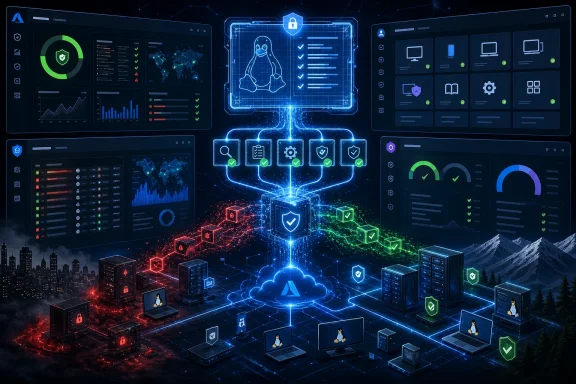 Security Standards Are Becoming Product Features
For more than two decades, CIS has occupied an unusual position in enterprise security. It is not a hyperscaler, not a regulator, and not a traditional vendor selling a single appliance or agent. Its power comes from consensus: administrators, auditors, vendors, government specialists, and security practitioners turning messy operational experience into configuration baselines that others can reuse.That model has always been valuable, but it has also been labor-intensive. A CIS Benchmark on a PDF or spreadsheet can tell an administrator what “good” looks like, but it cannot force a tenant, endpoint, VM, or Kubernetes node to stay that way. The hard work has traditionally lived in the gap between the standard and the system: scripts, Group Policy objects, Intune profiles, Terraform modules, exceptions, tickets, screenshots, and audit binders.
Microsoft and CIS are now trying to collapse that gap. The claim is not merely that CIS guidance exists for Microsoft products; that has been true for years across Windows, Windows Server, Azure, Microsoft 365, and related services. The newer argument is that those baselines should increasingly be visible and actionable inside the Microsoft control planes customers already use.
That distinction is crucial. In modern cloud and endpoint management, the dashboard is not a neutral window into reality. It shapes how work gets prioritized, which risks are seen first, which exceptions become normalized, and which teams get blamed when something slips. If CIS standards show up inside Defender for Cloud, Intune, Sentinel, and Purview workflows, they stop being a separate compliance exercise and become part of daily operations.
The Misconfiguration Era Has Arrived
Mishal Makshood, CIS’s partner alliance manager for Microsoft Azure, frames the central risk bluntly: attackers are increasingly exploiting misconfiguration rather than waiting for a traditional software vulnerability. That is not vendor theater. It is the lived reality of cloud administration.A modern enterprise environment is less like a castle and more like a constantly changing city. Identities are created and retired. Workloads scale up and down. Developers push infrastructure definitions. AI services connect to data stores. Devices roam between home networks, hotels, branch offices, and cellular links. In that world, the dangerous mistake is often not an unpatched kernel bug; it is an overly broad role assignment, a storage account exposed to the wrong network, a Linux image deployed without a hardened profile, or an endpoint policy that never reached a subset of machines.
This is why configuration risk has become the quiet giant of cybersecurity. It is less glamorous than zero-days and less dramatic than ransomware negotiations, but it is everywhere. Worse, it thrives in the spaces between teams. Security writes the policy, cloud engineering owns the platform, desktop engineering owns the endpoints, developers own the deployment pipeline, and audit asks everyone to prove what happened six months ago.
CIS’s value proposition is that a shared baseline gives those groups a common language. Microsoft’s value proposition is that a common language becomes more powerful when it is built into products that can measure and enforce it. The partnership is therefore not just about security content; it is about reducing the translation cost between policy and infrastructure.
Microsoft Wants the Baseline Inside the Workflow
The Microsoft ecosystem has become a sprawling security operating environment in its own right. Defender for Cloud assesses cloud posture and workload protections. Intune manages devices and configuration. Sentinel correlates security events and drives detection workflows. Purview handles compliance, data governance, and information protection. Entra governs identity. Azure Policy and Machine Configuration bring policy enforcement closer to infrastructure.CIS fits neatly into this architecture because benchmarks are inherently operational. They are not abstract statements like “use strong security.” They are prescriptive recommendations about how systems should be configured. That makes them unusually suitable for mapping into checks, policies, templates, and dashboards.
Defender for Cloud is the clearest example. When CIS standards form part of the assessment baseline, an organization does not have to invent its own definition of whether a cloud service or VM is configured securely. It can compare its environment against a recognized standard and prioritize drift. That does not remove the need for judgment, but it changes the starting point from “what should we check?” to “which deviations are acceptable, and why?”
Intune brings the same logic to endpoint fleets. The challenge with Windows endpoint security has never been the absence of knobs. Windows has knobs for nearly everything. The challenge is turning those knobs consistently across thousands of devices without breaking productivity, creating help desk chaos, or leaving unmanaged pockets behind. CIS-aligned baselines in device management workflows give administrators a more repeatable path from policy intent to applied configuration.
Linux Is the Cloud Story Windows Admins Cannot Ignore
The December 2025 Linux benchmark announcement is especially important because it cuts across a blind spot in many Microsoft-centric shops. Windows administrators may still think of Linux as someone else’s estate, but Azure does not. Linux underpins containers, Kubernetes nodes, AI workloads, web services, databases, appliances, and build infrastructure throughout Azure and hybrid environments.CIS says its collaboration with Microsoft brought built-in Linux benchmark capabilities to Azure for endorsed Linux distributions, with automation designed to apply trusted, audit-ready configurations across cloud and hybrid environments. That is a significant shift. Historically, Linux hardening in enterprise clouds often depended on image pipelines, shell scripts, Ansible roles, custom documentation, or marketplace images selected at deployment time. Those approaches can work, but they also fragment quickly.
The promise of built-in benchmark support is consistency. If an organization can apply or assess CIS-aligned settings through Azure-native policy and machine configuration tooling, Linux security becomes less dependent on each application team’s discipline. It also becomes more visible to central governance teams that may not have deep Linux administration expertise.
For WindowsForum readers, the practical implication is that Microsoft’s security story is no longer confined to Windows hardening. The Azure control plane is becoming the enforcement layer for mixed fleets. If your organization runs Windows Server, Windows 11, Azure Linux, Ubuntu, Red Hat, Kubernetes, and Arc-connected machines, the strategic question is not which operating system you prefer. It is whether your management plane can make configuration drift visible across all of them.
Hardened Images Were the First Step, Not the Destination
CIS Hardened Images have long offered a straightforward answer to a common problem: how do you start from a more secure VM without manually applying every recommendation yourself? In Azure Marketplace and other cloud marketplaces, these images give teams a preconfigured baseline aligned to CIS profiles. That helps reduce the risk of deploying a general-purpose image and hardening it later, if later ever comes.But hardened images solve only part of the lifecycle. They are excellent at the moment of creation. They are less complete as a guarantee of continuing compliance after package updates, emergency changes, application installs, troubleshooting sessions, and local exceptions. Any sysadmin who has inherited a “gold image” knows the problem: the image is clean on day one, but the fleet is judged on day 400.
That is why the newer emphasis on continuous assessment and automation matters. A hardened image is a secure starting point. A benchmark wired into policy tooling is a mechanism for detecting whether the machine stayed aligned after reality happened. The difference is the difference between a checklist at build time and a governance loop.
This is also where Microsoft’s cloud strategy gives CIS more reach. Azure Policy, Machine Configuration, Defender for Cloud, and Arc-connected management can extend assessment beyond a narrow set of Azure VMs. The aspiration is a single policy and compliance fabric across cloud and hybrid systems. The reality will be messier, as it always is, but the direction is clear.
Compliance Is Being Recast as Continuous Operations
One of the more telling claims in the source material is that customers report stronger audit outcomes and faster compliance cycles because their security posture is always visible and measured. That phrase, “always visible,” captures the industry’s broader pivot. Compliance is moving from periodic evidence gathering to continuous telemetry.That shift is both useful and dangerous. It is useful because annual or quarterly audits are bad at catching fast-moving cloud drift. A storage setting can be safe on Monday, exposed on Wednesday, and fixed by Friday, leaving no meaningful trace in a manually assembled audit pack unless the tooling records it. Continuous assessment gives organizations a better chance of seeing drift while it still matters.
It is dangerous because dashboards can create false confidence. A green compliance score is not the same as security. A benchmark cannot know every business context, every compensating control, or every emerging threat. Administrators can also learn to optimize for the score rather than the risk, especially when executives start treating compliance percentages as management targets.
The best use of CIS-aligned Microsoft integrations is therefore not blind enforcement. It is disciplined governance. Standards should define the default, automation should detect drift, and exceptions should be explicit, time-bound, and reviewed. The goal is not to eliminate human judgment; it is to stop wasting human judgment on repetitive baseline work.
AI Makes Baselines More Important, Not Less
The mention of AI in this context is not accidental. As organizations rush to deploy copilots, model-connected applications, retrieval systems, and automation agents, they are increasing the number of systems that can access, transform, or act on sensitive data. AI does not make old configuration problems disappear. It amplifies their consequences.A misconfigured identity in an AI-enabled workflow can be more damaging than the same mistake in a traditional application because automated systems can operate at speed and scale. A poorly governed data store can become a training, retrieval, or prompt-context problem. A workload granted excessive permissions can become a bridge between systems that were never meant to interact.
That is why standards-based governance has renewed relevance. The industry often talks about AI security as if it requires entirely new categories of control. Some of it does. But much of the near-term risk comes from familiar failures: weak identity boundaries, exposed services, unpatched systems, excessive privileges, insufficient logging, and inconsistent configuration. CIS Benchmarks are not a complete AI security strategy, but they are part of the substrate on which one has to be built.
Microsoft benefits from this framing because it already wants customers to see its cloud, endpoint, identity, and compliance products as an integrated security platform. CIS benefits because its standards become more actionable inside that platform. Customers benefit if the result is less manual hardening and clearer accountability. The caveat is that platform integration always comes with platform dependence.
The Platform Advantage Cuts Both Ways
There is an obvious upside to embedding CIS standards into Microsoft’s ecosystem: most organizations do not have enough security engineers to manually operationalize every benchmark across every service. If Microsoft can expose CIS-aligned checks directly in Defender for Cloud or apply settings through Intune and Azure tooling, smaller teams get leverage they otherwise would not have.The downside is subtler. When standards are mediated through a platform vendor’s tools, customers may experience the standard through the vendor’s interpretation, release cadence, licensing model, and product boundaries. A benchmark may be open and consensus-driven, but the integrated workflow is still shaped by Microsoft’s architecture.
That does not make the arrangement bad. In fact, it is probably unavoidable. Security guidance that never becomes enforceable at scale is not enough for modern enterprises. But IT leaders should be clear-eyed about what is happening. Microsoft is not merely hosting CIS content; it is making Azure and Microsoft Security the operational home for that content.
For many customers, that will be exactly what they want. They are already paying for Microsoft security products, already managing endpoints with Intune, already monitoring cloud posture with Defender for Cloud, and already struggling to prove compliance. For others, especially multi-cloud organizations or those wary of single-vendor gravity, the challenge will be maintaining portability and independent validation alongside Microsoft-native convenience.
The Administrator’s Job Moves Up the Stack
Automation does not remove administrators from the security process. It changes where their judgment is most valuable. If CIS-aligned baselines can be applied and assessed automatically, the administrator spends less time manually translating a benchmark into settings and more time deciding how those settings fit the environment.That is a better use of scarce expertise. Anyone who has tried to implement a CIS benchmark in production knows the work is not just technical. Some recommendations can affect usability, compatibility, performance, or legacy application behavior. Level 1 settings are designed to be broadly practical, while Level 2 profiles are more restrictive and may carry operational trade-offs. The hard part is not reading the recommendation; it is deciding what breaks, what risk remains, and who owns the exception.
The Microsoft-CIS integration story should therefore be read as a productivity story as much as a security story. It promises to reduce the undifferentiated labor of hardening and evidence collection. That matters in enterprises where security backlogs are endless and skilled staff are stretched thin.
But administrators should resist the fantasy of “set it and forget it.” Baselines need owners. Policy assignments need scoping. Exceptions need expiration dates. Monitoring needs review. If everything is automated but nobody understands the automation, the organization has traded manual inconsistency for automated opacity.
Government and Regulated Buyers Will Push This Faster
The strongest pull for this kind of integration will come from government, healthcare, finance, education, critical infrastructure, and large enterprise buyers with audit pressure. These organizations often need to demonstrate alignment with recognized frameworks, not merely assert that they follow internal best practices. CIS Benchmarks help because they are widely recognized and map into broader control families and regulatory expectations.For these buyers, Microsoft-native CIS assessment reduces friction. It can shorten the path from architecture decision to audit evidence. It can also give procurement and security review teams more confidence that workloads deployed in Azure are not starting from scratch. When a control framework is visible in the same tools used to manage the environment, compliance conversations become more concrete.
That does not mean regulators or auditors will simply accept a dashboard screenshot. Serious audits still require context, scope, evidence quality, exception handling, and proof that controls operate effectively over time. But continuous benchmark assessment gives organizations a stronger evidence base than ad hoc interviews and manually maintained spreadsheets.
The more interesting long-term question is whether this changes expectations. Once cloud platforms can continuously assess recognized baselines, auditors may become less tolerant of organizations that cannot show near-real-time configuration posture. What is optional convenience today can become tomorrow’s minimum bar.
Windows Remains Central, But It Is No Longer Alone
CIS’s Microsoft work still matters deeply for Windows. Benchmarks for Windows 11, Windows Server, Microsoft 365, and Azure remain central to enterprise hardening. Intune’s role in applying endpoint configuration at scale is particularly important as organizations continue moving away from purely domain-joined assumptions and toward cloud-managed or hybrid-managed fleets.But the center of gravity has shifted. Windows is now one layer in a broader Microsoft-managed estate. A Windows 11 endpoint may authenticate through Entra, be configured through Intune, send signals to Defender, access data governed by Purview, and interact with workloads running on Linux in Azure. A Windows Server VM may be only one component in a distributed application with containers, managed identities, storage services, and serverless pieces.
That is why benchmark integration across Microsoft’s ecosystem is more consequential than any single Windows setting. The enterprise attack surface is no longer neatly divided by operating system. Identity, policy, telemetry, and configuration management tie everything together. Attackers understand this. Defenders have to as well.
For the Windows community, this is a reminder that modern Windows administration increasingly requires cloud security literacy. Knowing Group Policy is still useful. Knowing Intune is essential. Knowing how Defender for Cloud evaluates workloads, how Azure Policy scopes assignments, how Linux nodes are hardened, and how Purview classifies data is becoming part of the same professional toolkit.
The Marketing Word Is Resilience, But the Operational Word Is Drift
Makshood describes the Linux benchmark work as a “resilience upgrade,” and that is a fair aspiration. Secure-by-default systems should produce fewer preventable incidents, fewer audit surprises, and less downtime from configuration mistakes. But the operational word that matters most is drift.Drift is what happens when the intended state and the actual state diverge. It is the firewall rule added during an outage and never removed. It is the local admin group expanded for troubleshooting. It is the VM deployed from an old image because the new one failed a dependency test. It is the endpoint policy that applies to 92 percent of devices while everyone assumes it applies to all of them.
CIS Benchmarks define the intended state. Microsoft’s tooling can help discover the actual state. The security value lives in narrowing the gap between them and making deviations visible enough that someone has to explain them.
That is not glamorous work. It does not produce the adrenaline of incident response or the prestige of threat hunting. But it is the work that prevents many incidents from becoming possible in the first place. In that sense, the CIS-Microsoft collaboration is part of a broader maturation of cybersecurity away from heroic cleanup and toward boring, repeatable control.
The Fine Print Belongs in the Change Advisory Board
No serious administrator should read “built-in CIS benchmarks” as permission to apply every setting everywhere without testing. Benchmarks are baselines, not business requirements. They need to be evaluated against application dependencies, user experience, support models, and risk appetite.Linux hardening can affect services that assume permissive defaults. Windows endpoint baselines can collide with legacy applications, peripheral workflows, or user expectations. Cloud posture recommendations can expose architectural shortcuts that are expensive to fix. The point of automation is to make these issues visible earlier, not to pretend they do not exist.
The right pattern is staged adoption. Pilot the baseline against representative systems. Compare Level 1 and Level 2 implications. Document exceptions with owners and review dates. Use Defender for Cloud, Intune, Azure Policy, and related tools to measure compliance continuously. Feed the results into security operations, audit workflows, and engineering backlogs.
That is less exciting than a product announcement, but it is how durable security programs are built. Standards give organizations a map. Automation gives them a vehicle. Governance decides where the vehicle is allowed to go.
The Real Win Is Fewer Heroics After Deployment
The most concrete lesson from the CIS-Microsoft collaboration is that security is moving closer to the moment infrastructure is created and managed. That will not eliminate breaches, misconfigurations, or bad decisions, but it can reduce the number of times teams have to rediscover the same hardening work under pressure.- CIS Benchmarks are becoming more useful inside Microsoft environments because they are increasingly tied to assessment and enforcement workflows rather than static documents.
- Defender for Cloud and Intune are important because they turn baseline alignment into something administrators can see and manage continuously.
- The December 2025 Azure Linux benchmark work matters because Linux is a first-class part of Microsoft cloud estates, especially for containers, AI workloads, and hybrid infrastructure.
- Hardened images remain valuable as secure starting points, but continuous policy and configuration assessment are what keep fleets from drifting over time.
- Organizations should treat CIS-aligned automation as a governance accelerator, not as a substitute for testing, exception management, and operational ownership.
- The partnership strengthens Microsoft’s role as the security control plane for many enterprises, which brings convenience and leverage but also increases dependence on Microsoft-native workflows.
References
- Primary source: Technology Record
Published: 2026-05-25T09:35:07.968971
Creating a safer, more predictable world with the Center...
Since 2000, the Center for Internet Security, Inc. (CIS) has helped organisations stay ahead of cyberthreats. It creates globally recognised best...www.technologyrecord.com
- Official source: techcommunity.microsoft.com
Microsoft Defender Cloud Now Supports CIS Azure Security Foundations Benchmark 2.0.0
Microsoft Defender Cloud Now Supports CIS Azure Security Foundations Benchmark 2.0.0 techcommunity.microsoft.com
- Official source: microsoft.com
Microsoft Intelligent Security Association (MISA) | Microsoft Security
Explore the Microsoft Intelligent Security Association (MISA), delivering cybersecurity solutions from MSSP and software development partners.www.microsoft.com
- Official source: microsoft.firstdistribution.com
- Official source: adoption.microsoft.com
