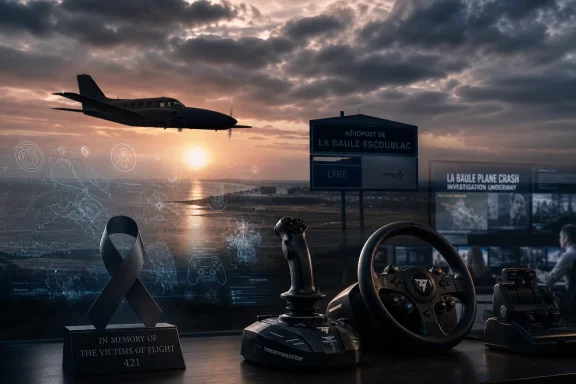
Claude Guillemot, one of the five brothers who founded Ubisoft in France in 1986, died at age 69 on June 19, 2026, when a twin-engine Cessna 421 crashed near La Baule-Escoublac Airport on France’s Atlantic coast. A flight instructor aboard the aircraft was also killed, and French authorities have not yet announced a cause. For the games business, the accident is more than the loss of a name in a corporate history book. It is a reminder that Ubisoft was never just a publisher; it was, and remains, a family enterprise trying to operate at global-platform scale.
That distinction matters because the Guillemot name has been welded into modern games for four decades. Players know Ubisoft through Assassin’s Creed, Far Cry, Rainbow Six, Rayman, Just Dance, Prince of Persia, Splinter Cell, and the long tail of open-world design habits the company helped normalize. Investors know it as a volatile listed company under pressure from weak releases, restructuring, labor scrutiny, consolidation talk, and the uneasy economics of premium game development. But inside the company’s origin story sits a more old-fashioned structure: five brothers from Brittany, building distribution, software publishing, peripherals, mobile games, and hardware brands into a sprawling family-controlled technology network.
The known facts of the crash are narrow and should stay that way until investigators say more. The aircraft, described by authorities and local reporting as a Cessna 421, went down near La Baule after departing Rennes. It crashed in a field during the approach phase, and emergency crews responded to a fire at the site. Both occupants died.
That restraint is important because aviation accidents attract premature certainty. Small-aircraft crashes are often publicly dissected before investigators have established weather, maintenance, pilot workload, mechanical status, communications, fuel state, or approach conditions. In this case, officials have said the investigation is continuing and no official cause has been released.
What is not uncertain is the identity of one of the victims and the symbolic weight attached to it. Claude Guillemot was not the Ubisoft executive most players could pick out of a lineup. He was not the public face who took the stage for blockbuster reveals, nor the CEO whose name became a shorthand for Ubisoft’s strategic choices. But he was part of the founding group that turned a family business into a permanent institution in gaming.
His death comes as Ubisoft is already in one of the most consequential periods in its modern life. The company has spent years trying to convince players, staff, and investors that it can recover from delayed projects, inconsistent execution, bruising workplace controversies, and a market that no longer rewards scale for its own sake. The loss of a founder does not change the release calendar overnight. It does, however, sharpen the story of a company still governed by the legacy of its founders while fighting to prove it can become something more durable than that legacy.
That history now reads almost impossibly distant from the current games economy. Modern Ubisoft runs on franchise roadmaps, live-service infrastructure, global marketing campaigns, proprietary engines, monetization systems, studio networks, and regulatory filings. But the company’s earliest advantage was not a billion-dollar pipeline. It was the ability to spot a market before it had hardened.
The five brothers did not merely build one company. Around Ubisoft sat a broader Guillemot ecosystem, including Guillemot Corporation, the hardware and accessories business associated with Thrustmaster and Hercules, and Gameloft, the mobile publisher founded later by members of the same family network. The result was not a neat corporate tree so much as a family-built technology archipelago.
Claude’s role was especially tied to that less glamorous but strategically revealing side of the story. He chaired Guillemot Corporation and led it for decades, keeping the family connected to peripherals, audio hardware, and the physical layer of play. That work rarely generates the same cultural oxygen as a new Assassin’s Creed trailer, but it is part of why the Guillemots are not simply remembered as game publishers. They were builders of a broader consumer-technology footprint around gaming.
Claude occupied a quieter kind of power. Reports and company materials over the years placed him in leadership roles across the Guillemot family’s businesses, especially Guillemot Corporation, where he remained chairman after the company separated the chairman and chief executive roles in 2025. Valentin Guillemot became chief executive while Claude stayed on as chairman, a move that looked like generational transition without full withdrawal.
That distinction is telling. Founder-led companies rarely hand off authority all at once, and family companies do so even less often. The title changes may appear procedural from the outside, but they are how continuity is signaled to markets, staff, banks, suppliers, and relatives who are also stakeholders. Claude’s remaining chairmanship said, in effect, that the next generation could run the machine while the founder still guarded its direction.
It also made him a connective figure between the Ubisoft story and the hardware story. Thrustmaster racing wheels, flight sticks, and other accessories are not merely side products in the culture of PC and console gaming; they sit inside enthusiast identity. Hercules, similarly, belongs to the older history of PC multimedia and digital audio. Claude’s career lived where software culture meets devices, a territory WindowsForum readers know well: drivers, peripherals, compatibility, latency, USB behavior, firmware, force feedback, and the sometimes maddening gap between marketing promises and hardware reality.
That is why Claude’s association with Guillemot Corporation deserves more than a sentence in an obituary. Thrustmaster and Hercules speak to a parallel history of gaming, one Windows users often encountered at the desk rather than in a trailer. A joystick, racing wheel, audio interface, or controller can define how a player experiences a game as much as the game itself. For simulation fans especially, hardware is not an accessory; it is the interface between imagination and muscle memory.
This is the unglamorous truth of the PC ecosystem. Great gaming companies are often remembered by their characters and worlds, but the lived experience of gaming is mediated by chips, drivers, APIs, firmware updates, USB hubs, operating-system changes, and support pages. Ubisoft’s software empire and Guillemot Corporation’s hardware business occupied different parts of that same stack.
Claude’s career therefore complicates the idea that Ubisoft’s founding family only made its mark through franchises. The family’s influence ran through game publishing, mobile gaming, and devices. It helped shape what people played, how they bought it, and in some cases what they held in their hands while playing.
Family control also gave Ubisoft a defensive posture. When larger companies circled, the Guillemots could present themselves as guardians of independence. That stance mattered especially during earlier consolidation pressures, when the company’s identity was bound up in resisting a future as just another label inside a larger media conglomerate.
But the same structure can look different when performance falters. A founder family can be seen as patient stewardship during growth and as entrenched control during decline. Ubisoft has faced investor frustration, repeated strategic resets, and public criticism over workplace culture and creative stagnation. In that environment, every family appointment, board role, or governance shift is read through a harsher lens.
That does not mean the family model is inherently wrong. Many technology companies have benefited from founders who resist quarterly panic. But it does mean Ubisoft’s founding mythology no longer functions as a shield by itself. Players judge the games. Workers judge the workplace. Investors judge returns. Founding stories buy emotional context, not permanent exemption.
But companies are not spreadsheets wearing lanyards. Founder deaths matter because they change the emotional and political environment inside which decisions are made. They remind employees that the institution has a finite human origin. They remind families that succession is not theoretical. They remind boards that continuity plans are not ceremonial documents.
At Guillemot Corporation, the timing is particularly stark. Claude had already stepped back from the chief executive role while remaining chairman. That arrangement suggested a deliberate transition, with the founder still available as a stabilizing presence. His sudden death removes that presence abruptly.
At Ubisoft, the effect is more symbolic but still real. The company’s future has been debated in terms of business models, release discipline, Tencent-linked structures, asset value, and franchise management. Claude’s death pulls the frame backward to the origin: a company built by brothers, still carrying the advantages and liabilities of that fact forty years later.
Ubisoft’s deeper challenge is trust across multiple constituencies. Players need to trust that a Ubisoft game will justify its size, price, launcher friction, post-launch plan, and time investment. Employees need to trust that leadership has absorbed the lessons of past workplace failures and production churn. Investors need to trust that the company can convert its enormous catalog and studio footprint into consistent earnings rather than expensive sprawl.
That trust deficit did not appear overnight. It accumulated through delayed games, canceled projects, formula fatigue, live-service misfires, public workplace allegations in prior years, and the broader fatigue surrounding premium publishers that keep chasing recurring revenue while telling players they are buying complete experiences. Ubisoft is hardly alone in that tension, but it has become one of its clearest examples.
The death of a founder does not answer any of those questions. It does, however, make the company’s next chapter feel less like ordinary corporate maintenance and more like a generational test. Ubisoft must now honor a founding era without hiding inside it.
Claude Guillemot’s death will inevitably pass through that filter. Some players will remember Rayman, Splinter Cell, early Assassin’s Creed, and the feeling that Ubisoft once represented European creative momentum. Others will think first of open-world checklists, monetization, workplace scandals, or the corporate rhetoric that now surrounds every major publisher. Both reactions are part of the company’s record.
A serious assessment has to hold both ideas at once. Ubisoft’s founders helped build a company that gave global reach to French game development and employed tens of thousands of people over decades. Ubisoft also became a corporation whose decisions frustrated players and workers, and whose sheer scale sometimes seemed to smother the creative weirdness that made its best games matter.
The mature response is not hagiography. It is proportion. Claude Guillemot’s death is a human tragedy and an industry milestone. It should not become a referendum on every Ubisoft grievance, but neither should it require pretending the company’s legacy is uncomplicated.
Thrustmaster’s place in that world is not incidental. The brand has long been part of the enthusiast landscape for racing, flight, and console accessories. It belongs to a category where reputation is built slowly, through compatibility, durability, feel, software support, and community troubleshooting. That is a very different rhythm from annualized game marketing.
Hercules, too, carries older PC resonance. Its history touches graphics, audio, DJ gear, and digital media hardware in ways that intersect with the evolution of Windows as a consumer platform. Before gaming became dominated by a handful of storefronts and engines, the PC was a more chaotic assembly of cards, peripherals, drivers, and utilities. Companies like Guillemot Corporation lived in that chaos.
Claude’s leadership in that business means his legacy sits partly outside Ubisoft’s most famous franchises. He helped sustain a company whose products interacted directly with the enthusiast hardware culture that made PC gaming distinctive. That may be less glamorous than publishing Assassin’s Creed, but it is more tangible to anyone who has ever calibrated pedals at midnight.
That question is not unique to Ubisoft. Technology history is full of founder transitions that either clarified a company’s identity or exposed how dependent it had been on informal authority. A founder can make decisions quickly because everyone knows where power sits. Remove that person, and the company may discover whether it has actual systems or only habits.
For Ubisoft, the issue is made more complicated by scale. It is not a boutique studio where one founder’s taste directly shapes every project. It is a multi-studio publisher with global production teams and major franchise obligations. Yet family identity still influences how the company is perceived, defended, criticized, and valued.
Claude’s death accelerates the emotional reality of that transition even if legal and executive structures were already in motion. The founding generation is no longer an abstract presence that can be assumed to remain in the background. The institutions they built must keep operating with fewer of their original anchors.
That matters in 2026 because the games industry is still being reorganized by capital. Microsoft’s acquisition of Activision Blizzard, Embracer’s rise and retrenchment, Sony’s live-service recalibrations, Tencent’s global investments, and the consolidation of middleware and distribution have made independence a more complicated word than it used to be. A publisher can be independent in listing, dependent in financing, global in revenue, and fragile in execution all at once.
Ubisoft has often sat at the center of that contradiction. It is large enough to matter, famous enough to attract scrutiny, and uneven enough to invite speculation. Its franchises are valuable, but value in games is now tied to execution risk. A dormant brand is an asset only if someone can revive it without spending half a decade and hundreds of millions of dollars proving the market moved on.
In that environment, governance is not a dry sidebar. Who controls the company, who chairs the board, who succeeds whom, and how family authority intersects with outside capital all become part of the strategic story. Claude Guillemot’s death is therefore not merely biographical. It touches the question of how long founder-era structures can guide companies built for a very different market.
That is especially true because Ubisoft’s best work has often emerged when its systems served a clear creative idea rather than replacing one. Assassin’s Creed worked when historical tourism, parkour, conspiracy fiction, and stealth-action structure felt like a coherent fantasy. Far Cry worked when systemic chaos and villain-driven narrative energy reinforced each other. Rainbow Six Siege worked because disciplined multiplayer design overcame early skepticism and grew into a long-running competitive platform.
The company’s weaker tendencies are just as recognizable. Overbuilt maps, interchangeable objectives, grinding progression, aggressive monetization, and brand management masquerading as design have all contributed to player fatigue. Ubisoft knows how to build worlds. The harder task is remembering why players wanted to enter them in the first place.
Claude Guillemot’s career on the hardware side offers a useful metaphor. A good peripheral disappears into the experience. It does not demand admiration every second; it earns trust by responding correctly. Ubisoft’s next era needs something similar: less noise, more responsiveness, and fewer excuses when the input does not match the output.
That distinction matters because the Guillemot name has been welded into modern games for four decades. Players know Ubisoft through Assassin’s Creed, Far Cry, Rainbow Six, Rayman, Just Dance, Prince of Persia, Splinter Cell, and the long tail of open-world design habits the company helped normalize. Investors know it as a volatile listed company under pressure from weak releases, restructuring, labor scrutiny, consolidation talk, and the uneasy economics of premium game development. But inside the company’s origin story sits a more old-fashioned structure: five brothers from Brittany, building distribution, software publishing, peripherals, mobile games, and hardware brands into a sprawling family-controlled technology network.
 A Fatal Crash Lands in the Middle of a Corporate Turning Point
The known facts of the crash are narrow and should stay that way until investigators say more. The aircraft, described by authorities and local reporting as a Cessna 421, went down near La Baule after departing Rennes. It crashed in a field during the approach phase, and emergency crews responded to a fire at the site. Both occupants died.That restraint is important because aviation accidents attract premature certainty. Small-aircraft crashes are often publicly dissected before investigators have established weather, maintenance, pilot workload, mechanical status, communications, fuel state, or approach conditions. In this case, officials have said the investigation is continuing and no official cause has been released.
What is not uncertain is the identity of one of the victims and the symbolic weight attached to it. Claude Guillemot was not the Ubisoft executive most players could pick out of a lineup. He was not the public face who took the stage for blockbuster reveals, nor the CEO whose name became a shorthand for Ubisoft’s strategic choices. But he was part of the founding group that turned a family business into a permanent institution in gaming.
His death comes as Ubisoft is already in one of the most consequential periods in its modern life. The company has spent years trying to convince players, staff, and investors that it can recover from delayed projects, inconsistent execution, bruising workplace controversies, and a market that no longer rewards scale for its own sake. The loss of a founder does not change the release calendar overnight. It does, however, sharpen the story of a company still governed by the legacy of its founders while fighting to prove it can become something more durable than that legacy.
Ubisoft Was Born as a Family Business Before It Became a Content Factory
The Ubisoft origin story has often been told in the charming register of 1980s European entrepreneurship. Christian, Claude, Gérard, Michel, and Yves Guillemot began from a family background in distribution and mail-order sales, at a time when the European computer-games market was fragmented, physical, local, and young. Ubisoft emerged in 1986 as a software distributor and publisher before growing into one of the industry’s defining global names.That history now reads almost impossibly distant from the current games economy. Modern Ubisoft runs on franchise roadmaps, live-service infrastructure, global marketing campaigns, proprietary engines, monetization systems, studio networks, and regulatory filings. But the company’s earliest advantage was not a billion-dollar pipeline. It was the ability to spot a market before it had hardened.
The five brothers did not merely build one company. Around Ubisoft sat a broader Guillemot ecosystem, including Guillemot Corporation, the hardware and accessories business associated with Thrustmaster and Hercules, and Gameloft, the mobile publisher founded later by members of the same family network. The result was not a neat corporate tree so much as a family-built technology archipelago.
Claude’s role was especially tied to that less glamorous but strategically revealing side of the story. He chaired Guillemot Corporation and led it for decades, keeping the family connected to peripherals, audio hardware, and the physical layer of play. That work rarely generates the same cultural oxygen as a new Assassin’s Creed trailer, but it is part of why the Guillemots are not simply remembered as game publishers. They were builders of a broader consumer-technology footprint around gaming.
Claude Guillemot Was the Less Visible Founder, Which May Be Why His Role Mattered
The public tends to over-index on chief executives. In Ubisoft’s case, that has meant Yves Guillemot, the long-serving CEO and most visible representative of the family’s control. Yves is the one associated with earnings calls, strategy pivots, shareholder defenses, and the sometimes awkward attempt to speak simultaneously to fans, employees, and capital markets.Claude occupied a quieter kind of power. Reports and company materials over the years placed him in leadership roles across the Guillemot family’s businesses, especially Guillemot Corporation, where he remained chairman after the company separated the chairman and chief executive roles in 2025. Valentin Guillemot became chief executive while Claude stayed on as chairman, a move that looked like generational transition without full withdrawal.
That distinction is telling. Founder-led companies rarely hand off authority all at once, and family companies do so even less often. The title changes may appear procedural from the outside, but they are how continuity is signaled to markets, staff, banks, suppliers, and relatives who are also stakeholders. Claude’s remaining chairmanship said, in effect, that the next generation could run the machine while the founder still guarded its direction.
It also made him a connective figure between the Ubisoft story and the hardware story. Thrustmaster racing wheels, flight sticks, and other accessories are not merely side products in the culture of PC and console gaming; they sit inside enthusiast identity. Hercules, similarly, belongs to the older history of PC multimedia and digital audio. Claude’s career lived where software culture meets devices, a territory WindowsForum readers know well: drivers, peripherals, compatibility, latency, USB behavior, firmware, force feedback, and the sometimes maddening gap between marketing promises and hardware reality.
The Guillemot Empire Was Built Across the Whole Stack of Play
Ubisoft became famous because of games, but the family’s larger business logic was always broader than content. The Guillemots had a distribution instinct first, then a publishing instinct, then a platform-adjacent instinct. They understood that gaming is not just software running on a machine; it is a chain of devices, retail channels, licenses, brands, and communities.That is why Claude’s association with Guillemot Corporation deserves more than a sentence in an obituary. Thrustmaster and Hercules speak to a parallel history of gaming, one Windows users often encountered at the desk rather than in a trailer. A joystick, racing wheel, audio interface, or controller can define how a player experiences a game as much as the game itself. For simulation fans especially, hardware is not an accessory; it is the interface between imagination and muscle memory.
This is the unglamorous truth of the PC ecosystem. Great gaming companies are often remembered by their characters and worlds, but the lived experience of gaming is mediated by chips, drivers, APIs, firmware updates, USB hubs, operating-system changes, and support pages. Ubisoft’s software empire and Guillemot Corporation’s hardware business occupied different parts of that same stack.
Claude’s career therefore complicates the idea that Ubisoft’s founding family only made its mark through franchises. The family’s influence ran through game publishing, mobile gaming, and devices. It helped shape what people played, how they bought it, and in some cases what they held in their hands while playing.
The Family Model Helped Ubisoft Survive, Then Became Part of the Debate
For much of Ubisoft’s life, family control looked like a strategic asset. It gave the company a long horizon in an industry prone to fads and brutal platform transitions. Ubisoft survived the shift from boxed PC software to console dominance, from licensed games to original franchises, from single-player blockbusters to online services, and from European challenger to multinational publisher.Family control also gave Ubisoft a defensive posture. When larger companies circled, the Guillemots could present themselves as guardians of independence. That stance mattered especially during earlier consolidation pressures, when the company’s identity was bound up in resisting a future as just another label inside a larger media conglomerate.
But the same structure can look different when performance falters. A founder family can be seen as patient stewardship during growth and as entrenched control during decline. Ubisoft has faced investor frustration, repeated strategic resets, and public criticism over workplace culture and creative stagnation. In that environment, every family appointment, board role, or governance shift is read through a harsher lens.
That does not mean the family model is inherently wrong. Many technology companies have benefited from founders who resist quarterly panic. But it does mean Ubisoft’s founding mythology no longer functions as a shield by itself. Players judge the games. Workers judge the workplace. Investors judge returns. Founding stories buy emotional context, not permanent exemption.
A Death in the Founding Generation Changes the Mood, Not the Math
It would be too much to say Claude Guillemot’s death will materially alter Ubisoft’s operating strategy. Ubisoft is a large public company with executives, boards, production plans, studios, licensors, and partners. The next earnings call will not be rewritten by sentiment alone. The next game delay will still be judged by cost, quality, and market timing.But companies are not spreadsheets wearing lanyards. Founder deaths matter because they change the emotional and political environment inside which decisions are made. They remind employees that the institution has a finite human origin. They remind families that succession is not theoretical. They remind boards that continuity plans are not ceremonial documents.
At Guillemot Corporation, the timing is particularly stark. Claude had already stepped back from the chief executive role while remaining chairman. That arrangement suggested a deliberate transition, with the founder still available as a stabilizing presence. His sudden death removes that presence abruptly.
At Ubisoft, the effect is more symbolic but still real. The company’s future has been debated in terms of business models, release discipline, Tencent-linked structures, asset value, and franchise management. Claude’s death pulls the frame backward to the origin: a company built by brothers, still carrying the advantages and liabilities of that fact forty years later.
Ubisoft’s Current Struggle Is About Trust, Not Just Games
The temptation in covering Ubisoft is to reduce the company’s problems to a release slate. If Assassin’s Creed lands, the company is back. If Far Cry returns strong, the pipeline is fixed. If a multiplayer bet works, investor confidence improves. There is truth in all of that, but it is incomplete.Ubisoft’s deeper challenge is trust across multiple constituencies. Players need to trust that a Ubisoft game will justify its size, price, launcher friction, post-launch plan, and time investment. Employees need to trust that leadership has absorbed the lessons of past workplace failures and production churn. Investors need to trust that the company can convert its enormous catalog and studio footprint into consistent earnings rather than expensive sprawl.
That trust deficit did not appear overnight. It accumulated through delayed games, canceled projects, formula fatigue, live-service misfires, public workplace allegations in prior years, and the broader fatigue surrounding premium publishers that keep chasing recurring revenue while telling players they are buying complete experiences. Ubisoft is hardly alone in that tension, but it has become one of its clearest examples.
The death of a founder does not answer any of those questions. It does, however, make the company’s next chapter feel less like ordinary corporate maintenance and more like a generational test. Ubisoft must now honor a founding era without hiding inside it.
The Accident Also Exposes Gaming’s Habit of Flattening Its Own History
Gaming culture has a strange relationship with its industrial past. It venerates beloved games while often flattening the people and companies that made them into memes, villains, or nostalgia tokens. Ubisoft, perhaps more than most publishers, exists in that split consciousness. It is the company behind some of the most important mainstream games of the last twenty years, and also a frequent shorthand for bloated maps, launcher annoyances, microtransaction creep, and corporate sameness.Claude Guillemot’s death will inevitably pass through that filter. Some players will remember Rayman, Splinter Cell, early Assassin’s Creed, and the feeling that Ubisoft once represented European creative momentum. Others will think first of open-world checklists, monetization, workplace scandals, or the corporate rhetoric that now surrounds every major publisher. Both reactions are part of the company’s record.
A serious assessment has to hold both ideas at once. Ubisoft’s founders helped build a company that gave global reach to French game development and employed tens of thousands of people over decades. Ubisoft also became a corporation whose decisions frustrated players and workers, and whose sheer scale sometimes seemed to smother the creative weirdness that made its best games matter.
The mature response is not hagiography. It is proportion. Claude Guillemot’s death is a human tragedy and an industry milestone. It should not become a referendum on every Ubisoft grievance, but neither should it require pretending the company’s legacy is uncomplicated.
The Hardware Side of the Story Belongs in the Obituary
For Windows enthusiasts, Claude Guillemot’s importance may be easiest to understand through the peripheral drawer. The PC gaming experience has always depended on a messy ecosystem of devices that only become visible when they fail. A racing wheel that works beautifully across one sim and breaks after a driver update can define a weekend. A joystick with proper force feedback can make a flight sim feel alive. A bad control panel can turn premium hardware into a support ticket.Thrustmaster’s place in that world is not incidental. The brand has long been part of the enthusiast landscape for racing, flight, and console accessories. It belongs to a category where reputation is built slowly, through compatibility, durability, feel, software support, and community troubleshooting. That is a very different rhythm from annualized game marketing.
Hercules, too, carries older PC resonance. Its history touches graphics, audio, DJ gear, and digital media hardware in ways that intersect with the evolution of Windows as a consumer platform. Before gaming became dominated by a handful of storefronts and engines, the PC was a more chaotic assembly of cards, peripherals, drivers, and utilities. Companies like Guillemot Corporation lived in that chaos.
Claude’s leadership in that business means his legacy sits partly outside Ubisoft’s most famous franchises. He helped sustain a company whose products interacted directly with the enthusiast hardware culture that made PC gaming distinctive. That may be less glamorous than publishing Assassin’s Creed, but it is more tangible to anyone who has ever calibrated pedals at midnight.
Founder Succession Is No Longer a Future Problem
The Guillemot family has already been navigating succession. Guillemot Corporation’s 2025 governance change moved Valentin Guillemot into the chief executive role while Claude stayed chairman. Ubisoft itself has had to answer questions about family influence, including scrutiny over leadership roles and the balance between continuity and nepotism. The broader question is simple: how does a family-built gaming empire professionalize without losing the thing that made it resilient?That question is not unique to Ubisoft. Technology history is full of founder transitions that either clarified a company’s identity or exposed how dependent it had been on informal authority. A founder can make decisions quickly because everyone knows where power sits. Remove that person, and the company may discover whether it has actual systems or only habits.
For Ubisoft, the issue is made more complicated by scale. It is not a boutique studio where one founder’s taste directly shapes every project. It is a multi-studio publisher with global production teams and major franchise obligations. Yet family identity still influences how the company is perceived, defended, criticized, and valued.
Claude’s death accelerates the emotional reality of that transition even if legal and executive structures were already in motion. The founding generation is no longer an abstract presence that can be assumed to remain in the background. The institutions they built must keep operating with fewer of their original anchors.
The Games Industry Should Read This as a Governance Story, Too
Obituaries in the games business often default to creative credits. Who made which game, who greenlit which franchise, who built which studio. Claude Guillemot’s case requires a different lens because his significance is partly structural. He belonged to the ownership and governance history of one of the few European publishers that achieved sustained global scale.That matters in 2026 because the games industry is still being reorganized by capital. Microsoft’s acquisition of Activision Blizzard, Embracer’s rise and retrenchment, Sony’s live-service recalibrations, Tencent’s global investments, and the consolidation of middleware and distribution have made independence a more complicated word than it used to be. A publisher can be independent in listing, dependent in financing, global in revenue, and fragile in execution all at once.
Ubisoft has often sat at the center of that contradiction. It is large enough to matter, famous enough to attract scrutiny, and uneven enough to invite speculation. Its franchises are valuable, but value in games is now tied to execution risk. A dormant brand is an asset only if someone can revive it without spending half a decade and hundreds of millions of dollars proving the market moved on.
In that environment, governance is not a dry sidebar. Who controls the company, who chairs the board, who succeeds whom, and how family authority intersects with outside capital all become part of the strategic story. Claude Guillemot’s death is therefore not merely biographical. It touches the question of how long founder-era structures can guide companies built for a very different market.
The Best Tribute Would Be Operational Discipline
There is a respectful but unsentimental way to honor a founder of a major technology company: run the company well. For Ubisoft, that means fewer grand declarations and more evidence. Better games, clearer production priorities, healthier studios, cleaner launches, and a more honest relationship with players would say more than any memorial phrasing.That is especially true because Ubisoft’s best work has often emerged when its systems served a clear creative idea rather than replacing one. Assassin’s Creed worked when historical tourism, parkour, conspiracy fiction, and stealth-action structure felt like a coherent fantasy. Far Cry worked when systemic chaos and villain-driven narrative energy reinforced each other. Rainbow Six Siege worked because disciplined multiplayer design overcame early skepticism and grew into a long-running competitive platform.
The company’s weaker tendencies are just as recognizable. Overbuilt maps, interchangeable objectives, grinding progression, aggressive monetization, and brand management masquerading as design have all contributed to player fatigue. Ubisoft knows how to build worlds. The harder task is remembering why players wanted to enter them in the first place.
Claude Guillemot’s career on the hardware side offers a useful metaphor. A good peripheral disappears into the experience. It does not demand admiration every second; it earns trust by responding correctly. Ubisoft’s next era needs something similar: less noise, more responsiveness, and fewer excuses when the input does not match the output.
The Concrete Lessons From a Founder’s Sudden Exit
The immediate story is a fatal aviation accident, but the industry lesson is broader. Ubisoft and the wider Guillemot network now face the kind of transition every founder-shaped company eventually confronts, only under tragic circumstances. The practical implications are not mysterious, but they are easy to understate.- Claude Guillemot’s death removes a founding-generation figure from both Ubisoft’s history and Guillemot Corporation’s ongoing governance at a moment when succession was already underway.
- The cause of the Cessna 421 crash near La Baule has not been officially determined, so speculation about the accident should be treated as speculation.
- Ubisoft’s day-to-day release strategy is unlikely to change because of this event, but the company’s internal and symbolic transition away from its founding era has become more visible.
- Guillemot Corporation’s Thrustmaster and Hercules businesses are an essential part of Claude Guillemot’s legacy, especially for PC and simulation enthusiasts who experience gaming through hardware as much as software.
- The broader industry should treat the moment as a reminder that governance, succession, and family control are not side issues when a publisher’s identity and market confidence are closely tied to its founders.
References
- Primary source: Tbreak Media
Published: 2026-06-20T17:50:20.546765
Ubisoft Co-Founder Claude Guillemot Dies Aged 69
Ubisoft co-founder Claude Guillemot has died aged 69 following a plane crash near La Baule in western France. tbreak.com
- Independent coverage: Rolling Out
Published: 2026-06-20T12:50:20.554200
Claude Guillemot death shakes Ubisoft's founding family
Claude Guillemot co founded Ubisoft and died in a Cessna 421 crash in France leaving the gaming industry mourning a pioneering business leader.rollingout.com - Related coverage: simplywall.st
Guillemot Corporation S.A. (0NB2) Leadership & Management Team Analysis - Simply Wall St
Learn about Guillemot Corporation S.A. (0NB2) stock's management team. Comprehensive performance, salary and tenure analysis for the CEO, board and leadership team.simplywall.st - Related coverage: finanzwire.com
GUILLEMOT (EPA:GUI) | Finanzwire
With finanzwire.com you can follow all financial news in real time from the best sources for publicly traded companies.www.finanzwire.com
- Related coverage: guillemot.com
- Related coverage: harianbasis.co
Ubisoft Co-Founder Claude Guillemot Dies in French Plane Crash
Ubisoft co-founder Claude Guillemot and a flight instructor died after a twin-engine Cessna 421 crashed and caught fire near La Baule, France.www.harianbasis.co
- Related coverage: suggest.com
Ubisoft Co-Founder Dies in Plane Crash: Claude Guillemot Was 69
Claude Guillemot, who, along with his brothers, founded Ubisoft, the maker of video games like Assassin’s Creed, has died in a plane crash.www.suggest.com - Related coverage: marketscreener.com
- Related coverage: globenewswire.com
Ubisoft Reports Full-Year 2025-26 Earnings Figures
UBISOFT REPORTS FULL-YEAR 2025-26 EARNINGS FIGURES FY2025-26: Strategic reset initiated and transformation well underway FY2026-27: A low point in FCF...www.globenewswire.com - Related coverage: www-cdn.abcnews.com
Founder of Assassin's Creed maker Ubisoft killed in a plane crash in western France - ABC News
A founder of Ubisoft, the global gaming company behind Assassin’s Creed, has been killed in a plane crash in western Francewww-cdn.abcnews.com
- Related coverage: as.com
- Related coverage: es.marketscreener.com
- Related coverage: optionfinance.fr
Guillemot : dissociation des fonctions de président et de directeur général | Option finance
Guillemot informe ses actionnaires que le conseil d’administration, réuni en séance le 5 juin 2025, a décidé de dissocier les fonctions de président du Conseil d’administration et de directeur général. Il a décidé le maintien de Claude Guillemot dans sa fonction de Président du Conseilwww.optionfinance.fr - Related coverage: webdisclosure.com
GUILLEMOT (EPA:GUI) |
Guillemot Corporation annonce une évolution majeure de sa gouvernance avec la séparation des fonctions de Président et de Directeur Général, et la nomination de Valentin Guillemot en tant que DG à compter du 1er juillet 2025www.webdisclosure.com
- Related coverage: gamesradar.com
Ubisoft says expect more Assassin's Creed, Far Cry, and Ghost Recon in the next 3 years, and "a return to higher quality standards" | GamesRadar+
We love higher quality standards!www.gamesradar.com - Related coverage: pcgamer.com
Ubisoft CEO responds to the Stop Killing Games petition, stating the publisher is 'working on' improving its approach to end-of-life support, but that 'nothing is eternal' | PC Gamer
Obviously support for all games cannot last forever.www.pcgamer.com - Related coverage: staticctf.ubisoft.com