

Microsoft has recorded CVE-2026-20918 as an Elevation of Privilege (EoP) vulnerability in Windows Management Services (WMS), and administrators should treat this as a high-priority patching and hunt exercise for any hosts that provide management-plane functionality or act as jump boxes. The vendor entry confirms the vulnerability exists and that a remediation is included in Microsoft’s January 2026 security rollup, but precise exploit mechanics, KB mapping per SKU, and proof-of-concept details are not broadly published in public technical write-ups at the time of writing—so defenders must act on the vendor guidance while treating speculative exploit narratives cautiously.
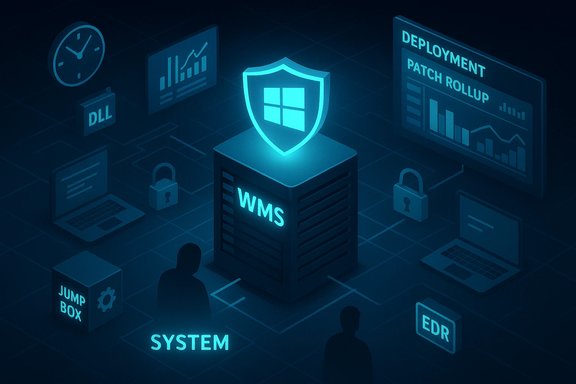
Windows Management Services is the inbox management plane in Windows that hosts background services and administrative endpoints used by tooling such as Windows Admin Center, remote management agents, and some automation/backplane components. Because WMS often runs with elevated rights and mediates update, extension and automation workflows, a local EoP in these components can rapidly escalate into broad operational compromise when combined with initial footholds. Microsoft has cataloged multiple WMS-related EoP entries in the January 2026 release and CVE-2026-20918 is one of several management-plane fixes included in that wave.
Conclusion
The record for CVE-2026-20918 confirms a real elevation-of-privilege risk in Windows Management Services and places the vendor fix squarely in the January 2026 update set. While the technical specifics remain limited in public writeups at the moment, the practical response is unambiguous: validate MSRC KB mappings, stage and test the vendor updates in pilot rings, prioritize high-value management hosts for immediate rollout, and harden detection and containment controls. The combination of management-plane privilege and common post‑compromise chains means rapid remediation and behavioral vigilance will materially reduce the attack surface exposed by this CVE.
Source: MSRC Security Update Guide - Microsoft Security Response Center
 Background
Windows Management Services is the inbox management plane in Windows that hosts background services and administrative endpoints used by tooling such as Windows Admin Center, remote management agents, and some automation/backplane components. Because WMS often runs with elevated rights and mediates update, extension and automation workflows, a local EoP in these components can rapidly escalate into broad operational compromise when combined with initial footholds. Microsoft has cataloged multiple WMS-related EoP entries in the January 2026 release and CVE-2026-20918 is one of several management-plane fixes included in that wave. Why management-plane EoP bugs matter
- Management hosts are high-value assets: they often store secrets, host tokens and run scheduled privileged tasks. A single exploited management host becomes an effective pivot for lateral movement and supply‑chain amplification.
- Low starting privileges often suffice: many WMS flaws permit escalation from a standard user to SYSTEM, which makes post‑compromise privilege hardening essential.
- Patch diffs are weaponized quickly: once Microsoft publishes fixes, interested parties routinely reverse patches to derive proof‑of‑concepts—so time-to-patch is the critical window.
What the public record currently verifies
- Existence and classification: Microsoft has recorded CVE-2026-20918 as an Elevation of Privilege affecting Windows Management Services in the January 2026 security update set. That listing is the authoritative confirmation that the vulnerability exists.
- Inclusion in the January 2026 rollup: community and vendor mirrors that summarize Microsoft’s monthly fixes list CVE-2026-20918 among other WMS fixes in the January 2026 bundle. This provides additional operational context about breadth and cadence.
- Lack of public low‑level PoC: as of publication, independent, technical exploit write‑ups providing function offsets, IOCTL numbers, or public PoC code tied to CVE-2026-20918 are not present in mainstream public feeds. That absence should not be interpreted as safety—rather it reflects coordinated-disclosure practices and the short window between patch publication and public analysis.
What remains unverified / must be confirmed by administrators
- Exact KB numbers and SKU-to-KB mappings for each affected Windows build must be validated directly on Microsoft’s Security Update Guide (MSRC) and the Microsoft Update Catalog before deploying automated patches. Public mirrors and scanner outputs sometimes mis-map CVEs to KBs; MSRC is the source of truth.
- Precise CVSS vector string and exploitability confidence assigned by Microsoft for CVE-2026-20918 — while MSRC exposes a short confidence/exploitability metric for each advisory, that field may require an interactive render in some contexts and should be checked in a live MSRC session if you need explicit scoring. Treat remotely cached summaries cautiously.
Technical summary and plausible exploitation models
Microsoft’s public advisory text for WMS-class EoP entries is typically concise; when vendor details are thin, the right defensive approach is to reason from historically observed defect classes that lead to EoP in Windows management services. The following technical classes are the realistic candidates for CVE-2026-20918 given Microsoft’s classification and prior WMS advisories:- TOCTOU (Time‑of‑Check / Time‑of‑Use) and signed‑artifact substitution: management services that validate signatures or checksums and later load files from writable paths create a small window that allows an attacker to swap in malicious artifacts or DLLs. This pattern has produced EoP chains in management/update flows before.
- Unsafe handling of updater/extension workflows: a two‑process flow where validation is done by one component and execution by another is fertile ground for race conditions and DLL hijacks. Attackers exploit the gap between validation and use.
- Improper access checks or descriptor reuse: services that accept handles, tokens or paths from unprivileged callers may forget to revalidate on the privileged side, permitting token impersonation or access escalation.
- Memory-safety defects (use‑after‑free, type confusion, heap overflow): classic primitives that convert an initial local code execution or controlled input into a write-what-where or arbitrary code execution in a privileged process—these are higher-complexity but high-impact when weaponized.
Affected platforms and blast radius (operational mapping)
- Breadth: community summaries and monthly rollup lists place CVE-2026-20918 among multiple Windows client and server servicing branches patched in January 2026. That generally means recent Windows 10/11 servicing branches and supported Windows Server SKUs are in scope, but precise build thresholds and KB numbers vary per SKU. Enterprises must map the MSRC KB to each build in inventory.
- Typical high-priority hosts to treat first:
- Jump hosts and admin workstations (where management tooling executes).
- Build servers, CI/CD runners, and automation hosts that hold tokens or machine identities.
- Windows servers that run management agents, remote management endpoints, or are used to orchestrate updates.
- Likely exploit prerequisites: most WMS advisories historically require local, authenticated presence (an unprivileged user or process). That profile makes the defect non-wormable but extremely valuable in post-compromise escalation chains.
Exploitability, MSRC “confidence” metric, and the practical meaning for responders
Microsoft’s Security Update Guide exposes a short “Exploitability / Confidence” metric that signals how certain the vendor is about the vulnerability and how specific the published technical details are. Operational teams should treat that metric as a triage control:- Confirmed / High: vendor acknowledges the flaw, provides KB mappings and likely assigns high urgency—patch quickly using emergency SLAs.
- Reasonable / Medium: third‑party corroboration exists (research writeups, PoC) but vendor detail may be limited—patch promptly and prioritize pilot validation.
- Uncorroborated / Low: early or partial reports—investigate and apply compensating controls while monitoring for further detail.
Immediate actions (0–72 hours) — prioritized checklist
- Confirm applicability:
- Consult Microsoft’s Security Update Guide and the Microsoft Update Catalog for CVE-2026-20918 and extract the exact KB→SKU mappings for every Windows build in your estate. Do not rely solely on CVE strings in automated scanners.
- Stage and test:
- Test the vendor KB in a representative pilot ring that includes management hosts, jump boxes, and admin workstations. Validate management tooling, backups, and rollback procedures.
- Prioritize deployment:
- Roll out to high-value hosts first: domain controllers, bastion hosts, automation servers, and any systems that host credentials or tokens. Then expand to general endpoints.
- Apply compensating controls where immediate patching is impossible:
- Restrict local administrative rights, disable unnecessary management services, and limit who can approve or execute privileged operations. Use IP restrictions and conditional access where applicable.
- Increase telemetry and EDR sensitivity:
- Hunt for suspicious local privilege escalations, unexpected SYSTEM process creations from non‑privileged parents, and anomalous service crashes around management binaries. Capture forensic artifacts (memory images, event logs) before remediation if exploitation is suspected.
Detection and hunting recommendations
Because vendor advisories for inbox management components tend to be terse, detection must emphasize behavior over brittle IOCs. Suggested telemetry and hunt queries:- EDR signatures and alerts:
- Unexpected process creations where a non‑privileged user process spawns a SYSTEM context process.
- Token duplication, impersonation events or suspicious handle duplications flagged by kernel-aware EDRs.
- Windows Event Logs and Sysmon:
- Service Control Manager events showing repeated crashes or restarts of management service binaries.
- Event 4697/4698 (service or scheduled task creation) correlated with low‑privilege parent processes.
- Network and process correlation:
- Management hosts initiating unusual outbound connections immediately after privilege elevation events (sign of exfiltration pivot).
- Short-term telemetry tune: increase sampling around admin hosts for 7–14 days after a patch rollout—the period when weaponization activity often spikes.
Patch management and operational trade‑offs
- KB mapping accuracy: many enterprises’ patch automation tools rely on CVE-to-KB mappings that may lag or misassociate packages. Always verify KB package names and file hashes in the Microsoft Update Catalog before automated mass deployment.
- Pilot→Production cadence: run the vendor patch in a representative pilot (including backup and rollback validation) before broad rollout. Management-plane patches can interact with automation, so testing is essential to minimize operational disruption.
- Hotpatch vs. cumulative update: if Microsoft offers a hotpatch or out-of-band fix for specific server SKUs, prioritize those options for high-risk hosts where reboot windows are constrained; otherwise follow standard cumulative update workflows. Confirm hotpatch availability per KB in MSRC.
Threat and risk analysis — strengths and residual risks
Notable strengths in the vendor response:- Microsoft has cataloged CVE-2026-20918 and included fixes in the January 2026 rollup, which provides the canonical mitigation path and supports automated patching channels. That vendor patch is the single most effective countermeasure.
- Patch rollouts are often slow in large, heterogeneous estates. Any delay increases the window for targeted adversaries to weaponize the defect.
- Lack of public PoC is not safety: adversaries with an existing foothold can weaponize subtle defects rapidly. Absence of public exploit code should not be conflated with low risk.
- CVE fragmentation: community trackers sometimes list multiple CVE identifiers for related management-plane issues; automated tooling that matches only on CVE IDs can miss the correct KB(s). Mapping by KB and package is the operationally safer route.
Recommended long-term hardening (beyond immediate patching)
- Principle of least privilege: remove unnecessary local administrative privileges and enforce least-privilege on identifiers and service accounts used by management tooling.
- Isolate management hosts: place jump boxes, build agents and admin tooling on segmented networks with constrained access to production servers and cloud consoles. Use bastion hosts with stringent MFA and conditional access.
- Hardening update/workflow paths: ensure updaters and extension installers use atomic validation paths (validate-then-execute within a restricted, non-writable loader directory) to reduce TOCTOU and DLL-hijack risk.
- Continuous validation: integrate KB-to-build verification into patch pipelines so that CVE-driven automation references the authoritative Microsoft KB mapping rather than mirror lists.
Final appraisal and practical takeaways
CVE-2026-20918 is a high-priority operational event because it targets Windows Management Services—an inherently high-value attack surface. Microsoft’s inclusion of the CVE in the January 2026 security rollup confirms the vulnerability and provides the canonical remediation path, but public technical details and independent PoCs were not broadly available at publication time. That combination creates a clear operational imperative:- Verify the KB→SKU mappings on Microsoft’s Security Update Guide and Microsoft Update Catalog immediately.
- Prioritize patching for management hosts, jump boxes and automation servers following a pilot test.
- Increase EDR/SIEM telemetry around behavioral indicators rather than waiting for brittle IOCs.
- Apply compensating controls where timely patching is impossible; remove local admin rights, segment networks, and harden update directories.
Conclusion
The record for CVE-2026-20918 confirms a real elevation-of-privilege risk in Windows Management Services and places the vendor fix squarely in the January 2026 update set. While the technical specifics remain limited in public writeups at the moment, the practical response is unambiguous: validate MSRC KB mappings, stage and test the vendor updates in pilot rings, prioritize high-value management hosts for immediate rollout, and harden detection and containment controls. The combination of management-plane privilege and common post‑compromise chains means rapid remediation and behavioral vigilance will materially reduce the attack surface exposed by this CVE.
Source: MSRC Security Update Guide - Microsoft Security Response Center
