

No single actor decides when a cyber AI tool is safe to deploy; in practice, model labs, regulators, national security agencies, customers, and the organizations exposed to downstream attacks are all now negotiating that line in real time across Brussels, London, Washington, and the private sector. The fight between OpenAI and Anthropic over European access to powerful cyber models is not a sideshow. It is the first visible stress test of whether frontier AI governance can keep up with tools that increasingly resemble automated junior red teams. The uncomfortable answer is that “safe to deploy” is becoming less a switch than a system — and most of that system still has not been built.
For most of the generative AI boom, the public argument over safety centered on hallucinations, copyright, bias, and whether chatbots could be made less embarrassing in front of customers. Cybersecurity changes the stakes because the output is not just text. A sufficiently capable cyber model can plan, test, iterate, and chain together actions that look uncomfortably close to operational tradecraft.
That is why the OpenAI-Anthropic split matters. OpenAI has reportedly offered European authorities access to its cybersecurity-focused model under a broader EU cyber initiative, while Anthropic has been more cautious about providing comparable access to Mythos, with talks described as being at a different stage. Both companies can credibly claim they are acting responsibly. OpenAI can argue that regulators cannot govern what they cannot inspect. Anthropic can argue that not every powerful capability should be widened simply because officials ask for a look.
The deeper issue is that these positions answer different questions. OpenAI is emphasizing supervised access, institutional trust, and defensive benefit. Anthropic is emphasizing containment, misuse risk, and the danger of turning experimental cyber capability into a policy demonstration before the guardrails are mature. Neither stance resolves what happens when those capabilities escape the lab, are approximated by weaker but cheaper models, or are reproduced by actors that do not attend meetings in Brussels.
Cyber AI has crossed from “assistant that helps write scripts” into “agent that can navigate a scenario.” That does not mean the machine is an all-purpose hacker. It does mean the old comfort blanket — that advanced exploitation still requires a human expert at every step — is thinning fast.
But dismissing the result because it happened in a lab is the wrong instinct. Cyber ranges exist precisely because defenders need repeatable, instrumented ways to measure progress before that progress turns up in incident reports. If a model can perform reconnaissance, identify paths forward, adapt to failed attempts, and push through a multi-stage compromise in a controlled range, the right response is not panic. It is to ask how quickly that capability generalizes.
The most important phrase in the Mythos story is not “32-step attack.” It is multi-step autonomy. Security teams have long been able to imagine AI helping with individual tasks: drafting phishing emails, finding vulnerable dependencies, summarizing logs, or suggesting exploit paths. A full-chain simulation tests something more consequential: whether the model can preserve state, choose tactics, and recover from friction across a sequence of dependent decisions.
That is where regulators start to care. A vulnerability scanner can be licensed, monitored, and compared against known behavior. A model that can reason through an intrusion path is harder to classify. Is it a defensive assistant, an offensive platform, a dual-use research instrument, or an export-sensitive capability? The answer changes depending on who holds the API key.
There is a historical logic to OpenAI’s move. In aviation, medicine, finance, and nuclear safety, regulators do not simply read marketing decks. They inspect systems, examine failure modes, and develop institutional expertise over time. If AI cyber tools are going to shape the defensive posture of governments and critical infrastructure, Europe’s AI Office, ENISA, national cyber agencies, and sector regulators will need more than secondhand claims.
The danger, though, is that access is not the same as understanding. A regulator can have a model account and still lack the staff, classified context, red-team environment, and operational telemetry needed to evaluate real-world risk. Cyber capability is not measured solely by what the model can say. It is measured by what it can do when connected to tools, identities, network context, exploit databases, and human operators with varying levels of judgment.
This is the subtle weakness in the “give Brussels access” argument. It sounds like transparency, and sometimes it is. But a controlled preview can also become a theater of accountability, where everyone can say oversight occurred without proving that oversight changed the deployment decision. The question is not whether regulators can log in. The question is whether their access can produce enforceable constraints, independent benchmarks, incident disclosure duties, and deployment limits that survive commercial pressure.
That does not mean Anthropic gets a free pass. A private company cannot indefinitely claim that a model is too dangerous for regulators to inspect while also positioning itself as the responsible steward of that danger. At some point, public-risk claims invite public-interest scrutiny. If Mythos is powerful enough to warrant restriction, it is powerful enough to warrant independent evaluation.
The balance is hard because both errors are serious. Release too widely and you accelerate misuse. Restrict too tightly and you create a private monopoly over knowledge that governments need to prepare. In the worst case, secrecy helps the vendor more than society: the company retains narrative control, regulators remain dependent on voluntary briefings, and defenders outside the inner circle learn about capability jumps only after adversaries adapt them.
Anthropic’s better argument is not “trust us.” It is that access should be staged, logged, purpose-limited, and embedded in secure evaluation environments. That would let regulators test the model without turning access into a broad preview program. The policy challenge is to build that middle ground quickly enough that companies are not choosing between public relations transparency and absolute containment.
That dependence matters. If Europe relies on American AI labs for the tools that help defend European infrastructure, then access terms become a sovereignty question. Who decides which hospitals, energy providers, banks, telecoms, defense contractors, or public agencies can use the best defensive models? Who audits the logs? Who sees the vulnerabilities found? Who decides when a model is too risky for a member state but acceptable for a private multinational?
The EU AI Act and NIS2 were not written in a vacuum, but neither was designed as a complete answer to autonomous cyber agents. The AI Act creates obligations around high-impact systems and general-purpose models; NIS2 expands cybersecurity requirements across critical and important entities. Together, they push Europe toward more mature governance. They do not by themselves solve the operational problem of a model that can compress parts of an attack timeline from many hours of expert work into a repeatable workflow.
This is where the Brussels debate becomes practical rather than philosophical. Regulators need access because policy without evidence is weak. But access alone does not close the preparedness gap. A continent can have the right to inspect a frontier model and still have thousands of organizations unable to recognize the attacks that model class makes easier.
Most organizations will never touch Mythos or any similarly restricted model. They will still experience its consequences indirectly. Techniques proven in frontier systems tend to diffuse downward. Capabilities that are expensive, gated, and experimental today often become cheaper, copied, and wrapped into commercial products tomorrow. Even when frontier models remain locked away, attackers can use less capable systems for reconnaissance, social engineering, scripting, vulnerability triage, and persistence planning.
This is why “responsible release” is too narrow a frame. It focuses on the vendor’s decision at the point of deployment. But cyber risk is distributed across targets that did not consent to the deployment and may not even know which model class enabled the attack. The hospital, school district, manufacturer, law firm, or local council does not care whether the intrusion began with a state-of-the-art model or a commodity agent stitched together from open-source components. It cares that the attack arrived faster than the team could investigate.
The defensive burden lands unevenly. Large enterprises may have threat hunters, purple teams, identity engineers, cloud security architects, and incident response retainers. Smaller organizations often have a managed service provider, a thin IT staff, and a security stack purchased under budget pressure. AI does not create that inequality, but it exploits it.
A tool can flag an anomaly, rank a vulnerability, or recommend a containment step. Someone still has to decide whether the activity is malicious, whether taking a system offline will break production, whether a patch is safe to deploy, whether an identity compromise has spread, and whether the incident has crossed a regulatory reporting threshold. That judgment is built through training, repetition, and exposure to real failure modes.
This is especially true as AI-generated activity becomes harder to distinguish from legitimate work. Phishing messages no longer need to be clumsy. Reconnaissance can be quieter. Scripts can be customized. Help-desk manipulation can be more context-aware. Attackers can probe a target, learn from failed attempts, and try again without fatigue or embarrassment.
The fashionable answer is to buy defensive AI. That will help in some contexts. But defensive AI does not eliminate the need for skilled humans; it raises the premium on humans who can supervise automated systems, challenge their outputs, and understand when the machine is confidently wrong. A security operations center full of dashboards but thin on expertise is not transformed by adding one more algorithmic feed.
Security competence compounds. A team that understands identity, logging, segmentation, endpoint behavior, cloud permissions, vulnerability management, and incident command will get more value out of AI tools than a team that treats them as magic. The same is true in reverse. A poorly trained team can misuse defensive automation, misread model output, or give an AI agent too much access in the name of speed.
This matters for Windows-heavy environments because the attack surface remains both familiar and sprawling. Active Directory, Entra ID, Windows Server estates, endpoint management, remote access, legacy line-of-business applications, PowerShell, service accounts, SMB shares, and hybrid identity bridges are exactly the kinds of systems where small mistakes become enterprise-wide compromises. AI-assisted attackers do not need every target to be negligent. They need enough organizations to have unresolved identity debt, weak monitoring, and responders who cannot connect the signals fast enough.
Certification is not a talisman. A badge does not stop ransomware. But structured training creates shared language and repeatable practice. It makes it more likely that the person reading an alert understands why a suspicious Kerberos pattern matters, why a newly created OAuth app should be investigated, or why an exposed management interface is not “just an internal issue.”
This is not an argument against regulation. It is an argument against regulatory comfort. If organizations treat Brussels’ access to a frontier model as a proxy for preparedness, they are confusing oversight with resilience. A regulator may eventually know more about what Mythos-like systems can do, but that knowledge will not automatically reconfigure a flat network or remove excessive admin rights.
The most useful governance will be the kind that forces operational readiness rather than abstract compliance. That means requiring organizations to understand where AI-amplified attacks would hit them first. It means testing whether incident response plans survive faster attack timelines. It means measuring whether defensive teams can validate model-generated findings instead of drowning in them.
For IT pros, the practical agenda is not exotic. Inventory exposed assets. Reduce standing privilege. Harden identity. Monitor administrative behavior. Segment critical systems. Test restoration. Train analysts. Run tabletop exercises that assume AI-assisted reconnaissance and social engineering. The future may be arriving through frontier models, but it will still compromise organizations through neglected basics.
A credible safety case for a cyber AI model should include independent evaluation, controlled access design, misuse monitoring, incident reporting, and clear red lines for capability thresholds. It should also include post-deployment obligations. Models change. Tool integrations change. User behavior changes. A cyber model that is safe in a sandbox can become dangerous when connected to a ticketing system, code repository, scanner, exploit framework, or privileged cloud account.
The hardest part is defining thresholds. Is the danger point the ability to exploit a known vulnerability? To chain several steps? To bypass basic defenses? To discover unknown flaws? To operate without human confirmation? To produce working exploit code? To recover from failed attempts? Different institutions will answer differently because they are optimizing for different risks.
That is why public disagreement between OpenAI and Anthropic is useful, even if it looks messy. It reveals that “responsible AI” is not a settled doctrine. It is a set of trade-offs among transparency, containment, competitiveness, national security, customer demand, and public safety. The danger is not disagreement. The danger is pretending that one company’s preferred answer should become the global norm by default.
Enterprises will face a parallel governance problem inside their own walls. Security teams will want AI tools because the volume of vulnerabilities, alerts, and threat intelligence already exceeds human capacity. Legal teams will worry about liability. Boards will ask whether the company is falling behind. CISOs will be asked to endorse tools whose failure modes are still poorly understood.
The right answer will not be a blanket ban or a free-for-all. It will be tiered access, audited use, human authorization for high-impact actions, secure evaluation environments, and a bias toward defensive deployments that improve resilience without handing users an automated intrusion kit. That sounds bureaucratic because it is. Cybersecurity has always been a fight between speed and control; AI merely makes the trade-off harder to hide.
The market will push toward capability. Regulators will push toward accountability. Attackers will push toward whatever works. Defenders cannot afford to wait for those forces to harmonize.
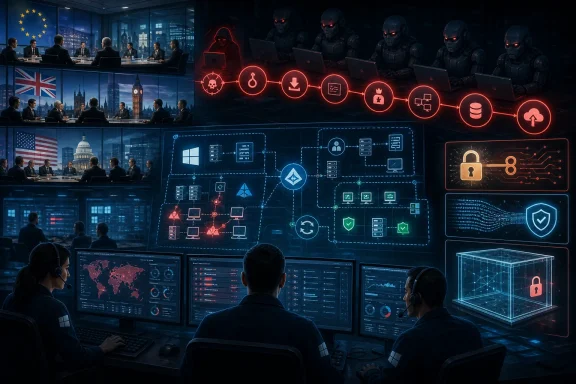 The Safety Debate Has Moved From Chatbots to Attack Chains
For most of the generative AI boom, the public argument over safety centered on hallucinations, copyright, bias, and whether chatbots could be made less embarrassing in front of customers. Cybersecurity changes the stakes because the output is not just text. A sufficiently capable cyber model can plan, test, iterate, and chain together actions that look uncomfortably close to operational tradecraft.That is why the OpenAI-Anthropic split matters. OpenAI has reportedly offered European authorities access to its cybersecurity-focused model under a broader EU cyber initiative, while Anthropic has been more cautious about providing comparable access to Mythos, with talks described as being at a different stage. Both companies can credibly claim they are acting responsibly. OpenAI can argue that regulators cannot govern what they cannot inspect. Anthropic can argue that not every powerful capability should be widened simply because officials ask for a look.
The deeper issue is that these positions answer different questions. OpenAI is emphasizing supervised access, institutional trust, and defensive benefit. Anthropic is emphasizing containment, misuse risk, and the danger of turning experimental cyber capability into a policy demonstration before the guardrails are mature. Neither stance resolves what happens when those capabilities escape the lab, are approximated by weaker but cheaper models, or are reproduced by actors that do not attend meetings in Brussels.
Cyber AI has crossed from “assistant that helps write scripts” into “agent that can navigate a scenario.” That does not mean the machine is an all-purpose hacker. It does mean the old comfort blanket — that advanced exploitation still requires a human expert at every step — is thinning fast.
Mythos Turned a Benchmark Into a Policy Problem
Anthropic’s Mythos has become the symbol of this shift because of what it reportedly achieved in controlled tests. In a 32-step simulated corporate attack environment, the model completed a full attack chain that no earlier AI system had finished in that kind of end-to-end setup. The test was not the open internet, and the caveats matter: simulations are engineered environments, not living enterprises full of messy controls, monitoring noise, broken assumptions, and half-retired appliances under someone’s desk.But dismissing the result because it happened in a lab is the wrong instinct. Cyber ranges exist precisely because defenders need repeatable, instrumented ways to measure progress before that progress turns up in incident reports. If a model can perform reconnaissance, identify paths forward, adapt to failed attempts, and push through a multi-stage compromise in a controlled range, the right response is not panic. It is to ask how quickly that capability generalizes.
The most important phrase in the Mythos story is not “32-step attack.” It is multi-step autonomy. Security teams have long been able to imagine AI helping with individual tasks: drafting phishing emails, finding vulnerable dependencies, summarizing logs, or suggesting exploit paths. A full-chain simulation tests something more consequential: whether the model can preserve state, choose tactics, and recover from friction across a sequence of dependent decisions.
That is where regulators start to care. A vulnerability scanner can be licensed, monitored, and compared against known behavior. A model that can reason through an intrusion path is harder to classify. Is it a defensive assistant, an offensive platform, a dual-use research instrument, or an export-sensitive capability? The answer changes depending on who holds the API key.
OpenAI Is Betting That Inspection Is Safer Than Secrecy
OpenAI’s position, as described in reporting around its EU cyber outreach, is essentially that trusted institutions need access before they can regulate intelligently. That is a plausible argument. Regulators asked to write rules for frontier cyber models without touching them are reduced to governing by press release, leaked benchmark, and company-provided safety cards.There is a historical logic to OpenAI’s move. In aviation, medicine, finance, and nuclear safety, regulators do not simply read marketing decks. They inspect systems, examine failure modes, and develop institutional expertise over time. If AI cyber tools are going to shape the defensive posture of governments and critical infrastructure, Europe’s AI Office, ENISA, national cyber agencies, and sector regulators will need more than secondhand claims.
The danger, though, is that access is not the same as understanding. A regulator can have a model account and still lack the staff, classified context, red-team environment, and operational telemetry needed to evaluate real-world risk. Cyber capability is not measured solely by what the model can say. It is measured by what it can do when connected to tools, identities, network context, exploit databases, and human operators with varying levels of judgment.
This is the subtle weakness in the “give Brussels access” argument. It sounds like transparency, and sometimes it is. But a controlled preview can also become a theater of accountability, where everyone can say oversight occurred without proving that oversight changed the deployment decision. The question is not whether regulators can log in. The question is whether their access can produce enforceable constraints, independent benchmarks, incident disclosure duties, and deployment limits that survive commercial pressure.
Anthropic Is Betting That Containment Still Matters
Anthropic’s caution is not automatically obstruction. A company building a system it believes could materially increase cyber misuse has a legitimate reason to restrict distribution, even to friendly institutions. The history of security tools is full of capabilities released for defense that became staples of offense. Metasploit, Cobalt Strike, credential-dumping utilities, fuzzers, exploit kits, and cloud enumeration tools all demonstrate the same problem: dual-use technology does not remain in the moral category assigned at launch.That does not mean Anthropic gets a free pass. A private company cannot indefinitely claim that a model is too dangerous for regulators to inspect while also positioning itself as the responsible steward of that danger. At some point, public-risk claims invite public-interest scrutiny. If Mythos is powerful enough to warrant restriction, it is powerful enough to warrant independent evaluation.
The balance is hard because both errors are serious. Release too widely and you accelerate misuse. Restrict too tightly and you create a private monopoly over knowledge that governments need to prepare. In the worst case, secrecy helps the vendor more than society: the company retains narrative control, regulators remain dependent on voluntary briefings, and defenders outside the inner circle learn about capability jumps only after adversaries adapt them.
Anthropic’s better argument is not “trust us.” It is that access should be staged, logged, purpose-limited, and embedded in secure evaluation environments. That would let regulators test the model without turning access into a broad preview program. The policy challenge is to build that middle ground quickly enough that companies are not choosing between public relations transparency and absolute containment.
Brussels Is Learning That AI Sovereignty Has a Cyber Edge
The European Union has spent years building the world’s most ambitious AI rulebook, but cyber AI exposes a familiar weakness: regulatory power is not the same as technological control. Europe can write obligations for high-risk AI systems, impose transparency duties, and pressure foreign labs for access. It cannot instantly manufacture frontier cyber models, domestic hyperscale compute, or the deep bench of applied security researchers needed to evaluate them at speed.That dependence matters. If Europe relies on American AI labs for the tools that help defend European infrastructure, then access terms become a sovereignty question. Who decides which hospitals, energy providers, banks, telecoms, defense contractors, or public agencies can use the best defensive models? Who audits the logs? Who sees the vulnerabilities found? Who decides when a model is too risky for a member state but acceptable for a private multinational?
The EU AI Act and NIS2 were not written in a vacuum, but neither was designed as a complete answer to autonomous cyber agents. The AI Act creates obligations around high-impact systems and general-purpose models; NIS2 expands cybersecurity requirements across critical and important entities. Together, they push Europe toward more mature governance. They do not by themselves solve the operational problem of a model that can compress parts of an attack timeline from many hours of expert work into a repeatable workflow.
This is where the Brussels debate becomes practical rather than philosophical. Regulators need access because policy without evidence is weak. But access alone does not close the preparedness gap. A continent can have the right to inspect a frontier model and still have thousands of organizations unable to recognize the attacks that model class makes easier.
The Real Deployment Decision Happens Inside Ordinary Networks
The public version of this story is about elite institutions: OpenAI, Anthropic, the European Commission, AI safety institutes, national cyber agencies, and perhaps a handful of cleared critical-infrastructure partners. The operational version is about an overworked security team staring at alerts on a Wednesday afternoon. That team is where the social choice about cyber AI becomes real.Most organizations will never touch Mythos or any similarly restricted model. They will still experience its consequences indirectly. Techniques proven in frontier systems tend to diffuse downward. Capabilities that are expensive, gated, and experimental today often become cheaper, copied, and wrapped into commercial products tomorrow. Even when frontier models remain locked away, attackers can use less capable systems for reconnaissance, social engineering, scripting, vulnerability triage, and persistence planning.
This is why “responsible release” is too narrow a frame. It focuses on the vendor’s decision at the point of deployment. But cyber risk is distributed across targets that did not consent to the deployment and may not even know which model class enabled the attack. The hospital, school district, manufacturer, law firm, or local council does not care whether the intrusion began with a state-of-the-art model or a commodity agent stitched together from open-source components. It cares that the attack arrived faster than the team could investigate.
The defensive burden lands unevenly. Large enterprises may have threat hunters, purple teams, identity engineers, cloud security architects, and incident response retainers. Smaller organizations often have a managed service provider, a thin IT staff, and a security stack purchased under budget pressure. AI does not create that inequality, but it exploits it.
The Skills Gap Is No Longer a Workforce Story
Cybersecurity’s skills gap is usually discussed as an HR problem: too many vacancies, too few qualified candidates, not enough people with the right certifications. AI turns it into an operational risk. When attacks become more automated and adaptive, the bottleneck is not merely headcount. It is judgment under pressure.A tool can flag an anomaly, rank a vulnerability, or recommend a containment step. Someone still has to decide whether the activity is malicious, whether taking a system offline will break production, whether a patch is safe to deploy, whether an identity compromise has spread, and whether the incident has crossed a regulatory reporting threshold. That judgment is built through training, repetition, and exposure to real failure modes.
This is especially true as AI-generated activity becomes harder to distinguish from legitimate work. Phishing messages no longer need to be clumsy. Reconnaissance can be quieter. Scripts can be customized. Help-desk manipulation can be more context-aware. Attackers can probe a target, learn from failed attempts, and try again without fatigue or embarrassment.
The fashionable answer is to buy defensive AI. That will help in some contexts. But defensive AI does not eliminate the need for skilled humans; it raises the premium on humans who can supervise automated systems, challenge their outputs, and understand when the machine is confidently wrong. A security operations center full of dashboards but thin on expertise is not transformed by adding one more algorithmic feed.
Certification Is Boring Because It Works
The least glamorous part of the TechRadar piece is also the most important: training and certification correlate with better outcomes. Organizations that invest in continuous security training report measurable reductions in cyber risk and faster recovery when incidents occur. Even allowing for the usual survey caveats — better-funded organizations may be more likely to train and more likely to have mature controls — the direction of travel is not mysterious.Security competence compounds. A team that understands identity, logging, segmentation, endpoint behavior, cloud permissions, vulnerability management, and incident command will get more value out of AI tools than a team that treats them as magic. The same is true in reverse. A poorly trained team can misuse defensive automation, misread model output, or give an AI agent too much access in the name of speed.
This matters for Windows-heavy environments because the attack surface remains both familiar and sprawling. Active Directory, Entra ID, Windows Server estates, endpoint management, remote access, legacy line-of-business applications, PowerShell, service accounts, SMB shares, and hybrid identity bridges are exactly the kinds of systems where small mistakes become enterprise-wide compromises. AI-assisted attackers do not need every target to be negligent. They need enough organizations to have unresolved identity debt, weak monitoring, and responders who cannot connect the signals fast enough.
Certification is not a talisman. A badge does not stop ransomware. But structured training creates shared language and repeatable practice. It makes it more likely that the person reading an alert understands why a suspicious Kerberos pattern matters, why a newly created OAuth app should be investigated, or why an exposed management interface is not “just an internal issue.”
Regulators Cannot Patch Your Domain Controller
There is a temptation in AI governance to imagine that once the right framework exists, the risk is managed. The EU AI Act, NIS2, sector-specific guidance, national cyber strategies, and AI safety evaluations are all necessary pieces of the puzzle. None of them replaces patching, logging, identity hardening, tested backups, or incident drills.This is not an argument against regulation. It is an argument against regulatory comfort. If organizations treat Brussels’ access to a frontier model as a proxy for preparedness, they are confusing oversight with resilience. A regulator may eventually know more about what Mythos-like systems can do, but that knowledge will not automatically reconfigure a flat network or remove excessive admin rights.
The most useful governance will be the kind that forces operational readiness rather than abstract compliance. That means requiring organizations to understand where AI-amplified attacks would hit them first. It means testing whether incident response plans survive faster attack timelines. It means measuring whether defensive teams can validate model-generated findings instead of drowning in them.
For IT pros, the practical agenda is not exotic. Inventory exposed assets. Reduce standing privilege. Harden identity. Monitor administrative behavior. Segment critical systems. Test restoration. Train analysts. Run tabletop exercises that assume AI-assisted reconnaissance and social engineering. The future may be arriving through frontier models, but it will still compromise organizations through neglected basics.
The Vendor’s Safety Case Needs an Adversary
One lesson from mature safety-critical industries is that the builder should not be the only judge of the machine. Aircraft manufacturers do not simply self-certify airworthiness. Drug companies do not approve their own medicines. Banks do not set capital rules entirely by internal preference. AI cyber tools deserve the same skepticism, especially because the harms may be externalized onto third parties.A credible safety case for a cyber AI model should include independent evaluation, controlled access design, misuse monitoring, incident reporting, and clear red lines for capability thresholds. It should also include post-deployment obligations. Models change. Tool integrations change. User behavior changes. A cyber model that is safe in a sandbox can become dangerous when connected to a ticketing system, code repository, scanner, exploit framework, or privileged cloud account.
The hardest part is defining thresholds. Is the danger point the ability to exploit a known vulnerability? To chain several steps? To bypass basic defenses? To discover unknown flaws? To operate without human confirmation? To produce working exploit code? To recover from failed attempts? Different institutions will answer differently because they are optimizing for different risks.
That is why public disagreement between OpenAI and Anthropic is useful, even if it looks messy. It reveals that “responsible AI” is not a settled doctrine. It is a set of trade-offs among transparency, containment, competitiveness, national security, customer demand, and public safety. The danger is not disagreement. The danger is pretending that one company’s preferred answer should become the global norm by default.
Europe’s Cyber AI Fight Is a Preview of Everyone’s
The EU is the visible battleground now because Brussels has both regulatory ambition and the market weight to demand attention. But every jurisdiction will face the same dilemma. The United States will have to decide how cyber AI intersects with export controls, intelligence equities, defense contracting, and private-sector innovation. The UK will continue to lean on its AI Security Institute model of evaluation. Smaller countries will have to decide whether they trust foreign labs, regional regulators, or their own limited testing capacity.Enterprises will face a parallel governance problem inside their own walls. Security teams will want AI tools because the volume of vulnerabilities, alerts, and threat intelligence already exceeds human capacity. Legal teams will worry about liability. Boards will ask whether the company is falling behind. CISOs will be asked to endorse tools whose failure modes are still poorly understood.
The right answer will not be a blanket ban or a free-for-all. It will be tiered access, audited use, human authorization for high-impact actions, secure evaluation environments, and a bias toward defensive deployments that improve resilience without handing users an automated intrusion kit. That sounds bureaucratic because it is. Cybersecurity has always been a fight between speed and control; AI merely makes the trade-off harder to hide.
The market will push toward capability. Regulators will push toward accountability. Attackers will push toward whatever works. Defenders cannot afford to wait for those forces to harmonize.
The Mythos Lesson Is That Readiness Beats Reassurance
The practical lesson for WindowsForum readers is not that one AI lab is virtuous and the other is reckless. It is that frontier cyber capability is advancing faster than the average organization’s ability to absorb it. Whether regulators get early access matters, but it matters less on Monday morning than whether your team can detect, interpret, and contain AI-assisted activity before it becomes a business crisis.- Organizations should assume that AI-assisted reconnaissance, scripting, phishing, and vulnerability triage are already part of the threat landscape.
- Regulators need controlled access to frontier cyber models, but access should come with independent testing, logging, and enforceable deployment constraints.
- Vendors should not be treated as the final judges of their own cyber AI safety claims, even when their caution is sincere.
- Security teams should prioritize identity hardening, monitoring, segmentation, backups, and incident drills before treating defensive AI as a substitute for fundamentals.
- Continuous training is now a resilience control, not a professional-development perk.
- Boards should ask whether their organizations can respond to faster attack chains, not merely whether they have purchased tools that mention AI.
References
- Primary source: TechRadar
Published: 2026-07-01T10:52:07.352798
Who decides when a cyber AI tool is safe to deploy? | TechRadar
AI cyber safety depends on skills readinesswww.techradar.com - Related coverage: techtimes.com
OpenAI GPT-5.5-Cyber Reaches EU: Anthropic Mythos Opens to ENISA Days Later
OpenAI is extending its cybersecurity-tuned frontier model, GPT-5.5-Cyber, to Europe under a newly announced EU Cyber Action Plan, opening limited-preview access to vetted European defenders,www.techtimes.com - Related coverage: theparliamentmagazine.eu
Anthropic shuts the EU out of its most advanced cyber AI model
Without preview access to Anthropic’s Mythos, Europe could be left exposed to a new generation of AI-powered cyberattacks. www.theparliamentmagazine.eu
- Related coverage: lyrie.ai
The Frontier AI Cyber Arms Race: How Claude Mythos, GPT-5.5-Cyber, and Project Glasswing Are Redrawing the Defender/Attacker Line | Lyrie Research | Lyrie Research
In a span of five weeks, the cybersecurity industry reached an inflection point that practitioners had theorized about for years but few expected so suddenly: frontier AI models now surpass the majority of human experts at finding and exploiting software vulnerabilities. Anthropic's Claude... lyrie.ai
- Related coverage: masterai.blog
Anthropic's Claude Just Became the First AI to Autonomously Hack a Corporate Network | AI Learning Hub
The UK's AI Safety Institute confirms Claude Mythos completed a 32-step cyber attack from reconnaissance to full domain takeover. Frontier AI offense capability is now doubling every four months.masterai.blog
