

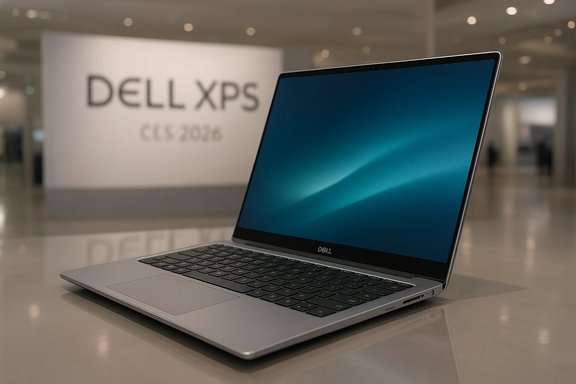
Dell’s return to the XPS name at CES 2026 wasn’t a quiet rebrand correction — it was an admission of error, a design reset and a wholesale product reboot that readmits one of the PC industry’s most recognisable badges back into the premium Windows laptop arena.
Background: why this matters (and why Dell reversed course)
Dell’s 2025 simplification — collapsing long-standing families like XPS, Inspiron and Precision into a three-tier “Dell / Dell Pro / Dell Pro Max” naming scheme — was intended to streamline buying. The reaction from reviewers and loyal customers was blunt and sustained: branding matters. Dell’s leadership publicly acknowledged the misstep, with Vice‑Chairman Jeff Clarke saying the company “underperformed” and “didn’t listen,” and promising a return to the XPS identity as the keystone of its premium consumer strategy. This is rare candour at scale. For a company that ships into a 280‑million‑unit global PC market, publicly reversing a corporate naming strategy mid-cycle is more than PR theater — it communicates a shift in priorities back toward design heritage and consumer sentiment. The XPS comeback is therefore both symbolic and practical: symbolic in restoring a trusted brand, and practical in demonstrating real, product-level changes that aim to fix long‑standing complaints about recent XPS generations.What Dell actually announced: the new XPS 14 and XPS 16
At CES and in pre‑show briefings, Dell introduced two immediate models — XPS 14 (DA14260) and XPS 16 (DA16260) — with a promise of a revived XPS 13 later in 2026. The new models are presented as re‑engineered from the ground up: fresh chassis, revised input ergonomics, new thermal solutions, Intel’s latest silicon, and aggressive battery claims. Early product specification summaries and hands‑on reporting list the headline hardware and UX changes as follows.- CNC‑machined aluminum unibody and Corning Gorilla Glass surfaces for palm rests and select panels.
- Physical function row restored (the haptic function row experiment is retired).
- Seamless glass touchpad with subtle etching to define the active area.
- 8MP / 4K HDR thin laptop camera (claimed to be Dell’s thinnest).
- Modular USB‑C ports and removable keyboards to simplify repairs.
- Recycled materials in hinges and batteries; EPEAT 2.0 compliance claimed.
- Intel Core Ultra Series 3 processors with integrated Intel Arc graphics (12 Xe cores in some SKUs).
- Display choices: 1–120Hz variable refresh LCD 2K panel and higher‑end tandem OLED options.
- Battery: 70Wh cells using new “900ED” high‑density chemistry; Dell claims up to 27 hours streaming / 40+ hours local playback on certain SKUs.
Design and ergonomics: a tangible course correction
Materials and finish
The new XPS models intentionally return to the premium materials that defined the series: CNC aluminum chassis married to Gorilla Glass in the right places. The overall visual language is restrained — calmer tones, cleaner parting lines — a deliberate move away from gimmicky touches that irritated long‑time XPS fans. The visible placement of the XPS logo on the lid is deliberately symbolic: it’s a public commitment that the brand matters again.Keyboard, touchpad, and inputs
Two of the loudest complaints from recent XPS generations were the haptic function row and keyboard ergonomics. Dell has reinstated a physical function row, tuned key travel for a more accurate typing feel, and added an etched outline to the all‑glass touchpad so the active area is easier to discover and control. These are practical, user‑facing changes that improve day‑to‑day usability rather than chasing novelty.Repairability and sustainability
Dell’s move to modular USB‑C ports, removable keyboards and recycled hinge/battery materials signals a more repairable, sustainable approach. The company claims both XPS 14 and XPS 16 meet the new EPEAT 2.0 standard and uses recycled cobalt and copper in battery construction. Those are welcome steps if implemented consistently across SKUs, but buyers should verify regional EPEAT listings and check teardown reports once review units circulate.Silicon, graphics and thermals: Intel Core Ultra and integrated Arc
Processor and GPU strategy
Dell’s headline technical shift is leaning hard on Intel’s newest client platform: Core Ultra Series 3 processors (codenamed Panther Lake in reporting) paired with on‑package NPUs and Intel Arc integrated graphics in higher‑end SKUs (12 Xe cores in some variants). Dell quoted expected uplifts of up to 57% faster AI performance on the XPS 14 and 78% on the XPS 16, and claimed more than 50% faster graphics compared with the previous generation. Those figures were attributed to Dell during pre‑CES briefings and are repeated in press coverage. This is a material strategic shift: Dell is effectively replacing some previous discrete‑GPU SKUs (e.g., configurations that once used NVIDIA RTX 4050 class parts) with Intel’s integrated Arc solution. That matters to buyers: for many everyday creative and productivity tasks, modern integrated GPUs and on‑device NPUs can deliver excellent efficiency and lower power draw; for sustained, pro‑grade GPU workloads (rendering, GPU acceleration in some content creation apps, CUDA‑dependent workflows), a true discrete NVIDIA or AMD GPU still holds an edge. Dell’s bet is that the combination of the Core Ultra NPU and Arc integrated GPU will provide the best balance of battery life, thermals and general GPU performance for the majority of premium consumers.Thermals: the subtle but critical overhaul
Dell redesigned the cooling system with what it describes as its largest, thinnest fans yet, new insulation gel and a layout that lowers typical TDP targets. The practical result claimed is cooler, quieter operation with better sustained performance per watt and improved battery life. Independent reviewers will need to validate thermal headroom, sustained clocks under load, and fan noise across the available SKUs and power targets. Early hands‑on coverage highlights thoughtful airflow and component placement, but the proof will be in measured thermal tests.Displays and battery life: the headline numbers — and why to be cautious
The 1–120Hz LCD claim
Dell promotes a novel 1–120Hz variable refresh LCD panel in the XPS 14/16 family that can step down to 1Hz for static content and ramp up to 120Hz for motion. That combination is presented as a primary lever for the long battery life claims. Several outlets repeated the claim as a first‑of‑its‑kind laptop panel, and Dell emphasized aggressive power management teaming of panel drivers, OS integration and the Core Ultra NPU. While the engineering is plausible — variable refresh panels with very low refresh floors are increasingly common — the marketing framing (“first of its kind”) should be taken as a manufacturer claim until the specific panel manufacturer and part number are published and independent display testing validates the behavior.Battery numbers: impressive but manufacturer‑rated
Dell’s headline battery claim — up to 27 hours streaming and 40+ hours local playback from a 70Wh pack using newly introduced 900ED high‑density cells — is eye‑catching. Multiple outlets reproduced the figure; Dell’s internal testing probably drove the number. Historically, laptop manufacturers’ battery figures vary widely depending on test methodology (streaming vs local playback, screen brightness, wireless on/off, OS version, codec support, and use of power‑saving features). Independent, real‑world battery tests from outlets like AnandTech, Notebookcheck, and others will be essential to validate Dell’s numbers; until then, treat them as optimistic manufacturer claims.Mobility and build: thinner, lighter — and the trade-offs
Dell advertises both XPS models as extremely thin (around 14.6mm) and lighter than prior generations: XPS 14 starts near 3.0 lbs (≈1.36 kg) and XPS 16 around 3.6 lbs (≈1.63 kg) for OLED SKUs, according to the specs published in coverage. Dell attributes the weight and thickness gains to the absence of discrete GPUs in many SKUs, the 900ED battery chemistry, and tighter component packaging. Early hands‑on impressions suggest the 14‑inch model feels denser than the weight implies — which can translate to perceived build quality.A practical caveat: extreme thinness and soldered LPDDR5x memory (present across many premium ultrabook designs) mean limited user serviceability beyond the modular ports and removable keyboard. Buyers should plan RAM and storage purchases accordingly. Dell’s repairability moves are welcome but do not fully reverse the long trend toward less user‑upgradable ultrabooks.
XPS 13: the surprise prototype and the roadmap
Dell confirmed the XPS 13 is back on the roadmap after not being planned 120 days earlier. The company fast‑tracked the 13‑inch model to re‑establish a full XPS portfolio. Early descriptions indicate Dell aims for the thinnest XPS ever (sub‑13mm) and the most accessible XPS price band, with Qualcomm and ARM variants possible given the prior XPS Snapdragon models. Dell stopped short of committing to specific silicon for the 13‑inch SKU publicly. The fast turnaround speaks to how seriously Dell is treating the branding reversal.Pricing, availability and market positioning
Initial launch pricing places the XPS 14 at roughly $2,049 and XPS 16 at $2,199.99 for selected configurations in the U.S. and Canada with limited SKUs available immediately and broader configurations rolling out in February. Dell says more entry‑level configurations (including models priced below $2,000) will arrive later; Ubuntu options and the XPS 13 will follow during the year. These starting prices put the new XPS squarely in premium territory, directly competing with high‑end Windows ultrabooks and Apple’s MacBook lineup. Competitive buyers will need to weigh the value of on‑device AI, display choices, and battery claims against similarly priced Macs and Windows rivals.Strengths: what Dell got right this round
- Brand humility and rapid reversal — Dell publicly acknowledged its mistake and moved quickly; that’s rare and builds trust when followed by concrete product changes.
- Practical UX fixes — returning physical function keys, tuned key travel and a more discoverable touchpad are direct responses to repeated user complaints.
- Sustainable engineering moves — modular ports, removable keyboards and recycled materials are steps toward more repairable and lower‑impact products.
- Efficiency‑first silicon strategy — leaning on Intel Core Ultra NPUs and Arc integrated GPUs targets battery, thermal and AI features without a major size penalty. If real‑world performance matches the claims, that’s a big win for everyday users.
Risks and unanswered questions
- Manufacturer battery numbers vs independent testing — Dell’s 27/40+ hour claims are optimistic; independent lab results will be needed to validate them. Treat manufacturer numbers as marketing until validated.
- Software adoption for NPUs and Copilot+ — hardware NPUs only matter if software and developer ecosystems actually use them; early wins will depend on Microsoft, ISVs and Dell’s software partnerships to deliver tangible AI features on device.
- No clear discrete‑GPU option for heavy GPU users — Dell’s move away from NVIDIA in many SKUs improves efficiency but reduces choice for users who rely on GPU‑accelerated workflows that prefer CUDA and discrete RT cores.
- Soldered RAM and long‑term upgradeability — the reality of LPDDR5x soldered RAM means buyers must spec the correct memory at purchase. Dell’s repairability improvements are welcome but don’t negate the upgradability trade‑offs in modern ultrabooks.
- Marketing superlatives that need verification — claims such as first-of‑its‑kind 1Hz LCD, thinnest 8MP/4K webcam, and specific % gains in AI/graphics are vendor metrics; they require panel part numbers, test methodology disclosure, and third‑party validation. Flag these as unverified manufacturer claims until independent data is available.
Practical buying guidance (short checklist)
- If portability and battery life are the highest priorities, wait for independent battery and thermal tests before buying. Manufacturer streaming/local playback figures are directional, not definitive.
- Choose RAM carefully: if the SKU uses LPDDR5x soldered RAM, buy the memory you’ll need for the laptop’s lifetime. Upgrades will likely be impossible later.
- If your workflows need CUDA/RTX features, verify whether the XPS SKU you’re considering has a discrete GPU — the integrated Arc solution is powerful but not a one‑to‑one replacement for discrete NVIDIA in every pro app.
- Test camera and Copilot features in person or via trusted reviews if conferencing privacy, image quality and on‑device AI are important to you.
- Confirm EPEAT listing and regional warranty/repair options if sustainability and long‑term serviceability are key buying factors.
The industry significance: why this matters beyond Dell
Dell’s quick reversal is a wider signal to the PC industry: brand heritage still matters, and consumers will push back when large, recognizable families are retired in the name of marketing simplicity. More importantly, Dell’s execution-focused fixes (keyboard, touchpad, battery chemistry, modular ports) suggest major vendors are listening — not just about logos, but about the real, tactile user experiences that matter day to day. If Dell’s new XPS models validate their claims in independent testing, the ripple effects will include renewed competitiveness across Windows ultrabooks, renewed focus on repairability, and a clearer path for OEMs to balance on‑device AI acceleration with real battery life.Verdict and final takeaways
Dell’s XPS comeback is more than nostalgia; it’s a deliberately engineered attempt to fix both perception and product. The company has addressed long‑standing user pain points, leaned into new silicon aimed at on‑device AI, and made meaningful strides in sustainability and repairability. Those are real positives.However, the most eye‑catching claims — extreme battery life, a first‑of‑its‑kind 1–120Hz panel, and specific AI/graphics percentage gains — remain manufacturer assertions until validated independently. For early adopters who prize cutting‑edge battery life and integrated AI hardware, the new XPS 14 and XPS 16 are compelling prospects. For buyers with workloads that depend on discrete GPU features or who prefer maximal upgradeability, a cautious wait for review units and thermal/battery benchmarks is the prudent move.
Dell did something PC companies rarely do: it admitted a mistake and shipped a coherent, tangible course correction. If the early claims hold under independent scrutiny, the new XPS family could reset expectations for premium Windows ultraportables in 2026. Until then, treat the launch as a very encouraging start that still needs proof in the hands of reviewers and real‑world users.
Source: Windows Central https://www.windowscentral.com/hardware/dell/dell-xps-returns-in-2026-after-rebrand-flop/
