

Blizzard’s Game Awards reveal pulled no punches: Diablo IV’s next expansion, Lord of Hatred, arrives on April 28, 2026 — and with it comes a wave of legacy returns, structural rewrites, and one of the series’ most requested class comebacks. The long-rumored Paladin is finally playable today for players who pre-purchase the expansion, but the reveal was only the tip of the iceberg: a second, still‑unnamed class will ship with the expansion proper; the Horadric Cube returns to deepen crafting; the game’s skill trees and loot systems are getting major overhauls; and a retooled endgame framework — War Plans and the punishing Echoing Hatred gauntlet — will reshape how players grind and compete. Blizzard framed Lord of Hatred as the finale to the “Age of Hatred Saga,” a narrative crescendo aimed squarely at fans of Diablo’s darkest lore and deepest builds.
Diablo IV launched as an ambitious live service with seasons and expansions intended to keep Sanctuary alive and evolving. After Vessel of Hatred expanded the world and introduced the Spiritborn class, Blizzard’s roadmap pivoted away from an annual expansion cadence toward a more deliberate schedule — a decision born from the studio’s recent overhaul of core systems and an emphasis on quality over speed. Lord of Hatred is the next major chapter: a Mephisto‑centric expansion set in the ancient island realm of Skovos, a place tied to the first civilizations and the tangled pasts of Lilith and Inarius.
This expansion is not just more of the same. It’s being billed as both a narrative high point — a climactic face‑off with Mephisto — and a systems update that touches nearly every major mechanical pillar of the game: skill trees, itemization, crafting, endgame progression, and quality‑of‑life features such as the long‑asked‑for loot filter. For players who’ve been waiting for a sword‑and‑shield archetype to anchor Diablo IV’s roster, the Paladin is a nostalgic return. For players worried about paid-gated content, the Paladin’s early access via pre‑purchase has already ignited a lively debate.
Expect an expansion structure that transitions directly from story into a revamped endgame. This is intentional: the campaign sets the stakes, and the endgame systems are designed to unpack the expansion’s progression loop in a way that rewards mastery and repeat engagement.
Key mechanical pillars:
This early‑access gating has predictable community implications (addressed later), but practically it means you can create and experiment with Paladin builds right now if you buy Lord of Hatred — otherwise you'll wait until the full expansion release on April 28, 2026.
What to expect from the Cube’s modern incarnation:
That said, the expansion also signals a continued reliance on pre‑purchase incentives and edition tiers to fund and monetize the content pipeline. The inclusion of gameplay‑adjacent early access in pre‑orders shows Blizzard believes the revenue and engagement tradeoff is worth it — but it will be judged by how well the studio avoids creating pay‑to‑win optics or deeply fractured seasonal ladders.
If Blizzard balances deterministic crafting with RNG drops, tunes War Plans to reward both casual and hardcore players, and keeps Echoing Hatred as a challenge rather than a gating treadmill, Lord of Hatred could be the moment Diablo IV matures into a more flexible, player‑driven ARPG. If not, some of the announced changes — especially the Paladin early access and powerful crafting tools — risk creating new sources of friction.
The big question is whether Blizzard can deliver the necessary balance and polish across such a wide set of changes. The Paladin’s early access is generous to buyers but risks dividing the community. The Horadric Cube’s return could elevate crafting — or, if implemented poorly, distort the economy. War Plans and Echoing Hatred have the potential to become exactly the kind of compelling progression loop that drives the best ARPGs for years, but they’ll require careful tuning to avoid exclusivity or grind fatigue.
For fans of the franchise, Lord of Hatred is both a nostalgia trip and a systems rebirth. It’s the kind of expansion that will define Diablo IV’s second act — and the next six months of PTR feedback, developer communication, and tuning will determine whether it becomes a definitive turning point or a mixed legacy.
Source: Windows Central https://www.windowscentral.com/gaming/diablo4-lord-of-hatred-paladin/
 Background / Overview
Diablo IV launched as an ambitious live service with seasons and expansions intended to keep Sanctuary alive and evolving. After Vessel of Hatred expanded the world and introduced the Spiritborn class, Blizzard’s roadmap pivoted away from an annual expansion cadence toward a more deliberate schedule — a decision born from the studio’s recent overhaul of core systems and an emphasis on quality over speed. Lord of Hatred is the next major chapter: a Mephisto‑centric expansion set in the ancient island realm of Skovos, a place tied to the first civilizations and the tangled pasts of Lilith and Inarius.This expansion is not just more of the same. It’s being billed as both a narrative high point — a climactic face‑off with Mephisto — and a systems update that touches nearly every major mechanical pillar of the game: skill trees, itemization, crafting, endgame progression, and quality‑of‑life features such as the long‑asked‑for loot filter. For players who’ve been waiting for a sword‑and‑shield archetype to anchor Diablo IV’s roster, the Paladin is a nostalgic return. For players worried about paid-gated content, the Paladin’s early access via pre‑purchase has already ignited a lively debate.
What Lord of Hatred brings to Diablo IV
Story and setting: Skovos and the Age of Hatred finale
Lord of Hatred sends players to Skovos, described as the ancestral birthplace of an ancient civilization — a coastal, waterlogged region that nods toward archetypal Diablo horror and classical ruin. Skovos is positioned as the spiritual home of pivotal franchise figures and should be heavy with environmental storytelling: decaying temples, sunken citadels, and cultist enclaves. Narrative stakes are high; Mephisto returns as the Prime Evil of Hatred, and the campaign promises to tie together threads left dangling by earlier expansions.Expect an expansion structure that transitions directly from story into a revamped endgame. This is intentional: the campaign sets the stakes, and the endgame systems are designed to unpack the expansion’s progression loop in a way that rewards mastery and repeat engagement.
Systems-level changes: skill trees, loot, and crafting
Lord of Hatred is being sold as more than content — it’s a platform update. Core systems are receiving sweeping changes intended to reshape build design and loot flow.- Skill tree reworks: Each class will receive expanded and reworked skill trees with new skill variants. This is pitched as a deepening of choice and specialization rather than a simple stat bump.
- Level cap increases: The expansion raises caps, enabling longer progression curves and new late‑game power spikes.
- Loot Filter: A proper loot filter finally arrives to reduce screen clutter and help players target the items they actually want, a quality‑of‑life change that veteran players have repeatedly asked for.
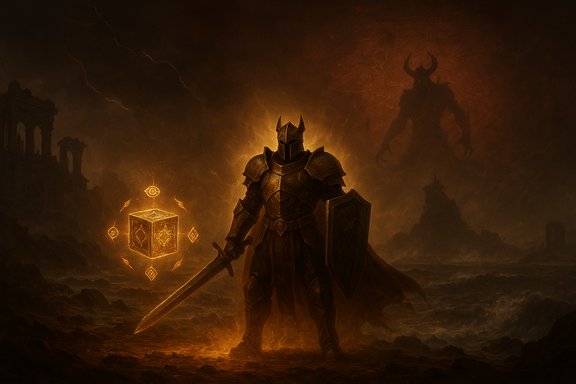
- Horadric Cube returns: The iconic Diablo II crafting transmutation tool returns, reimagined to elevate crafting beyond simple stat rerolls. Early messaging suggests cube recipes and talismans will let players convert or combine specific items into more powerful alternatives.
- Talisman and set bonuses: A new talisman system aims to unlock or expand set bonuses, opening additional avenues for late‑game customization.
Endgame overhaul: War Plans and Echoing Hatred
Arguably the most consequential shift for endgame players is the introduction of War Plans and the Echoing Hatred gauntlet.- War Plans allow players to design their own endgame progression by selecting favored activities and applying modifiers that increase risk and reward. Think of it as a playlist creator for high‑value content: players choose a path, accept modifiers, and push for better loot as difficulty scales.
- Echoing Hatred is a relentless, escalating challenge that pits players against unending waves of demonic hordes. Intended as the “ultimate test,” Echoing Hatred is designed to stress builds, force tight mechanical play, and create replayable competitions for leaderboard placements and bragging rights.
The Paladin: design, playstyle, and what it means for Diablo IV
A long-awaited return
Few revelations would have generated more nostalgia than the Paladin’s return. The class dates back to Diablo II as a frontline champion of the Zakarum faith, known for auras, holy magic, and sturdy sword‑and‑shield combat. Diablo III delivered a related but distinct entry — the Crusader — while Vessel of Hatred introduced the Spiritborn, addressing the demand for fresh melee fantasy. The Paladin’s reintroduction is a clear nod to legacy fans who’ve wanted a dedicated “sword‑and‑board” holy knight with traditional Paladin trappings: auras, heavy defenses, and righteous smites.How the Paladin plays
From early footage and developer outline, the Paladin in Diablo IV is heavy, weighty, and decisively melee‑focused: a true sword‑and‑shield brawler that relishes frontline engagements.Key mechanical pillars:
- Holy damage focus: A primary damage type historically associated with Paladins; it helps carve out a distinct niche versus other classes.
- Auras and buffs: Expect party and self‑buffing mechanics that improve survivability and supportive power.
- Control and area denial: Skills that shape space — consecrations, hammers, and radiating effects — will be part of the kit.
- Classic skill returns: Names like Blessed Hammer, Blessed Shield, Zeal, Condemn, and Heaven’s Fury have been revived and reworked for modern animations and impact.
The Oath system: shaping identity and builds
The Paladin introduces an Oath mechanic: distinct sacred paths that structure identity and reward commitment to a specific playstyle. Four Oaths were outlined:- Juggernaut — Emphasizes the shield. Defensive play that converts protection into offensive movement; Shield Bash is central, while the ultimate Fortress is a towering defensive cooldown.
- Zealot — The aggressive sword play. Focused on rapid melee strikes; Zeal and the ultimate Zenith deliver fast, cleaving holy damage.
- Judicator — Ranged or area holy judgment. Uses Blessed Shield and Heaven’s Fury to rain punishment across crowds.
- Disciple / Arbiter Form — A high‑power transformation path: angelic flight, celestial speed, and spear‑like divine abilities in an Arbiter Form.
How to get the Paladin today
The important business model detail: the Paladin is immediately playable for players who pre-purchase Diablo IV: Lord of Hatred. Pre‑purchase grants early access to the Paladin plus instant access to the Vessel of Hatred expansion content (if not already owned), along with extra stash tabs, character slots, and cosmetic items depending on edition.This early‑access gating has predictable community implications (addressed later), but practically it means you can create and experiment with Paladin builds right now if you buy Lord of Hatred — otherwise you'll wait until the full expansion release on April 28, 2026.
The Horadric Cube’s return: crafting reborn
Reintroducing the Horadric Cube is perhaps the most Diablo‑native change Blizzard announced. In Diablo II, the Cube served as a transmutation engine: combine items and reagents to create unique results. Its return signals a more powerful crafting economy in Diablo IV.What to expect from the Cube’s modern incarnation:
- Recipe-driven power: Specific combinations will likely yield predictable, high‑value outcomes, incentivizing collection and recipe hunting.
- Class and set interactions: Talismans and cross‑class set mechanics could tie into Cube recipes, enabling new set bonuses or unlocking variant effects.
- Enhanced experimentation: Rather than relying solely on RNG drops, the Cube introduces a deterministic path for certain upgrades — a way for deliberate crafters to chase tailored outcomes.
Quality of life and smaller features — fishing and more
Not every addition is game‑breaking, and Blizzard knows this. Some features are explicitly for variety and tone.- Loot Filter: Simple, crucial, and overdue. Designers say it will let players filter by rarity, item type, stats, and custom rules — reducing inventory tedium.
- Fishing: Yes, fishing was mentioned as a new, calmer activity for those who want respite from slaughter. It’s presented as a lower‑risk, lifestyle diversion that also ties into crafting and exploration. Whether fishing becomes meaningful or remains decorative depends on how deep Blizzard makes the mechanics and rewards.
- New cosmetic crossovers: Pre‑purchase bundles include World of Warcraft housing décors and other cross‑title items — a continuation of Blizzard’s inter‑IP entanglement.
Editions, pricing, and pre‑purchase details
Lord of Hatred will be sold in multiple editions. Standard, Deluxe, and Ultimate variants were detailed, with the Ultimate featuring the largest cosmetic and currency bundles (armor sets, mounts, platinum currency, and more). Pre‑purchase of any Lord of Hatred edition grants instant access to the Paladin and Vessel of Hatred content, plus a selection of edition‑specific bonuses:- 1 extra stash tab (instant)
- 2 additional character slots (instant)
- Paladin early access (instant)
- Cosmetic bundles and premium currencies depending on edition
Critical analysis: strengths, risks, and community implications
Notable strengths
- Major systems refresh: Changing skill trees, adding new skill variants, and raising caps is the kind of foundational work players asked for. It promises to refresh stale builds and reintroduce meaningful choice.
- Horadric Cube and crafting: Bringing deterministic crafting tools can reduce the frustration of pure RNG and enable build‑defining gear in a more controlled way.
- Endgame rework: War Plans and Echoing Hatred are clear attempts to diversify endgame goals and create both choice and mastery tracks — an answer to critics who called Diablo IV’s endgame repetitive.
- Nostalgia done with modern polish: The Paladin’s return is likely to please long‑time fans and give the devs a foothold to reintroduce classic Diablo mechanics while using modern systems.
Real risks and pain points
- Paywalled early access to a class: Making the Paladin immediately playable only for pre‑purchase buyers fragments the playerbase and creates a “pay for time” dynamic. Even if the class will be freely available at launch, early access to a new class can confer meaningful meta advantages, especially in seasonal economies where time equals a headstart in legendary drops, crafting materials, and leaderboards.
- Economy and crafting balance: The Horadric Cube and more powerful crafting will need careful sinks and gating to avoid rampant inflation. The introduction of deterministic upgrades can compress the rarity ladder and devalue drops unless managed with scarcity or significant material costs.
- Endgame difficulty and accessibility: Echoing Hatred’s gauntlet design risks becoming an elitist treadmill for competitive players if it’s the primary route to the “best” loot. War Plans must remain flexible so casual players can chase meaningful rewards without grinding an endless playlist of min‑maxed content.
- Seasonal timing and rollout cadence: Blizzard’s longer development cycles are sensible, but extended gaps between expansions concentrate expectations. Any launch roughness will be magnified by fan anticipation.
- Cosmetic cross‑locking and crossgame prerequisites: Some pre‑purchase items require ownership/subscriptions to other Blizzard properties (e.g., World of Warcraft) to be fully redeemable. That can be confusing and may alienate players who don’t cross‑own titles.
The community will judge Blizzard on three things
- Balance and fairness — whether Paladin early access confers an unfair competitive advantage and whether crafting and War Plans respect player investment without breaking the economy.
- Polish at launch — the scope of systems changes is large; adequate PTR time, bug fixes, and tuning will be crucial.
- Communication and transparency — players will respond positively if Blizzard explains the design choices, recipes, and sinks in clear terms and backs them with data‑driven tuning.
Practical recommendations for players and guilds
If you’re planning to dive into Lord of Hatred, here’s a practical playbook:- Decide whether pre‑purchase is worth early access to Paladin. If you value firsthand experimentation and a head start, pre‑purchase delivers that. If you prefer parity with friends and the broader community, wait for the expansion release.
- Save premium currency or plan for stash management in advance. With more crafted possibilities and higher level caps, inventory pressure will increase.
- If you care about leaderboards or Echoing Hatred speed‑runs, prepare to engage early — these systems will reward those who experiment quickly and iterate builds.
- Follow PTRs and developer notes closely. The launch window will include significant changes to skill trees and crafting mechanics; reading official patch notes and PTR feedback will give you an edge in optimizing builds at release.
Unverified or ambiguous items — flagged for caution
A few announced items deserve a cautionary flag until Blizzard publishes technical details:- Fishing depth and rewards: The presence of fishing is confirmed, but whether it’s a fully fledged minigame with meaningful rewards or a light activity for ambience remains unclear. Treat it as optional until more detail is published.
- Exact Horadric Cube mechanics and recipe lists: The Cube’s high‑level return is confirmed, but specifics about materials, recipe rarity, and cross‑class effects are not published. Expect iteration through PTR.
- Second class identity and mechanics: Blizzard officially teased a second, unnamed class arriving with Lord of Hatred. No specifics have been released; any further assumptions about its identity are speculative.
The larger picture: what Lord of Hatred signals about Diablo IV’s future
Lord of Hatred reads like a turning point: an expansion that doubles as a systems update. Blizzard isn’t just shipping a story — it’s shipping a new mechanical baseline. The studio’s choices suggest the team has learned from the first live‑service cycle: the most sustainable route to long‑term engagement is not just new maps and bosses, but meaningful choices that let players continually refine and reinvent their characters.That said, the expansion also signals a continued reliance on pre‑purchase incentives and edition tiers to fund and monetize the content pipeline. The inclusion of gameplay‑adjacent early access in pre‑orders shows Blizzard believes the revenue and engagement tradeoff is worth it — but it will be judged by how well the studio avoids creating pay‑to‑win optics or deeply fractured seasonal ladders.
If Blizzard balances deterministic crafting with RNG drops, tunes War Plans to reward both casual and hardcore players, and keeps Echoing Hatred as a challenge rather than a gating treadmill, Lord of Hatred could be the moment Diablo IV matures into a more flexible, player‑driven ARPG. If not, some of the announced changes — especially the Paladin early access and powerful crafting tools — risk creating new sources of friction.
Conclusion
Lord of Hatred is a bold, high‑stakes expansion. It brings back a beloved class, resurrects the Horadric Cube, overhauls skill and loot systems, and reframes the endgame into a player‑driven structure. On paper, the package answers many of Diablo IV’s loudest player requests: deeper builds, more meaningful crafting, cleaner loot acquisition, and a harder, more rewarding endgame.The big question is whether Blizzard can deliver the necessary balance and polish across such a wide set of changes. The Paladin’s early access is generous to buyers but risks dividing the community. The Horadric Cube’s return could elevate crafting — or, if implemented poorly, distort the economy. War Plans and Echoing Hatred have the potential to become exactly the kind of compelling progression loop that drives the best ARPGs for years, but they’ll require careful tuning to avoid exclusivity or grind fatigue.
For fans of the franchise, Lord of Hatred is both a nostalgia trip and a systems rebirth. It’s the kind of expansion that will define Diablo IV’s second act — and the next six months of PTR feedback, developer communication, and tuning will determine whether it becomes a definitive turning point or a mixed legacy.
Source: Windows Central https://www.windowscentral.com/gaming/diablo4-lord-of-hatred-paladin/
