

Docusign announced on June 2, 2026, that Graham Sheldon, formerly Chief Product Officer at UiPath and a longtime Microsoft product executive, will become its Chief Product Officer on July 6, leading product, design, and user research. The appointment is less a routine executive shuffle than a signal about where Docusign thinks the next software battleground sits. The company that made electronic signatures mundane now wants to make agreements programmable, searchable, agent-friendly business infrastructure. Sheldon’s job is to prove that “Intelligent Agreement Management” is more than a rebrand for contract lifecycle management with AI glued to the front.
For years, Docusign’s gravitational pull came from the simplest kind of enterprise magic: take a painful paper process, put it in a browser, and make the result legally and operationally acceptable. That is still a large business, but it is no longer enough of a story for a SaaS company living through the AI reset. E-signature is a feature in many suites; agreement intelligence is the larger claim.
That context makes Sheldon’s hiring unusually legible. Docusign is not merely bringing in a product manager with big-company polish. It is bringing in someone whose résumé maps almost exactly onto the transformation it is trying to sell: collaboration at Microsoft, workflow automation at UiPath, and now AI-mediated agreement work at Docusign.
The product remit matters. Sheldon will oversee product, design, and user research, which means he is not being asked only to manage a roadmap. He is being asked to shape the way Docusign’s next platform feels to users who may not think of themselves as contract professionals at all.
That is a harder problem than adding a chatbot to a document repository. Agreements sit across sales, procurement, legal, HR, finance, and compliance. Every department touches them, few departments own the entire lifecycle, and most companies discover the true cost of a bad agreement only after it has already been signed.
The Teams chapter is particularly relevant. Teams was not just another collaboration app; it became the connective tissue for meetings, chat, files, identity, calendars, and workplace routines. Scaling that kind of product means learning how enterprise software becomes habit before it becomes strategy.
Docusign would like IAM to become similarly embedded. The company does not want users to visit Docusign only at the end of a transaction to sign something. It wants to be present when a deal is drafted, reviewed, routed, amended, renewed, queried, and audited.
UiPath adds a different but equally important credential. Sheldon arrived there as the company was pushing beyond traditional robotic process automation into agentic automation and broader business orchestration. That vocabulary is fashionable, but the underlying shift is real: enterprises are trying to move from bots that click through repetitive tasks to systems that understand goals, data, permissions, and exceptions.
Docusign’s agreement workflows are a natural fit for that ambition, but also a dangerous one. A bot that misfiles an internal report creates annoyance. An agent that misunderstands a termination clause, renewal obligation, indemnity provision, or procurement approval chain can create legal and financial exposure.
The AI-era challenge is almost the opposite. If software can draft, summarize, compare, route, and trigger actions from agreements, the user’s question changes from “can this save me time?” to “can I trust what this system thinks the document means?” That is a much higher bar.
Contracts are full of edge cases. They depend on jurisdiction, business context, negotiated exceptions, side letters, templates, fallback terms, and internal policy. The same clause can be routine in one transaction and radioactive in another.
That is why Docusign’s pivot cannot succeed as a generic AI feature set. Agreement management needs structured data, permissions, audit trails, workflow discipline, and human review points. If the company gets those wrong, customers may admire the demo and still refuse to deploy it for serious work.
Sheldon’s job is to make the product convincing where the demo ends. The interface has to show its work. The system has to know when to ask for a lawyer, a sales ops owner, or a procurement approver. And it has to make AI feel like an accountable layer in an enterprise process, not a clever assistant hovering over sensitive documents.
That distinction is critical. E-signature is usually a moment in time. Agreement management is a lifecycle. It includes preparing standard documents, negotiating terms, extracting obligations, connecting those obligations to CRM or ERP systems, tracking renewals, and surfacing risk before it becomes a surprise.
This is where Docusign’s installed base becomes both an advantage and a constraint. The company has enormous reach and brand recognition, but customers often categorize it narrowly. Many still think “Docusign” means “the thing we use when someone needs to sign.”
Changing that mental model is difficult. It requires Docusign to persuade customers that the signed agreement is not the endpoint of the workflow but the beginning of a living operational record. That is a much more ambitious claim, and it puts the company into competition not only with e-signature rivals but also with contract lifecycle management vendors, CRM suites, procurement platforms, enterprise content systems, and AI workflow tools.
The 40,000-customer figure for the IAM platform suggests real traction, but the deeper question is usage intensity. Are customers using IAM as a strategic agreement layer, or as an adjacent upgrade to existing Docusign deployments? The difference will determine whether this becomes a durable platform or another SaaS bundle line item.
For decades, SaaS vendors assumed users would come to their applications. The AI assistant model flips that assumption. Increasingly, users will ask a general-purpose AI system to find a contract, summarize renewal risk, draft a redline, prepare outreach, or trigger a workflow. The application becomes a data and action endpoint behind the assistant.
This is a profound product shift for companies like Docusign. If the user experience happens inside ChatGPT, Claude, Gemini, Copilot, or another agentic workspace, then Docusign must win by being the most trusted agreement layer underneath. The value moves from owning every screen to owning the authoritative context, permissions, workflows, and execution path.
That is also why MCP matters. The protocol is becoming one of the ways AI systems connect to external tools and data sources with a more standardized interface. For Docusign, MCP connectors are a way to make agreement data available to assistants without forcing every customer or developer to build bespoke integrations.
But standards do not eliminate risk. They distribute it. Once agreements become accessible to AI agents, enterprises must answer uncomfortable questions about access control, data retention, prompt logging, model behavior, and auditability. The product that wins will not simply be the one with the flashiest natural-language demo; it will be the one security, legal, and IT can tolerate in production.
That is where agreement management becomes a classic IT governance problem. Contracts contain pricing, employee data, customer information, merger details, intellectual property terms, vendor commitments, and compliance obligations. Feeding that material into AI workflows requires strict boundaries.
The practical questions come quickly. Can an AI assistant see only the agreements a user is entitled to access? Can it distinguish between signed documents, drafts, templates, and expired terms? Can it explain why it flagged a clause as risky? Can it be prevented from drafting language outside approved playbooks? Can every action be logged in a form auditors will accept?
These are not afterthoughts. They are the product. In the AI agreement-management market, trust is not a marketing adjective; it is a set of permission models, retrieval constraints, workflow checkpoints, and evidence trails.
Sheldon’s Microsoft experience may be useful here precisely because Microsoft’s modern enterprise software strength has been less about isolated applications than about identity, compliance, administration, and cross-product governance. Docusign needs some version of that sensibility if it wants to sit deeper inside business processes.
But agreements are not ordinary workflow objects. They are negotiated instruments, and their meaning often depends on nuance. “Renew this customer” may sound simple until the agent encounters an unusual price increase clause, a nonstandard notice period, a pending support dispute, or a side agreement buried in an attachment.
This is where Docusign must resist the temptation to over-automate. The product should not pretend that every agreement action can be safely delegated to an agent. The better strategy is to automate the retrieval, comparison, preparation, and routing around decisions while making human approval obvious and efficient.
In other words, the future is not fully autonomous contract management. It is likely to be supervised agreement orchestration, where AI handles the repetitive and interpretive first pass while humans remain accountable for the consequential moves. That may sound less glamorous than the agentic hype cycle, but it is far more deployable.
UiPath’s evolution is instructive. Traditional RPA often promised more than brittle enterprise processes could bear. The newer orchestration narrative is an attempt to make automation more context-aware and resilient. Docusign will face a similar maturity curve, only with documents that can bind companies to years of obligations.
That cross-functional reality is why agreement data is often fragmented. A signed contract may live in a repository, key terms may be manually copied into a CRM, obligations may be tracked in spreadsheets, and renewal dates may depend on a heroic operations manager who remembers where the bodies are buried. AI can help only if the underlying agreement fabric is coherent enough to query.
Docusign’s opportunity is to become the connective layer across those silos. That is a valuable position because agreements encode business intent. They define who owes what, when, under which conditions, and with what remedies if things go wrong.
The challenge is political as much as technical. A platform that crosses sales, legal, procurement, HR, and finance must satisfy different incentives. Sales wants speed, legal wants control, procurement wants leverage, finance wants accuracy, and IT wants security. A product leader who has worked across Microsoft-scale collaboration and UiPath-style automation may be better prepared for that mess than someone with a narrower document-management background.
Still, the buying motion will be complicated. Docusign has to convince executives that agreement intelligence is not merely legal software and not merely sales enablement. It has to become a boardroom productivity and risk argument.
Docusign’s timing is therefore both promising and unforgiving. The market is more receptive than ever to AI-powered workflow claims, but less patient with vague ones. Customers have seen enough copilots to know that a text box is not a strategy.
For Docusign, the strongest argument is specificity. Agreement work is narrow enough to benefit from domain context and broad enough to matter across the enterprise. Unlike a generic productivity assistant, IAM can point to concrete outcomes: faster cycle times, fewer missed renewals, better clause visibility, cleaner approvals, and improved compliance posture.
But those outcomes must be measurable. If Docusign wants IAM to become a platform, it will need proof that customers are reducing negotiation time, avoiding leakage, improving renewal capture, or cutting manual review burden. AI enthusiasm may open doors, but procurement departments still ask for business cases.
This is where product design and user research become central. AI agreement tools that work only for power users will not reshape the category. The winning product has to make complex agreement intelligence usable by people who are not lawyers, data analysts, or automation engineers.
That raises the stakes for continuity. IAM is already in market, connectors are already being announced, and customers are already being asked to think of Docusign differently. Sheldon will inherit a product strategy that needs acceleration, not a blank slate.
The best-case version is straightforward: Docusign has a platform thesis, early customer adoption, and a new CPO whose experience matches the next phase. The more difficult version is that the company is still trying to assemble a coherent product identity while the AI interface layer is moving fast around it.
Both can be true. Mature SaaS companies often reinvent themselves while still relying on the old business to fund the new one. That creates tension in roadmaps, sales messaging, engineering priorities, and customer expectations.
Sheldon’s first challenge may be narrative discipline. Docusign cannot be everything: an e-signature company, a CLM suite, an AI agent platform, a contract data layer, and a workflow automation vendor all at once unless customers understand how those pieces fit together. The product story needs to be simple enough to buy and robust enough to deploy.
If Docusign succeeds, agreement actions will increasingly happen from places where users already work. That could mean a contract summary inside an AI assistant, a renewal workflow triggered from a CRM record, a clause review surfaced in a collaboration tool, or a procurement approval routed through an existing enterprise process. The destination may not always feel like “opening Docusign.”
That changes the administrative surface. IT teams will need to understand which AI hosts can access agreement data, how connectors are authorized, which users can trigger actions, and how logs flow into compliance systems. The danger is not only unauthorized access; it is authorized users causing unintended actions through poorly bounded AI workflows.
This is a familiar pattern for Microsoft 365 administrators. The hard part of modern enterprise software is no longer simply deploying the app. It is governing the graph of permissions, integrations, automations, and data flows that surrounds the app.
Docusign’s move into AI agreement management should therefore be read as part of a larger shift: SaaS applications are turning into back-end capability providers for AI-driven work surfaces. That can be powerful, but it makes tenant governance, conditional access, data classification, and audit readiness more important, not less.
Docusign’s counterargument is that agreements deserve a dedicated intelligence layer because they are too important and too cross-functional to be trapped in any single application. That argument has merit. A contract touches CRM, ERP, HCM, finance, and legal operations, but none of those systems necessarily captures the full agreement lifecycle.
The risk is that customers may prefer agreement intelligence embedded in tools they already use. If a seller can ask their CRM assistant about renewal risk, or a procurement manager can ask their sourcing platform about vendor obligations, Docusign must either power that answer or risk being abstracted away.
This is why the connector strategy is not optional. Docusign needs to show up wherever agreement questions are asked. If the company clings too tightly to its own interface, it may lose relevance in a world where AI assistants become the front door.
The strongest version of Docusign’s strategy is therefore not “come to our app for AI contracts.” It is “wherever your organization asks agreement questions, Docusign is the trusted system that answers and acts.” That is a platform claim, and it is exactly the kind of claim a new CPO must turn into product reality.
That means watching for adoption patterns beyond pilots. Are sales teams using agreement intelligence before renewals? Are procurement teams routing exceptions through Docusign rather than email? Are legal teams trusting AI-assisted clause analysis enough to redesign review queues? Are finance teams using agreement data to improve forecasting and billing accuracy?
The answer will vary by customer maturity. Large enterprises with disciplined templates and repositories will be better positioned to benefit early. Organizations with chaotic contract stores, inconsistent metadata, and fragmented approval processes may discover that AI exposes their mess before it fixes it.
That is not a failure of AI; it is the usual truth of enterprise software. Automation rewards process discipline. Agreement intelligence will be only as useful as the permissions, document quality, metadata, and workflows beneath it.
Docusign can help by making the path incremental. Customers do not need to automate the entire agreement lifecycle on day one. They need credible starting points: renewal discovery, clause extraction, template-guided drafting, approval routing, obligation tracking, and safe assistant access to contract data.
The practical story is sharper than the marketing one. Agreements are full of data enterprises already need but often cannot reliably use. AI makes that data easier to query and act on, but only if the system around it is secure, governed, and designed for real workflows.
The appointment does not guarantee Docusign will win that market. It does, however, align leadership experience with the company’s stated ambition. Sheldon has worked on products that became daily enterprise surfaces and on automation platforms trying to evolve beyond task scripts. Docusign now needs both instincts.
Here is the concrete shape of the story now unfolding:
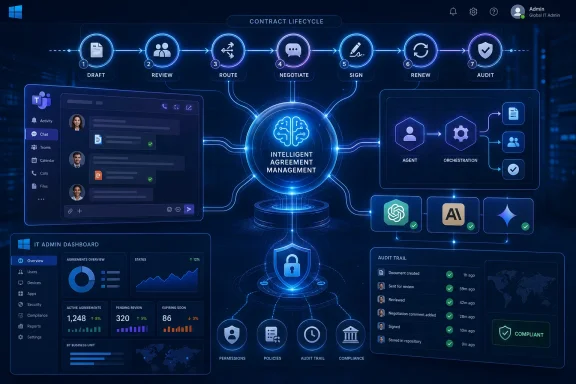 Docusign Hires for the Platform War, Not the Signature Business
For years, Docusign’s gravitational pull came from the simplest kind of enterprise magic: take a painful paper process, put it in a browser, and make the result legally and operationally acceptable. That is still a large business, but it is no longer enough of a story for a SaaS company living through the AI reset. E-signature is a feature in many suites; agreement intelligence is the larger claim.That context makes Sheldon’s hiring unusually legible. Docusign is not merely bringing in a product manager with big-company polish. It is bringing in someone whose résumé maps almost exactly onto the transformation it is trying to sell: collaboration at Microsoft, workflow automation at UiPath, and now AI-mediated agreement work at Docusign.
The product remit matters. Sheldon will oversee product, design, and user research, which means he is not being asked only to manage a roadmap. He is being asked to shape the way Docusign’s next platform feels to users who may not think of themselves as contract professionals at all.
That is a harder problem than adding a chatbot to a document repository. Agreements sit across sales, procurement, legal, HR, finance, and compliance. Every department touches them, few departments own the entire lifecycle, and most companies discover the true cost of a bad agreement only after it has already been signed.
The Microsoft and UiPath Résumé Is the Message
Sheldon’s Microsoft background is the part of the announcement most people will notice first, and understandably so. He spent more than two decades at the company and held senior product roles across Teams, Dynamics, Bing, and Office. He also served as a technical adviser to CEO Satya Nadella, a role that tends to sit close to strategy rather than mere execution.The Teams chapter is particularly relevant. Teams was not just another collaboration app; it became the connective tissue for meetings, chat, files, identity, calendars, and workplace routines. Scaling that kind of product means learning how enterprise software becomes habit before it becomes strategy.
Docusign would like IAM to become similarly embedded. The company does not want users to visit Docusign only at the end of a transaction to sign something. It wants to be present when a deal is drafted, reviewed, routed, amended, renewed, queried, and audited.
UiPath adds a different but equally important credential. Sheldon arrived there as the company was pushing beyond traditional robotic process automation into agentic automation and broader business orchestration. That vocabulary is fashionable, but the underlying shift is real: enterprises are trying to move from bots that click through repetitive tasks to systems that understand goals, data, permissions, and exceptions.
Docusign’s agreement workflows are a natural fit for that ambition, but also a dangerous one. A bot that misfiles an internal report creates annoyance. An agent that misunderstands a termination clause, renewal obligation, indemnity provision, or procurement approval chain can create legal and financial exposure.
The Old Docusign Problem Was Friction; the New One Is Trust
Docusign’s original genius was reducing friction. The company took the ritual of printing, signing, scanning, emailing, and archiving documents and collapsed it into a few clicks. That was enough to turn e-signature from a convenience into basic business infrastructure.The AI-era challenge is almost the opposite. If software can draft, summarize, compare, route, and trigger actions from agreements, the user’s question changes from “can this save me time?” to “can I trust what this system thinks the document means?” That is a much higher bar.
Contracts are full of edge cases. They depend on jurisdiction, business context, negotiated exceptions, side letters, templates, fallback terms, and internal policy. The same clause can be routine in one transaction and radioactive in another.
That is why Docusign’s pivot cannot succeed as a generic AI feature set. Agreement management needs structured data, permissions, audit trails, workflow discipline, and human review points. If the company gets those wrong, customers may admire the demo and still refuse to deploy it for serious work.
Sheldon’s job is to make the product convincing where the demo ends. The interface has to show its work. The system has to know when to ask for a lawyer, a sales ops owner, or a procurement approver. And it has to make AI feel like an accountable layer in an enterprise process, not a clever assistant hovering over sensitive documents.
IAM Is Docusign’s Attempt to Escape the Feature Trap
The most important word in Docusign’s current strategy is not “AI.” It is “management.” Intelligent Agreement Management is the company’s attempt to move up from transactions into systems of record and systems of action.That distinction is critical. E-signature is usually a moment in time. Agreement management is a lifecycle. It includes preparing standard documents, negotiating terms, extracting obligations, connecting those obligations to CRM or ERP systems, tracking renewals, and surfacing risk before it becomes a surprise.
This is where Docusign’s installed base becomes both an advantage and a constraint. The company has enormous reach and brand recognition, but customers often categorize it narrowly. Many still think “Docusign” means “the thing we use when someone needs to sign.”
Changing that mental model is difficult. It requires Docusign to persuade customers that the signed agreement is not the endpoint of the workflow but the beginning of a living operational record. That is a much more ambitious claim, and it puts the company into competition not only with e-signature rivals but also with contract lifecycle management vendors, CRM suites, procurement platforms, enterprise content systems, and AI workflow tools.
The 40,000-customer figure for the IAM platform suggests real traction, but the deeper question is usage intensity. Are customers using IAM as a strategic agreement layer, or as an adjacent upgrade to existing Docusign deployments? The difference will determine whether this becomes a durable platform or another SaaS bundle line item.
AI Connectors Move the Battlefield Into ChatGPT, Claude, and Gemini
Docusign’s recent Model Context Protocol connector work is the most telling product move around Sheldon’s arrival. The company has added or announced integrations that bring agreement workflows into major AI environments, including Anthropic Claude, Google Gemini, and OpenAI ChatGPT. That is not just a distribution strategy; it is an admission that the enterprise software front end is changing.For decades, SaaS vendors assumed users would come to their applications. The AI assistant model flips that assumption. Increasingly, users will ask a general-purpose AI system to find a contract, summarize renewal risk, draft a redline, prepare outreach, or trigger a workflow. The application becomes a data and action endpoint behind the assistant.
This is a profound product shift for companies like Docusign. If the user experience happens inside ChatGPT, Claude, Gemini, Copilot, or another agentic workspace, then Docusign must win by being the most trusted agreement layer underneath. The value moves from owning every screen to owning the authoritative context, permissions, workflows, and execution path.
That is also why MCP matters. The protocol is becoming one of the ways AI systems connect to external tools and data sources with a more standardized interface. For Docusign, MCP connectors are a way to make agreement data available to assistants without forcing every customer or developer to build bespoke integrations.
But standards do not eliminate risk. They distribute it. Once agreements become accessible to AI agents, enterprises must answer uncomfortable questions about access control, data retention, prompt logging, model behavior, and auditability. The product that wins will not simply be the one with the flashiest natural-language demo; it will be the one security, legal, and IT can tolerate in production.
The Enterprise Buyer Will Ask Boring Questions First
The consumer AI story rewards speed and surprise. Enterprise AI rewards predictability. Docusign’s prospective buyers will want to know what the system can do, but they will spend just as much time asking what it cannot do, what it records, and who can override it.That is where agreement management becomes a classic IT governance problem. Contracts contain pricing, employee data, customer information, merger details, intellectual property terms, vendor commitments, and compliance obligations. Feeding that material into AI workflows requires strict boundaries.
The practical questions come quickly. Can an AI assistant see only the agreements a user is entitled to access? Can it distinguish between signed documents, drafts, templates, and expired terms? Can it explain why it flagged a clause as risky? Can it be prevented from drafting language outside approved playbooks? Can every action be logged in a form auditors will accept?
These are not afterthoughts. They are the product. In the AI agreement-management market, trust is not a marketing adjective; it is a set of permission models, retrieval constraints, workflow checkpoints, and evidence trails.
Sheldon’s Microsoft experience may be useful here precisely because Microsoft’s modern enterprise software strength has been less about isolated applications than about identity, compliance, administration, and cross-product governance. Docusign needs some version of that sensibility if it wants to sit deeper inside business processes.
The Agentic Automation Pitch Has a Legal Department Problem
Agentic automation is seductive because it promises to turn intent into action. A user might ask an assistant to identify contracts expiring in the next 90 days, draft renewal emails, route exceptions to legal, and update account plans. In a well-designed workflow, that saves time and reduces missed obligations.But agreements are not ordinary workflow objects. They are negotiated instruments, and their meaning often depends on nuance. “Renew this customer” may sound simple until the agent encounters an unusual price increase clause, a nonstandard notice period, a pending support dispute, or a side agreement buried in an attachment.
This is where Docusign must resist the temptation to over-automate. The product should not pretend that every agreement action can be safely delegated to an agent. The better strategy is to automate the retrieval, comparison, preparation, and routing around decisions while making human approval obvious and efficient.
In other words, the future is not fully autonomous contract management. It is likely to be supervised agreement orchestration, where AI handles the repetitive and interpretive first pass while humans remain accountable for the consequential moves. That may sound less glamorous than the agentic hype cycle, but it is far more deployable.
UiPath’s evolution is instructive. Traditional RPA often promised more than brittle enterprise processes could bear. The newer orchestration narrative is an attempt to make automation more context-aware and resilient. Docusign will face a similar maturity curve, only with documents that can bind companies to years of obligations.
Docusign Is Also Selling a New Organizational Map
One underappreciated part of Docusign’s IAM push is that agreements do not belong neatly to one department. Legal may draft and review them, sales may negotiate them, procurement may initiate them, finance may care about their payment terms, HR may manage employment documents, and operations may live with the consequences.That cross-functional reality is why agreement data is often fragmented. A signed contract may live in a repository, key terms may be manually copied into a CRM, obligations may be tracked in spreadsheets, and renewal dates may depend on a heroic operations manager who remembers where the bodies are buried. AI can help only if the underlying agreement fabric is coherent enough to query.
Docusign’s opportunity is to become the connective layer across those silos. That is a valuable position because agreements encode business intent. They define who owes what, when, under which conditions, and with what remedies if things go wrong.
The challenge is political as much as technical. A platform that crosses sales, legal, procurement, HR, and finance must satisfy different incentives. Sales wants speed, legal wants control, procurement wants leverage, finance wants accuracy, and IT wants security. A product leader who has worked across Microsoft-scale collaboration and UiPath-style automation may be better prepared for that mess than someone with a narrower document-management background.
Still, the buying motion will be complicated. Docusign has to convince executives that agreement intelligence is not merely legal software and not merely sales enablement. It has to become a boardroom productivity and risk argument.
The Timing Reveals an AI SaaS Market Under Pressure
The Sheldon appointment arrives during a broader recalibration in enterprise software. Every SaaS company is telling customers that AI will transform workflows, but many customers are still sorting useful automation from expensive novelty. The first wave of AI features often looked like summarization, drafting, and chat over documents. The next wave has to connect those capabilities to actual business outcomes.Docusign’s timing is therefore both promising and unforgiving. The market is more receptive than ever to AI-powered workflow claims, but less patient with vague ones. Customers have seen enough copilots to know that a text box is not a strategy.
For Docusign, the strongest argument is specificity. Agreement work is narrow enough to benefit from domain context and broad enough to matter across the enterprise. Unlike a generic productivity assistant, IAM can point to concrete outcomes: faster cycle times, fewer missed renewals, better clause visibility, cleaner approvals, and improved compliance posture.
But those outcomes must be measurable. If Docusign wants IAM to become a platform, it will need proof that customers are reducing negotiation time, avoiding leakage, improving renewal capture, or cutting manual review burden. AI enthusiasm may open doors, but procurement departments still ask for business cases.
This is where product design and user research become central. AI agreement tools that work only for power users will not reshape the category. The winning product has to make complex agreement intelligence usable by people who are not lawyers, data analysts, or automation engineers.
Dmitri Krakovsky’s Departure Leaves a Strategy Mid-Construction
Sheldon is filling a role previously held by Dmitri Krakovsky, who left Docusign at the end of May. Leadership transitions always invite overinterpretation, but timing matters. Docusign is not replacing a product chief during a quiet maintenance phase; it is doing so while trying to redefine its category.That raises the stakes for continuity. IAM is already in market, connectors are already being announced, and customers are already being asked to think of Docusign differently. Sheldon will inherit a product strategy that needs acceleration, not a blank slate.
The best-case version is straightforward: Docusign has a platform thesis, early customer adoption, and a new CPO whose experience matches the next phase. The more difficult version is that the company is still trying to assemble a coherent product identity while the AI interface layer is moving fast around it.
Both can be true. Mature SaaS companies often reinvent themselves while still relying on the old business to fund the new one. That creates tension in roadmaps, sales messaging, engineering priorities, and customer expectations.
Sheldon’s first challenge may be narrative discipline. Docusign cannot be everything: an e-signature company, a CLM suite, an AI agent platform, a contract data layer, and a workflow automation vendor all at once unless customers understand how those pieces fit together. The product story needs to be simple enough to buy and robust enough to deploy.
Windows Shops Should Watch the Workflow Layer, Not Just the Logo
For WindowsForum readers, the obvious Microsoft connection is Sheldon’s Teams background. But the more important angle is how AI agreement workflows will land inside the enterprise environments many admins already manage. Docusign’s future will intersect with identity providers, browsers, Office documents, Teams conversations, CRM systems, procurement suites, and security tooling.If Docusign succeeds, agreement actions will increasingly happen from places where users already work. That could mean a contract summary inside an AI assistant, a renewal workflow triggered from a CRM record, a clause review surfaced in a collaboration tool, or a procurement approval routed through an existing enterprise process. The destination may not always feel like “opening Docusign.”
That changes the administrative surface. IT teams will need to understand which AI hosts can access agreement data, how connectors are authorized, which users can trigger actions, and how logs flow into compliance systems. The danger is not only unauthorized access; it is authorized users causing unintended actions through poorly bounded AI workflows.
This is a familiar pattern for Microsoft 365 administrators. The hard part of modern enterprise software is no longer simply deploying the app. It is governing the graph of permissions, integrations, automations, and data flows that surrounds the app.
Docusign’s move into AI agreement management should therefore be read as part of a larger shift: SaaS applications are turning into back-end capability providers for AI-driven work surfaces. That can be powerful, but it makes tenant governance, conditional access, data classification, and audit readiness more important, not less.
The Real Competition Is the System That Knows the Business
Docusign’s competitors are not limited to companies that sell electronic signatures. The deeper threat comes from platforms that already know the customer, the opportunity, the vendor, the employee, or the transaction. Salesforce, Microsoft, ServiceNow, Workday, SAP, Oracle, and procurement specialists all have reasons to treat agreements as a workflow component inside their own systems.Docusign’s counterargument is that agreements deserve a dedicated intelligence layer because they are too important and too cross-functional to be trapped in any single application. That argument has merit. A contract touches CRM, ERP, HCM, finance, and legal operations, but none of those systems necessarily captures the full agreement lifecycle.
The risk is that customers may prefer agreement intelligence embedded in tools they already use. If a seller can ask their CRM assistant about renewal risk, or a procurement manager can ask their sourcing platform about vendor obligations, Docusign must either power that answer or risk being abstracted away.
This is why the connector strategy is not optional. Docusign needs to show up wherever agreement questions are asked. If the company clings too tightly to its own interface, it may lose relevance in a world where AI assistants become the front door.
The strongest version of Docusign’s strategy is therefore not “come to our app for AI contracts.” It is “wherever your organization asks agreement questions, Docusign is the trusted system that answers and acts.” That is a platform claim, and it is exactly the kind of claim a new CPO must turn into product reality.
Sheldon’s First Scorecard Will Be Adoption, Not Announcements
Executive appointments produce neat press releases. Product transformations produce messy scorecards. For Sheldon, the important measures will not be how many AI features Docusign announces in the next year, but whether customers make IAM part of daily work.That means watching for adoption patterns beyond pilots. Are sales teams using agreement intelligence before renewals? Are procurement teams routing exceptions through Docusign rather than email? Are legal teams trusting AI-assisted clause analysis enough to redesign review queues? Are finance teams using agreement data to improve forecasting and billing accuracy?
The answer will vary by customer maturity. Large enterprises with disciplined templates and repositories will be better positioned to benefit early. Organizations with chaotic contract stores, inconsistent metadata, and fragmented approval processes may discover that AI exposes their mess before it fixes it.
That is not a failure of AI; it is the usual truth of enterprise software. Automation rewards process discipline. Agreement intelligence will be only as useful as the permissions, document quality, metadata, and workflows beneath it.
Docusign can help by making the path incremental. Customers do not need to automate the entire agreement lifecycle on day one. They need credible starting points: renewal discovery, clause extraction, template-guided drafting, approval routing, obligation tracking, and safe assistant access to contract data.
The Signature Company Wants to Become the Agreement Operating Layer
Docusign’s hiring of Graham Sheldon says the company understands the moment it is in. E-signature made it ubiquitous, but ubiquity can become a ceiling if the product is remembered only for the final click. IAM is Docusign’s attempt to move from the end of the document to the center of the business process.The practical story is sharper than the marketing one. Agreements are full of data enterprises already need but often cannot reliably use. AI makes that data easier to query and act on, but only if the system around it is secure, governed, and designed for real workflows.
The appointment does not guarantee Docusign will win that market. It does, however, align leadership experience with the company’s stated ambition. Sheldon has worked on products that became daily enterprise surfaces and on automation platforms trying to evolve beyond task scripts. Docusign now needs both instincts.
The Contract AI Era Will Be Won in the Admin Console
Docusign’s next chapter will not be decided by whether an assistant can summarize a contract in a conference demo. It will be decided by whether enterprises can safely let that assistant participate in the agreement lifecycle. The difference is governance, context, and repeatable product judgment.Here is the concrete shape of the story now unfolding:
- Graham Sheldon will become Docusign’s Chief Product Officer on July 6, 2026, taking responsibility for product, design, and user research.
- Docusign is positioning his Microsoft Teams and UiPath experience as evidence that it can scale IAM from product line to enterprise platform.
- The company’s AI strategy increasingly depends on connectors that bring agreement workflows into assistants such as Claude, Gemini, and ChatGPT.
- The central product challenge is not generating contract text, but making agreement data trustworthy, permission-aware, auditable, and useful across departments.
- IT and security teams should treat AI agreement workflows as a governance issue because sensitive contract data will increasingly move through assistant interfaces and automation layers.
- Docusign’s long-term risk is being reduced to an e-signature utility if larger enterprise platforms own the user experience around agreement questions and actions.
References
- Primary source: thekeyexecutives.com
Published: 2026-06-23T08:42:14.409454
Docusign Appoints Former UiPath Chief Product Officer Graham Sheldon as CPO Key Executives
Docusign is bringing in a product leader from UiPath and Microsoft as it pushes deeper into AI-driven agreement management. Graham Sheldon will join the company as Chief Product Officer on July 6, 2026, overseeing product, design, and user research for Docusign’s Intelligent Agreement Management...www.thekeyexecutives.com - Related coverage: docusign.com
Docusign Appoints Graham Sheldon as Chief Product Officer to Accelerate Intelligent Agreement Management Vision
In the news at Docusignwww.docusign.com
- Related coverage: marketscreener.com
- Official source: claude.com
- Related coverage: streetinsider.com
Docusign names Graham Sheldon as chief product officer
Docusign Inc. (NASDAQ: DOCU) appointed Graham Sheldon as chief product officer, effective July 6, the company announced. Sheldon will oversee product development, design, and user research as the company expands its...www.streetinsider.com - Related coverage: uk.investing.com
Docusign appoints Graham Sheldon as chief product officer By Investing.com
Docusign appoints Graham Sheldon as chief product officeruk.investing.com

- Related coverage: citybiz.co
Docusign Recruits Former UiPath Product Chief Graham Sheldon to Advance AI Agreement Strategy | citybiz
Docusign has appointed former UiPath and Microsoft executive Graham Sheldon as chief product officer, a leadership move that strengthens the... Read Morewww.citybiz.co - Related coverage: app.dealroom.co
Docusign appoints Microsoft Teams veteran Graham Sheldon as chief product officer | Dealroom.co
Docusign has appointed Graham Sheldon as chief product officer, effective 6 July. Sheldon will oversee product, design and user research as the company advances its Intelligent Agreement Management platform. Sheldon joins from UiPath, where he served as chief product officer and led the...app.dealroom.co - Related coverage: briefglance.com
Docusign Taps UiPath Veteran as CPO to Drive AI-Powered A... — Docusign, Inc. | BriefGlance
Docusign appoints Graham Sheldon as Chief Product Officer, starting July 6, 2026.briefglance.com - Related coverage: de.marketscreener.com
- Related coverage: investor.docusign.com
Docusign Inc. - Docusign Brings Trusted Agreement Intelligence and Workflows into ChatGPT and Codex
Docusign (Nasdaq: DOCU) today announced that the Docusign app is available in ChatGPT and Codex. The app brings the Docusign Intelligent Agreement Management (IAM) platform directly into OpenAI's products, enabling organizations to securely create, analyze, manage, and take action on...investor.docusign.com - Related coverage: ir.uipath.com
