Droga5 has reportedly been named Microsoft Copilot’s global creative partner in June 2026, replacing Panay Films as lead creative agency on an account said to be worth $20 million to $30 million in annual fees. The move is not just another agency shuffle. It is Microsoft admitting, without quite saying so, that Copilot’s biggest problem is no longer only technical. It is narrative.
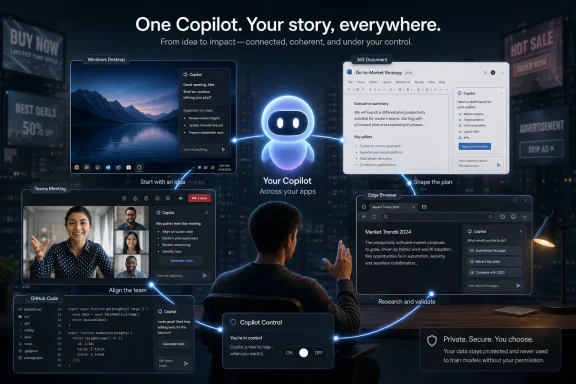
Droga5 is not arriving as a stranger to Redmond. The Accenture Song-owned agency has worked with Microsoft before, including on Xbox and Windows 11, which matters because Copilot is not a conventional product launch. It is a layer Microsoft is trying to stretch across Windows, Microsoft 365, Edge, Bing, GitHub, security tooling, and enterprise workflows.
That breadth is the opportunity and the problem. Microsoft has spent the past several years making “Copilot” the umbrella name for nearly every AI-assisted interaction in its ecosystem. The result is a brand that is everywhere and, for many users, still strangely hard to describe.
A global creative partner can help with that, but only up to a point. Advertising can sharpen the promise, reduce confusion, and make a product feel culturally inevitable. It cannot, by itself, make an assistant consistently useful inside Excel, Windows settings, Outlook, Teams, or the browser.
That is why the reported Droga5 appointment is more interesting than the usual agency-of-record news. Microsoft is not simply buying campaigns. It is buying coherence.
But visibility is not the same as understanding. For consumers, Copilot can mean a chatbot in the Windows taskbar, an assistant in Edge, a search-adjacent AI answer engine, or a creative tool. For businesses, it can mean Microsoft 365 Copilot, Copilot Studio, GitHub Copilot, Security Copilot, role-specific agents, or a broader pitch about AI transformation.
The word Copilot was supposed to solve that fragmentation by giving Microsoft one simple metaphor. A copilot assists, does not replace, and sits beside the user. The metaphor is elegant. The implementation has become cluttered.
That clutter creates a hard assignment for Droga5. The agency is not being asked merely to make Copilot seem exciting. It is being asked to make a sprawling family of AI products feel like a single, trustworthy idea.
Copilot needs a different kind of persuasion. It is not a laptop hinge, a touchscreen, or a magnesium chassis. It is an invisible system that touches documents, calendars, code, meetings, searches, and potentially sensitive corporate data.
That makes the creative brief harder. Microsoft has to persuade users that Copilot is useful without making it seem intrusive, powerful without making it seem reckless, and integrated without making it feel forced. In other words, the advertising challenge mirrors the product challenge.
Droga5’s best-known work has often succeeded by simplifying a complex product into a human idea. Microsoft now needs exactly that discipline. But the agency will also have to avoid the trap that has hurt much AI marketing: promising magic when the daily experience is still full of caveats.
But AI markets do not wait for brand architecture to settle. ChatGPT became the default mental model for mainstream AI assistants. Claude built a reputation among many knowledge workers for writing and reasoning. Google pushed Gemini across its own productivity and Android ecosystems. Specialized tools kept appearing in code, design, research, customer service, and data analysis.
Microsoft’s advantage is distribution. Its weakness is that distribution can look like imposition when users do not feel the product has earned the space it occupies. A Copilot button in the right place can feel like convenience. A Copilot button that interrupts a spreadsheet can feel like an ad inside paid software.
That distinction is everything. Microsoft is trying to turn Copilot into a default behavior, not merely an optional feature. To do that, it needs users to experience the product as help rather than pressure.
Enterprise buyers do not need another inspirational video about “unlocking creativity.” They need to know whether Copilot saves measurable time, whether it respects permissions, whether it leaks sensitive context into unexpected places, whether it can be audited, and whether employees actually use it after the first week. A $30-per-user-per-month AI license changes the internal politics of productivity software.
That is where Microsoft’s brand challenge becomes operational. If Copilot is sold as a transformative assistant but behaves like a search box with better grammar, admins will hear about it. If it summarizes meetings well but struggles with structured workflows, departments will notice. If employees need prompt training, policy guardrails, and app-by-app explanation before they see value, the product is not yet self-explanatory.
Droga5 can help Microsoft tell a cleaner story to executives and end users. But CIOs and sysadmins will still judge Copilot by deployment friction, telemetry, adoption, security posture, and support tickets. The campaign may open the door. The admin console closes the deal.
That makes AI integration in Windows more sensitive than AI integration in a standalone web service. If Copilot helps a user find a setting, summarize a file, or automate a small task, it feels native and useful. If it gives vague guidance, points to the wrong control, or interrupts an established workflow, it feels like the operating system has become a sales surface.
Microsoft knows this tension because it has lived through versions of it before. Internet Explorer bundling, Edge promotion, Teams integration, Start menu ads, Microsoft account nudges, and OneDrive prompts all taught users to be suspicious when Microsoft says a feature is “integrated.” Integration can be convenient. It can also be coercive.
Copilot inherits that baggage. Droga5’s job will be to make Copilot feel like a companion, not another Microsoft upsell. That is a high-wire act, because the more Microsoft pushes AI into Windows, the more users will ask whether they are getting assistance or being enrolled in a strategy.
This is not merely a branding inconvenience. It affects user trust. If someone has a poor experience with one Copilot surface, that disappointment can bleed into their perception of the whole brand. A weak Windows demo can undermine confidence in a business tool. A confusing Office integration can make the broader AI pitch feel inflated.
Microsoft’s answer has often been to argue that context matters. Copilot in Microsoft 365 is not just a general chatbot; it works with organizational data and Microsoft Graph permissions. GitHub Copilot is not the same thing as Copilot in Edge. Security Copilot has a different audience and risk model.
That explanation is true, but it is not simple. Great brands compress complexity. Copilot currently expands it.
The strongest Copilot story is probably not “AI everywhere.” It is more likely “the right help, in the right context, with the right controls.” That is less spectacular but more credible. It also maps better to how real people adopt productivity software.
The agency’s task, then, is not simply to make Copilot look futuristic. It is to make restraint feel like confidence. If Microsoft can show Copilot solving ordinary problems reliably—finding the right document, preparing a useful meeting brief, explaining a confusing spreadsheet, drafting a reply that sounds like the user, helping an admin investigate an incident—it may do more for the brand than another cinematic montage of glowing interfaces.
That is the irony of AI advertising in 2026. The companies most tempted to sell wonder may win more trust by selling competence.
Habit is harder than awareness because it depends on repeated reward. Users return to ChatGPT, Claude, Gemini, or GitHub Copilot when the tool reliably helps them finish something. They avoid tools that require too much correction, too much explanation, or too much patience.
Microsoft’s advantage is that Copilot can appear at the exact moment of work. It does not need users to open a separate tab if it is already inside Word, Excel, Teams, Outlook, Edge, or Windows. That should be a formidable advantage.
But embedded AI also raises the bar. If a standalone chatbot fails, the user blames the chatbot. If Copilot fails inside Excel, Outlook, or Windows, the user may blame Microsoft for degrading the workspace. The closer AI gets to the operating system and productivity suite, the less tolerance users have for theatrical imperfection.
Droga5 can help create desire, but habit will come from usefulness. In AI, the product demo is not a launch event. It is Tuesday afternoon.
Users want control. Admins want policy. Security teams want logging, boundaries, and assurances that experimental capabilities will not outrun governance. Developers want clarity on training, code handling, and intellectual-property exposure. Consumers want to know why an assistant is appearing and what it can see.
A credible Copilot campaign must therefore treat control as part of the value proposition, not as a compliance appendix. Microsoft’s best argument is not that Copilot is unavoidable. It is that Copilot is useful when invited, governed when deployed, and removable or suppressible when unwanted.
That may sound less glamorous than “the future of work,” but it is closer to the concerns of the people who actually manage Windows environments. The AI assistant that earns trust will not be the one with the loudest icon. It will be the one that knows when not to appear.
That gap is dangerous. When marketing outruns product reality, users become cynical. When product reality is strong but the story is muddled, users become indifferent. Copilot has shown signs of both problems depending on where it appears.
Droga5’s opportunity is to help Microsoft narrow that gap. The agency can give Copilot a sharper public identity, better demonstrations, and a more emotionally intelligent tone. It can help Microsoft stop talking about AI as a destiny and start showing it as a tool.
But the burden remains with Microsoft. Creative work can frame the promise. Engineering, design, pricing, support, and governance must make the promise feel earned.
 Microsoft Hands Copilot to an Agency That Knows How to Sell Platforms
Droga5 is not arriving as a stranger to Redmond. The Accenture Song-owned agency has worked with Microsoft before, including on Xbox and Windows 11, which matters because Copilot is not a conventional product launch. It is a layer Microsoft is trying to stretch across Windows, Microsoft 365, Edge, Bing, GitHub, security tooling, and enterprise workflows.That breadth is the opportunity and the problem. Microsoft has spent the past several years making “Copilot” the umbrella name for nearly every AI-assisted interaction in its ecosystem. The result is a brand that is everywhere and, for many users, still strangely hard to describe.
A global creative partner can help with that, but only up to a point. Advertising can sharpen the promise, reduce confusion, and make a product feel culturally inevitable. It cannot, by itself, make an assistant consistently useful inside Excel, Windows settings, Outlook, Teams, or the browser.
That is why the reported Droga5 appointment is more interesting than the usual agency-of-record news. Microsoft is not simply buying campaigns. It is buying coherence.
Copilot’s Branding Problem Is Really a Product Problem
Microsoft has been unusually aggressive in making Copilot visible. The company has put the brand into Windows, Office apps, browsers, developer tools, and enterprise admin conversations with a speed that feels less like a rollout and more like a land grab. That strategy has one obvious advantage: users cannot miss it.But visibility is not the same as understanding. For consumers, Copilot can mean a chatbot in the Windows taskbar, an assistant in Edge, a search-adjacent AI answer engine, or a creative tool. For businesses, it can mean Microsoft 365 Copilot, Copilot Studio, GitHub Copilot, Security Copilot, role-specific agents, or a broader pitch about AI transformation.
The word Copilot was supposed to solve that fragmentation by giving Microsoft one simple metaphor. A copilot assists, does not replace, and sits beside the user. The metaphor is elegant. The implementation has become cluttered.
That clutter creates a hard assignment for Droga5. The agency is not being asked merely to make Copilot seem exciting. It is being asked to make a sprawling family of AI products feel like a single, trustworthy idea.
The Panay Films Exit Signals a Change in Microsoft’s AI Storytelling
The reported replacement of Panay Films is symbolically loaded, even if the mechanics are ordinary agency business. Panos Panay, before leaving Microsoft for Amazon, was closely associated with the Surface-era style of Microsoft product storytelling: tactile devices, emotional demos, polished launch videos, and hardware-as-lifestyle presentation. That mode worked when Microsoft needed Windows PCs to feel desirable again.Copilot needs a different kind of persuasion. It is not a laptop hinge, a touchscreen, or a magnesium chassis. It is an invisible system that touches documents, calendars, code, meetings, searches, and potentially sensitive corporate data.
That makes the creative brief harder. Microsoft has to persuade users that Copilot is useful without making it seem intrusive, powerful without making it seem reckless, and integrated without making it feel forced. In other words, the advertising challenge mirrors the product challenge.
Droga5’s best-known work has often succeeded by simplifying a complex product into a human idea. Microsoft now needs exactly that discipline. But the agency will also have to avoid the trap that has hurt much AI marketing: promising magic when the daily experience is still full of caveats.
The AI Market Has Moved Faster Than Microsoft’s Message
When Microsoft first attached itself to OpenAI’s rise, the strategic logic was brutally clear. Google looked vulnerable, enterprise customers were suddenly curious about generative AI, and Microsoft had a once-in-a-generation chance to make Office feel new again. Copilot was the banner under which all of that could happen.But AI markets do not wait for brand architecture to settle. ChatGPT became the default mental model for mainstream AI assistants. Claude built a reputation among many knowledge workers for writing and reasoning. Google pushed Gemini across its own productivity and Android ecosystems. Specialized tools kept appearing in code, design, research, customer service, and data analysis.
Microsoft’s advantage is distribution. Its weakness is that distribution can look like imposition when users do not feel the product has earned the space it occupies. A Copilot button in the right place can feel like convenience. A Copilot button that interrupts a spreadsheet can feel like an ad inside paid software.
That distinction is everything. Microsoft is trying to turn Copilot into a default behavior, not merely an optional feature. To do that, it needs users to experience the product as help rather than pressure.
Enterprise IT Wants Value, Not Vibes
For WindowsForum’s audience, the consumer advertising angle is only half the story. The more consequential fight is inside businesses, where Microsoft is trying to justify AI licensing, governance changes, training programs, and new data practices across Microsoft 365 tenants.Enterprise buyers do not need another inspirational video about “unlocking creativity.” They need to know whether Copilot saves measurable time, whether it respects permissions, whether it leaks sensitive context into unexpected places, whether it can be audited, and whether employees actually use it after the first week. A $30-per-user-per-month AI license changes the internal politics of productivity software.
That is where Microsoft’s brand challenge becomes operational. If Copilot is sold as a transformative assistant but behaves like a search box with better grammar, admins will hear about it. If it summarizes meetings well but struggles with structured workflows, departments will notice. If employees need prompt training, policy guardrails, and app-by-app explanation before they see value, the product is not yet self-explanatory.
Droga5 can help Microsoft tell a cleaner story to executives and end users. But CIOs and sysadmins will still judge Copilot by deployment friction, telemetry, adoption, security posture, and support tickets. The campaign may open the door. The admin console closes the deal.
Windows Is the Most Dangerous Place to Overpromise
Copilot’s presence in Windows carries special risk because Windows is not merely another app. It is the environment in which users do everything else. When Microsoft changes Windows, it changes the daily weather for hundreds of millions of people.That makes AI integration in Windows more sensitive than AI integration in a standalone web service. If Copilot helps a user find a setting, summarize a file, or automate a small task, it feels native and useful. If it gives vague guidance, points to the wrong control, or interrupts an established workflow, it feels like the operating system has become a sales surface.
Microsoft knows this tension because it has lived through versions of it before. Internet Explorer bundling, Edge promotion, Teams integration, Start menu ads, Microsoft account nudges, and OneDrive prompts all taught users to be suspicious when Microsoft says a feature is “integrated.” Integration can be convenient. It can also be coercive.
Copilot inherits that baggage. Droga5’s job will be to make Copilot feel like a companion, not another Microsoft upsell. That is a high-wire act, because the more Microsoft pushes AI into Windows, the more users will ask whether they are getting assistance or being enrolled in a strategy.
A Better Campaign Cannot Hide a Confusing Portfolio
One uncomfortable truth for Microsoft is that “Copilot” now carries too many meanings. There is consumer Copilot, Microsoft 365 Copilot, GitHub Copilot, Copilot in Windows, Copilot Chat, Copilot Studio, Security Copilot, industry copilots, and agentic experiences wearing the same family name. Some are mature. Some are experimental. Some are bundled. Some are premium. Some are aimed at individuals; others are aimed at entire organizations.This is not merely a branding inconvenience. It affects user trust. If someone has a poor experience with one Copilot surface, that disappointment can bleed into their perception of the whole brand. A weak Windows demo can undermine confidence in a business tool. A confusing Office integration can make the broader AI pitch feel inflated.
Microsoft’s answer has often been to argue that context matters. Copilot in Microsoft 365 is not just a general chatbot; it works with organizational data and Microsoft Graph permissions. GitHub Copilot is not the same thing as Copilot in Edge. Security Copilot has a different audience and risk model.
That explanation is true, but it is not simple. Great brands compress complexity. Copilot currently expands it.
Droga5 Gets the Account Because Microsoft Needs Taste as Much as Scale
Microsoft has never lacked distribution, engineering capacity, or enterprise relationships. What it has sometimes lacked is taste: the editorial sense of what to emphasize, what to withhold, and when to let a product prove itself quietly before shouting about it. That matters in AI because the category is already saturated with exaggerated claims.The strongest Copilot story is probably not “AI everywhere.” It is more likely “the right help, in the right context, with the right controls.” That is less spectacular but more credible. It also maps better to how real people adopt productivity software.
The agency’s task, then, is not simply to make Copilot look futuristic. It is to make restraint feel like confidence. If Microsoft can show Copilot solving ordinary problems reliably—finding the right document, preparing a useful meeting brief, explaining a confusing spreadsheet, drafting a reply that sounds like the user, helping an admin investigate an incident—it may do more for the brand than another cinematic montage of glowing interfaces.
That is the irony of AI advertising in 2026. The companies most tempted to sell wonder may win more trust by selling competence.
The Competitive Fight Is for Habit, Not Awareness
Copilot does not suffer from obscurity. Anyone using modern Microsoft software has almost certainly seen the name. The question is whether they have formed a habit around it.Habit is harder than awareness because it depends on repeated reward. Users return to ChatGPT, Claude, Gemini, or GitHub Copilot when the tool reliably helps them finish something. They avoid tools that require too much correction, too much explanation, or too much patience.
Microsoft’s advantage is that Copilot can appear at the exact moment of work. It does not need users to open a separate tab if it is already inside Word, Excel, Teams, Outlook, Edge, or Windows. That should be a formidable advantage.
But embedded AI also raises the bar. If a standalone chatbot fails, the user blames the chatbot. If Copilot fails inside Excel, Outlook, or Windows, the user may blame Microsoft for degrading the workspace. The closer AI gets to the operating system and productivity suite, the less tolerance users have for theatrical imperfection.
Droga5 can help create desire, but habit will come from usefulness. In AI, the product demo is not a launch event. It is Tuesday afternoon.
The Trust Story Has to Include the Off Switch
There is another reason Copilot’s positioning is delicate: AI assistants operate near personal and corporate context. They summarize, infer, draft, retrieve, and increasingly act. That creates a different emotional contract than a normal software feature.Users want control. Admins want policy. Security teams want logging, boundaries, and assurances that experimental capabilities will not outrun governance. Developers want clarity on training, code handling, and intellectual-property exposure. Consumers want to know why an assistant is appearing and what it can see.
A credible Copilot campaign must therefore treat control as part of the value proposition, not as a compliance appendix. Microsoft’s best argument is not that Copilot is unavoidable. It is that Copilot is useful when invited, governed when deployed, and removable or suppressible when unwanted.
That may sound less glamorous than “the future of work,” but it is closer to the concerns of the people who actually manage Windows environments. The AI assistant that earns trust will not be the one with the loudest icon. It will be the one that knows when not to appear.
The Real Brief Is to Make Copilot Feel Earned
Microsoft’s reported agency change comes at a moment when the company’s AI ambition is both obvious and contested. The company has invested heavily, integrated quickly, and pushed Copilot as a defining layer of its future. Yet the user experience has not always matched the scale of the campaign.That gap is dangerous. When marketing outruns product reality, users become cynical. When product reality is strong but the story is muddled, users become indifferent. Copilot has shown signs of both problems depending on where it appears.
Droga5’s opportunity is to help Microsoft narrow that gap. The agency can give Copilot a sharper public identity, better demonstrations, and a more emotionally intelligent tone. It can help Microsoft stop talking about AI as a destiny and start showing it as a tool.
But the burden remains with Microsoft. Creative work can frame the promise. Engineering, design, pricing, support, and governance must make the promise feel earned.
The Copilot Campaign Microsoft Actually Needs
The reported Droga5 appointment gives Microsoft a chance to reset how it talks about Copilot before user skepticism hardens into habit. The most useful campaign would be less about declaring an AI era and more about proving that Microsoft understands why people are wary.- Microsoft needs to explain which Copilot it is selling in each context, because the same brand now covers very different products and expectations.
- Microsoft needs to show mundane, repeatable productivity wins rather than cinematic AI magic that collapses under real-world use.
- Microsoft needs to make controls, admin policy, privacy boundaries, and opt-out paths part of the story instead of treating them as fine print.
- Microsoft needs to stop assuming distribution equals affection, especially inside Windows and Office where users are sensitive to forced surfaces.
- Microsoft needs to win over practitioners as well as executives, because Copilot’s reputation will be shaped by daily workflows rather than keynote language.
References
- Primary source: Exchange4Media
Published: Fri, 05 Jun 2026 03:09:22 GMT

Droga5 named global creative partner for Microsoft Copilot
The account is reportedly valued at $20 million to $30 million in annual agency fees.
www.exchange4media.com
- Official source: microsoft.com
- Related coverage: techspot.com
Customers complain that Copilot isn't as good as ChatGPT, Microsoft blames misunderstanding and misuse | TechSpot
Microsoft's tactics when it comes to pushing Copilot onto users are comparable to its Windows 10 and 11 upgrade campaigns. The Redmond giant has launched a Pro...www.techspot.com - Related coverage: pcworld.com
80 Copilots later, Microsoft is finally confronting the mess | PCWorld
An AI researcher has set out to chart all the different instances of Copilot in Microsoft's services. There are far, far more than you think!www.pcworld.com - Related coverage: techcrunch.com
Microsoft Copilot: Everything you need to know about Microsoft's AI | TechCrunch
Want to learn more about Microsoft's family of Copilots? Here's our guide to Copilot and Copilot in Microsoft 365, as well as GitHub Copilot.techcrunch.com - Official source: news.microsoft.com
Microsoft: AI in Action - Microsoft: AI in Action
Get the scoop on how leading companies around the world are embracing Microsoft AI capabilities to reinvent customer engagement, enrich employee experiences, reshape business processes, and bend the curve on innovation.news.microsoft.com
- Related coverage: arstechnica.com
Critics scoff after Microsoft warns AI feature can infect machines and pilfer data - Ars Technica
Integration of Copilot Actions into Windows is off by default, but for how long?arstechnica.com - Related coverage: windowscentral.com
Microsoft Copilot Windows 11 setting fails in new ad | Windows Central
Microsoft's obsession with AI in Windows 11 is becoming so toxic that its latest ad campaign shows Copilot failing to help a user in their quest to change a setting, while pretending it worked as intended.www.windowscentral.com - Related coverage: mediapost.com
Microsoft Explains How It Made An Ad From AI 04/28/2025
Microsoft Explains How It Made An Ad From AI - 04/28/2025www.mediapost.com - Related coverage: campaignlive.com
Microsoft appoints global media agency | Campaign US
US portion of the account is worth an estimated $559m.. From Campaign USwww.campaignlive.com - Related coverage: four.agency

Microsoft spotlights Four as AI pioneers | Four Agency
Four was one of the first agencies to adopt Copilot for Microsoft 365 - Microsoft’s enterprise AI product – at the beginning of the year. It formed a key part of our strategy of human-centric, responsible AI, and we’ve wasted no time in rolling it out across the agency, alongside clear policies...
www.four.agency
- Related coverage: techradar.com
'Copilot is for entertainment purposes only': Even Microsoft's official terms and conditions say you really shouldn't be using its AI at work | TechRadar
"Use Copilot at your own risk," Microsoft sayswww.techradar.com - Related coverage: tomshardware.com
Microsoft responds to Gaming Copilot controversy, says it uses screenshots to understand in-game events, not for training AI models — optional feature can be turned off, but not easily uninstalled | Tom's Hardware
Microsoft says it isn't using your data to train its AI.www.tomshardware.com - Related coverage: axios.com
Microsoft data shows Copilot is growing in use for health. relationships
Users are increasingly turning to Microsoft Copilot for non-work topics.www.axios.com
- Official source: cdn-dynmedia-1.microsoft.com