

Dynatrace’s new Azure-focused cloud operations offering promises to shift observability from “tell me what happened” to “help me fix it safely,” introducing deeper Azure telemetry, built‑in prevention, agentic remediation, and continuous optimization — a preview announced at Microsoft Ignite with general availability targeted for early 2026.
Modern Azure estates are increasingly complex: containerized microservices, serverless functions, and specialized AI workloads multiply telemetry volume and operational surface area. Observability vendors have responded by layering AI on top of telemetry to reduce noise, find root causes, and recommend fixes. Dynatrace’s latest announcement positions the company’s Davis causal AI and GRAIL telemetry lakehouse as the analytic core that feeds actionable remediation into Microsoft’s portal-native execution surface, Azure SRE Agent. This is not merely a product update; it is a vendor play to operationalize “agentic operations” — systems that can analyze, recommend, and (under governance) act inside the cloud control plane. For Azure-first teams, that means observability data could soon be surfaced and executed where operators already work: inside the Azure portal and integrated with Azure identity, governance, and billing models.
Attendees at Microsoft Ignite will have an early chance to see live demos and ask detailed questions; teams planning to evaluate Dynatrace’s preview should use that opportunity to validate integration depth, request demonstrable proof points, and collect reference data to model AAU and telemetry costs before any broad rollout.
Source: HPCwire Dynatrace Announces New Cloud Operations Solution for Microsoft Azure - BigDATAwire
 Background
Modern Azure estates are increasingly complex: containerized microservices, serverless functions, and specialized AI workloads multiply telemetry volume and operational surface area. Observability vendors have responded by layering AI on top of telemetry to reduce noise, find root causes, and recommend fixes. Dynatrace’s latest announcement positions the company’s Davis causal AI and GRAIL telemetry lakehouse as the analytic core that feeds actionable remediation into Microsoft’s portal-native execution surface, Azure SRE Agent. This is not merely a product update; it is a vendor play to operationalize “agentic operations” — systems that can analyze, recommend, and (under governance) act inside the cloud control plane. For Azure-first teams, that means observability data could soon be surfaced and executed where operators already work: inside the Azure portal and integrated with Azure identity, governance, and billing models. Overview of the Announcement
Dynatrace disclosed a purpose-built cloud operations solution for Microsoft Azure, now in preview and showcased at Microsoft Ignite, with broader availability planned for early 2026. The vendor highlights four headline capabilities:- Comprehensive Visibility — expanded telemetry and metadata ingestion across Azure services to improve topology and causal models.
- Auto‑Prevention — proactive health alerts, warning signals, and templates to detect emerging risks before they escalate.
- Auto‑Remediation — intelligent automation and runbook integration that can remediate or suggest fixes across AKS, Azure VMs, Functions, and AI Foundry workloads.
- Auto‑Optimization — continuous rightsizing and efficiency recommendations to reduce resource waste and control cloud spend.
What the New Solution Actually Does
Technical scope and telemetry
Dynatrace’s pitch centers on richer telemetry ingestion from Azure Monitor and other Azure services. That means the platform will collect and correlate traces, metrics, logs, and business telemetry, enrich them with topology and historical context in its GRAIL lakehouse, and feed causal signals into Azure incident workflows. The goal: higher‑fidelity full‑stack maps and fewer false positives when identifying root cause.Agentic integration: Dynatrace → Azure SRE Agent
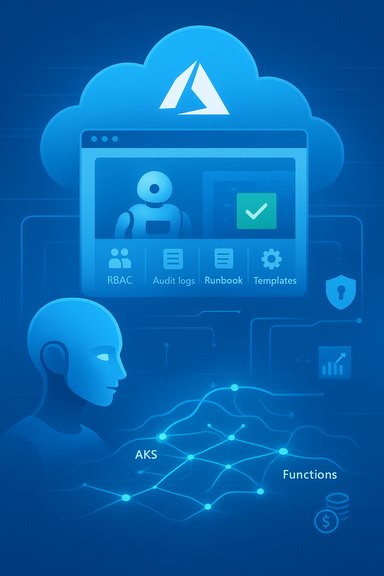
The integration maps Dynatrace causal outputs (diagnostics, implicated resources, confidence scores, and suggested remediation steps) into the Azure SRE Agent’s investigative UI. The Azure SRE Agent can surface remediation hints and — where governance permits — execute runbook steps under controlled approval flows. This converts enriched observability into a portal-native operational surface.Automation lifecycle and guardrails
Both vendors emphasize incremental automation: read‑only diagnostics → suggested remediation hints → gated low‑risk actions → broader automation once confidence is proven. The integration is designed to work with identity, role-based approvals, audit trails, and runbook templates to maintain human oversight and compliance.Verified Technical Claims and What Requires Caution
Several factual items are independently verifiable:- The Dynatrace announcement and preview availability are published in Dynatrace’s press materials.
- Dynatrace publicly states integration with Microsoft’s Azure SRE Agent and positions itself as the first observability vendor to do so. This is documented in vendor materials.
- Azure SRE Agent’s billing model and unit definitions (Azure Agent Unit or AAU) are published in Microsoft’s pricing and product pages: baseline 4 AAUs per hour per agent and 0.25 AAUs per second for active tasks. These specifics are confirmed in Microsoft documentation.
- Precise MTTR reductions, specific percentage cost savings, and “first‑to‑market” exclusivity claims: these are marketing claims that depend on definitions, the depth of integration, and customer contexts. Independent proof points and reference customers are required before accepting concrete ROI numbers.
Pricing and Cost Modeling: Azure Agent Units (AAUs) and Observability Spend
One of the most practical implications of this integration is cost modeling. Azure SRE Agent billing uses Azure Agent Units (AAUs). Microsoft documents the consumption model as:- Baseline (always‑on): 4 AAUs per hour per agent.
- Active tasks: 0.25 AAU per second per agent task (charged only while task executes).
- AAUs (SRE Agent baseline + active tasks)
- Dynatrace telemetry ingestion, retention, and platform fees
- Egress or API invocation costs (if data crosses tenancy boundaries)
- Operational overhead for runbook maintenance and FinOps governance
- Baseline AAUs per agent, per day = 4 AAUs/hour * 24 = 96 AAUs/day.
- Monthly baseline AAUs per agent ≈ 96 * 30 = 2,880 AAUs.
- Active task AAUs depend on frequency and duration: 0.25 AAU/second = 15 AAUs/minute of active task runtime. If an agent runs 10 minutes of active tasks/day, that’s 150 AAUs/day extra.
Security, Governance, and Compliance Considerations
The integration shifts remediation from third‑party consoles into Microsoft’s control plane — a convenience that carries security and governance responsibilities.- Least privilege and RBAC: Ensure connectors and SRE Agent service identities have narrowly scoped permissions. Over-permissive service principals enable dangerous automation.
- Auditability: Every automated action must be tied to an auditable chain (Azure Activity Logs, resource provider logs). Keep immutable records of decisions, approvals, and runbook execution.
- Model governance: If agentic suggestions are generated by LLMs or generative AI, version prompts, capture rationale, and maintain human review processes to prevent action drift. Treat model outputs as recommendations, not authority, until proven safe.
- Data residency and compliance: Preview region restrictions and telemetry residency must align with regulatory requirements; confirm regional availability during the preview and again at GA.
Strengths: Where Dynatrace + Azure SRE Agent Can Deliver Value
- Reduced context switching: Embedding causal diagnostics into the Azure portal lowers friction between detection and mitigation. Platform teams can work where they already manage infrastructure.
- Causal analytics for high‑signal remediation: Dynatrace’s causal engine can prioritize root causes rather than symptomatic alerts, improving the precision of recommended runbook actions. This better signal fidelity matters for complex distributed systems.
- Incremental automation model: Built‑in guardrails (approval gates, human-in-the-loop) make the path to automation conservative and auditable — a practical approach for enterprise SRE teams.
- FinOps alignment: Auto‑optimization features that recommend rightsizing and idle resource cleanup help teams wrestle with runaway costs from AI and GPU workloads. If operationalized, these can deliver measurable savings.
Risks and Limits: What Could Go Wrong
- Over‑automation hazards: Poorly tested automations can cascade changes across distributed systems. Automations must be idempotent, tested, and limited to low‑risk actions until trust is established.
- Cost surprises: AAU consumption plus telemetry ingestion can produce non‑trivial monthly bills. High‑cardinality telemetry (AKS pods, GPU clusters, per‑request traces) is especially costly. Model AAU usage during pilot and cap telemetry cardinality.
- Vendor marketing vs. reality: Claims like “first observability platform to integrate” or “move closer to fully autonomous operations” are marketing positions and depend heavily on technical definitions and depth of partnership. Validate the integration’s practical scope in a pilot.
- Multi‑cloud mismatch: Organizations with heterogeneous clouds must either accept a split tooling model or evaluate whether equivalent integrations exist for other clouds; the Dynatrace–Azure SRE Agent combination is Azure‑native and optimized for Azure-first estates.
Practical Pilot Plan: How to Test the Integration Safely
- Define KPIs before you start: MTTR reduction targets, percent of incidents fully diagnosed by AI, percent of remediations automated, and cost savings from rightsizing.
- Start in read‑only mode: Connect Dynatrace telemetry and let the Azure SRE Agent surface remediation hints without executing actions. Collect data on suggestion accuracy.
- Pilot on low‑risk workloads: Use dev/test AKS namespaces, sandboxed Function apps, or noncritical AI training clusters.
- Enable gated automation for trivial, idempotent tasks (e.g., cache clears, targeted service restarts), requiring a single approval at first.
- Measure and iterate: After each pilot window, analyze false positives, unintended side effects, AAU consumption, and actual cost impact. Update runbooks and confidence thresholds accordingly.
How to Evaluate Integration Depth During Procurement
Ask vendors these technical and operational questions:- Is the integration a one‑way telemetry export or a bi‑directional context exchange that reconciles incident state?
- Which Azure telemetry sources and resource types are included out of the box (AKS, AI Foundry, VMs, Functions, storage, networking)?
- Which remediation playbooks are available as templates, and can they be versioned as code?
- What RBAC scopes are required for runbook execution — can permissions be narrowed to resource group or role level?
- What are expected AAU consumption patterns for our estate (estimate baseline + active tasks)?
Realistic Expectations for SRE and Platform Teams
- Expect incremental value: the first gains are better diagnostics and fewer false positives; automation benefits follow once runbooks and guardrails are mature.
- Be realistic about automation coverage: not every incident is automatable. Focus on routine, idempotent tasks that are safe to auto‑apply.
- Institutionalize runbooks as code: automated remediation requires up‑to‑date runbooks, CI testing, and a clear rollback strategy.
- Monitor telemetry cardinality: prune unnecessary high-cardinality tags and adjust sampling to control costs and maintain inference performance.
Broader Market Context
The Dynatrace–Microsoft announcement lands in a broader industry trend: observability platforms are moving from passive monitoring toward agentic, action‑oriented operations. Hyperscalers are building native agentic surfaces (Azure SRE Agent is one example) and inviting partner signals into that control plane. The dynamic redefines vendor roles: observability providers must now prove they can not only detect problems but also provide safe, auditable remediation guidance that works cleanly with cloud provider governance and billing. Analysts note that rising AI investment and telemetry volumes make integrated observability + automation a market priority, but operational complexity, cost, and governance concerns will determine who wins in production deployments.Conclusion
Dynatrace’s Azure cloud operations preview is a significant step toward agentic observability on Azure: deeper telemetry ingestion, auto‑prevention, auto‑remediation, and auto‑optimization combined with a portal‑native execution surface via Azure SRE Agent create a compelling proposition for Azure‑first enterprises. The announcement is supported by verifiable product materials and Microsoft pricing documentation, but the real test will be production pilots that demonstrate safe automation, measurable MTTR reductions, and cost‑effective AAU usage. For platform teams, the pragmatic path is clear: pilot conservatively, measure everything (technical and financial), lock down RBAC and audit trails, and treat automation as an objective that is earned through repeatable, tested outcomes — not a checkbox to enable at scale overnight.Attendees at Microsoft Ignite will have an early chance to see live demos and ask detailed questions; teams planning to evaluate Dynatrace’s preview should use that opportunity to validate integration depth, request demonstrable proof points, and collect reference data to model AAU and telemetry costs before any broad rollout.
Source: HPCwire Dynatrace Announces New Cloud Operations Solution for Microsoft Azure - BigDATAwire
