

Easy Dynamics’ announcement that it has earned the Microsoft Azure Solutions Partner Designation in Security closes a year of rapid partner progress for the McLean, Virginia firm and signals an important capability shift for organizations that rely on Microsoft Azure for mission-critical, compliance-sensitive workloads. The designation — confirmed by Easy Dynamics’ December 11, 2025 press release — adds Security to the company’s earlier 2025 wins in Data & AI, Digital & App Innovation, and Infrastructure, and positions the company to claim deeper collaboration, prioritized technical resources, and enhanced co-sell opportunities with Microsoft.
Concurrently, Microsoft tightened baseline security expectations for partners: program communications and channel journalism in 2025 flagged elevated security requirements for Partner Center hygiene, admin MFA, and incident response obligations — all aimed at raising the partner ecosystem’s operational bar. These policy and program changes have direct procurement consequences: customers can now demand higher minimum security baselines from partner vendors.
Easy Dynamics’ Security designation is a meaningful, program‑level validation that should accelerate conversations about secure Azure delivery — particularly for federal and compliance‑driven programs. That value will be realized only through careful validation of the company’s audit artifacts, customer references, and operational practices. The badge opens doors; the deliverables and controls inside contracts keep them open.
Source: Markets Financial Content https://markets.financialcontent.co...nation-delivering-continued-azure-excellence/
 Background / Overview
What the Microsoft Solutions Partner designation is — and why it matters
Microsoft’s Solutions Partner framework is the vendor’s primary mechanism for signaling partner capability across six broad solution areas: Security, Data & AI (Azure), Digital & App Innovation (Azure), Infrastructure (Azure), Modern Work, and Business Applications. Achieving a Solutions Partner designation requires a partner to meet thresholds across three core pillars: Performance, Skilling, and Customer Success — collectively summarized in a Partner Capability Score that is validated in Partner Center. The designation provides marketing visibility (a badge), discovery advantages inside Microsoft sales motions, and program benefits intended to accelerate partner-led customer engagements. Microsoft has also expanded the program with differentiated paths (Enterprise and SMB) and periodic skilling updates to reflect evolving technical prerequisites, which means qualification routes and certification requirements can change during the fiscal year. Partners typically pursue multiple designations to show end‑to‑end capabilities across cloud architecture, app modernization, analytics and security.The Security designation specifically
The Solutions Partner for Security signals that a partner has demonstrated integrated capabilities across identity, threat protection, information protection, and cloud security operations using Microsoft security technologies. Microsoft measures this through Partner Capability Score metrics (performance, skilling, customer success) and offers an SMB path to make the designation accessible to smaller partners. Security partners also gain access to solution plays, partner enablement materials, and prioritized engagement channels that can increase co-sell positioning. The program also maps to additional, audit‑level specializations in security that have distinct ACR and evidence thresholds.What Easy Dynamics announced
Key claims from the company
According to Easy Dynamics’ December 11, 2025 announcement, the company:- Has been awarded the Microsoft Azure Solutions Partner Designation in Security.
- Previously earned the Data & AI, Digital & App Innovation, and Infrastructure designations earlier in 2025, creating cross‑area Azure capabilities.
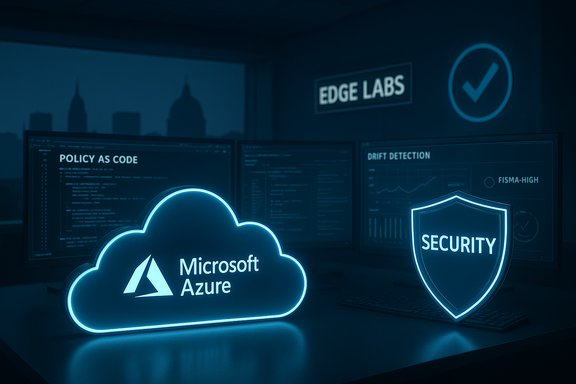
- Demonstrated an integrated delivery approach through its internal innovation hub, EDGE Labs, citing deployable, FISMA‑High ready Infrastructure‑as‑Code modules that embed policy‑as‑code, automated compliance validation, and continuous drift detection. The company positions this pattern as a repeatable method for federal and regulated customers.
What Easy Dynamics stands to gain operationally
Easy Dynamics’ release also highlights expected operational benefits commonly associated with Solutions Partner designation, including:- Priority access to Microsoft technical resources and program‑level co‑sell motions.
- Early access to emerging Azure capabilities and deeper engagement channels that can matter for federal and regulated procurements.
- A stronger go‑to‑market story where security, infrastructure, app modernization and analytics are delivered as a unified solution rather than as point products.
Technical verification and program requirements
How Microsoft qualifies Security partners
Microsoft’s validation model for Solutions Partner designations relies on three measurable pillars:- Performance — typically measured through Azure Consumption Revenue (ACR) or other performance signals tied to customer deployments.
- Skilling — role‑based certifications held by named individuals in the partner organization. Microsoft periodically updates which certifications count and how prerequisite certifications are applied.
- Customer Success — evidence of customer projects, references, and outcomes logged in Partner Center.
Specializations and ACR thresholds (what to watch for)
Beyond the Solutions Partner designation, security specializations exist and require additional demonstration of workload‑specific Azure consumption and audit evidence. For example, Microsoft’s Cloud Security specialization lists specific ACR filters (for example, Hybrid Environment XDR and Network Security categories) and minimum revenue thresholds that partners must meet to qualify. One publicly documented example shows a $200,000 ACR requirement tied to certain Cloud Security pathways — a concrete, auditable metric partners must demonstrate to obtain narrow specializations. These thresholds and the eligible services that count toward ACR are explicitly enumerated in Partner Center guidance and can vary by specialization and region.Critical analysis — strengths, credibility, and caveats
Notable strengths in Easy Dynamics’ claim
- Breadth of Azure competence. Having designations across Data & AI, Digital & App Innovation, Infrastructure and now Security is meaningful when a partner intends to deliver integrated cloud solutions at scale. That alignment simplifies procurement decisions for customers seeking consolidated partners.
- Government and compliance focus. Easy Dynamics’ emphasis on FISMA‑High ready modules and compliance automation directly targets government mission needs, a market where Microsoft’s tooling and partner network are heavily used. If substantiated by references and artifacts, that capability is differentiating.
- Repeatable delivery posture. Company references to Infrastructure‑as‑Code, policy‑as‑code and automated drift detection reflect modern, automatable delivery practices that, when implemented well, materially lower operational risk and accelerate secure deployments.
Important caveats and verification points
- A Solutions Partner badge is a programmatic signal, not a full technical audit report. The badge indicates the partner met Microsoft’s aggregated thresholds at a point in time; it does not replace the due diligence customers should do for production or regulated deployments. Partners can lose designation status if metrics slip or audits reveal gaps. Independent verification in Partner Center or audit summaries is strongly recommended.
- Company claims about ready‑to‑deploy, FISMA‑High modules are promotional until validated. Press releases routinely describe productized solutions; customers moving regulated workloads should request sanitized audit artifacts, customer references for similar scope projects, and security posture documentation (SOC 2, ISO 27001, penetration test summaries, and runbooks). Easy Dynamics’ materials present a plausible technical approach, but the specific compliance posture of any delivered system must be validated by the buyer.
- Partner benefits vary by pathway and are not guarantees of prioritized delivery. While Solutions Partners gain visibility and co‑sell access, actual resource allocation, incentive qualification, and field priority are situational and contingent on Partner Center metrics and Microsoft regional field practices. Don’t assume a badge automatically confers unlimited Microsoft engineering time or contractual guarantees.
- Microsoft’s program rules continue to evolve. 2025 brought skilling updates, SMB tracks, and new specialization criteria; therefore, the precise certification mix and ACR filters that counted earlier in the year may have been updated. Partners that announced designations in 2025 may have qualified under slightly different rules than those that will apply in subsequent quarters. Verify the timing and the exact criteria used to qualify a partner.
Practical due diligence: a procurement checklist
When evaluating Easy Dynamics’ Security designation claims (or any partner badge), organizations should follow a concise verification and procurement workflow:- Request an exported screenshot of the partner’s Partner Center designation page showing current Solutions Partner status and any active specializations.
- Ask for the specialization audit letter or third‑party audit executive summary (sanitized) if the partner claims a specialization (e.g., Cloud Security).
- Obtain named references for at least two recent engagements of similar scale and compliance posture (FISMA‑High or equivalent), and verify technical claims such as IaC modules and drift detection in conversation with the reference.
- Review security artifacts: SOC 2 type II, ISO 27001, vulnerability management schedules, incident response playbooks and evidence of secure operations (MFA for admin roles, secure tenant configurations).
- Confirm ACR and performance metrics: request an attestation or evidence of Azure Consumption Revenue category alignment if specialization thresholds are material to your selection.
- Contractual protections: require SLAs, rollback and migration warranties, and specific acceptance criteria for compliance and auditability.
- Optionally run a short pilot (30–90 days) focusing on governance, identity configuration, and a constrained production‑adjacent workload to validate operational claims before full rollout.
Market context — partner badges, channel dynamics, and buyer impact
2024–2025 saw a clear market dynamic: Microsoft’s partner framework became the primary sorting mechanism for enterprise shortlists. Multiple firms publicly announced multi‑designation achievements and used them to rebrand and pursue larger enterprise deals; these movements illustrate a channel race where badges convert to greater discoverability and, potentially, Microsoft co‑sell momentum. That competitive environment makes a Security designation materially useful — but only as part of a broader, validated capability set.Concurrently, Microsoft tightened baseline security expectations for partners: program communications and channel journalism in 2025 flagged elevated security requirements for Partner Center hygiene, admin MFA, and incident response obligations — all aimed at raising the partner ecosystem’s operational bar. These policy and program changes have direct procurement consequences: customers can now demand higher minimum security baselines from partner vendors.
What this means for WindowsForum readers and enterprise IT teams
- For federal and regulated buyers: Easy Dynamics’ Security designation and stated FISMA‑High posture make it a candidate for shortlists, but procurement should require the audit evidence and references described above. The combination of security, infrastructure, data, and app modernization designations is attractive for single‑vendor delivery of complex programs.
- For enterprise IT leaders evaluating managed services partners: the designation is a useful signal that the partner has invested in technical skilling and customer success metrics, but do not substitute the badge for operational validation. Verify runbooks, security telemetry, and contractual responsibilities before entrusting production workloads.
- For IT practitioners and architects: if you evaluate Easy Dynamics as a provider, prioritize a hands‑on technical assessment of their IaC, compliance automation, and drift detection mechanics. These are the features that translate badge‑level marketing into measurable operational outcomes.
Final assessment and recommendation
Easy Dynamics’ December 11, 2025 Security designation is an important program milestone that formalizes the company’s Azure security posture and strengthens its narrative as an integrated cloud and security partner for government and regulated customers. The designation complements the firm’s earlier 2025 wins across Data & AI, Digital & App Innovation, and Infrastructure and aligns it with Microsoft’s partner incentive and co‑sell pathways. At the same time, the designation should be treated as a validated signal that triggers a standard procurement diligence sequence rather than as a standalone guarantee. Microsoft’s program mechanics, skilling updates and specialization ACR thresholds are explicit and measurable — partners earn benefits, but they must also sustain the metrics and pass any required audits that underpin deeper specializations. Buyers that follow a disciplined verification checklist will be best positioned to convert these designations into real, low‑risk operational value. The broader channel context shows many firms using Solutions Partner designations in 2025 to rebrand, expand market reach, and win larger engagements. That competitive pressure benefits buyers — it increases supplier capability — but it also raises the bar for verification and evidence‑based procurement. In short: Easy Dynamics’ Security designation matters, but its practical value will be proven in delivery, audited artifacts, and customer references — not just in the badge itself.Quick reference: immediate questions to verify with Easy Dynamics (for procurement teams)
- Provide current Partner Center screenshot(s) showing active Solutions Partner designations and any specializations.
- Supply the third‑party audit letter or specialization validation for any claimed specializations (redacted as needed).
- Share two named customer references for FISMA‑High or equivalent compliance engagements and technical contact details.
- Produce evidence of the stated IaC modules (sample templates or sanitized code) and an architecture diagram showing how policy‑as‑code and drift detection are implemented operationally.
- Deliver security artifacts (SOC 2, penetration test summary, patch/incident response SLAs) for review under NDA.
Easy Dynamics’ Security designation is a meaningful, program‑level validation that should accelerate conversations about secure Azure delivery — particularly for federal and compliance‑driven programs. That value will be realized only through careful validation of the company’s audit artifacts, customer references, and operational practices. The badge opens doors; the deliverables and controls inside contracts keep them open.
Source: Markets Financial Content https://markets.financialcontent.co...nation-delivering-continued-azure-excellence/
