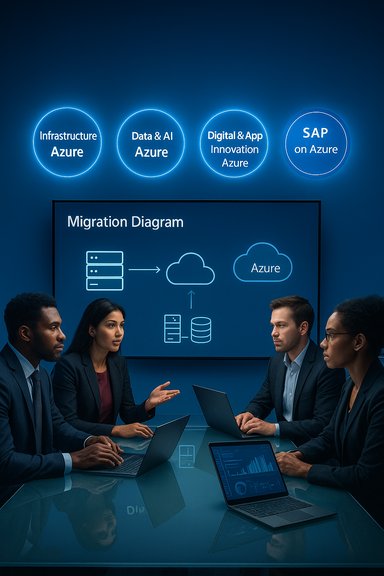
eMazzanti Technologies announced it has earned four Microsoft Solutions Partner designations — Infrastructure (Azure), Data & AI (Azure), Digital & App Innovation (Azure), and Modern Work — and says it has met the prerequisite requirements for the SAP on Microsoft Azure specialization, a milestone the company frames as validation of deep Microsoft-aligned skills and production delivery capability.
eMazzanti Technologies is a long-standing managed services provider (MSP) headquartered in Hoboken, New Jersey, with a history of Microsoft-focused services, Modern Work projects, and cybersecurity offerings. The company has repeatedly promoted Microsoft credentials and partner awards across prior years as part of its go-to-market and service positioning. Microsoft’s partner framework was retooled into the Microsoft AI Cloud Partner Program (formerly a mix of legacy competencies and specialist tracks), which centers partner recognition on measurable outcomes across three pillars: Performance, Skilling, and Customer Success. The program issues six Solutions Partner designations that align to core enterprise cloud priorities, and it layers workload specializations (audited, higher‑bar certifications) on top of those designations. Achieving any Solutions Partner designation signals a partner has reached a capability score threshold and associated metrics in Partner Center.
eMazzanti’s move is consistent with channel dynamics: as Microsoft prioritizes AI and cloud, partners that combine infrastructure scale, data/AI delivery and modern workplace transformation will see stronger GTM lift — provided that they maintain the operational discipline the badges imply. The label is useful; the proof is in the Partner Center artifacts and the delivery track record.
Source: AiThority eMazzanti Technologies Achieves Four Microsoft Solutions Partner Designations in AI Cloud Partner Program
 Background
eMazzanti Technologies is a long-standing managed services provider (MSP) headquartered in Hoboken, New Jersey, with a history of Microsoft-focused services, Modern Work projects, and cybersecurity offerings. The company has repeatedly promoted Microsoft credentials and partner awards across prior years as part of its go-to-market and service positioning. Microsoft’s partner framework was retooled into the Microsoft AI Cloud Partner Program (formerly a mix of legacy competencies and specialist tracks), which centers partner recognition on measurable outcomes across three pillars: Performance, Skilling, and Customer Success. The program issues six Solutions Partner designations that align to core enterprise cloud priorities, and it layers workload specializations (audited, higher‑bar certifications) on top of those designations. Achieving any Solutions Partner designation signals a partner has reached a capability score threshold and associated metrics in Partner Center. What eMazzanti announced — the essentials
- eMazzanti states it has secured Solutions Partner designations in: Infrastructure (Azure), Data & AI (Azure), Digital & App Innovation (Azure), and Modern Work.
- The company also reports that it has met prerequisite requirements for the SAP on Microsoft Azure specialization, which is the step before the formal specialization award and involves meeting performance, skilling, and audit pre-conditions.
- The announcement and executive quote from Carl Mazzanti frame these recognitions as validation of the firm’s investments in Microsoft skilling, managed services capabilities, and its ability to deliver AI and cloud projects at scale.
Overview: What each Solutions Partner designation means in practice
Infrastructure (Azure)
The Infrastructure designation signals that a partner can design, migrate, operate and optimize core Azure infrastructure at scale — virtual machines, networking, storage, backup, disaster recovery, hybrid connectivity and related operational processes. For procurement, Infrastructure is shorthand that a partner has demonstrable delivery and operating experience for production infrastructure workloads on Azure.Data & AI (Azure)
Data & AI indicates capability across Azure’s data platform and AI services — from ingestion, warehousing and analytics to model deployment and governance. This designation matters for customers moving from pilots to production AI, because it requires both skilling and measured customer outcomes linked to data-platform usage.Digital & App Innovation (Azure)
Digital & App Innovation covers cloud-native application modernization, DevOps, container platforms (AKS), serverless and developer productivity. Partners with this badge are expected to deliver developer-focused modernization programs, CI/CD and platform engineering work.Modern Work
Modern Work aligns to Microsoft 365, Teams, Windows management, Viva, identity and device lifecycle — essentially the tools and practices that enable hybrid work, secure endpoints, and employee productivity. Historically a core practice area for many SMB‑focused MSPs, Modern Work remains a vital procurement filter for endpoint and collaboration transformations.Why these designations matter (and where the marketing ends)
Attaining multiple Solutions Partner designations can materially improve a partner’s visibility in Microsoft channels, unlock go‑to‑market benefits, and qualify the partner for co‑sell or deployment funding opportunities. Practically, the designations are used as pre‑qualification signals in RFPs and shortlists. Microsoft’s program mechanics ensure that the badges are tied to measurable activity in Partner Center rather than simple press announcements. That said, a few important practical limits apply:- A designation is a programmatic signal, not a delivery guarantee. It confirms a partner met program thresholds across Performance, Skilling and Customer Success, but it does not by itself prove operational readiness for every customer scenario. Request production references and technical artifacts.
- Badges must be maintained. Solutions Partner status and specializations depend on ongoing metrics and audits; the recognition can change if the partner’s ACR, certifications, or customer evidence changes.
- Marketing language can blur nuance. Press releases often compress complex audit and Threshold‑to‑Award workflows into simpler narratives; procurement teams should verify Partner Center exports or specialization certification letters rather than relying solely on press dissemination.
SAP on Microsoft Azure specialization — verification and the numbers debate
eMazzanti’s release says it “met prerequisite requirements” for the SAP on Microsoft Azure specialization. Microsoft’s public pages define that specialization as requiring:- An active Solutions Partner for Infrastructure (Azure) designation.
- Azure Consumed Revenue (ACR) performance thresholds and evidence aggregated over the previous three months from at least three customers. One Microsoft page lists USD 10,000 average monthly ACR aggregated over the last three months, while other Microsoft pages and specialization checklists reference a USD 30,000 ACR threshold for SAP-related specializations or for the SAP Workloads audit step. This inconsistency exists in Microsoft’s public documentation and can vary by the specialization version and the update timeline.
- Skilling: typically three or more individuals with relevant Azure/SAP certifications or completion of Microsoft’s “Run SAP on the Microsoft Cloud” learning path.
- A third‑party audit or validated customer references as part of the formal specialization application.
Cross-check: what the public record shows right now
- PR Newswire carries eMazzanti’s formal announcement and the company quote about these recognitions. This is the primary declaration from the vendor.
- Multiple syndicated industry outlets reproduced the PR wire release (AiThority, StreetInsider and wire aggregators), which confirms distribution but does not constitute independent verification of Microsoft Partner Center state.
- Microsoft’s documentation explains Solutions Partner rules, capability scoring and specialization workflows — these are the authoritative definitions for how the program operates and what customers should expect. However, Microsoft’s public pages show occasional differences in numerical thresholds across different specialization pages; those discrepancies should be validated in Partner Center for accuracy.
Critical analysis — strengths, commercial upside, and risks
Strengths and positives
- Strategic alignment with Microsoft’s priorities. The four designations map directly to enterprise priorities (infrastructure reliability, data & AI, app modernization, and employee productivity), positioning eMazzanti to compete for a broad set of Azure‑centric deals.
- Go‑to‑market advantages. Solutions Partner badges unlock co‑sell eligibility and partner incentives that can accelerate proof‑of‑value funding and shorten sales cycles with Microsoft field support.
- Signal of organized skilling and outcomes. Meeting the badge thresholds typically requires role-based certifications and documented customer outcomes — an operational bar that many smaller MSPs do not clear. When genuine, that investment reduces delivery variability.
Risks and potential downsides
- Badge maintenance and volatility. Partner capability scores and ACR can ebb and flow; a badge today does not guarantee identical status a quarter from now. Customers relying on these signals should require up‑to‑date Partner Center proof at the time of contract.
- Marketing vs. operational reality. A press release compresses audit steps and may omit the difference between meeting prerequisites and having a finalized, auditable specialization. For SAP workloads — where uptime, data integrity and rollback plans are critical — procurement should insist on technical references and redacted audit summaries.
- Specialization threshold ambiguity. Public Microsoft guides show varying ACR numbers for some specializations; that ambiguity can create procurement and sourcing confusion. Validate thresholds directly in Partner Center before assuming a specialization is complete.
Practical procurement checklist — turning badges into verifiable procurement evidence
- Request an authenticated Partner Center export (screenshot or downloadable report) showing the partner capability score and the active Solutions Partner designations.
- For the SAP on Azure specialization, request the Microsoft specialization certification letter or the Partner Center specialization status and ask for the redacted third‑party audit executive summary.
- Obtain at least three named customer references for similar‑scale Azure/SAP/Data & AI/Modern Work projects and verify deliverables, timelines, and measurable outcomes.
- Verify security posture: request SOC 2 / ISO 27001 reports, vulnerability-scanning cadence, and incident response playbooks if the partner will operate production workloads.
- Insist on contractual protections for mission‑critical systems: SLAs, downtime credits, rollback and migration warranties, and a staged cutover plan.
What partners do next: how to convert badges into customer value
To avoid the “badge as marketing” trap, partners that succeed convert program recognition into repeatable offerings and public proof:- Map solutions partner badges to packaged offerings (e.g., Infrastructure: lift‑and‑shift migration package; Data & AI: analytics factory starter kit; Modern Work: device and identity lifecycle service).
- Publish sanitized audit summaries or make redacted audit evidence available under NDA so procurement can see the mechanics behind the badge.
- Maintain a public case library with measurable KPIs (ACR growth, time‑to‑value, adoption metrics) and named, contactable references.
Market context: how this fits the broader channel trend
A wave of partner announcements during 2024–2025 shows many MSPs and system integrators racing to earn Solutions Partner designations and advanced specializations as Microsoft’s AI and cloud agenda accelerates. Holding multiple designations is becoming table stakes for partners who want prioritized co‑sell motion and field visibility; however, the presence of many similar announcements has increased the importance of procurement-level verification. The badge is a filter — not a substitute for technical diligence.Recommended next steps for IT buyers evaluating eMazzanti (or any Solutions Partner‑claiming vendor)
- Ask for a current Partner Center export and the Microsoft specialization letter. If the partner claims to have met prerequisites for a specialization, request the audit summary or timeline showing audit completion.
- Demand named production references for projects that mirror scope, industry, and scale (SAP, hybrid infra, high‑availability data & AI workloads). Confirm contact details and ask targeted questions about runbooks, incident resolution, and retention of backups.
- Confirm team composition: request a roster of certified individuals mapped to project roles (Azure Architect, SAP on Azure specialty holders, DevOps lead) and verify their certification status in Microsoft Learn or via exported certification rosters.
- Contractually require operational artifacts (runbooks, change control, disaster recovery playbooks) and measurable success criteria tied to acceptance milestones for go‑live.
Caveats and unverifiable claims
- eMazzanti’s press release is an authoritative company statement published via PR Newswire and widely syndicated; it legitimately reflects the company’s announced achievements. That announcement should be treated as a primary source for the company’s claims.
- The precise numeric thresholds for SAP on Microsoft Azure specialization (ACR amounts) vary between Microsoft pages and updates; because Microsoft documents have changed over time, the public pages can show different numbers. This inconsistency means the ACR figure cited in a press release should be verified inside Partner Center. Where Microsoft pages conflict, Partner Center and the Microsoft specialization certification letter are definitive.
- Any vendor assertion that a designation or specialization “places them among the top X% of Microsoft partners” should be treated as promotional unless accompanied by verifiable ranking methodology or Microsoft-supplied verification. Such percentile claims are common marketing amplifications and require proof.
Bottom line
eMazzanti Technologies’ announcement that it has earned four Solutions Partner designations and met prerequisites for the SAP on Microsoft Azure specialization is a credible, market‑typical claim distributed through standard PR channels. The recognition aligns the MSP with Microsoft’s high‑priority solution areas — Infrastructure, Data & AI, Digital & App Innovation, and Modern Work — and signals that the company has invested in skilling and customer outcomes relevant to Azure and Microsoft 365 projects. For IT buyers and procurement teams, the most important action is verification: convert the press release into Partner Center exports, specialization letters, audit summaries, and named references before awarding high‑risk contracts, especially for SAP and other mission‑critical workloads. When badges are supported by documented runbooks, redacted audit evidence and strong references, they shift from marketing claims into practical procurement signals — and that is where customers will find real value.eMazzanti’s move is consistent with channel dynamics: as Microsoft prioritizes AI and cloud, partners that combine infrastructure scale, data/AI delivery and modern workplace transformation will see stronger GTM lift — provided that they maintain the operational discipline the badges imply. The label is useful; the proof is in the Partner Center artifacts and the delivery track record.
Source: AiThority eMazzanti Technologies Achieves Four Microsoft Solutions Partner Designations in AI Cloud Partner Program