

Leadership doesn’t come with a checklist, but reading can give EMS leaders a practical, battlefield-tested playbook for making better decisions under pressure—and the new Read to Lead series from JEMS does exactly that, packaging essential lessons from four influential leadership books into concise, actionable takeaways for prehospital care.
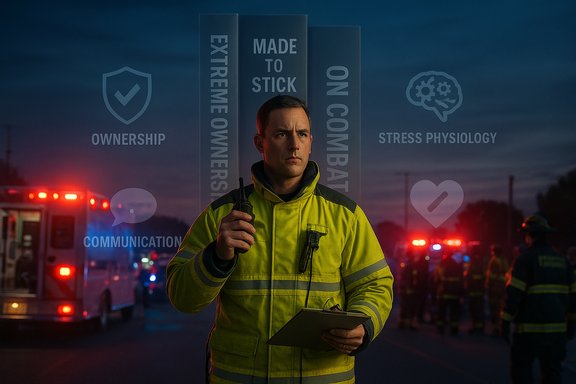
EMS operates at the sharp end of healthcare: a noisy radio, shifting protocols, and lives that hinge on split-second choices. The JEMS Read to Lead launch frames leadership development as an operational imperative rather than a career bonus, promising short, practical breakdowns of leadership books paired with five concrete actions per title for people who work on the rig, in the station, or in the chief’s office. The first installment centers on four books with distinct yet complementary emphases:
Risk and adaptation: SEAL doctrine emphasizes command clarity and rapid enforcement of standards; transplanting it without tempering for healthcare culture risks over‑authoritarian leadership or punitive responses to human error. EMS leaders should pair Extreme Ownership with psychologically safe debrief practices so accountability does not morph into shame.
Risk and adaptation: Not every sticky message is accurate or safe—simple slogans can obscure nuance. Leaders must ensure that simplification preserves clinical fidelity and that “unexpected” teaching tools are ethical and trauma‑sensitive.
Risk and adaptation: Grossman’s framing is built on combat experience and can sometimes adopt militarized language that alienates clinicians. Translate the lessons into clinical ergonomics: design breathing breaks into protocols, create cognitive aids for tunnel‑vision moments, and institutionalize high‑fidelity practice rather than rhetoric.
Risk and adaptation: Grossman’s work has critics who argue parts rely on contested historical data; the practical value for EMS is not in every historical claim but in recognizing trauma patterns and building humane, evidence‑informed support systems. Leaders should pair Grossman’s observations with contemporary, peer‑reviewed guidance on EMS mental health.
Practical leadership in prehospital care is not an academic exercise; it’s an operational multiplier that saves lives. Start small—one chapter, one sticky message, one breathing drill—and build the culture you want your crews to practice when the call turns hard.
Source: JEMS Strong Leaders Save Lives. Start Reading.
 Background / Overview
EMS operates at the sharp end of healthcare: a noisy radio, shifting protocols, and lives that hinge on split-second choices. The JEMS Read to Lead launch frames leadership development as an operational imperative rather than a career bonus, promising short, practical breakdowns of leadership books paired with five concrete actions per title for people who work on the rig, in the station, or in the chief’s office. The first installment centers on four books with distinct yet complementary emphases:- Extreme Ownership — a hardline, accountability-first leadership manual written by former Navy SEALs.
- Made to Stick — a communication playbook that explains why some ideas survive and others vanish.
- On Combat — a primer on how stress shapes perception and performance in life‑or‑death settings.
- On Killing — an exploration of the psychological cost of violence and the secondary trauma experienced by those exposed to it.
Why books—especially these books—matter for EMS
Reading converts experience into repeatable patterns. Military and behavioral science literature has long been mined by emergency services for tactics, doctrine, and resilience training; the Read to Lead series translates those lessons back to EMS with specific, short-term actions you can take on shift, during debriefs, and in training programs. Framing leadership growth as an everyday habit (10–30 minutes of reading plus structured reflection) increases the odds that lessons translate into changed behavior—rather than gather dust on a bookshelf. The four books chosen together create a practical stack:- A leadership operating system (Extreme Ownership).
- A communications toolbox for teaching and policy (Made to Stick).
- A physiological and cognitive primer for performance under stress (On Combat).
- A framework for recognizing and treating moral injury and trauma exposure (On Killing).
Extreme Ownership — take responsibility, simplify command
Quick synopsis
Extreme Ownership: How U.S. Navy SEALs Lead and Win, by Jocko Willink and Leif Babin, distills SEAL leadership doctrine into approachable principles for any high-stakes organization. The central thesis is simple: leaders accept full responsibility for mission outcomes and never blame subordinates; accountability breeds clarity, trust, and operational performance.Five EMS‑ready takeaways (practical, field-tested)
- Mirror-first leadership. When outcomes lag, the first question is “What did I control poorly?”—then fix it. This habit prevents toxic blame cycles and accelerates improvement.
- Cover and move—interagency as team. Treat fire, PD, and ED staff as teammates rather than obstacles; train shared language and expectations for multi‑agency scenes.
- Decentralized command. Empower the most context‑proximate clinician (EMT/paramedic) to act within clear intent—teach “why” as well as “what.”
- Prioritize and execute. Under load, identify the single, highest‑leverage problem and act; avoid paralysis by analysis.
- Discipline equals freedom. Routine checks, disciplined training, and after‑action reviews create the breathing room to improvise when scenes go off‑script.
Why it’s useful—and where to be cautious
Extreme Ownership provides a no‑nonsense accountability framework that maps well to clinical responsibility and chain‑of‑command realities in EMS. It forces a shift from “who screwed up” to “what system failed,” which is essential for patient safety and culture change.Risk and adaptation: SEAL doctrine emphasizes command clarity and rapid enforcement of standards; transplanting it without tempering for healthcare culture risks over‑authoritarian leadership or punitive responses to human error. EMS leaders should pair Extreme Ownership with psychologically safe debrief practices so accountability does not morph into shame.
Made to Stick — communicate so the message endures
Quick synopsis
Made to Stick by Chip and Dan Heath reveals why some ideas persist while others evaporate. Their SUCCESs framework—Simplicity, Unexpectedness, Concreteness, Credibility, Emotion, Story—is a short checklist for messages that survive translation from classroom to street.Five EMS‑ready takeaways
- Simplicity wins. Boil protocols, briefings, and handoffs to the core concept that people can recall under stress.
- Use unexpected hooks in training. A surprising demonstration or case study locks attention and makes the lesson memorable.
- Concrete language. Replace abstract talk (e.g., “optimize scene safety”) with observable actions (“exit the vehicle, don high‑vis, announce ‘scene clear’”).
- Leverage credibility. Use local case stats, peer testimony, and quick evidence points to build buy‑in for new procedures.
- Teach through story. Case narratives and vignettes are mental flight simulators—they prepare crew members to act when the real call arrives.
Why it’s useful—and where to be cautious
Communication failures are an underlying cause in many adverse outcomes. Made to Stick gives leaders a practical taxonomy for making training and policy memorable. In EMS, where cognitive load is high and turnover can be steep, rewriting protocols to be sticky can meaningfully increase compliance and retention.Risk and adaptation: Not every sticky message is accurate or safe—simple slogans can obscure nuance. Leaders must ensure that simplification preserves clinical fidelity and that “unexpected” teaching tools are ethical and trauma‑sensitive.
On Combat — how stress reshapes perception and performance
Quick synopsis
On Combat: The Psychology and Physiology of Deadly Conflict in War and in Peace by Lt. Col. Dave Grossman explains the body’s fight/flight responses—tunnel vision, auditory exclusion, time distortion—and prescribes training and breathing techniques that help professionals maintain function under life‑threatening stress. First published in the 2000s, the book is widely used by military, police, and many responder training programs.Five EMS‑ready takeaways
- Train the way you fight. Scenario fidelity reduces surprise and improves muscle memory; high‑fidelity rehearsal should be prioritized alongside classroom time.
- Know stress physiology. Recognize tunnel vision and fine‑motor degradation so you can design checklists and cribs to compensate during high adrenaline events.
- Tactical/controlled breathing. Teach and practice square breathing or “combat breathing” to regulate heart rate and cognitive clarity on scene.
- Mental rehearsal. Visualization and structured mental walk‑throughs enhance readiness for rare, high‑acuity scenarios.
- Embed recovery. Post‑call decompression, psychological first aid, and structured peer check‑ins reduce cumulative stress.
Why it’s useful—and where to be cautious
Understanding stress physiology is operationally essential: it explains why skilled providers sometimes “freeze” or miss cues, and it gives concrete countermeasures leaders can embed in training and SOPs.Risk and adaptation: Grossman’s framing is built on combat experience and can sometimes adopt militarized language that alienates clinicians. Translate the lessons into clinical ergonomics: design breathing breaks into protocols, create cognitive aids for tunnel‑vision moments, and institutionalize high‑fidelity practice rather than rhetoric.
On Killing — the moral and psychological toll of violence
Quick synopsis
On Killing by Dave Grossman examines the psychological cost of taking a life and how training and culture shape that process. For EMS leaders, the book’s relevance lies in its exploration of vicarious and secondary trauma: even those who don’t kill can carry burdens from violence, morally injurious events, and chronic exposure to suffering.Five EMS‑ready takeaways
- Violence alters people. Recurrent exposure to trauma can produce moral injury and cumulative stress—leaders must monitor long‑term indicators.
- Denial is dangerous. Avoiding conversations about grief and guilt increases the risk of burnout and maladaptive coping.
- Normalize help‑seeking. Leaders who model accessing support reduce stigma and increase early intervention.
- Build proactive systems. Peer support, confidential counseling, and trauma‑informed debrief pathways should exist before catastrophic incidents occur.
- Sequence learning. JEMS advises reading On Combat before On Killing so providers first learn how stress affects function before confronting the moral cost of violence. That sequencing eases comprehension and coping.
Why it’s useful—and where to be cautious
On Killing gives leaders language and frameworks to identify moral injury and create organizational supports. For EMS—where crews regularly witness violence but are not combatants—this helps normalize complications like survivor guilt and vicarious trauma.Risk and adaptation: Grossman’s work has critics who argue parts rely on contested historical data; the practical value for EMS is not in every historical claim but in recognizing trauma patterns and building humane, evidence‑informed support systems. Leaders should pair Grossman’s observations with contemporary, peer‑reviewed guidance on EMS mental health.
Putting the books into practice: a pragmatic roadmap for EMS leaders
- Curate a short reading + reflection plan. Start with Extreme Ownership (accountability), then Made to Stick (communication), On Combat (stress performance), and On Killing (trauma). Read one short chapter per week and run a 30‑minute shift‑change discussion to translate one idea into policy.
- Operationalize, don’t preach. Convert principles into checklists, scenario templates, and one‑line radio scripts. For example, use Made to Stick to rewrite the cardiac arrest handoff into a six‑word structure teammates can recall under stress.
- Train with fidelity. Use On Combat principles to calibrate realistic scenario training—add stressors, timed tasks, and debriefs that address perception changes and breathing techniques.
- Create psychological safety around accountability. Apply Extreme Ownership with a learning posture: leaders own system fixes and establish blameless morbidity/mortality reviews to protect clinicians who report near‑misses.
- Institutionalize recovery and peer support. Implement voluntary hot‑washes and a tiered peer‑support program; capture evidence that supports use and identify barriers to uptake (trust, stigma) as described in EMS mental‑health research.
Critical analysis: strengths, blind spots, and risks
- Strength — actionable mindset: All four books prioritize application over abstraction. That makes them well suited to EMS, where leaders need usable heuristics rather than theory. The JEMS series wisely extracts five practical steps from each title, lowering the activation energy for change.
- Strength — cross‑discipline triangulation: Combining leadership, communication, stress physiology, and trauma creates a holistic package: you can improve decision‑making (Extreme Ownership), ensure the message lands (Made to Stick), preserve performance under pressure (On Combat), and protect welfare afterward (On Killing).
- Blind spot — military framing. Military metaphors (battle, enemy, kill) can be powerful motivators but also risk cultural mismatch in civilian healthcare. Leaders should translate military concepts into clinical language—“mission” becomes “patient outcome,” “cover and move” becomes “mutual support protocols”—to avoid alienation.
- Risk — oversimplification and unintended harm. Simplifying complex clinical recommendations into slogans is useful—but not when nuance affects safety. Protocols should be distilled, tested in simulation, and validated before becoming standard operating language.
- Risk — mental‑health implementation gaps. Books point to peer support and debriefing, but the evidence shows uptake is limited by trust, stigma, and poorly designed programs. Any mental‑health rollout must be voluntary, confidential, and backed by accessible professional resources; mandatory single-session psychological debriefs can sometimes worsen outcomes if executed poorly. Use evidence and gradual trust‑building.
Recommended next steps for EMS leaders
- Pick one title and commit a 6‑week micro‑program: weekly reading + 30‑minute applied discussion + a simple field change (e.g., a revised radio report or a short breathing drill).
- Run a pilot: deploy one “sticky” messaging change to a single station, measure recall in scenario drills, and iterate before systemwide rollout.
- Pair accountability with safety: adopt Extreme Ownership principles in after‑action reviews that are explicitly blameless and focused on system fixes.
- Invest in training fidelity: repurpose budget toward realistic scenario time and tactical breathing practice to lower performance variance under stress.
- Launch a confidential peer support pathway and measure engagement barriers—trust is the primary asset. Draw on evidence when designing access, timing, and follow‑up.
Conclusion
Read to Lead is more than a reading list—it’s a focused intervention strategy for EMS leadership. When leaders intentionally read, reflect, and convert ideas into small, testable changes, the payoff is practical: clearer radio calls, tighter teamwork, better performance under stress, and a healthier culture that recognizes trauma before it fractures teams. The four books JEMS selected form a compact, complementary curriculum: take ownership, make your message stick, understand stress, and tend to the moral wounds left by the work.Practical leadership in prehospital care is not an academic exercise; it’s an operational multiplier that saves lives. Start small—one chapter, one sticky message, one breathing drill—and build the culture you want your crews to practice when the call turns hard.
Source: JEMS Strong Leaders Save Lives. Start Reading.
