

Bethesda Game Studios has confirmed that Fallout 5 is in pre-production and that Obsidian Entertainment is developing a separate, new Fallout project with Bethesda. The announcement ends years of speculation around whether Microsoft would ever put the Fallout: New Vegas studio back on the series—and establishes that Fallout now has more than one major development path inside Xbox.
Bethesda’s July 17 roadmap also confirms remasters of Fallout 3 and Fallout: New Vegas, continued support for Fallout 76, and new Starfield content. The immediate practical message is clear: while The Elder Scrolls VI remains Bethesda Game Studios’ main production priority, Microsoft is no longer treating the next Fallout as a single-project, post-Elder Scrolls proposition.
Bethesda said it is working with Obsidian once again on “a new Fallout project,” without confirming a title, setting, target platforms, release date, or engine. Reporting by Windows Central first detailed the renewed collaboration, while Bethesda’s public statement supplied the official confirmation.
The most important clarification is structural. Obsidian’s game is not Fallout 5.
Bethesda says Fallout 5 is being developed internally on Creation Engine 3 and remains a “long-range destination” for the studio. It is in pre-production, a stage that can include prototyping, early design, technology work, staffing, and narrative planning rather than full-scale content production. Bethesda simultaneously says that the majority of its team is focused on The Elder Scrolls VI.
That makes Obsidian’s project the near-term wildcard. A separate Fallout title can give Xbox a path to a new single-player release without waiting for Bethesda to complete The Elder Scrolls VI and then move its full attention to the next numbered Fallout.
For fans, the distinction matters. A new Obsidian game could be a spin-off in the tradition of Fallout: New Vegas, rather than a replacement for Bethesda’s own sequel. It also means the two studios can potentially approach the universe from different design traditions: Bethesda’s large-scale exploration and simulation systems on one side, and Obsidian’s reputation for faction-driven quests, dialogue, and consequence-heavy role-playing on the other.
Todd Howard pushed back on the idea that Bethesda and Obsidian have a meaningful internal rivalry. In an interview with Windows Central, Howard described the relationship as one of mutual respect and said the teams had long looked for a situation where another collaboration made sense. GameDeveloper, citing separate reporting from Bloomberg, similarly reported that Howard believes the timing is right for the partnership.
That is a notable change in tone from the years of fan debate around New Vegas. The 2010 game was made by Obsidian under a tight schedule, became a cult favorite despite its launch issues, and has often been positioned by players as an alternative vision for the franchise. Bethesda’s statement effectively turns that old comparison into an Xbox production strategy.
That language is important because Bethesda’s release cadence has become one of its biggest business constraints. Fallout 4 launched in 2015, The Elder Scrolls V: Skyrim arrived in 2011, and Starfield became Bethesda Game Studios’ next major new universe in 2023. A strategy built around one enormous game at a time may produce landmark releases, but it leaves franchises dormant for long stretches.
Creation Engine 3 is therefore not just a graphics-engine upgrade. It is Bethesda’s stated effort to build a more scalable development foundation, one capable of sustaining live games, supporting creator tools, and moving flagship RPGs forward in parallel.
The company tied that effort directly to its Creations ecosystem. Bethesda says more than 40 percent of Starfield players customize their game through Creations, while creators have earned more than $10 million in royalties across the platform. For Windows players, that suggests the PC modding and paid-creation ecosystem will remain central to Bethesda’s future releases rather than an afterthought bolted on after launch.
Obsidian’s title is the exception with a major unanswered technical question. Windows Central reported that the engine has not been disclosed, and that discussions had reportedly considered Unreal Engine as well as Creation Engine. Bethesda has made no public commitment either way. Until it does, any claim that the project will use a particular toolchain—or inherit the same modding model as Bethesda’s own games—remains speculation.
That distinction should not be blurred. The success of The Elder Scrolls IV: Oblivion Remastered has encouraged expectations of modernized engines, expanded assets, and broad quality-of-life work. But Bethesda has not promised the same treatment for either Fallout game. Reports and fan terminology have frequently called them remakes; the official wording is remasters.
For PC players, the questions go beyond visual fidelity. Fallout 3 and New Vegas have survived in part because their communities built compatibility fixes, stability patches, UI overhauls, new questlines, and total conversions around aging technology. An official modern release could make both games easier to run on current Windows systems, but it would also need to handle existing mod ecosystems carefully.
A remaster that breaks popular toolchains, script extenders, load-order utilities, or community fixes would create a different sort of problem than the original games’ technical roughness. Bethesda has not addressed backward compatibility with mods or whether Creations will be included.
Starfield is also staying in rotation. Bethesda says it will continue adding stories, targeted gameplay improvements, and updates during its third year, while preparing “new Starborn content” for next year. That does not amount to a full reset for the game, but it is a firm rejection of the idea that Bethesda has quietly left it behind.
The broader strategy is a portfolio approach: live Fallout through Fallout 76, legacy Fallout through remasters, a new Obsidian project, a long-range Fallout 5, and ongoing community content through Creations. It is more ambitious than Bethesda’s old one-game-at-a-time public image, but it also arrives after a difficult period of Xbox layoffs and restructuring.
Bethesda’s roadmap is a promise of direction, not a release calendar. No date exists for Obsidian’s Fallout, Fallout 5, either remaster, or The Elder Scrolls VI. The first real test will be whether Microsoft can turn this expanded slate into visible releases before Fallout’s 30th anniversary in 2027—when Bethesda says it plans a live Fallout Day event in Washington, D.C.
Bethesda’s July 17 roadmap also confirms remasters of Fallout 3 and Fallout: New Vegas, continued support for Fallout 76, and new Starfield content. The immediate practical message is clear: while The Elder Scrolls VI remains Bethesda Game Studios’ main production priority, Microsoft is no longer treating the next Fallout as a single-project, post-Elder Scrolls proposition.
Bethesda said it is working with Obsidian once again on “a new Fallout project,” without confirming a title, setting, target platforms, release date, or engine. Reporting by Windows Central first detailed the renewed collaboration, while Bethesda’s public statement supplied the official confirmation.
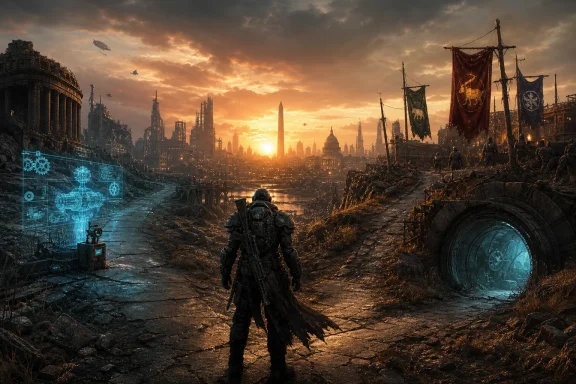 Obsidian Is Back, but This Is Not Fallout 5
The most important clarification is structural. Obsidian’s game is not Fallout 5.Bethesda says Fallout 5 is being developed internally on Creation Engine 3 and remains a “long-range destination” for the studio. It is in pre-production, a stage that can include prototyping, early design, technology work, staffing, and narrative planning rather than full-scale content production. Bethesda simultaneously says that the majority of its team is focused on The Elder Scrolls VI.
That makes Obsidian’s project the near-term wildcard. A separate Fallout title can give Xbox a path to a new single-player release without waiting for Bethesda to complete The Elder Scrolls VI and then move its full attention to the next numbered Fallout.
For fans, the distinction matters. A new Obsidian game could be a spin-off in the tradition of Fallout: New Vegas, rather than a replacement for Bethesda’s own sequel. It also means the two studios can potentially approach the universe from different design traditions: Bethesda’s large-scale exploration and simulation systems on one side, and Obsidian’s reputation for faction-driven quests, dialogue, and consequence-heavy role-playing on the other.
Todd Howard pushed back on the idea that Bethesda and Obsidian have a meaningful internal rivalry. In an interview with Windows Central, Howard described the relationship as one of mutual respect and said the teams had long looked for a situation where another collaboration made sense. GameDeveloper, citing separate reporting from Bloomberg, similarly reported that Howard believes the timing is right for the partnership.
That is a notable change in tone from the years of fan debate around New Vegas. The 2010 game was made by Obsidian under a tight schedule, became a cult favorite despite its launch issues, and has often been positioned by players as an alternative vision for the franchise. Bethesda’s statement effectively turns that old comparison into an Xbox production strategy.
Creation Engine 3 Is Bethesda’s Answer to the Pipeline Problem
Bethesda says both The Elder Scrolls VI and Fallout 5 are being developed on Creation Engine 3, a shared platform it has been building since Starfield launched. The studio says the technology is intended to let teams support multiple projects simultaneously through new tools, rendering technology, and gameplay systems.That language is important because Bethesda’s release cadence has become one of its biggest business constraints. Fallout 4 launched in 2015, The Elder Scrolls V: Skyrim arrived in 2011, and Starfield became Bethesda Game Studios’ next major new universe in 2023. A strategy built around one enormous game at a time may produce landmark releases, but it leaves franchises dormant for long stretches.
Creation Engine 3 is therefore not just a graphics-engine upgrade. It is Bethesda’s stated effort to build a more scalable development foundation, one capable of sustaining live games, supporting creator tools, and moving flagship RPGs forward in parallel.
The company tied that effort directly to its Creations ecosystem. Bethesda says more than 40 percent of Starfield players customize their game through Creations, while creators have earned more than $10 million in royalties across the platform. For Windows players, that suggests the PC modding and paid-creation ecosystem will remain central to Bethesda’s future releases rather than an afterthought bolted on after launch.
Obsidian’s title is the exception with a major unanswered technical question. Windows Central reported that the engine has not been disclosed, and that discussions had reportedly considered Unreal Engine as well as Creation Engine. Bethesda has made no public commitment either way. Until it does, any claim that the project will use a particular toolchain—or inherit the same modding model as Bethesda’s own games—remains speculation.
The Remasters Need More Precision Than the Announcement Provides
Bethesda has confirmed that it is “working on remasters” of Fallout 3 and Fallout: New Vegas. It has not announced dates, platforms, studios, gameplay changes, mod support, or whether these are straightforward remasters or more extensive rebuilds.That distinction should not be blurred. The success of The Elder Scrolls IV: Oblivion Remastered has encouraged expectations of modernized engines, expanded assets, and broad quality-of-life work. But Bethesda has not promised the same treatment for either Fallout game. Reports and fan terminology have frequently called them remakes; the official wording is remasters.
For PC players, the questions go beyond visual fidelity. Fallout 3 and New Vegas have survived in part because their communities built compatibility fixes, stability patches, UI overhauls, new questlines, and total conversions around aging technology. An official modern release could make both games easier to run on current Windows systems, but it would also need to handle existing mod ecosystems carefully.
A remaster that breaks popular toolchains, script extenders, load-order utilities, or community fixes would create a different sort of problem than the original games’ technical roughness. Bethesda has not addressed backward compatibility with mods or whether Creations will be included.
Fallout 76 and Starfield Are Still Part of the Plan
The roadmap is not solely about future RPGs. Bethesda says Fallout 76 will receive a major expansion next year called Raven Rock, described as a prequel story to Fallout 3. The live-service game has received nearly 70 free updates, according to the studio, and remains one of the ways Microsoft can keep Fallout active between larger releases.Starfield is also staying in rotation. Bethesda says it will continue adding stories, targeted gameplay improvements, and updates during its third year, while preparing “new Starborn content” for next year. That does not amount to a full reset for the game, but it is a firm rejection of the idea that Bethesda has quietly left it behind.
The broader strategy is a portfolio approach: live Fallout through Fallout 76, legacy Fallout through remasters, a new Obsidian project, a long-range Fallout 5, and ongoing community content through Creations. It is more ambitious than Bethesda’s old one-game-at-a-time public image, but it also arrives after a difficult period of Xbox layoffs and restructuring.
Bethesda’s roadmap is a promise of direction, not a release calendar. No date exists for Obsidian’s Fallout, Fallout 5, either remaster, or The Elder Scrolls VI. The first real test will be whether Microsoft can turn this expanded slate into visible releases before Fallout’s 30th anniversary in 2027—when Bethesda says it plans a live Fallout Day event in Washington, D.C.
References
- Primary source: Windows Central
Published: 2026-07-17T14:06:43+00:00
Loading…
www.windowscentral.com - Related coverage: gamesradar.com
Loading…
www.gamesradar.com - Related coverage: gamedeveloper.com
Loading…
www.gamedeveloper.com - Related coverage: nintendowire.com
Loading…
nintendowire.com - Related coverage: neowin.net
Loading…
www.neowin.net - Related coverage: psu.com
Loading…
www.psu.com