

Square Enix revealed Final Fantasy VII Revelation at Summer Game Fest on June 5, 2026, confirming the final chapter of its remake trilogy will launch in spring 2027 on PlayStation 5, Xbox Series X|S, Xbox on PC, Nintendo Switch 2, Steam, and Epic Games Store. For Xbox players, that is not just another platform checkbox. It is the end of a very long wait, and a conspicuous break from the old Final Fantasy habit of treating Xbox as an afterthought. The bigger story is that Square Enix’s multiplatform reset has finally reached the franchise most associated with PlayStation prestige.
For much of the modern Final Fantasy era, Xbox fans have lived in a strange half-presence. The series was not absent from Xbox, exactly, but it arrived unevenly, late, or through side doors. Final Fantasy XV launched on Xbox One day one in 2016, Final Fantasy XIII had already made the leap in the Xbox 360 era, and Final Fantasy XIV eventually came to Xbox Series X|S after a long delay.
But the Final Fantasy VII Remake project was different. This was not just another JRPG launch. It was Square Enix revisiting one of the most commercially and culturally important console RPGs ever made, rebuilding it as a prestige trilogy and placing it at the center of the company’s AAA identity.
That project began life as a PlayStation-first showcase. Final Fantasy VII Remake launched on PlayStation 4 in 2020, Intergrade followed on PlayStation 5 in 2021, and Rebirth arrived on PlayStation 5 in 2024. PC came later. Xbox did not.
Revelation changes the posture from “eventually” to “simultaneously.” That single word matters more than the platform list, because Xbox players have heard plenty of platform lists that effectively meant “when the exclusivity window closes and the porting calendar allows it.” A day-one launch says Square Enix no longer sees Xbox as merely a back-catalog recovery market for this series.
What happened over the following decades was a mix of marketing alignment, development priority, platform economics, and player expectation. Final Fantasy X and XII stayed on PlayStation 2. Final Fantasy XIII went multiplatform at launch in the West. Final Fantasy XV treated Xbox as a peer platform. Then the pendulum swung back with the VII Remake trilogy and Final Fantasy XVI, both of which reinforced the impression that PlayStation still had privileged access to Square Enix’s biggest single-player bets.
The problem is that prestige exclusivity has become harder to justify for expensive games with long tails. AAA development costs have climbed, release windows have stretched, and the audience has fragmented across console, PC, handheld-style devices, and cloud-adjacent ecosystems. A giant RPG that spends years in production needs more than one launch spike if it is going to behave like a modern global franchise.
Square Enix has said in recent years that it wants to move more aggressively toward multiplatform releases. Revelation is the cleanest example yet of that policy becoming reality where it matters most. It is one thing to say future titles will reach more players. It is another to put the finale of the Final Fantasy VII Remake trilogy on Xbox, Switch 2, and PC storefronts on the same day as PlayStation.
But for Xbox, the release timing is the announcement. A late port is a commercial apology. A day-one release is a strategic commitment.
The difference shows up everywhere. Day-one launches allow marketing beats to include Xbox users without awkward asterisks. They let community discussion happen across platforms at the same time. They allow streamers, reviewers, and achievement hunters to enter the conversation together rather than reconstructing it years later.
That matters for a story-heavy RPG. Spoilers are not merely an inconvenience for the Final Fantasy VII Remake project; they are central to the trilogy’s identity. Square Enix has spent two games playing with fate, memory, expectation, and the audience’s knowledge of the 1997 original. Asking Xbox players to experience that conversation after the fact would undercut the whole exercise.
Revelation’s simultaneous launch means Xbox players will not be stuck reading theories from the outside. They will be part of the first wave of interpretation, argument, disappointment, elation, and inevitable Reddit archaeology. For a series that thrives on communal overanalysis, that is not a small thing.
That would be a notable practical advantage. Xbox Play Anywhere is not glamorous, but for a sprawling RPG it is exactly the kind of feature that changes behavior. Buy once, play on console and PC, sync progress, and let the platform fade into the background.
For WindowsForum readers, that is the part worth watching. Microsoft’s gaming strategy has increasingly been about turning Windows, Xbox consoles, cloud services, and handheld-adjacent PC devices into a shared surface for the same library. Square Enix supporting that model with a marquee RPG trilogy is a small but meaningful vote of confidence in Microsoft’s platform abstraction.
It also gives Xbox players a cleaner answer to the question of where to buy. Steam remains the default for many PC players, and Epic Games Store has had its share of Square Enix releases. But Xbox on PC becomes more compelling when the purchase carries over to the living room and potentially to future Xbox hardware.
This is where Microsoft’s long, sometimes messy effort to collapse the wall between Xbox and Windows starts to pay off. Final Fantasy VII Revelation is not a Microsoft game, and it is not a Game Pass announcement. Still, a day-one Xbox-on-PC listing makes the Microsoft Store feel less like the place PC gamers visit only when forced.
That catch-up matters because the Remake project is not a conventional remake in three slices. Remake and Rebirth do not simply modernize the original’s plot in sequence. They reinterpret it, challenge it, and increasingly turn player memory into part of the text.
A newcomer can enjoy the combat systems, lavish production, and character work without having studied the original. But Revelation will almost certainly expect players to understand what Square Enix has been doing with fate, divergence, and the friction between old canon and new possibility. This is not the kind of finale that should be treated as a standalone curiosity.
The Xbox release cadence therefore becomes part of the editorial story. Square Enix is not merely dumping old ports on a platform before shipping the new thing. It is preparing a previously excluded audience to arrive at the finale with context.
That is especially important for an Xbox audience that has historically been asked to love Final Fantasy in fragments. The original Final Fantasy VII is available on modern Xbox platforms. Final Fantasy X/X-2, XII, XIII entries, XV, Crisis Core, and XIV have all had Xbox presences in various forms. But the emotional center of modern Final Fantasy discourse has been the VII Remake project, and Xbox has been catching up from behind.
What changes is the marketing gravity. Sony can no longer treat the final chapter as a de facto platform showcase in the same way the earlier entries functioned. Revelation will arrive as a Square Enix event first and a platform event second.
That is healthier for the game but less useful for console-war theater. PlayStation fans still get the game. Xbox fans finally get the game on time. PC players get a clearer release path. Switch 2 owners become part of a AAA RPG conversation that would have seemed unlikely during the original Switch’s early years.
The loser is not PlayStation as a platform. The loser is the idea that a third-party tentpole should behave like a first-party identity marker indefinitely.
That distinction matters because exclusivity debates often confuse access with ownership. Sony did not own Final Fantasy VII. Microsoft does not gain ownership because Revelation is coming to Xbox. What changes is Square Enix’s calculation about where the audience is and how much money it can afford to leave off the table.
A more disciplined multiplatform approach is the obvious corrective. It does not guarantee success, but it reduces self-inflicted limits. If a game is expensive enough to require global scale, restricting its launch audience becomes a luxury the publisher must actively justify.
That is particularly true for Final Fantasy, a brand that has often wanted to be both a premium console showpiece and a worldwide RPG institution. Those goals can coexist, but not if large groups of players are trained to assume they will be served late or not at all.
Revelation is therefore less a betrayal of Sony than a recognition that the old math has changed. The PlayStation audience remains crucial, but it is no longer enough to define the entire business case for every mainline-adjacent Final Fantasy release. Xbox, Windows PC, Steam, Epic, and Nintendo’s next hardware all become part of the launch plan, not the cleanup plan.
That is good for players, but it is also good for Square Enix’s ability to maintain relevance between blockbuster releases. A fandom that is synchronized across platforms is easier to market to, easier to sustain, and harder to fragment.
That is part of the same broader industry movement. Platform boundaries are softening, but not because companies have become sentimental about consumer choice. They are softening because players are spending time across devices, and publishers want to follow them.
For Final Fantasy VII Revelation, that means the final chapter will not be confined to the old living-room console rivalry. It will exist on traditional consoles, Windows PCs, handheld-capable ecosystems, and multiple storefronts. That is the modern AAA map.
The challenge, of course, is technical consistency. Rebirth was a visually ambitious game even on PlayStation 5, and the final chapter will likely push open environments, cinematic combat, and bespoke set pieces even harder. Square Enix will need to deliver acceptable versions across very different hardware targets.
If it does, Revelation may become a template for what large Japanese RPG launches look like in the second half of the decade. Not exclusive first, PC later, everyone else eventually. Everywhere plausible, all at once.
Final Fantasy VII Remake ended by making clear that this trilogy was not going to be a museum piece. Rebirth expanded that gamble, leaning into ambiguity, multiverse-adjacent interpretation, and character moments designed to keep old fans uncertain. Revelation now has to pay off that uncertainty.
The title itself points toward disclosure, finality, and perhaps judgment. “Revelation” suggests a game built around answers, but answers are dangerous when mystery has become part of the appeal. The more Square Enix explains, the more it risks shrinking the emotional space players have occupied for years.
That may be why the day-one multiplatform launch matters creatively as well as commercially. A simultaneous release creates one shared moment of reckoning. Everyone gets to argue about the ending together, rather than watching one platform define the consensus before the others arrive.
For Final Fantasy VII, that shared moment is unusually important. The original game’s most famous scenes became gaming folklore because players encountered them, debated them, misremembered them, and mythologized them over years. Revelation is being built in a faster, louder, more connected culture. Square Enix has one shot to let the finale land before the internet hardens around it.
That gap has always been partly psychological. Xbox players could often point to broad third-party support, strong backward compatibility, Game Pass value, and excellent hardware. Yet when certain Japanese releases skipped Xbox or arrived years late, the platform still felt outside the center of the conversation.
Final Fantasy VII Revelation landing day one does not mean every Japanese publisher will treat Xbox equally overnight. Sales performance will matter. Microsoft’s store policies, developer relations, and hardware footprint will matter. The Series S optimization question will continue to matter for ambitious games.
But this is the kind of announcement that changes expectations. Once a franchise of this stature arrives simultaneously, late ports become harder to excuse. Players notice when the biggest wall comes down.
The real test will come after launch. If Xbox sales are strong, Square Enix will have evidence that the audience was waiting. If they are weak, skeptics will argue that the old platform hierarchy reflected demand rather than habit. Either way, Revelation gives Xbox players the chance to vote at the moment that counts.
Square Enix has not detailed performance targets, resolution modes, frame-rate options, or feature differences. That is normal this far out. But Rebirth’s scale makes the question unavoidable: how will the final chapter handle Xbox Series S, Switch 2, and a wide PC range without compromising the higher-end versions?
The answer may be less dramatic than forum arguments suggest. Developers have become better at scalable rendering, dynamic resolution, asset management, and CPU-side optimization. PC development already requires a range of targets. Switch 2 may force even more careful engineering.
Still, Xbox players should expect months of technical scrutiny. Every trailer, preview build, and digital store listing will be examined for signs of parity or compromise. If Square Enix wants the multiplatform message to land cleanly, it will need to communicate clearly before launch.
This is where Microsoft also has a role. If Xbox Play Anywhere is part of the package, if cross-save works as expected, and if the console versions are well optimized, Xbox can present Revelation as an ecosystem success rather than merely a port victory. If not, the day-one announcement will still matter, but the practical experience will carry caveats.
That does not mean exclusives are dead. First-party games will remain platform anchors. Timed exclusivity will still happen when the money, marketing, or development support makes sense. Smaller projects may still benefit from focused platform partnerships.
But the default assumption is changing for major third-party releases. If a game costs blockbuster money, depends on global mindshare, and has a fan base spread across ecosystems, the burden of proof shifts toward exclusivity rather than away from it.
Final Fantasy VII Revelation is a useful case because the franchise’s PlayStation association is so strong. If this game can go day one across Xbox, Nintendo, and PC storefronts, the rationale for keeping other third-party prestige releases locked down becomes harder to defend. Not impossible, but harder.
Players have been trained for years to treat platform availability as a form of identity politics. Publishers are now being trained by budgets to treat it as distribution math. Revelation sits right at that intersection.
That creates opportunity, but also pressure. A staggered release lets each platform moment become its own marketing beat and gives late ports room to be judged on different terms. A simultaneous launch leaves less cover. Every version will be compared immediately, every storefront will compete from day one, and every platform community will enter the spoiler minefield together.
For Xbox, that pressure is welcome. It is better to be judged in the arena than invited in after the championship parade. After years of waiting, Final Fantasy VII Revelation gives Xbox players something they have rarely had with this trilogy: equal footing at the moment of maximum attention.
Square Enix’s decision does not erase the series’ PlayStation history, and it does not guarantee that every future Final Fantasy project will arrive everywhere at once. But it does mark the point where the company’s multiplatform rhetoric becomes impossible to dismiss as corporate fog. In spring 2027, if the date holds, Cloud’s final march through the remake trilogy will not belong to one console tribe first and everyone else later; it will be a shared launch, and that may be the most consequential revelation of all.
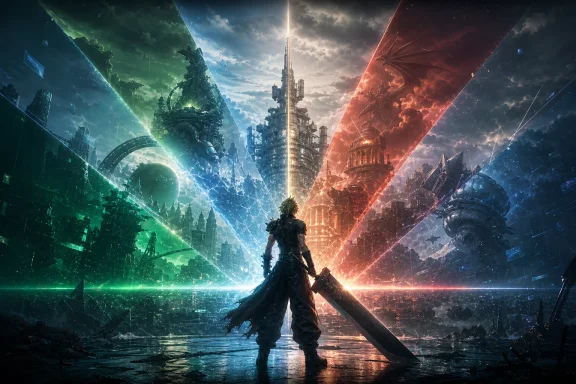 Square Enix Finally Stops Making Xbox Wait Outside Midgar
For much of the modern Final Fantasy era, Xbox fans have lived in a strange half-presence. The series was not absent from Xbox, exactly, but it arrived unevenly, late, or through side doors. Final Fantasy XV launched on Xbox One day one in 2016, Final Fantasy XIII had already made the leap in the Xbox 360 era, and Final Fantasy XIV eventually came to Xbox Series X|S after a long delay.But the Final Fantasy VII Remake project was different. This was not just another JRPG launch. It was Square Enix revisiting one of the most commercially and culturally important console RPGs ever made, rebuilding it as a prestige trilogy and placing it at the center of the company’s AAA identity.
That project began life as a PlayStation-first showcase. Final Fantasy VII Remake launched on PlayStation 4 in 2020, Intergrade followed on PlayStation 5 in 2021, and Rebirth arrived on PlayStation 5 in 2024. PC came later. Xbox did not.
Revelation changes the posture from “eventually” to “simultaneously.” That single word matters more than the platform list, because Xbox players have heard plenty of platform lists that effectively meant “when the exclusivity window closes and the porting calendar allows it.” A day-one launch says Square Enix no longer sees Xbox as merely a back-catalog recovery market for this series.
The PlayStation Aura Was Always Part Business, Part Myth
It is tempting to frame this as Square Enix “abandoning” PlayStation, but that is too simple. Final Fantasy VII became a PlayStation-defining game in 1997 because Sony, Square, and the CD-ROM moment all lined up at once. The association was powerful, profitable, and emotional, but it was never sacred.What happened over the following decades was a mix of marketing alignment, development priority, platform economics, and player expectation. Final Fantasy X and XII stayed on PlayStation 2. Final Fantasy XIII went multiplatform at launch in the West. Final Fantasy XV treated Xbox as a peer platform. Then the pendulum swung back with the VII Remake trilogy and Final Fantasy XVI, both of which reinforced the impression that PlayStation still had privileged access to Square Enix’s biggest single-player bets.
The problem is that prestige exclusivity has become harder to justify for expensive games with long tails. AAA development costs have climbed, release windows have stretched, and the audience has fragmented across console, PC, handheld-style devices, and cloud-adjacent ecosystems. A giant RPG that spends years in production needs more than one launch spike if it is going to behave like a modern global franchise.
Square Enix has said in recent years that it wants to move more aggressively toward multiplatform releases. Revelation is the cleanest example yet of that policy becoming reality where it matters most. It is one thing to say future titles will reach more players. It is another to put the finale of the Final Fantasy VII Remake trilogy on Xbox, Switch 2, and PC storefronts on the same day as PlayStation.
Day One Is the Real Announcement
The name Final Fantasy VII Revelation will excite the fandom, as any title for the trilogy’s final chapter would. The spring 2027 window gives the project a surprisingly clear runway, especially for a game that has carried the weight of a decades-old ending, a new continuity, and a fan base trained to inspect every trailer frame like forensic evidence.But for Xbox, the release timing is the announcement. A late port is a commercial apology. A day-one release is a strategic commitment.
The difference shows up everywhere. Day-one launches allow marketing beats to include Xbox users without awkward asterisks. They let community discussion happen across platforms at the same time. They allow streamers, reviewers, and achievement hunters to enter the conversation together rather than reconstructing it years later.
That matters for a story-heavy RPG. Spoilers are not merely an inconvenience for the Final Fantasy VII Remake project; they are central to the trilogy’s identity. Square Enix has spent two games playing with fate, memory, expectation, and the audience’s knowledge of the 1997 original. Asking Xbox players to experience that conversation after the fact would undercut the whole exercise.
Revelation’s simultaneous launch means Xbox players will not be stuck reading theories from the outside. They will be part of the first wave of interpretation, argument, disappointment, elation, and inevitable Reddit archaeology. For a series that thrives on communal overanalysis, that is not a small thing.
Xbox Play Anywhere Would Turn a Port Into an Ecosystem Play
Square Enix’s platform list includes Xbox Series X|S and Xbox on PC, which strongly suggests the company is continuing to treat Microsoft’s gaming footprint as more than a console box under the TV. Final Fantasy VII Remake Intergrade and Rebirth have been positioned around Xbox Play Anywhere support, and Revelation appears likely to follow the same pattern if Square Enix keeps the same store strategy.That would be a notable practical advantage. Xbox Play Anywhere is not glamorous, but for a sprawling RPG it is exactly the kind of feature that changes behavior. Buy once, play on console and PC, sync progress, and let the platform fade into the background.
For WindowsForum readers, that is the part worth watching. Microsoft’s gaming strategy has increasingly been about turning Windows, Xbox consoles, cloud services, and handheld-adjacent PC devices into a shared surface for the same library. Square Enix supporting that model with a marquee RPG trilogy is a small but meaningful vote of confidence in Microsoft’s platform abstraction.
It also gives Xbox players a cleaner answer to the question of where to buy. Steam remains the default for many PC players, and Epic Games Store has had its share of Square Enix releases. But Xbox on PC becomes more compelling when the purchase carries over to the living room and potentially to future Xbox hardware.
This is where Microsoft’s long, sometimes messy effort to collapse the wall between Xbox and Windows starts to pay off. Final Fantasy VII Revelation is not a Microsoft game, and it is not a Game Pass announcement. Still, a day-one Xbox-on-PC listing makes the Microsoft Store feel less like the place PC gamers visit only when forced.
The Trilogy’s Late Xbox Catch-Up Was Necessary Before the Finale
The simultaneous Revelation launch would have been less meaningful if Xbox players had no practical route into the first two chapters. Square Enix appears to understand that. The company has been moving the earlier Remake titles onto Xbox and Nintendo platforms ahead of the finale, turning what could have been a confusing final-entry announcement into a full ecosystem catch-up.That catch-up matters because the Remake project is not a conventional remake in three slices. Remake and Rebirth do not simply modernize the original’s plot in sequence. They reinterpret it, challenge it, and increasingly turn player memory into part of the text.
A newcomer can enjoy the combat systems, lavish production, and character work without having studied the original. But Revelation will almost certainly expect players to understand what Square Enix has been doing with fate, divergence, and the friction between old canon and new possibility. This is not the kind of finale that should be treated as a standalone curiosity.
The Xbox release cadence therefore becomes part of the editorial story. Square Enix is not merely dumping old ports on a platform before shipping the new thing. It is preparing a previously excluded audience to arrive at the finale with context.
That is especially important for an Xbox audience that has historically been asked to love Final Fantasy in fragments. The original Final Fantasy VII is available on modern Xbox platforms. Final Fantasy X/X-2, XII, XIII entries, XV, Crisis Core, and XIV have all had Xbox presences in various forms. But the emotional center of modern Final Fantasy discourse has been the VII Remake project, and Xbox has been catching up from behind.
Sony Loses an Advantage, Not a Franchise
The PlayStation version of Revelation will still sell. It will likely remain the emotional home for many fans who played Remake and Rebirth on Sony hardware, kept their save files there, and associate the entire project with PlayStation’s cinematic single-player brand. Nothing about a multiplatform launch erases that.What changes is the marketing gravity. Sony can no longer treat the final chapter as a de facto platform showcase in the same way the earlier entries functioned. Revelation will arrive as a Square Enix event first and a platform event second.
That is healthier for the game but less useful for console-war theater. PlayStation fans still get the game. Xbox fans finally get the game on time. PC players get a clearer release path. Switch 2 owners become part of a AAA RPG conversation that would have seemed unlikely during the original Switch’s early years.
The loser is not PlayStation as a platform. The loser is the idea that a third-party tentpole should behave like a first-party identity marker indefinitely.
That distinction matters because exclusivity debates often confuse access with ownership. Sony did not own Final Fantasy VII. Microsoft does not gain ownership because Revelation is coming to Xbox. What changes is Square Enix’s calculation about where the audience is and how much money it can afford to leave off the table.
Square Enix’s Multiplatform Pivot Looks Less Like Surrender Than Survival
Square Enix has had a complicated run over the past decade. Its biggest games still command attention, but its portfolio has swung between lavish hits, uneven experiments, blockchain flirtations, live-service misfires, and mid-budget releases that sometimes disappeared too quickly. The company’s problem has not been a lack of beloved IP. It has been extracting predictable returns from a scattered strategy.A more disciplined multiplatform approach is the obvious corrective. It does not guarantee success, but it reduces self-inflicted limits. If a game is expensive enough to require global scale, restricting its launch audience becomes a luxury the publisher must actively justify.
That is particularly true for Final Fantasy, a brand that has often wanted to be both a premium console showpiece and a worldwide RPG institution. Those goals can coexist, but not if large groups of players are trained to assume they will be served late or not at all.
Revelation is therefore less a betrayal of Sony than a recognition that the old math has changed. The PlayStation audience remains crucial, but it is no longer enough to define the entire business case for every mainline-adjacent Final Fantasy release. Xbox, Windows PC, Steam, Epic, and Nintendo’s next hardware all become part of the launch plan, not the cleanup plan.
That is good for players, but it is also good for Square Enix’s ability to maintain relevance between blockbuster releases. A fandom that is synchronized across platforms is easier to market to, easier to sustain, and harder to fragment.
The Switch 2 Listing May Be as Important as the Xbox One
Xbox fans will understandably focus on Xbox Series X|S and Xbox on PC, but the Nintendo Switch 2 listing may reveal just as much about Square Enix’s expectations. The original Switch was a monster install-base story but a difficult target for high-end current-generation ports. If Switch 2 can credibly run games like Revelation, publishers gain a new route to players who prefer portable or hybrid play without sacrificing too much ambition.That is part of the same broader industry movement. Platform boundaries are softening, but not because companies have become sentimental about consumer choice. They are softening because players are spending time across devices, and publishers want to follow them.
For Final Fantasy VII Revelation, that means the final chapter will not be confined to the old living-room console rivalry. It will exist on traditional consoles, Windows PCs, handheld-capable ecosystems, and multiple storefronts. That is the modern AAA map.
The challenge, of course, is technical consistency. Rebirth was a visually ambitious game even on PlayStation 5, and the final chapter will likely push open environments, cinematic combat, and bespoke set pieces even harder. Square Enix will need to deliver acceptable versions across very different hardware targets.
If it does, Revelation may become a template for what large Japanese RPG launches look like in the second half of the decade. Not exclusive first, PC later, everyone else eventually. Everywhere plausible, all at once.
The Story Burden Is Heavier Than the Platform Burden
The irony is that the platform news may be simpler than the creative problem. Square Enix has to finish one of the most scrutinized remake projects in gaming history. That means satisfying players who want emotional fidelity to the 1997 classic, players who want the new continuity to justify itself, and players who simply want a polished, spectacular RPG.Final Fantasy VII Remake ended by making clear that this trilogy was not going to be a museum piece. Rebirth expanded that gamble, leaning into ambiguity, multiverse-adjacent interpretation, and character moments designed to keep old fans uncertain. Revelation now has to pay off that uncertainty.
The title itself points toward disclosure, finality, and perhaps judgment. “Revelation” suggests a game built around answers, but answers are dangerous when mystery has become part of the appeal. The more Square Enix explains, the more it risks shrinking the emotional space players have occupied for years.
That may be why the day-one multiplatform launch matters creatively as well as commercially. A simultaneous release creates one shared moment of reckoning. Everyone gets to argue about the ending together, rather than watching one platform define the consensus before the others arrive.
For Final Fantasy VII, that shared moment is unusually important. The original game’s most famous scenes became gaming folklore because players encountered them, debated them, misremembered them, and mythologized them over years. Revelation is being built in a faster, louder, more connected culture. Square Enix has one shot to let the finale land before the internet hardens around it.
Xbox Gains More Than Another JRPG
For Microsoft, this is a symbolic win in a generation where symbolism has often been hard to come by. Xbox has spent years talking about access, ecosystems, and meeting players where they are, while also fighting the perception that it lacks the kind of cultural tentpoles that make a platform feel mandatory. A day-one Final Fantasy VII finale does not solve Xbox’s first-party problems, but it helps reduce the third-party prestige gap.That gap has always been partly psychological. Xbox players could often point to broad third-party support, strong backward compatibility, Game Pass value, and excellent hardware. Yet when certain Japanese releases skipped Xbox or arrived years late, the platform still felt outside the center of the conversation.
Final Fantasy VII Revelation landing day one does not mean every Japanese publisher will treat Xbox equally overnight. Sales performance will matter. Microsoft’s store policies, developer relations, and hardware footprint will matter. The Series S optimization question will continue to matter for ambitious games.
But this is the kind of announcement that changes expectations. Once a franchise of this stature arrives simultaneously, late ports become harder to excuse. Players notice when the biggest wall comes down.
The real test will come after launch. If Xbox sales are strong, Square Enix will have evidence that the audience was waiting. If they are weak, skeptics will argue that the old platform hierarchy reflected demand rather than habit. Either way, Revelation gives Xbox players the chance to vote at the moment that counts.
The Series S Question Will Follow the Game Until Launch
Any major current-generation multiplatform announcement involving Xbox still brings the Series S into the room. Microsoft’s lower-cost console has been a successful access point, but it has also created public friction around technical requirements for developers. A game like Final Fantasy VII Revelation will inevitably renew that discussion.Square Enix has not detailed performance targets, resolution modes, frame-rate options, or feature differences. That is normal this far out. But Rebirth’s scale makes the question unavoidable: how will the final chapter handle Xbox Series S, Switch 2, and a wide PC range without compromising the higher-end versions?
The answer may be less dramatic than forum arguments suggest. Developers have become better at scalable rendering, dynamic resolution, asset management, and CPU-side optimization. PC development already requires a range of targets. Switch 2 may force even more careful engineering.
Still, Xbox players should expect months of technical scrutiny. Every trailer, preview build, and digital store listing will be examined for signs of parity or compromise. If Square Enix wants the multiplatform message to land cleanly, it will need to communicate clearly before launch.
This is where Microsoft also has a role. If Xbox Play Anywhere is part of the package, if cross-save works as expected, and if the console versions are well optimized, Xbox can present Revelation as an ecosystem success rather than merely a port victory. If not, the day-one announcement will still matter, but the practical experience will carry caveats.
The Old Exclusivity Playbook Is Running Out of Road
The Final Fantasy VII Revelation announcement fits a wider industry pattern. Microsoft has been putting more of its own games on rival platforms. Sony has expanded into PC. Publishers that once liked platform checks and timed deals are increasingly forced to consider whether exclusivity still serves their largest financial interests.That does not mean exclusives are dead. First-party games will remain platform anchors. Timed exclusivity will still happen when the money, marketing, or development support makes sense. Smaller projects may still benefit from focused platform partnerships.
But the default assumption is changing for major third-party releases. If a game costs blockbuster money, depends on global mindshare, and has a fan base spread across ecosystems, the burden of proof shifts toward exclusivity rather than away from it.
Final Fantasy VII Revelation is a useful case because the franchise’s PlayStation association is so strong. If this game can go day one across Xbox, Nintendo, and PC storefronts, the rationale for keeping other third-party prestige releases locked down becomes harder to defend. Not impossible, but harder.
Players have been trained for years to treat platform availability as a form of identity politics. Publishers are now being trained by budgets to treat it as distribution math. Revelation sits right at that intersection.
The Fine Print Xbox Players Should Watch
The platform announcement is big, but Xbox players should keep their eyes on the specifics as Square Enix moves from reveal to preorder campaign. The difference between a good announcement and a good launch will live in details that are easy to overlook during the excitement of a Summer Game Fest finale.- Square Enix has announced a spring 2027 launch window, not a specific release date.
- The game is confirmed for Xbox Series X|S and Xbox on PC alongside PlayStation 5, Nintendo Switch 2, Steam, and Epic Games Store.
- Xbox Play Anywhere support looks likely based on the Xbox on PC listing and the handling of earlier entries, but players should wait for explicit store confirmation.
- Xbox newcomers should plan to play Final Fantasy VII Remake Intergrade and Final Fantasy VII Rebirth first, because Revelation is the final chapter of a story-heavy trilogy.
- Technical details such as frame-rate modes, Series S performance, PC requirements, and save-data bonuses remain important unanswered questions.
- The announcement is best understood as part of Square Enix’s broader multiplatform strategy, not as proof that PlayStation support is being abandoned.
Revelation Turns a Platform Win Into a Pressure Test
The most interesting version of this story is not that Xbox “won” and PlayStation “lost.” That framing is too small for what Square Enix is attempting. The company is taking the finale of its most visible modern project and asking the entire market to show up at once.That creates opportunity, but also pressure. A staggered release lets each platform moment become its own marketing beat and gives late ports room to be judged on different terms. A simultaneous launch leaves less cover. Every version will be compared immediately, every storefront will compete from day one, and every platform community will enter the spoiler minefield together.
For Xbox, that pressure is welcome. It is better to be judged in the arena than invited in after the championship parade. After years of waiting, Final Fantasy VII Revelation gives Xbox players something they have rarely had with this trilogy: equal footing at the moment of maximum attention.
Square Enix’s decision does not erase the series’ PlayStation history, and it does not guarantee that every future Final Fantasy project will arrive everywhere at once. But it does mark the point where the company’s multiplatform rhetoric becomes impossible to dismiss as corporate fog. In spring 2027, if the date holds, Cloud’s final march through the remake trilogy will not belong to one console tribe first and everyone else later; it will be a shared launch, and that may be the most consequential revelation of all.
References
- Primary source: Windows Central
Published: 2026-06-06T14:10:13.530622
Final Fantasy returns to Xbox with a huge day‑one launch as Final Fantasy VII Revelation breaks exclusivity | Windows Central
Final Fantasy VII Revelation launches on Xbox day one, marking the end of PlayStation exclusivity for the remake trilogy's final chapter.www.windowscentral.com - Related coverage: gamesradar.com
Final Fantasy 7 Revelation brings the JRPG remake trilogy to a close in 2027, and yes, it's "launching simultaneously on all platforms" | GamesRadar+
Merry very early Christmas from Square Enixwww.gamesradar.com - Related coverage: techradar.com
Final Fantasy 7 Revelation let's you jump out of an airship Fortnite style | TechRadar
Square Enix has officially announced Final Fantasy 7 Revelation, the third and final installment in the remake series, launching in Spring 2027.www.techradar.com - Related coverage: news.xbox.com
Why is Final Fantasy VII Remake Intergrade Such A Big Deal? - XBOX Wire
Final Fantasy Remake Intergrade is coming this winter to Xbox Series X|S and PC, experience the story that changed gaming forever in a bold new way.news.xbox.com - Related coverage: gamespot.com
Final Fantasy 7 Remake Intergrade, Final Fantasy XVI Finally Coming To Xbox - GameSpot
A pair of Final Fantasy games are coming to Xbox platforms, and FFXVI is out today.www.gamespot.com - Related coverage: gematsu.com
Final Fantasy VII Rebirth coming to Xbox Series, Switch 2; third game confirmed multiplatform - Gematsu
Square Enix will release Final Fantasy VII Rebirth for Xbox Series and Switch 2, as well as for PC via Microsoft Store, the company announced.www.gematsu.com
- Related coverage: purexbox.com
- Related coverage: xbox.com
Buy FINAL FANTASY VII REBIRTH | Xbox
The Unknown Journey Continues... After escaping the city of Midgar, Cloud and his friends set out on a journey across the planet. New adventures await in a vibrant, expansive world in this standalone entry of the FFVII remake trilogy.www.xbox.com - Related coverage: businesswire.com
- Related coverage: xboxachievements.com
Final Fantasy VII Remake Intergrade is Coming to Xbox Series X|S This Winter | XboxAchievements.com
Square Enix has announced that Final Fantasy VII Remake Intergrade will finally be coming to Xbox following its initial PS4 release in 2020.Remaking t...www.xboxachievements.com - Related coverage: as.com
El polémico “modo fácil” de Final Fantasy VII Remake Intergrade que divide a la comunidad: salud infinita y daño de 9999
Final Fantasy VII Remake Intergrade recibe nuevas opciones de dificultad y accesibilidad con su lanzamiento en Switch 2 y Xbox. ¿Es lícito usarlas?as.com
