

AI first discovery is no longer a niche channel—it's a structural change in how people find answers and buy things online, and businesses that treat AI search as an extension of traditional SEO will win; those that ignore it risk losing substantial referral traffic and share of voice.\n
\nAI‑powered assistants and search copilots synthesize answers across many pages, often surfacing short, self contained passages instead of links. That behavior compresses the funnel: users read an AI summary and may never click through to the original site, which changes what “visibility” means for websites and brands. Generative Engine Optimization (GEO)—the set of tactics that make businesses machine readable, verifiable, and citable by AI systems—has emerged as the practical response to this shift.\nIndustry reporting and practitioner playbooks show consistent patterns: AI surfaces answers by retrieving segments of pages, preferring structured, corroborated facts (schema, business listings, reviews), and favoring concise, clearly headed text that reads well when extracted. At the same time, the exact magnitude of traffic shifts varies by vertical, dataset, and platform; vendors and platform owners publish different figures, and those headline numbers should be validated against primary sources for any high stakes decision.\n
\n
\n
\n
\n
\n
\n
\n
\n
\n
\n
\n
\n
Source: TechRound How Can Businesses Optimise Websites For AI Search In 2026? - TechRound
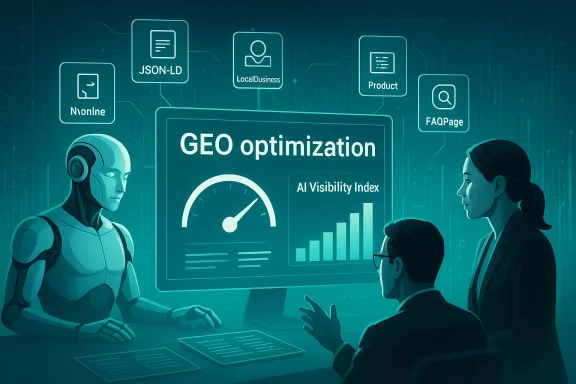 Background
\nAI‑powered assistants and search copilots synthesize answers across many pages, often surfacing short, self contained passages instead of links. That behavior compresses the funnel: users read an AI summary and may never click through to the original site, which changes what “visibility” means for websites and brands. Generative Engine Optimization (GEO)—the set of tactics that make businesses machine readable, verifiable, and citable by AI systems—has emerged as the practical response to this shift.\nIndustry reporting and practitioner playbooks show consistent patterns: AI surfaces answers by retrieving segments of pages, preferring structured, corroborated facts (schema, business listings, reviews), and favoring concise, clearly headed text that reads well when extracted. At the same time, the exact magnitude of traffic shifts varies by vertical, dataset, and platform; vendors and platform owners publish different figures, and those headline numbers should be validated against primary sources for any high stakes decision.\n\n
How AI Search Changes the Rules: A Short Technical Primer
\nRetrieval, synthesis, and citation: the practical mechanics
\nAI systems that power assistants and copilots generally follow a three‑step pipeline:\n- \n
- Query understanding — the system turns a natural‑language prompt into an intent vector.\n
- Retrieval — a retriever (knowledge graph, index, or vector store) returns candidate passages and documents that match the vector.\n
- Synthesis and ranking — a generative model composes an answer from the retrieved passages and applies filters for trust, recency, and safety. The engine then decides which sources to cite, if any.\n
What “visibility” means now
\n- \n
- Traditional SEO visibility = position in a ranked list of links.\n
- AI search visibility = probability a page is selected as a source or cited inside a synthesized answer, and the degree to which its text can be clipped or summarized without losing meaning.\n
\n
The Business Impact: What Brands Are Facing
\nTraffic, conversions, and the “zero click” problem
\nAI summaries remove many intermediate clicks in the discovery path. For information‑seeking queries—product comparisons, how‑to guides, and local recommendations—users increasingly receive a packaged answer from the assistant and then act without visiting ten different pages. The outcome is fewer tracked sessions for publishers and brands, but not necessarily no demand: purchases and decisions may still happen, just with different attribution and fewer measurable referrals.\nAnalysts and practitioners warn that the decline in click‑throughs can be material in some verticals and modest in others; the variability depends on query intent, the platform’s citation policy, and how many agents a specific assistant returns. Businesses must therefore measure both direct citation presence inside AI replies and downstream conversion signals to understand revenue impact.\nThe new currency: trust and corroboration
\nAI systems prefer signals that reduce ambiguity: consistent business facts across directories, authoritative third‑party references, up‑to‑date reviews, and machine readable structured data. That means earned reputation—journalist mentions, industry reports, verified reviews—can become the primary path to being cited by an assistant. Brands with broad third‑party proof points often appear in AI answers more often than brands that rely solely on their owned content.\n\n
Practical Playbook: How Businesses Should Optimise for AI Search in 2026
\nThe following is a prioritized, operational playbook that aligns content engineering, technical SEO, PR, and analytics to increase the chance of being used or cited by AI systems.\nImmediate triage (0–30 days)
\n- \n
- Claim and fully populate your Google Business Profile (GBP) / Bing Places / platform‑specific listings. Consistency of name, address, phone, hours, categories and booking links is low cost and high impact.\n
- Implement or audit critical schema types on revenue‑sensitive pages:\n
- Organization / LocalBusiness\n
- Product, Offer, and AggregateRating for ecommerce\n
- FAQPage and QAPage for common queries\n
- Article and Author metadata for long‑form content\nSchema makes facts machine readable and increases the chance that a specific fact will be lifted into an AI reply.\n
- Add “machine‑readable fact blocks”: short, bulleted summaries at the top of service and product pages that directly answer buyer‑intent prompts. Keep sentences short and factual.\n
Short‑term (1–3 months)
\n- \n
- Build a small set (50–200) of buyer‑intent prompts and run manual audits across major assistants (Copilot, Gemini, ChatGPT with web access, Perplexity). Record whether your brand is cited and how it’s described; this is your baseline GEO index.\n
- Convert high value long pages into “question‑first” formats:\n
- H2/H3 headings that mirror user prompts.\n
- Short lead paragraphs (1–3 sentences) that answer the question up front.\n
- Bulleted lists and tables for extractable facts.\n
- Strengthen off‑site corroboration through targeted PR and data releases. Publish one‑page factsheets, industry data, and case study PDFs with structured metadata to create easily citable references.\n
Medium term (3–12 months)
\n- \n
- Automate review acquisition and monitoring. Recency and volume of verified reviews are critical trust signals for many agents.\n
- Expose transactional signals (inventory, bookings, appointments) with machine‑readable APIs or live feeds where possible. Assistants that can verify availability are more likely to surface your business for a booking or purchase.\n
- Establish editorial provenance for high value content: bylines, publication dates, and author bios improve perceived expertise and make it easier for agents to attribute and cite your material.\n
\n
Technical Checklist for AI‑readability (Concrete Items)
\n- \n
- JSON‑LD schema for Organization, LocalBusiness, Product, FAQPage, Article, Review and Offer.\n
- Clear H1, H2, H3 hierarchy that mirrors conversational prompts.\n
- Concise answer snippets at the top of pages (no more than 2–3 sentences) for each targeted question.\n
- FAQ pages with Q/A pairs such that the answer is a self contained paragraph.\n
- OpenGraph and Twitter Card tags for social surfaces (these help aggregator scrapers).\n
- Sitemaps and an indexable canonical site for retrievers.\n
- Robots meta tags and HTTP header guidance for AI crawlers (ensure you’re not accidentally blocking agent crawlers). Pay special attention to meta robots and X‑Robots‑Tag usage—targeted robot tags can either allow or disallow agents from ingesting particular pages.\n
\n
Content Strategy: Write for People, Engineered for Clipping
\nAI selection rewards text that is both human‑useful and extractable. That means:\n- \n
- Lead with the answer. The first 1–3 sentences on a page should directly answer the question users are most likely to ask. Short, factual, precise language is better than rhetorical flourishes.\n
- Use lists and tables for facts (specs, dimensions, prices, times).\n
- Include clear definitions, “what it is” and “how it works” sections for technical topics that assistants love to cite.\n
- Add canonical facts pages that collect core company facts (founding date, headquarters, product line, certifications). These single sources of truth reduce ambiguity.\n
Example page anatomy (highly citable product page)
\n- \n
- H1: Product Name (exact match)\n
- Short lead (1–2 sentences): What it does + one key differentiator\n
- Quick facts box: Price | Availability | SKU | Key specs (bullet list)\n
- FAQ (3–5 Q/A pairs)\n
- Short how‑to or quick‑start section (steps)\n
- Schema JSON‑LD for Product, Offer, and AggregateRating\n
\n
Measurement: How to Know If GEO Efforts Work
\nTraditional analytics undercount AI impact because many responses are zero click. Develop an AI Visibility Index that combines:\n- \n
- Frequency of being cited by assistants (manual checks + automated trackers). Capture transcripts/screenshots with timestamps.\n
- Referral uplift from known AI connectors (some assistants or plugins will pass referrer headers—capture these).\n
- Changes in branded and non‑branded conversions for queries you target.\n
- Share of citation across platforms (Copilot, Gemini, ChatGPT/Perplexity, specialized vertical agents).\n
- \n
- Run weekly manual prompt checks for priority queries and log results.\n
- Use server logs and UTM parameters where interactions allow—instrument CTAs on canonical facts pages specifically for AI traffic (e.g., “Get a quote” button that is unique to the page).\n
- Maintain a scoreboard of which outlets and content types are most frequently used as sources by assistants to guide PR and content priorities.\n
\n
Governance, Legal and Risk Considerations
\n- \n
- Hallucinations and misinformation: Assistants sometimes generate confident but incorrect statements. Establish a remediation plan and a public corrections page to signal authoritative updates.\n
- Privacy and data governance: Avoid exposing sensitive customer data in public feeds. When you provide live APIs for inventory or bookings, ensure those endpoints respect rate limits and privacy practices.\n
- Platform economics and gatekeepers: Be prepared for new referral models and integrations (booking APIs may carry comms/fees). Diversify discovery channels to avoid dependence on a single assistant index.\n
- Editorial responsibility: When using AI to draft content, maintain human editorial review and document the process—this both improves quality and creates defensible audit trails.\n
\n
Prioritisation Guide: Where to Spend Your Time and Budget
\n- \n
- Low cost / high impact\n
- GBP, Bing Places, Yelp hygiene and NAP consistency.\n
- FAQ pages with schema on high‑traffic product/service pages.\n
- Machine‑readable quick facts boxes.\n
- Review solicitation and monitoring.\n
- Mid cost / strategic\n
- PR and third‑party corroboration campaigns (trade press, analyst mentions).\n
- Booking/inventory feed work for transactional businesses.\n
- Content re‑engineering for top 50 buyer intents.\n
- Higher cost / longer term\n
- Building APIs and live index feeds.\n
- Enterprise GEO tooling and platform partnerships.\n
- Ongoing multi‑assistant monitoring and R&D into prompt formats and localizations.\n
\n
Common Pitfalls and How to Avoid Them
\n- \n
- Mistaking quantity for quality: Mass production of shallow pages still performs poorly in AI syntheses. Prioritize depth, utility, and verifiability.\n
- Over‑automation without oversight: Automated review generation or content pipelines must include human checks to prevent errors and avoid penalties.\n
- Ignoring off‑site signals: AI often relies on third‑party confirmations. A brand that publishes everything on its own site but lacks external corroboration will struggle to be selected.\n
\n
Tools, Partners and Emerging Ecosystem
\n- \n
- Schema validators and structured data testing tools.\n
- Multi‑engine monitoring tools that simulate prompts across assistants.\n
- Reputation platforms that automate review collection and display verification metadata.\n
- PR and data release services that help create authoritative, citable assets (PDFs, fact sheets, datasets).\n
- Specialized GEO consultancies and platforms that integrate GBP, schema, content, and monitoring into a single workflow. Use caution: validate claims, request case studies, and insist on data portability.\n
\n
What Remains Unclear — and What to Watch
\nSome headline numbers about traffic shifts and market share (platform‑specific referral growth, dollar estimates of commerce routed by AI, and percentage of queries served with AI summaries) vary between vendor reports, consultancies, and platform statements. These figures are directionally consistent—AI search is growing fast and can materially affect referral patterns—but the precise percentages and dollar values should be verified against primary Microsoft, Google, or McKinsey reports before being used for budgeting or contractual negotiations. Treat vendor‑sourced headlines as early indicators rather than immutable facts.\n\n
Conclusion: A Pragmatic Stance for 2026
\nOptimising for AI search in 2026 is not a replacement of SEO; it's an extension that requires new disciplines: machine‑readability, third‑party corroboration, concise extractable content, and new measurement practices. The sensible strategy blends the familiar—title tags, meta descriptions, sitemaps and link building—with GEO‑specific work: schema hygiene, FAQ-first content, canonical fact pages, and proactive PR to create authoritative citations.\nStart with the basics (listings, schema, FAQ pages), measure assiduously (manual prompt audits and a GEO index), and invest progressively in feeds and reputation signals. Focus on clarity and verifiability: AI tools reward precise facts that can be confidently cited. Treat this not as a short‑term growth hack but as a long‑term investment in being knowable—by both people and machines.\nFlagged claim caution: any single percentage or dollar estimate quoted in public coverage should be cross‑checked against the originating Microsoft, Google, or McKinsey publication before being used in board or investor conversations—platform metrics and market forecasts change rapidly and are often updated.\nThe companies that thrive will be those that make themselves easy to verify, easy to cite, and easy to transact with—both for humans and the AI systems increasingly orchestrating discovery.\nSource: TechRound How Can Businesses Optimise Websites For AI Search In 2026? - TechRound
