

Google Discover’s February 2026 core update is a watershed moment for merchants: it recasts Discover from a quirky traffic booster into a gatekeeper that rewards locality, depth, and trust — and it arrives at the same moment AI-driven summaries and agentic commerce are reshaping where and how shoppers find products.
Google Discover launched as a personalized, query-less feed in 2018 and has quietly become a high-impact referral surface for many publishers and retailers. It surfaces articles, videos, and social content directly in the Google app and on Android home screens, showing what Google’s systems think a specific user will find interesting rather than what someone explicitly searched for. That difference — selection by interest rather than response to a query — changes the quality bar and the commercial dynamics for ecommerce content.
Until early 2026, Discover was often treated as a secondary channel: helpful when a piece “went viral,” but inconsistent compared with the steady baseline of organic search. The landscape shifted as Google integrated AI summaries and broadened Discover’s formats to include creator and video content, and as AI Overviews and shopping agents started to divert clicks away from traditional search-result pages. Those trends put more strategic weight behind Discovery-style syndication for ecommerce marketers.
The February 2026 Discover Core Update is the first major algorithmic change targeted at Discover alone — not the main search index — and it formalizes signals that privilege local relevance, original reporting, subject-matter depth, and a cleaner editorial experience (less clickbait, fewer sensational thumbnails). Google positions the change as a quality-focused refinement intended to improve user satisfaction with the feed. The rollout began for U.S. English users on February 5, 2026, with a global expansion planned in stages.
This convergence matters for two reasons:
Google has rolled AI-generated summaries into Discover that sometimes replace original headlines and snippets, and those summaries can be inaccurate. This has raised concerns among publishers about traffic diversion and misrepresentation. When AI summaries become a common surface, merchants reliant on branded landing experiences should test how summaries affect click intent and perception. Flag uncertain or unverifiable claims am])
Source: Practical Ecommerce Google Discover for Ecommerce
 Background: why Discover matters now
Google Discover launched as a personalized, query-less feed in 2018 and has quietly become a high-impact referral surface for many publishers and retailers. It surfaces articles, videos, and social content directly in the Google app and on Android home screens, showing what Google’s systems think a specific user will find interesting rather than what someone explicitly searched for. That difference — selection by interest rather than response to a query — changes the quality bar and the commercial dynamics for ecommerce content. Until early 2026, Discover was often treated as a secondary channel: helpful when a piece “went viral,” but inconsistent compared with the steady baseline of organic search. The landscape shifted as Google integrated AI summaries and broadened Discover’s formats to include creator and video content, and as AI Overviews and shopping agents started to divert clicks away from traditional search-result pages. Those trends put more strategic weight behind Discovery-style syndication for ecommerce marketers.
The February 2026 Discover Core Update is the first major algorithmic change targeted at Discover alone — not the main search index — and it formalizes signals that privilege local relevance, original reporting, subject-matter depth, and a cleaner editorial experience (less clickbait, fewer sensational thumbnails). Google positions the change as a quality-focused refinement intended to improve user satisfaction with the feed. The rollout began for U.S. English users on February 5, 2026, with a global expansion planned in stages.
What changed in the February 2026 Discover Core Update
The new priority signals
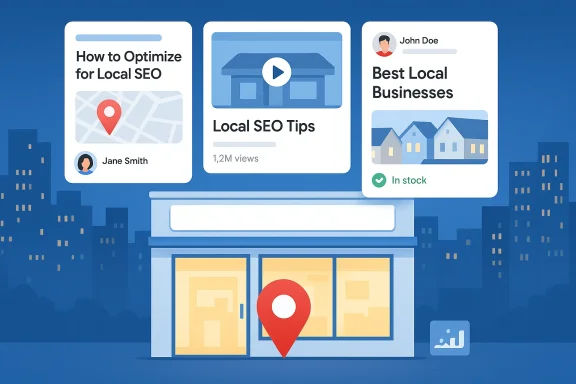
Google’s public guidance and accompanying coverage make the update’s main shifts clear:- Local and regional relevance: Discover will show more content from domestic publishers and prioritize content tied to the user’s country or region. This elevates local SEO signals and gives physical retailers an advantage when their coverage is genuinely local.
- Less clickbait / more editorial integrity: Google explicitly calls out clickbait, sensationalism, and misleading preview tactics as behaviors that reduce Discover eligibility. Headlines that overpromise and images that intentionally mislead are now risk factors.
- Depth, originality, and topical expertise: Discover now rewards in-depth and original reporting or content, and it assesses expertise at a topic level rather than purely site-wide authority. Niche publishers with consistent coverage on a subject can outperform broader sites that lack depth.
- Page experience and image quality: Google updated Discover guidance to add page experience into the mix and to emphasize large, high-quality images (Google recommends images at least 1200px wide for the larger preview). Pages that degrade experience with intrusive ads or autoplay elements can lose ground.
- Format and creator signals: Discover is increasingly multi-format — showing videos, creator posts, and short-form content — and the feed’s personalization can give preference to creators users explicitly follow or favor. That expands opportunity beyond strict article-centric SEO.
Why this is not “another SEO tweak”
This update is not a traditional ranking tweak; it’s closer to a redefinition of editorial standards for a recommendation surface. Discover chooses items to show users without a query; consequently, Google treats the feed’s content more like curated editorial recommendations and expects higher standards of trustworthiness and usefulness. That conceptual shift matters because signals that win in Discover can be different from what drives classic search-page rankings.Why ecommerce teams should care
Discover is no longer merely a publisher play — it’s becoming a viable channel for product discovery and upper-funnel ecommerce. The update intersects with three larger shifts that matter to merchants:- The rise of AI Overviews and shopping agents which can answer questions or propose purchases without directing users to traditional SERPs. These agents increasingly depend on structured product data and authoritative content to ground recommendations.
- Google’s move to integrate creator and video content in Discover means product explainers, unboxings, and visual buying guides can now appear in the same stream as articles — and these formats often convert well for retail.
- The localization emphasis directly benefits retailers with physical stores and localized inventory. Regional product roundups, local store coverage, and community-facing content can now have disproportionate reach in Discover compared to national competitors.
Practical Google Discover optimization for ecommerce (GDO playbook)
Google Discover Optimization (GDO) is not identical to SEO, but many best practices overlap. Below is a pragmatic, testable playbook for ecommerce teams that want to treat Discover as a primary channel.Start with fundamentals (low-hanging wins)
- Use accurate, non-clickbait headlines that summarize the page’s value. Google now calls out sensationalism as a direct penalty in Discover.
- Include large, compelling images (≥1200 px wide where possible) and enable max-image-preview:large so Discover can show the large thumbnail. Avoid using logos as the main image.
- Ensure page experience is solid: fast loading, mobile-first layout, and minimal intrusive ads. Google added page-experience guidance to Discover recommendations in the February update.
- Prioritize **people-firor humans, not models. Offer original insights, useful details, and avoid thin aggregations of other sites’ material.
Content types that perform for ecommerce
- Product buying guides that go deeper than specs — include hands-on commentary, comparisons, and local availability.
- How-to content and product uses (e.g., "How to choose winter boots for city walking") that match durable interest signals.
- Short video explainers and vertical-friendly formats (unboxings, demos, quick tips).
- Local content: store-focused posts, local product roundups, event tie-ins, community partnerships.
- Creator-led content: collaborations with creators who can produce attention-grabbing, authentic content that Discover can surface to followers.
A/B test and measure Discover separately
- Set up a Discover-specific view in Search Console and segment Discover referrals in analytics. Treat Discover traffic as a separate channel for testing.
- Publish consistent variants: try different headline styles, image crops, and content lengths to see which editorial traits win.
- Track downstream conversions and returns: high-intent Discover referrals often convert well, but you must monitor return rates and customer satisfaction to validate net value.
Editorial characteristics that tend to succeed
- Content with topical depth: more than a paragraph of opinion or listicle-level treatment.
- Verified or demonstrable expertise: author bios, linked sources, and demonstrable domain knowledge.
- Freshness where relevant: timely pieces that respond to regional events or seasonal interest.
- Rich media that answers visually — diagrams, step photos, or demo videos.
Measurement and testing framework
Treat Discover like a media property with its own editorial rhythm.- Use Google Search Console’s Discover report to track impressions, clicks, and CTR by page. Log changes on the day of publication and over 14–30 day rolling windows.
- Build an editorial experiment cadence: pick a single theme (e.g., "local gift guides"), –10 variant pages, and track which editorial elements produce consistent Discover visibility.
- Monitor revenue lift, AOV (average order value), and post-purchase metrics separately for Discover referrals. Agentic checkout flowrals can change conversion patterns, so reconcile orders with your attribution and fulfillment telemetry.
How Discover fits into the broader AI and agentic commerce picture
Discover’s evolution is happening alongside a much larger industry shift toward agentic commerce — conversational agents and assistants that can recommend, assemble carts, and even complete tokenized checkouts. Google has contributed to that infrastructure push (notably with standards like the Universal Commerce Protocol), and platforms are piloting in-chat discounting and checkout experiences. The upshot: Discover can be an upstream signal that influences AI recommenagents, especially when content demonstrates topical authority and presents canonical product data.This convergence matters for two reasons:
- Agents rely on authoritative content and structured product data to avoid hallucinations. Pages that perform well in Discover — original, high-quality pieces with strong product metadata — are more likely to be used as grounding for agentic responses.
- Discover’s richer formats (video, creator posts) are the same formats that fuel Demand Gen and shoppable creatives inside Google’s broader ad stack, making Discover visibility synergistic with paid discovery investments.
Risks, trade-offs, and operational cautions
Optimizing for Discover and agentic channels can bring meaningful upside, but there are clear and growing risks merchants must manage.1) Dependence on platform selection and opacity
Platforms are becoming powerful gatekeepers for disgly, checkout. If a large share of discovery and conversion migrates to Google’s AI surfaces or to assistant-hosted checkouts, merchants may face changing commercial terms, opaque ranking criteria, and concentrated negotiating leverage. Diversify acquisition channels and insist on transparent measurement and placement contracts when possibries and publisher frictionGoogle has rolled AI-generated summaries into Discover that sometimes replace original headlines and snippets, and those summaries can be inaccurate. This has raised concerns among publishers about traffic diversion and misrepresentation. When AI summaries become a common surface, merchants reliant on branded landing experiences should test how summaries affect click intent and perception. Flag uncertain or unverifiable claims am])
3) Data hygiene & fulfillment fragility
Agentic commerce magnifies the importance of accurate, machine. If AI agents or Discover cards surface a product only to find it out of stock or mispriced, the result is a broken user experience and a repe merchant. Treat feeds, inventory sync, and return policies as operational controls, not marketing afterthoughts.4) Measurement ambiguity and inflated vendor metrics
Platform-provided multipliers (e.g., “7× AI traffic” or “11× AI orders”) are directional and often company-reported; treat them as incitements to test, not as guaranteed forecasts. Always validate platform claims against your own analytics and reconciliation of orders and returns.5) Legal, privacy, and ad-disclosure issues
AI-driven placements may rely on contextual signals from a user’s conversation. Merchants must ensure consented data practices and fair disclosure of paory scrutiny is increasing, and card networks and privacy authorities are watching how delegated payments and persistent conversational context are used. Build with auditable provenance rules.A prioritized 90‑day checklist for merchants (practical, tactical)
- Audit and canonicalize product data
- GTIN/UPC coverage, SKU normalization, accurate dimensions, and alt-texted hero images.
- Harden inventory and fulfillment
- Near-real-time syncs, explicit shipping windows, and fast-fulfillment SKUs for early agentic tests.
- Experiment with Discover-focused content
- Publish local guides, in-depth explainers, and short video explainers. Run A/B tests on images and headlines.
- Implement page-experience improvements
- Mobile speed, reduced intrusive ads, and stable layout for images — all of which matter for Discover eligibility.
- Track and reconcile
- Instrument end-to-end metrics: impressions → clicks → conversions → returns → chargebacks; measure Discover separately in Search Console.
- Engage payments and PSP partners
- Ask about tokenized checkout support and delegated payment testing for agentic channels.
- Negotiate placement and measurement clarity
- When participating in Direct Offers, Demand Gen, or in‑chat placements, demand transparently auditable metrics and placement terms.
Editorial examples: headlines and image choices that reduce risk
- Risky: “You won’t believe this cheap replacement that beats X!” — flagged as clickbait.
- Better: “Budget earbuds that match studio sound for under $50 — tested” — descriptive, truthful, and signals human-first value.
- Image rule: use a product-in-context hero image at or above 1200px wide, avoid logos, and ensure the image matches the headline’s promise.
The long view: Discover as part of a hybrid future
Discover’s February 2026 update signals that Google is treating recommendation surfaces with editorial seriousness. For merchants, that means two durable bets:- Invest in content that demonstrates topical expertise and serves human readers with original value. Those pages are more likely to be surfaced by Discover and used as grounding by AI agents.
- Treat product data and operational readiness as first-class engineering assets. Accurate feeds, tokenized payment endpoints, and observability are prerequisites for participating in agentic commerce without undue risk.
Conclusion
The February 2026 Discover Core Update is a wake-up call: Discover is evolving from an opportunistic referral stream into a curated, multi-format discovery surface that rewards trust, locality, and depth. For ecommerce brands, that’s both an opportunity and an operational challenge. Embrace it by producing people-first content, prioritizing local relevance where it matters, and treating product metadata and fulfillment as mission-critical systems. Test deliberately, measure Discover as its own channel, and be cautious of opaque platform metrics. Do that, and Discover — once an unpredictable traffic burst — can become a dependable and valuable part of your acquisition mix.Source: Practical Ecommerce Google Discover for Ecommerce
