

Microsoft Azure is increasingly being framed not as a destination in itself, but as the operating layer that makes enterprise transformation possible. In the South African channel context, that message matters because partners are no longer being asked to move workloads alone; they are being asked to help customers translate cloud capability into business outcomes. The Westcon-Comstor commentary captures that shift clearly, arguing that the real opportunity for partners lies in architecture, enablement, licensing strategy, and recurring value rather than simple infrastructure resale oITWeb piece is simple: transformation is not delivered by cloud infrastructure alone. The cloud is the foundation, but the value emerges when organizations know how to modernize workloads, govern data, operationalize security, and align technology choices with business goals. That framing is consistent with Microsoft’s own guidance, which positions the Cloud Adoption Framework as a structured roadmap for organizations adopting Azure and the Well-Architected Framework as the design standard for reliable, secure, performant workloads
Westcon-Comstor’s channel view reflectality. Partners are no longer valuable simply because they can sell cloud consumption. They are valuable because they can make cloud measurable, repeatable, and defensible in production. That is especially true when customers are dealing with hybrid estates, regulatory pressure, AI readiness, and the need to connect Azure to Microsoft 365, Dynamics 365, Power Platform, and Copilot-based workflows
Microsoft’s own positioning supports that story. Azure’s global infrastructure is described as spanning *sis presented as a secure, globally distributed environment designed for enterprise workloads at scale The company also emphasizes integrated security capabilities and large-scale cybersecurity expertise across the Azure stack, reinforcing the notion that the platform is meant to carry production risk, not just host experiments
That matters because many organizations still treat “cloud transformation” as a migration project. In practice, the more valuable transformation is usually the second phase: re-architecting for resilience, modernizing data and application flows, and creating a business model that can sustain ongoing change. Microsoft’s frameworks are built around that longer arc, and partners like Westcon-Comstor are positioning themselves as the translators between platform potential and operational reality
Azure’s appeal is not just breadth; it is fit. Enterprises are looking for a platform that can support infrastructure, identity, analytics, security, AI, and hybrid operations without forcing each woe operating model. Microsoft has spent years turning Azure into a platform that connects naturally with the rest of its enterprise stack, including Microsoft 365, Dynamics 365, Power Platform, and Copilot experiences
The significance here is that Azure is less of a commodity utility than a control plane for enterprise change. When customers already use Microsoft 365 and increasingly want Copilot-driven workflows, Azure becomes the natural place to anchor identity, data, and policy. That tight integration is one reason partners can build repeatable offerings around Microsoft’s ecosystem rather than trying to stitch together separate technology silos
That consistency also helps partners. If a solution can be packaged repeatedly, supported predictably, and aligned with Microsoft’s native buying motions, it becomes easier to scale. This is a major reason the channel remains central to Azure’s market strategy: the partner ecosystem turns broad capability into specific customer outcomes
Microsoft’s regional footprint also creates a competitive moat. Once a customer’s architecture, compliance rules, and disaster recovery design are built around a specific cloud geography, switching becomes much harder. That makes Azure particularly attractive to multinational organizations, public-sector bodies, and industries with formal data governance requirements
This is one reason Azure often shows up in long-cycle transformation stories. Whether the workload is SAP, analytics, industrial operations, or partner-led managed services, the selling point is not just that Azure exists. It is that Azure exists in the places and formats customers need it to exist.
A major thread in the article is that Azure’s appeal is tied to trust. Microsoft’s security positioning is not just about controls and certifications. It is about presenting the platform as safe enough for mission-critical transformation. That matters because in enterprise IT, the first question is often not “Can this run?” but “Can we defend it to audit, risk, and legal teams?”
The article’s point about Microsoft’s multibillion-dollar security investment and responsible AI posture fits this broader narrative, even if the exact phrasing in the quote is promotional. What matters is the strategic implication: Azure is being sold as a platform where security, compliance, and AI governance are designed into the environment rather than bolted on afterward
That is where the channel earns its keep. A customer may buy Azure from Microsoft, but they often buy the confidence to use it from a partner.
This matters because it changes how cloud is bought. Customers are no longer purchasing infrastructure to support IT alone. They are purchasing the substrate for AI-enabled business workflows. That makes Azure’s role more central, not less.
That makes Azure especially relevant for enterprises that are modernizing without rewriting everything. The platform’s value lies in helping organizations move at a pace that matches risk tolerance.
AWS and Google Cloud have strong technical positions, but Microsoft’s advantage is often commercial and operational: existing enterprise relationships, partner scale, and an increasingly coherent value stack. That is why channel stories like the one in ITWeb matter. They show how Microsoft’s ecosystem becomes a distribution engine for transformation.
The most important test will be whether partners can build services that survive beyond the migration project. That means advisory, governance, optimization, AI enablement, and managed operations. It also means getting better at proving value in terms that business leaders care about: resilience, cost control, speed, compliance, and productivity. Microsoft’s frameworks provide the structure, but the channel must provide the implementation discipline
Source: ITWeb The power behind transformation is not the cloud
Westcon-Comstor’s channel view reflectality. Partners are no longer valuable simply because they can sell cloud consumption. They are valuable because they can make cloud measurable, repeatable, and defensible in production. That is especially true when customers are dealing with hybrid estates, regulatory pressure, AI readiness, and the need to connect Azure to Microsoft 365, Dynamics 365, Power Platform, and Copilot-based workflows
Microsoft’s own positioning supports that story. Azure’s global infrastructure is described as spanning *sis presented as a secure, globally distributed environment designed for enterprise workloads at scale The company also emphasizes integrated security capabilities and large-scale cybersecurity expertise across the Azure stack, reinforcing the notion that the platform is meant to carry production risk, not just host experiments
That matters because many organizations still treat “cloud transformation” as a migration project. In practice, the more valuable transformation is usually the second phase: re-architecting for resilience, modernizing data and application flows, and creating a business model that can sustain ongoing change. Microsoft’s frameworks are built around that longer arc, and partners like Westcon-Comstor are positioning themselves as the translators between platform potential and operational reality
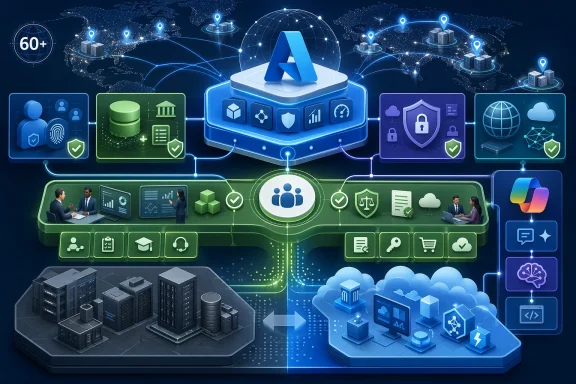 Why Azure Keeps Winning the Enterprise Conversation
Azure’s appeal is not just breadth; it is fit. Enterprises are looking for a platform that can support infrastructure, identity, analytics, security, AI, and hybrid operations without forcing each woe operating model. Microsoft has spent years turning Azure into a platform that connects naturally with the rest of its enterprise stack, including Microsoft 365, Dynamics 365, Power Platform, and Copilot experiencesThe platform story is bigger than IaaS
A pure infrastructure pitch has become increasingly insufficient. Buyers want a cloud platform that can support data governance, developer workflows, AI integration, and compliance without becoming a maze of disconnected tools. Microsoft’s Cloud Adoption Framewor strategic Azure adoption across planning, adoption, governance, security, and operations, which makes the cloud story about business process as much as server placementThe significance here is that Azure is less of a commodity utility than a control plane for enterprise change. When customers already use Microsoft 365 and increasingly want Copilot-driven workflows, Azure becomes the natural place to anchor identity, data, and policy. That tight integration is one reason partners can build repeatable offerings around Microsoft’s ecosystem rather than trying to stitch together separate technology silos
- Azure offers more than raw compute.
- Microsoft ties Azure into productivity, ERP, low-code, and AI.
- Partners can build services across a coherent stack.
- Customers gain fewer integration seams to manage.
- The platform becomes easier to govern at scale.
Consistency matters as much as capability
One of the strongest arguments in the ITWeb piece is that Azure’s value lies in **consistemus than AI headlines or region announcements, but consistency is exactly what enterprise IT buys. Microsoft’s frameworks, architecture guidance, and security investments are all signals that the platform is designed to be operationalized, not merely adoptedThat consistency also helps partners. If a solution can be packaged repeatedly, supported predictably, and aligned with Microsoft’s native buying motions, it becomes easier to scale. This is a major reason the channel remains central to Azure’s market strategy: the partner ecosystem turns broad capability into specific customer outcomes
Global Reach, Local Control
The article leans heavily on Azure’s scale, and that point iosoft’s global infrastructure messaging centers on 60+ announced regions, which gives the company a strong answer to latency, data residency, and sovereignty concernsWhy geography still shapes cloud buying
Despite all the rhetoric about borderless cloud, geography still matters. Enterprises operating in regulated sectors or across multiple jurisdictions need to know where dliness continuity is preserved. That makes region count more than a marketing statistic; it is a practical design constraintMicrosoft’s regional footprint also creates a competitive moat. Once a customer’s architecture, compliance rules, and disaster recovery design are built around a specific cloud geography, switching becomes much harder. That makes Azure particularly attractive to multinational organizations, public-sector bodies, and industries with formal data governance requirements
- Regional coverage improves latency and resilience.
- Data residency becomes easier to manage.
- Multi-country organizations can standardize more quickly.
- Regulated sectors can design around legal requirements.
- Geographic depth strengthens switching costs.
Local presence enables enterprise trust
Microsoft’s history of regional datacentre investment also supports its trust narrative. That is especially relevant in markets where enterprise cloud maturity is still evolving. A cloud provider that can combine local footprint with global consistency has an edge over a provider that can only offer one or the otherThis is one reason Azure often shows up in long-cycle transformation stories. Whether the workload is SAP, analytics, industrial operations, or partner-led managed services, the selling point is not just that Azure exists. It is that Azure exists in the places and formats customers need it to exist.
Enterprise implications
For large organizations, the real benefit is architecture flexibility. They can place workloads closer to users, design around legal jurisdictions, and build recovery plans that match operational risk. For partners, that translates into a broader service opportunity because regional strategy is never just a technical decision; it is a governance and businenty, Compliance, and the Trust PremiumA major thread in the article is that Azure’s appeal is tied to trust. Microsoft’s security positioning is not just about controls and certifications. It is about presenting the platform as safe enough for mission-critical transformation. That matters because in enterprise IT, the first question is often not “Can this run?” but “Can we defend it to audit, risk, and legal teams?”
Security is a feature and a business case
Microsoft’s own Azure security messaging emphasizes broad expertise and layered protections across datacentres, infrastructure, and operations. That matters for partners because security is no longer an add-on. It is a budget line, a procurement gate, and a deciding factor in whether a cloud project gets approval at allThe article’s point about Microsoft’s multibillion-dollar security investment and responsible AI posture fits this broader narrative, even if the exact phrasing in the quote is promotional. What matters is the strategic implication: Azure is being sold as a platform where security, compliance, and AI governance are designed into the environment rather than bolted on afterward
Responsible AI is now part of infrastructure
Microsoft’s newer cloud and AI messaging increasingly treats governance as a first-class product concern. That aligns with the company’s frameworks and with the way enterprise buyers now think about AI adoption. When customers ask about Copilot, agents, or AI workflows, they are really asking whether the underlying cloud can support permissioning, auditability, and control- Security reduces adoption friction.
- Compliance helps cloud move from pilot to production.
- Responsible AI supports long-term trust.
- Governance is now part of the value proposition.
- Partners need to explain safety, not just capability.
Why this changes the channel opportunity
For partners, security creates room for advisory services, assessments, remediation, and managed operations. It also creates a reason to stay involved after migration. The more customers care about compliance and governance, the more they need a partner who can translate Microsoft’s platform into their regulatory contextThat is where the channel earns its keep. A customer may buy Azure from Microsoft, but they often buy the confidence to use it from a partner.
The Channel Is Moving Up the Stack
The article’s most important business insight is that the partner role is changing. The old model—resell infrastructure, assist with migration, move on—does not create enough value in a mature cloud market. The newer model is about helping customers turn Azure into a strategic operating platform and then staying in the account through recurring servicesFrom transactions to transformation
Westcon-Comstor’s framing is useful because it reflects a real channel economy shift. As cloud becomes more standardized, infrastructure alone becomes less differentiating. Partners need to focus on assessments, architecture, licensing strategy, enablement, optimization, and ongoing governance. That is where margin, stickiness, and long-term influensis change benefits both Microsoft and its partners. Microsoft gets a stronger ecosystem capable of driving consumption and retention. Partners get access to a larger services surface area. Customers get a more realistic path to modernization because they are not forced to solve every design problem alone.Why managed services are becoming the real prize
A recurring managed service is more valuable than a one-time project because it aligns the partner’s business model with the customer’s operating reality. Enterprise cloud is never donsadjusted as business needs change. That is why frameworks like the Cloud Adoption Framework and Well-Architected Framework matter so much: they create a repeatable basis for ongoing service delivery- Recurring services improve margin quality.
- Repeatable delivery lowers support burden.
- Governance becomes a monetizable discipline.
- Managed operations outlast the initial migration.
- Partners new value equation
Azure, AI, and the Next Layer of Modernization
The article is also really about AI, even when it says it is about cloud. Microsoft’s ecosystem now links Azure to Copilot, Dynamics 365, Power Platform, and AI services in ways that make cloud infrastructure part of a broader productivity and automation storyAI makes the cloud more strategic
Microsoft’s enterprise AI story depends on the cloud being robust enough to host models, data, governance, and application integration together. That is why the company keeps tying Copilot and AI capabilities back to Azure. In Dynamics 365 and Power Platform, Microsoft explicitly describes Copilot experiences as powered by Azure OpenAI Service and integrated into its enterprise security and compliance stackThis matters because it changes how cloud is bought. Customers are no longer purchasing infrastructure to support IT alone. They are purchasing the substrate for AI-enabled business workflows. That makes Azure’s role more central, not less.
Platforms beat point solutions
One of the article’s implied arguments is that Azure wins wakloads come together. That includes traditional infrastructure, but it now also includes analytics, governance, collaboration, and AI. Microsoft’s own documentation shows a clear intent to connect the Cloud Adoption Framework with the Well-Architected Framework and AI-oriented scenarios, reinforcing the idea that transformation is a lifecycle, not a one-off migration- AI amplifies the value of clean data.
- Data quality depends on architecture discipline.
- Governance becomes a prerequisite for innovation.
- Enterprise buyers want integrated control points.
- The cloud becomes the platform for business automation.
Channel implications for AI
For partners, AI creates both opportunity and pressure. Opportunity, because customers need help operationalizing Azure-based AI. Pressure, because the market will quickly reject abstract AI talk without real outcomes. That makes the partner’s ability to connect Azure, data, and business process more important than their ability to cite model names or demo features.Hybrid Reality Still Rules
Even in an Azure-forward world, most enterprises remain hybrid. The article acknowledges this indirectly by emphasizing modernisation, long-term strategy, and frameworks rather than a simple migration narrative. That is important because the cloud debate in 2026 is no longer about whether hybrid exists; it is about how to manage it intelligentlyHybrid is not a compromise
For many organizations, hybrid is the operating model that reflects reality. Legacy systems stay in place for business, regulatory, or financial reasons, while new workloads move to Azure where it makes sense. Microsoft’s Cloud Adoption Framework explicitly supports that kind of phased journey, with strategy, plan, ready, adopt, govern, secure, and manage methodologies that help organizations progress over timeThat makes Azure especially relevant for enterprises that are modernizing without rewriting everything. The platform’s value lies in helping organizations move at a pace that matches risk tolerance.
Why partners matter more in hybrid estates
Hybrid environments are complicated. Identity, networking, security, observability, and governance all have to work across boundaries. That complexity creates demand for partners who can design around real constraints instead of selling clean-room architecture ideals. A partner-led Azure practice can therefore be more useful than a direct-only model because it accounts for the messy middle of enterprise IT- Hybrid requires more orchestration.
- Legacy systems need careful integration.
- Security must span multiple environments.
- Operational visibility becomes more important.
- Partners can reduce the burd### The strategic upside of patience
The Competitive Landscape
Azure’s rise is not happening in isolation. It is part of a broader contest with AWS, Google Cloud, and a growing set of specialist platforms. The article’s subtext is that Microsoft is winning not just because it has a big cloud, but because it has a complete enterprise story that combines infrastructure, applications, security, AI, and channel leverageMicrosoft’s advantage is integration
That integration matters because enterprise buyers rarely want one vendor for everything, but they do want one vendor to feel like the organizing layer. Microsoft is better positioned than most to do that because Azure connects naturally to collaboration, identity, productivity, ERP, and now eat is hard for rivals to match with infrastructure aloneAWS and Google Cloud have strong technical positions, but Microsoft’s advantage is often commercial and operational: existing enterprise relationships, partner scale, and an increasingly coherent value stack. That is why channel stories like the one in ITWeb matter. They show how Microsoft’s ecosystem becomes a distribution engine for transformation.
Competitive pressure shifts to execution
The more enterprises care about governance, hybrid readiness, regional presence, and AI operationalization, the more the contest shifts from raw feature count to execution quality. Azure’s success depends on whether it can keep turning broad capability into clear customer outcomes faster than rivals can. In that sense, partners are part of the competitive weaponry.- Integration beats isolated feature sets.
- Ecosystems increase switching costs.
- Partners extend market reach.
- AI makes governance more valuable.
- Regional presence strengthens trust.
What rivals have to aeat they can host workloads, but that they can help customers transform securely and repeatably. That is a harder story, and it requires a channel model, a framework strategy, and a clear migration path. Microsoft’s current positioning suggests it understands that very well.
Strengths and Opportunities
The biggest strength in the Azure-plus-partner model is that it creates a bridge between enterprise ambition and operational reality. Microsoft supplies the platform depth, while partners like Westcon-Comstor help customers make practical decisions about migration, governance, licensing, and adoption. That combination is especially powerful in a market where buyers increasingly want business outcomes, not just cloud capacity.- Azure’s enterprise stack is broad and coherent.
- Regional presence supports compliance and resilience.
- Microsoft’s security story increases buyer confidence.
- Partners can monetize assessments and managed services.
- AI integration creates new advisory opportunities.
- The channel can build repeatable, scalable offerings.
- Customers get help turning cloud into operating advantage.
Risks and Concerns
The obvious risk is overpromising what cloud alone can do. A cloud platform can enable transformation, but it cannot replace poor governance, weak architecture, or unclear business priorities. If partners sell Azure as a magic fix rather than an operating model, disappointment follows quickly.- Cloud enthusiasm can outrun readiness.
- Hybrid complexity can be underestimated.
- Security and compliance work can be harder than migration.
- Vendor concentration may raise lock-in concerns.
- AI adoption can expose data-quality weaknesses.
- Service providers may struggle to productize expertise.
- Customers may resist recurring services if value is unclear.
Looking Ahead
The next phase of this story will be about execution quality. Azure already has the scale, security, and ecosystem credibility to remain a central enterprise platform. What will determine partner success is whether they can turn that platform into measurable modernization outcomes for customers in South Africa and beyond.The most important test will be whether partners can build services that survive beyond the migration project. That means advisory, governance, optimization, AI enablement, and managed operations. It also means getting better at proving value in terms that business leaders care about: resilience, cost control, speed, compliance, and productivity. Microsoft’s frameworks provide the structure, but the channel must provide the implementation discipline
- Watch for more partner-led Azure service bundles.
- Expect stronger alignment with Copilot and AI workloads.
- Look for recurring managed services to replace one-off projects.
- Monitor how partners package governance and compliance.
- Pay attention to whether customers demand more proof of ROI.
Source: ITWeb The power behind transformation is not the cloud
