Informatica Adds Microsoft Fabric Open Mirroring + Swiss Pod for AI-Ready Data

  • Thread Author
Informatica’s expanded collaboration with Microsoft is more than a routine partner announcement: it is a signal that the race to make enterprise data AI-ready is now being fought at the plumbing layer, not just the model layer. By adding support for Microsoft Fabric Open Mirroring inside Informatica Intelligent Data Management Cloud and launching a new Azure-based pod in Switzerland, Informatica is betting that customers want fewer integration hops, tighter governance, and more explicit regional control over where their data is processed. For Microsoft, the move reinforces Fabric’s pitch as a unified analytics fabric that can absorb third-party data management strengths rather than trying to replace them. The practical result is a cleaner story for enterprises trying to reconcile speed, compliance, and scale at the same time.

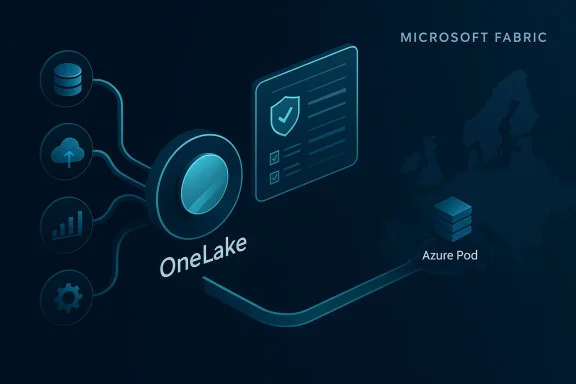
Abstract tech diagram showing Microsoft Fabric integration with OneLake, Azure Pod, and cloud icons.Overview​

The announcement lands at an important moment for both companies. Microsoft Fabric has been steadily evolving from a promising analytics platform into a broader data operating layer, with Mirroring positioned as a low-friction way to move data into OneLake and keep it current without traditional ETL. Microsoft’s own documentation describes Open Mirroring as an extensible feature that lets applications write change data directly into a mirrored database, with the replication engine converting data into Delta Parquet for downstream analytics use. (learn.microsoft.com)
Informatica, meanwhile, has been deepening its Fabric integration for more than a year. In May 2025, the company said customers could ingest data from 300-plus enterprise sources into Microsoft Fabric endpoints, run data profiles in Fabric, and use MDM extensions to move mastered data into Fabric more quickly. Microsoft also framed Fabric as one of its fastest-growing analytics solutions since November 2023, highlighting the strategic importance of the ecosystem around it. (informatica.com)
That backdrop matters because the new announcement is not about introducing a brand-new integration pattern. It is about operationalizing a pattern that already exists, then making it easier, more governed, and more commercially attractive. Support for Open Mirroring inside Informatica’s Cloud Data Integration and Replication services means customers can build mirrored pipelines without stitching together multiple tools or engineering custom landing-zone logic. That is a subtle shift, but in enterprise data architecture, subtle often means expensive savings. (learn.microsoft.com)
The Switzerland pod is equally important, even if it sounds like a regional capacity update. Microsoft’s marketplace and commitment documentation shows why many customers care: purchases of eligible offers can count toward Microsoft Azure Consumption Commitment, and Microsoft explicitly calls out Azure benefit eligibility and Marketplace-in-Azure-portal procurement as the mechanism that makes this work. In other words, geography is now also a commercial and compliance lever. (learn.microsoft.com)

Why Open Mirroring Matters Now​

Open Mirroring is part of a wider industry move away from brittle batch pipelines and toward continuous replication with a more direct path into analytics systems. Microsoft says Mirroring in Fabric reduces complex ETL and keeps data current in OneLake, while Open Mirroring extends that pattern to external applications and data providers. The attraction is obvious: fewer handoffs, fewer latency gaps, and fewer chances for schema drift to turn into a fire drill. (learn.microsoft.com)
For Informatica, embedding this support directly into IDMC’s Cloud Data Integration and Replication layer gives the company an opportunity to remain central even as Fabric becomes more self-sufficient. That is the strategic tension in this market. If Microsoft can make Fabric easier to adopt natively, some customers will use fewer third-party tools; if Informatica can become the easiest way to feed Fabric with governed, high-quality data, it stays indispensable. (informatica.com)
The significance of “single-click” enablement is larger than the phrase suggests. Enterprise integration tools live or die by how many expert decisions they force into the middle of a production pipeline. A one-click Open Mirroring option reduces friction not just for deployment but for ongoing maintenance, which is often where integration projects become costly. It also lowers the barrier for teams that already use Informatica for broader data orchestration and simply want Fabric to become one more governed target. That is the real user experience win. (learn.microsoft.com)

From ETL to Continuous Data Products​

The move also reflects a shift in how modern data teams think about data assets. Instead of treating pipelines as one-off jobs, enterprises are increasingly building data products with clear ownership, quality controls, and real-time consumption expectations. Mirroring aligns with that philosophy because the data in OneLake remains close to the source while still being available for warehouses, notebooks, and downstream analytics. (learn.microsoft.com)
  • Reduced latency between source systems and analytics consumers
  • Less custom code to maintain mirroring logic
  • Better fit for near-real-time AI feature pipelines
  • Lower operational overhead than traditional ETL in many scenarios
  • Stronger alignment with lakehouse-style analytics architectures
Open Mirroring also changes the economics of “fresh data.” In a conventional stack, freshness often means more orchestration, more compute, and more brittle dependencies. Here, the platform story is that replication happens once and the resulting data can be consumed by multiple Fabric experiences without redundant movement. That is not the same as eliminating cost, but it can certainly reduce the number of places cost accumulates. (learn.microsoft.com)

What Informatica Gains​

Informatica’s chief advantage is that it can stay relevant as the center of gravity shifts toward Fabric. The company’s platform promise has long been about connecting, governing, and mastering data across complex estates, not just moving rows around. By integrating Open Mirroring directly into IDMC, Informatica reinforces the message that it is not merely a feeder system; it is the enterprise-grade control plane sitting in front of Fabric. (informatica.com)
That matters because Informatica has been positioning its platform as an AI-enablement layer. Its May 2025 announcement emphasized data quality, MDM, and copilots built with Azure OpenAI Service, all framed around trusted data for analytics and AI. The new Open Mirroring support extends that logic: if you can’t trust or govern the mirrored data, then all the downstream AI acceleration in the world is just faster confusion. (informatica.com)
The company also gets a commercial advantage from being closer to Microsoft’s procurement motion. Microsoft’s Azure consumption commitment documentation shows that eligible Marketplace purchases can contribute toward MACC when bought through the correct channel, and Microsoft’s Marketplace guidance stresses the importance of Azure benefit eligibility. That means the Switzerland pod is not only about sovereignty; it is also about making Informatica easier to buy, deploy, and justify inside Azure-centered enterprise accounts. (learn.microsoft.com)

The Platform Positioning Advantage​

This announcement helps Informatica answer a competitive question: why should customers still use a dedicated data management platform if Microsoft Fabric already includes more native data capabilities? The answer is governance, quality, MDM, and multi-cloud consistency. By folding Open Mirroring into its existing services, Informatica can say that Fabric is the destination, but Informatica remains the policy, quality, and operational layer. (informatica.com)
  • Protects Informatica’s relevance as Fabric adoption expands
  • Strengthens the company’s “trusted data” narrative
  • Encourages deeper consumption of broader IDMC capabilities
  • Creates a smoother path from source systems to AI use cases
  • Keeps Informatica embedded in modernization programs already centered on Azure
There is also a subtle ecosystem play here. If Informatica becomes one of the easiest ways to feed governed data into Fabric, it can grow alongside Microsoft rather than being displaced by it. That is a much better position than resisting the platform shift altogether. Partnering with the platform winner is usually safer than fighting it. (informatica.com)

What Microsoft Gains​

Microsoft’s benefit is equally clear: Fabric becomes more open, more enterprise-ready, and more attractive to customers who already rely on Informatica. Microsoft has been describing Fabric as a lake-centric, open, unified analytics platform since its early community conference messaging, and mirroring is a key pillar of that vision. Open Mirroring lets Microsoft extend that openness to partner ecosystems without having to build every connector itself. (microsoft.com)
The value here is not just technical. It is about reducing friction for adoption in large organizations that already standardize on Informatica for integration, quality, and governance. If those customers can keep using familiar tooling while feeding Fabric, Microsoft reduces the odds of a long, expensive platform substitution cycle. In enterprise software, time to trust is often more important than time to first query. (informatica.com)
Microsoft also gains a stronger compliance story by expanding regional presence through partner-operated cloud locations. The Switzerland pod helps address sovereignty and local processing requirements, which remain major procurement filters in Europe. That matters because many buyers want the analytics platform benefits of Fabric without creating legal or policy risk around cross-border data movement. (learn.microsoft.com)

Fabric as a System of Record for Analytics​

Fabric’s underlying strategy has been to make OneLake the shared foundation for analytics, AI, and data sharing. Mirroring, according to Microsoft, continuously replicates data into OneLake and makes it available across BI, data engineering, data science, and other Fabric experiences. Informatica’s support makes that story more credible for large enterprises that need more than a friendly platform narrative. (learn.microsoft.com)
  • Broadens the range of enterprise sources that can feed Fabric
  • Makes Fabric more attractive to governance-conscious organizations
  • Supports Microsoft’s “open” positioning against rival cloud data platforms
  • Helps reduce churn risk among Informatica-heavy customers
  • Reinforces OneLake as the analytical home for replicated data
Microsoft is also quietly benefiting from the market psychology around AI readiness. Organizations are under pressure to modernize data estates fast, but they are increasingly skeptical of solutions that promise AI transformation without data discipline. A partner like Informatica helps Microsoft show that Fabric is not just a user interface for AI demos; it is a serious, governed platform for production workloads. (informatica.com)

Why Switzerland Is a Bigger Deal Than It Sounds​

Regional cloud footprints are often dismissed as backend housekeeping, but in Europe they are strategic assets. The new Azure-based IDMC pod in Switzerland gives customers a more local option for data processing, which can simplify residency planning, sovereignty obligations, and vendor due diligence. Informatica says the pod will deliver the full suite of cloud data management capabilities, including serverless integration, data governance, data quality, and MDM. (informatica.com)
That matters because compliance is rarely one-dimensional. Customers want to know not just where data is stored, but where it is processed, how it is managed, and whether the platform can support their audit and policy requirements. A local pod gives procurement teams a concrete answer, which can be the difference between a stalled pilot and a signed contract. In regulated industries, locality is not a feature; it is a prerequisite. (informatica.com)
There is also an architectural implication. Deploying closer to where data resides can reduce latency and simplify data operations for distributed European estates. That may not matter for every workload, but it becomes important when pipelines need to support operational analytics or AI inference workflows with tighter timing requirements. Localization is therefore both a compliance tool and a performance strategy. (informatica.com)

Compliance, Sovereignty, and Procurement​

Microsoft’s own guidance on Azure consumption commitments makes the commercial angle easy to understand: eligible Marketplace purchases can count toward MACC when the offer is Azure benefit eligible and purchased through the Azure portal. That creates an incentive for enterprises to centralize spend, especially when the deployment also solves a residency problem. The Switzerland pod fits neatly into that procurement logic. (learn.microsoft.com)
  • Supports data residency and sovereignty requirements
  • Helps European customers simplify compliance reviews
  • Improves latency and operational proximity for local workloads
  • Strengthens the Azure and Marketplace procurement story
  • Makes enterprise adoption easier for regulated sectors
The bigger message is that sovereignty is moving from a legal footnote to a platform design principle. Vendors that can offer regional control without fragmenting the user experience will have an advantage as European buyers continue to scrutinize cloud architecture. Informatica’s expansion in Switzerland suggests it understands that buying criterion very well. (informatica.com)

How This Fits Microsoft Fabric’s Broader Arc​

Microsoft Fabric has been built around a simple but ambitious idea: collapse the old separation between data engineering, warehousing, real-time analytics, and BI into one environment. Since the first Fabric Community Conference, Microsoft has emphasized OneLake, Mirroring, and open access as ways to simplify the modern data estate. Open Mirroring is a direct expression of that philosophy because it lets the platform ingest from external systems without forcing everyone through the same narrow path. (microsoft.com)
The partner ecosystem is what turns that philosophy into a market. Microsoft’s own documentation now references open mirroring partners, and it highlights the ability for existing applications or data providers to land data in OneLake. That means Fabric is not trying to be a closed box; it is trying to be the place where multiple systems converge. Informatica’s support makes that convergence more enterprise-friendly. (learn.microsoft.com)
For Microsoft, this is also a competitive signal to rival cloud analytics stacks. Open systems and partner integrations are a strong answer to criticism that hyperscaler data platforms can become too vertically integrated. If Fabric can welcome enterprise integration leaders rather than sidelining them, it strengthens its positioning against competing lakehouse and warehouse platforms that still rely heavily on custom build-out. (learn.microsoft.com)

The Competitive Message to the Market​

The message to customers is that Fabric can be both open and managed, two qualities that are often treated as opposites. Informatica’s integration helps Microsoft prove that a platform can accept external data-management expertise without losing coherence. That matters for large enterprises that want flexibility but cannot afford a sprawling integration architecture. (informatica.com)
  • Encourages partner-led adoption of Fabric
  • Reinforces Microsoft’s openness narrative
  • Helps attract organizations with existing Informatica investments
  • Reduces the need for custom data movement logic
  • Makes Fabric more credible for enterprise standardization
In practical terms, this is how platforms win the long game. They do not just ship features; they make the surrounding ecosystem easier to assemble. Ecosystem gravity is often a stronger moat than any single feature release. (informatica.com)

Enterprise Impact Versus Consumer Impact​

This announcement is overwhelmingly an enterprise story, and that is exactly why it matters. The buyers who care about Open Mirroring, MDM, governance, Azure consumption commitments, and Swiss data residency are not casual users; they are platform owners, compliance teams, data architects, and procurement leaders. They want lower integration overhead and higher confidence, not novelty. (informatica.com)
For enterprise teams, the benefit is mainly in reducing time spent reconciling source systems with analytics targets. Open Mirroring can shorten the journey from operational data to Fabric workloads, while Informatica’s governance stack helps ensure the data is suitable for AI and BI use cases. That combination is particularly useful where teams have to balance speed with controls. (learn.microsoft.com)
For consumers, there is no direct product implication in the way there would be with a new app or device release. The indirect effect is that the analytics and AI services used by large organizations may become faster, cleaner, and more dependable behind the scenes. In other words, the consumer story is downstream and invisible, which is exactly how infrastructure wins tend to work. (learn.microsoft.com)

Why Enterprises Should Care​

The enterprise significance is not just about connectivity; it is about architecture discipline. Companies building AI on top of messy, delayed, or poorly governed data are setting themselves up for brittle outcomes. By combining Informatica’s data management controls with Fabric’s open mirroring layer, customers can create a more trustworthy foundation for analytics and automation. (informatica.com)
  • Faster onboarding for source data into analytics systems
  • Better governance for AI and reporting workloads
  • Reduced dependence on ad hoc data engineering
  • Easier regional compliance planning
  • More leverage from existing Azure and Informatica investments
This is why the announcement should be read as a modernization enabler rather than a marketing flourish. Enterprises are trying to reduce complexity while adding AI capabilities, and the vendors that help them do both will keep winning budget. That is the real prize here. (informatica.com)

Strengths and Opportunities​

The strongest feature of this partnership is that it meets customers where they already are. Microsoft gets a broader, more credible Fabric ecosystem, while Informatica gets to stay central in the data estate even as more workloads migrate to Fabric. The result is a cleaner modernization path for organizations that want to move quickly without losing governance or regional control.
  • Single-click enablement reduces operational friction for Open Mirroring
  • 300-plus source connectivity keeps Informatica valuable in heterogeneous estates
  • Enterprise-grade governance strengthens AI readiness
  • Swiss regional deployment improves sovereignty and compliance options
  • Marketplace alignment can simplify procurement and budget planning
  • Fabric compatibility increases the usefulness of existing Informatica investments
  • Near-real-time synchronization supports analytics and operational use cases
The opportunity is particularly strong for organizations already committed to Azure but still dependent on third-party integration tooling. Those customers can modernize without ripping out working processes, which is often the difference between a platform strategy and a stalled pilot. If Microsoft and Informatica keep simplifying the journey from source systems to governed analytics, they can make their combined stack feel like the obvious enterprise default. (informatica.com)

Risks and Concerns​

The main risk is that this kind of integration can still be complex under the hood, even when the user experience looks simple. Open Mirroring reduces friction, but it does not eliminate the need for data modeling, governance design, lifecycle planning, and cost management. If customers assume single-click means single-issue-free, they may be disappointed.
  • Potential overreliance on platform promises without enough operational governance
  • Cost surprises if mirrored data volumes grow quickly
  • Vendor lock-in concerns despite the “open” positioning
  • Regional fragmentation if sovereignty policies differ across countries
  • Integration sprawl if organizations treat mirroring as a substitute for architecture
  • Change-management burden for teams moving from ETL-centric habits
  • Procurement complexity if Marketplace and MACC rules are misunderstood
A second concern is competitive overlap. As Microsoft expands Fabric, customers may question how much third-party tooling they truly need, and that can create pressure on partners to justify their role continuously. Informatica’s answer is stronger governance and broader enterprise orchestration, but that story must remain compelling as Microsoft fills more gaps natively. Partnerships are powerful, but they are never static. (informatica.com)

Looking Ahead​

The next phase of this collaboration will likely be measured by adoption rather than by another headline. If customers start using Open Mirroring in production for more source systems, and if the Switzerland pod sees real enterprise uptake, then the announcement will prove to be a meaningful step in the evolution of Fabric’s ecosystem. If not, it may remain a well-executed but modest integration update.
What to watch next is whether Informatica broadens the mirrored-data story into more governance and AI features, and whether Microsoft keeps making Fabric easier for partner platforms to plug into without custom work. The deepest competitive battles in enterprise software are rarely about one feature; they are about how much of the customer’s operating model each vendor can absorb. That is where this collaboration will be judged.
  • Production adoption of Open Mirroring in customer environments
  • Additional Informatica governance or MDM integrations for Fabric
  • Expansion of Azure pod coverage to other regulated regions
  • Evidence of Marketplace-led procurement growth
  • Microsoft’s continued investment in open mirroring partner support
If the two companies execute well, the partnership could become a reference pattern for how hyperscalers and independent data-management vendors coexist in the AI era. The strongest outcome is not that one replaces the other, but that each does what it does best: Microsoft provides the analytics platform, and Informatica provides the trusted-data layer that makes the platform useful at scale. That division of labor is exactly what enterprises have been asking for, and it is why this announcement deserves more attention than a typical partner press release.

Source: iTWire iTWire - Informatica Expands Microsoft Collaboration with Open Mirroring Support for Microsoft Fabric and Geographic Expansion for Microsoft Azure Point-of-Delivery
 

Informatica’s latest move with Microsoft is more than a routine partner update: it is a signal that the enterprise data market is increasingly being shaped by platform gravity, not just point integrations. The company is expanding its collaboration around Microsoft Fabric Open Mirroring and extending its Azure footprint geographically, a combination that speaks directly to two of the biggest enterprise demands in 2026: faster AI-ready data movement and stronger data residency control. For Microsoft-centric customers, the message is simple but important — if the data plumbing is easier to operate inside the cloud they already trust, the path to analytics and AI gets shorter. The strategic payoff could be substantial, especially for service providers looking to turn integration into a repeatable managed service model.

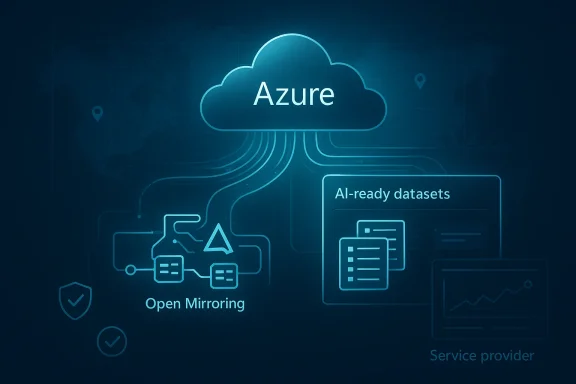
Azure cloud icon with connected AI-ready datasets, open mirroring, and service provider graphics.Overview​

The announcement lands at a moment when many enterprises have discovered a hard truth: model ambition outpaces data readiness far more often than vendors like to admit. AI programs fail not because the front-end tools are weak, but because the underlying data is fragmented, delayed, poorly governed, or difficult to move across environments. Informatica is positioning itself as part of the answer to that problem, and Microsoft is the distribution channel that can make the answer feel native rather than bolted on.
That matters because enterprise buyers increasingly want fewer hops between data sources, governance layers, and analytics destinations. Open Mirroring in Microsoft Fabric is designed to reduce friction in the data ingestion and synchronization path, and Informatica’s support for that approach suggests the company wants to be closer to the operational core of modern data estates. In practical terms, that means less custom plumbing, fewer brittle point-to-point pipelines, and a more direct route from operational systems to analytics and AI workloads.
The Azure geographic expansion adds another layer to the story. Regional availability is no longer a compliance footnote; it is often a deciding factor in regulated industries, multinational deployments, and public-sector architectures. By localizing part of its service footprint, Informatica is acknowledging that customers do not just want cloud scale — they want cloud scale with boundaries. That is especially true in Europe and other jurisdictions where sovereignty, residency, and data-handling rules can shape architecture from day one.
There is also a broader channel story here. Informatica’s deeper Microsoft alignment strengthens the case for managed service providers and systems integrators that want a standardized foundation rather than a bespoke stack for every customer engagement. The more the service feels like part of the Microsoft ecosystem, the easier it becomes to package, sell, support, and scale. That is why this announcement is not just about software compatibility; it is about making enterprise data management more operationalizable.

Background​

Informatica has spent years transforming itself from a classic data-integration vendor into a cloud-native data management platform company. That shift was not cosmetic. It required the company to realign cataloging, integration, data quality, privacy, and governance capabilities around the places where enterprise data actually lives now: hyperscaler clouds, SaaS environments, and hybrid estates that refuse to stay still. Microsoft Azure, with its enormous enterprise footprint, was an obvious strategic anchor for that evolution.
The first notable public step came in 2023, when Informatica said it planned to offer IDMC as an Azure Native ISV Service. That was more than a marketplace listing. It suggested a jointly surfaced customer experience inside Azure’s commercial and operational framework, which is precisely the kind of tight integration enterprises increasingly prefer when standardizing on a cloud platform. By 2024, Informatica described the relationship as deeper still, signaling that the initial plan had matured into a real delivery model rather than a marketing promise.
In 2025, the partnership broadened again with a strategic agreement focused on Microsoft Fabric, Azure, and GenAI use cases. That progression is revealing. Enterprises no longer ask merely how to move data from system A to system B; they ask how to build governed, trustworthy data flows that can support copilots, analytics products, and AI agents without introducing chaos or compliance risk. Informatica’s Microsoft strategy tracks that change closely, and the current expansion is the latest proof that the company sees the market moving from integration as a feature to integration as an operating model.

Why the timing matters​

The timing is especially important because the data platform market is under pressure from both sides. On one side are cloud-native vendors trying to collapse more functionality into their own stacks. On the other are enterprises that want to consolidate tooling, reduce complexity, and avoid building every data workflow from scratch. Informatica’s bet is that the middle layer — data movement, governance, and orchestration — is becoming more valuable, not less, as AI adoption accelerates. That is a smart bet if the company can keep the experience simple enough to matter.

Microsoft Fabric Open Mirroring and What It Really Means​

At the center of the announcement is Open Mirroring, a capability in Microsoft Fabric that lets applications write change data into a mirrored database item using public APIs and Delta Lake format. That is technically significant because it lowers the barrier between operational data and analytics-ready data. Instead of asking customers to stitch together a long chain of ingestion tools, the model supports a more direct synchronization path.
For Informatica, supporting Open Mirroring inside IDMC means it can sit closer to the point where enterprise data becomes usable for analysis and AI. That is a big deal because data management vendors are no longer judged solely on breadth of connectors; they are judged on how quickly they can make data trustworthy and available inside modern consumption platforms. In a market obsessed with AI outcomes, that utility is worth more than another generic connector list.

The practical payoff for customers​

Customers will likely care less about the feature name and more about the consequences. Those consequences include faster synchronization, fewer transformation steps, and a cleaner path from transactional systems into Microsoft Fabric-based analytics workflows. For data teams, that can translate into less maintenance overhead and more time spent on quality, lineage, and governance rather than pipeline babysitting.
The broader effect is to reduce the accidental complexity that often creeps into cloud data projects. When architecture has too many moving parts, the cost of change rises and the odds of failure increase. Open Mirroring, combined with Informatica’s orchestration layer, is a sign that both companies want to shorten that path and make the experience feel more integrated.
  • Less custom ingestion work
  • Faster data availability for analytics
  • Lower operational burden for platform teams
  • Better fit for Microsoft-standardized environments
  • A more direct path to AI-ready datasets

Azure Geographic Expansion and Data Residency​

The geographic expansion component may sound less flashy, but it is arguably just as important as the Fabric integration. Enterprises increasingly evaluate cloud services through the lens of where data is processed, stored, and controlled. A regional Azure expansion gives Informatica a stronger story for customers that need local processing or stricter residency guarantees, especially in regulated sectors such as finance, healthcare, and public administration.
This is where the partnership stops being merely about convenience and starts becoming about architecture policy. When customers deploy data platforms across jurisdictions, they must align infrastructure, compliance, and governance. A locally available pod or point of delivery can simplify procurement and help enterprises avoid creating awkward exceptions in their sovereign data strategy. That sort of predictability is often more valuable than any single feature announcement.

Why sovereignty is now a product requirement​

The rise of AI has made sovereignty more urgent, not less. Once organizations begin using sensitive data to power copilots, search, and automation, the question of where that data resides becomes operationally consequential. A regional Azure expansion gives Informatica a way to reassure buyers that the platform can support AI modernization without forcing them to compromise on locality or control. That is not a minor differentiator in 2026.
It also gives Microsoft and Informatica a cleaner joint story when competing for multinational accounts. The ability to say that data can be managed closer to the customer’s jurisdiction, while still benefiting from Microsoft’s cloud ecosystem, is a strong narrative against vendors that remain more centralized or less explicit about locality. In enterprise procurement, clarity often beats cleverness.
  • Better fit for regulated industries
  • Stronger support for cross-border governance
  • More options for local control
  • Reduced compliance friction
  • Improved confidence for AI workloads using sensitive data

Why This Matters for Microsoft​

For Microsoft, the partnership reinforces a broader ecosystem strategy: make Azure the control plane not just for infrastructure, but for the surrounding data and AI stack as well. The more Microsoft can point customers to native or native-like partners, the easier it becomes to keep enterprise workloads inside its orbit. Informatica helps Microsoft by filling a critical gap between raw cloud services and enterprise-ready data operations.
This is especially relevant in the context of Microsoft Fabric, which is designed to unify analytics, data engineering, and operational data patterns. Open Mirroring strengthens the value proposition of Fabric by making it easier for customers to get live or near-live data into the environment. Informatica’s support for that pattern makes the Microsoft story more compelling because it reduces the need for external tooling at the edge of the analytics stack.

Competitive signaling​

The competitive subtext is easy to miss but hard to ignore. Microsoft is not only competing on AI models or cloud infrastructure; it is competing on ecosystem coherence. If it can make the data path from source to insight feel easier than rival clouds, that is a serious advantage. Informatica gives Microsoft another proof point that its platform can support enterprise-grade data modernization without forcing customers into fragmented architectures.
That matters in a market where rivals such as AWS and Google Cloud are also pushing hard on data and AI integration. Microsoft’s advantage is not guaranteed, but ecosystem density helps. Every time a respected data vendor deepens alignment with Azure and Fabric, it strengthens the perception that Microsoft is becoming the default operating environment for enterprise AI.
  • Stronger Azure ecosystem lock-in
  • Better Fabric adoption narrative
  • Higher value for Microsoft enterprise sales teams
  • More partner-led proof of AI readiness
  • Greater credibility in governed data workflows

Why This Matters for Informatica​

For Informatica, the announcement is a reminder that strategic relevance increasingly comes from being embedded in the cloud stack customers already trust. A data platform can have excellent capabilities and still lose deals if it feels too detached from procurement reality or too hard to operationalize. By becoming more intertwined with Microsoft, Informatica is making itself harder to ignore in enterprise architecture discussions.
That also helps the company defend against commoditization. In a world where basic integration is increasingly expected, differentiation comes from trust, governance, deployment convenience, and ecosystem fit. Informatica’s current posture suggests it wants to own the “messy middle” of enterprise AI: the part where data becomes clean, compliant, and consumable enough for real business use. That is a much stronger position than being just another integration vendor.

The move from tool to platform​

The strategic prize here is platform status. If Informatica is perceived as a platform-level component of Azure-based data estates, it can influence more architecture decisions and participate in more recurring spending. That is a better business model than chasing one-off integration projects, because platform relevance tends to generate long-term attachment and wider cross-sell opportunities.
It also improves the company’s story to investors and partners alike. A tightly aligned Microsoft relationship suggests distribution leverage, while the Fabric and regional expansion elements suggest product depth. Together, those elements make Informatica look less like a niche software vendor and more like an infrastructure-adjacent enabler of enterprise AI.
  • Greater strategic visibility
  • Stronger position in AI data pipelines
  • More compelling enterprise sales narrative
  • Better partner scalability
  • Reduced risk of being treated as a standalone utility

What Service Providers Stand to Gain​

The service provider angle may be the most commercially interesting part of the story. Microsoft-centric MSPs and systems integrators need repeatable offers, not endless custom work, and this partnership helps create that repeatability. When the underlying stack is standardized, partners can build managed services around onboarding, governance, migration, monitoring, and optimization rather than re-architecting every project from scratch.
That changes the economics. A managed service anchored in a recognizable cloud ecosystem is easier to explain to customers, easier to support operationally, and often easier to renew. It also gives partners a way to sell outcomes — trusted data, better AI readiness, compliance support — instead of selling labor hours. That shift is exactly what service providers need if they want to escape low-margin consulting traps.

A better packaging model​

The best partner offers will likely bundle a few core elements together: discovery, readiness assessment, migration planning, governance setup, ongoing monitoring, and AI use-case enablement. That is not flashy, but it is highly commercial. Customers increasingly want someone to take responsibility for the hard parts of data modernization, especially when AI deadlines are breathing down their necks.
This also favors partners that understand Microsoft buying motions. If a service can be bought, deployed, and governed through familiar Azure pathways, it fits more naturally into enterprise procurement. That can accelerate sales cycles and make the service feel less like a special project and more like a standard operating choice.
  • Easier service standardization
  • Better margins through repeatability
  • More natural fit with Azure-led customers
  • Stronger managed-service value proposition
  • Simplified support and lifecycle management

Enterprise Impact: Data Teams, Governance, and AI​

For enterprise customers, the real benefit is not just a nicer integration story. It is the possibility of building a more trustworthy data estate that can support AI use cases without constant rework. Data teams are under pressure to deliver faster, but they also face increased scrutiny on quality, provenance, and compliance. Informatica’s alignment with Microsoft speaks directly to that balancing act.
The governance angle is crucial. AI systems are only as trustworthy as the data behind them, and enterprise leaders have learned that point the hard way. If Fabric becomes a more direct destination for governed data, and Informatica helps ensure that the data landing there is clean and policy-aware, customers gain a more credible foundation for analytics and copilots. That can reduce the gap between AI experimentation and production deployment.

Consumer vs. enterprise reality​

This is not a consumer story, and that distinction matters. Consumers care about speed and simplicity; enterprises care about speed, simplicity, auditability, and control all at once. The Microsoft-Informatica collaboration is valuable precisely because it speaks to the enterprise need to balance innovation with governance, without pretending those goals are identical.
The result is that enterprise teams may see better outcomes in both analytics and AI projects, but only if they resist the temptation to treat the partnership as a turnkey magic wand. The technology can reduce friction, yet organizational discipline still matters. The companies that win will be the ones that use the new integration to simplify architecture, not to justify more complexity in a different layer.
  • Cleaner governance workflows
  • Better support for AI-ready data
  • Less duplication across tools
  • More reliable compliance posture
  • Faster movement from pilot to production

Competitive Implications​

The competitive implications extend beyond the two companies involved. Microsoft is effectively sharpening its argument that enterprise data and AI should be managed within its ecosystem, while Informatica is strengthening its relevance as a strategic layer rather than a point product. That puts pressure on rivals that rely on looser integrations or less explicit regional strategies.
The bigger market signal is that data management is becoming infrastructure-adjacent. That is a powerful place to be because infrastructure-adjacent software tends to be sticky, deeply embedded, and harder to displace. If Informatica can stay close to Azure and Fabric while preserving a strong governance story, it becomes part of long-term architecture planning rather than a temporary vendor in the stack.

What rivals will need to answer​

Competitors will need to answer a few difficult questions. Can they match the convenience of native cloud integration? Can they provide comparable locality and sovereignty support? Can they do it without increasing complexity for buyers? Those are not easy questions, and the more enterprise customers standardize on Microsoft, the more difficult they become to avoid.
There is also a subtle channel implication. If partners can earn more by building on Microsoft and Informatica together, other vendors may find themselves squeezed out of managed-service conversations. The value chain shifts toward ecosystems that make the commercial story easy to package, and that is a trend that tends to reward incumbents with scale.
  • Stronger Microsoft ecosystem pull
  • Harder displacement for embedded data platforms
  • Higher bar for rival cloud partnerships
  • More pressure on legacy integration vendors
  • Better economics for ecosystem-heavy go-to-market models

Strengths and Opportunities​

The partnership’s strongest feature is that it tackles two enterprise pain points at once: how to move data more cleanly into AI-ready environments, and how to do so while respecting geography, governance, and platform preference. That combination is unusually strong because it addresses both the technical and commercial layers of adoption. For Informatica, it also reinforces the company’s place in the most valuable part of the stack: the layer that makes AI trustworthy enough to scale.
  • Tighter Azure alignment for Microsoft-first customers
  • Simpler deployment paths for service providers
  • Better AI readiness through cleaner data movement
  • Reduced procurement friction inside Microsoft buying motions
  • Stronger governance story for regulated enterprises
  • More credible regional control for sovereignty-sensitive customers
  • Cross-sell opportunities across Fabric, Azure, and managed services

Risks and Concerns​

The biggest risk is dependency. The more Informatica ties itself to Microsoft’s stack, the more exposed it becomes to platform shifts, pricing pressure, or strategic changes in Microsoft’s own priorities. Customers may also worry that convenience comes with lock-in, and that concern will be especially acute for organizations trying to preserve multi-cloud flexibility. Convenience is valuable, but it is never free.
  • Cloud lock-in risk as the stack becomes more Azure-centric
  • Potential complexity creep if customers assume “native” means effortless
  • Execution risk around regional availability and consistency
  • Competitive response from other hyperscalers and data vendors
  • Perception risk if the integration is seen as marketing faster than product
  • Compliance expectations rising faster than feature rollout
  • Channel conflict if partners struggle to differentiate offerings

Looking Ahead​

The next phase will be about execution, not announcement velocity. Customers will want to see whether Open Mirroring support actually shortens delivery cycles, whether the regional Azure expansion improves real-world sovereignty outcomes, and whether Informatica can keep the experience clean as it becomes more embedded in Microsoft’s ecosystem. If those things happen, the partnership could become a template for how enterprise data vendors survive the AI era.
It will also be worth watching how service providers package the opportunity. The most successful ones will not sell the software itself; they will sell a managed journey from fragmented data to governed AI operations. That is where the margin is, and that is where Microsoft and Informatica can together create a durable commercial lane. If the ecosystem gets that right, the partnership becomes more than a feature story — it becomes a market structure story.
  • Product rollout quality and timing
  • Customer adoption in regulated industries
  • MSP and SI packaging around managed services
  • Fabric synchronization performance in production
  • Expansion of regional Azure availability
  • Rival responses from other cloud/data platforms
In the end, Informatica’s expanded Microsoft collaboration is best understood as a bet that enterprise AI will be won by the vendors who make trusted data feel simple, local, and operationally native. That is a smart bet in 2026, because the market has moved beyond fascination with AI demos and into the harder business of production reality. If Informatica and Microsoft can keep reducing friction while preserving control, they will have built something more durable than a press release: a pathway enterprises can actually use.

Source: ZAWYA Informatica expands Microsoft collaboration with Open Mirroring Support for Microsoft Fabric and Geographic expansion for Microsoft Azure
 

Informatica’s latest expansion of its Microsoft partnership is more than another routine cloud announcement. It signals that the race to make enterprise data AI-ready is now being fought at the plumbing layer, not just the model layer. By adding support for Microsoft Fabric Open Mirroring and launching a new Azure point of delivery in Switzerland, Informatica is tightening the loop between data ingestion, governance, regional compliance, and analytics execution. The result is a clearer play for enterprise customers that want less friction, more control, and better trust in the data pipelines feeding analytics and AI.

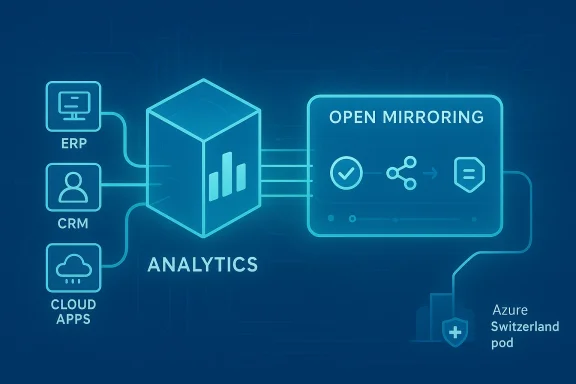
A digital visualization related to the article topic.Overview​

This announcement lands at an important moment for both vendors and enterprise buyers. The Intelligent CIO report says Informatica now supports Fabric Open Mirroring directly inside its Cloud Data Integration and Replication services, with general availability tied to the April 2026 IDMC release, and that it will also open a new Azure-based IDMC pod in Switzerland in March 2026. Those two moves target different but related pressures: faster data movement into Microsoft Fabric and stronger local control for customers that must meet data residency or sovereignty requirements.
The headline is not just about connectivity. It is about how modern enterprise platforms increasingly compete on data trust. Microsoft Fabric is built around the idea of simplifying the analytics stack, while Informatica’s value has long come from integration, governance, quality, and master data management. Bringing those strengths together creates a more compelling story for organizations trying to operationalize AI without rebuilding their entire data estate from scratch.
There is also a broader strategic thread here. Informatica has been moving for years from classic ETL heritage toward a cloud-native data management platform model, and Microsoft has been steadily turning Azure and Fabric into an ecosystem where partners can plug in as native services rather than external add-ons. That shift matters because native-style integration reduces procurement friction, speeds adoption, and makes the partner’s tools feel like part of the cloud itself.
For Microsoft customers, this is especially relevant because Fabric is becoming a center of gravity for analytics and AI workloads. If Informatica can help customers synchronize data into mirrored databases while preserving governance and quality controls, then the partnership becomes more than a convenience feature. It becomes part of the control plane for trustworthy AI.

Background​

Informatica and Microsoft have been deepening their relationship for several years, and the current announcement fits into a longer pattern rather than appearing out of nowhere. Earlier forum coverage notes that Informatica first publicly planned to bring IDMC to market as an Azure Native ISV Service in 2023, then described deeper integration in 2024, and followed with a strategic agreement in 2025 centered on Microsoft Fabric, Azure, and GenAI use cases. That history matters because it shows the partnership has matured from technical compatibility into platform alignment.
The new step is more operationally focused. Open Mirroring is designed to simplify synchronization between sources and Fabric’s OneLake-centered analytics layer, and the current release places that capability directly into Informatica’s CDIR services. In practical terms, customers get a more direct route from enterprise systems into mirrored Fabric databases, without having to stitch together as much custom plumbing.
The Switzerland pod is just as significant, though for different reasons. Regional cloud deployment is no longer only about latency or performance; it is increasingly about legal architecture, national policy, and customer confidence. The article says the new pod is designed to support European customers with data residency, sovereignty, and local processing requirements, which makes it a compliance enabler as much as an infrastructure expansion.

Why this matters now​

Enterprises are under pressure to move faster with AI, but most still struggle with the quality and consistency of the data feeding those systems. That is why data integration vendors are repositioning themselves as strategic infrastructure rather than back-office utilities. Informatica is making a clear bet that trusted data movement, governance, and policy enforcement will be just as important as model selection.

The Microsoft Fabric angle​

Microsoft Fabric continues to gain relevance as a consolidated analytics environment, and Open Mirroring fits the broader Fabric promise of simplifying how data lands in the platform. Informatica’s support effectively extends that promise into a wider set of enterprise source systems. For customers already living in the Microsoft ecosystem, that can be the difference between a pilot and a production rollout.

The sovereignty angle​

The Switzerland pod also reflects a truth that enterprise vendors increasingly acknowledge: sovereignty is not a niche requirement anymore. It is becoming a mainstream buying criterion, especially in regulated industries, public-sector environments, and multinational firms with strict internal controls. Local deployment options are no longer a nice-to-have; they are a competitive requirement.

What Open Mirroring Changes​

Open Mirroring is the most technically visible part of the announcement, and it changes how customers can think about data movement into Fabric. Rather than treating mirroring as a standalone, manually maintained pipeline, Informatica now embeds support into its existing integration workflow. That makes it easier for teams to create and maintain mirrored database pipelines while using Informatica’s broader tooling around quality, governance, and master data management.
The key distinction is that this is not merely a transport feature. Informatica is pairing synchronization with enterprise controls, which means data can arrive faster without arriving carelessly. In AI-era architectures, speed without governance is a liability, so the value here lies in combining near-real-time access with stronger trust signals.

Why one-click matters​

The article says customers can enable Open Mirroring with a single click while creating and maintaining mass ingestion pipelines in IDMC. That sounds simple, but operational simplification is often where enterprise platforms win or lose. The less custom engineering required to establish a governed pipeline, the more likely customers are to standardize on the solution.

Governance is the real differentiator​

If mirroring were only about copying data into Fabric, the announcement would be incremental. What makes it more strategic is the attached governance stack. Informatica’s ability to layer data quality, metadata, lineage, and master data management onto the flow gives Microsoft customers a stronger answer to a familiar problem: how to trust data once it is centralized.

Enterprise implications​

For enterprises, the practical benefits are clear:
  • Faster onboarding of source systems into Fabric.
  • Less hand-built pipeline maintenance.
  • Better support for governed AI and analytics use cases.
  • Lower integration sprawl across multicloud estates.
  • A more coherent path from raw data to consumption.

Why Fabric Needs Partners Like Informatica​

Microsoft Fabric is designed to reduce complexity, but simplification at the platform layer does not eliminate complexity in the real world. Most organizations have dozens or hundreds of systems, each with its own schemas, latency expectations, and governance rules. That is where Informatica’s reach across more than 300 enterprise data sources becomes strategically valuable.
This is also why the partnership matters beyond a single product feature. Fabric can be the destination, but Informatica can help with the journey. For enterprises, the combination means they can exploit Fabric’s analytics model without having to rebuild the ingestion, validation, and stewardship logic that makes those analytics reliable.

The platform stack effect​

The deeper the integration, the more Microsoft can present Fabric as a full-stack environment rather than a set of disconnected tools. Informatica adds connective tissue and control points that make Fabric feel more production-ready for larger organizations. That is especially important in industries where data correctness matters as much as data freshness.

Competing on trust, not just features​

The data platform market is crowded, and most vendors now claim some variation of real-time, unified, governed, or AI-ready data. What differentiates them is less the vocabulary and more the completeness of the operating model. Informatica’s role is to make Microsoft’s platform story more believable for conservative buyers who need more than a demo.

The customer value proposition​

For buyers, the attraction is straightforward:
  • Fewer integration hops.
  • More predictable governance.
  • Better alignment with Microsoft procurement and architecture.
  • Faster analytics activation.
  • A stronger foundation for AI models and copilots.

Switzerland Pod and the Sovereignty Market​

The new Azure pod in Switzerland is an equally important part of the story, especially for customers who care about where data lives and where it is processed. Informatica says the pod will deliver the full suite of IDMC cloud data management capabilities on Azure, including serverless integration as an Azure Native Service and AI-empowered data governance, quality, and master data management. That is a broader operational promise than a typical regional expansion.
In Europe, local processing is no longer just a regulatory checkbox. It is increasingly a purchasing condition, and vendors that can prove locality while preserving cloud elasticity have a meaningful edge. The Switzerland pod gives Informatica a way to answer the most common objection to centralized cloud data platforms: can this be kept where we need it?

Regulatory alignment matters​

Switzerland’s role in the European data landscape is distinctive because it combines strong privacy expectations with a reputation for stable governance. For customers handling sensitive financial, public-sector, or cross-border data, a local pod can reduce the friction associated with regional compliance reviews. That can accelerate buying decisions and simplify architectural approvals.

Why regional choice is strategic​

Cloud vendors often talk about “global scale,” but enterprise buyers often evaluate them on local control. A new point of delivery can influence competitive bids, especially when the alternative requires data to leave approved jurisdictions. That makes the Switzerland pod a commercial lever, not just an infrastructure upgrade.

Practical benefits for European customers​

The regional expansion can help customers:
  • Satisfy data residency policies.
  • Reduce legal and procurement friction.
  • Keep sensitive processing closer to end users.
  • Improve confidence in AI and analytics deployments.
  • Align cloud strategy with sovereign data expectations.

Competitive Implications​

This announcement also tells us something about the competitive landscape around data integration and cloud analytics. Informatica is not trying to beat Microsoft Fabric by standing apart from it. Instead, it is moving to become one of the most useful layers inside the Fabric experience. That is a smart move in a market where ecosystem gravity often matters more than product purity.
Competitors in data integration, data quality, and governance now face a higher bar. If Microsoft customers can get native-style mirroring plus enterprise-grade governance in one motion, then rival vendors must either match that level of coherence or justify why a more fragmented stack is worth the trade-off. That is a tougher sell than simply claiming broad connectivity.

Microsoft’s ecosystem advantage​

Microsoft benefits because the partnership reinforces Fabric as a destination for operational analytics and AI. The more complete the surrounding partner ecosystem becomes, the more attractive Fabric looks to enterprise architects who want fewer platforms to manage. That creates a virtuous cycle that rivals will find hard to break.

Informatica’s positioning​

For Informatica, the value is access and relevance. Being deeply embedded in Microsoft’s cloud story can expand reach, reduce friction in customer conversations, and reinforce the company’s image as a trusted data foundation provider rather than a legacy integration vendor. That identity shift is important in a market where AI readiness is becoming a shorthand for budget priority.

What rivals must respond to​

  • Faster time-to-value expectations.
  • Greater demand for compliance-aware analytics tooling.
  • More pressure to support cloud-native control planes.
  • Increased interest in managed, repeatable data services.
  • Stronger buyer preference for integrated ecosystems.

Enterprise vs. Consumer Impact​

This is primarily an enterprise story, but the distinction between enterprise and consumer impact is useful because it shows where the value actually accrues. Consumers will not interact directly with the new pod or Open Mirroring, but they may eventually feel the effects through faster insights, smarter applications, and more responsive AI systems built on top of better-managed data.
For enterprises, the impact is immediate and architectural. The changes influence how teams design data pipelines, how they satisfy compliance obligations, and how they move from experimentation to operational AI. That makes the announcement relevant not only to data engineers, but also to CIOs, governance leaders, compliance officers, and application owners.

Enterprise upside​

Enterprises can benefit from:
  • More reliable analytics foundations.
  • Better regional deployment choices.
  • Simplified governance across Fabric and Azure.
  • Reduced manual pipeline maintenance.
  • A more credible path to AI at scale.

Consumer upside​

Consumers may see:
  • Faster personalization in downstream apps.
  • Better decisioning in AI-enabled services.
  • More dependable experiences in data-driven products.
  • Fewer errors caused by stale or inconsistent backend data.

Why the distinction matters​

The enterprise benefits are measurable in architecture and compliance; the consumer benefits are mostly indirect and second-order. That is typical of infrastructure announcements, but it does not make them less important. In fact, the best enterprise plumbing is often the kind most consumers never notice.

The AI Readiness Narrative​

One of the most important subtexts in the announcement is that AI readiness now depends on data management discipline. Informatica’s chief product officer is quoted as saying organizations accelerating AI and analytics initiatives require trusted context to succeed, which captures the central thesis of the move: models are only as useful as the data they consume.
This is why the partnership resonates beyond technical circles. Enterprises have spent the last two years investing heavily in generative AI experiments, but many are now discovering that poor data quality, inconsistent lineage, and jurisdictional uncertainty can undermine those investments. Informatica and Microsoft are positioning this announcement as a remedy for that gap.

The trusted data foundation argument​

The phrase “trusted data foundation” is doing a lot of work here. It implies not only accurate data, but also governed access, policy enforcement, and an architecture that can survive audit, scale, and production use. That is the kind of message procurement teams and enterprise architects want to hear when AI budgets are under scrutiny.

What makes this credible​

The credibility comes from the combination of broad source connectivity, mirrored database support, and localized deployment. Each element addresses a different failure mode: source sprawl, synchronization latency, and jurisdictional control. Together, they form a more complete answer to the AI readiness problem than any single feature could offer.

The market message​

The larger message is that the winners in enterprise AI may not be the vendors with the loudest model claims. They may be the vendors that can make data dependable enough for the models to work consistently. In that sense, Informatica is not merely attaching itself to Microsoft’s AI momentum; it is helping define the operational conditions that make that momentum sustainable.

Adoption Challenges and Operational Reality​

Despite the optimism, no enterprise integration story is automatically simple in practice. Open Mirroring may reduce friction, but customers still have to map business logic, governance rules, access policies, and exception handling across real-world source systems. The more heterogeneous the environment, the more work remains after the feature is enabled.
The Switzerland pod also creates new expectations. Once vendors offer localized cloud processing, customers will expect that regional availability to be matched by consistent service levels, support quality, and feature parity. Any gap between promise and actual rollout can quickly become a source of frustration.

Adoption still depends on execution​

Even with tighter integration, success will depend on how easily customers can operationalize the stack. The hardest part of enterprise data work is usually not connecting systems; it is keeping them aligned over time. That means documentation, support, observability, and governance workflows remain essential.

The hidden complexity​

Mirroring often looks clean in a diagram and messy in production. Latency tolerances, schema drift, data quality issues, and compliance reviews can all complicate implementation. Informatica’s value proposition is strongest if it can absorb those frictions without forcing customers back into brittle custom engineering.

Where projects can stall​

Common friction points include:
  • Incomplete source system mapping.
  • Governance policy mismatches.
  • Regional deployment approval delays.
  • Integration ownership disputes.
  • Underestimated data quality remediation work.

Strengths and Opportunities​

The strongest part of this announcement is that it aligns product design, regional strategy, and market timing. Microsoft gets a more compelling Fabric ecosystem story, Informatica gets deeper platform relevance, and customers get a more practical path to governed analytics and AI. That three-way alignment is why the partnership feels strategically larger than its feature count suggests.
  • Tighter Microsoft Fabric integration improves the flow of trusted data into analytics and AI.
  • Governance and quality controls help reduce the risk of fast but unreliable pipelines.
  • Single-click enablement lowers adoption friction for customers and partners.
  • Switzerland-based deployment strengthens the sovereignty story for regulated buyers.
  • Azure Native Service positioning supports simpler procurement and deployment.
  • Broad source connectivity gives Informatica an edge in heterogeneous environments.
  • Near-real-time access helps bridge the gap between operational data and decision-making.

Risks and Concerns​

The biggest risk is that customers may overestimate how much simplification Open Mirroring and regional deployment alone can provide. Enterprise data environments are rarely uniform, and the real cost of standardization often lives in the cleanup work that follows integration. A product story can be elegant while the implementation story remains stubbornly difficult.
  • Execution complexity may still be high in multi-system, multi-cloud estates.
  • Regional feature parity will matter if customers compare local pods with core Azure regions.
  • Governance claims must translate into operational outcomes, not marketing language.
  • Vendor lock-in concerns could rise as more customers standardize on platform-native patterns.
  • Latency and synchronization edge cases may surface in production workloads.
  • Compliance expectations will likely grow once localized deployment becomes available.
  • Competitive response from other data platform vendors could narrow Informatica’s advantage.

Looking Ahead​

The next phase to watch is adoption. If customers begin treating Informatica’s Fabric support as a standard part of Microsoft-centric analytics architectures, the move will look less like a feature addition and more like a platform milestone. If adoption is slower than expected, the announcement may still matter, but mostly as a sign of where the market is heading rather than proof that it has already arrived.
The Switzerland pod is equally important to monitor. Regional cloud offerings can become powerful differentiators when they are backed by clear service maturity and strong compliance alignment. But if customers perceive them as isolated exceptions rather than a durable pattern, the strategic value will be more limited.

What to watch next​

  • Whether customers adopt Open Mirroring as a default Fabric ingestion pattern.
  • How quickly the Switzerland pod becomes available in production deals.
  • Whether Microsoft and Informatica extend the partnership to additional regional pods.
  • How rivals in data integration and governance respond to the tighter Fabric tie-in.
  • Whether customers report measurable gains in AI readiness and compliance efficiency.
In the end, this is a story about control as much as it is about connectivity. Informatica and Microsoft are trying to show that the future of enterprise AI depends on trusted, governed, region-aware data movement, not just flashy models or broad platform promises. If they can deliver that consistently, the partnership could become one of the more important quiet infrastructure stories in the Microsoft ecosystem.

Source: Intelligent CIO Informatica expands Microsoft collaboration with Open Mirroring support for Microsoft Fabric and geographic expansion for Microsoft Azure points of delivery – Intelligent CIO North America
 

Back
Top