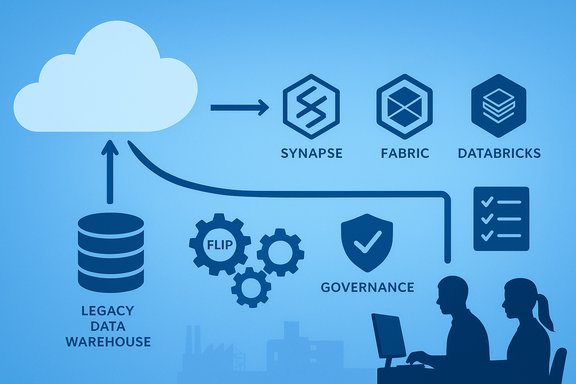
Kanerika’s new Microsoft specialization signals a growing trend: systems integrators are converting product familiarity into auditable, partner‑program credentials that buyers should value — but also verify. Kanerika announced it has been awarded the Data Warehouse Migration to Microsoft Azure specialization, positioning the firm as a partner validated to migrate legacy data warehouses to Azure while leveraging modern services such as Azure Synapse Analytics, Microsoft Fabric, and Azure Databricks. The announcement was distributed as a syndicated press release and repeated through industry wire channels on December 10, 2025.
Microsoft’s specialization program sits on top of the Solutions Partner designations and represents a narrow, audit‑heavy validation of a partner’s delivery capability in a focused domain. The Data Warehouse Migration to Microsoft Azure specialization exists to highlight partners who can analyze legacy workload footprints, create schema models, and execute extract/transform/load (ETL) operations at scale — specifically migrations that move enterprise warehouses into Azure analytics platforms. The specialization requires an aligned Solutions Partner designation in Data & AI (Azure), measurable Azure consumption (ACR), staff skilling, and a third‑party audit or equivalent validated evidence. Kanerika’s release framed the achievement as validation of their automation strategy (their FLIP migration platform and accelerators), and as an extension of prior Microsoft recognitions the company has publicly announced, including Solutions Partner status for Data & AI and an Analytics specialization earned earlier in 2025. Kanerika’s own newsroom and PR distributions document those prior milestones.
At the same time, the specialization should be treated as one procurement filter rather than the sole deciding factor. The real proof is in project‑level evidence: Partner Center artifacts, audit summaries, named certified engineers, redacted runbook samples, and a successful pilot that proves automation claims in your environment.
In short:
The dynamics of modern data migrations reward repeatable automation, solid governance, and clear contractual controls. Microsoft’s specialization program helps highlight partners who invest in those practices, but the job of turning a validated capability into a successful migration still rests on careful scoping, transparent pilot validation, and enforceable SLAs in the contract.
Source: WRBL https://www.wrbl.com/business/press...-migration-to-microsoft-azure-specialization/
 Background / Overview
Microsoft’s specialization program sits on top of the Solutions Partner designations and represents a narrow, audit‑heavy validation of a partner’s delivery capability in a focused domain. The Data Warehouse Migration to Microsoft Azure specialization exists to highlight partners who can analyze legacy workload footprints, create schema models, and execute extract/transform/load (ETL) operations at scale — specifically migrations that move enterprise warehouses into Azure analytics platforms. The specialization requires an aligned Solutions Partner designation in Data & AI (Azure), measurable Azure consumption (ACR), staff skilling, and a third‑party audit or equivalent validated evidence. Kanerika’s release framed the achievement as validation of their automation strategy (their FLIP migration platform and accelerators), and as an extension of prior Microsoft recognitions the company has publicly announced, including Solutions Partner status for Data & AI and an Analytics specialization earned earlier in 2025. Kanerika’s own newsroom and PR distributions document those prior milestones. What the Data Warehouse Migration specialization actually certifies
The technical scope (what Microsoft expects)
The specialization is not a marketing ribbon — it’s a technical gate. Microsoft’s public documentation lists the principal program gates:- Performance (Azure Consumed Revenue, or ACR): Partners must demonstrate at least US$30,000 of ACR in the trailing three months tied to eligible workloads, and those revenues must come from at least three unique customers. Eligible workloads are explicitly Azure Synapse Analytics, Microsoft Fabric, and Azure Databricks.
- Skilling: The organization must show a minimum bench of certified practitioners. For this specialization Microsoft requires at least five individuals with defined certifications (each certification type held by at least two people), generally including Fabric Data Engineer / Azure Data Engineer pathways and Fabric Analytics credentials. Certification retirements and transitions (for example the retirement of older Azure Data Engineer tracks) are specifically called out and Microsoft provides transitional rules.
- Third‑party audit / customer evidence: The program requires either a third‑party audit or validated customer references demonstrating repeatable delivery practices, runbooks, migration automation artifacts, and governance controls. Specializations that are delivery‑facing (like Data Warehouse Migration) are placed in the audit‑required bucket.
What this means in practice
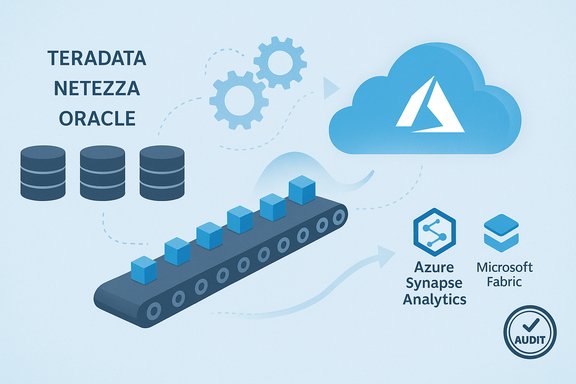
Earning the specialization means Microsoft has accepted evidence that a partner can:- Design migration strategies across common enterprise warehouses (Teradata, Netezza, on‑prem SQL‑based warehouses) and re‑target them to modern Azure architectures.
- Deliver repeatable ETL/ELT and schema migration patterns that preserve business logic and query semantics.
- Operate governance, security, and cutover playbooks to minimize downtime and control data integrity risk.
- Show measurable ACR activity on the eligible services, which suggests the partner is actively running customer workloads on the Azure stack.
What the Kanerika announcement says — and what’s already verifiable
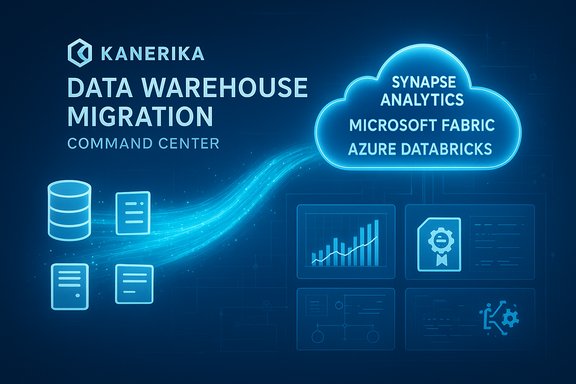
Kanerika’s press release highlights three principal claims:- It has been awarded the Data Warehouse Migration to Microsoft Azure specialization by Microsoft.
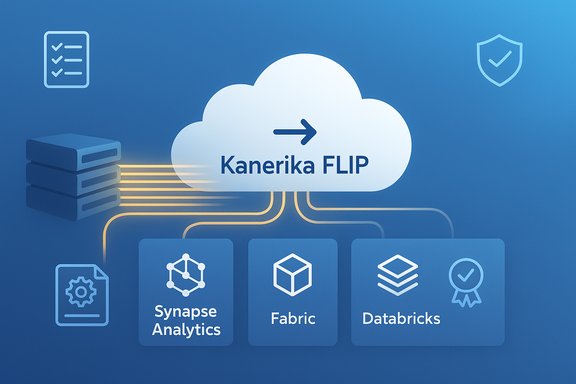
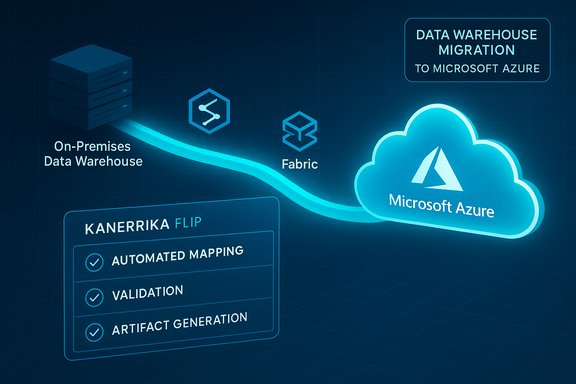
- The company claims proprietary migration accelerators (FLIP) that automate large parts of the conversion work from legacy tools and artifacts into Azure/Fabric targets.
- The company says this new specialization complements existing Microsoft credentials (Solutions Partner for Data & AI, Analytics on Microsoft Azure specialization, and other Azure Solutions Partner designations).
Independent verification and due diligence: a checklist for buyers
Public announcements are important signals, but Microsoft’s partner program deliberately separates a public badge from the detailed evidence buyers need. The following verification steps translate the partner‑announcement into procurement artifacts that materially reduce risk.- Request the Microsoft specialization letter or Partner Center screenshots showing the active specialization and the award date.
- Ask for the named list of certified individuals and the certification IDs that map to Microsoft Learn credentials — verify those in Microsoft Learn or the certification portal.
- Obtain anonymized ACR evidence or a Partner Center export that demonstrates the partner’s eligible ACR attribution types (DPOR/PAL/CSP) for the trailing three months.
- Request anonymized redacted excerpts from the third‑party audit (or customer references) — specifically runbooks, migration playbooks, and evidence of cutover/test results from representative projects.
- Require a pilot or trial phase with clear acceptance criteria: data integrity tests, query performance baselines, and rollback procedures.
- Review the partner’s automation artifacts (for example, FLIP’s outputs): ask to see a mapping sample, metadata validation reports, and test cases that preserve business logic during conversion.
Strengths in Kanerika’s story — why buyers will pay attention
- Aligned program pathway: Kanerika already publicized a Solutions Partner for Data & AI designation and an Analytics specialization earlier in 2024–2025. Those prior recognitions fit the prerequisites for the Data Warehouse Migration specialization and increase the plausibility of the award. This alignment reduces the friction for enterprise buyers who prefer consolidated Microsoft‑aligned vendors.
- Automation emphasis (FLIP and accelerators): The vendor’s automation narrative is compelling: automation can reduce manual rework, accelerate timelines, and reduce cutover risk when it properly preserves business logic and edge cases. In crowded migration markets, reproducible automation is a strong differentiator if it truly handles complexity and testing at scale. Kanerika’s productization of common migration paths (SSIS→Fabric, SSIS/SSAS→Fabric, Tableau→Power BI, etc. directly targets the most labor‑intensive parts of warehouse projects.
- Documented vertical experience: The release emphasizes case work across healthcare, manufacturing, retail, financial services, and logistics — verticals that place high demands on both performance and compliance. If substantiated with references, this breadth is a practical advantage for enterprise buyers evaluating cross‑industry knowledge and migration edge cases.
- Clear program benefits for customers: Microsoft specializations commonly unlock co‑sell pathways, presales funding options (for example ECIF, Azure Innovate), and prioritized visibility in Microsoft partner discovery tools. These commercial benefits can materially reduce customer POC costs and accelerate procurement cycles when the partner’s evidence holds up to review. Kanerika’s prior messaging already signals access to these programs.
Risks, caveats, and where to be cautious
- Press releases are not audit letters. Public announcements show intent and public distribution of the claim. They are not the same as the audited Partner Center artifacts Microsoft issues to the partner. Always request the formal specialization letter or Partner Center evidence before relying on the claim in procurement. Syndicated PR is a common channel for partner news, and it should trigger verification, not replace it.
- Specialization proves capability, not project fit. The specialization validates repeatable delivery patterns and operational hygiene under audit conditions. It does not guarantee performance targets in your environment. Complex migrations still require careful assessment of schema fidelity, bespoke stored procedures, user‑defined functions, security boundaries, and downstream dependencies.
- Checklist and sample size matters. Some specialization audits accept a handful of customer references or a small number of audited projects. Buyers should judge whether the partner’s audited sample represents workloads of comparable scale and complexity. Ask for projects of similar size, concurrency, and SLAs.
- Automation limits and edge cases. Automation can accelerate the bulk of migration tasks, but edge cases — UDFs, vendor‑specific features, query tuning, and poorly documented schema assumptions — often require manual remediation. Confirm the partner’s process for handling exceptions and their time/cost model for non‑automatable work.
- ACR and commercial dependency. The requirement to show ACR on specific eligible services (Synapse, Fabric, Databricks) means partners with cloud consumption in other services may look more capable than they are for data‑warehouse migrations. Verify the ACR breakdown if the partner emphasizes total Azure revenue rather than eligible workload revenue. Microsoft documents the eligible service filters used to validate the specialization.
Practical guidance for WindowsForum readers planning migrations
Selecting a partner: pragmatic evaluation steps
- Validate the specialization with Partner Center evidence and specialization letter.
- Require one or more anonymized, redacted audit excerpts or the audit summary that was submitted to the auditor.
- Ask for a named list of certified engineers who will be assigned and check their live certification records.
- Run a short, time‑boxed pilot focused on:
- End‑to‑end extract from source (with CDC if relevant)
- Transformation fidelity (business rules preserved)
- Query parity/performance tests for representative workloads
- Cutover rehearsal and rollback capability
- Add contractual SLAs for data fidelity and a defined remediation scope for discrepancies found during handover.
Scope and contract terms to negotiate
- Include explicit acceptance criteria (row counts, checksums, query result comparators).
- Require shadow period support after go‑live during which the partner remediates migration‑induced defects at no additional cost.
- Specify knowledge transfer and runbook delivery as part of the contract.
- Define rights and responsibilities for licensing and runtime costs (Fabric vs. Synapse vs. Databricks chargeback).
Market context and how the specialization fits into broader Azure trends
Microsoft has been consolidating its partner recognition to emphasize measurable outcomes, skilling, and active customer results. The Data Warehouse Migration specialization aligns with Microsoft’s strategic push around Microsoft Fabric (OneLake, lakehouse paradigms), Synapse, and managed Spark environments (Databricks). As enterprises move from legacy appliances to cloud fabrics, partners that can prove they both do migrations and operate the resulting platform at scale will be prioritized by account teams and procurement workflows. Evidence of this trend appears in multiple partner announcements historically and is visible across Microsoft documentation and partner case studies. Not every partner will take the same technical route — some will favor Synapse dedicated SQL pools, others Fabric lakehouses, and others Databricks‑centric patterns. The specialization’s focus on eligible workloads recognizes that multiple target architectures are valid; what’s important is the partner’s demonstrated ability to deliver and operate whichever architecture you choose.Bottom line: what this means for enterprise IT teams
Kanerika’s announcement that it earned the Data Warehouse Migration to Microsoft Azure specialization is a credible and plausible step in the company’s Microsoft alignment — and it follows a pattern other reputable partners have walked. The specialization is valuable: it signals Microsoft‑validated processes, a baseline of certified personnel, measurable Azure consumption in relevant services, and an audit trail that procurement teams can request.At the same time, the specialization should be treated as one procurement filter rather than the sole deciding factor. The real proof is in project‑level evidence: Partner Center artifacts, audit summaries, named certified engineers, redacted runbook samples, and a successful pilot that proves automation claims in your environment.
In short:
- Signal: The specialization is a positive procurement signal and typically unlocks Microsoft co‑sell and funding support.
- Verify: Buyers should request Partner Center evidence, audit artifacts, and pilot acceptance criteria to validate the fit.
- Measure: Use a short pilot with objective acceptance criteria to validate automation claims (FLIP or otherwise) and to measure migration fidelity, cost, and performance outcomes.
Conclusion
The Data Warehouse Migration to Microsoft Azure specialization is a meaningful, auditable credential for partners that work at the intersection of legacy data warehousing and modern cloud analytics. Kanerika’s public announcement puts the firm in the company of other specialized partners and signals that it has been through Microsoft’s scrutiny process. For IT buyers, this is a strong reason to include Kanerika on shortlists — provided the usual verification steps are taken and the partner’s automation and audited evidence are validated against your project’s scale and complexity.The dynamics of modern data migrations reward repeatable automation, solid governance, and clear contractual controls. Microsoft’s specialization program helps highlight partners who invest in those practices, but the job of turning a validated capability into a successful migration still rests on careful scoping, transparent pilot validation, and enforceable SLAs in the contract.
Source: WRBL https://www.wrbl.com/business/press...-migration-to-microsoft-azure-specialization/