

Kevin Scott’s career is less a single-story biography and more a roadmap of the last two decades of enterprise tech: from scaling ad systems and mobile infrastructure to shaping Microsoft’s strategy for an AI-first world, his influence is visible across cloud infrastructure, developer tools, and the rise of generative AI — but the narrative often needs correction, context, and hard scrutiny to separate myth from measurable impact.
Kevin Scott occupies one of the most consequential executive posts in technology: Chief Technology Officer of Microsoft. Appointed in January 2017, Scott’s remit is broad — steward the company’s technical vision, accelerate research-to-product pathways, support engineering culture, and act as a bridge between Microsoft’s sprawling product groups and the wider research community. His public-facing role has become synonymous with Microsoft’s push to make AI a mainstream, integrated capability across Azure, Microsoft 365, Windows, and developer tools.
But biography matters in context. A number of profiles and reprints (including the piece provided) contain an important factual error about Scott’s formal academic credentials. Contrary to claims that he earned a Ph.D. from the University of California, Berkeley, authoritative sources show a different record: Scott holds a B.S. in Computer Science from Lynchburg College and an M.S. in Computer Science from Wake Forest University, and he completed most of a Ph.D. program at the University of Virginia before moving into industry work. This distinction — “completed most of his Ph.D.” versus “earned a Ph.D.” — is not trivial for accuracy and should be corrected wherever it appears.
Key outcomes of that strategic direction include:
Two practical levers stand out:
At the same time, accurate biography and clear-eyed critique matter. Reporting that misstates foundational facts — such as incorrectly claiming a Berkeley Ph.D. — should be corrected. The real record shows deep graduate training and research, followed by decisive industry contributions that are no less impressive when stated correctly.
Finally, Scott’s most consequential legacy will be determined less by biography and more by outcomes: whether Microsoft’s AI integrations are useful, secure, and fair, whether the company’s hardware and cloud investments stabilize cost and performance for customers, and whether developer ecosystems remain open and competitive. For practitioners in the Windows and enterprise ecosystem, the advice is straightforward: adopt thoughtfully, govern conservatively, and measure outcomes rigorously as Microsoft — and Kevin Scott as its chief technical steward — continues to steer one of the industry’s most consequential technical turnarounds.
Source: thedetroitbureau.com Kevin Scott: A Tech Visionary's Journey
 Background / Overview
Kevin Scott occupies one of the most consequential executive posts in technology: Chief Technology Officer of Microsoft. Appointed in January 2017, Scott’s remit is broad — steward the company’s technical vision, accelerate research-to-product pathways, support engineering culture, and act as a bridge between Microsoft’s sprawling product groups and the wider research community. His public-facing role has become synonymous with Microsoft’s push to make AI a mainstream, integrated capability across Azure, Microsoft 365, Windows, and developer tools.But biography matters in context. A number of profiles and reprints (including the piece provided) contain an important factual error about Scott’s formal academic credentials. Contrary to claims that he earned a Ph.D. from the University of California, Berkeley, authoritative sources show a different record: Scott holds a B.S. in Computer Science from Lynchburg College and an M.S. in Computer Science from Wake Forest University, and he completed most of a Ph.D. program at the University of Virginia before moving into industry work. This distinction — “completed most of his Ph.D.” versus “earned a Ph.D.” — is not trivial for accuracy and should be corrected wherever it appears.
Early life and education: the real record
From rural Virginia to research labs
Kevin Scott grew up in rural Virginia and followed a classical path for many engineering leaders: undergraduate study in computer science followed by graduate work. The correct academic highlights are:- B.S. in Computer Science — Lynchburg College.
- M.S. in Computer Science — Wake Forest University.
- Ph.D. program (all but dissertation) — University of Virginia (most coursework and research completed, but he transitioned into industry before earning the doctorate).
Career trajectory: research, scale, and systems
Academia to Google: building at scale
After graduate work and a stint in research, Scott’s technical career took off in industry. He joined Google in the early 2000s, working in search and advertising engineering where he contributed to infrastructure and scaling efforts. His work at Google established him as an engineer who could operate at massive scale — a critical skill for the era of web-scale services.AdMob and the mobile pivot
Scott moved to AdMob in a senior engineering capacity, where he focused on mobile ads engineering and operations. The AdMob chapter is notable because it connected Scott to mobile monetization problems at a time when the industry was rapidly migrating from desktop to mobile. Google acquired AdMob in 2010, and Scott returned to a Google role after the acquisition.LinkedIn: from engineer to executive
In February 2011 Scott joined LinkedIn and rapidly moved into executive leadership. As Senior Vice President of Engineering and Operations, he helped scale LinkedIn through fast growth and its public listing. Observers credited him with playing a key role in stabilizing and scaling infrastructure during an intense growth period. His time at LinkedIn positioned him as a leader capable of marrying engineering excellence with product and operational imperatives.Microsoft: CTO and AI leadership
Microsoft named Scott CTO in January 2017 following the company’s acquisition of LinkedIn. As CTO, Scott’s profile expanded from internal engineering leader to public evangelist for Microsoft’s AI-first strategy: championing AI integration across Azure, Microsoft 365 (Copilot), Windows, and developer tooling. He has overseen cross-company initiatives, driven partnerships, and worked publicly on AI governance and responsible development.The Microsoft era: shaping AI, chips, and developer platforms
AI as a product and platform priority
Under Scott’s technical leadership, Microsoft has moved aggressively to integrate AI into both developer-facing products and end-user experiences. The company’s long-term partnership and multi-billion-dollar investments with OpenAI have been central to that strategy, enabling Microsoft to bring large language models and generative AI capabilities into Azure, GitHub Copilot, Microsoft 365 Copilot, Bing, and developer platforms. Microsoft and OpenAI’s 2023 and subsequent partnership announcements formalized a multi-year, multi-billion dollar roadmap for infrastructure and product integration.Key outcomes of that strategic direction include:
- Embedding generative AI into productivity (Copilot family) and developer tools (GitHub Copilot).
- Offering Azure as the privileged cloud forraining and inference workloads.
- Building enterprise-grade interfaces (Copilot Studio, Copilot Tuning) so organizations can customize AI models.
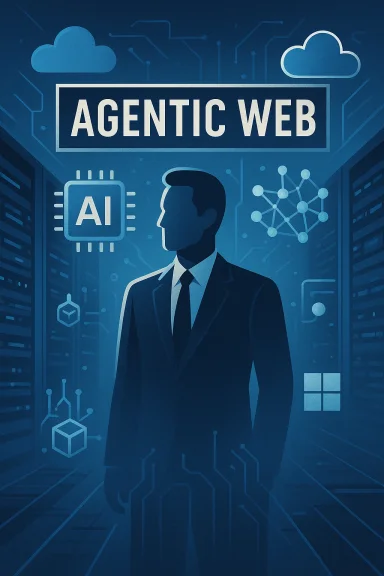
The “Agentic Web” and developer vision
At developer conferences and public appearances, Scott has articulated a vision sometimes described as the “agentic web”: interoperable, memory-augmented AI agents that can act across services and assist users in multi-step tasks. This is not only a conceptual shifoduct architecture priority that touches browsers, OS-level integration, APIs, and open protocols. Community discussions and industry threads around Build 2025 emphasize how Microsoft is pushing open protocols and agent interoperability as a developer-first strategy.Hardware strategy: in-house chips and system design
Beyond software, Scott has spoken and been reported on publicly for advocating a strategic pivot toward running “mainly Microsoft chips” in AI data centers where it makes sense. This is part of a broader move to optimize cost, latency, and system integration for large AI workloads: designing silicon, racks, cooling, and networking as an integrated stack rather than a piece-part approach. Industry commentary and forum analysis have flagged Microsoft’s push into bespoke AI hardware as one of the most consequential infrastructure bets in the cloud era.Key contributions and innovations
Kevin Scott’s influence is best understood as a set of connected contributions rather than a single invention:- AI product integration: Accelerating deployment of advanced language and generative models into Microsoft products (Copilot, Bing, Designer, etc.).
- Cloud and infrastructure leadership: Ensuring Azure can host and scale frontier AI research and commercial workloads, with both short-term partnerships and long-term investments.
- Developer-first thinking: Promoting tools and protocols that let developers build, tune, and ship AI-powered apps (Copilot Studio, Azure OpenAI Service).
- Organizational culture: Advocating engineering excellence, cross-company collaboration, and investment in people and research communities.
- Public engagement: Publishing work that translates technical and ethical trade-offs into accessible insights (podcasts, public speeches, and a book on AI’s social impact).
Critical analysis: strengths, trade-offs, and systemic risks
Kevin Scott’s record includes unmistakable strengths, but the strategies he’s promoted also carry material risks and trade-offs that WindowsForum readers — IT leaders, developers, and admins — should understand.Strengths and why they matter
- Systems thinking at scale. Scott’s background in building scalable ad and mobile systems translates well into designing cloud systems for AI, where throughput, latency, and cost at scale are paramount. This skillset is rare and valuable in executive technology leadership.
- Bridging research and product. He has pushed for deliberate pathways from research models to production services, helping Microsoft commercialize AI while still engaging research partners like OpenAI and internal research groups. This contributes to faster product cycles and enterprise adoption. (openai.com)
- Developer-focused openness. Scott’s support for tools and open protocols aims to attract the developer community, a necessary strategy to make Microsoft’s AI offerings platforms rather than siloed features. Forum discussion shows that developers view Build announcements and open tooling as critical to adoption.
Trade-offs and risks
- Concentration of compute and vendor lock-in. Heavy integration with a single model-provider and an emphasis on Azure as a privileged platform can accelerate innovation but risks creating dependency for customers and partners. Even public statements that preserve “exclusive” or preferential arrangements raise concerns among enterprises about portability, multi-cloud strategies, and negotiation leverage. OpenAI–Microsoft investments and agreements have been substantial; that closeness has both technical wer implications.
- Hardware verticalization and ecosystem impact. Microsoft’s bet on running “mainly Microsoft chips” in Azure data centers is technically defensible for optimizing generative AI workloads. However, this pivot could reshape partner dynamics with GPU vendors and complicate procurement and compatibility for ISVsrdized hardware stacks. It also raises timing and execution risk: designing chips, cooling, and systems at datacenter scale is expensive and operationally complex.
- Ethics, safety, and governance gaps. Scott has publicly endorsed responsible AI, but rapid productization of LLMs introduces real-world hbias, privacy leakage, and the potential for misuse. The governance architecture — both internal and external — must scale with the technology. This is an active and unresolved industry challenge.
- Commercialization vs. public trust. Democratizing AI via Copilot and consumer-facing integrations increases adoption, but commercialization choices (pricing, telemetry, data use policies) will determine whether users trust those tools. Early adoption numbers and monetization dynamics matter; community discussion has already highlighted questions about adopted-paid Copilot seats versus total Microsoft 365 installs. These adoption economics will shape future product decisions.
What the industry debates say (forum signals)
WindowsForum and other community threads echo many of the priorities and concerns above:- Conversations around Build 2025 emphasised Microsoft’s push for an interoperable “agentic web” and opened debate about the balance between openness and platform control. That community signal aligns with Scott’s public roadmap for multi-agent collaboration and developer tooling.
- Threads discussing Microsoft’s hardware strategy highlight both excitement (better price-performance for AI workloads) and anxiety (implications for vendors and customers who plan on GPU-based deployments). Forum analysis has tracked Scott’s comments on bespoke chips as a major infrastructural pivot.
- Debates on Copilot adoption and paid-seat penetration underline the difference between headline product numbers and real enterprise penetration — a tension that will determine long-term revenue outcomes for Microsoft’s AI bets.
Recommendations for IT leaders, developers, and Windows users
The technical and strategic shifts led by Scott affect practical decision-making. Here are action-oriented recommendations for practitioners:- Treat AI as an architectural decision. Build a clear stance on cloud portability, data residency, and model governance before adopting Copilot or Azure-hosted models. Plan for multi-cloud or hybrid fallbacks where business-critical workloads are involved.
- Assess telemetry and data policies. Before enabling enterprise copilot or LLM features, validate how prompts, attachments, and metadata are stored, shared, or retained. Document contractual guarantees and opt-ins for sensitive data.
- Monitor hardware roadmap risk. If you manage on-prem or colocation AI infrastructure, model procurement assumptions should account for evolving hyperscaler hardware strategies (including in-house silicon). Stagger refreshes and design for abstraction at the orchestration layer.
- Invest in human-in-the-loop processes. Adopt verification checkpoints for LLM-generated outputs in regulated workflows. Train teams to treat model responses as drafts, not authoritative facts.
- Engage developers with local sandboxes. Use Copilot Studio, model tuning, and local testing to validate integrations early. Prioritize observability and fail-safe behavior for production deployments.
- Plan for skill shifts. Upskill engineers in prompt engineering, RLHF basics, and retrieval-augmented generation techniques — practical skills that will determine the success of internal AI projects.
The ethics and public-interest ledger
Scott has publicly advocated for responsible AI development. The industry has responded with a mix of praise and skepticism: applauding Miin safety research while seeking concrete evidence of robust governance, independent audits, and public accountability mechanisms. As AI capabilities accelerate, the balance between product innovation and societal risk becomes a core measure of leadership effectiveness.Two practical levers stand out:
- Transparency in model behavior and dataset provenance. Enterprises and researchers need clearer hairline specifications for training data sources and bias testing, especially in customer-facing applications.
- Independent oversight and verification. External audits, reproducible evaluations, and third-party red teams help build trust that safety commitments are real rather than only rhetorical.
Where Kevin Scott’s legacy may land
Over the next decade, Scott’s influence will likely be judged by a handful of measurable outcomes:- How seamlessly and responsibly Microsoft embeds AI into productivity and developer tools. If Copilot and Azure-based models become secure, dependable productivity multipliers, that’s a durable legacy.
- Whether Microsoft’s hardware and systems bets deliver better price-performance at scale. Running “mainly Microsoft chips” in Azure for some workloads could be transformative — but it depends on execution and partner dynamics.
- If Microsoft can balance platform advantage with an open ecosystem. The long-term health of the web and developer ecosystems will be influenced by whether Microsoft fosters true interoperability or entrenches proprietary lanes.
- The degree to which Microsoft’s AI advances are matched by robust governance. This includes transparent safety work, credible third-party audits, and clear lines for redress when models cause harm.
Conclusion: a nuanced verdict
Kevin Scott is rightly described as a tech visionary in the sense that his career and public work have consistently aligned with the major technical inflection points of the internet era: scaling web systems, moving to mobile, and now operationalizing generative AI across products and infrastructure. His leadership has helped position Microsoft at the center of the AI era through a mix of product integration, strategic partnerships, and infrastructural bets.At the same time, accurate biography and clear-eyed critique matter. Reporting that misstates foundational facts — such as incorrectly claiming a Berkeley Ph.D. — should be corrected. The real record shows deep graduate training and research, followed by decisive industry contributions that are no less impressive when stated correctly.
Finally, Scott’s most consequential legacy will be determined less by biography and more by outcomes: whether Microsoft’s AI integrations are useful, secure, and fair, whether the company’s hardware and cloud investments stabilize cost and performance for customers, and whether developer ecosystems remain open and competitive. For practitioners in the Windows and enterprise ecosystem, the advice is straightforward: adopt thoughtfully, govern conservatively, and measure outcomes rigorously as Microsoft — and Kevin Scott as its chief technical steward — continues to steer one of the industry’s most consequential technical turnarounds.
Source: thedetroitbureau.com Kevin Scott: A Tech Visionary's Journey
