

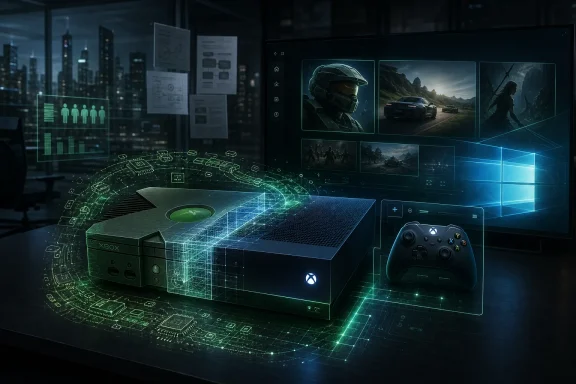
Xbox’s Oldest Argument Has Become Its Newest Problem
The first Xbox was born from a contradiction Microsoft never fully resolved. The company was already central to PC gaming through Windows, DirectX, and its developer relationships, yet it chose to enter a business defined by custom silicon, subsidized boxes, retail inventory, living-room branding, and brutal generational timing. Fryer’s recollection is valuable because it strips away two decades of nostalgia and returns Xbox to its original strategic question: why would a software company volunteer for the pain of hardware?
In 2001, the answer was partly defensive. Sony’s PlayStation 2 was not just a successful console; it looked like a potential living-room computer, a machine that might chip away at Windows’ cultural relevance as entertainment moved off the desk and onto the couch. Xbox was Microsoft’s counterpunch, an attempt to make sure the next mass-market computing platform did not belong to someone else.
That logic worked better than many skeptics expected. Xbox Live helped define online console gaming, the Xbox 360 gave Microsoft a genuine lead in the HD era, and the brand became one of the few credible console ecosystems on the planet. But success did not erase the structural mismatch Fryer worried about. It only delayed the reckoning.
The question now is not whether Microsoft can build good hardware. It can. The question is whether traditional console hardware still gives Microsoft enough leverage to justify the cost, risk, and organizational drag that comes with building it.
The Console Business Was Always a Bad Fit for Microsoft’s Best Instincts
Microsoft is at its strongest when it turns platforms into gravity wells. Windows, Office, Azure, and developer tools all follow the same broad pattern: create infrastructure, attract users and developers, take a cut from the ecosystem, and let scale compound. The console business has always been stranger. It asks a platform company to behave like a consumer electronics firm, a first-party publisher, a retail logistics operation, and a culture brand all at once.
That was manageable when the console box was the center of the gaming universe. If players bought the hardware, they bought the accessories, subscribed to the online service, purchased games through the store, and formed a durable identity around the platform. The hardware did not need to make huge profit by itself because it protected the store, the network, and the customer relationship.
But Xbox has spent the last several years deliberately weakening that old lock-in. Microsoft now ships more games across more screens, treats PC as a first-class Xbox destination, experiments with cloud delivery, and has become more willing to put former Xbox-associated franchises on rival platforms. That may be rational for a company with Activision Blizzard, Bethesda, King, and a massive software footprint, but it makes the console economics harder to defend.
If the games are everywhere, the box must justify itself on experience rather than exclusivity. If the store is no longer guaranteed to be the only store, the subsidy model gets shakier. If Windows is again the strategic center, then the Xbox console stops being Microsoft’s beachhead in the living room and starts looking like a specialized Windows appliance with a controller-friendly shell.
That is why Fryer’s 2001 skepticism feels newly relevant. Xbox was created because Microsoft feared being boxed out of the future of entertainment. In 2026, the company’s bigger fear may be being trapped inside the box it built to avoid that fate.
Project Helix Is Not an Exit From Hardware, but It Is an Exit From the Old Deal
Microsoft’s Project Helix messaging is designed to reassure fans that Xbox hardware has a future. The company has talked about a next-generation Xbox built around custom AMD silicon, compatibility with Xbox and PC games, and a more unified experience across console and Windows. On paper, that sounds like ambition rather than retreat.
But the interesting part is not that Microsoft still wants to sell hardware. It is what kind of hardware Microsoft appears to want. A future Xbox that runs console and PC games is not merely a more powerful Series X. It is a statement that the old boundary between Xbox and Windows has become a liability.
That shift could solve real problems. Windows has the deepest PC gaming catalog, the widest storefront support, and the broadest hardware ecosystem. Xbox has a cleaner living-room interface, a trusted controller model, and a history of backward compatibility that matters to its most loyal customers. A successful Helix strategy would merge those strengths: the openness of PC without the mess, the convenience of console without the isolation.
That is the dream. The risk is that Microsoft produces the worst of both worlds: a device too expensive to feel like a console, too restricted to satisfy PC gamers, and too Windows-like to deliver the frictionless couch experience console buyers expect. Fryer’s point about execution is the whole ballgame. “Windows, but make it feel like Xbox” is easy to write on a slide and hard to ship into a living room.
The history of Windows-based entertainment devices is littered with technically plausible ideas that never became beloved objects. Console users tolerate less friction because consoles taught them to expect less friction. They want instant resume, painless updates, reliable controller navigation, predictable performance, and a store that does not behave like a repurposed desktop. If Microsoft wants Xbox hardware to become more Windows-like, it must also make Windows more Xbox-like in the places that matter.
AI Has Turned Component Anxiety Into Platform Strategy
Fryer’s mention of AI-driven component shortages gives the argument a sharper edge. Console manufacturing has always depended on timing: lock the silicon, forecast demand, negotiate supply, absorb cost curves, and hope the market moves in your favor over a seven-year cycle. That model gets harder when the same supply chain is being pulled toward AI accelerators, high-bandwidth memory, advanced packaging, and data center capacity.
Microsoft is not a bystander in that pressure. It is one of the companies driving the AI infrastructure boom. Azure, Copilot, and the broader AI arms race make compute a strategic priority across the entire corporation. That creates an uncomfortable internal comparison for Xbox hardware. Every dollar and supply-chain favor spent making consoles has to compete, implicitly or explicitly, with the company’s appetite for AI servers and cloud capacity.
This does not mean Xbox consoles are about to vanish because GPUs are needed elsewhere. It means the business case for dedicated gaming hardware has to clear a higher bar. If Microsoft can reach players through Windows PCs, handheld partners, cloud streaming, rival consoles, mobile devices, and Game Pass, then the traditional subsidized console becomes one route among many rather than the route.
That matters because console platforms historically win by being unavoidable. A PlayStation or Xbox under the television is not just a device; it is an anchor for purchasing behavior. Microsoft’s broader gaming strategy increasingly suggests that the anchor may be the account, the library, the subscription, the identity layer, and the developer platform rather than the plastic box.
The hardware gamble becomes less sustainable not because hardware is unimportant, but because hardware is no longer the only way Microsoft can exercise power in gaming. Once that is true, every console design decision must answer a colder question: what unique job does this device do that Microsoft cannot accomplish through Windows and partners?
The Restructuring Rumors Fit the Strategy Too Neatly to Ignore
The reports swirling around Xbox restructuring, leadership changes, possible layoffs, studio uncertainty, and a broader “reset” should not be treated as disconnected corporate weather. They fit the same strategic pattern. Microsoft appears to be trying to rationalize a gaming empire that expanded faster than its operating model matured.
The post-Activision version of Microsoft gaming is enormous. It spans console hardware, Windows gaming, Game Pass, cloud infrastructure, mobile ambitions, esports-adjacent communities, long-running PC franchises, blockbuster console brands, subscription economics, and a publishing catalog that now reaches across rival platforms. That scale gives Microsoft options. It also creates bureaucracy, duplication, and pressure to prove that owning so much content actually produces returns commensurate with the acquisition spree.
Fryer’s comments about empowering studios are therefore more than a sentimental plea from a veteran game maker. They point to the other half of the Xbox problem. Hardware strategy can distribute games, but it cannot make them worth caring about. A unified Windows-Xbox platform means little if the first-party pipeline is inconsistent, delayed, or treated as a spreadsheet optimization exercise.
Microsoft has already learned that buying studios does not automatically produce cultural momentum. Great games emerge from talent, time, leadership, technology, and a tolerance for creative risk. Those conditions are hard to maintain inside a company simultaneously asking for predictable margins, broad platform reach, subscription value, and global franchise management.
Asha Sharma’s reported reset, whatever its final form, has to navigate that contradiction. Cutting costs may please the corporate center, but a platform without must-play games becomes infrastructure in search of emotion. Xbox’s best moments were never just about hardware specifications. They were about Halo LAN parties, Xbox Live voice chat, Gears of War co-op, Forza showcases, Bethesda worlds, and the feeling that the platform had its own center of gravity.
Windows Is the Obvious Answer and the Obvious Trap
If Microsoft is returning to its strengths, Windows is the obvious place to start. It remains the most important PC gaming platform, the home of Steam, Epic, Battle.net, modding communities, niche simulators, competitive games, early-access hits, and decades of compatibility. For a company wondering whether a dedicated console platform is too narrow, Windows looks like the largest gaming canvas Microsoft already owns.
But Windows is also the reason the strategy is dangerous. PC gamers tolerate Windows because it gives them access, flexibility, and performance. Console players choose consoles because they do not want to manage drivers, launchers, overlays, background processes, account conflicts, shader compilation, display modes, and the thousand papercuts of general-purpose computing. The more Xbox becomes Windows, the more Microsoft must protect console users from Windows’ worst habits.
The handheld market makes this tension impossible to avoid. Devices like the Steam Deck, ROG Ally, Legion Go, and Xbox-branded or Xbox-adjacent handheld PCs prove there is demand for portable PC gaming. They also prove that Windows remains awkward on small screens and controller-first devices. Valve’s advantage with SteamOS is not magic; it is focus. It built an experience around gaming first and everything else second.
Microsoft can do something similar only if it is willing to discipline Windows for gaming scenarios. That means a full-screen interface that is not merely a launcher, background behavior that respects battery and performance, updates that do not sabotage play sessions, and input systems that assume a controller may be the only device in reach. It also means being honest about where openness ends and console-like reliability begins.
Project Helix will be judged less by teraflops than by trust. Can a parent buy it and know a child can use it? Can a living-room player ignore the desktop forever? Can a PC enthusiast access the openness they expect without breaking the appliance experience for everyone else? If Microsoft cannot answer those questions cleanly, Helix risks becoming an enthusiast curiosity rather than a generational reset.
The End of Exclusivity Makes the Box Prove Itself
Xbox’s multiplatform shift is often debated as a matter of loyalty, but the business implications are more important. Once Microsoft accepts that its games can thrive on PlayStation, Nintendo hardware, Steam, and mobile, the Xbox console loses one of the classic reasons to exist. That does not make it useless. It makes it accountable.
A future Xbox must compete on convenience, library continuity, performance-per-dollar, services, backward compatibility, and the quality of its user experience. That is a harder pitch than “buy this box to play these games.” It is also a more Microsoft-like pitch. The company can argue that Xbox is the best place to bring a fragmented gaming life together, even if it is no longer the only place to play Microsoft games.
There is a parallel here with Surface. Microsoft did not need Surface to dominate PC sales for it to matter. Surface established design patterns, pushed OEMs, showcased Windows capabilities, and gave Microsoft a first-party reference point. Xbox hardware could evolve in a similar direction: not the sole vessel for Xbox, but the premium expression of Microsoft’s gaming platform.
The danger is that console buyers are not enterprise customers buying reference devices. They are consumers comparing price, games, habits, friends lists, subscriptions, and vibes. A console that exists mainly to demonstrate Microsoft’s platform strategy may satisfy executives and confuse everyone else. The box still needs a simple reason to be under the TV.
That reason may be “all your Xbox and PC games, one living-room machine.” If Microsoft nails it, that is powerful. If it ships as “a Windows PC that mostly behaves itself,” Sony and Nintendo will not need to do much to make their alternatives look coherent.
Xbox’s Real Rival Is No Longer PlayStation Alone
For most of its life, Xbox has been interpreted through its rivalry with PlayStation. That framing is now too small. Sony remains the most direct console competitor, but Microsoft’s strategic problem is broader: Steam owns PC gaming culture, Nintendo owns distinctive hardware-software integration, Apple and Google dominate mobile distribution, and cloud platforms compete for developer attention and infrastructure spend.
Microsoft’s advantage is that it can play on more of these boards than almost anyone else. It owns Windows, Azure, Xbox, Game Pass, Mojang, Bethesda, Activision Blizzard, King, and a developer ecosystem that stretches from indie tools to enterprise cloud services. Few companies can match that spread.
But breadth can become incoherence. “This is an Xbox” was a revealing slogan because it tried to turn the brand into a presence across many devices. The backlash was also revealing. Players understood the strategic point, but many heard it as an admission that the dedicated Xbox console had become less special.
The next phase has to be more precise. Xbox can be an ecosystem, but it cannot be everything in a way that makes nothing feel definitive. Microsoft needs to define which experiences are best on dedicated Xbox hardware, which are best on Windows PCs, which are best through cloud, and which belong on rival platforms because the economics of content demand it.
Fryer’s warning resonates because it asks Microsoft to stop pretending the old categories still hold. The company can remain in hardware, but the reason for that hardware has changed. The enemy is not merely Sony selling more consoles. The enemy is strategic mush.
Game Studios Are the Test Microsoft Cannot Automate
It is tempting to view all of this through devices and platforms because that is where Microsoft’s corporate muscle is easiest to see. But Xbox’s future still depends on games that make people rearrange their time. No amount of platform architecture can substitute for that.
Fryer’s closing emphasis on studios making games that are both critically acclaimed and financially successful is the quiet center of the whole debate. Microsoft does not need every first-party project to become a forever franchise, but it does need a portfolio that feels alive. That means protecting creative teams from churn while also demanding clearer production discipline than Xbox has sometimes shown.
The industry’s current economics make this brutally difficult. AAA development is expensive, timelines are long, audience expectations are punishing, and subscription services can blur the perceived value of individual releases. Microsoft’s ownership of so many studios gives it scale, but scale does not automatically produce taste.
The best version of Xbox’s reset would pair platform clarity with studio clarity. Some teams should make prestige single-player games. Some should build durable multiplayer worlds. Some should experiment at smaller scale. Some should feed Game Pass with variety. But all of them need to understand how success is measured before the green light, not after the miss.
If restructuring becomes merely a euphemism for cuts, Xbox will shrink without becoming sharper. If it becomes a way to align hardware, Windows, Game Pass, and publishing around a coherent creative strategy, then Fryer’s optimism has a chance. The bet is not just on Asha Sharma or Project Helix. It is on whether Microsoft can manage game creation without sanding off the reasons people love games.
The Console Is Becoming a Promise, Not a Prison
The most defensible future for Xbox hardware is not as a walled garden. That model belongs to a different strategic era. The more plausible future is Xbox as a promise: buy this device and Microsoft will give you the cleanest path through a messy, cross-platform gaming life.
That promise could be compelling. Imagine a console-like machine that boots into an Xbox interface, plays decades of Xbox purchases where licensing allows, runs PC games from multiple stores, syncs cloud saves, supports Game Pass, handles mods and peripherals intelligently, and lets advanced users drop into a more open Windows environment when they choose. That would be meaningfully different from both a traditional console and a generic gaming PC.
But promises create expectations. If Microsoft says it is breaking down artificial barriers, players will notice every new barrier that remains. If it claims console simplicity, players will punish desktop jank. If it claims PC openness, players will object to store restrictions. If it claims premium hardware, price will matter.
The company’s challenge is not technological possibility. It is product judgment. Microsoft has often been able to build the components of a great consumer experience while struggling to make the whole thing feel inevitable. Xbox, at its best, was an exception. It gave Microsoft attitude, community, and a place in living rooms that Windows alone could not reach.
That is why the hardware should not be dismissed as a relic. A well-designed Xbox device can still embody the ecosystem in a way an app cannot. But it must serve the ecosystem rather than pretend the ecosystem still begins and ends with the console.
The Fryer Warning Cuts Through the Xbox Reset Noise
The lesson from Fryer’s comments is not that Microsoft should abandon Xbox hardware. It is that the company must stop treating hardware as proof of commitment and start treating it as a product that has to earn its place. The coming reset will matter less for what Microsoft calls Xbox and more for whether users can feel the strategy becoming simpler.
- Microsoft’s original Xbox gamble was always a software company’s defensive move into a hardware business with very different economics.
- Project Helix suggests Microsoft still wants Xbox devices, but devices that lean harder into Windows, PC compatibility, and ecosystem reach.
- AI-era component pressure makes subsidized or tightly controlled console hardware harder to justify unless it delivers a uniquely strong experience.
- Xbox’s multiplatform publishing strategy weakens the old exclusivity argument and forces future hardware to compete on convenience, performance, and trust.
- Windows is Microsoft’s biggest gaming asset, but it becomes a liability if the next Xbox inherits desktop friction instead of hiding it.
- Studio health remains the decisive test, because no platform reset can compensate for a first-party slate that fails to excite players.
The original Xbox was a risky answer to a strategic fear: that Microsoft might lose the future of gaming if it stayed on the PC and let someone else own the living room. Twenty-five years later, the fear has inverted. Microsoft now risks losing the plot if it clings to console assumptions that no longer match how it publishes games, sells services, builds Windows devices, and allocates compute in an AI-hungry company. Fryer’s warning should be read less as nostalgia than as a demand for discipline: if Xbox hardware continues, it has to be more than a symbol. It has to be the clearest, most convincing expression of why Microsoft still belongs at the center of gaming’s next era.
References
- An original Xbox founder says the fears they had in 2001 are coming back stronger than ever Windows Central · 2026-06-20T10:50:09.365639