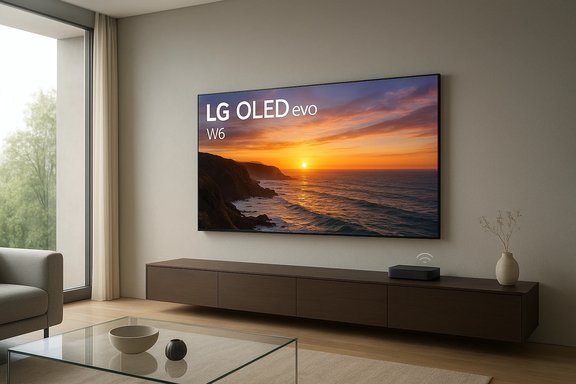
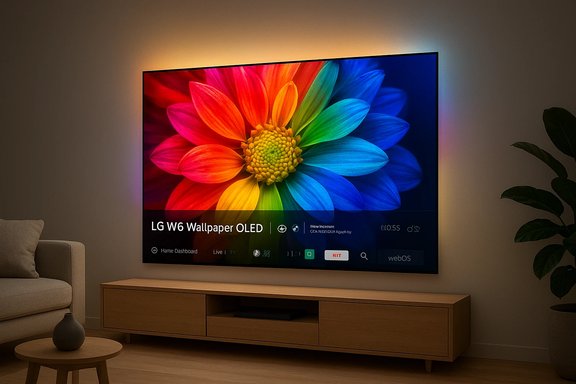
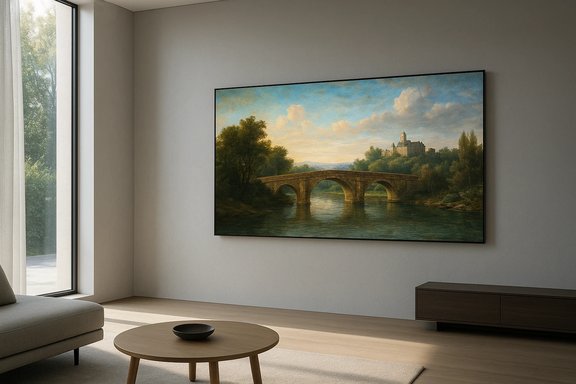
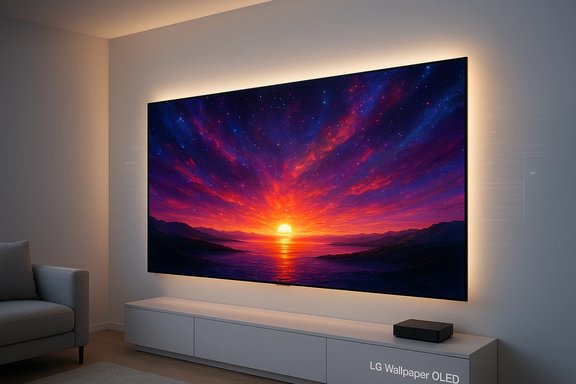
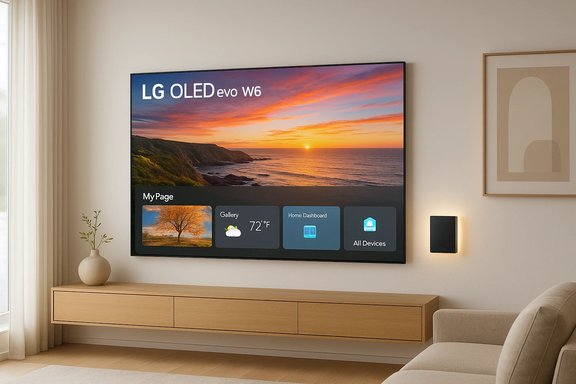
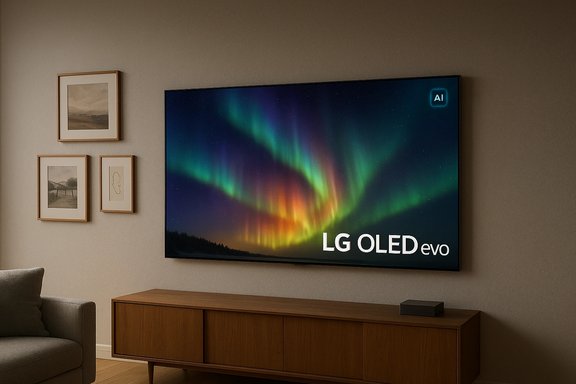
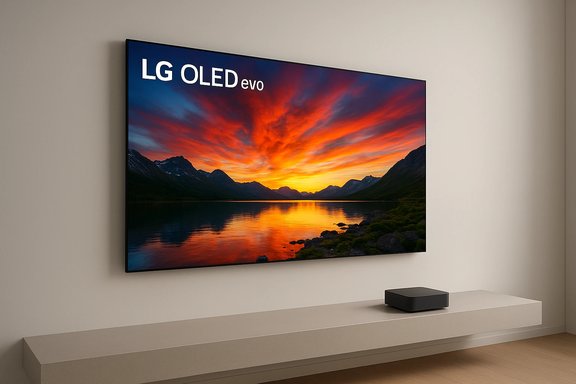
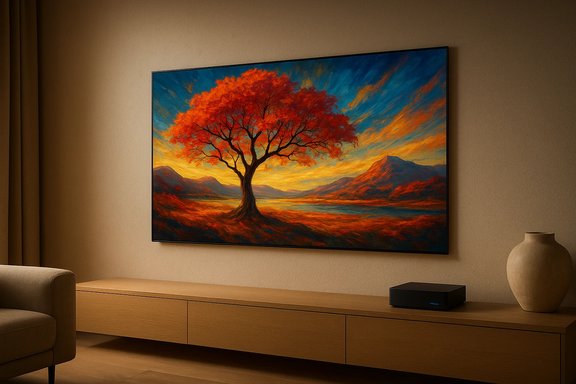
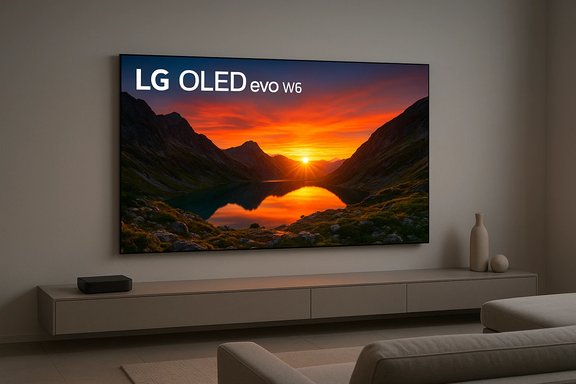
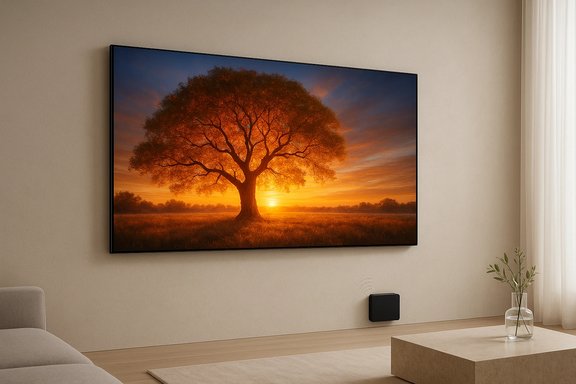
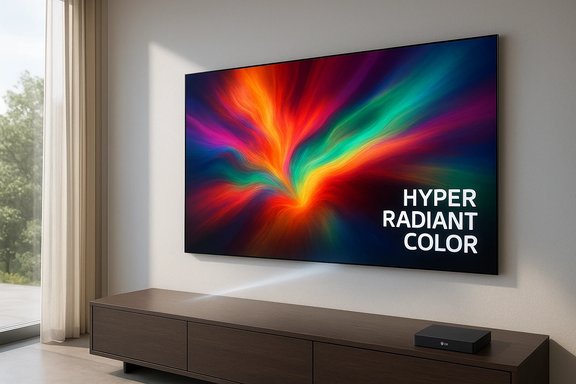
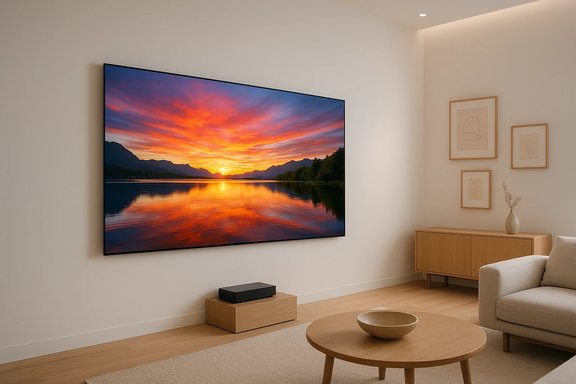
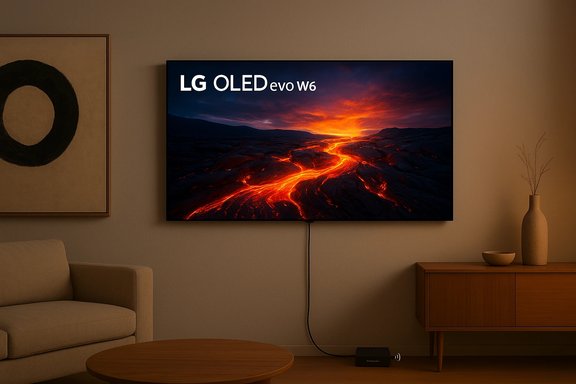
LG’s return to the Wallpaper concept at CES with a 9mm‑class, True Wireless OLED — the LG OLED evo W6 — reintroduces one of the most design‑forward TV ideas of the last decade while packing modern brightness, AI smarts and a wireless “Zero Connect Box” that promises visually lossless 4K video up to 10 meters away, a story first reported in regional coverage and echoed in LG’s own launch materials.
LG’s original Wallpaper OLED made headlines for its near‑paper‑thin profile when it debuted in 2017. The new W6 revives that aesthetic with updated engineering that shifts all inputs and heavy electronics into a separate connect box, allowing the panel itself to remain extraordinarily thin while still supporting today’s feature set: higher sustained brightness, adaptive AI processing, gaming framerate chops and integrated multi‑AI assistants. LG positions the W6 as the world’s thinnest True Wireless OLED, and the company has framed the launch as both a design statement and a technical milestone for the 2026 OLED evo family.
LG’s Wallpaper comeback is more than nostalgia; it’s a test of whether design‑first engineering and modern wireless + AI systems can move premium TV buyers away from the familiar safety of wired, thick‑chassis solutions. If the wireless link proves reliable and the brightness/reflectance claims hold up under scrutiny, this will be one of the more consequential TV launches of the year. If not, the W6 will remain an impressive engineering statement with caveats that matter to real‑world customers.
Source: The Malaysian Reserve https://themalaysianreserve.com/202...tv-the-worlds-thinnest-true-wireless-oled-tv/
 Background
LG’s original Wallpaper OLED made headlines for its near‑paper‑thin profile when it debuted in 2017. The new W6 revives that aesthetic with updated engineering that shifts all inputs and heavy electronics into a separate connect box, allowing the panel itself to remain extraordinarily thin while still supporting today’s feature set: higher sustained brightness, adaptive AI processing, gaming framerate chops and integrated multi‑AI assistants. LG positions the W6 as the world’s thinnest True Wireless OLED, and the company has framed the launch as both a design statement and a technical milestone for the 2026 OLED evo family. Overview: What LG Announced
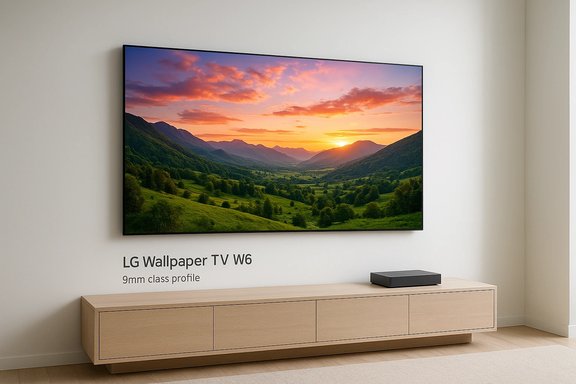
- Product headline: LG OLED evo W6 (Wallpaper TV) — a 9mm‑class, near‑wall‑flush OLED panel with a separate Zero Connect Box for inputs and wireless A/V transmission.
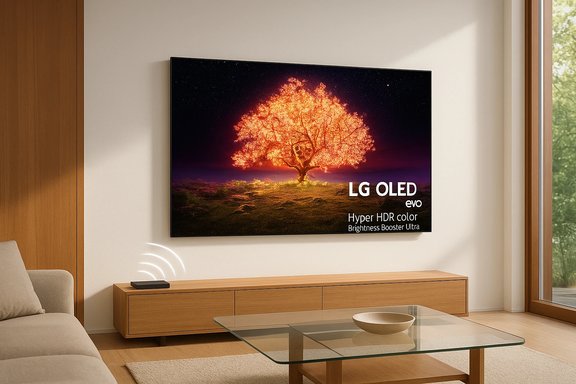
- Key display claims: Hyper Radiant Color Technology and Brightness Booster Ultra, with LG quoting up to 3.9× luminance over “conventional OLED” on a 3% window (internal measurement).
- Wireless approach: visually lossless 4K/60–165Hz transmission to the panel from a Zero Connect Box up to 10 meters away per LG’s specs; the panel itself still requires a power cable.
- AI & software: the new α11 AI Processor Gen3 (NPU cited as 5.6× more powerful in LG materials), Multi‑AI integrations including Microsoft Copilot and Google Gemini, and webOS personalization (Voice ID, “In This Scene,” generative wallpaper).
- Other verification claims: Intertek “Reflection Free Premium” certification for ultra‑low reflectance and UL‑verified black level and color consistency claims. LG stresses these third‑party verifications in marketing material.
Design & Mechanical Engineering
A near‑paper profile, revisited
The W6 is built to look like a mounted canvas rather than a consumer electronics object. By relocating HDMI, audio and processing to the Zero Connect Box and miniaturizing the panel’s internal components, LG achieves a nine‑millimeter class thickness that lets the TV sit extremely close to the wall when mounted. LG’s showroom mount is redesigned to make the panel appear flush from edge to edge. The headline figure — 9mm class — appears repeatedly in LG’s materials and press coverage and is now a defining marketing point of this revival.The Zero Connect Box: convenience vs. dependence
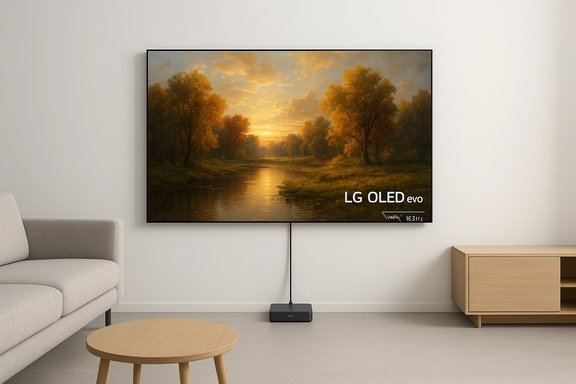
The Zero Connect Box houses I/O and acts as the wireless transmitter for video and audio. Placing the box up to 10 meters from the screen allows much more freedom for interior design and hides cable clutter, which is the Wallpaper concept’s principal appeal. That said, this approach introduces a new single point of failure: if the wireless link stutters or the box fails, user experience can be disrupted. LG describes the transmission as “visually lossless” per ISO/IEC internal tests — a reasonable claim from the manufacturer, but one that independent reviews and home‑environment tests will need to validate.Display Technology: Brightness, Color and Anti‑Reflection
Hyper Radiant Color + Brightness Booster Ultra
LG groups its panel improvements under the banner of Hyper Radiant Color Technology, which combines panel engineering, processing and an improved anti‑reflection surface to deliver higher sustained brightness and preserved blacks. The company’s Brightness Booster Ultra claim — specifically a 3.9× peak luminance increase versus “conventional OLED” measured at a 3% window — is prominently stated in LG’s press materials. Tech coverage and leaks cite higher peak brightness figures for G6/W6 families and position LG’s 2026 OLED evo generation as the brightest OLEDs in LG’s lineup to date. Readers should note LG’s 3.9× number is an internal comparative measurement and applies to certain models and measurement windows; independent lab validation will be necessary to confirm exact nits in working conditions.Anti‑reflection and certifications
LG highlights external verification for reflectance: the W6 line is said to have earned Intertek’s “Reflection Free Premium” certification and UL verifications for low black‑level measurement (≤0.24 nit up to 500 lux) and >99% color consistency up to 500 lux. These third‑party lab notes add credibility to marketing claims about daytime usability and gallery‑style viewing that previously disadvantaged OLED in bright rooms. They don’t remove all doubt, but they are meaningful: verified reflectance and color‑stability metrics are practical advantages for lifestyle buyers who mount TVs in bright living rooms or use them as art displays.Performance: Gaming and Motion
High refresh rates, low response
LG promotes the W6 and the broader 2026 OLED evo family as gaming‑friendly: 4K at up to 165Hz, support for NVIDIA G‑SYNC and AMD FreeSync Premium, a 0.1ms pixel response claim and Auto Low Latency Mode (ALLM). Those features make the W6 competitive with high‑end gaming displays and position it to serve dual roles as a cinematic panel and a gaming monitor for console and PC players. Early previews from outlets and LG’s specs align on these numbers, although full validation of input processing, VRR stability and sustained performance under prolonged high‑frame workloads will be necessary.Real‑world concerns: wireless latency and stability
The wireless transmission of high‑frame‑rate, high‑bitrate signals is the W6’s most distinctive risk. While LG’s Zero Connect Box is billed as “visually lossless,” high refresh rates and VRR for gaming demand extremely low latency and near‑perfect packet delivery to avoid tearing, judder or input lag. In congested RF environments — dense apartments, industrial interference or multiple competing 60/80/120 GHz links — performance could degrade. Gamers and pro‑use buyers should wait for independent latency tests that measure encoder/decoder delay, round‑trip VRR behavior and worst‑case packet loss scenarios before assuming parity with wired HDMI 2.1 connections.AI, UX and Privacy
α11 AI Processor Gen3 and Multi‑AI
LG’s 2026 family is powered by the α11 AI Processor Gen3, which the company claims delivers a major uplift in NPU performance (LG cites a 5.6× increase vs prior generation in some materials). The chip is central to LG’s “Dual AI Engine” and upscaling pipelines, and powers features like scene analysis, texture preservation for Gallery Mode and real‑time tone‑mapping for HDR. LG also plugs Multi‑AI integrations — bringing Microsoft Copilot and Google Gemini into webOS — which aims to make content discovery conversational and generative. These integrations expand the TV’s role from passive display to interactive household surface.Practical implications and privacy trade‑offs
Tying multiple cloud AI services into the TV experience raises data‑flow and privacy questions. LG promotes LG Shield and local Voice ID for personalization, and it cites CES awards for security architecture, but third‑party AI features often route audio or contextual queries via cloud services. Buyers should seek details on:- Where voice/audio is processed (on‑device vs cloud)
- Retention and deletion policies for voice profiles
- Whether image generation or scene metadata is stored off‑device
- Subscription or account requirements for Copilot/Gemini features
Audio, Ecosystem and Extras
LG’s preview materials and press coverage also describe an expanding wireless audio ecosystem that pairs with the TV concept to deliver Dolby Atmos and modular speaker configurations under the FlexConnect name. The goal is to enable multi‑channel Atmos experiences without complicated wiring, but wireless Atmos networks must still solve latency, sync and packet loss issues to match wired multichannel setups. For buyers who plan integrated home theater use, testing a complete wireless audio configuration under room conditions is essential.Sizes, Availability and Pricing
LG’s press materials and early coverage indicate the Wallpaper W6 will be offered in large sizes consistent with the Wallpaper concept — initial mentions focus on 77‑inch and 83‑inch models — and the product is being shown at CES 2026. LG has not universally published MSRP or market‑by‑market availability in its release; that is typical for a CES debut. Expect pricing to be at the premium end of LG’s lineup given the industrial design and advanced feature set. Retail availability and model SKUs (exact size and region variants) will be confirmed when LG publishes order or regional release details following the show.Strengths — Why the W6 Matters
- Design leadership: The Wallpaper form factor remains a high‑impact differentiator for buyers who value interior design and near‑flush wall mounting. The W6 modernizes that concept with True Wireless inputs and a contemporary mount.
- Daytime usability: Intertek and UL‑verified anti‑reflection and black‑level claims directly address a long‑standing OLED weakness in bright rooms, making OLED more practical in living rooms and daylight conditions.
- Balanced performance: The convergence of high refresh rates, low response time claims and gaming certifications positions the W6 to serve both cinephiles and gamers — a useful capability for buyers who want one premium display to do everything.
- AI and services: Multi‑AI integration and a smarter webOS could make navigation and content discovery faster and more contextually intelligent, especially for households invested in Microsoft or Google ecosystems.
Risks and Open Questions — What Buyers Should Verify
- Wireless robustness and latency. Wireless links are convenient but must be tested under realistic RF conditions. Confirm latency and VRR stability in third‑party reviews.
- Real‑world brightness numbers. LG’s 3.9× brightness claim is measured internally on a 3% window; independent lab measurements (nits at different APLs) will reveal practical HDR performance relative to other high‑brightness LCD/mini‑LED sets.
- Burn‑in and longevity for static content. Wallpaper’s intended use as a design object makes it likely to display static images; while LG’s anti‑reflection and Gallery Mode help, OLED burn‑in remains an engineering consideration for static art displays unless LG implements additional mitigation. Consider the Gallery TV (Mini‑LED) option if you expect prolonged static content.
- AI data handling. Look for granular privacy controls, on‑device processing options and clear retention policies before enabling voice/SaaS AI features.
- Price and value. Historically, Wallpaper models are premium niche products. Confirm pricing and compare against similarly spec’d OLED and Micro RGB/mini‑LED competitors for total value.
How to Evaluate the Wallpaper TV in Person
If you plan to see the W6 at a show or a retailer, bring a checklist:- Visual inspection: confirm the panel sits flush with the wall mount and that the mount is suitably robust for long‑term installation.
- Wireless stress test: if a demo allows, test the Zero Connect link across different room paths and through common household materials. Ask for latency numbers and whether wired fallback is supported.
- HDR test clips: use high‑dynamic‑range patterns and small‑object HDR clips (streetlights, speculars) to see how Brightness Booster Ultra and tone mapping handle highlights and small bright elements.
- Motion and input test: run VRR and 120–165Hz test patterns and an input lag test to compare to wired HDMI.
- Reflection and daylight viewing: evaluate the screen in both dim and bright ambient conditions to verify the Intertek/UL claims translate into visible improvement.
Market Context: Where this Fits
LG’s W6 arrives into a market where manufacturers are pushing higher brightness, RGB backlighting experiments and AI as differentiators. Samsung and other brands are also exploring Micro RGB/LCD and advanced mini‑LED implementations at large sizes. LG’s strategic play is to combine industrial design with credible third‑party test claims and a robust software story — an approach that could pressure competitors on both design and daytime usability fronts. For consumers, the choice will increasingly be between pure emissive perfection (OLED), very high sustained brightness (micro‑RGB/mini‑LED) and lifestyle/art‑first sets (Gallery / Frame‑type devices). The W6 attempts to bridge those categories by making bright, low‑reflectance OLED both desirable and practical.Final Analysis and Buying Guidance
The LG Wallpaper W6 is an ambitious product that reimagines a signature design language for a new era of high‑brightness OLED and AI‑centric smart TV features. Its combination of a 9mm‑class profile, Zero Connect wireless inputs, Hyper Radiant Color and third‑party anti‑reflection verifications are notable strengths that give LG a differentiated product to show at CES 2026. Buyers should balance enthusiasm for the concept with pragmatic checks:- Confirm wireless performance and latency from independent reviews before buying for gaming or mission‑critical home theater use.
- Treat the 3.9× brightness claim as a marketing figure until lab measurements report absolute nits at multiple APLs and confirm HDR tone mapping fidelity.
- Review privacy settings and data‑handling disclosures before enabling cloud AI features if sensitive household data is a concern.
LG’s Wallpaper comeback is more than nostalgia; it’s a test of whether design‑first engineering and modern wireless + AI systems can move premium TV buyers away from the familiar safety of wired, thick‑chassis solutions. If the wireless link proves reliable and the brightness/reflectance claims hold up under scrutiny, this will be one of the more consequential TV launches of the year. If not, the W6 will remain an impressive engineering statement with caveats that matter to real‑world customers.
Source: The Malaysian Reserve https://themalaysianreserve.com/202...tv-the-worlds-thinnest-true-wireless-oled-tv/