

Linus Torvalds has drawn a clear line in the Linux kernel’s AI debate: the project will not ban developers from using AI-assisted tools. In a kernel mailing-list discussion this week, Torvalds said Linux is “not one of those anti-AI projects” and that contributors opposed to the policy are free to fork the code or leave.
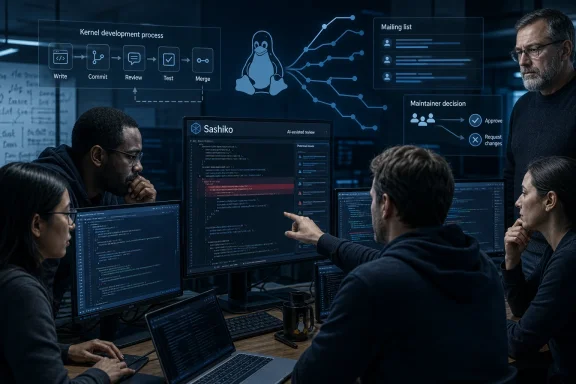
The dispute centered on Sashiko, an agentic review system designed to examine Linux kernel patches submitted through the mailing-list workflow. As reported by Windows Central and corroborated by Ars Technica, the tool comments on proposed changes rather than merging code or making changes itself.
Torvalds’ position is not an order for kernel developers to adopt generative AI. He explicitly said no one is being forced to use it. Instead, he objected to attempts to prevent other contributors from using AI where it helps their work.
His practical argument is that an imperfect review tool can still find real defects. Torvalds acknowledged that AI-generated feedback can increase maintainer workload and expose embarrassing bugs, but argued that the answer is to improve the workflow around the tools rather than prohibit them outright.
That distinction matters. Linux kernel development already relies on a layered review process involving maintainers, automated test systems and human contributors. Sashiko’s role, at least in the current debate, is as another signal in that process—not as an autonomous author or gatekeeper.
Those issues have not disappeared, and Torvalds did not claim AI is reliable enough to replace human judgment. His point was narrower: the kernel should assess tools on technical merit and real results, not adopt a blanket ideological objection to AI.
Torvalds also stressed that the Linux kernel’s purpose is building better technology. The project’s open-source model gives dissenting developers an escape valve that proprietary platforms do not: they can fork the code and maintain a kernel under different rules.
The more meaningful outcome is cultural and procedural. AI-assisted code review now has explicit support from Linux’s top-level maintainer, provided it helps maintainers rather than overwhelms them. Organizations consuming Linux kernels should expect continued experimentation with AI review tooling, while conventional testing, maintainer approval and patch provenance remain essential controls.
For now, Sashiko and similar tools remain review aids, with humans still responsible for deciding what enters the Linux kernel.
The dispute centered on Sashiko, an agentic review system designed to examine Linux kernel patches submitted through the mailing-list workflow. As reported by Windows Central and corroborated by Ars Technica, the tool comments on proposed changes rather than merging code or making changes itself.
 A tool, not a mandate
Torvalds’ position is not an order for kernel developers to adopt generative AI. He explicitly said no one is being forced to use it. Instead, he objected to attempts to prevent other contributors from using AI where it helps their work.His practical argument is that an imperfect review tool can still find real defects. Torvalds acknowledged that AI-generated feedback can increase maintainer workload and expose embarrassing bugs, but argued that the answer is to improve the workflow around the tools rather than prohibit them outright.
That distinction matters. Linux kernel development already relies on a layered review process involving maintainers, automated test systems and human contributors. Sashiko’s role, at least in the current debate, is as another signal in that process—not as an autonomous author or gatekeeper.
Why the argument became heated
The controversy followed discussion of guidance from the Software Freedom Conservancy concerning LLM-backed systems in free and open-source projects. Critics have raised familiar concerns: false positives, low-quality automated reports, opaque model behavior, licensing questions and the risk that AI use shifts review labor onto already-busy maintainers.Those issues have not disappeared, and Torvalds did not claim AI is reliable enough to replace human judgment. His point was narrower: the kernel should assess tools on technical merit and real results, not adopt a blanket ideological objection to AI.
Torvalds also stressed that the Linux kernel’s purpose is building better technology. The project’s open-source model gives dissenting developers an escape valve that proprietary platforms do not: they can fork the code and maintain a kernel under different rules.
What it means for Windows users and admins
There is no immediate change for Windows systems, WSL deployments or Linux-based infrastructure. The kernel has not announced a requirement to use Sashiko, nor a new policy allowing AI-generated patches to bypass normal review.The more meaningful outcome is cultural and procedural. AI-assisted code review now has explicit support from Linux’s top-level maintainer, provided it helps maintainers rather than overwhelms them. Organizations consuming Linux kernels should expect continued experimentation with AI review tooling, while conventional testing, maintainer approval and patch provenance remain essential controls.
For now, Sashiko and similar tools remain review aids, with humans still responsible for deciding what enters the Linux kernel.
References
- Primary source: Windows Central
Published: 2026-07-16T13:02:22+00:00
Linux is not a "social warrior project," says its creator Linus Torvalds as he puts his foot firmly down against anti-AI comments | Windows Central
The father of Linux has had enough of people talking badly about AI and tells people to either fork it or walk away if they have a problem with it.www.windowscentral.com - Related coverage: pcgamer.com
'It's not like natural intelligence is always all that great either': Linus Torvalds addresses anti-AI sentiment in Linux development | PC Gamer
'We make decisions primarily based on technical merit. Not fear of new tools.'www.pcgamer.com - Related coverage: techradar.com
Linus Torvalds says Linux is not "anti-AI", tells haters to 'fork it' and 'just walk away' | TechRadar
Linux isn't a "social warrior" project, Torvalds sayswww.techradar.com - Related coverage: tomshardware.com
Linus Torvalds rebukes anti-AI stances in the Linux kernel code review process, says 'Linux is not one of those anti-AI projects' — creator embraces AI as just a tool and 'clearly a useful one' | Tom's Hardware
The flashpoint was the Sashiko code review tools.www.tomshardware.com - Related coverage: techspot.com
Linus Torvalds tells AI critics to fork Linux or walk away | TechSpot
Torvalds' comments came in response to a discussion about anti-LLM feelings on lore.kernel.org, the official public archive for Linux kernel development mailing lists. He said that while...www.techspot.com - Related coverage: phoronix.com
Linus Torvalds Reaffirms That Linux Is Not "Anti-AI" & Not A "Social Warrior" Project - Phoronix
Overnight Linux creator Linus Torvalds wrote another well crafted message that reaffirms the Linux kernel position of not being against AI and lashing back against some kernel developers that are against AI/LLM usage within the kernel project.www.phoronix.com