

Linux’s moment of plausibility for mainstream PC gaming didn’t arrive as a sudden coup — it emerged from a sequence of engineering wins, commercial signals, and calendar pressure that together made gaming on Linux a realistic choice for far more players than ever before. e we were, and what changed
The raw numbers still favor Windows overwhelmingly, and that matters. Valve’s Steam Hardware & Software Survey for January 2026 shows Windows 11 at 66.71% and Windows 10 at 27.79%, leaving Linux at roughly 3.38% of surveyed Steam users — a small slice of a very large pie, but a slice that represents millions of active players.
Yet market-share snapshots miss the structural shifts under the surface. Three developments changed the calculus for many gamers and developers:
Proton’s 10.x cycle has been a watershed. The official Proton 10 betas and release candidates expanded compatibility significantly and folded in many upstream fixes and improvements from DXVK and VKD3D, while community builds (GE‑Proton) continue to fill gaps and accelerate fixes for specific titles. Coverage from multiple outlets and the Proton changelogs confirm a steady stream of new playable titles and important bug fixes through the 10.x series.
Valve’s Deck Verified program and SteamOS bundling turned compatibility into a product feature: titles get classification badges (Verified, Playable, Unsupported) so consumdence. That user-facing curation reduces churn and friction — you don’t need to parse forum threads to know whether a game “just works” on SteamOS or needs tweaks. This shift from “it might work” to “it is listed to work” is one of the underappreciated reasons Linux is now plausible for many gamers.
Real-world performance
For gamers:
For a growing and commercially meaningful segment of plar fans, indie enthusiasts, handheld-first buyers, and users who prize a lean runtime and privacy — Linux is now a practical and compelling choice. Proton, SteamOS, and the Steam Deck moved Linux from laboratory curiosity to consumer product, and OEM and community signals suggest an ongoing trajectory of improvement.
But for the broadest definition of mainstream — where every triple‑A multiplayer title, every anti‑cheat system, and every enterprise toolchain works identically out of the box — Linux is not yet the safest single answer. Windows remains the dominant, lower‑risk platform for maximal compatibility. The remaining gating factor is increasingly commercial, not purely technical: will publishers and anti‑cheat vendors consistently opt into Proton flows and validate their titles on the SteamOS baainstream parity will accelerate. If they don’t, Linux will remain a robust second platform for many use cases rather than the default for all.
For gamers contemplating the move: test priority titles on ProtonDB and the Deck Verified list, confirm anti‑cheat status for your multiplayer favorites, and be prepared to use community tooling or GE builds for edge cases. For developers and vendors: adding Proton to CI and starting early conversations with anti‑cheat providers is pragmatic insurance — it reduces friction for an expanding user base and opens a growing market that’s no longer hypothetical.
The story of Linux gaming in 2026 is not a single triumph; it’s an ecosystem in motion. That motion now has momentum — enough that treating Linux as a second mainstream platform is not only reasonable, it’s increasingly necessary for developers, OEMs, and savvy gamers who want to be prepared for a plural OS future.
Source:** Outlook Respawn Linux vs Windows: A PC Gaming Inflection Point
The raw numbers still favor Windows overwhelmingly, and that matters. Valve’s Steam Hardware & Software Survey for January 2026 shows Windows 11 at 66.71% and Windows 10 at 27.79%, leaving Linux at roughly 3.38% of surveyed Steam users — a small slice of a very large pie, but a slice that represents millions of active players.
Yet market-share snapshots miss the structural shifts under the surface. Three developments changed the calculus for many gamers and developers:
- Valve’s sustained investment in Proton and its related translation layers (DXVK, VKD3D-Proton).
- The Steam Deck shipping at scale and normalizing Linux as a consumer gaming OS.
- External pressures — notably Windows 10’s end of free support on October 14, 2025 — that nudged systems and decision-makers tos.
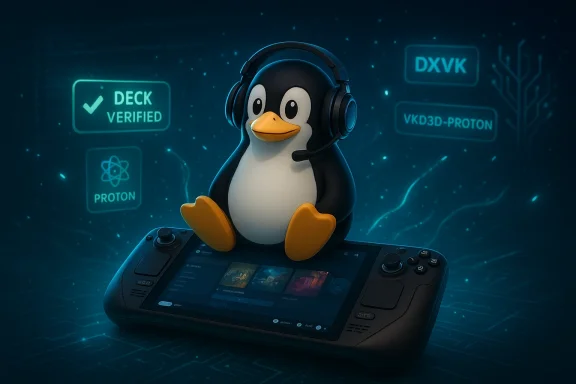 The technology that made the moment possible
Proton, DXVK, VKD3D — translation at scale
At the technical heart of Linux’s gaming renaissance is Proton, Valve’s compatibility layer built on the Wine project and augmented with DXVK (Direct3D 9/10/11 → Vulkan) and VKD3D‑Proton (Direct3D 12 → Vulkan). Rather than forcing native ports, Proton translates Windows API calls to Vulkan in real time so many Windows games can run on Linux with minimal user involvement. This engineering approach changedon from “can Linux run my games?” to “what would it take to live without Windows?” — and for many players the answer is shrinking.Proton’s 10.x cycle has been a watershed. The official Proton 10 betas and release candidates expanded compatibility significantly and folded in many upstream fixes and improvements from DXVK and VKD3D, while community builds (GE‑Proton) continue to fill gaps and accelerate fixes for specific titles. Coverage from multiple outlets and the Proton changelogs confirm a steady stream of new playable titles and important bug fixes through the 10.x series.
Why Vulkan and modern open drivers matter
Vulkan provides a stable, cross‑vendor graphics API that maps well to modern GPUs and is easier to translate to than older, proprietary Windows-only stacks. Combined with improved open-source drivers (Mesa/RADV for AMD, ongoing work on Intel and better support for NVIDIA’s Vulkan path), the stack delivers strong performance in a broad set of scenarios, especially where thermal or power ceilings limit peak CPU/GPU draw. Community and independent lab tests s matching or exceeding Windows in frame-time consistency, particularly on constrained handheld or low‑TDP systems. Those gains often come from fewer background services, a leaner runtime, and more predictable shader compilation behavior.The Steam Deck effect: hardware made the software credible
The Steam Deck did something that a decade of blog posts and hobbyist distros could not: it provided a polished, supported Linux device that mainstream consumers purchased to play games — not to “experiment with a distro.” Valve’s messaging that the Deck has sold “multiple millions” underscored that it was a commercially relevant product, even as independent analyst estimates place the installed base in the low‑millions. Those sales and the Deck’s widespread adoption elevated SteamOS/Proton from a niche engineering curiosity to a platform that publishers and middleware vendors had to reckon with.Valve’s Deck Verified program and SteamOS bundling turned compatibility into a product feature: titles get classification badges (Verified, Playable, Unsupported) so consumdence. That user-facing curation reduces churn and friction — you don’t need to parse forum threads to know whether a game “just works” on SteamOS or needs tweaks. This shift from “it might work” to “it is listed to work” is one of the underappreciated reasons Linux is now plausible for many gamers.
Real-world performance roducibility
Where Linux shines
- Thermally constrained devices: Community benchmarks repeatedly show Linux delivering steadier frame-times and fewer 1% lows on handheld and mid‑TDP devices — the Steam Deck is the canonical example where a lean OS and tuned stack matter.
- Single‑player and indie titles: These tend to be easier to run under Proton, and many indie developers have shipped Deck Verified badges without major changes.
- Software stack improvements: The maturation of VKD3D‑Proton and DXVK, plus frequent Proton releases, mean fewer launch regressions and more consistent support for DX11/DX12 features than would have been realistic a few years ago.
Where Windows still wins
- Largest live‑service multiplayer titles: Many of the most-played online games remain Windows‑first due to complex anti-cheat demands and platform-specific tooling.veloper toolchains*: Build systems, telemetry, profiling, and middleware often presume Windows; large studios are cost‑sensitive to the idea of validating a full Linux build pipeline.
- Edge cases and regressions: Performance and compatibility gains are often conditional on very specific kernel, Mesa, firmware, and driver combinations. What works well on one machine or Deck image may fail on another.
The anti‑cheat gate: progress, ambiguity, and publisher decisions
Anti‑cheat systems are the most consequential single blocker for full mainstream parity. The situation is now technical and commercial at once: the major anti‑cheat providers have made meaningful technical progress toward Linux/Proton support, but publishers must opt in and validate their ecosystems.- BattlEye made early integration work straightforward, and Valve signaled that developers can enable BattlEye on Proton with communication to the vendor; several titles followed suit. Yet adoption across publishers is inconsistent, and high‑profile cases (e.g., GTA Online’s compatibility problems after an anti‑cheat update) illustrate that opt‑in is not universal.
- Easy Anti‑Cheat (EAC) has been a focal point of progress. Valve and Epic have publicly moved to enable EAC on Steam Deck/Proton flows; Epic’s EAC work to support ARM and Linux hardware further lowers barriers. Still, many studios are cautiouevelopers — citing exploit vectors and resource trade-offs — have explicitly declined to support Linux/Proton for their titles.
Ecosystem signals: publishers, OEMs, and tooling
Several vendors and OEMs are sending practical signals that Linux gaming is moving from fringe to mainstream:- OEMs shipping SteamOS variants of handhelds and producing “Powered by SteamOS” devices indicate Vproduct roadmaps rather than being an experimental add‑on.
- ProtonDB, Deck Verified, and Valve’s Steam Survey are transparent metrics that developers can reasonably scan to prioritize fixes and ports.
- Community distributions and curated images (e.g., gaming-focused distros) lower the entry bar for users who want Desktop Linux for gaming. These images package kernel/mesa/firmware combinations known to work well with Proton and often include practical tweaks for shader caching and runtime stability.
Practical guidance: when Linux makes sense — and when it doesn’t
If you’re considering Linux for gaming, weigh the trade-offs clinically.For gamers:
- Check your library on ProtonDB and the Deck Verified listing before switching.
- Expect most single‑player and indie/mid‑tier titles to run well; verify anti‑cheat support for multiplayer games first.
- Use verified Proton releases or the Proton Experimental branch when necessary — community GE buildses but carry maintenance overhead.
- Add Proton and SteamOS to CI: automated testing under Proton is increasingly straightforward and catches regressions before release.
- Engage anti‑cheat vendors early if your game depends on secure online play; delaying that coform fragmentation.
- Publish compatibility notes and Deck Verified results — transparency reduces support costs and increases buyer confidence.
- SteamOS can lower licensing costs and simplify maintenance for single‑player and local multiplayer deployments. Confirm multiplayer/anti‑cheat coverage up front and maintain a narrow hardware‑software stack for predictable stability.
Strengths, risks, and the realistic timelines for mainstream adoption
Strengths
- Compatibility engineering is real: Proton 10.x and community builds have widened the set of playable titles considerably.
- A shipping consumer device matters: The Steam Deck created a user base and telemetry that developers cannot ignore; it is a credible commercial signal that Linux gaming is worth investment.
- Performance parity is achievable: In many representative workloads — espstrained ones — Linux matches or exceeds Windows in frame-time stability.
Risks and caveats
- Anti‑cheat governance remains the largest single blocker for many multiplayer franchises. While EAC and BattlEye have made tblisher opt‑in is uneven and sometimes resisted for legitimate integrity concerns.
- Hardware-driver volatility: The open‑source driver stack evolves quickly, and regressions can appear with kernel or Mesa changes; stable, enterprise‑grade rollouts require vendors to commit to long‑term maintenance of specific stacks.
- Developer inertia and tooling gaps: Many build systems, telemetry tools, and middleware are Windows-first; converting large studios’ pipelines requires time and money. That inertia is real and will slow some transitions.
Timelines and the “last mile” problem
Linux’s path to being a true second mainstream platform depends less on a single technical breakthrough and more on repeated, incremental commercial choices:- If major publishers consistently enable EAC/BattlEye for Proton flows, the game catalog for competitive multiplayer will expand rapidly.
- Continued Proton and VKD3D improvements (shader backends, FSR/anti‑lag support, better RT fallbacks) will reduce platform-specific visual/functional regressions.
- OEMs shipping validated SteamOS hardware and publishing clear support matrices will lower consumer friction.
Case studies: how the ecosystem changed for specific titles
- Single‑player AAA and indie hits: Many modern single‑player titles have moved from “launch-with-workarounds” to “Deck Verified” as Proton matured, sometimes without developer patches — an example of compatibility-layer wins paying off. Proton 10 releases have been responsible for enabling several high‑profile additions to the Deck Verified list.
- Live‑service multiplayer: Titles that rely heavily on anti‑cheat remain the most visible counterexamples. Developer choices — not purely technical impossibility — keep some games unsupported. A high‑visibility example is Rockstar’s handling of BattlEye for GTA Online on Steam Deck, which left online play blocked until publisher action.
- Community and GE builds: Where official Proton releases lag, community builds like GE‑Proton frequently fill the gap, offering fixes for media, controller, or launch issues. That community patchwork is powerful but increases testing burden for users who want a frictionless experience.
Conclusion: ready is a spectrum, not a binary
Is Linux “finally ready” for mainstream PC gaming? The honest answer is: it depends on what you mean by “mainstream.”For a growing and commercially meaningful segment of plar fans, indie enthusiasts, handheld-first buyers, and users who prize a lean runtime and privacy — Linux is now a practical and compelling choice. Proton, SteamOS, and the Steam Deck moved Linux from laboratory curiosity to consumer product, and OEM and community signals suggest an ongoing trajectory of improvement.
But for the broadest definition of mainstream — where every triple‑A multiplayer title, every anti‑cheat system, and every enterprise toolchain works identically out of the box — Linux is not yet the safest single answer. Windows remains the dominant, lower‑risk platform for maximal compatibility. The remaining gating factor is increasingly commercial, not purely technical: will publishers and anti‑cheat vendors consistently opt into Proton flows and validate their titles on the SteamOS baainstream parity will accelerate. If they don’t, Linux will remain a robust second platform for many use cases rather than the default for all.
For gamers contemplating the move: test priority titles on ProtonDB and the Deck Verified list, confirm anti‑cheat status for your multiplayer favorites, and be prepared to use community tooling or GE builds for edge cases. For developers and vendors: adding Proton to CI and starting early conversations with anti‑cheat providers is pragmatic insurance — it reduces friction for an expanding user base and opens a growing market that’s no longer hypothetical.
The story of Linux gaming in 2026 is not a single triumph; it’s an ecosystem in motion. That motion now has momentum — enough that treating Linux as a second mainstream platform is not only reasonable, it’s increasingly necessary for developers, OEMs, and savvy gamers who want to be prepared for a plural OS future.
Source:** Outlook Respawn Linux vs Windows: A PC Gaming Inflection Point
