LTIMindtree Deepens Microsoft Alliance to Accelerate Azure AI Adoption

  • Thread Author
LTIMindtree has formally expanded its global collaboration with Microsoft, positioning itself as a deeper Global System Integrator (GSI) for Azure and promising to accelerate enterprise adoption of Microsoft Azure, Azure OpenAI (via Microsoft Foundry), Microsoft 365 Copilot, and Microsoft Fabric while embedding a full Microsoft security stack into customer programs to drive AI-powered business transformation.

Blue-lit data center featuring Azure OneLake with LTIMindtree and Microsoft logos.Background / Overview​

LTIMindtree, the combined entity formed from L&T Infotech (LTI) and Mindtree, has sharpened its Microsoft-focused go-to-market and delivery model over the past three years. The new announcement formalizes a 360° alignment with Microsoft — from co-sell and marketplace plays to a dedicated Microsoft Business Unit and a Microsoft Cloud Generative AI Center of Excellence — with the explicit aim of moving customers “from pilots to productivity.” This is not a narrow product tie-up. LTIMindtree’s messaging and Microsoft’s customer case materials show the strategy spans:
  • Cloud migration and modernization accelerators that reduce lift-and-shift friction.
  • Data modernization using Microsoft Fabric and OneLake as the unified data plane feeding AI systems.
  • Production-scale AI using Azure OpenAI in Microsoft Foundry and Copilot integration into business workflows.
  • A security-first operations model built on Defender XDR, Microsoft Sentinel, Intune, Windows Autopatch, and Entra ID.
The company specifically highlights tools and commercial levers such as Microsoft Azure Consumption Commitment (MACC/MAAC) to optimize cloud economics, and says it will productize Copilot adoption programs and Fabric Real‑Time Intelligence offerings for customers.

What the announcement actually says​

Core commitments summarized​

  • A formal Microsoft Business Unit inside LTIMindtree to coordinate joint GTM, co-sell and delivery across Azure and Microsoft 365 stacks.
  • A Microsoft Cloud Generative AI Center of Excellence (GenAI CoE) to prototype, govern and scale enterprise-grade generative AI solutions.
  • Adoption and integration of Azure OpenAI (via Microsoft Foundry), Microsoft 365 Copilot, and Microsoft Fabric in LTIMindtree IP and client delivery.
  • A security-first posture with deployment of Defender XDR, Sentinel, Intune, Windows Autopatch and Entra ID across internal endpoints and as a customer blueprint.
  • Commercial mechanisms to accelerate consumption and reduce procurement friction — notably Microsoft Azure Consumption Commitment (MACC) alignment and marketplace listings.

Executive signal​

LTIMindtree’s CEO framed the collaboration as a mission to “embed AI into every business process” and accelerate time‑to‑value; Microsoft’s GSI leadership publicly endorsed the alignment as a move toward responsible, scaled AI adoption. These executive quotes are included in the public release and repeated in company and industry coverage.

Why this matters: market and technical context​

Azure as the enterprise AI substrate​

Microsoft has purposefully reoriented Azure toward AI-first workloads over the last 18–24 months, introducing Foundry as a model+governance control plane, expanding Azure OpenAI availability, and embedding Copilot into the productivity fabric of Microsoft 365. For systems integrators, a deep alignment with Microsoft now provides not only engineering resources but direct commercial levers: co‑sell programs, marketplace distribution and consumption‑backed financing. LTIMindtree is explicitly exploiting those levers.

Practical differentiators for customers​

  • Prebuilt vertical accelerators and delivery IP shorten pilot cycles and reduce integration risk.
  • A unified data plane (Microsoft Fabric + OneLake) gives a single source of truth for retrieval‑augmented generation (RAG) pipelines and Copilot grounding.
  • A packaged security baseline, if implemented correctly, reduces one of the largest adoption barriers — trust and governance.
These practical mechanics matter: the hard work of industrializing LLMs is rarely model selection alone — it is data plumbing, governance, monitoring, and runbook automation. A GSI that couples domain accelerators with cloud platform controls can reduce friction for IT buyers — but only if delivery quality and contract terms align with customer expectations.

Technical analysis: how LTIMindtree plans to build enterprise AI​

Architecture patterns signaled in the announcement​

  • Data foundation: Microsoft Fabric / OneLake as the canonical data store for both analytics and model grounding.
  • Retrieval and indexing: Azure Cognitive Search or Fabric-backed vector/semantic indexes to power RAG pipelines.
  • Model hosting and governance: Azure OpenAI runtimes surfaced through Microsoft Foundry’s control plane to centralize model choice, routing, and observability.
  • Inference and scale: Containerized microservices on AKS or managed inference for custom workloads, with GPU-backed nodes as needed.
  • Productivity integration: Microsoft 365 Copilot and Copilot Studio to create business-facing copilots inside Word/Excel/Teams and declarative agents connected to organization data.

Operational controls and MLOps​

The announcement emphasizes governance-first Copilot rollouts and a security-first stack. These are essential for production reliability:
  • Identity and access control (Entra ID) for data and model access.
  • Centralized telemetry ingestion into Sentinel and Defender for automated playbooks.
  • Endpoint management (Intune and Windows Autopatch) to limit the attack surface and control data exfiltration.
Taken together, these components form a plausible enterprise LLM deployment blueprint — but success is contingent on implementation discipline across data quality, observability, and escalation playbooks.

Security and governance: strengths and gaps​

Strengths​

  • LTIMindtree has publicly documented large-scale endpoint consolidation and modern workplace deployments — notably the migration of more than 85,000 endpoints across 40 countries using Intune, Autopatch and Autopilot — evidence of execution capability on identity and endpoint hardening. That operational experience provides a credible foundation for secure Copilot and LLM rollouts.
  • Integration of Microsoft Copilot for Security and Sentinel in its SOC demonstrates practical benefits: faster triage and automated response playbooks that can reduce time-to-detect and respond for incidents.

Risks and caution points​

  • Vendor concentration: embedding Copilot, Foundry/ Azure OpenAI, Fabric and the entire Microsoft security stack creates strong platform lock-in. That can simplify engineering and procurement in the short term but reduces vendor portability and negotiating leverage over time.
  • Cost visibility for LLM workloads: compute, inference and storage (for vector indexes and OneLake) can balloon unexpectedly; consumption commitments (MACC) help with discounts but can expose customers to overcommitment risk if usage patterns are optimistic. Microsoft documentation outlines MAAC mechanics and eligibility, and customers must model consumption carefully.
  • Governance at scale: a governance-first rollout is necessary but not sufficient. Enterprises need auditable data lineage, red-team testing of model outputs, prompt provenance, and external compliance attestations for regulated workloads.

Verification and transparency​

Several claims in the press release are verifiable (endpoint migration, internal Copilot adoption and Sentinel/Defender integration) through Microsoft customer stories and independent coverage; other claims — for example being a “featured partner” for Fabric Real‑Time Intelligence — appear in the company release and syndicated news articles but lack a clear, independently verifiable entry in publicly browsable Microsoft partner directories at this time. That designation should be considered a company-declared claim until confirmed by Microsoft’s official partner listing.

Commercial implications and procurement mechanics​

Azure Consumption Commitment (MACC) use​

LTIMindtree lists Microsoft Azure Consumption Commitment (MAAC) as a lever to optimize costs and underwrite migration work. MACC lets organizations commit to a specified Azure spend over time and gain marketplace and partner benefits, but it is a contract that must be modeled precisely:
  • Define baseline and peak usage and tie commitments to observable KPIs.
  • Ensure marketplace purchases are routed through eligible billing flows so they count toward the commitment.
  • Include termination and repricing clauses linked to realistic utilization forecasts.

When the GSI model helps — and when it doesn’t​

  • Helps: end-to-end accountability for migrations, security hardening, and binding Copilot/LLM programs to operational SLAs.
  • Doesn’t help: when customers require portability across clouds or prefer a multi-cloud model to avoid lock-in; or when customers need bespoke open-source model hosting outside Microsoft’s managed ecosystem.
Procurement teams should demand:
  • Clear cost models for inference, storage and search (vector ops).
  • Outcome-based milestones with partial outcome‑linked payments.
  • Auditability of data lineage and independent security attestation.

Execution challenges and what enterprise buyers should insist on​

Common execution traps​

  • Treating PoCs as production: many pilots fail because monitoring, cost controls, and governance are only applied at production scale.
  • Ignoring data transformation work: Fabric automation can help, but the hard work of aligning schema, cleaning histories, and building semantic indexes is project-intensive.
  • Underestimating latency and availability SLAs for retrieval pathways feeding LLMs.

Practical procurement and delivery checklist (recommended)​

  • Require a staged delivery roadmap: discovery → pilot (governed) → incrementally expanded production lanes with defined KPIs.
  • Contractualize cost ceilings and consumption reporting cadence for MACC programs.
  • Ask for independent security verification and runbook access (e.g., red-team reports, model output sampling).
  • Insist on portability clauses for critical components — exportable vector indexes and data extracts to avoid entrapment.
  • Demand training and transfer of runbook ownership to internal teams for long-term operability.

Competitive landscape and strategic positioning​

LTIMindtree’s move is consistent with a larger industry pattern: major GSIs are aligning closely with hyperscalers to provide turnkey AI solutions. This is a defensive and offensive strategy: defense, because customers value a single accountable integrator; offense, because GSIs capture much of the professional services margin and can accelerate sales via co-sell incentives.
Key competitive dynamics:
  • Other MS‑aligned GSIs are also promoting Fabric, Foundry and copilot accelerators; customers will evaluate delivery credibility and vertical IP (domain expertise), not just partner badges.
  • For companies that demand multi-cloud flexibility, specialist cloud‑agnostic integrators or boutique AI firms offering open‑model hosting remain relevant alternatives.

Strengths, weaknesses and the real test​

Notable strengths​

  • Operational proofs exist: LTIMindtree’s Intune/Autopatch consolidation (85k endpoints) and Sentinel/Defender integrations are referenced in Microsoft customer stories and show real field experience.
  • Broad, productized offers: the combination of migration factories, Copilot adoption packages, and Fabric-focused data modernization reduces vendor friction for enterprise buyers.
  • Security-first narrative: integrating a consolidated Microsoft security stack and Security Copilot can materially improve SOC throughput if executed properly.

Potential weaknesses and open questions​

  • The Fabric Real‑Time Intelligence “featured partner” claim requires independent confirmation from Microsoft’s partner directories; press releases and syndicated articles alone are insufficient validation. Treat this as a vendor‑declared achievement until verified.
  • Execution scale: promises of 170+ distinct services and accelerated Azure consumption are strategic targets — not automatically outcomes. Buyers should insist on measurable, phased delivery tied to KPIs and refunds/escrow for performance misses.
  • Cost and governance risk remains high for LLM workloads; the commercial benefits of MAAC need to be traded off against the risk of overcommitment and mobility loss.

Field guide for IT leaders evaluating LTIMindtree + Microsoft offers​

  • Validate references: ask for verifiable case studies (with redacted technical artifacts) that show Fabric ingestion, vector search throughput, and latency SLAs.
  • Test the GenAI CoE: require a short, governed pilot with data residency, model selection and MLOps outputs as deliverables.
  • Demand clear cost simulations for one, three and twelve months of production at target scale (token volumes, search QPS, storage growth).
  • Ask for a security runbook: how Sentinel playbooks, Defender automation, and Entra conditional access connect to Copilot usage logs and DLP controls.
  • Negotiate MACC conservatively: use phased commitments with the option to pause or reallocate consumption to avoid stranded spend.

Conclusion​

LTIMindtree’s expanded collaboration with Microsoft is a concrete example of how systems integrators are reorganizing around hyperscaler AI platforms to help enterprise customers move from experimental pilots to operational AI. The announcement ties together Microsoft’s largest enterprise building blocks — Foundry/Azure OpenAI, Microsoft 365 Copilot and Fabric — with LTIMindtree’s delivery IP, security-first references and commercial levers such as MACC. When executed with discipline, that combination can materially speed time-to-value for enterprise AI programs and reduce integration risk. However, the promise is not automatic. Buyers must demand independent verification of partner credentials (especially partner‑directory designations), insist on auditable KPIs and flexible consumption terms, and treat governance, portability and cost control as first‑class contractual requirements. Without those safeguards, the very strengths that make a hyperscaler partnership attractive — integrated tooling, co-sell economics and deep platform features — can become strategic constraints.
Enterprises that pair disciplined procurement, staged technical pilots, and rigorous governance will find the LTIMindtree–Microsoft pathway a compelling route to scale AI. Those that accept marketing claims without contractual and technical guardrails risk unexpected cost inflation, audit exposure and reduced strategic flexibility.

Source: Business Wire India LTIMindtree Strengthens Relationship with Microsoft to Accelerate Microsoft Azure Adoption and Drive AI-Powered Transformation
 

LTIMindtree has formally deepened its global collaboration with Microsoft to accelerate enterprise adoption of Microsoft Azure and scale AI-powered transformation — a move that packages Azure OpenAI (via Microsoft Foundry), Microsoft 365 Copilot, Microsoft Fabric and a full Microsoft security stack into transactable migration, governance and productivity offers intended to move customers from pilots into production at scale.

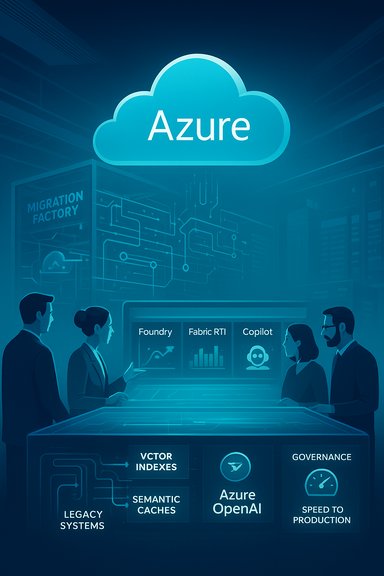
Azure cloud platform powering a futuristic data factory with OpenAI and governance.Background​

LTIMindtree, the combined entity formed from L&T Infotech (LTI) and Mindtree, has for several years maintained a tight partnership with Microsoft across cloud, workplace and data domains. The company’s recent announcement formalizes a dedicated Microsoft-facing business unit, a Microsoft Cloud Generative AI Center of Excellence and a set of productized GTM (go‑to‑market) offers that lean on Microsoft’s latest enterprise AI and data platform capabilities. The public messaging explicitly highlights use of Azure OpenAI through Microsoft Foundry, Microsoft 365 Copilot, Microsoft Fabric and full-stack security components (Defender XDR, Sentinel, Intune, Windows Autopatch and Entra ID) as the technical backbone of these offerings. The announcement is consistent with a broader market dynamic: hyperscalers and Global System Integrators (GSIs) increasingly pair platform-level model hosting and governance with industry domain IP and migration factories to convert enterprise AI interest into measurable business outcomes. LTIMindtree positions itself as a “360° Microsoft partner” — acting as vendor, implementer and customer — and points to internal adoption of the same Microsoft stack as operational proof points to sell to clients.

What the expanded LTIMindtree–Microsoft collaboration actually includes​

Core technology pillars​

  • Azure OpenAI via Microsoft Foundry — LTIMindtree says it will build domain copilots and agentic applications using Azure OpenAI models surfaced and governed through Microsoft Foundry’s model catalog, routing and governance controls. This pattern follows standard enterprise LLM design: ingest enterprise data, create semantic/vector indexes, ground model inference with governed datasets and route inference via managed Azure-hosted models.
  • Microsoft 365 Copilot adoption — The partnership includes packaged Copilot adoption programs that emphasize a governance-first rollout: staged pilots, DLP and Entra‑based access controls, red‑team testing and progressive integration into business processes (sales enablement, legal, HR, service desks). LTIMindtree cites its own internal Copilot deployment as a practical reference for customers.
  • Microsoft Fabric and Fabric Real-Time Intelligence — Fabric is positioned as the unified data plane (OneLake) that feeds copilots and analytics. Microsoft’s Fabric Real‑Time Intelligence (RTI) capabilities are being referenced as the foundation for event-driven, low‑latency analytics that can feed inference and operational decisioning. LTIMindtree has been named a featured partner for Fabric Real‑Time Intelligence in partner materials.
  • Security and identity stack — LTIMindtree has publicly said it has deployed the full Microsoft security suite internally: Defender XDR, Microsoft Sentinel, Intune, Windows Autopatch and Entra ID. The company reports ingesting extensive telemetry on a monthly basis to enable automated threat detection and response across hybrid and multi‑cloud estates — a template it intends to replicate for clients.

Commercial mechanics and customer levers​

LTIMindtree emphasizes commercial instruments that matter to enterprise procurement and finance:
  • Microsoft Azure Consumption Commitment (MAAC) advisory and acceleration — packages that help customers optimize committed spend, unlock joint funding and structure consumption-based migration economics.
  • Co‑sell motions and marketplace transactable offers — productized accelerators and marketplace listings to shorten procurement cycles and standardize delivery across accounts.
  • Delivery IP and accelerators — LTIMindtree ties this Microsoft stack to its own product IP (Canvas.AI, BlueVerse, Cloud Accelerate Factory and vertical accelerators) to accelerate deployment timelines and reduce custom engineering burden.

Why this matters for enterprise IT buyers​

Enterprises deciding where to host and operationalize AI must weigh speed, governance, cost and strategic vendor relationships. The LTIMindtree–Microsoft playbook addresses four immediate buyer concerns:
  • Speed to production: Pre‑built accelerators, migration factories and co‑engineered offers reduce the technical lift from PoC to production. LTIMindtree frames this as moving enterprises “from pilots to productivity.”
  • Governance and security: Integrating Copilot, Azure OpenAI and Fabric with a standard Microsoft security posture can simplify compliance and auditable controls — provided the implementation rigor is enforced. LTIMindtree’s internal deployment of the Microsoft security suite serves as a practical reference point in its messaging.
  • Cost predictability and commercial funding: MAAC-style consumption commitments and co‑sell funding help enterprises plan budgets for large-scale AI and cloud projects, though they also require disciplined forecasting.
  • Domain expertise + platform scale: For regulated verticals (financial services, healthcare, manufacturing), pairing domain IP with Microsoft’s enterprise-grade platform addresses integration complexity and risk tolerance for production-grade AI. LTIMindtree’s vertical accelerators are meant to be the differentiator here.

LTIMindtree’s internal proof points and leadership signals​

LTIMindtree publicly points to internal adoption of Microsoft technologies as an operational testament to the partnership’s viability:
  • The company has rolled out Microsoft 365 Copilot across internal workflows under a governance-first process designed to accelerate decision-making and improve productivity.
  • It reports deploying the full Microsoft Security stack (Defender XDR, Sentinel, Intune, Windows Autopatch, Entra ID) across multiple endpoints and ingesting security telemetry monthly for automated threat response. This internal “client zero” posture is a recurring claim in the company’s messaging.
  • LTIMindtree states it serves more than 700 clients globally and employs 86,000+ professionals across 40+ countries — figures used to demonstrate delivery scale and staffing capacity for large Azure programs. Independent filings and corporate profiles corroborate the headcount and client footprint as foundational context for the company’s market positioning.
Those internal investments matter commercially: enterprises often prefer partners that have “eaten their own dogfood” as it reduces uncertainty about operational complexity when rolling out similar solutions.

Strengths and immediate opportunities​

  • Integrated stack reduces integration cost: Packaging Fabric (data), Azure OpenAI (models), Copilot (productivity) and Microsoft security as a single pathway addresses the most common friction points in enterprise AI projects: data plumbing, model governance and secure deployment. This integrated approach has pragmatic benefits for teams that lack internal cloud‑to‑AI engineering depth.
  • Co‑sell economics and commitment models: LTIMindtree’s focus on MAAC optimization and marketplace offers provides customers with structured funding and a clearer procurement path for substantial Azure consumption, lowering the barrier to enterprise-scale migrations.
  • Operational proof via internal adoption: Publicized internal use of Microsoft Copilot and the security suite allows LTIMindtree to demonstrate real usage patterns, governance playbooks and measurable productivity experiments as part of their client engagements.
  • Domain accelerators and delivery IP: LTIMindtree’s Canvas.AI and BlueVerse IP aim to cut time-to-value for vertical use cases, which can be decisive for buyers who need repeatable deployments rather than one-off PoCs.

Risks, caveats and what enterprises must watch for​

The promise of a tightly integrated Microsoft-centric path is compelling, but the tradeoffs and operational risks must be acknowledged and contractually mitigated.

Vendor concentration and portability risk​

Relying heavily on a single cloud and model/agent control plane — Azure + Microsoft Foundry + Copilot + Fabric — creates concentration risk. If future strategic priorities require multi-cloud flexibility or alternative model providers, migration can be costly. Contracts should include exit clauses, data portability guarantees and a clear roadmap for multi‑model support.

Consumption and cost unpredictability​

MAAC and consumption-based commitments smooth procurement but transfer forecasting risk to the customer. Overestimates of consumption can lead to stranded commitments. Conversely, variable model and inference costs can spike total cost of ownership if not monitored and controlled. Procurement teams must demand transparent cost modeling, usage baselines and contractual protections (caps, periodic true-ups).

Governance complexity and regulatory scrutiny​

Embedding generative AI into business processes increases regulatory and compliance scrutiny around data residency, privacy, output validation and explainability. Governance-first rollouts reduce exposures, but buyers must verify that red‑teaming, logging, audit trails and human-in-the-loop controls are part of every SLA. Ask for explicit attestations on model lineage, prompt logs and mitigation playbooks.

Operational maturity & SLAs for agentic systems​

Agentic workflows and copilots introduce new failure modes (hallucinations, unintended actions, automation drift). Production-grade SLAs must cover model availability, latency for inference, rollback processes and incident response for AI-caused business errors. Design rules should enforce limited agent authority and clear human override boundaries.

Practical advice for IT and procurement teams evaluating offers like this​

  • Treat early proofs as procurement milestones. Require staged pilots with explicit KPIs (time saved, accuracy, automation rate) before committing to MAACs or multi‑year consumption deals.
  • Insist on runbook-level governance. Require red-team results, DLP mappings, prompt logging, and evidence of staged Copilot governance (pilot → controlled rollout → enterprise scale).
  • Quantify total cost of model inference. Ask for expected inference cost models at scale, include worst-case consumption scenarios, and negotiate protective contractual terms (caps, adjustable bands, outcome‑linked payments).
  • Verify partner credentials and featured statuses. When a partner claims “featured partner” or a specialized status for product capabilities (e.g., Fabric Real‑Time Intelligence), get written confirmation and a description of what that designation means in practice (support commitments, co‑engineering, access to product teams).
  • Map data residency and sovereignty requirements explicitly. For regulated industries, require that sensitive records used for model grounding remain in the customer’s tenancy or a contractually enforced secure enclave.
  • Design for portability. Require modular architecture with well-documented data exports and model abstraction layers so that future model or cloud shifts are feasible without rewriting core business logic.

How LTIMindtree’s announcement fits into the larger Microsoft ecosystem​

Microsoft has been actively evolving its enterprise AI fabric: Foundry as a model governance and application control plane, Fabric as a unified data layer, and Copilot as the primary productivity surface. For partners such as LTIMindtree, the market opportunity lies in combining enterprise domain knowledge with Microsoft’s managed AI capabilities to reduce integration friction and accelerate adoption. Industry analysts and partner ecosystems view this as a natural — if strategically concentrated — path to industrialize AI in regulated enterprise environments. LTIMindtree’s public positioning as a GSI and its use of internal Microsoft technologies allow it to claim both technical readiness and operational experience when presenting to prospective customers.

Bottom line: pragmatic promise, conditional on disciplined execution​

LTIMindtree’s expanded alliance with Microsoft is a pragmatic, well‑packaged attempt to turn the promise of enterprise AI into repeatable, auditable outcomes by using:
  • Azure as the infrastructure and model host,
  • Microsoft Foundry as the governance and model routing plane,
  • Microsoft Fabric as the unified data fabric,
  • Microsoft 365 Copilot as the productivity surface, and
  • Microsoft security + identity tools as the operational guardrails.
The combination reduces end‑to‑end integration risk and offers meaningful commercial levers (MAAC, co‑sell) that can accelerate adoption, especially for customers that already favor Microsoft in their stack. However, successful outcomes will depend on disciplined procurement, clear KPIs, rigorous governance, and contractual protections against cost and portability exposures. LTIMindtree’s internal deployments and declared scale (700+ clients, 86,000+ employees) strengthen its credibility as a delivery partner, but buyers should validate claims, insist on runbooks and pilot metrics, and preserve strategic flexibility in their contracts.

Conclusion​

The LTIMindtree–Microsoft expansion is a high‑signal development in the race to operationalize enterprise AI on Azure. It packages the critical building blocks enterprises need — data, models, productivity copilots and security — into transactable offerings designed to accelerate migration, cut engineering friction and scale AI across business processes. For IT leaders, the announcement is both an enabler and a reminder: the tools to deliver business value now exist at scale, but so do the governance, cost and vendor concentration challenges. Enterprising buyers who insist on measurable pilots, transparent cost models, contractual portability and auditable governance will be best placed to convert this partnership’s promise into sustained competitive advantage.
Source: India Infoline LTIMindtree Expands Microsoft Partnership to Accelerate Azure Adoption and AI Transformation | India Infoline
 

LTIMindtree has formally expanded its global alliance with Microsoft to accelerate enterprise adoption of Microsoft Azure and to embed Microsoft’s generative AI stack—Azure OpenAI (via Microsoft Foundry), Microsoft Fabric and Microsoft 365 Copilot—across customer environments, with a packaged go-to-market, security baseline and migration accelerators designed to move organizations “from pilots to productivity.”

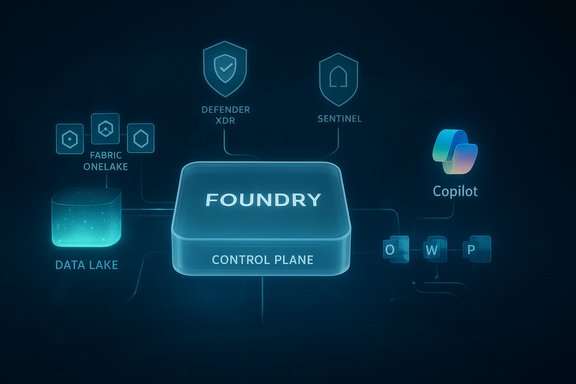
A futuristic diagram of Foundry control plane linking Data Lake, Fabric OneLake, Defender XDR, Sentinel, and Copilot.Background​

LTIMindtree is the combined organization formed from L&T Infotech (LTI) and Mindtree and has been positioning itself as a Microsoft‑centric Global System Integrator (GSI). The company’s refreshed announcement formalizes a dedicated Microsoft Business Unit, a Microsoft Cloud Generative AI Center of Excellence, and a set of transactable, Azure‑native offerings aimed at shortening cloud migration cycles and industrializing generative AI across industries.
Microsoft, for its part, has continued to shape Azure around data + AI + governance primitives—introducing Microsoft Foundry as an enterprise control plane for models and agents, expanding Azure OpenAI availability, integrating Copilot into Microsoft 365, and promoting Microsoft Fabric/OneLake as the unified data plane for analytics and AI. LTIMindtree’s announcement explicitly maps its customer programs to these Microsoft building blocks.

What LTIMindtree and Microsoft are promising​

Core commitments and messaging​

The expanded alliance centers on a coherent set of customer promises:
  • Accelerate Azure adoption and consumption through migration accelerators, a Cloud Accelerate Factory and commercial levers such as Azure Consumption Commitment programs.
  • Build and deploy enterprise copilots and generative‑AI solutions using Azure OpenAI surfaced through Microsoft Foundry, plus retrieval‑augmented generation (RAG) patterns and agent orchestration.
  • Fast‑track enterprise adoption of Microsoft 365 Copilot with governance‑first rollouts and Copilot Studio / declarative agents to embed AI into business workflows.
  • Modernize and unify data estates with Microsoft Fabric and OneLake to feed models and analytical experiences that underpin copilots and decision automation.
  • Deliver a repeatable security baseline using Microsoft Defender XDR, Microsoft Sentinel, Intune, Windows Autopatch and Entra ID to support compliance, telemetry ingestion and automated threat response.
These are being sold as a single, packaged pathway for enterprises to accelerate time‑to‑value: unify data, host models under a governance/control plane, embed copilots in workflows, operate under an integrated security posture, and finance or underwrite migration via consumption commitments and co‑sell arrangements.

Executive framing​

LTIMindtree’s CEO framed the collaboration around embedding AI across business processes and unlocking scalable outcomes, while Microsoft’s GSI leadership publicly endorsed the alignment as a responsible pathway to scaled AI adoption. These executive signals underscore the joint GTM and operational intent behind the announcement.

Technical architecture: the pieces and how they fit​

Microsoft Foundry + Azure OpenAI: model control plane and hosting​

Foundry is presented as the enterprise control plane for model choice, routing, agent orchestration and governance. LTIMindtree intends to leverage Azure OpenAI within that Foundry framework to host inference, manage model catalogs and route requests to the appropriate model instance—supporting both single‑model and multi‑model strategies while keeping sensitive inference inside customer Azure tenancies. This is the logical enterprise RAG and agent pattern most organizations are now using: ingest and normalize data, create semantic/vector indexes, and route inference through governed model hosts.

Microsoft Fabric and OneLake: the data spine​

LTIMindtree positions Microsoft Fabric / OneLake as the canonical data plane feeding both analytics and copilots. A unified lake reduces data duplication, simplifies lineage and access control, and provides the curated datasets that LLMs require to produce grounded, auditable outputs. Fabric’s Real‑Time Intelligence features are specifically cited for operational, low‑latency scenarios—IoT, telemetry‑driven automation, fraud detection—that need event streams and near‑real‑time reasoning.

Microsoft 365 Copilot and Copilot Studio: workplace AI and workflow integration​

Copilot brings generative AI directly into apps most knowledge workers use every day—Word, Excel, Outlook, Teams—while Copilot Studio and declarative agents extend that capability into enterprise workflows and systems. LTIMindtree reports internal adoption of Copilot under a governance‑first rollout and plans to offer packaged Copilot adoption tracks to customers that include staged deployments, DLP and Entra‑based access controls. The vendor emphasizes measured productivity gains when Copilot is rolled out correctly, but also warns of compliance and data leakage risks if governance is rushed.

Security stack: Defender XDR, Sentinel, Intune, Windows Autopatch, Entra ID​

LTIMindtree says it has deployed Microsoft’s full security stack internally and intends to reuse that blueprint for customers. The stack provides:
  • Defender XDR for endpoint and cross‑environment detection and response.
  • Microsoft Sentinel as cloud‑native SIEM/SOAR for telemetry aggregation and automated playbooks.
  • Intune and Windows Autopatch for device management and patch automation at scale.
  • Entra ID (identity and access control) as the governance backbone tying identity to model and data access.
Taken together, these services form the operational scaffolding required to run copilots, agents and inference workloads with auditable access, telemetry and incident response. LTIMindtree also references integration with Security Copilot for SOC augmentation.

Commercial mechanics: procurement, consumption and co‑sell​

Azure Consumption Commitment (MAAC / MACC) and marketplace plays​

LTIMindtree intends to use Azure consumption commitment programs and marketplace procurement to underwrite migrations and early deployments. These contractual structures can provide predictable pricing, discounts and joint funding but also introduce consumption risk if projected scale does not materialize. Procurement and finance teams should expect consumption modeling, exit/rebaseline clauses and transparent overrun protections as negotiation priorities.

Co‑sell and transactable IP​

The partnership emphasizes co‑sell engagement and transactable marketplace listings for LTIMindtree’s accelerators (BlueVerse, Canvas.AI, Cloud Accelerate Factory, etc., which can shorten procurement timelines and reduce custom engineering work required for initial deployments. These packaged offers are meant to lower the friction between PoC and production.

Why this matters to enterprise IT buyers​

  • Faster time‑to‑value: Prebuilt accelerators, Copilot adoption packages and standardized migration factories reduce repetitive engineering work, shortening the path from pilot to production.
  • A governed hosting surface: Using Foundry + Azure OpenAI offers an enterprise control plane for model governance, observability and routing—important for compliance, residency and audit requirements.
  • A single data spine: Fabric/OneLake promises to reduce data sprawl and ground LLM outputs in curated, trusted datasets—helpful for reducing hallucination risk and ensuring lineage.
  • Security baseline and operational trust: A packaged Microsoft security stack, if implemented correctly, addresses one of the largest practical barriers to production‑grade AI: trust and governance.
If executed well, these mechanics create a repeatable, auditable route to scale—particularly appealing for regulated industries (financial services, healthcare, government) where data residency, access controls and auditability are mandatory.

Critical analysis — strengths, realistic outcomes and execution risks​

Notable strengths​

  • Platform coherence: Bundling Foundry, Azure OpenAI, Fabric and Copilot into a single delivery pathway reduces integration complexity. LTIMindtree’s approach maps directly to the platform capabilities Microsoft has been building, increasing the likelihood of technical compatibility and operational stability.
  • Operational experience: LTIMindtree points to large internal projects—such as migrating and unifying tens of thousands of endpoints with Intune and Windows Autopatch—as evidence of scale delivery experience. Those prior wins matter when customers ask for evidence of execution across distributed, regulated estates.
  • Commercial levers: Co‑sell and marketplace packaging reduce procurement friction, and consumption commitments can help customers finance migration and run costs in a more predictable way—if assumptions hold.

Key risks and caveats​

  • Vendor concentration and lock‑in: A deep, single‑vendor alignment with Microsoft simplifies operations at the cost of vendor concentration risk. Organizations should assess multi‑cloud portability and exit pathways, especially for model hosting, data lakes and identity controls. Multiple stakeholders must understand how tightly new workloads will couple to Azure‑specific APIs and services.
  • Consumption and cost exposure: MAAC/MACC‑style consumption commitments can produce predictable discounts but may create overruns or stranded spend if projected workloads don’t achieve forecasted scale. Procurement teams must insist on transparent billing models and rebaseline clauses.
  • Governance complexity at scale: The technical pieces (Foundry routing, Fabric indexes, Copilot agents, Defender telemetry) are powerful but require mature MLOps, data ops and security‑ops capabilities. Many enterprises underestimate the people, process and culture work required to sustain production AI. LTIMindtree’s offers reduce engineering overhead but do not eliminate the need for in‑house governance expertise.
  • Unverifiable or company‑claimed metrics: Several headline items—such as “majority of practitioners trained on AI” or “170+ distinct services” for customers—are cited in vendor materials and press coverage but are not independently audited in the announcement. Treat these as vendor claims until validated by contracts, case studies or third‑party audits.
  • Model risk and hallucinations: Grounding LLM outputs in Fabric/OneLake does not eliminate hallucinations; it reduces the risk when retrieval, prompt engineering and guardrails are applied correctly. Enterprises should require service level descriptions for model accuracy, lineage and downstream decision audits.

Practical guidance and recommended red lines for IT teams​

Governance and procurement checklist​

  • Require an explicit data residency, lineage and retention plan for any Copilot or LLM workload. Ensure Fabric/OneLake retention policies and access controls are contractually defined.
  • Model the economics of MAAC commitments with sensitivity scenarios: 0.5x, 1x and 2x of forecasted utilization. Insist on rebaseline and exit protections.
  • Validate security posture with operational metrics: SIEM ingestion rates, mean time to detect/resolve (MTTD/MTTR), and red/blue test results for agents and copilots. Demand SOC runbooks for Copilot‑enabled incident response.
  • Contractually define auditability for model inferences: request logs that tie prompts, retrieval sources, model versions and outputs to user identities (Entra ID). This is critical for compliance and downstream dispute resolution.

Implementation and MLOps playbook​

  • Start with a narrow, high‑value pilot that has clear ROI metrics and tight data boundaries. Use this to validate RAG pipelines, vector store freshness and Copilot prompts.
  • Instrument telemetry early: collect prompt logs, retrieval hits, hallucination incidents and user satisfaction metrics. Feed these into model governance dashboards.
  • Harden identity and access: bind Copilot and agent actions to Entra identities and role‑based policies; use Intune and Autopatch to maintain device hygiene.
  • Bake in data‑centric quality controls: lineage, schema validation, and dataset testing in Fabric/OneLake before using data for training or as retrieval sources.
  • Plan for model lifecycle: versioning, rollback capabilities, and a controlled upgrade cadence coordinated through Foundry/partner orchestration.

Industry impact and competitive dynamics​

This LTIMindtree–Microsoft expansion is an archetypal example of hyperscaler + GSI consolidation in the generative AI era: platform providers are packaging control planes, data rails and workplace copilots, while integrators bring industry templates, managed services and delivery scale. For enterprise buyers, the practical implications are twofold:
  • Speed: A tightly coupled stack reduces integration overhead and lowers the barrier to production for many organizations that lack deep AI engineering teams.
  • Tradeoffs: The speed gains must be balanced against concentration risk, contractual complexity and the need for rigorous governance—which remain the largest inhibitors to sustained AI adoption.
Regulators and auditors are also watching these consolidation patterns; enterprises should expect increased scrutiny around audit trails, model provenance and third‑party risk assessments as deployments scale in regulated sectors.

Where the announcement is aspirational — and what to watch for​

LTIMindtree’s public commitment to embed Copilot across its operations and to ingest monthly security telemetry are practical and positive signals, but some of the broader claims—workforce reskilling scale, the precise economics of consumption commitments, and the depth of cross‑industry accelerators—remain vendor statements that require contractual validation. Prospective customers should request customer references, case studies with measurable KPIs, and, where possible, third‑party audits of security and model governance.
Key near‑term indicators to watch:
  • Evidence of transactable marketplace listings and co‑sell outcomes (measurable deals closed through marketplace channels).
  • Customer adoption case studies showing measurable productivity or cost outcomes from Copilot and Fabric‑grounded copilots.
  • Independent verification or audit reports for the security baseline and telemetry ingestion claims.

Conclusion​

The expanded LTIMindtree–Microsoft alliance packages a comprehensive, Azure‑centric path to industrialize generative AI for enterprises—combining Azure OpenAI + Microsoft Foundry, Microsoft Fabric / OneLake, Microsoft 365 Copilot, and a unified Microsoft security stack into a repeatable delivery and commercial model intended to move customers from experimentation into production. The approach brings clear benefits: reduced integration overhead, platform coherence, and a security‑first operational blueprint.
At the same time, the partnership exposes familiar tradeoffs: vendor concentration, consumption risk tied to MAAC commitments, and the non‑trivial governance and operational work required to make LLMs reliable and auditable at scale. Many of the headline claims are credible and align with Microsoft’s product direction, but several are vendor‑sourced and should be validated through references, contractual SLAs and, where warranted, third‑party audits. Enterprises that approach the alliance with a disciplined governance checklist, precise procurement modeling and a staged implementation plan stand to move faster and more safely—while those that rush into scale without those controls risk cost overruns, compliance exposure and brittle model behavior.
The LTIMindtree–Microsoft announcement is therefore both an enabling roadmap and a reminder: generative AI at enterprise scale is as much an organizational and contractual challenge as it is a technical one. For IT leaders, the reward will come to those who combine speed with surgical governance, clear procurement guardrails and a relentless focus on data quality and auditability.

Source: dqindia.com LTIMindtree and Microsoft expand Azure alliance to scale AI transformation for enterprises
 

Back
Top