

Malaysia’s nationwide emergency communications platform has taken a decisive step into the IP era: the Next Generation Emergency Services 999 (NG999) system has gone live, replacing the legacy MERS999 service and promising faster, smarter, data-rich emergency response across the country.
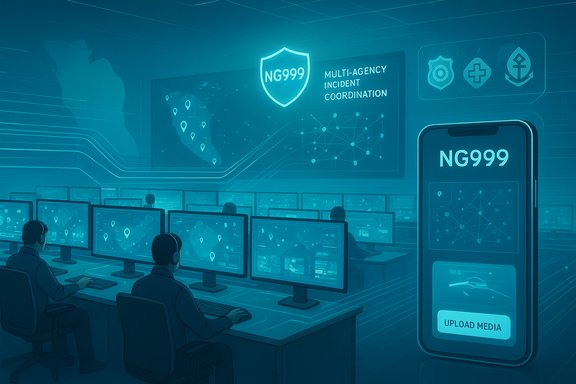
Malaysia’s NG999 is the government-backed upgrade to the long-running Malaysia Emergency Response Services 999 (MERS999). Designed as a strategic, IP-based emergency communications platform, NG999 consolidates call handling, geolocation, digital mapping, multimedia messages, and automated data feeds into a single operational fabric intended to serve police, medical, fire, maritime and civil defence agencies. The rollout was announced in government and industry notices and has been publicly active as of November 16, 2025. Telekom Malaysia (TM) — through its technology arm — won the concession to design, implement and operate NG999 under a long-term agreement. The contract value reported is approximately RM1.25 billion over a 12‑year concession, positioning TM as the primary systems integrator and operator for the national NG999 service. The agreement was signed in 2024 and the concession starts from an effective date in 2024 and runs through 2036. Industry partners and systems suppliers have been publicised as contributors to the platform. Notably, Frequentis’ LifeX3020 emergency communications solution is being deployed to modernise call handling and incident management across several response centres, with reports describing a large-scale deployment that includes hundreds of operator workstations and a unified incident management capability.
Source: Newswav NG999 goes live: Malaysia upgrades to faster, smarter emergency response network
 Background / Overview
Malaysia’s NG999 is the government-backed upgrade to the long-running Malaysia Emergency Response Services 999 (MERS999). Designed as a strategic, IP-based emergency communications platform, NG999 consolidates call handling, geolocation, digital mapping, multimedia messages, and automated data feeds into a single operational fabric intended to serve police, medical, fire, maritime and civil defence agencies. The rollout was announced in government and industry notices and has been publicly active as of November 16, 2025. Telekom Malaysia (TM) — through its technology arm — won the concession to design, implement and operate NG999 under a long-term agreement. The contract value reported is approximately RM1.25 billion over a 12‑year concession, positioning TM as the primary systems integrator and operator for the national NG999 service. The agreement was signed in 2024 and the concession starts from an effective date in 2024 and runs through 2036. Industry partners and systems suppliers have been publicised as contributors to the platform. Notably, Frequentis’ LifeX3020 emergency communications solution is being deployed to modernise call handling and incident management across several response centres, with reports describing a large-scale deployment that includes hundreds of operator workstations and a unified incident management capability. What NG999 actually brings: features and capabilities
NG999 represents a shift from voice-only, circuit-switched emergency lines to a multi-modal, IP-native emergency service that can accept voice, text, images, video and structured data. The publicly stated platform features include:- Geolocation and digital mapping for precise caller location and dispatch routing.
- Multimedia reporting: callers (and the new mobile app) can upload photos and video to help call takers assess incidents before responders arrive.
- Caller ID and enhanced caller context, integrating contact and device metadata into the incident record.
- Mobile smart app support — TM has stated a mobile application will be made available to registered users to transmit text, images and video to emergency operators. News reports mention an app name used in public alerts. Independent verification of app store entries at the time of reporting was not immediately available and should be treated with caution.
- AI and analytics to assist incident triage, routing and resourcing decisions, plus data sharing among agencies.
- Expanded physical footprint: NG999 has been extended to more than 800 locations nationwide, roughly doubling the coverage points reported under MERS999.
Architecture and suppliers: who does what?
The NG999 programme is architected as a national emergency services network operated by TM Technology Services under a concession model. TM’s public announcement outlines responsibilities including network and platform infrastructure, call management, and ongoing operational support. TM’s position as a national telco and systems operator means it handles both the physical connectivity and the call‑handling platform integration. System supplier activity reported in industry press points to Frequentis’ LifeX3020 solution being installed in multiple emergency response centres as part of the NG999 project. Reports indicate the deployment comprises several hundred operator workstations and a unified incident management environment to enable multi‑agency coordination. These deployments are described as the first of their kind in Southeast Asia for this product and are intended to provide standardized call handling and incident coordination across agencies. The reported commercial terms (a 12‑year concession and a RM1.25 billion contract value) create a long window during which TM will operate and evolve the platform, including upgrades, maintenance, and likely managed services that tie together national routing, ESInet-style components and public safety applications.Strengths: what NG999 improves — measurable gains and practical benefits
The NG999 programme brings a number of tangible, measurable improvements over legacy emergency call handling:- More accurate location and faster routing: IP-based geolocation plus digital maps allow for policy-based routing to the most relevant call centre and responders, reducing dispatch time in critical incidents. This is a core benefit seen in NG112/NG911 implementations.
- Richer situational awareness: photos, videos and structured data provided by callers or connected devices mean dispatchers can triage incidents more effectively, send the right assets and brief responders en route. This reduces the guessing that sometimes delays appropriate response under voice-only calls.
- Improved inter-agency coordination: a single integrated platform simplifies the flow of data across police, health, fire, maritime and civil defence agencies — shortening handoff times and improving resource allocation.
- Scalability and future-proofing: NG999’s IP-first approach allows the platform to accept new data types (telemetry from vehicles, IoT sensors, automatic incident reports from vehicles), support remote operator working, and evolve feature sets over time. This is consistent with international NG architectures.
- National continuity and resilience (potential): consolidating operations on a managed, standards-aligned platform can improve resilience and allow for policy-driven routing and failover between centres — if the resilience architecture is properly implemented and independently audited.
Risks, unknowns and implementation challenges
No technology project of this scale is without risk. Several important areas deserve scrutiny and active mitigation:- Privacy and data protection: NG999 will collect location metadata, multimedia content, and possibly health or device data. How that data are stored, encrypted, retained, and shared across agencies will determine whether the platform respects user privacy and complies with data protection laws. The public release has not yet disclosed a comprehensive privacy and retention policy for the NG999 data streams.
- Cybersecurity and resilience: moving an entire national emergency response capability onto IP networks expands the attack surface. The platform must sustain DDoS mitigation, network segmentation, hardened operator terminals, secure APIs and robust key-management practices. Public statements reference alignment with NG best practices, but technical details and independent security audits are not in the public record. This gap needs addressing to ensure critical services remain available during cyber incidents.
- Vendor lock-in and concession governance: a 12‑year, RM1.25 billion concession provides long-term continuity but raises questions about flexibility to change suppliers, adapt to new standards, or pivot technologies. Contractual clauses that require transparency, performance metrics, service credits, and open standards will determine whether the concession benefits the public long-term or entrenches a closed ecosystem.
- Equity and accessibility: reliance on a mobile app and data-rich interfaces must not disadvantage callers who lack smartphones, have limited connectivity, or speak minority languages. NG implementations internationally stress the need for multi-channel access (voice, SMS, real-time text) and support for non‑smartphone users — policies that need explicit confirmation in NG999 operations.
- False positives, misuse and burden on call centres: richer data can be a double-edged sword. Images and video increase cognitive load for operators and may require new triage training and AI-assisted filtering. There is also the perennial problem of misuse of emergency lines; public advisories have urged responsible use. Without careful design, richer inputs could escalate workload rather than reduce it.
- Operational readiness and training: introducing new call handling systems and workstations across dozens of centres requires comprehensive training, exercises, and change management. The human-element of emergency response is the largest determinant of success; technology alone cannot guarantee faster outcomes. Industry reports note large-scale workstation rollouts but public materials on training, SOP changes, and live-fire testing are limited.
How NG999 compares to international “Next Generation” standards
NG999’s design goals mirror established international practices for next-generation emergency platforms:- NG architectures (NG112, NG911) move emergency communications to an IP-based, service-oriented architecture that supports multimedia, policy-based routing, and managed core services. EENA and NENA describe these components as essential for modern emergency communications implementation. NG999’s advertised features — geolocation services, mapping, multimedia, and policy routing — align with these principles.
- The emphasis on data exchange, interoperability, and standardized location services is consistent with best practices. However, real interoperability depends on use of open standards, documented APIs, and publicly available interface specifications; public communications about NG999 emphasize alignment with international best practices but do not yet publish the technical interface or standards conformance reports for independent verification.
Procurement, cost and accountability
The TM concession (reported at RM1.25 billion over 12 years) frames NG999 as a long-term managed service. Long concessions can deliver stability and concentrated expertise but require robust governance to avoid lock-in and to ensure performance:- Public contracts of this size should include clear Key Performance Indicators (KPIs): uptime, average handle time, call-to-dispatch times, data availability SLAs, and independent security audits.
- Transparency mechanisms — published performance dashboards or independent review boards — help maintain public trust. So far, published employee and vendor statements outline the service scope but do not disclose granular KPIs or independent audit plans in the public domain.
- Cost of ownership vs. public good: the RM1.25 billion investment can be framed as a national infrastructure upgrade with social returns (saved lives, faster response), but value-for-money depends on measurable improvements in outcomes and efficient operation over the concession period.
The technology stack — practical implications for operators
From the public descriptions and industry disclosures, NG999 will likely include the following technical layers:- ESInet-style core: an emergency services IP network that routes calls and data between devices, call centres and agencies. This is the backbone for policy routing and redundancy.
- Call-handling and incident management: a workstation and incident management suite (Frequentis LifeX3020 or similar) that aggregates incoming multimedia and contextual data for dispatcher workflows. Industry press mentions a roll-out of hundreds of such workstations.
- Geolocation and LIS: location services and location repositories (LIS/HELD or similar standards) to support precise addressing and routing. This is core to NG112/NG911 architectures.
- Mobile app and API endpoints: portals and applications to accept user-submitted media and structured reports; public statements mention a new mobile app for registered users. Independent app-store verification should be sought for download availability and permissions.
- Analytics, AI and orchestration: ML-driven triage, predictive analytics for surge management and automated workflows for multi‑agency dispatch. Vendor statements reference analytics and AI as part of the platform roadmap.
Practical advice for the public and first responders
For citizens:- Keep your phone battery charged and ensure you can place emergency calls even with basic network service.
- If NG999 prompts an app download, verify official sources — government portals or telco notices — before installing. Public notifications have mentioned an app; independent app-store confirmation should be checked.
- Continue to use voice calls if in doubt. Voice remains the primary and most reliable channel for many urgent scenarios.
- Publish transparent performance KPIs and publish periodic audit summaries.
- Mandate independent cybersecurity assessments and publicise remediation efforts.
- Ensure multi-language, multi-channel accessibility (voice, SMS, real‑time text) for vulnerable populations.
- Institute rigorous training and live exercises that simulate multimedia‑rich incidents to reshape operating procedures and reduce cognitive overload.
Questions that still need clear public answers
Several operational and governance questions remain open in the public domain and will determine NG999’s long-term success:- What are the explicit data retention and sharing policies for multimedia and location data captured by NG999?
- Which security standards and certifications will the platform maintain and how often will independent penetration tests be performed?
- What are the SLA and KPI thresholds embedded in the TM concession and what enforcement or financial remedies exist for underperformance?
- How will NG999 support non-smartphone users and tourists who may not have a registered app or local mobile plan?
Early indicators and what to watch next
- Watch for published operational metrics: average call answer time, call-to-dispatch time, and the number of incidents where multimedia materially changed the response. These are the clearest measurable outcomes that justify the investment.
- Look for published cybersecurity audits or third‑party certification statements; these will be decisive in assessing platform risk.
- Monitor uptake and usability of any mobile application announced in public communications; app-store ratings, permission scopes, and update cadence will reveal real-world usability and adoption. Independent checks for the app’s store availability are recommended.
- Track cross-agency exercises and public reporting on interoperability to confirm NG999 is functioning as an integrated national service rather than a series of siloed upgrades.
Conclusion
The launch of NG999 marks a major modernization step for Malaysia’s emergency services: moving to an IP-enabled, data-rich architecture that promises faster, better-informed responses and multi-agency coordination. The project’s scope — backed by a sizeable long-term concession and the involvement of major systems suppliers — positions Malaysia alongside other countries adopting NG112/NG911-style architectures. Yet the public benefits will depend on non-technical decisions as much as on the technology: governance, transparent KPIs, robust cybersecurity, privacy protections, equitable access, and sustained training for operators. If those elements are implemented and openly audited, NG999 could substantially improve emergency outcomes. If they are neglected, the very features intended to save time — multimedia, AI, and centralized data — could create new points of failure or public concern. The next 12 months of operational reporting, independent audits and public transparency will determine whether NG999 delivers on its promise of faster, smarter emergency response.Source: Newswav NG999 goes live: Malaysia upgrades to faster, smarter emergency response network
