

Meta has reportedly hired longtime Amazon Web Services executive Dave Brown to help lead its expanding AI data center operation and an internal effort known as Meta Compute. The Wall Street Journal first reported the planned move; Reuters separately confirmed that Brown, an AWS senior vice president and member of Amazon’s leadership advisory group, is leaving the company after 19 years.
Brown led AWS compute and machine-learning services, making the hire notable beyond the usual executive shuffle. Meta is building infrastructure at a scale normally associated with hyperscale cloud providers, and Brown brings experience operating the core services that made AWS the default platform for a large share of enterprise workloads.
Meta Compute is reportedly intended to turn some of Meta’s AI infrastructure into a commercial service. Options under consideration have included hosted access to Meta AI models and leasing raw AI compute capacity to outside customers.
That would be a meaningful change in direction. Meta has operated enormous data centers for Facebook, Instagram, WhatsApp, advertising, and its AI research, but it has not been a general-purpose enterprise cloud supplier in the AWS, Microsoft Azure, or Google Cloud mold. Selling capacity would put it into competition with those firms as well as specialist GPU-cloud providers.
For now, there is no announced Meta Compute product, service catalog, region list, pricing model, or customer availability date. The reporting describes an internal initiative and a potential business, not a cloud platform enterprises can yet procure.
Those figures help explain the logic behind Meta Compute. AI infrastructure is expensive to build and difficult to keep fully utilized. A commercial compute business could give Meta another way to monetize capacity that would otherwise serve only its own models, recommendation systems, and internal services.
Brown is expected to report to Meta infrastructure chief Santosh Janardhan when he joins in the coming weeks, according to reports. AWS has named Dave Treadwell to lead its compute and machine-learning services organization after Brown’s departure.
The immediate significance is competitive: Meta is signaling that it may want to become a supplier of AI infrastructure rather than only a buyer of hardware and power. Administrators evaluating GPU capacity should treat Meta Compute as a future possibility, not a platform to include in current procurement plans.
Brown led AWS compute and machine-learning services, making the hire notable beyond the usual executive shuffle. Meta is building infrastructure at a scale normally associated with hyperscale cloud providers, and Brown brings experience operating the core services that made AWS the default platform for a large share of enterprise workloads.
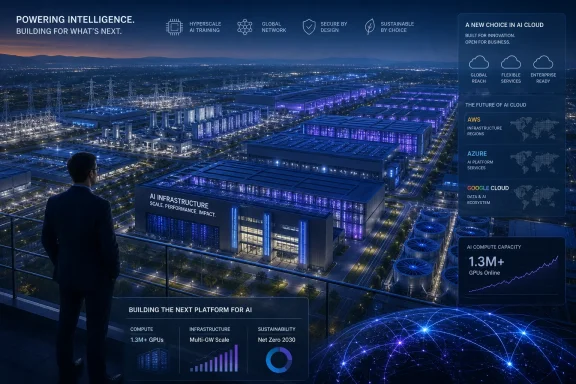 A possible cloud business, not just bigger AI labs
Meta Compute is reportedly intended to turn some of Meta’s AI infrastructure into a commercial service. Options under consideration have included hosted access to Meta AI models and leasing raw AI compute capacity to outside customers.That would be a meaningful change in direction. Meta has operated enormous data centers for Facebook, Instagram, WhatsApp, advertising, and its AI research, but it has not been a general-purpose enterprise cloud supplier in the AWS, Microsoft Azure, or Google Cloud mold. Selling capacity would put it into competition with those firms as well as specialist GPU-cloud providers.
For now, there is no announced Meta Compute product, service catalog, region list, pricing model, or customer availability date. The reporting describes an internal initiative and a potential business, not a cloud platform enterprises can yet procure.
Spending is already on a hyperscaler scale
Meta has projected 2026 capital expenditure of $125 billion to $145 billion, largely for AI data centers, network equipment, chips, power, and related infrastructure. The company’s Hyperion project in Richland Parish, Louisiana, is being expanded from more than 2 gigawatts of compute capacity to 5 gigawatts, with planned investment exceeding $50 billion, according to Reuters and Meta’s recent project disclosures.Those figures help explain the logic behind Meta Compute. AI infrastructure is expensive to build and difficult to keep fully utilized. A commercial compute business could give Meta another way to monetize capacity that would otherwise serve only its own models, recommendation systems, and internal services.
Brown is expected to report to Meta infrastructure chief Santosh Janardhan when he joins in the coming weeks, according to reports. AWS has named Dave Treadwell to lead its compute and machine-learning services organization after Brown’s departure.
What Windows admins should do
There is no immediate operational impact for Windows shops. Meta has not announced Windows Server support, virtual machine offerings, identity integration, enterprise contracts, or an Azure-style management plane.The immediate significance is competitive: Meta is signaling that it may want to become a supplier of AI infrastructure rather than only a buyer of hardware and power. Administrators evaluating GPU capacity should treat Meta Compute as a future possibility, not a platform to include in current procurement plans.
References
- Primary source: iNews Zoombangla
Published: 2026-07-18T19:56:47+00:00
Loading…
inews.zoombangla.com - Related coverage: tomshardware.com
Loading…
www.tomshardware.com - Related coverage: techradar.com
Loading…
www.techradar.com - Related coverage: axios.com
Loading…
www.axios.com - Related coverage: investing.com
Loading…
www.investing.com - Related coverage: gadgetsnow.indiatimes.com
Loading…
gadgetsnow.indiatimes.com