

Micron Technology has become a focal point in the latest AI infrastructure debate as Moonshot AI’s Kimi K3 draws extraordinary interest in China, exposing how rapidly a popular generative AI model can translate into demand for memory capacity, memory bandwidth, and data-center storage. The central thesis is plausible: advanced models do not run on compute alone, and an AI service that attracts heavy inference traffic can pressure the supply of high-performance DRAM, High Bandwidth Memory, and enterprise SSDs. But the leap from Kimi K3’s early momentum to a material, identifiable Micron revenue contribution remains unproven.
That distinction matters. Kimi K3 is a meaningful signal about AI demand intensity, especially in China, but it is not public evidence of a direct Moonshot AI purchase agreement with Micron. Investors and enterprise technology buyers should therefore separate the broader AI memory demand story from the narrower claim that a single model launch has already created incremental sales for one U.S. memory supplier.
Still, the wider backdrop is difficult to ignore. Micron is entering this period with a portfolio increasingly aligned to AI servers, accelerated computing platforms, high-capacity memory configurations, and data-center SSD deployments. Kimi K3’s fast uptake may not transform Micron’s outlook on its own, yet it reinforces a crucial industry reality: as AI shifts from occasional chatbot interactions to persistent reasoning, coding, agentic tasks, and long-context workloads, memory is becoming a strategic constraint rather than a secondary component.
Moonshot AI introduced Kimi K3 as a frontier-scale multimodal model designed for complex reasoning, coding, long-context processing, and knowledge work. Moonshot describes the model as having 2.8 trillion parameters and a one-million-token context window, specifications that underline both its ambition and its infrastructure requirements.
Not every parameter is necessarily active for each request, particularly in modern mixture-of-experts architectures. Even so, models at this scale require substantial resources for training, serving, caching, and handling extended sessions. The operational challenge is not merely loading a model into GPU memory once. It is sustaining concurrent usage across thousands or millions of requests while maintaining acceptable response times.
Reports that Moonshot temporarily limited new subscriptions after demand strained capacity give the story additional weight. Capacity pressure can result from many factors, including GPU availability, networking, software efficiency, model-serving architecture, and cloud deployment choices. Yet memory remains embedded in each of those bottlenecks.
For Micron, the significance is therefore indirect but strategically relevant:
Memory matters at several layers.
The performance of an AI accelerator is not determined only by its arithmetic capability. It is also shaped by how quickly it can retrieve the data needed to keep its compute engines busy. If the accelerator waits for data, peak processing capability does not translate into real-world throughput.
HBM has become especially important because modern AI systems increasingly prioritize:
The reason is straightforward: AI clusters are not isolated GPUs operating in a vacuum. They are large systems that ingest data, prepare prompts, manage retrieval pipelines, execute workflows, coordinate agents, and distribute requests across servers.
Agentic AI can make this even more memory-intensive. A conventional chatbot may process a prompt, generate an answer, and release much of its temporary state. An agentic system can retain task context, call tools, retrieve documents, run code, branch into sub-tasks, and maintain multiple concurrent chains of reasoning.
That pattern raises the value of both fast memory and large memory pools.
Micron has emphasized growing AI-driven demand for data-center NAND and enterprise SSDs. That matters because the memory opportunity is not limited to premium HBM. An expanding AI infrastructure market can create demand across a spectrum of products:
For users, this can improve usefulness. For infrastructure operators, it can increase resource requirements.
The advantage is speed. The trade-off is memory consumption.
As prompts become longer and conversations persist, the KV cache grows. When many users run long sessions concurrently, total memory needs can rise sharply. Efficient model-serving software, quantization, compression, cache sharing, and tiered storage can reduce the burden, but they do not erase it.
This is why large-context AI can be both a software breakthrough and an infrastructure challenge. A company may optimize its model well enough to lower costs per token, only to see total capacity demand rise as users take advantage of richer features and longer sessions.
A smaller, efficient model used continuously for enterprise automation may consume more total infrastructure than a much larger model used occasionally. Kimi K3’s potential importance lies in the possibility that stronger coding, reasoning, and multimodal capabilities could encourage more frequent or more demanding use.
If users begin relying on a model to analyze documents, write and test software, process spreadsheets, generate presentations, and carry out multi-stage tasks, inference workloads can become persistent rather than episodic.
That creates a more favorable environment for memory demand because the service provider must build for peak concurrency, acceptable latency, and operational resilience.
Even so, Micron has several strengths that make the company relevant to the discussion.
The company has highlighted products and roadmaps that address:
A supplier that can participate in multiple layers has more opportunities to benefit from rising AI deployment. It also has more insulation if a particular product cycle weakens.
AI changes the mix, but it does not eliminate the cycle.
The more attractive part of the current market for Micron is the potential shift toward higher-value products. HBM, advanced server DRAM, and performance-oriented data-center SSDs can carry a different economic profile than commodity-oriented memory categories.
This is why demand headlines linked to Kimi K3 should not be interpreted merely as a prediction of more bits shipped. The more consequential question is whether AI workloads can support durable demand for premium memory products where technology leadership, qualification cycles, packaging expertise, and supply relationships matter more.
The company’s progress on HBM4 and planned HBM4E products will be closely watched because leading AI platforms evolve quickly. A supplier that misses a generation transition, struggles with yields, or falls behind a customer’s qualification schedule can lose ground even in a booming market.
The good news for Micron is that it has already established a visible role in the AI memory conversation. The risk is that competitors are pursuing the same customers with the same urgency.
For memory suppliers, that creates a potentially significant source of infrastructure demand. Yet the path from Chinese AI growth to Micron revenue is neither automatic nor simple.
Memory is not identical to advanced logic or GPUs, but memory demand is connected to the systems in which it is deployed. If customers cannot access certain classes of accelerators, they may choose different server architectures, use domestic alternatives, optimize models for lower compute requirements, or prioritize inference over frontier-scale training.
That does not remove memory demand. It changes the shape of demand.
For Micron, the China-related opportunity is therefore subject to several variables:
In other words, the path is layered:
The scale is significant. It reflects confidence that AI, data centers, automotive systems, industrial technology, and increasingly intelligent edge devices will require far more memory over the next decade.
New fabs require enormous investment long before they produce revenue. Equipment must be purchased, facilities must be constructed, process technologies must be qualified, and yields must be improved. A company can make the right long-term strategic decision and still endure weak near-term free cash flow if demand slows or pricing normalizes during a heavy spending phase.
The danger is familiar to memory investors. Strong prices encourage capacity investment. New capacity eventually enters the market. If demand growth fails to keep pace, excess supply can pressure pricing and profitability.
AI may extend the current upcycle, but it does not repeal this basic industry pattern.
Micron’s management will therefore need to balance ambition with discipline. The most favorable outcome is not simply building the most capacity. It is building the right capacity, for the right product mix, at the right time.
Enterprises deploying AI on Windows Server, Azure-connected environments, hybrid cloud platforms, or local AI workstations should expect memory configuration to matter more than it did in earlier software cycles.
For Windows Server environments, it is increasingly important to separate bulk archival storage from high-performance working storage. A retrieval system backed by slow storage may undermine the responsiveness that users expect from an AI assistant, regardless of the model’s raw capability.
The most effective strategy is often tiered:
Investors should watch whether memory manufacturers expand capacity aggressively, how quickly advanced packaging capacity grows, and whether HBM demand continues to absorb available supply. Supply discipline among major manufacturers has been a key element of the current favorable memory pricing environment.
If every producer races to add capacity based on today’s tightness, the industry could set the stage for tomorrow’s oversupply.
That development is favorable to Micron’s broader strategic narrative. The company is deeply invested in HBM, advanced DRAM, enterprise SSDs, and the manufacturing capacity needed to serve an AI-driven memory market. Its massive U.S. investment program shows that it expects demand for memory to remain strategically important well beyond the current cycle.
But Kimi K3 should be understood as a sector signal, not a verified Micron-specific contract catalyst. There is no public basis to conclude that Moonshot AI’s capacity strain directly translates into incremental Micron revenue. The more credible conclusion is that successful AI platforms are making memory constraints increasingly visible—and that visibility strengthens the case for suppliers capable of serving the highest-value parts of the market.
Micron’s opportunity is substantial, but so are the execution, capital-spending, competition, export-control, and cyclicality risks. The companies best positioned for the AI era will not simply sell more memory. They will deliver the right memory technologies, at scale, into an infrastructure market where capacity, bandwidth, efficiency, and reliability have become inseparable from AI performance.
That distinction matters. Kimi K3 is a meaningful signal about AI demand intensity, especially in China, but it is not public evidence of a direct Moonshot AI purchase agreement with Micron. Investors and enterprise technology buyers should therefore separate the broader AI memory demand story from the narrower claim that a single model launch has already created incremental sales for one U.S. memory supplier.
Still, the wider backdrop is difficult to ignore. Micron is entering this period with a portfolio increasingly aligned to AI servers, accelerated computing platforms, high-capacity memory configurations, and data-center SSD deployments. Kimi K3’s fast uptake may not transform Micron’s outlook on its own, yet it reinforces a crucial industry reality: as AI shifts from occasional chatbot interactions to persistent reasoning, coding, agentic tasks, and long-context workloads, memory is becoming a strategic constraint rather than a secondary component.
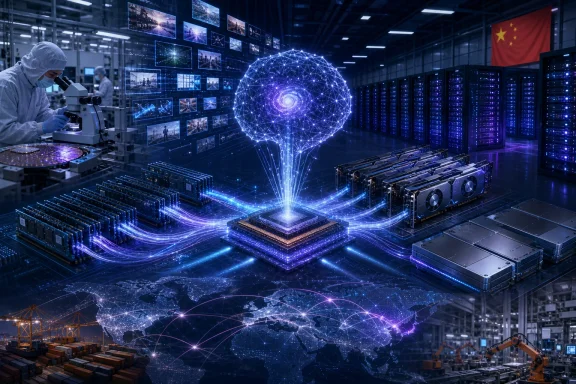 Overview: Why Kimi K3 Is Relevant to the Memory Industry
Moonshot AI introduced Kimi K3 as a frontier-scale multimodal model designed for complex reasoning, coding, long-context processing, and knowledge work. Moonshot describes the model as having 2.8 trillion parameters and a one-million-token context window, specifications that underline both its ambition and its infrastructure requirements.Not every parameter is necessarily active for each request, particularly in modern mixture-of-experts architectures. Even so, models at this scale require substantial resources for training, serving, caching, and handling extended sessions. The operational challenge is not merely loading a model into GPU memory once. It is sustaining concurrent usage across thousands or millions of requests while maintaining acceptable response times.
Reports that Moonshot temporarily limited new subscriptions after demand strained capacity give the story additional weight. Capacity pressure can result from many factors, including GPU availability, networking, software efficiency, model-serving architecture, and cloud deployment choices. Yet memory remains embedded in each of those bottlenecks.
For Micron, the significance is therefore indirect but strategically relevant:
- More AI users create more inference requests.
- More inference requests require more AI servers and accelerators.
- More AI servers consume more HBM, DDR5 or LPDRAM, and SSD capacity.
- Longer contexts and agentic workflows can amplify demand for memory per workload.
- Infrastructure scarcity can support stronger pricing and product mix for leading memory suppliers.
The Difference Between Compute Demand and Memory Demand
The AI market often treats GPUs as the entire story. Nvidia, AMD, custom accelerators, and cloud compute clusters rightly dominate headlines because they deliver the processing performance required to train and run advanced models. But a high-performance accelerator without sufficient memory bandwidth or attached system memory can become an expensive bottleneck.Memory matters at several layers.
High Bandwidth Memory Feeds AI Accelerators
High Bandwidth Memory, or HBM, sits close to AI accelerators and provides exceptionally fast data transfer. AI training and inference frequently require large volumes of model weights and intermediate data to move rapidly between compute units and memory.The performance of an AI accelerator is not determined only by its arithmetic capability. It is also shaped by how quickly it can retrieve the data needed to keep its compute engines busy. If the accelerator waits for data, peak processing capability does not translate into real-world throughput.
HBM has become especially important because modern AI systems increasingly prioritize:
- Higher throughput for simultaneous users
- Lower inference latency
- Larger model sizes
- More complex reasoning chains
- Multimodal inputs, including image, audio, and document processing
- Long-context workloads that retain more information per session
System Memory Expands the AI Server Envelope
HBM is only one part of the memory equation. AI server platforms also require substantial DDR5 DRAM, low-power server memory, and increasingly dense memory configurations to support CPUs, accelerators, networking, data preparation, and orchestration tasks.The reason is straightforward: AI clusters are not isolated GPUs operating in a vacuum. They are large systems that ingest data, prepare prompts, manage retrieval pipelines, execute workflows, coordinate agents, and distribute requests across servers.
Agentic AI can make this even more memory-intensive. A conventional chatbot may process a prompt, generate an answer, and release much of its temporary state. An agentic system can retain task context, call tools, retrieve documents, run code, branch into sub-tasks, and maintain multiple concurrent chains of reasoning.
That pattern raises the value of both fast memory and large memory pools.
NAND Storage Supports the Expanding Data Layer
AI inference also has a storage problem. Vector databases, retrieval-augmented generation systems, knowledge repositories, model checkpoints, logs, embeddings, and cache-offload strategies can demand large amounts of high-performance flash storage.Micron has emphasized growing AI-driven demand for data-center NAND and enterprise SSDs. That matters because the memory opportunity is not limited to premium HBM. An expanding AI infrastructure market can create demand across a spectrum of products:
- HBM for accelerators
- DDR5 and LPDRAM for servers and systems
- Enterprise SSDs for high-performance data access
- High-capacity QLC SSDs for large data repositories
- Specialized memory for edge, automotive, and industrial AI systems
Why Long Context Can Change Infrastructure Economics
A one-million-token context window sounds like a model feature, but it has meaningful implications for data-center design. Long context allows an AI system to process extensive documents, codebases, archives, meeting records, research collections, and multi-step task histories without immediately losing earlier information.For users, this can improve usefulness. For infrastructure operators, it can increase resource requirements.
The KV Cache Problem
During inference, transformer-based language models create and maintain what is commonly called a key-value cache, or KV cache. This cache helps the system avoid recalculating every prior token whenever a new token is generated.The advantage is speed. The trade-off is memory consumption.
As prompts become longer and conversations persist, the KV cache grows. When many users run long sessions concurrently, total memory needs can rise sharply. Efficient model-serving software, quantization, compression, cache sharing, and tiered storage can reduce the burden, but they do not erase it.
This is why large-context AI can be both a software breakthrough and an infrastructure challenge. A company may optimize its model well enough to lower costs per token, only to see total capacity demand rise as users take advantage of richer features and longer sessions.
More Capability Can Produce More Usage
The most important variable is not simply model size. It is usage intensity.A smaller, efficient model used continuously for enterprise automation may consume more total infrastructure than a much larger model used occasionally. Kimi K3’s potential importance lies in the possibility that stronger coding, reasoning, and multimodal capabilities could encourage more frequent or more demanding use.
If users begin relying on a model to analyze documents, write and test software, process spreadsheets, generate presentations, and carry out multi-stage tasks, inference workloads can become persistent rather than episodic.
That creates a more favorable environment for memory demand because the service provider must build for peak concurrency, acceptable latency, and operational resilience.
Micron’s Position in the AI Memory Supply Chain
Micron is not the only beneficiary of the AI memory buildout. Samsung Electronics and SK hynix remain major competitors in DRAM and HBM, while storage suppliers also compete aggressively for enterprise SSD opportunities. The AI memory market is highly competitive, capital intensive, and technically demanding.Even so, Micron has several strengths that make the company relevant to the discussion.
A Broader Product Portfolio Than the HBM Headline Suggests
HBM captures attention because it is tightly tied to AI accelerators and is often supply constrained. But Micron’s opportunity spans the broader server architecture.The company has highlighted products and roadmaps that address:
- HBM for AI accelerators
- High-density DDR5 memory for servers
- Low-power DRAM for data-center platforms
- PCIe Gen6 enterprise SSDs
- High-capacity QLC SSDs
- Memory and storage products for AI PCs, mobile devices, vehicles, and edge systems
A supplier that can participate in multiple layers has more opportunities to benefit from rising AI deployment. It also has more insulation if a particular product cycle weakens.
Product Mix Can Matter More Than Bit Growth
The traditional memory industry has often been dominated by commodity cycles. DRAM and NAND suppliers can see revenue rise quickly when prices improve, then face severe pressure when capacity expansion outruns demand.AI changes the mix, but it does not eliminate the cycle.
The more attractive part of the current market for Micron is the potential shift toward higher-value products. HBM, advanced server DRAM, and performance-oriented data-center SSDs can carry a different economic profile than commodity-oriented memory categories.
This is why demand headlines linked to Kimi K3 should not be interpreted merely as a prediction of more bits shipped. The more consequential question is whether AI workloads can support durable demand for premium memory products where technology leadership, qualification cycles, packaging expertise, and supply relationships matter more.
Execution Is as Important as Demand
Micron’s AI opportunity depends on execution. Memory products must meet demanding performance, power, reliability, yield, packaging, and customer-qualification requirements. HBM in particular is not a simple volume business; it is deeply linked to advanced packaging and accelerator platform roadmaps.The company’s progress on HBM4 and planned HBM4E products will be closely watched because leading AI platforms evolve quickly. A supplier that misses a generation transition, struggles with yields, or falls behind a customer’s qualification schedule can lose ground even in a booming market.
The good news for Micron is that it has already established a visible role in the AI memory conversation. The risk is that competitors are pursuing the same customers with the same urgency.
China: A Large Opportunity With Complex Constraints
Kimi K3 puts renewed attention on China’s role in the global AI market. China has enormous demand for AI services, a large developer ecosystem, cloud providers, consumer internet platforms, and strong incentives to develop domestic AI capabilities.For memory suppliers, that creates a potentially significant source of infrastructure demand. Yet the path from Chinese AI growth to Micron revenue is neither automatic nor simple.
Export Controls Shape the Addressable Market
The United States has imposed restrictions on exports of certain advanced computing technologies to China. Those restrictions can affect the accelerators and systems used to train and deploy frontier AI models, while policy changes and enforcement developments can alter the market over time.Memory is not identical to advanced logic or GPUs, but memory demand is connected to the systems in which it is deployed. If customers cannot access certain classes of accelerators, they may choose different server architectures, use domestic alternatives, optimize models for lower compute requirements, or prioritize inference over frontier-scale training.
That does not remove memory demand. It changes the shape of demand.
For Micron, the China-related opportunity is therefore subject to several variables:
- U.S. export-control policy
- Customer and end-user compliance requirements
- China’s domestic semiconductor development
- Alternative accelerator architectures
- Local sourcing preferences
- Competitive pricing from Chinese DRAM and NAND suppliers
- Geopolitical risks affecting supply chains and market access
Direct Exposure Should Not Be Assumed
A surge in Kimi K3 usage does not establish that Moonshot AI is buying Micron HBM, Micron server DRAM, or Micron SSDs. Large AI deployments can be served by cloud providers, systems integrators, original design manufacturers, and multiple component suppliers.In other words, the path is layered:
- A model gains users.
- The model operator or cloud partner expands capacity.
- Server and accelerator vendors build or procure systems.
- Memory vendors supply qualified components through direct or indirect channels.
- Revenue appears over time, subject to contracts, inventory, product mix, and regional restrictions.
Micron’s Massive Capacity Expansion Is Both a Strength and a Risk
Micron’s plan to invest more than $250 billion in U.S. manufacturing and technology through 2035 illustrates how seriously the company views long-term memory demand. The program includes major commitments in New York, Idaho, Virginia, and the broader domestic supply-chain ecosystem.The scale is significant. It reflects confidence that AI, data centers, automotive systems, industrial technology, and increasingly intelligent edge devices will require far more memory over the next decade.
Why the Investment Case Is Compelling
Building memory capacity in the United States offers strategic advantages.- It supports supply-chain resilience.
- It expands domestic access to advanced memory production.
- It can strengthen relationships with customers seeking geographically diversified supply.
- It positions Micron to participate in future demand rather than ceding share because of capacity limits.
- It aligns with public policy efforts to expand U.S. semiconductor manufacturing.
Why Capital Intensity Cannot Be Ignored
The same expansion creates the central risk in the Micron story: memory manufacturing is brutally capital intensive.New fabs require enormous investment long before they produce revenue. Equipment must be purchased, facilities must be constructed, process technologies must be qualified, and yields must be improved. A company can make the right long-term strategic decision and still endure weak near-term free cash flow if demand slows or pricing normalizes during a heavy spending phase.
The danger is familiar to memory investors. Strong prices encourage capacity investment. New capacity eventually enters the market. If demand growth fails to keep pace, excess supply can pressure pricing and profitability.
AI may extend the current upcycle, but it does not repeal this basic industry pattern.
Micron’s management will therefore need to balance ambition with discipline. The most favorable outcome is not simply building the most capacity. It is building the right capacity, for the right product mix, at the right time.
What Windows and Enterprise IT Teams Should Take From This
For Windows-focused organizations, the Kimi K3 and Micron narrative is not merely a stock-market story. It points to a practical technology trend: memory is becoming a central planning consideration for AI-enabled infrastructure.Enterprises deploying AI on Windows Server, Azure-connected environments, hybrid cloud platforms, or local AI workstations should expect memory configuration to matter more than it did in earlier software cycles.
AI Workloads Are Raising Memory Expectations
Traditional enterprise planning often focused on CPU core counts, virtual machine density, storage capacity, and network bandwidth. AI adds new questions:- How much GPU memory does the model require?
- How much system RAM is needed to feed the accelerator efficiently?
- Can long-context workloads sustain performance under concurrent use?
- Does the retrieval system require fast local SSD storage?
- How will cached data, embeddings, and logs affect storage growth?
- Are workstation-class devices equipped with enough memory for local AI tools?
Storage Is Part of the AI Performance Conversation
Enterprise AI deployments can generate large volumes of data. Models, fine-tuning datasets, vector indexes, audit logs, document libraries, snapshots, and checkpoints all need storage.For Windows Server environments, it is increasingly important to separate bulk archival storage from high-performance working storage. A retrieval system backed by slow storage may undermine the responsiveness that users expect from an AI assistant, regardless of the model’s raw capability.
The most effective strategy is often tiered:
- High-performance SSDs for active databases, indexes, and cache layers
- Capacity-oriented SSDs for large but frequently accessed datasets
- Lower-cost storage tiers for archival content
- Clear data lifecycle policies to prevent AI repositories from becoming unmanaged sprawl
Key Signals to Watch Beyond the Kimi K3 Headlines
The early popularity of Kimi K3 is a reminder that new models can alter infrastructure expectations quickly. But the durable indicators will emerge over quarters, not days.Demand Signals
The most meaningful demand indicators include:- Continued evidence of AI server buildouts
- Growth in inference workloads, not just training announcements
- Rising adoption of long-context and agentic AI services
- Sustained demand for HBM and premium server DRAM
- Enterprise SSD orders tied to AI data pipelines
- Customer commitments that extend beyond short-term spot purchases
Supply Signals
The supply side deserves equal attention.Investors should watch whether memory manufacturers expand capacity aggressively, how quickly advanced packaging capacity grows, and whether HBM demand continues to absorb available supply. Supply discipline among major manufacturers has been a key element of the current favorable memory pricing environment.
If every producer races to add capacity based on today’s tightness, the industry could set the stage for tomorrow’s oversupply.
Technology Signals
Micron’s competitive standing will depend on more than headline demand. Relevant technology indicators include:- HBM product qualification with leading accelerator platforms
- Yield progression and packaging capacity
- Performance-per-watt improvements
- Availability of high-density server memory
- Enterprise SSD performance and reliability
- Adoption of new process nodes
- Ability to scale advanced products without sacrificing margins
The Bottom Line
Kimi K3’s rapid emergence is a meaningful demonstration of how quickly AI adoption can challenge available infrastructure. A frontier-scale model with long-context capabilities, multimodal functions, and strong coding ambitions can increase demand for compute, networking, storage, and—critically—memory across the data center.That development is favorable to Micron’s broader strategic narrative. The company is deeply invested in HBM, advanced DRAM, enterprise SSDs, and the manufacturing capacity needed to serve an AI-driven memory market. Its massive U.S. investment program shows that it expects demand for memory to remain strategically important well beyond the current cycle.
But Kimi K3 should be understood as a sector signal, not a verified Micron-specific contract catalyst. There is no public basis to conclude that Moonshot AI’s capacity strain directly translates into incremental Micron revenue. The more credible conclusion is that successful AI platforms are making memory constraints increasingly visible—and that visibility strengthens the case for suppliers capable of serving the highest-value parts of the market.
Micron’s opportunity is substantial, but so are the execution, capital-spending, competition, export-control, and cyclicality risks. The companies best positioned for the AI era will not simply sell more memory. They will deliver the right memory technologies, at scale, into an infrastructure market where capacity, bandwidth, efficiency, and reliability have become inseparable from AI performance.