

Microsoft finished 2025 with its most consequential year-in-review in recent memory: impressive financial momentum driven by cloud and AI, matched by persistent product and consumer-facing missteps that damaged trust in Windows, strained Xbox’s consumer business, and left many long-time users wondering who the company is building for.
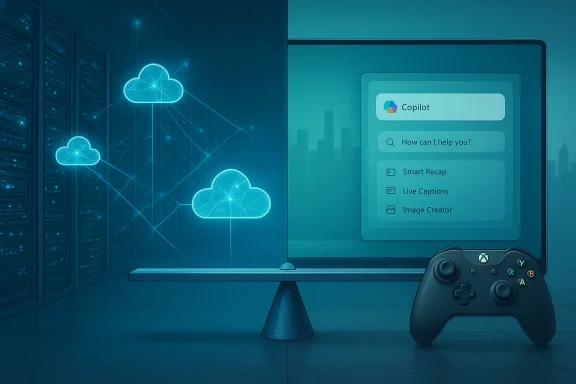
2025 for Microsoft was a study in contrasts. The company’s cloud and AI revenue engines kept delivering strong results and justified heavy investment, while its consumer software and hardware experiences—particularly Windows 11 and Xbox—suffered mounting criticism and operational problems. The retirement of Windows 10 on October 14, 2025, introduced an unusual consumer ESU pathway and softened what might have been a hard migration cliff, but it also created a period of inertia that slowed Windows 11 adoption. Meanwhile, Microsoft’s aggressive push to “make every Windows 11 PC an AI PC” generated both genuinely useful capabilities and fierce backlash over priorities, privacy, and stability. These tensions played out across product forums, media coverage, and analysts’ notes throughout the year.
Why this mattered
Engineering wins beneath the surface
Why this was consequential
Where Microsoft made progress
Risk and balance
The strategic risk for Microsoft heading into the near term is clear: if the company continues to privilege revenue-driving AI infrastructure and subscription economics without re-establishing operational excellence and user respect in Windows and Xbox, it may sustain short-term financial wins but lose the goodwill that underpins platform strength. Conversely, 2026 presents a straightforward corrective path: fix core reliability issues, rebalance messaging and opt-in controls around AI, stabilize Xbox pricing and content commitments, and make migration away from Windows 10 straightforward and equipment-friendly.
Microsoft’s scale and resources mean it can correct course, but doing so will require humility: fewer press releases about grand AI visions and more committed engineering and product attention on the real, day-to-day experiences that billions of users depend on.
Source: TechRadar https://www.techradar.com/computing/windows/microsoft-in-2025-year-in-review/
 Background / Overview
2025 for Microsoft was a study in contrasts. The company’s cloud and AI revenue engines kept delivering strong results and justified heavy investment, while its consumer software and hardware experiences—particularly Windows 11 and Xbox—suffered mounting criticism and operational problems. The retirement of Windows 10 on October 14, 2025, introduced an unusual consumer ESU pathway and softened what might have been a hard migration cliff, but it also created a period of inertia that slowed Windows 11 adoption. Meanwhile, Microsoft’s aggressive push to “make every Windows 11 PC an AI PC” generated both genuinely useful capabilities and fierce backlash over priorities, privacy, and stability. These tensions played out across product forums, media coverage, and analysts’ notes throughout the year.Windows 10: End of support — what happened and why it mattered
On October 14, 2025, Microsoft formally ended mainstream support for Windows 10. This was the calendar milestone the company had signposted for years, but the aftermath was more nuanced than a simple “switch off.” For the first time, Microsoft offered a consumer Extended Security Updates (ESU) option that could be paid for (regional pricing around $30 was commonly reported) or — in a notable concession — obtained for free through a OneDrive sync/backup enrollment or other opt-in mechanisms for a year of protection through October 13, 2026. That consumer ESU acted as a one-year bridge rather than a long-term lifeline.Why this mattered
- It turned what could have been a mass migration into a trickle: many households and small businesses opted into the free ESU pathway, delaying upgrades.
- The result was a slower-than-expected Windows 11 uptake, especially because a sizeable installed base simply could not meet Windows 11’s hardware requirements. The combination of a free ESU window and compatibility constraints produced a migration stall in 2025.
- Inventory devices and classify by Windows 11 eligibility.
- For incompatible hardware, plan for alternative operating systems, hardware refresh, or ESU enrollment for short-term security.
- Treat ESU as a time-limited mitigation rather than a permanent solution. Security best practices — network segmentation, application allow-listing, and endpoint detection — remain essential for any Windows 10 holdouts.
- Reports of immediate large-scale defections to Linux distributions were present in community forums and some outlets, but the longer-term impact remains uncertain and should be treated cautiously until broader telemetry or sales figures confirm a meaningful shift.
Windows 11 in 2025: AI-first strategy and community backlash
The company’s stated ambition
Microsoft openly pursued a strategy to embed AI deeply into Windows 11, aiming to turn large swathes of PC functionality into AI-enhanced experiences: voice input, a broadened Copilot, AI agents and on-device features tied to Copilot+ PCs and NPUs. That marketing and engineering push culminated in major messaging around “every PC an AI PC.”What shipped — practical wins and genuinely useful features
- Copilot+ features such as supercharged search and local semantic search/Recall were rolled out to supported devices and offered real productivity gains when they worked as intended.
- Incremental UI and quality-of-life updates arrived (Start menu refreshes, PC recovery improvements, some File Explorer polish).
- On-device AI enhancements like Windows Studio Effects and NPU-accelerated routines improved camera and media experiences on compatible machines.
What went wrong: tone-deaf rollout and missed basics
Despite some useful additions, the perceived balance of Microsoft’s effort hurt the brand:- Many users and community leaders objected to relentless AI marketing while basic quality issues and long-standing Windows 11 bugs persisted.
- The AI-first narrative felt forced in places and triggered privacy and security anxieties: the idea of agentic AI working inside settings and files raised legitimate questions about data handling and attack surface expansion.
- Senior executives’ public dismissals of critics intensified backlash rather than calming it.
Security and privacy: why the worry isn’t just noise
Microsoft attempted to position many AI features as privacy-conscious (on-device processing, authentication gating). Still, the mere presence of autonomous agents that can access local files and system APIs materially changes threat models. Security researchers and enterprises flagged the increased need for clear opt-in controls, audit logs, and enterprise policy management before broad deployment. Until those governance and technical controls are demonstrably robust, consumer and enterprise skepticism is rational.Windows 11 quality and reliability: bugs remained visible
Across 2025, Windows 11 continued to ship visible annoyances and glitches that undermined confidence. Even where Microsoft focused on platform plumbing and emulation improvements (notably for Windows-on-Arm), day-to-day irritants persisted: odd UI language mashups, visual glitches when opening folders, and troubling gaming regressions at times. These weren’t just cosmetic; they fed a narrative that Microsoft prioritized shiny AI features over foundational reliability.Engineering wins beneath the surface
- Microsoft made meaningful low-level improvements (Prism emulator enhancements that broadened ISA support on Arm, improved DirectX runtime coordination, and anti-cheat cooperation that matter to developers). Those engineering moves have long-term value, even if they were overshadowed in consumer conversations by UI-level problems.
Gaming: price hikes, platform questions, and an increasingly uncomfortable position
Xbox Game Pass price hike and fallout
In September 2025 Microsoft raised the price of Xbox Game Pass Ultimate to $29.99 / £22.99 / AU$35.95 per month. The decision provoked an immediate, vociferous backlash: mass cancellations, public outrage, and system overloads as many subscribers rushed to cancel simultaneously. Microsoft defended the move as reflecting increased value and content, but users pushed back hard — and some telemetry suggested churn followed, even if Game Pass revenue hit record annual figures earlier in the year.Why this was consequential
- The price rise tested consumer tolerance: subscriptions are sticky until they feel overpriced relative to perceived value.
- Mass cancellations created bad optics and operational fallout (support systems overwhelmed).
- Game Pass revenue remained strong in 2025, but the sustainability of growth tied to a subscription price that exceeded many consumers’ expectation is questionable.
Console sales and the Xbox hardware dilemma
Late-2025 analyst reports painted a grim picture for Xbox hardware sales, with figures suggesting a sharp year-on-year decline (widely reported cuts as steep as a 70% drop in certain quarters). Even adjusting for variances in analyst methodology, the consensus was that Xbox console unit sales softened dramatically in 2025—worse than the PS5’s decline in the same period—exposing a clear issue in Microsoft’s console play. Pricing increases for hardware and the pivot toward subscription and cloud streaming both contributed to this dynamic. These sales figures were widely discussed in industry commentary but should be treated as analyst-reported estimates rather than company-released totals.Studio closures, layoffs, and content strategy stress
Microsoft also executed severe cost-cutting in the Gaming division, including large-scale layoffs (reports put the number around thousands) and studio/project cancellations that generated public controversy and morale problems internally. The industry observed a tension between long-term subscription economics (Game Pass as a growth engine) and the near-term need to justify profitability across first-party studios. That trade-off produced visible creative casualties in 2025.Competitive pressure: Valve, SteamOS, and the handheld/systems threat
Valve’s SteamOS efforts and new Steam Machine hardware sharpened competitive pressure. Independent tests in 2025 found that well-optimized SteamOS handhelds could match or beat Windows handhelds on identical hardware in gaming performance thanks to a lighter OS footprint and focused driver/firmware integration. That’s meaningful: when alternate platforms deliver better or equivalent experiences for gaming, Windows’ default status becomes vulnerable—particularly on handhelds and living-room devices. Microsoft’s handheld strategy (including the ROG Xbox Ally X partnership) produced capable hardware but at price points that limited mass appeal.Surface and PC hardware: wins, misses, and the Arm story
2024’s momentum for Arm-based Surface devices carried into 2025 in more technical and incremental ways, but the Surface lineup in 2025 failed to replicate the previous year’s clear breakout moment. The Surface Pro 12 and Surface Laptop 13-inch were competent devices; the former felt like a price-driven compromise in places while the latter remained a solid Windows laptop that struggled to match the MacBook Air (M4) in raw performance-per-watt and perceived value.Where Microsoft made progress
- Windows-on-Arm compatibility improved materially thanks to emulation and ISA work, making more x86 apps usable on Arm silicon. That progress is strategically important and could shift the performance and battery-efficiency equation over time.
- Pricing strategies and thermal/performance trade-offs left some models less compelling against Apple’s M4 MacBook Air and other ultra-thin Windows competitors. Enthusiasm levels were lower in 2025 than in the previous product cycle.
Cloud, AI revenue, and the financial reality
From an investor and corporate-finance view, 2025 was strong. Azure and Microsoft’s AI-related business continued to grow at high rates, and management highlighted an AI annualized run-rate and cloud traction that make Microsoft a leading beneficiary of enterprise AI adoption. Quarterly results and investor materials showed substantial cloud and AI revenue growth that underpinned continued capex for data centers and LLM infrastructure. This financial reality explains why Microsoft prioritized AI investments even while consumer experiences sometimes suffered.Risk and balance
- Heavy capital spending on AI infrastructure is necessary to meet enterprise demand, but it increases expectations for returns; that dynamic encourages cost discipline in consumer areas that may lead to layoffs and studio consolidation. The optics—profitability and share-price gains alongside consumer frustration—create a tricky reputational paradox.
Ethics, governance, and employee activism
2025 also included a bruising ethics and governance chapter when reporting and internal protests focused on Microsoft’s Azure usage by external organizations and the company’s handling of those revelations. Employee protests and public scrutiny over Azure contracts and the company’s subsequent internal reviews highlighted a widening expectation among tech employees for corporate accountability on geopolitical and ethical uses of cloud services. Microsoft’s responses—internal reviews and some service restrictions—partially addressed the concerns but left lingering reputational impacts. This episode reinforced that product and platform choices have social and political dimensions that require transparent governance.What Microsoft did well in 2025
- Maintained strong cloud and AI revenue growth, validating the macro strategy and funding further R&D and infrastructure.
- Delivered meaningful engineering progress (Windows-on-Arm emulation, platform plumbing) that positions Windows for longer-term gains in efficiency and compatibility.
- Rolled out genuinely useful AI features to Copilot+ devices and improved several day-to-day features that will benefit enterprise users who opt into those capabilities.
Where Microsoft stumbled and the risks it created
- Prioritizing AI marketing and feature rollout over fixing long-standing quality-of-life bugs undermined user trust on Windows 11.
- Game Pass price hikes and Xbox hardware pricing produced churn and damaged Xbox’s consumer goodwill while console sales indicators suggested notable weakness. These choices expose Microsoft’s gaming strategy to both revenue and engagement risk.
- Cost-cutting in gaming led to studio closures and layoffs that reduce content pipeline certainty at a time when content is critical to subscription economics.
- The company’s handling of ethical and governance concerns around Azure usage left reputational scars that require renewed transparency and stronger external audits to heal.
Practical advice for Windows and Xbox users today
- If your PC can upgrade to Windows 11 and you value continuity and security, plan the migration while verifying driver and application compatibility first.
- If your PC can’t meet Windows 11 requirements, enroll in consumer ESU only as a short-term mitigation and prioritize a migration route (hardware refresh, Linux, or Cloud PC) within the ESU window.
- For Game Pass subscribers, reassess value: if you use the service heavily the higher price may be justified, but casual subscribers who felt priced out in 2025 should be prepared for churn-related company-level responses and promotions.
- Gamers considering handheld or living-room alternatives should trial SteamOS options where available—some implementations showed competitive or superior performance for gaming workloads on identical hardware in 2025.
Conclusion: a company in two modes
Microsoft closed 2025 as a company pulled in two directions. On one side sits a highly successful cloud-and-AI engine delivering revenue and justification for large-scale investment. On the other sits a collection of consumer-facing ecosystems—Windows, Surface, Xbox—that require careful, sustained attention to quality, pricing, and community trust. The year’s mistakes were not technical inevitabilities but a consequence of prioritization choices: advancing a bold AI agenda while tolerating persistent consumer friction.The strategic risk for Microsoft heading into the near term is clear: if the company continues to privilege revenue-driving AI infrastructure and subscription economics without re-establishing operational excellence and user respect in Windows and Xbox, it may sustain short-term financial wins but lose the goodwill that underpins platform strength. Conversely, 2026 presents a straightforward corrective path: fix core reliability issues, rebalance messaging and opt-in controls around AI, stabilize Xbox pricing and content commitments, and make migration away from Windows 10 straightforward and equipment-friendly.
Microsoft’s scale and resources mean it can correct course, but doing so will require humility: fewer press releases about grand AI visions and more committed engineering and product attention on the real, day-to-day experiences that billions of users depend on.
Source: TechRadar https://www.techradar.com/computing/windows/microsoft-in-2025-year-in-review/
