Microsoft has pushed Copilot into a new phase: not just drafting text, but executing work across Microsoft 365 with multiple AI models in the loop. The latest update, described by Reuters and echoed in Microsoft’s own Frontier materials, introduces a Critique pattern in Researcher, where OpenAI and Anthropic models can evaluate one another’s output, alongside a Model Council view for comparing responses side by side. At the same time, Microsoft is broadening access to Copilot Cowork through its Frontier early-access program, signaling that the company now sees agentic AI as a platform layer rather than a novelty feature. (blogs.microsoft.com)
Microsoft’s Copilot strategy has been evolving from a single-assistant promise into something much more ambitious: a managed ecosystem of agents, models, and governance controls built for enterprise work. In March 2026, Microsoft said Copilot is now model diverse by design, explicitly pairing OpenAI and Anthropic systems inside Microsoft 365 instead of relying on a single provider. That matters because the company is no longer selling only speed or convenience; it is selling orchestration, oversight, and reliability. (blogs.microsoft.com)
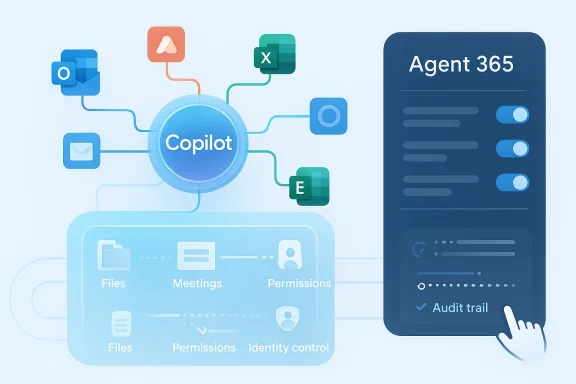
The headline feature is Copilot Cowork, a research-preview experience that turns a prompt into a plan, then executes that plan across Outlook, Teams, Word, Excel, PowerPoint, files, and calendars. Microsoft describes the workflow as something that can run for minutes or hours while the user does other work, with approval checkpoints where needed. In practice, that moves Copilot from a writing aid to an execution layer, which is a far bigger product shift than a new UI toggle. (venturebeat.com)
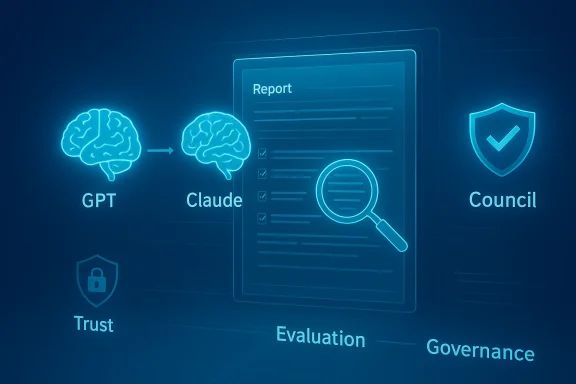
The second major theme is verification. Microsoft’s newly discussed Critique capability lets one model draft and another review, which is a direct response to the industry’s lingering hallucination problem. The company’s own support guidance for Researcher stresses source-cited outputs, admin controls for Anthropic model access, and phased rollout timing, underscoring that Microsoft sees trust as a feature, not a footnote. (support.microsoft.com)
There is also a commercial angle that should not be overlooked. Microsoft has paired these AI updates with a broader Frontier program and a premium enterprise bundle, while Reuters reporting indicates the company is widening access to its newest AI workflows in stages. That combination suggests Microsoft wants to make Copilot the default place where AI work happens inside the enterprise, with governance and billing attached to the same stack. (blogs.microsoft.com)
The broader market context matters here. Over the past year and a half, enterprise AI has shifted from chatbot demos to agentic systems that can browse files, coordinate across apps, and perform semi-autonomous tasks. Microsoft’s own language now reflects that shift, with references to Work IQ, Agent 365, and a Frontier program that lets customers test experimental features before they are generally available. The company is not merely adding models; it is building the operating system for enterprise AI. (microsoft.com)
Anthropic’s role is important because it changes the competitive story. Microsoft has historically leaned heavily on OpenAI, but its newest Copilot materials say it is now openly combining models from OpenAI and Anthropic, and that Claude is available in mainline Copilot Chat for Frontier users. That is a notable break from the old single-provider narrative and a sign that Microsoft wants flexibility more than exclusivity. (blogs.microsoft.com)
The trust story is just as central as the model story. Researcher now promises structured, source-cited reports, and Microsoft says admins must explicitly allow Anthropic models before users can invoke Claude in that experience. The phased rollout, English-first Frontier access, and security-bound execution model all suggest the company is trying to preempt the risks that come with more autonomous AI. That caution is telling. (support.microsoft.com)
Another backdrop is Microsoft’s increasing willingness to package AI with governance. The company has publicly discussed a higher-tier Microsoft 365 E7 bundle, Agent 365 for control and security, and a much broader agent ecosystem operating inside enterprise permissions. In other words, the new Copilot features are not isolated product launches; they are part of a licensing and platform architecture designed to make AI consumption predictable for IT departments. (blogs.microsoft.com)
It also reveals how enterprise customers actually buy AI. They do not just want “better answers”; they want fewer embarrassing mistakes, fewer compliance surprises, and fewer hours spent verifying output manually. A reviewer model will not guarantee correctness, but it gives Microsoft a story about layered assurance, which is increasingly valuable in regulated or high-stakes workflows. That is the real product message. (support.microsoft.com)
At the same time, the feature raises practical questions. If the reviewer model and the drafting model disagree, which one wins, and how transparent will that disagreement be to the user? Microsoft’s public materials emphasize source citations and admin controls, but the user experience of model conflict will matter as much as the technical design. (support.microsoft.com)
It also gives Microsoft a way to normalize heterogeneity. The company has said that Copilot is model diverse by design, and Model Council is the UX expression of that philosophy. Rather than pretending that one model is best at everything, Microsoft is teaching users to work with plurality as a feature. (blogs.microsoft.com)
There is a subtle competitive angle here too. If Microsoft can make model comparison feel native, it weakens the idea that users need to leave the Microsoft ecosystem to benchmark or validate AI output. That keeps the workflow inside Microsoft 365, which is exactly where the company wants the value to stay. (blogs.microsoft.com)
That matters because Microsoft is using Frontier as a controlled exposure mechanism. Instead of shipping agentic behavior to everyone at once, it can gather feedback, observe failure modes, and refine admin controls before broad release. In a category where one bad action can create trust damage, that slower rollout is not timid; it is strategically sensible. (support.microsoft.com)
Reuters’ framing of the update as early access to Copilot Cowork matches the broader Microsoft messaging: this is being introduced in stages, with limited customer testing first and wider availability later through Frontier. That sequencing suggests Microsoft is still calibrating how autonomous it wants these agents to be in real-world enterprise environments.
That said, multi-model architecture comes with overhead. The more providers involved, the more difficult it becomes to explain behavior, maintain consistent policy enforcement, and troubleshoot failures. Microsoft seems willing to accept that complexity in exchange for higher confidence and better task fit, which is a classic enterprise trade-off. The simple path is over. (blogs.microsoft.com)
The open question is whether customers will experience model diversity as empowerment or confusion. If Microsoft abstracts everything correctly, most users will just notice that Copilot gets better at certain jobs. If the abstraction leaks, users may be forced to think about model choice when they just want work done. (blogs.microsoft.com)
This approach also addresses a very real enterprise concern: agent sprawl. Once agents can create documents, reschedule meetings, file summaries, and trigger workflows, organizations need policy enforcement, logging, and role-based access just as much as they need good model output. Microsoft’s pitch is that it can provide both intelligence and trust, which is a persuasive combination for cautious buyers. (blogs.microsoft.com)
Still, governance is only as strong as the workflow around it. If users are allowed to approve too much too quickly, or if admins cannot meaningfully review agent behavior, the control plane becomes a label rather than a safeguard. That gap between promise and operational reality is where many AI deployments fail. (microsoft.com)
This also helps explain why Microsoft is so focused on workflows that already live inside Microsoft 365. If Copilot Cowork can own enough of the day-to-day work loop, the business case becomes less about novelty and more about operating efficiency. That is a much more durable revenue argument than “try this cool AI feature.” (microsoft.com)
For consumers and small teams, the economics are less clear. Frontier access and premium tiers may be interesting, but the real leverage is likely to remain with enterprises that already depend on Microsoft 365 as their system of record. In that sense, Copilot Cowork is less a mass-market AI launch than a strategic deepening of Microsoft’s enterprise moat. (support.microsoft.com)
That creates a difficult challenge for rivals. They may have sharper functionality in one area, but they usually lack Microsoft’s combination of app integration, compliance tooling, identity infrastructure, and distribution. In enterprise software, those factors often decide the deal long before model benchmarks do. (blogs.microsoft.com)
The catch is that Microsoft now has to prove it can support this breadth without confusing buyers. A product that does everything inside one suite can also become a product that does nothing clearly enough. That is the risk of platform ambition. (venturebeat.com)
That distinction matters because people often evaluate AI features by their demo output, not by their deployment reality. A polished briefing deck or neatly summarized memo can hide the hard questions about permission boundaries, stale context, and whether the AI actually understood the task. The deeper the agent gets into work, the more those issues matter. (support.microsoft.com)
There is also a user-expectation problem. Once Microsoft frames Copilot as a coworker that can act, users will expect reliability to rise sharply. If the agent is only occasionally wrong, that may still be too wrong for trust-sensitive work. This is where confidence can evaporate fast. (support.microsoft.com)
The bigger trend is already clear. Microsoft is building toward a workplace where AI systems do not merely answer questions but coordinate work, check each other, and stay within governed boundaries. That is a much more mature vision of AI than the early chatbot era, and it is also a sign that the competition in enterprise software is moving from model quality to platform control. (microsoft.com)
Source: dev.ua Microsoft unveils AI updates and opens early access to Copilot Cowork
 Overview
Microsoft’s Copilot strategy has been evolving from a single-assistant promise into something much more ambitious: a managed ecosystem of agents, models, and governance controls built for enterprise work. In March 2026, Microsoft said Copilot is now model diverse by design, explicitly pairing OpenAI and Anthropic systems inside Microsoft 365 instead of relying on a single provider. That matters because the company is no longer selling only speed or convenience; it is selling orchestration, oversight, and reliability. (blogs.microsoft.com)The headline feature is Copilot Cowork, a research-preview experience that turns a prompt into a plan, then executes that plan across Outlook, Teams, Word, Excel, PowerPoint, files, and calendars. Microsoft describes the workflow as something that can run for minutes or hours while the user does other work, with approval checkpoints where needed. In practice, that moves Copilot from a writing aid to an execution layer, which is a far bigger product shift than a new UI toggle. (venturebeat.com)
The second major theme is verification. Microsoft’s newly discussed Critique capability lets one model draft and another review, which is a direct response to the industry’s lingering hallucination problem. The company’s own support guidance for Researcher stresses source-cited outputs, admin controls for Anthropic model access, and phased rollout timing, underscoring that Microsoft sees trust as a feature, not a footnote. (support.microsoft.com)
There is also a commercial angle that should not be overlooked. Microsoft has paired these AI updates with a broader Frontier program and a premium enterprise bundle, while Reuters reporting indicates the company is widening access to its newest AI workflows in stages. That combination suggests Microsoft wants to make Copilot the default place where AI work happens inside the enterprise, with governance and billing attached to the same stack. (blogs.microsoft.com)
Background
Microsoft’s first wave of Copilot messaging centered on augmentation: summarize, draft, rewrite, and search faster inside Microsoft 365. That original pitch was attractive because it fit into familiar tools, but it still treated AI as an assistant living beside the work rather than inside the workflow. The current update shows how far the category has moved in just a short time. (blogs.microsoft.com)The broader market context matters here. Over the past year and a half, enterprise AI has shifted from chatbot demos to agentic systems that can browse files, coordinate across apps, and perform semi-autonomous tasks. Microsoft’s own language now reflects that shift, with references to Work IQ, Agent 365, and a Frontier program that lets customers test experimental features before they are generally available. The company is not merely adding models; it is building the operating system for enterprise AI. (microsoft.com)
Anthropic’s role is important because it changes the competitive story. Microsoft has historically leaned heavily on OpenAI, but its newest Copilot materials say it is now openly combining models from OpenAI and Anthropic, and that Claude is available in mainline Copilot Chat for Frontier users. That is a notable break from the old single-provider narrative and a sign that Microsoft wants flexibility more than exclusivity. (blogs.microsoft.com)
The trust story is just as central as the model story. Researcher now promises structured, source-cited reports, and Microsoft says admins must explicitly allow Anthropic models before users can invoke Claude in that experience. The phased rollout, English-first Frontier access, and security-bound execution model all suggest the company is trying to preempt the risks that come with more autonomous AI. That caution is telling. (support.microsoft.com)
Another backdrop is Microsoft’s increasing willingness to package AI with governance. The company has publicly discussed a higher-tier Microsoft 365 E7 bundle, Agent 365 for control and security, and a much broader agent ecosystem operating inside enterprise permissions. In other words, the new Copilot features are not isolated product launches; they are part of a licensing and platform architecture designed to make AI consumption predictable for IT departments. (blogs.microsoft.com)
How Critique Changes Researcher
Critique is the most intriguing part of this update because it turns model diversity into an internal quality-control mechanism. Instead of asking one model to do everything, Microsoft is effectively using one model to generate and another to challenge the answer. That may not eliminate errors, but it is a more realistic answer to hallucination than pretending a single pass is enough. (support.microsoft.com)A reviewer model is more than a gimmick
The practical benefit is easy to understand. If one model writes the first draft and a second model checks structure, factual coherence, or missing context, the output should become more stable and more defensible. Microsoft has already been positioning Researcher as a source-cited assistant for complex, multi-step work, so adding a critique layer is a logical extension rather than a marketing flourish. (support.microsoft.com)It also reveals how enterprise customers actually buy AI. They do not just want “better answers”; they want fewer embarrassing mistakes, fewer compliance surprises, and fewer hours spent verifying output manually. A reviewer model will not guarantee correctness, but it gives Microsoft a story about layered assurance, which is increasingly valuable in regulated or high-stakes workflows. That is the real product message. (support.microsoft.com)
At the same time, the feature raises practical questions. If the reviewer model and the drafting model disagree, which one wins, and how transparent will that disagreement be to the user? Microsoft’s public materials emphasize source citations and admin controls, but the user experience of model conflict will matter as much as the technical design. (support.microsoft.com)
- Critique aims to reduce hallucinations through model cross-checking.
- The approach fits Microsoft’s multi-model Copilot strategy.
- It should be most valuable in research-heavy enterprise scenarios.
- The user benefit depends on how visible the review process becomes.
- A reviewer model adds trust, but also adds complexity.
Model Council and Side-by-Side Comparison
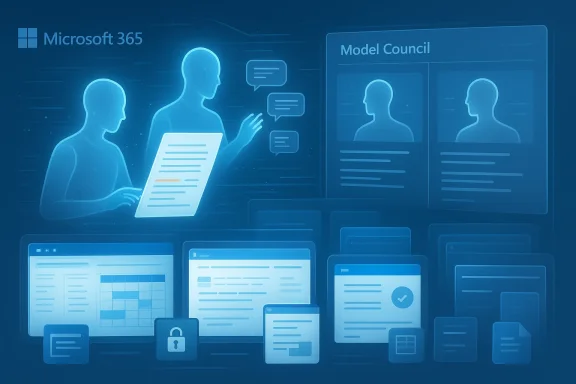
If Critique is about improving one answer, Model Council is about helping users compare several answers at once. That matters because different models still have different strengths, and the fastest way to make that useful is to let people see disagreement rather than hiding it. Microsoft’s public messaging strongly suggests it wants Copilot to become a place where model selection is abstracted away from the user unless comparison is the task itself. (blogs.microsoft.com)Why comparison is a strategic feature
For enterprise users, side-by-side comparison is often more important than raw benchmark scores. Procurement teams, analysts, marketers, and researchers all need to know whether a model is being concise, cautious, creative, or overly confident. A council-style interface could make Copilot feel less like a black box and more like a controlled workspace. (support.microsoft.com)It also gives Microsoft a way to normalize heterogeneity. The company has said that Copilot is model diverse by design, and Model Council is the UX expression of that philosophy. Rather than pretending that one model is best at everything, Microsoft is teaching users to work with plurality as a feature. (blogs.microsoft.com)
There is a subtle competitive angle here too. If Microsoft can make model comparison feel native, it weakens the idea that users need to leave the Microsoft ecosystem to benchmark or validate AI output. That keeps the workflow inside Microsoft 365, which is exactly where the company wants the value to stay. (blogs.microsoft.com)
- Side-by-side comparison may improve confidence in high-stakes tasks.
- It reinforces Microsoft’s claim that Copilot is open and heterogeneous.
- It helps users understand trade-offs between models.
- It could reduce lock-in to a single answer style.
- It may also expose inconsistency across providers, which is both useful and awkward.
Copilot Cowork and the Frontier Rollout
Copilot Cowork is where Microsoft’s AI ambitions become visible to ordinary users. The company describes the feature as a background assistant that can plan tasks, coordinate across apps, and return completed work, all within Microsoft 365’s security and governance boundaries. That is a big step beyond chat, because it implies durable, permissioned action rather than just suggestion. (venturebeat.com)What Frontier actually means
Microsoft’s Frontier program is its early-access lane for experimental AI features in Microsoft 365. The support page says Frontier gives users hands-on access before general availability and notes that early features may change as Microsoft improves them. It is available to enterprise and business users with Microsoft 365 Copilot licenses, and even to some personal subscribers, though availability is staged and limited. (support.microsoft.com)That matters because Microsoft is using Frontier as a controlled exposure mechanism. Instead of shipping agentic behavior to everyone at once, it can gather feedback, observe failure modes, and refine admin controls before broad release. In a category where one bad action can create trust damage, that slower rollout is not timid; it is strategically sensible. (support.microsoft.com)
Reuters’ framing of the update as early access to Copilot Cowork matches the broader Microsoft messaging: this is being introduced in stages, with limited customer testing first and wider availability later through Frontier. That sequencing suggests Microsoft is still calibrating how autonomous it wants these agents to be in real-world enterprise environments.
- Frontier is Microsoft’s early-access program for experimental AI features.
- Copilot Cowork is currently in research preview or limited testing.
- Broader access is being staged rather than launched all at once.
- Microsoft is treating feedback and governance as product inputs.
- The company is clearly trying to avoid a consumer-style rollout failure.
Multi-Model Strategy and the OpenAI-Anthropic Balance
One of the most consequential parts of this news is not the feature list but the supplier mix. Microsoft’s blog explicitly says Copilot is model diverse by design and that it leverages leading models from OpenAI and Anthropic across clouds and data services. That is a deliberate statement of strategy, and it matters because the company has spent years being closely associated with OpenAI. (blogs.microsoft.com)What model diversity really buys Microsoft
For Microsoft, diversity is not just about redundancy. It gives the company bargaining leverage, product flexibility, and a way to route specific tasks to the model best suited for them. It also helps Microsoft argue that customers are not locked into one AI vendor’s strengths and weaknesses. (blogs.microsoft.com)That said, multi-model architecture comes with overhead. The more providers involved, the more difficult it becomes to explain behavior, maintain consistent policy enforcement, and troubleshoot failures. Microsoft seems willing to accept that complexity in exchange for higher confidence and better task fit, which is a classic enterprise trade-off. The simple path is over. (blogs.microsoft.com)
The open question is whether customers will experience model diversity as empowerment or confusion. If Microsoft abstracts everything correctly, most users will just notice that Copilot gets better at certain jobs. If the abstraction leaks, users may be forced to think about model choice when they just want work done. (blogs.microsoft.com)
- Microsoft is signaling that it wants to be model-agnostic.
- OpenAI remains important, but it is no longer the only story.
- Anthropic adds a credible alternative for reasoning and agent workflows.
- More providers can improve task matching.
- More providers can also complicate governance and troubleshooting.
Enterprise Governance and Security
Microsoft’s strongest argument for these new capabilities is not raw intelligence; it is control. The company repeatedly emphasizes that Copilot Cowork runs inside Microsoft 365’s existing identity, permissions, and compliance framework, and that actions are auditable by default. That matters because enterprise AI only scales when security teams believe they can see and contain what the agent is doing. (venturebeat.com)Agent 365 and the control-plane approach
The companion to Copilot Cowork is Agent 365, which Microsoft describes as a control plane for AI agents. In Microsoft’s own March 2026 materials, the goal is to give IT and security leaders a single place to observe, govern, manage, and secure agents across the organization. That is a familiar Microsoft move: solve the adoption problem by wrapping the technology in the management layer enterprises already expect. (blogs.microsoft.com)This approach also addresses a very real enterprise concern: agent sprawl. Once agents can create documents, reschedule meetings, file summaries, and trigger workflows, organizations need policy enforcement, logging, and role-based access just as much as they need good model output. Microsoft’s pitch is that it can provide both intelligence and trust, which is a persuasive combination for cautious buyers. (blogs.microsoft.com)
Still, governance is only as strong as the workflow around it. If users are allowed to approve too much too quickly, or if admins cannot meaningfully review agent behavior, the control plane becomes a label rather than a safeguard. That gap between promise and operational reality is where many AI deployments fail. (microsoft.com)
- Copilot actions are intended to remain within existing Microsoft 365 controls.
- Auditable by default is a key enterprise reassurance.
- Agent 365 is Microsoft’s answer to agent sprawl.
- Governance will live or die by admin visibility and enforcement.
- Security buyers will care as much about logs as about model quality.
Commercial Implications
Microsoft’s Copilot update is also a pricing and packaging story. The company has been tying AI features to broader enterprise bundles and premium licensing, which helps explain why it is investing so heavily in advanced agent tooling. The logic is straightforward: if AI becomes part of the work platform, then AI becomes part of the platform’s monetization. (venturebeat.com)Why the bundle matters
Enterprise buyers do not purchase AI features in isolation. They purchase security, compliance, admin controls, and support together with the capability itself. Microsoft’s broader Frontier suite and premium packaging reflect that reality, and they also create a path for Microsoft to upsell organizations that want the newest AI features without managing a patchwork of vendors. (blogs.microsoft.com)This also helps explain why Microsoft is so focused on workflows that already live inside Microsoft 365. If Copilot Cowork can own enough of the day-to-day work loop, the business case becomes less about novelty and more about operating efficiency. That is a much more durable revenue argument than “try this cool AI feature.” (microsoft.com)
For consumers and small teams, the economics are less clear. Frontier access and premium tiers may be interesting, but the real leverage is likely to remain with enterprises that already depend on Microsoft 365 as their system of record. In that sense, Copilot Cowork is less a mass-market AI launch than a strategic deepening of Microsoft’s enterprise moat. (support.microsoft.com)
- AI is being bundled with security and governance, not sold as a standalone trick.
- Premium licensing helps Microsoft monetize agent adoption.
- Enterprise workflow ownership is the real economic prize.
- Smaller customers may benefit later, but enterprises get first priority.
- The product strategy reinforces Microsoft 365 stickiness.
Competitive Pressure on Rivals
Microsoft’s move puts pressure on almost every major enterprise AI competitor. Anthropic has its own agent story, OpenAI continues pushing deeper computer-use and productivity workflows, and Google keeps expanding Workspace AI integrations. By embedding multiple models into Microsoft 365, Microsoft is trying to make the competition happen inside its own house. (venturebeat.com)Why distribution may matter more than raw model quality
Microsoft’s biggest advantage is not that it has the best model. It is that it already sits where work happens for hundreds of millions of users. If Copilot Cowork is good enough and tightly integrated enough, customers may prefer the path of least resistance over a standalone AI tool, even if that standalone tool is more flexible in isolation. (venturebeat.com)That creates a difficult challenge for rivals. They may have sharper functionality in one area, but they usually lack Microsoft’s combination of app integration, compliance tooling, identity infrastructure, and distribution. In enterprise software, those factors often decide the deal long before model benchmarks do. (blogs.microsoft.com)
The catch is that Microsoft now has to prove it can support this breadth without confusing buyers. A product that does everything inside one suite can also become a product that does nothing clearly enough. That is the risk of platform ambition. (venturebeat.com)
- Rivals must compete not just on models, but on workflow placement.
- Microsoft’s distribution gives it a major structural advantage.
- Anthropic may benefit even as it helps Microsoft compete.
- OpenAI’s role remains important but no longer exclusive.
- Enterprise buyers may prefer integrated governance over standalone novelty.
What This Means for Users
For everyday Microsoft 365 users, the near-term effect is likely to be practical rather than dramatic. Copilot may become better at preparing meetings, comparing documents, cleaning up calendars, and generating structured outputs from work context. Those are not flashy tasks, but they are the ones that consume time every day. (venturebeat.com)Consumer and enterprise impact are not the same
Consumers will mostly notice convenience, assuming Frontier access expands to them in visible ways. Enterprises, by contrast, will focus on permissions, audit trails, and whether the agent can safely act on behalf of employees without creating shadow automation. Microsoft’s own language strongly suggests the enterprise case is the primary one. (support.microsoft.com)That distinction matters because people often evaluate AI features by their demo output, not by their deployment reality. A polished briefing deck or neatly summarized memo can hide the hard questions about permission boundaries, stale context, and whether the AI actually understood the task. The deeper the agent gets into work, the more those issues matter. (support.microsoft.com)
There is also a user-expectation problem. Once Microsoft frames Copilot as a coworker that can act, users will expect reliability to rise sharply. If the agent is only occasionally wrong, that may still be too wrong for trust-sensitive work. This is where confidence can evaporate fast. (support.microsoft.com)
- Users gain time-saving help on routine workflows.
- Enterprises get stronger controls, but also more governance work.
- Trust will depend on repeatability, not just demo quality.
- Multi-model review may improve confidence in research tasks.
- The closer AI gets to doing work, the higher the expectation bar becomes.
Strengths and Opportunities
Microsoft’s latest Copilot push has several clear strengths. It combines model diversity, workflow integration, and enterprise governance in a way few rivals can match at scale. That combination gives Microsoft a credible path to making Copilot a default work layer rather than a sidecar feature. (blogs.microsoft.com)- Deep Microsoft 365 integration gives Copilot access to the data and context where work already lives.
- Multi-model design reduces dependence on any one provider and can improve task fit.
- Critique-style review offers a practical way to reduce hallucinations.
- Frontier access lets Microsoft gather feedback before broad rollout.
- Agent 365 gives IT teams a governance story they can actually adopt.
- Commercial bundling creates a clearer path to monetization.
- Enterprise distribution gives Microsoft an advantage standalone AI tools struggle to match.
Risks and Concerns
The same features that make the strategy compelling also make it fragile. More models mean more complexity, and more autonomy means more ways for something to go wrong. Microsoft is right to emphasize governance, but governance cannot eliminate the reputational damage of an agent that acts confidently and incorrectly. (support.microsoft.com)- Hallucinations may shrink, but they will not disappear.
- Model disagreement could confuse users if the interface is not transparent.
- Agent sprawl may accelerate faster than admins can govern it.
- Permission errors could create serious enterprise trust issues.
- Pricing pressure may limit adoption outside large organizations.
- Workflow overreach could make users overly reliant on automation.
- Phased rollout complexity may frustrate customers expecting immediate access.
Looking Ahead
The next few weeks should tell us whether Microsoft’s multi-model Copilot strategy is more than a branding exercise. If Frontier access expands smoothly and Critique or Model Council actually produce better outcomes, Microsoft will have a strong case that the future of enterprise AI is not single-model brilliance but managed collaboration between models. If not, the update may be remembered as another ambitious step that proved harder to operationalize than to announce. (support.microsoft.com)The bigger trend is already clear. Microsoft is building toward a workplace where AI systems do not merely answer questions but coordinate work, check each other, and stay within governed boundaries. That is a much more mature vision of AI than the early chatbot era, and it is also a sign that the competition in enterprise software is moving from model quality to platform control. (microsoft.com)
- Watch whether Frontier access expands beyond early enterprise testers.
- Watch how Microsoft explains Critique and Model Council in real workflows.
- Watch whether Claude remains a review layer, a drafting layer, or both.
- Watch how quickly Agent 365 becomes a practical governance standard.
- Watch whether rivals respond with deeper productivity-suite integrations.
Source: dev.ua Microsoft unveils AI updates and opens early access to Copilot Cowork