

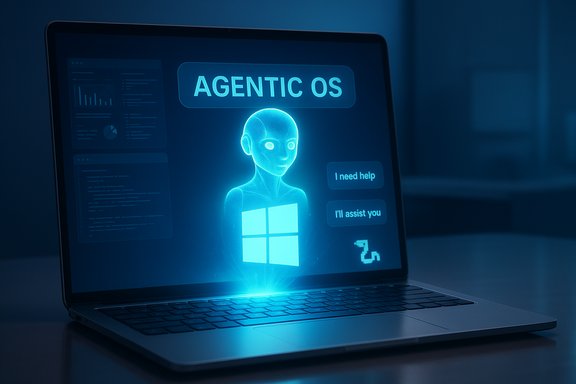
Microsoft’s AI chief pushed back at an angry wave of Windows users this week, calling critics “cynics” and saying he’s “mind‑blown” that anyone could be unimpressed by conversational and generative AI — a terse reaction that crystallizes a widening trust gap between Silicon Valley enthusiasm and everyday user expectations.
Background
What happened in one sentence
A public spat began after Windows leadership publicly framed Windows as “evolving into an agentic OS,” the message provoked an unusually large user backlash, and Mustafa Suleyman — CEO of Microsoft AI — answered critics on social media with a short, incredulous post that compared today’s AI to the wonder of playing Snake on a Nokia, prompting renewed debate about Microsoft’s AI strategy.Why this matters
Microsoft has made generative AI and agent-style assistants a central pillar of its product roadmap for Windows, Office, and enterprise services. That strategy is visible across Ignite announcements (Copilot Actions, Copilot Vision, the Model Context Protocol, and the Copilot+ PC branding) and in the company’s push to treat AI as a platform primitive rather than an optional add‑on. Those changes affect millions of Windows PCs, enterprise management tools, and developer workflows — which means user trust, opt‑outs, performance, and reliability now carry strategic weight.Overview: Suleyman’s post, the “agentic OS” line and the user reaction
The social exchange that set this off
- Pavan Davuluri, President of Windows & Devices, published public messaging promoting Windows as moving toward an “agentic OS” — a phrase meant to emphasize automation, context‑aware agents and deeper AI integration. The post was tied to Microsoft’s Ignite activity and its developer/enterprise messaging.
- The reply stream to that message filled with strong pushback from users — complaints ranged from “no one asked for this” to worries about bloat, telemetry, and loss of control. Several outlets picked up on the volume and tone of the replies.
- Mustafa Suleyman replied on X with a short message that included the line about growing up playing Snake on a Nokia and saying he was “mindblown” that people would be unimpressed by AI’s conversational and generative abilities. The post was amplified widely and became a lightning rod for criticism and commentary.
How the company framed its intentions
Microsoft’s official messaging at Ignite and in its Windows blog positions AI as an enterprise and productivity multiplier and describes a hardware class called Copilot+ PC that delivers enhanced on‑device AI experiences via an NPU (marketed around “40 TOPS” in Microsoft messaging), plus cloud/edge coordination. Those messages aim to reassure customers that agentic features will include enterprise grade security, controls, and opt‑in flows — but they have not ended user frustration about how and where these features show up.What the eBaum’s World piece said (summary of the user’s supplied material)
The short, viral post carried a tone of incredulity and frustration in coverage that portrayed Suleyman as out‑of‑touch with the lived experience of many Windows users. The article argued that the broader public is not impressed because many AI integrations feel intrusive, poorly executed, or impossible to disable — and it highlighted the disconnect between Silicon Valley’s exhilaration about technical possibility and mainstream users’ desire for a stable, controllable OS. That framing echoes the online reaction that criticized Microsoft for pushing flashy features before fixing long‑standing stability and usability issues.The facts, verified and cross‑checked
Suleyman’s post — verified
Multiple independent reporters and outlets documented Suleyman’s social comment and reproduced the central lines about Snake and being “mindblown.” Coverage appeared in mainstream technology outlets that tracked the exchange during Microsoft Ignite. The broad outline of the post and its context (a user backlash tied to Davuluri’s “agentic OS” messaging) are corroborated by multiple, independent reports. Caveat: several summaries reconstruct the exact wording from screenshots and reposts; some reporting correctly warns readers that verbatim reconstructions of short, rapidly edited social posts should be treated cautiously until an authoritative archive preserves the original. The principle stands: Suleyman made a short, incredulous comment that was widely circulated and reported.The “agentic OS” claim — verified and widely discussed
Pavan Davuluri’s post using the phrase “Windows is evolving into an agentic OS” is public and was widely reported. User replies were overwhelmingly negative in the observed threads, prompting follow‑up clarifications from Microsoft and additional press coverage that characterizes the reaction as sizable and substantive.Microsoft’s product claims and Copilot+ PC hardware guidance — verified
Microsoft’s Windows blog and Ignite materials explicitly describe Copilot+ PCs and detail experiences tied to on‑device inference, calling out an NPU figure in marketing copy (40 TOPS) and touting benefits such as offline support for some features and purported battery/performance improvements on qualifying hardware. These official materials show the company is defining a hardware tier and associating product promises with it. Those claims are Microsoft’s messaging and should be evaluated against independent testing and real‑world user experience.User experience: complaints and evidence
Independent user reports and consumer reviews show a broad pattern of dissatisfaction with Copilot and related AI features in real use:- Community threads and trust/review sites include many first‑hand complaints about hallucinations, incorrect or irrelevant guidance, inconsistent image/video recognition, and performance/latency problems when Copilot features are invoked. That pattern appears across many reports and reviewers.
Cross‑check note: “The Verge hands‑on report” and unverifiable claims
Many summaries, including community threads and corporate‑adjacent reporting, reference a hands‑on piece in which advertising‑style demos for Copilot did not hold up under real‑world testing. That specific claim — that The Verge published a detailed hands‑on showing Copilot falling short of ad scenarios — is cited repeatedly in secondary reporting and in community write‑ups. However, attempts to locate the original Verge hands‑on piece at the time of writing returned multiple references pointing to such coverage but did not produce a single canonical Verge article URL in the search results used here.Practical takeaway: the substance of the claim (real‑world tests revealing brittle behavior) is corroborated by multiple independent reviewers and user reports, but readers should treat any single‑article attribution (e.g., “The Verge reported X”) as subject to confirmation by checking the primary article archive. Where a primary link cannot be located, label the attribution as “widely reported” rather than definitively traceable to one named long‑form article.
Technical analysis — why users see brittle behavior
Multimodal perception is hard
Combining vision, language and audio reliably on arbitrary, messy inputs (e.g., compressed video, low‑contrast screenshots, varied fonts and UI layouts) requires complex engineering:- Robust frame selection and filtering to avoid misreading transient frames.
- High‑quality OCR tailored for on‑screen fonts and small, rotated text.
- Context handling that links visual elements to current app state and user intent.
Marketing demos typically use clean, controlled inputs; in the wild, deviations multiply failure cases. This explains many of the user‑reported misidentifications and inconsistent answers.
Latency and hardware constraints
On‑device inference can reduce latency and improve privacy, but it depends on capable NPUs, optimized quantized models, and sufficient memory bandwidth. Machines falling short of the Copilot+ hardware profile will be routed to cloud inference, which introduces variable latency and potential privacy concerns — a two‑tier experience that can feel inconsistent to end users. Microsoft’s own Copilot+ messaging references a 40 TOPS NPU figure for premium experiences, which is a hardware performance target rather than a universal baseline.Design and UX tradeoffs
Turning AI from a demonstrative novelty into a durable product requires:- Predictable failure modes and explicit fallbacks.
- Clear, discoverable opt‑outs and persistent controls.
- Admin tools and policies for IT to control agent capabilities in enterprise environments.
Users are upset because some of those UX guardrails either aren’t visible, are difficult to use, or don’t exist in the places where AI appears. That’s a design failure as much as an engineering one.
Product and trust risks
Business and brand risks
- Credibility gap: If marketing promises are perceived as hyperbole, enterprise procurement and developer communities will push back, slowing adoption and increasing compliance scrutiny.
- Fragmentation: A two‑tier Copilot experience across hardware will increase support burden and produce inconsistent outcomes for users with older devices.
- Regulatory and legal exposure: As agents take actions on behalf of users, liability questions increase — who is accountable when an agent executes a faulty workflow that costs money or violates policy?
Security and privacy concerns
- Data surface: Agents that access files and cloud accounts raise questions about telemetry, data residency, and exfiltration risks unless permissions, encryption and enterprise controls are rock solid.
- Default settings: Aggressive defaults that opt users into agentic behaviors are a governance risk. Users distrust hard‑to‑find controls and may interpret opt‑out friction as intentional upselling.
UX and human factors risks
- Annoyance fatigue: Users who find AI features intrusive are less likely to explore potential benefits.
- Error amplification: AI that provides plausible–but‑wrong answers (hallucinations) can be more harmful than silence, particularly in productivity or decision contexts. Trust degrades faster than it is built.
What Microsoft can do now — practical, prioritized roadmap
- Stabilize core experiences first.
- Prioritize fixes for the highest‑complaint features (vision misidentification, incorrect procedural guidance).
- Publish measurable performance goals and SLAs for enterprise features.
- Make opt‑outs clear and persistent.
- Provide a single, easily accessible control panel to disable Copilot/agent features at the OS level.
- Surface per‑feature consent for data access and execution rights.
- Improve telemetry and transparency for IT.
- Offer enterprise admins audit logs, tool‑call traces, and the ability to sandbox agents before wide rollout.
- Align advertising with representative user scenarios.
- Use reproducible examples and publish replication steps for ad demos so reviewers and customers can validate claims. If performance varies by hardware, disclose that clearly.
- Stage rollouts and public issue tracking.
- Use staged opt‑in previews that surface defects publicly and show incremental fixes. Public issue trackers improve credibility.
Strengths in Microsoft’s approach (what’s worth defending)
- Platform scale: Microsoft can integrate AI across Windows, Office, Azure and device partners — that integration delivers unique opportunities for useful automation when executed well.
- Hardware + cloud model: The Copilot+ concept — combining local NPUs with cloud services — is sound when OEMs and software align, offering low‑latency private inference for capable devices.
- Enterprise focus: Microsoft has the enterprise governance tools and contractual relationships to build auditable agent experiences if it prioritizes them. That capability is a structural advantage vs. consumer‑only vendors.
Where Microsoft is vulnerable
- Optics and tone: Executive comments that appear to scoff at user concerns (even inadvertently) exacerbate the perception problem and make trust rebuilding harder. Suleyman’s social jab may be sincere, but it read as dismissive to many users who cited concrete grievances.
- Brittleness vs. expectation: Users expect reliability from their OS. Even a small but visible track record of hallucinations, misidentifications or unexpected actions undermines adoption.
- Fragmentation and upgrade friction: The two‑tier experience (Copilot+ vs non‑Copilot+ PCs) will create support complexity and resentment among users who feel pushed toward upgrades.
How to read this moment — final analysis
This flashpoint is not a referendum on AI’s technical potential; it’s a test of product integration, communications discipline and governance. The same technology Suleyman celebrates — fluent conversation, multimodal generation and image/video creation — is indeed novel and technically impressive in controlled contexts. But productization at OS scale is not a lab exercise: it’s an exercise in trust engineering.Two clear lessons emerge:
- Technological wonder does not substitute for predictable, unobtrusive user experiences. A dependable OS is a baseline expectation.
- Messaging and optics matter. Leaders who celebrate progress without acknowledging real user pain risk making progress more expensive in terms of reputation and adoption.
Practical reading list for IT admins and power users (what to check now)
- Review Copilot and agent entitlements in tenant policies before broad user rollouts.
- Test Copilot features on representative hardware in your estate to measure latency and battery impact.
- Identify simple opt‑out steps and prepare user guidance for teams who prefer a non‑agentic Windows experience.
This episode makes a simple point plain: building the future requires more than bright demos and bold pronouncements — it demands earned trust, predictable behavior, and respect for user control. Microsoft’s technical lead and platform reach give it the tools to succeed. Whether the company listens and adjusts its rollout and messaging will determine if the agentic OS becomes a practical asset or a cautionary tale of product hubris.
Source: eBaum's World Microsoft AI CEO Says He’s Frustrated and Confused by the Fact that No One Likes AI
