

Microsoft on April 30, 2026, announced new Microsoft Security capabilities spanning Agent 365, Microsoft Defender, GitHub Advanced Security, and Microsoft Purview, with previews for AI-agent threat protection and a generally available Defender for Cloud integration with GitHub. The news is less a grab bag than a map of where Microsoft thinks enterprise security is headed. The company is trying to move security control from the edge of the workflow into the workflow itself. That is the right ambition, but it also raises a harder question for IT: whether Microsoft’s increasingly unified security stack is simplifying risk or simply relocating it inside Redmond’s platform.
The most important announcement is not the shiniest one. Microsoft Defender’s new preview capabilities for Agent 365 tooling gateway are aimed at a problem that has moved from conference-stage futurism to enterprise architecture: AI agents are no longer just chatbots with better manners. They are software actors that can invoke tools, access business data, trigger workflows, and make decisions across systems.
That changes the security model. A compromised user account is bad; a compromised agent acting with delegated authority, tool access, and partial autonomy is a different class of problem. It can make mistakes faster, at machine scale, while leaving behind telemetry that traditional SOC playbooks may not yet understand.
Microsoft’s answer is to make Defender watch the agent at runtime. The new preview capabilities are designed to detect, block, and investigate anomalous agent behavior, with near-real-time protection that evaluates attempted actions before execution. That last clause matters. The old model of “log it, alert it, investigate it” is too slow for autonomous workflows. If the agent is about to send sensitive data to the wrong place, the useful security decision happens before the tool call completes.
This is the first major theme of the announcement: Microsoft is treating agent behavior as a first-class security signal. Not just prompts. Not just model outputs. Not just access policies. Behavior.
That is why Microsoft’s language around the Agent 365 tooling gateway is worth reading closely. The gateway gives security teams visibility and control over agentic workflows, while Defender can evaluate the action an AI agent is attempting. In plain English: Microsoft wants the moment an agent reaches for a tool to become inspectable, enforceable, and investigable.
This is a practical recognition of how agent risk actually works. Prompt injection is not dangerous merely because a model says something strange. It becomes dangerous when the model’s manipulated reasoning causes a downstream action: send the email, query the database, retrieve the secret, summarize the confidential file, open the ticket, call the API, or modify the record.
The security boundary therefore moves from the chat window to the execution layer. That is a profound shift, and it is also where Microsoft has a structural advantage. If the agent, identity, productivity data, cloud runtime, and security console are all inside the Microsoft estate, Defender can correlate events that would otherwise be scattered across separate tools.
The danger, of course, is that this also assumes the Microsoft estate is where the organization’s agentic life will primarily happen. Many enterprises will have Copilot Studio agents, Azure AI Foundry workloads, GitHub-connected pipelines, SaaS automation, third-party model gateways, AWS and Google services, and bespoke internal agents. A security model that works best when everything is onboarded to Agent 365 may be elegant for Microsoft customers, but uneven for hybrid reality.
That last point is especially important. Blocking an endpoint process is disruptive; blocking an AI agent action could interrupt a business workflow whose owner does not even understand that an agent is involved. When security teams start enforcing controls at the tool-call layer, they will need new escalation paths, exception handling, and change-management norms.
This is where Microsoft’s Secure Future Initiative casts a long shadow over the announcement. After years of criticism over cloud security failures, token theft, and preventable identity weaknesses, Microsoft has been trying to reframe security as a company-wide engineering discipline rather than a feature checklist. Agent security is a test of whether that promise can survive contact with the next platform shift.
If Microsoft gets this right, Defender becomes not just a detection surface but a runtime governor for autonomous work. If it gets it wrong, customers inherit a new source of opaque policy failures with AI branding on top.
That may sound like conventional DevSecOps packaging, but the underlying problem is real. Most organizations do not suffer from a shortage of security alerts. They suffer from an inability to decide which alerts deserve scarce engineering time. A dependency flaw in a dormant repository is not the same as a flaw in an internet-facing production service touching sensitive data, but many tools still flatten those distinctions into queues that nobody loves.
Microsoft’s integration tries to make the alert more situationally aware. A finding in GitHub Advanced Security can be connected to the workload it affects. Defender for Cloud can add production context. The security team can understand whether the affected code is actually running, exposed, sensitive, or part of a larger attack path.
This is the sort of mundane plumbing that matters more than another dashboard. Security programs improve when they reduce ambiguity for the people who have to fix things. If a developer receives a vulnerability report that says, in effect, “this package issue affects this production container behind this exposed service,” the conversation changes from abstract compliance to concrete risk.
The Defender-GitHub integration is Microsoft’s attempt to interrupt that cycle. By mapping code changes to production environments and using runtime context to prioritize alerts, Microsoft is trying to give security teams a better answer to the question developers always ask: “Why this, why now?”
The AI-powered remediation angle fits naturally into that story. GitHub’s security tooling and Copilot-branded remediation features are increasingly being positioned not merely as detection aids but as fix-generation systems. The promise is straightforward: find the vulnerable code, identify whether it matters in production, route the work to the right owner, and accelerate the patch.
That promise deserves cautious optimism. AI-assisted remediation can help with repetitive dependency updates, boilerplate fixes, and well-understood vulnerability patterns. But it can also produce shallow patches, miss architectural context, or create a false sense that vulnerability management has become an automated exercise. A generated fix still needs review, testing, and ownership.
Microsoft’s better argument is not that AI will fix everything. It is that security context and developer workflow need to live closer together. On that point, the company is right.
For customers already deeply invested in Microsoft 365, Azure, Defender, and GitHub, this can be attractive. The fewer times an analyst has to pivot between tools, normalize identities, reconcile asset inventories, and manually correlate repository data with runtime workloads, the better. Integration is not a luxury in security operations. It is often the difference between a response and a postmortem.
But integration is also dependency. The more Microsoft’s tools become the natural place to see, govern, and remediate security risk, the more customers must trust Microsoft’s telemetry model, licensing model, data handling, admin experience, and roadmap discipline. A unified console is only as good as the assumptions underneath it.
That tension is especially acute for WindowsForum’s audience of sysadmins and IT pros. Microsoft’s security story is compelling when everything is configured properly. It becomes less glamorous when tenants are messy, licenses differ by business unit, connectors are half-enabled, old workloads are still alive, and ownership metadata is wrong. In the real enterprise, the platform is never as unified as the keynote diagram.
Purview’s demo is framed around helping analysts identify investigation-relevant data, use AI-powered deep content analysis, and mitigate sensitive-data risks in one integrated solution. It includes proactive risk assessment, reactive investigation after incidents such as breaches or leaks, and visualization through a data risk graph that correlates sensitive content, users, and activities.
That language aligns neatly with Microsoft’s agent-security message. If agents are going to access and act on enterprise data, then security teams need a richer picture of the data itself. Classification labels and DLP policies are useful, but they are blunt instruments when autonomous systems can summarize, transform, retrieve, and transmit information in ways that may not look like traditional exfiltration.
The “data risk graph” idea is the interesting part. Security increasingly depends on relationships: which user touched which file, which agent invoked which tool, which repository built which workload, which vulnerability affects which runtime asset, and which identity has permission to do more than it should. Microsoft is building toward a world where these relationships become navigable objects inside its security products.
That is not just a feature direction. It is a worldview.
This is why the Agent 365 and GitHub announcements belong in the same story. One is about governing autonomous action. The other is about connecting source code to runtime consequence. Purview adds the data layer. Together, they form a thesis: security teams cannot defend what they cannot connect.
For Windows administrators, this will feel familiar. Active Directory was always a graph, even before defenders talked about attack paths and lateral movement in graph terms. The same principle now applies to cloud identities, SaaS data, software supply chains, and AI agents. Attackers do not experience the enterprise as separate admin portals. They experience it as connected opportunity.
Microsoft’s opportunity is to make those connections visible to defenders first. Its challenge is to avoid burying that visibility under licensing gates, portal fragmentation, and preview caveats.
This is where AI adoption and security readiness are likely to diverge. Business units will build agents because the tools are accessible and the productivity story is immediate. Security teams will then be asked to produce visibility after the fact. We have seen this movie with SaaS, cloud subscriptions, shadow IT, and unmanaged scripts. Agent sprawl is just the next cut.
The preview Defender capabilities for Agent 365 are therefore not merely new detections. They are a hint that Microsoft wants Agent 365 to become the control plane for enterprise agents in the same way Entra became the identity control plane and Purview became the compliance and data-governance plane. That may be strategically coherent, but adoption will depend on whether organizations can bring non-Microsoft and custom agents into the fold without heroic engineering.
For now, the practical advice is simple: inventory first, runtime controls second, automation third. Organizations that invert that order will create fast-moving systems they cannot explain.
That model has appeal because security teams are overmatched. Alert volume is high, attacker automation is improving, and the attack surface now spans endpoints, cloud workloads, SaaS platforms, identities, repositories, pipelines, and data estates. A human-only SOC cannot manually reason across all of that fast enough.
But AI-assisted security also risks becoming a slogan that hides process debt. If asset ownership is wrong, AI will route fixes to the wrong team faster. If data classification is poor, AI will produce confident summaries over incomplete labels. If runtime context is missing, AI remediation may optimize for the wrong risk.
The strongest version of Microsoft’s pitch is not “AI will save the SOC.” It is “AI becomes useful when grounded in telemetry, identity, runtime, and data context.” That is a much more credible claim, and it explains why Microsoft is investing so heavily in connectors, graphs, and unified portals.
Expect Agent 365 to receive more attention as Microsoft tries to define the enterprise agent lifecycle: build, register, observe, govern, secure, investigate, and retire. Expect Defender to be positioned as the runtime shield for agents and AI workloads. Expect GitHub to be framed as the place where security remediation becomes part of the developer workflow rather than an after-hours chore.
The unanswered questions are the ones IT pros should care about most. What will the licensing look like at scale? Which agent platforms receive first-class support? How much telemetry is required? What happens in sovereign clouds, regulated environments, or hybrid estates? How noisy are the detections? How explainable are the blocks?
Those questions do not undercut the significance of the announcement. They define whether the announcement becomes operational reality.
Source: Microsoft What’s new, updated, or recently released in Microsoft Security | Microsoft Security Blog
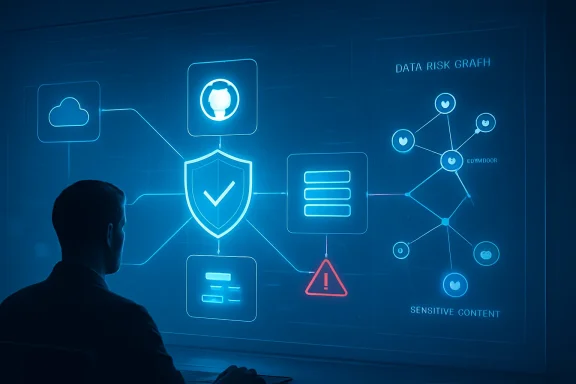 Microsoft Is Turning Agent Security Into an Operating Discipline
The most important announcement is not the shiniest one. Microsoft Defender’s new preview capabilities for Agent 365 tooling gateway are aimed at a problem that has moved from conference-stage futurism to enterprise architecture: AI agents are no longer just chatbots with better manners. They are software actors that can invoke tools, access business data, trigger workflows, and make decisions across systems.That changes the security model. A compromised user account is bad; a compromised agent acting with delegated authority, tool access, and partial autonomy is a different class of problem. It can make mistakes faster, at machine scale, while leaving behind telemetry that traditional SOC playbooks may not yet understand.
Microsoft’s answer is to make Defender watch the agent at runtime. The new preview capabilities are designed to detect, block, and investigate anomalous agent behavior, with near-real-time protection that evaluates attempted actions before execution. That last clause matters. The old model of “log it, alert it, investigate it” is too slow for autonomous workflows. If the agent is about to send sensitive data to the wrong place, the useful security decision happens before the tool call completes.
This is the first major theme of the announcement: Microsoft is treating agent behavior as a first-class security signal. Not just prompts. Not just model outputs. Not just access policies. Behavior.
The Tool Call Becomes the New Security Boundary
For decades, enterprise security has chased the place where intent becomes action. In Windows, that meant process creation, registry writes, driver loading, and network calls. In cloud infrastructure, it meant API calls, identity tokens, and policy changes. In agentic AI, the analogous moment is the tool invocation.That is why Microsoft’s language around the Agent 365 tooling gateway is worth reading closely. The gateway gives security teams visibility and control over agentic workflows, while Defender can evaluate the action an AI agent is attempting. In plain English: Microsoft wants the moment an agent reaches for a tool to become inspectable, enforceable, and investigable.
This is a practical recognition of how agent risk actually works. Prompt injection is not dangerous merely because a model says something strange. It becomes dangerous when the model’s manipulated reasoning causes a downstream action: send the email, query the database, retrieve the secret, summarize the confidential file, open the ticket, call the API, or modify the record.
The security boundary therefore moves from the chat window to the execution layer. That is a profound shift, and it is also where Microsoft has a structural advantage. If the agent, identity, productivity data, cloud runtime, and security console are all inside the Microsoft estate, Defender can correlate events that would otherwise be scattered across separate tools.
The danger, of course, is that this also assumes the Microsoft estate is where the organization’s agentic life will primarily happen. Many enterprises will have Copilot Studio agents, Azure AI Foundry workloads, GitHub-connected pipelines, SaaS automation, third-party model gateways, AWS and Google services, and bespoke internal agents. A security model that works best when everything is onboarded to Agent 365 may be elegant for Microsoft customers, but uneven for hybrid reality.
Preview Status Is the Fine Print That Matters
The Defender capabilities for AI agents are in preview, and that should temper the immediate expectations of security teams. Preview does not mean vaporware, but it does mean the operational contract is still forming. The difference between a compelling demo and a SOC-ready control is measured in false positives, missing telemetry, licensing complexity, and whether the alert explains why an action was blocked in language an analyst can defend.That last point is especially important. Blocking an endpoint process is disruptive; blocking an AI agent action could interrupt a business workflow whose owner does not even understand that an agent is involved. When security teams start enforcing controls at the tool-call layer, they will need new escalation paths, exception handling, and change-management norms.
This is where Microsoft’s Secure Future Initiative casts a long shadow over the announcement. After years of criticism over cloud security failures, token theft, and preventable identity weaknesses, Microsoft has been trying to reframe security as a company-wide engineering discipline rather than a feature checklist. Agent security is a test of whether that promise can survive contact with the next platform shift.
If Microsoft gets this right, Defender becomes not just a detection surface but a runtime governor for autonomous work. If it gets it wrong, customers inherit a new source of opaque policy failures with AI branding on top.
GitHub and Defender Are Being Fused Because Alert Triage Is Broken
The second major announcement, now generally available, is Microsoft Defender for Cloud’s integration with GitHub Advanced Security. This is the “code to runtime” story: connect security findings in repositories with deployed production environments, prioritize vulnerabilities using real runtime context, and coordinate remediation between development and security teams.That may sound like conventional DevSecOps packaging, but the underlying problem is real. Most organizations do not suffer from a shortage of security alerts. They suffer from an inability to decide which alerts deserve scarce engineering time. A dependency flaw in a dormant repository is not the same as a flaw in an internet-facing production service touching sensitive data, but many tools still flatten those distinctions into queues that nobody loves.
Microsoft’s integration tries to make the alert more situationally aware. A finding in GitHub Advanced Security can be connected to the workload it affects. Defender for Cloud can add production context. The security team can understand whether the affected code is actually running, exposed, sensitive, or part of a larger attack path.
This is the sort of mundane plumbing that matters more than another dashboard. Security programs improve when they reduce ambiguity for the people who have to fix things. If a developer receives a vulnerability report that says, in effect, “this package issue affects this production container behind this exposed service,” the conversation changes from abstract compliance to concrete risk.
Runtime Context Is Microsoft’s Answer to Developer Fatigue
Developer fatigue has become one of the defining constraints in modern security. Security teams can buy more scanners than engineering teams can service. The result is a familiar ritual: findings are exported, tickets are opened, exceptions are filed, risk is accepted, and the backlog grows old enough to become infrastructure.The Defender-GitHub integration is Microsoft’s attempt to interrupt that cycle. By mapping code changes to production environments and using runtime context to prioritize alerts, Microsoft is trying to give security teams a better answer to the question developers always ask: “Why this, why now?”
The AI-powered remediation angle fits naturally into that story. GitHub’s security tooling and Copilot-branded remediation features are increasingly being positioned not merely as detection aids but as fix-generation systems. The promise is straightforward: find the vulnerable code, identify whether it matters in production, route the work to the right owner, and accelerate the patch.
That promise deserves cautious optimism. AI-assisted remediation can help with repetitive dependency updates, boilerplate fixes, and well-understood vulnerability patterns. But it can also produce shallow patches, miss architectural context, or create a false sense that vulnerability management has become an automated exercise. A generated fix still needs review, testing, and ownership.
Microsoft’s better argument is not that AI will fix everything. It is that security context and developer workflow need to live closer together. On that point, the company is right.
The Platform Play Is Becoming Explicit
It is impossible to separate these announcements from Microsoft’s larger security-platform strategy. Defender, Purview, Entra, Sentinel, Security Copilot, GitHub, Azure, Microsoft 365, and now Agent 365 are being woven into a single narrative: Microsoft sees the security stack as an integrated fabric, not a set of loosely connected products.For customers already deeply invested in Microsoft 365, Azure, Defender, and GitHub, this can be attractive. The fewer times an analyst has to pivot between tools, normalize identities, reconcile asset inventories, and manually correlate repository data with runtime workloads, the better. Integration is not a luxury in security operations. It is often the difference between a response and a postmortem.
But integration is also dependency. The more Microsoft’s tools become the natural place to see, govern, and remediate security risk, the more customers must trust Microsoft’s telemetry model, licensing model, data handling, admin experience, and roadmap discipline. A unified console is only as good as the assumptions underneath it.
That tension is especially acute for WindowsForum’s audience of sysadmins and IT pros. Microsoft’s security story is compelling when everything is configured properly. It becomes less glamorous when tenants are messy, licenses differ by business unit, connectors are half-enabled, old workloads are still alive, and ownership metadata is wrong. In the real enterprise, the platform is never as unified as the keynote diagram.
Purview’s Investigation Demo Points to the Next Data-Security Fight
The third item in Microsoft’s announcement is a new hands-on demo for Microsoft Purview Data Security Investigations. It is easy to underrate demos, but this one points to a major operational battleground: data security teams need to investigate not only where data lives, but how people, agents, and workflows interact with it.Purview’s demo is framed around helping analysts identify investigation-relevant data, use AI-powered deep content analysis, and mitigate sensitive-data risks in one integrated solution. It includes proactive risk assessment, reactive investigation after incidents such as breaches or leaks, and visualization through a data risk graph that correlates sensitive content, users, and activities.
That language aligns neatly with Microsoft’s agent-security message. If agents are going to access and act on enterprise data, then security teams need a richer picture of the data itself. Classification labels and DLP policies are useful, but they are blunt instruments when autonomous systems can summarize, transform, retrieve, and transmit information in ways that may not look like traditional exfiltration.
The “data risk graph” idea is the interesting part. Security increasingly depends on relationships: which user touched which file, which agent invoked which tool, which repository built which workload, which vulnerability affects which runtime asset, and which identity has permission to do more than it should. Microsoft is building toward a world where these relationships become navigable objects inside its security products.
That is not just a feature direction. It is a worldview.
AI Security Is Becoming a Graph Problem
The old enterprise security metaphor was a perimeter. The newer one was a mesh. Microsoft’s latest announcements suggest the next one is a graph: identities, agents, data, code, tools, workloads, prompts, detections, and business processes connected in ways that can be queried, scored, blocked, and remediated.This is why the Agent 365 and GitHub announcements belong in the same story. One is about governing autonomous action. The other is about connecting source code to runtime consequence. Purview adds the data layer. Together, they form a thesis: security teams cannot defend what they cannot connect.
For Windows administrators, this will feel familiar. Active Directory was always a graph, even before defenders talked about attack paths and lateral movement in graph terms. The same principle now applies to cloud identities, SaaS data, software supply chains, and AI agents. Attackers do not experience the enterprise as separate admin portals. They experience it as connected opportunity.
Microsoft’s opportunity is to make those connections visible to defenders first. Its challenge is to avoid burying that visibility under licensing gates, portal fragmentation, and preview caveats.
The Agentic Era Will Punish Shallow Governance
Microsoft’s announcement repeatedly returns to governance, visibility, and protection. That triad is sensible, but it also exposes the gap many organizations will face. You cannot govern agents you have not inventoried. You cannot protect tool calls you have not routed through a controllable layer. You cannot investigate agent behavior if observability was never enabled.This is where AI adoption and security readiness are likely to diverge. Business units will build agents because the tools are accessible and the productivity story is immediate. Security teams will then be asked to produce visibility after the fact. We have seen this movie with SaaS, cloud subscriptions, shadow IT, and unmanaged scripts. Agent sprawl is just the next cut.
The preview Defender capabilities for Agent 365 are therefore not merely new detections. They are a hint that Microsoft wants Agent 365 to become the control plane for enterprise agents in the same way Entra became the identity control plane and Purview became the compliance and data-governance plane. That may be strategically coherent, but adoption will depend on whether organizations can bring non-Microsoft and custom agents into the fold without heroic engineering.
For now, the practical advice is simple: inventory first, runtime controls second, automation third. Organizations that invert that order will create fast-moving systems they cannot explain.
The Security Copilot Shadow Is Everywhere
Although the April 30 announcement is not centered on Security Copilot, its influence is obvious. Microsoft’s modern security strategy increasingly assumes that analysts and developers will work with AI assistance, whether through remediation suggestions, hunting support, incident summarization, or data investigation. The company is not just securing AI; it is using AI to sell a new operating model for security work.That model has appeal because security teams are overmatched. Alert volume is high, attacker automation is improving, and the attack surface now spans endpoints, cloud workloads, SaaS platforms, identities, repositories, pipelines, and data estates. A human-only SOC cannot manually reason across all of that fast enough.
But AI-assisted security also risks becoming a slogan that hides process debt. If asset ownership is wrong, AI will route fixes to the wrong team faster. If data classification is poor, AI will produce confident summaries over incomplete labels. If runtime context is missing, AI remediation may optimize for the wrong risk.
The strongest version of Microsoft’s pitch is not “AI will save the SOC.” It is “AI becomes useful when grounded in telemetry, identity, runtime, and data context.” That is a much more credible claim, and it explains why Microsoft is investing so heavily in connectors, graphs, and unified portals.
Microsoft Build Is the Obvious Next Stage
Microsoft says more will be discussed at Microsoft Build, scheduled for June 2–3, 2026, in San Francisco. That timing is no accident. Build is where Microsoft tells developers what to adopt next, and the security announcements are aimed at making that adoption feel governable rather than reckless.Expect Agent 365 to receive more attention as Microsoft tries to define the enterprise agent lifecycle: build, register, observe, govern, secure, investigate, and retire. Expect Defender to be positioned as the runtime shield for agents and AI workloads. Expect GitHub to be framed as the place where security remediation becomes part of the developer workflow rather than an after-hours chore.
The unanswered questions are the ones IT pros should care about most. What will the licensing look like at scale? Which agent platforms receive first-class support? How much telemetry is required? What happens in sovereign clouds, regulated environments, or hybrid estates? How noisy are the detections? How explainable are the blocks?
Those questions do not undercut the significance of the announcement. They define whether the announcement becomes operational reality.
Redmond’s April Security Drop Rewards Early Planners, Not Passive Tenants
Microsoft’s April 30 security update is best read as a planning signal. The customers that benefit most will be the ones already mapping agents, repositories, workloads, identities, and sensitive data into coherent ownership models. Everyone else will see attractive previews and integrations that expose how much groundwork remains.- Microsoft Defender’s new Agent 365 capabilities are in preview and focus on detecting, blocking, and investigating risky AI-agent behavior at runtime.
- The most important technical shift is the treatment of agent tool invocations as enforceable security events, not merely log entries after the fact.
- The Defender for Cloud and GitHub Advanced Security integration is now generally available and is designed to prioritize code findings using production runtime context.
- Microsoft Purview’s Data Security Investigations demo shows how data risk analysis is becoming tied to users, activities, sensitive content, and incident response.
- The common thread across the announcements is Microsoft’s push to connect identity, code, data, workloads, and agents into a single security graph.
- Organizations should start with inventory and ownership before relying on automated blocking, AI-generated remediation, or agentic workflows.
Source: Microsoft What’s new, updated, or recently released in Microsoft Security | Microsoft Security Blog
