

Photon Education’s new education platform is a reminder that the most effective classroom technology is often the kind students and teachers stop noticing after a few minutes. By combining Microsoft Azure AI, teacher-created content, and a hybrid approach built for real classrooms, the company has scaled a model that now reaches 200,000 students and is winning over teachers who want less friction, more feedback, and better visibility into learning. The story is bigger than a software rollout: it reflects a broader shift in edtech toward platforms that blend content, analytics, and inclusive design. Microsoft’s customer story says the platform, Classwise, gives teachers verified lessons, physical response pads, and post-lesson analytics, while more than two-thirds of content is now created by teachers themselves.
The Photon Education story lands at an important moment for education technology. Schools and ministries are no longer asking whether digital tools belong in classrooms; they are asking which tools actually improve teaching without burdening educators with yet another system to manage. That is why the Classwise model matters. It is not presented as a flashy consumer app or a generic LMS clone, but as a hybrid cloud-based education platform designed to help teachers prepare lessons, engage students in the room, and review performance afterward.
This is also a story about the maturation of AI in education. The public conversation often centers on chatbots, cheating, or the novelty of generative tools. Photon Education’s case takes a more practical path. The platform is built around lesson delivery, classroom interaction, analytics, and curriculum alignment, which suggests a more durable use of AI: supporting pedagogy instead of trying to replace it. That distinction matters because schools usually reject tools that look clever but add complexity.
Microsoft’s customer story also emphasizes accessibility and inclusion. Teachers can use screen-free response pads, students can answer quickly during class, and the system supports learners with selective mutism or spelling difficulties. In other words, the tech is not just about speeding up instruction; it is about making participation easier for students who might otherwise be left behind.
The scale is important too. Reaching 200,000 students is not a boutique pilot. It means the platform has to handle language variation, curricular differences, teacher expectations, and operational reliability across multiple educational settings. Microsoft says Classwise is localized for different countries and educational standards, which is exactly the kind of implementation detail that determines whether an edtech product stays useful after the launch buzz fades.
That is where Classwise appears to differentiate itself. According to Microsoft’s profile, the platform combines gamification, analytics, and content in one interface. Teachers get access to a repository of verified lessons and videos, can run lessons with physical student devices, and can later examine classroom usage data to see who may need additional support. The logic is simple but powerful: reduce prep time, increase engagement, and capture evidence of learning.
The inclusion of physical pads is especially interesting. Much of the edtech market has leaned heavily toward browser-based or smartphone-based participation, but that can create distractions and equity problems. Screen-free input devices are a deliberate design choice. They let students respond quickly without opening a laptop, toggling apps, or fighting for attention against other notifications. In practice, that can make classrooms feel more focused and more controllable.
There is also a strong localization angle here. Photon Education’s platform is not described as a one-size-fits-all import. Microsoft says the curriculum library spans subjects beyond STEM — including geography and history — and is adapted to different national standards. That matters because educational relevance is local. A lesson bank is only useful if it maps cleanly to what teachers are actually asked to teach.
The story also reflects the growing importance of inclusive education as a product requirement, not a marketing slogan. Teachers quoted in the Microsoft piece say the platform helps students with selective mutism and spelling difficulties participate without the pressure of speaking or handwriting in the moment. That is a meaningful clue about where classroom technology is heading: the best tools are those that remove barriers to participation rather than merely digitizing existing ones.
It also reflects the shift toward data-informed teaching. Teachers do not want dashboards for the sake of dashboards; they want signals that help them intervene sooner and more accurately. Photon Education’s approach appears to be built around that exact need. The post-lesson analytics are not positioned as surveillance; they are positioned as a way to identify students who need extra help.
The verified content repository is one of the strongest parts of the model. Teachers can draw from lessons and videos rather than start from scratch every time, which reduces prep burden and helps standardize quality. For busy teachers, that is not a minor convenience. It is often the difference between adopting a platform and abandoning it after one term.
The physical pads also stand out because they are a thoughtful answer to a familiar problem. If students are using tablets or laptops for every interaction, the classroom can become fragmented. Screen-free devices keep attention on the teacher’s display while still allowing instant participation. That is a classic example of good product design solving a pedagogical issue.
The best classroom tools do not just increase activity; they remove administrative drag. If a platform helps a teacher plan faster, manage the lesson more smoothly, and assess outcomes more easily, it has a real shot at becoming part of the school routine rather than a temporary experiment.
This is where Microsoft’s role becomes strategically important. Azure gives partners the computational and data foundation they need to run content-rich platforms across many schools and countries. In education, scale is not just about the number of users; it is about consistency. A platform can only be trusted if the same lesson delivery and analytics logic works reliably for every teacher.
There is also a governance dimension. Schools are increasingly sensitive to privacy, security, and vendor accountability. Cloud-based education tools have to strike a balance between flexibility and control. If the architecture is too rigid, teachers hate it. If it is too open, administrators worry about compliance. Microsoft’s ecosystem gives partners a way to claim both scale and governance, which is a compelling combination in institutional settings.
The cloud also helps explain why AI is becoming more practical in education. AI features are only useful when they are embedded in workflows teachers already understand. Azure AI allows Photon Education to present intelligence as part of the lesson environment rather than as a separate “AI tool” teachers must learn from scratch. That lowers the psychological barrier to adoption.
That matters for two reasons. First, it makes the product more relevant to teachers, who are judged by outcomes tied to specific national or regional expectations. Second, it reduces the risk that an AI-enabled platform will feel culturally generic or pedagogically out of touch. In education, context is not a nice-to-have; it is the product.
Education technology often promises inclusion but delivers convenience for the already-comfortable. This case feels different because it addresses the mechanics of participation. If a learner can respond privately, quickly, and without the stress of public performance, they may engage more often and more confidently. That can change outcomes in subtle but meaningful ways.
It also matters that the platform supports mixed-ability classes. Teachers can modify their own materials and adapt content from the library, which gives them more flexibility in accommodating different levels of readiness. This is the kind of capability that teachers value because it respects the reality of the classroom rather than imposing a rigid instructional model.
There is also a broader lesson for edtech vendors here. Schools are increasingly looking for tools that help students with very different needs, not just the average learner. A platform that can handle mixed-ability classes gracefully has a better chance of long-term relevance than one designed for a narrow, idealized student profile.
The fact that one teacher in the story became a Classwise ambassador and started training others in Poland is also revealing. Adoption spreads fastest when teachers can see colleagues using a tool successfully in similar classroom conditions. Peer credibility is still one of the most powerful forms of edtech marketing.
This matters because the strongest education platforms are usually those that let educators shape the experience rather than merely consume it. If teachers are generating content, the platform becomes more relevant over time, not less. The knowledge base grows from within the classroom, which is a powerful retention mechanism.
It also reflects a shift in how educational authority works. Teachers increasingly want high-quality starting points, but they do not want to be boxed into prepackaged content that ignores their style or local needs. When a platform allows them to customize and contribute, it becomes a collaborator rather than a constraint.
There is also a scaling advantage. If a product depends entirely on a central content team, growth becomes expensive and slow. If teachers can create and share content inside the platform, the ecosystem expands organically. That appears to be what Photon Education has achieved, and it is one reason the platform seems to have exceeded expectations.
It also helps explain why Microsoft and Photon Education are highlighting teacher engagement so prominently. A platform with passive users is fragile. A platform with active contributors becomes harder to dislodge.
That design choice is more important than it first appears. In many classrooms, digital participation creates a second attention economy. Students are technically engaged, but they are also tempted by tabs, apps, notifications, and multitasking. A physical response device keeps the interaction focused and bounded.
It also changes the rhythm of the lesson. Teachers can ask questions, get immediate feedback, and move on without waiting for devices to boot, login prompts to clear, or browsers to cooperate. That makes the classroom feel more live and less like a technical exercise.
This simplicity also supports younger learners or classrooms where attention management is a constant issue. When the interface is clear, students spend more time thinking about the answer and less time thinking about how to use the tool. That is exactly how classroom tech should behave.
The lesson for the wider edtech market is clear: the most effective products are often the least visually dramatic. They reduce cognitive load, not increase it. They disappear into the workflow just enough to make the learning feel natural.
This is where AI and analytics intersect with pedagogy. If the platform can help teachers identify patterns without forcing them to sift through raw data, it becomes a time-saving tool rather than an administrative burden. That distinction is critical for busy educators.
It also reinforces the idea that AI in education is becoming a platform layer rather than a headline feature. Schools are less interested in “AI” as a buzzword than in AI-enhanced tools that help teachers do their jobs better. That means edtech companies will need to prove practical value, not just technical sophistication.
Microsoft benefits from this trend because its Azure AI ecosystem can support a wide range of partner solutions. But the bigger market story is that the winners will likely be those who can combine strong infrastructure with credible classroom outcomes. The era of purely speculative edtech narratives is fading.
There is also a procurement reality here. Schools do not buy on novelty; they buy on trust, support, and repeatability. Once a platform proves it can work across multiple teachers and students, it becomes much harder for a rival to displace it with a feature checklist alone.
For rivals, that creates a steep challenge. They must match both the classroom experience and the enterprise-grade reliability story. In education, good enough is no longer enough if another platform can demonstrate a more complete workflow.
That translation is the real art. Schools need the discipline of enterprise software, but they do not want enterprise complexity. They need systems that can be managed, updated, and trusted, while remaining usable by teachers who already have enough on their plates.
Microsoft’s Azure-backed story helps here because it offers a familiar institutional framework. Security, scalability, and support are easier to justify when they are part of a larger cloud ecosystem. That does not automatically make a product better, but it does make it easier for school leaders to trust.
The fact that teachers are creating so much of the content is also a governance win. It suggests the platform has enough openness to feel flexible, but enough structure to remain coherent. That balance is hard to achieve, and it may be one reason the product has gained traction so quickly.
The opportunity is to turn that early success into a durable educational ecosystem. If Classwise continues to scale while preserving teacher ownership, localized content, and clear classroom value, it could become a model for how AI-backed education platforms should be built.
There is also the risk of complexity creeping back in. A platform that starts simple can become bloated if too many features are added too quickly. Teachers rarely ask for more menus; they ask for fewer headaches.
The other thing to watch is how the platform’s analytics and AI features mature. There is a big difference between reporting what happened and actually helping a teacher decide what to do next. If Photon Education can move further into actionable guidance without becoming intrusive, it will have a much stronger long-term story.
The real breakthrough is not that the platform adds AI to classrooms. It is that it helps schools use technology in ways that feel calm, inclusive, and operationally sensible. That is the kind of innovation that lasts, and it is exactly why the Photon Education story deserves attention well beyond the usual edtech cycle.
Source: Microsoft Photon Education brings innovative tech to 200,000 students with Microsoft Azure AI | Microsoft Customer Stories
 Overview
The Photon Education story lands at an important moment for education technology. Schools and ministries are no longer asking whether digital tools belong in classrooms; they are asking which tools actually improve teaching without burdening educators with yet another system to manage. That is why the Classwise model matters. It is not presented as a flashy consumer app or a generic LMS clone, but as a hybrid cloud-based education platform designed to help teachers prepare lessons, engage students in the room, and review performance afterward.This is also a story about the maturation of AI in education. The public conversation often centers on chatbots, cheating, or the novelty of generative tools. Photon Education’s case takes a more practical path. The platform is built around lesson delivery, classroom interaction, analytics, and curriculum alignment, which suggests a more durable use of AI: supporting pedagogy instead of trying to replace it. That distinction matters because schools usually reject tools that look clever but add complexity.
Microsoft’s customer story also emphasizes accessibility and inclusion. Teachers can use screen-free response pads, students can answer quickly during class, and the system supports learners with selective mutism or spelling difficulties. In other words, the tech is not just about speeding up instruction; it is about making participation easier for students who might otherwise be left behind.
The scale is important too. Reaching 200,000 students is not a boutique pilot. It means the platform has to handle language variation, curricular differences, teacher expectations, and operational reliability across multiple educational settings. Microsoft says Classwise is localized for different countries and educational standards, which is exactly the kind of implementation detail that determines whether an edtech product stays useful after the launch buzz fades.
Background
Photon Education’s rise fits into a broader evolution in school technology. For years, edtech vendors focused on one of three things: digitizing content, connecting classrooms, or automating assessment. Those categories still exist, but they are no longer enough on their own. Schools increasingly want a platform that can do all three while remaining easy enough for teachers to adopt without a long training arc.That is where Classwise appears to differentiate itself. According to Microsoft’s profile, the platform combines gamification, analytics, and content in one interface. Teachers get access to a repository of verified lessons and videos, can run lessons with physical student devices, and can later examine classroom usage data to see who may need additional support. The logic is simple but powerful: reduce prep time, increase engagement, and capture evidence of learning.
The inclusion of physical pads is especially interesting. Much of the edtech market has leaned heavily toward browser-based or smartphone-based participation, but that can create distractions and equity problems. Screen-free input devices are a deliberate design choice. They let students respond quickly without opening a laptop, toggling apps, or fighting for attention against other notifications. In practice, that can make classrooms feel more focused and more controllable.
There is also a strong localization angle here. Photon Education’s platform is not described as a one-size-fits-all import. Microsoft says the curriculum library spans subjects beyond STEM — including geography and history — and is adapted to different national standards. That matters because educational relevance is local. A lesson bank is only useful if it maps cleanly to what teachers are actually asked to teach.
The story also reflects the growing importance of inclusive education as a product requirement, not a marketing slogan. Teachers quoted in the Microsoft piece say the platform helps students with selective mutism and spelling difficulties participate without the pressure of speaking or handwriting in the moment. That is a meaningful clue about where classroom technology is heading: the best tools are those that remove barriers to participation rather than merely digitizing existing ones.
Why this matters now
The timing is significant because schools are becoming more cautious about software overload. Many districts already have too many overlapping platforms, and teachers are tired of logging into systems that solve one problem while creating two more. A platform that combines lesson content, student interaction, and analytics has a better chance of surviving real-world use than a feature-rich tool that only solves a narrow slice of the classroom day.It also reflects the shift toward data-informed teaching. Teachers do not want dashboards for the sake of dashboards; they want signals that help them intervene sooner and more accurately. Photon Education’s approach appears to be built around that exact need. The post-lesson analytics are not positioned as surveillance; they are positioned as a way to identify students who need extra help.
The Classwise platform model
At the heart of the story is the idea that a classroom platform should be more than a content library. Classwise appears to combine the lesson-planning convenience of an LMS, the engagement mechanics of a quiz tool, and the visibility of an analytics layer. That makes it less like a single-point product and more like a teaching environment.The verified content repository is one of the strongest parts of the model. Teachers can draw from lessons and videos rather than start from scratch every time, which reduces prep burden and helps standardize quality. For busy teachers, that is not a minor convenience. It is often the difference between adopting a platform and abandoning it after one term.
The physical pads also stand out because they are a thoughtful answer to a familiar problem. If students are using tablets or laptops for every interaction, the classroom can become fragmented. Screen-free devices keep attention on the teacher’s display while still allowing instant participation. That is a classic example of good product design solving a pedagogical issue.
Key platform features
- Verified lesson library for faster curriculum preparation.
- Teacher-created and teacher-shared content that expands the available resource pool.
- Physical response pads that reduce screen distraction.
- Post-lesson analytics that help identify learning gaps.
- Localized curriculum support across countries and standards.
- Broad subject coverage beyond AI and STEM.
- Gamified participation to improve engagement.
Teacher workflow and time savings
The Microsoft story makes clear that time savings are a major part of the value proposition. Teachers get immediate feedback from student responses and can review outcomes after class, which reduces the amount of manual checking they have to do later. That is an important shift because teacher workload is one of the most underappreciated constraints in education technology.The best classroom tools do not just increase activity; they remove administrative drag. If a platform helps a teacher plan faster, manage the lesson more smoothly, and assess outcomes more easily, it has a real shot at becoming part of the school routine rather than a temporary experiment.
Azure AI and the infrastructure story
Photon Education’s platform is also a reminder that classroom innovation increasingly depends on cloud infrastructure. Microsoft Azure AI is not the visible classroom feature students touch, but it is part of what makes the platform scalable, searchable, localized, and responsive. That is often how modern education products work: the classroom experience looks simple because the back end is doing a lot of heavy lifting.This is where Microsoft’s role becomes strategically important. Azure gives partners the computational and data foundation they need to run content-rich platforms across many schools and countries. In education, scale is not just about the number of users; it is about consistency. A platform can only be trusted if the same lesson delivery and analytics logic works reliably for every teacher.
There is also a governance dimension. Schools are increasingly sensitive to privacy, security, and vendor accountability. Cloud-based education tools have to strike a balance between flexibility and control. If the architecture is too rigid, teachers hate it. If it is too open, administrators worry about compliance. Microsoft’s ecosystem gives partners a way to claim both scale and governance, which is a compelling combination in institutional settings.
Why cloud matters in classrooms
Cloud-backed education platforms can:- update content faster,
- support localization more easily,
- centralize usage analytics,
- reduce friction in rollout,
- and scale across many schools without rebuilding the product each time.
The cloud also helps explain why AI is becoming more practical in education. AI features are only useful when they are embedded in workflows teachers already understand. Azure AI allows Photon Education to present intelligence as part of the lesson environment rather than as a separate “AI tool” teachers must learn from scratch. That lowers the psychological barrier to adoption.
Localized at scale
Localization is one of the hardest parts of education software. Translation is easy; curriculum alignment is hard. The Microsoft story’s emphasis on localized content suggests Photon Education understands that a useful platform has to map to local standards, not just local language.That matters for two reasons. First, it makes the product more relevant to teachers, who are judged by outcomes tied to specific national or regional expectations. Second, it reduces the risk that an AI-enabled platform will feel culturally generic or pedagogically out of touch. In education, context is not a nice-to-have; it is the product.
Inclusion and accessibility
One of the most compelling parts of the Photon Education story is its focus on inclusive learning. Teachers quoted in Microsoft’s customer profile say the platform helps students with selective mutism and spelling difficulties participate without the anxiety that can come with speaking out loud or handwriting under pressure. That is not a side benefit. It is a core educational win.Education technology often promises inclusion but delivers convenience for the already-comfortable. This case feels different because it addresses the mechanics of participation. If a learner can respond privately, quickly, and without the stress of public performance, they may engage more often and more confidently. That can change outcomes in subtle but meaningful ways.
It also matters that the platform supports mixed-ability classes. Teachers can modify their own materials and adapt content from the library, which gives them more flexibility in accommodating different levels of readiness. This is the kind of capability that teachers value because it respects the reality of the classroom rather than imposing a rigid instructional model.
Inclusion by design
The platform’s inclusive features appear to work in several ways:- reducing social pressure during live participation,
- supporting learners with writing challenges,
- enabling low-friction responses in class,
- helping teachers differentiate instruction more easily,
- and making participation feel safer for quieter students.
There is also a broader lesson for edtech vendors here. Schools are increasingly looking for tools that help students with very different needs, not just the average learner. A platform that can handle mixed-ability classes gracefully has a better chance of long-term relevance than one designed for a narrow, idealized student profile.
The teacher’s role stays central
What stands out in the Microsoft story is that teachers remain central to the process. The platform does not replace them; it supports them with content, devices, and analytics. That is the right framing. Inclusive technology is most effective when it strengthens professional judgment rather than trying to automate it away.The fact that one teacher in the story became a Classwise ambassador and started training others in Poland is also revealing. Adoption spreads fastest when teachers can see colleagues using a tool successfully in similar classroom conditions. Peer credibility is still one of the most powerful forms of edtech marketing.
Teacher-created content and the shift in ownership
Perhaps the most interesting operational detail in the Microsoft story is that more than two-thirds of the content is now created by teachers, for teachers. That is a major signal about product-market fit. It suggests the platform is not just distributing lessons from the top down; it is enabling a community of practice.This matters because the strongest education platforms are usually those that let educators shape the experience rather than merely consume it. If teachers are generating content, the platform becomes more relevant over time, not less. The knowledge base grows from within the classroom, which is a powerful retention mechanism.
It also reflects a shift in how educational authority works. Teachers increasingly want high-quality starting points, but they do not want to be boxed into prepackaged content that ignores their style or local needs. When a platform allows them to customize and contribute, it becomes a collaborator rather than a constraint.
Why teacher-generated content wins
Teacher-created content offers several advantages:- It is more likely to match real classroom pacing.
- It can reflect local curriculum expectations.
- It usually feels more authentic to peers.
- It allows rapid iteration based on actual use.
- It gives teachers a sense of ownership.
There is also a scaling advantage. If a product depends entirely on a central content team, growth becomes expensive and slow. If teachers can create and share content inside the platform, the ecosystem expands organically. That appears to be what Photon Education has achieved, and it is one reason the platform seems to have exceeded expectations.
The trust loop
The more a platform is used, the more content it accumulates. The more content it accumulates, the more useful it becomes. The more useful it becomes, the more teachers contribute. That feedback loop is one of the healthiest signs in edtech.It also helps explain why Microsoft and Photon Education are highlighting teacher engagement so prominently. A platform with passive users is fragile. A platform with active contributors becomes harder to dislodge.
Classroom engagement without distraction
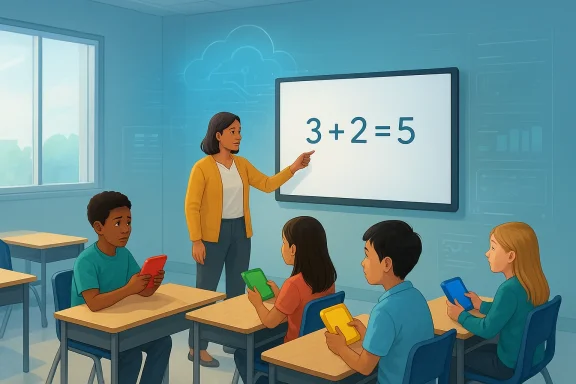
Classwise seems designed to solve a classic classroom problem: how do you keep students involved without turning the room into a forest of screens? The answer here is the screen-free pad model, where students can respond with colored buttons while the teacher controls the lesson flow on the whiteboard.That design choice is more important than it first appears. In many classrooms, digital participation creates a second attention economy. Students are technically engaged, but they are also tempted by tabs, apps, notifications, and multitasking. A physical response device keeps the interaction focused and bounded.
It also changes the rhythm of the lesson. Teachers can ask questions, get immediate feedback, and move on without waiting for devices to boot, login prompts to clear, or browsers to cooperate. That makes the classroom feel more live and less like a technical exercise.
Why simplicity matters
In education, feature complexity is often the enemy of adoption. Teachers usually do not want ten new functions; they want one system that works every day. The screen-free device model is elegant because it keeps the interaction simple while still collecting useful data for later analysis.This simplicity also supports younger learners or classrooms where attention management is a constant issue. When the interface is clear, students spend more time thinking about the answer and less time thinking about how to use the tool. That is exactly how classroom tech should behave.
The lesson for the wider edtech market is clear: the most effective products are often the least visually dramatic. They reduce cognitive load, not increase it. They disappear into the workflow just enough to make the learning feel natural.
Analytics after the lesson
The analytics layer is the other half of the equation. Teachers can see which students struggled, where the class fell short, and which material may need reinforcement. That allows for targeted follow-up, which is a stronger use of data than generic reporting.This is where AI and analytics intersect with pedagogy. If the platform can help teachers identify patterns without forcing them to sift through raw data, it becomes a time-saving tool rather than an administrative burden. That distinction is critical for busy educators.
Competitive implications for edtech
Photon Education’s success has implications beyond one product. It shows that the edtech market is rewarding vendors that can blend content, participation, analytics, and inclusion in one coherent system. That puts pressure on competitors who are still selling standalone tools with narrow use cases.It also reinforces the idea that AI in education is becoming a platform layer rather than a headline feature. Schools are less interested in “AI” as a buzzword than in AI-enhanced tools that help teachers do their jobs better. That means edtech companies will need to prove practical value, not just technical sophistication.
Microsoft benefits from this trend because its Azure AI ecosystem can support a wide range of partner solutions. But the bigger market story is that the winners will likely be those who can combine strong infrastructure with credible classroom outcomes. The era of purely speculative edtech narratives is fading.
What rivals will have to match
Competitors now have to answer tougher questions:- Can your product help teachers save prep time?
- Can it reduce classroom distraction?
- Can it support local curriculum standards?
- Can it help students who need alternative participation modes?
- Can it produce meaningful analytics without adding overhead?
- Can teachers make the content their own?
There is also a procurement reality here. Schools do not buy on novelty; they buy on trust, support, and repeatability. Once a platform proves it can work across multiple teachers and students, it becomes much harder for a rival to displace it with a feature checklist alone.
Microsoft’s ecosystem advantage
Microsoft’s advantage is not just Azure AI. It is the credibility of the broader stack. Education buyers already know Microsoft as a cloud, productivity, and collaboration vendor. That makes partner stories like Photon Education easier to absorb because they fit a recognizable ecosystem narrative.For rivals, that creates a steep challenge. They must match both the classroom experience and the enterprise-grade reliability story. In education, good enough is no longer enough if another platform can demonstrate a more complete workflow.
Enterprise discipline in a classroom setting
One reason this story resonates is that it brings enterprise logic into the classroom without making the classroom feel corporate. The platform’s value depends on reliability, content governance, analytics, and scalable infrastructure — all classic enterprise concerns. But those concerns are translated into teacher-friendly experiences.That translation is the real art. Schools need the discipline of enterprise software, but they do not want enterprise complexity. They need systems that can be managed, updated, and trusted, while remaining usable by teachers who already have enough on their plates.
Microsoft’s Azure-backed story helps here because it offers a familiar institutional framework. Security, scalability, and support are easier to justify when they are part of a larger cloud ecosystem. That does not automatically make a product better, but it does make it easier for school leaders to trust.
Enterprise benefits in education
- Predictable administration for IT teams.
- Centralized content management for curriculum leaders.
- Data visibility for intervention planning.
- Scalability across schools or districts.
- Vendor support pathways that institutions can rely on.
- Governance controls that matter in regulated environments.
The fact that teachers are creating so much of the content is also a governance win. It suggests the platform has enough openness to feel flexible, but enough structure to remain coherent. That balance is hard to achieve, and it may be one reason the product has gained traction so quickly.
Strengths and Opportunities
Photon Education’s approach has several clear strengths. It solves real classroom problems instead of inventing artificial ones, and it gives teachers tools that save time while improving participation. The emphasis on inclusion is especially strong because it addresses learner differences in a practical, usable way rather than as an afterthought.The opportunity is to turn that early success into a durable educational ecosystem. If Classwise continues to scale while preserving teacher ownership, localized content, and clear classroom value, it could become a model for how AI-backed education platforms should be built.
- Teacher efficiency through prebuilt verified lessons.
- Student engagement without constant screen distraction.
- Inclusive participation for learners with different needs.
- Localized curriculum relevance across different countries.
- Analytics-driven support for students who need help.
- Strong community contribution from teachers creating content.
- Azure AI scalability for future growth and product expansion.
Risks and Concerns
No edtech platform is immune to the common failure modes that come with scale. The biggest risk is overpromising: a system that works brilliantly in a few schools can still struggle when curriculum differences, support demands, or adoption habits vary more widely. The bigger the user base, the more important consistency becomes.There is also the risk of complexity creeping back in. A platform that starts simple can become bloated if too many features are added too quickly. Teachers rarely ask for more menus; they ask for fewer headaches.
- Overreliance on a single ecosystem could create long-term vendor dependence.
- Localization drift could weaken relevance if content does not stay aligned.
- Teacher workload could rise if content creation becomes an expectation rather than an option.
- Analytics overload could overwhelm users if signals are not well designed.
- Privacy and governance requirements may become more demanding as the platform grows.
- Inclusion claims must be validated continuously, not just in launch narratives.
- Scaling support across regions can strain implementation quality.
Looking Ahead
The most interesting question now is whether Photon Education can preserve its classroom intimacy as it scales. A platform built on teacher trust, localized content, and inclusive design can grow only if those elements remain central. If the company keeps listening to educators, the product can evolve without losing its identity.The other thing to watch is how the platform’s analytics and AI features mature. There is a big difference between reporting what happened and actually helping a teacher decide what to do next. If Photon Education can move further into actionable guidance without becoming intrusive, it will have a much stronger long-term story.
What to watch next
- Whether Classwise expands into more countries and standards.
- Whether teacher-generated content continues to grow as a share of the library.
- Whether post-lesson analytics become more predictive and actionable.
- Whether Microsoft and Photon Education deepen the Azure AI integration.
- Whether the platform proves durable in large-scale, real-world deployments.
The real breakthrough is not that the platform adds AI to classrooms. It is that it helps schools use technology in ways that feel calm, inclusive, and operationally sensible. That is the kind of innovation that lasts, and it is exactly why the Photon Education story deserves attention well beyond the usual edtech cycle.
Source: Microsoft Photon Education brings innovative tech to 200,000 students with Microsoft Azure AI | Microsoft Customer Stories
