

Microsoft’s year‑end position is simple and brutal: the AI build phase has moved from proof‑of‑concept to infrastructure industrialization, and Azure sits at the fulcrum of that transformation — backed by ambitious data‑center projects, accelerated GPU allocations, and a productized AI stack that is already changing how enterprises consume compute and software. The narrative driving markets into December 2025 is not abstract optimism; it’s a calculable, capital‑intensive race to provide low‑latency, high‑memory inference capacity at global scale — and that race has real winners, real risks, and hard accounting implications for anyone running Windows servers, Azure workloads, or enterprise AI pilots.
The industry’s focal point shifted decisively over 2024–2025 from raw training FLOPS to test‑time compute (inference). Where early LLM economics emphasized massive, episodic training runs, production deployments for conversational assistants, multi‑modal agents, and real‑time customization impose a persistent, recurring compute load that is often more expensive in aggregate than training for the same model family. This is the “Inference Inflection Point”: a structural change that prioritizes low latency, large HBM pools, new interconnect fabrics, and different operational economics than training‑first datacenters.
The consequence is an arms race in capital spending. Multiple industry trackers and sell‑side reports place the combined capex plans of the major hyperscalers well into the high hundreds of billions for calendar 2026 — a figure routinely summarized as “north of $600 billion” in the market narrative. These estimates are analyst aggregations, not a single disclosure, but they reflect a consistent repositioning of corporate budgets toward racks, power, liquid cooling, and next‑generation accelerators. Independent industry forecasters such as TrendForce and technology trade analyses have reached similar top‑line numbers for hyperscaler capex growth in 2026, emphasizing the AI share of that spend.
Those choices will determine winners and losers in 2026. For enterprises and IT teams, the immediate priority is pragmatic: design pilots with usage gates, insist on pricing transparency, and architect for portability so infrastructure decisions made in 2026 don’t become technical or financial prisons in 2027. The supercycle rewards scale and integration; it punishes unpreparedness. The next 12 months will tell whether hyperscalers can turn silicon and campuses into predictable, profitable, and sustainable AI services — or whether the industry faces a messy, capital‑heavy learning curve.
Source: FinancialContent https://markets.financialcontent.co...as-big-tech-capex-projections-surge-for-2026/
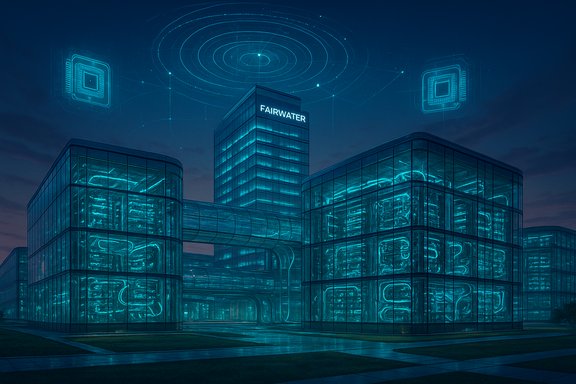 Background: overview of the Industrial AI Era and the “Inference Inflection Point”
The industry’s focal point shifted decisively over 2024–2025 from raw training FLOPS to test‑time compute (inference). Where early LLM economics emphasized massive, episodic training runs, production deployments for conversational assistants, multi‑modal agents, and real‑time customization impose a persistent, recurring compute load that is often more expensive in aggregate than training for the same model family. This is the “Inference Inflection Point”: a structural change that prioritizes low latency, large HBM pools, new interconnect fabrics, and different operational economics than training‑first datacenters.The consequence is an arms race in capital spending. Multiple industry trackers and sell‑side reports place the combined capex plans of the major hyperscalers well into the high hundreds of billions for calendar 2026 — a figure routinely summarized as “north of $600 billion” in the market narrative. These estimates are analyst aggregations, not a single disclosure, but they reflect a consistent repositioning of corporate budgets toward racks, power, liquid cooling, and next‑generation accelerators. Independent industry forecasters such as TrendForce and technology trade analyses have reached similar top‑line numbers for hyperscaler capex growth in 2026, emphasizing the AI share of that spend.
Why Microsoft (Azure) is the center of attention
Azure’s product and channel momentum
Microsoft has intentionally reframed its cloud narrative around integrated AI experiences: Copilot‑family monetization, Azure AI Foundry as a developer and enterprise platform, and deep product hooks into Microsoft 365, Dynamics, GitHub, and Windows. Microsoft’s own product pages and investor messaging emphasize Foundry’s scale (advertised as “used by more than 80,000 enterprises”) and a catalog of thousands of models and templates intended to accelerate enterprise agent deployment. That positioning makes Azure not only a commodity compute provider but an outcomes platform where compute, models, and enterprise controls are bundled together. Microsoft’s quarterly disclosures throughout 2025 confirmed the pattern: Azure and Intelligent Cloud continued to grow at double‑digit rates, with management repeatedly pointing to AI‑attached revenue and capacity constraints as the principal dynamics shaping future quarters. The company also disclosed sharply higher capex cadence and increasingly GPU‑heavy spend profiles across several quarters — facts that underpin most capex extrapolations in the market. Importantly, management’s commentary shows Microsoft is leaning into front‑loaded investments to avoid becoming supply‑constrained as enterprise adoption of agentic AI scales.The Fairwater “AI superfactory” and the new data‑center archetype
Microsoft’s Fairwater campus in Mount Pleasant, Wisconsin has become the industry emblem for AI‑first datacenters: contiguous floorplates designed to behave as a single supercomputer, engineered for very high GPU density, liquid cooling at scale, and ultra‑fast intra‑site networking. Microsoft’s own technical blog describes multi‑building campuses with liquid cooling loops, massive fiber backbones, and design choices that prioritize inference and reasoning workloads — not traditional multi‑tenant VM density. Independent reporting corroborates those claims, noting the site’s scale and the company’s plans to operate it as a purpose‑built AI campus. This is not merely marketing; Fairwater is a concrete manifestation of the infrastructure choices hyperscalers must make to compete in inference‑first economics.The $120 billion number: what it is — and what it isn’t
A recurring market headline is that Microsoft is “guiding $120 billion in CapEx for 2026.” That summary is shorthand for an extrapolated timeline and not a single, clean disclosure in a 10‑Q or press release labeled “$120B guidance.” Public company transcripts and investor materials do show dramatically higher quarterly capex (for example, $30B+ quarters were discussed by management) and a clear statement that FY26 capex growth will be higher than FY25. If a quarterly $30B pace were sustained unchanged for the full year, it would annualize near $120B — which is where many market write‑ups derive the headline figure. But that arithmetic maskes nuance: Microsoft’s filings emphasize quarter‑to‑quarter variability (finance leases, goods‑received timing, and short‑lived GPU purchases), and management repeatedly warned the pace is front‑loaded with moderation expected in H2. Treat the $120B figure as a market extrapolation based on disclosed quarterly run‑rates, not as a single-line company guidance in the public filing sense. Why that precision matters: depending on accounting treatment and lease recognition, the headline CapEx tally can be reported differently (total capex vs. cash paid for P,P&E vs. finance lease recognition). For anyone modeling return on invested capital or depreciation pressure, those distinctions change the near‑term margin impact materially.Hardware: why NVIDIA (and Rubin) matter — and why vendor claims deserve scrutiny
NVIDIA remains the essential supplier for hyperscale AI compute. The company’s Blackwell family (GB200 / Blackwell Ultra) and the publicly previewed Rubin/Vera Rubin roadmap are central to cloud performance planning. At GTC 2025 NVIDIA unveiled the Rubin family (positions and roadmap publicly covered by major outlets), and company materials claim meaningful inference throughput gains when Rubin is paired with the Vera CPU. Industry reporting suggests Rubin‑class products will target major deployment volumes across hyperscalers in 2026 and beyond. The vendor roadmap and supply allocation decisions create practical first‑mover advantages for early customers who secure inventory and integrated rack systems. That said, two important caveats apply:- Vendor performance claims (e.g., “2× inference vs prior generation”) are manufacturer benchmarks that depend heavily on microarchitecture, memory configuration (HBM stacks and capacity), interconnect, and the particular model/kernel used in the test. Independent third‑party benchmarks against representative, enterprise‑grade workloads are required to validate real‑world gains. Early adopter deployment results typically provide the clearest signal — and those results often vary by workload.
- Supply allocation favors largest buyers initially. Early allocations of Rubin‑family systems will go to the largest hyperscalers (Microsoft, Google, Amazon) and large AI cloud customers, which perpetuates a hardware “moat” and raises barriers for smaller clouds and enterprises. That is both strategic advantage and systemic concentration risk.
Who wins and who gets pressured in the 2026 CapEx wave
- Winners (likely)
- Microsoft: integrated product stack, Foundry distribution, and early Fairwater capacity position it to capture agentic workloads and adjacent commercial monetization.
- NVIDIA and other hardware ecosystem suppliers: GPUs, HBM vendors, interconnect (Mellanox/ConnectX), and liquid‑cooling specialists see large TAM expansion.
- Select infrastructure specialists (Vertiv, Celestica, specialist integrators): rising demand for custom racks and cooling is a direct revenue driver.
- Conditional winners
- Amazon (AWS): if Trainium/Inferentia silicon closes the performance gap for inference at scale, AWS preserves margin advantages. That depends on long lead‑times and continued silicon optimization.
- Oracle: by targeting specialized clusters and sovereign workloads, OCI can win niche contracts where latency, compliance, or price matters.
- At risk
- Secondary public cloud providers without multi‑billion capex capacity.
- Hardware and legacy enterprise server vendors that cannot pivot to liquid cooling/HBM‑dense designs quickly.
- Municipal and grid operators facing energy planning stress where hyperscaler projects concentrate.
Energy, policy, and the geopolitics of AI power
High‑density AI datacenters consume substantial, continuous power. The recent capex cycle has forced a policy conversation on “AI Power Sovereignty”: how nations and utilities plan for multi‑gigawatt load additions, whether through grid upgrades, long‑term PPAs, or modular nuclear/SMR investments. Several reports and public comments from hyperscalers allude to renewed interest in longer‑horizon energy procurement, including large renewables portfolios and, in some cases, modular nuclear as a route to provide reliable baseload while decarbonizing compute. This is not peripheral: energy availability and cost become first‑order constraints on feasible scale in many regions. Regulators and governments are also accelerating sovereign cloud conversations. The demand for air‑gapped, locally hosted “Sovereign AI” regions — especially for regulated industries and national governments — presents a profitable extension of hyperscaler strategy, but one that also raises geopolitical and compliance complexity.The economics: margin compression, depreciation, and the ROI clock
Two simultaneous forces shape the finance story for 2026:- Upfront capital intensity (GPU racks, data center shells, electrification, and network).
- Recurring per‑token or per‑agent inference revenue that scales with adoption and per‑seat Copilot monetization.
- Depreciation drag from heavy capital deployments (especially if hardware refresh cycles accelerate).
- Underutilized racks if agent adoption lags forecast, which could create a capacity glut and downward pricing pressure.
- Commodity and supply chain risk for critical parts (HBM, advanced packaging) that can bend performance economics.
What’s verifiable — and what should be treated as analyst extrapolation
Verified, public facts (select examples)- Microsoft has built and described the Fairwater AI datacenter in Wisconsin and announced further multi‑billion investments for an extended campus. Microsoft’s site and independent reporting document the scale and intended early 2026 operational targets.
- Microsoft’s investor transcripts for FY2025/FY2026 show materially higher quarterly capex runs and management statements that capex growth will be elevated in FY26 relative to FY25. Those transcripts also quantify quarterly capex levels (e.g., $20B–$35B ranges depending on quarter).
- NVIDIA publicly announced the Blackwell Ultra family and previewed the Rubin/Vera Rubin roadmaps and claimed significant inference and memory improvements in the Rubin generation. Mainstream outlets reported NVIDIA’s GTC announcements.
- Microsoft publicly advertises Azure AI Foundry usage metrics (the product page lists “80K” enterprise customers and model catalog counts), a product fact useful for gauging distribution reach.
- “Microsoft guided $120 billion in CapEx for 2026” — this is best read as an extrapolation of disclosed quarterly run‑rates (for example, $30B/quarter) rather than a formal, single‑line annual guidance in SEC filings. Use company filings and the Q‑call transcripts for precise accounting treatments.
- “Azure AI reaches an annual run rate of $26 billion” — run‑rate figures for Azure AI vary across reports and firm models. Microsoft publicly announced AI product run‑rates earlier in 2025 (for example, a $13B run‑rate was cited in mid‑2025 commentary), but larger run‑rate numbers quoted near year‑end appear to be market estimates that extrapolate recent growth; treat $26B as an analyst aggregation unless Microsoft publishes a formal breakdown. Cross‑reference Microsoft’s investor slide decks and earnings transcripts for the most conservative baseline.
Practical implications for WindowsForum readers: IT leaders and enterprise architects
- Inventory your AI‑critical workloads now. If your business intends to run production agentic systems at scale, capture token usage estimates, latency requirements, data residency needs, and the cost per inference under alternative hosting strategies (multicloud, on‑prem co‑lo, hybrid).
- Create pilots with clearly defined utilization gates. The economic case for cloud‑hosted reasoning compute behaves differently from VM workloads — move from POC to staged production with utilization thresholds tied to committed discounts or reserved capacity.
- Prepare for governance and observability needs. As agentic workloads become operational, logging, explainability, and algorithmic accountability must be integral — not add‑ons — to minimize compliance risk.
- Plan for cost transparency. Negotiate pricing alignment tied to predictable throughput (e.g., per‑agent or per‑seat contracts) rather than purely per‑token or per‑GPU‑hour models, where possible.
- Catalogue candidate workloads and define SLA/latency targets.
- Benchmark representative inference workloads on target clouds or hardware.
- Build cost models for expected scale (tokens/day or agents/day) and model drift refresh economics.
- Define exit and portability clauses for critical agent services to avoid vendor lock‑in.
- Establish an energy and sustainability evaluation for any proposed large‑scale deployment.
The downside scenario: capacity glut, margin squeeze, or slower adoption
The bullish, consolidation outcome is plausible but not guaranteed. Three downside scenarios could disrupt the supercycle thesis:- Demand shock: enterprise adoption of large‑scale agentic systems plateaus, leaving hyperscalers with excess specialized capacity and depressed utilization.
- Competitive silicon wins: if AWS’s Trainium/Inferentia or other custom silicon materially reduces per‑inference costs without sacrificing performance, the market’s hardware allocation could re‑balance faster than expected.
- Regulatory and sovereign fragmentation: export controls, procurement rules, and sovereign cloud regimes could fragment the market, increasing per‑customer delivery costs and slowing monetization.
Final assessment and what to watch in 2026
- Watch the early Rubin‑powered service launches and independent benchmarks. Real‑world, third‑party performance and availability are the clearest signals about whether the next GPU generation delivers on vendor claims.
- Monitor Microsoft’s capex cadence in SEC filings and quarterly cash‑flow disclosures. The quarter‑by‑quarter mix of short‑lived assets (GPUs/CPUs) versus long‑lived builds materially alters depreciation and cash‑flow outlooks.
- Track hyperscaler capex aggregates from multiple analyst houses (TrendForce, CreditSights, sector‑specific research). These provide a market‑level lens but remember they are estimates and will be revised as contracts and deliveries firm up.
- Evaluate Azure AI attachment rates as a core health metric. The proportion of Azure revenue directly tied to AI/agent services will be the best early read on whether the capex is turning into sustainably higher ARPU. Treat company disclosures on AI run‑rates conservatively and corroborate with independent usage data where possible.
Those choices will determine winners and losers in 2026. For enterprises and IT teams, the immediate priority is pragmatic: design pilots with usage gates, insist on pricing transparency, and architect for portability so infrastructure decisions made in 2026 don’t become technical or financial prisons in 2027. The supercycle rewards scale and integration; it punishes unpreparedness. The next 12 months will tell whether hyperscalers can turn silicon and campuses into predictable, profitable, and sustainable AI services — or whether the industry faces a messy, capital‑heavy learning curve.
Source: FinancialContent https://markets.financialcontent.co...as-big-tech-capex-projections-surge-for-2026/
