

Microsoft's announcement that it will pour roughly $10 billion (about €8.6 billion) into an AI-focused data‑centre hub at the Start Campus in Sines, Portugal, marks a decisive escalation in hyperscaler infrastructure spending across Europe and anchors southern Europe as a new locus of AI compute capacity for Azure and next‑generation workloads. The deal — signed in concert with Start Campus, AI infrastructure provider Nscale and semiconductor leader NVIDIA — commits to deploying more than 12,000 next‑generation NVIDIA GPUs at Sines and aims for initial operations in early 2026, a timeline and scale that will materially affect regional data‑gravity, subsea connectivity economics, and the environmental and workforce planning of Portugal’s coastal infrastructure.
Sines sits on Portugal’s Atlantic coast and has been courted by hyperscalers for years because it combines three highly desirable attributes: direct subsea cable landings connecting Europe to Africa and the Americas, abundant coastal space for hyperscale campus builds, and growing access to renewable energy potential from wind and solar. The Start Campus project — a multi‑building, multi‑billion‑euro data‑centre development in Sines — has already been in motion, with one building (SIN01) operational and plans for subsequent halls across a multi‑year build‑out. Start Campus itself is positioning Sines as a European “AI gigafactory” cluster that can host dense GPU farms for model training and inference. This Microsoft commitment must be viewed in the context of a broader industrial shift: hyperscalers are racing to provision localized, sovereign‑grade AI capacity inside the EU to satisfy latency, compliance and strategic demand for on‑shore compute. Google, Amazon and other major cloud providers have also announced large European infrastructure programs in recent months; taken together those announcements exceed tens of billions of dollars and are reshaping where the continent’s AI workloads will run.
At the same time, the Sines project illuminates the hard trade‑offs of the AI era: the need for secure, sovereign compute versus the realities of constrained silicon supply, the complexity of delivering genuine 24/7 clean power, and the local political and environmental negotiations that must accompany megascale infrastructure. As the campus moves from announcement to commissioning, stakeholders should expect meticulous scrutiny — from regulators, environmental watchdogs, civic groups and enterprise buyers — demanding measurable commitments, independent verification and accountable delivery.
The Sines announcement is therefore both a milestone and a test: a milestone for Europe’s AI capacity, and a test of whether hyperscalers, local developers and governments can synchronize on power, people and governance in a way that delivers long‑term socio‑economic benefits without externalizing environmental or social costs.
Source: capacityglobal.com Microsoft powers into Portugal with €8.6bn AI data-centre hub - Capacity
 Background
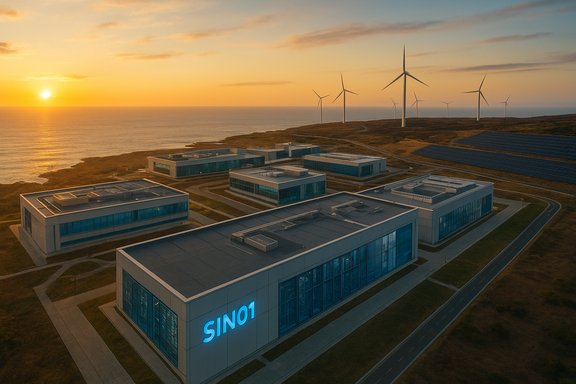
Sines sits on Portugal’s Atlantic coast and has been courted by hyperscalers for years because it combines three highly desirable attributes: direct subsea cable landings connecting Europe to Africa and the Americas, abundant coastal space for hyperscale campus builds, and growing access to renewable energy potential from wind and solar. The Start Campus project — a multi‑building, multi‑billion‑euro data‑centre development in Sines — has already been in motion, with one building (SIN01) operational and plans for subsequent halls across a multi‑year build‑out. Start Campus itself is positioning Sines as a European “AI gigafactory” cluster that can host dense GPU farms for model training and inference. This Microsoft commitment must be viewed in the context of a broader industrial shift: hyperscalers are racing to provision localized, sovereign‑grade AI capacity inside the EU to satisfy latency, compliance and strategic demand for on‑shore compute. Google, Amazon and other major cloud providers have also announced large European infrastructure programs in recent months; taken together those announcements exceed tens of billions of dollars and are reshaping where the continent’s AI workloads will run. What Microsoft announced — the essentials
- The headline figure: Microsoft says it will invest roughly $10 billion (c. €8.6 billion) in AI infrastructure tied to the Sines Start Campus, a commitment the company framed publicly during events in Lisbon.
- Partners named: the project is being developed jointly with Start Campus (the local campus developer), Nscale (an AI infrastructure operator) and NVIDIA (GPU supplier).
- GPU capacity: the Sines site is set to receive about 12,600 of NVIDIA’s next‑generation GB300‑class GPUs (often referred to in industry coverage as Blackwell‑class or Grace‑Blackwell systems) as part of the initial deployment.
- Timing: Microsoft and its partners are targeting the first quarter of 2026 for initial operations at Sines, with phased ramps thereafter as additional buildings are completed and more racks are installed.
Why Sines? Strategic and technical rationale
Subsea connectivity and data‑gravity
Sines is already a landing point for several trans‑Atlantic and intercontinental subsea cables, giving it natural advantages for serving traffic between Europe, Africa and the Americas. For cloud providers, being proximate to undersea connectivity reduces hop counts for cross‑border traffic, improves backbone latency and creates a natural aggregation point for international customers and content delivery. Locating an AI hub in Sines turns the town into a regional data‑gravity node, drawing traffic, services and business activity toward its campus.Renewable energy potential
Hyperscale GPU clusters are power intensive. Microsoft and its partners emphasise renewable procurement and on‑site green energy as core to the Sines pitch. Start Campus and its investors have presented an offering that foregrounds renewables and energy contracts, which helps hyperscalers meet corporate sustainability objectives and respond to scrutiny about the carbon footprint of AI compute. That said, procuring firm, long‑term, 24/7 renewable supply at hyperscale is complex; claims of “entirely renewable” operations frequently rely on off‑site PPAs and eventual new buildouts that provide matching annual energy rather than minute‑by‑minute clean power. These are meaningful differences for lifecycle emissions and grid balancing.Space and modularity
Start Campus is being developed as a multi‑building campus (SIN01–SIN06 planned), allowing for modular scale‑up of GPU halls with dense power and liquid‑cooling infrastructure — the physical attributes that modern GB300/NVL72 rack‑scale systems require. Those rack architectures prize high interconnect bandwidth, dense power feeds and liquid cooling for thermal management; Sines offers land and port infrastructure to support those requirements.Technical specifics: GPUs, racks, and the GB300 architecture
NVIDIA’s GB300‑class systems (sometimes referenced as Grace‑Blackwell integrated systems) underpin the technical ambitions of modern hyperscale AI campuses. GB300 NVL‑style racks pair many Blackwell GPUs with Grace‑class CPU combiners and employ NVLink/NVSwitch fabrics and high‑speed InfiniBand to deliver unified memory spaces and extreme inter‑GPU bandwidth. For large model training and multi‑tenant inference, these technical characteristics are essential. Microsoft’s Sines installation (c.12.6k GPUs) is thus pitched for frontier‑class training and inference workloads. Nscale’s role — as an operator and third‑party capacity supplier — is central to Microsoft’s speed‑to‑market approach. By leasing capacity from Nscale (and similar “neocloud” providers), Microsoft shortens procurement cycles for GPUs and racks without waiting for a fully Microsoft‑built campus to reach operational scale. This blended model — using both Microsoft‑owned regions and partner‑supplied capacity — is now a common pattern to secure frontier GPUs rapidly.Economic, workforce and national impacts
GDP and FDI optics
A multi‑billion‑euro investment of this scale is one of the largest tech FDI commitments Portugal has seen in a single project. The headline figure creates political and economic momentum: it supports the government’s ambition to pivot from tourism and light manufacturing toward a higher‑value digital economy. Local economic modelling usually predicts direct construction jobs, long‑term operational roles and spillover activity in services, logistics and high‑value IT. But headline job forecasts must be treated cautiously; much of the long‑term value capture depends on the depth of local supply chains, the availability of skilled labour, and how many higher‑value AI services and startups the campus can catalyse.Skilling and labour supply
Microsoft has historically tied large infrastructure investments to skilling initiatives, but the reality of filling thousands of GPU‑operational and AI‑engineering roles in a country with a smaller tech talent base requires deliberate, multi‑stakeholder programs. Portugal will need to scale technical education, certifications, and migration of experienced talent to support operations and to seed a domestic AI services ecosystem. Without these interventions, there is a risk that much of the value — particularly high‑margin AI engineering — accrues to external suppliers and not to local firms.Energy, sustainability and environmental scrutiny
Large AI campuses demand continuous, dense electrical supply and sophisticated cooling systems. Microsoft and partners have pledged renewable energy sourcing for the Sines campus and plan closed‑loop liquid cooling and other efficiency measures. Yet independent analysts and local stakeholders often highlight gaps between procurement pledges and the operational reality of grid integration:- Renewable matching versus instantaneous supply: PPAs and new build renewables match annual consumption but don’t guarantee minute‑by‑minute renewable-sourced power. This is critical when evaluating real‑time carbon intensity and when systems must rely on firming capacity.
- Grid upgrades and transmission: A 100+ MW AI campus needs significant transmission upgrades (substations, transformers, long‑run cables) that require coordination with utilities and regulators. Those civil works can be costly and slow.
- Water and cooling: Although modern liquid cooling reduces consumptive water use compared with evaporative systems, any build‑out at scale must quantify water‑use metrics and local watershed impacts across the full campus lifecycle.
Governance, sovereignty and regulatory context
Microsoft’s expansion in Europe is not purely commercial; it is also a response to regulatory pressures around data residency, privacy and the EU’s emerging AI and data frameworks. Hosting Azure‑grade AI compute within the EU footprint helps Microsoft offer customers demonstrable in‑region processing — an advantage for regulated industries and government contracts that require clear territorial processing guarantees. However, the details matter:- Contractual commitments about where data and model weights are stored and processed.
- Auditability of privileged access and firmware update channels.
- Clarity on model governance when training datasets cross jurisdictions.
Risks and open questions
No project of this scale is without material execution and strategic risks. The most salient include:- Supply and schedule risk for GPUs and complementary gear. NVIDIA’s high‑end silicon remains constrained and globally contested; arrival windows for GB300 racks are subject to vendor allocation and logistics.
- Grid and transmission gating: securing long‑term, firm power and performing major substation upgrades can delay commissioning and escalate capital costs.
- Local political and social friction: Start Campus has been linked in reporting to past governance controversies, and large municipal agreements often invite scrutiny on planning concessions and tax arrangements. Any unresolved legal or social issues could complicate future expansions. Independent reporting notes that Start Campus has faced investigation linked to earlier allegations; this is a reputational and operational wildcard that local and international partners will need to manage transparently.
- Skills gap and leakage: Without aggressive, high‑quality training and sustained hiring commitments, many operational and engineering roles could be filled by imported talent, reducing local value capture.
- Environmental trade‑offs: “Renewable‑backed” claims need to be audited against grid realities, firming requirements and lifecycle embodied emissions from construction and electronics.
What this means for enterprises, Windows admins and cloud architects
For IT leaders and Windows‑centric organizations evaluating Azure AI services, the Sines investment has practical implications:- Lower latency and local options: Customers in Iberia, southern Europe, and adjacent Atlantic markets can expect lower latency for Azure AI services hosted closer to end users. This is relevant for real‑time inference, desktop‑scale Copilot experiences and hybrid cloud scenarios.
- More sovereign options: Healthcare, finance and public‑sector buyers that must keep processing within the EU will gain access to more regionally proximate, Azure‑managed compute.
- Procurement and contract dynamics: Organizations should demand explicit SLAs and audit rights around data locality, firmware change windows, and supply‑chain provenance for AI model training. Vendors will increasingly offer hybrid arrangements that mix Microsoft‑owned regions with partner‑operated capacity; contracts must reflect that mix.
- Opportunity for modern Windows apps: Dense, low‑latency AI compute in Europe enables new classes of Windows workloads — from on‑premises augmented productivity agents to hybrid Copilot deployments that rely on regulated, on‑shore inference. IT teams should plan for a surge in GPU‑attached service offerings and budget accordingly for potential cost shifts in GPU‑hour economics.
Strategic takeaways — strengths and potential pitfalls
- Strengths: The Microsoft commitment is a clear signal of hyperscaler confidence in European AI demand. It brings scale, global partners and a technology stack (Azure + NVIDIA GB300) capable of supporting frontier LLM training and inference. For Portugal, the project accelerates a strategic pivot toward high‑value digital infrastructure.
- Pitfalls: Execution risks around power, supply chains and local social license are non‑trivial. Sustainability claims require careful independent verification, and the headline investment figure should be read as a multi‑year programme rather than an immediately liquidated spend. Prior controversies around Start Campus raise governance questions that require public clarity.
Practical checklist for industry stakeholders
- Demand clear timelines and enforceable delivery milestones for GPU and rack shipments.
- Require transparent PUE, WUE and 24x7 renewable matching or firming commitments.
- Negotiate audit rights for data locality and firmware/privileged‑access processes.
- Build local skilling partnerships and apprenticeship pathways to ensure talent remains in country.
- Insist on community and environmental impact reporting linked to permit milestones.
Conclusion
Microsoft’s Sines commitment crystallizes a pivotal chapter in Europe’s AI infrastructure build‑out. It shows hyperscalers are willing to anchor massive, GPU‑centred campuses in strategic coastal locations that combine subsea connectivity, renewable ambitions and scalable land. For Portugal, the economic and reputational upside is substantial; for Microsoft and its customers, the move promises new capacity for training and operating large AI models closer to European users.At the same time, the Sines project illuminates the hard trade‑offs of the AI era: the need for secure, sovereign compute versus the realities of constrained silicon supply, the complexity of delivering genuine 24/7 clean power, and the local political and environmental negotiations that must accompany megascale infrastructure. As the campus moves from announcement to commissioning, stakeholders should expect meticulous scrutiny — from regulators, environmental watchdogs, civic groups and enterprise buyers — demanding measurable commitments, independent verification and accountable delivery.
The Sines announcement is therefore both a milestone and a test: a milestone for Europe’s AI capacity, and a test of whether hyperscalers, local developers and governments can synchronize on power, people and governance in a way that delivers long‑term socio‑economic benefits without externalizing environmental or social costs.
Source: capacityglobal.com Microsoft powers into Portugal with €8.6bn AI data-centre hub - Capacity
