

Microsoft used Build 2026 in San Francisco this week to pitch Scout, OpenClaw integration, new Copilot agent features, and in-house AI models as proof that it can still define the developer platform in the agentic AI era. The harder question is whether those announcements show renewed command of the market or a company scrambling to repackage someone else’s breakthrough. Microsoft has not lost its mojo in the old sense of technical irrelevance. It has lost something more dangerous: the presumption that developers will automatically follow where Redmond points.
The uncomfortable backdrop to Build was not that Microsoft had nothing to show. It had plenty: Scout, new Copilot surfaces, GitHub agentic workflows, Windows hooks for AI development, and a familiar Satya Nadella argument that Microsoft owns the productivity layer where agents will actually do useful work.
But the vibe shift matters. Three years ago, Microsoft looked like the company that had forced the entire technology industry onto its calendar. The OpenAI partnership gave it an early claim on generative AI, Bing Chat made Google look flat-footed, GitHub Copilot seemed to redefine programming assistance, and Microsoft 365 Copilot promised to turn Office from a document suite into a thinking layer for work.
That was the old magic trick: Microsoft did not need to invent every breakthrough if it could productize one faster than everyone else. Windows, Office, Azure, GitHub, Visual Studio Code, Teams, and LinkedIn gave the company distribution that rivals could only envy. If AI was going to become a feature of everything, Microsoft looked like the company with the most “everything” to attach it to.
Build 2026 exposed the limit of that advantage. The agentic turn in AI is not just another model upgrade or side panel in Word. It changes the developer relationship from “help me write this line” to “go make this system change, test it, explain it, and ask me only when necessary.” That is a different trust contract, and Microsoft is no longer clearly setting the terms.
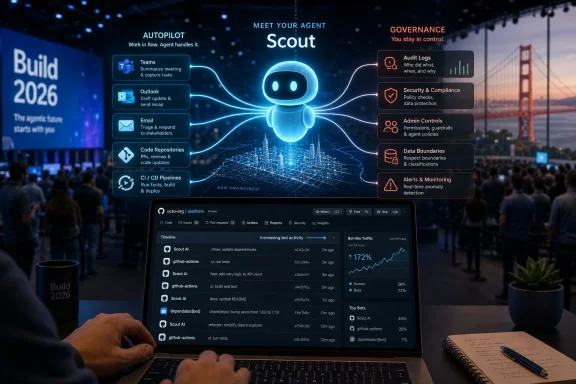
That distinction matters. The Copilot brand has been stretched across Windows, Office, GitHub, Edge, security, Azure, and consumer chat until it sometimes means little more than “AI is nearby.” Scout is an attempt to make the promise more concrete: an agent that understands a user’s work context, uses tools such as Teams and Outlook, and can prepare, schedule, coordinate, and act with more persistence than a chatbot.
It is also an admission that the market’s imagination moved faster than Microsoft’s flagship AI packaging. OpenClaw became exciting because it felt native to the new agentic moment: messy, autonomous, extensible, and a little dangerous. Microsoft’s version must be safer, governed, auditable, and enterprise-ready. Those are real advantages, but they are also reasons the product may feel less alive to the developers and power users who first made agentic tools matter.
Microsoft’s challenge is that it cannot simply be thrilling. It must be thrilling and compliant, powerful and administrable, open enough for developers while still fitting procurement checklists. That is the enterprise bargain Microsoft has won for decades, but agentic AI puts unusual pressure on it because the best demos are often the least enterprise-safe behaviors.
Both views can be true. Microsoft can have one of the largest paid AI productivity businesses in the world and still be underperforming relative to the expectations it created. When a company tells customers that AI will transform work, a few percentage points of penetration across a vast installed base is not a knockout win. It is a beachhead.
The deeper problem is that Copilot has often felt like a feature bundle rather than a new work model. Summarizing meetings, drafting emails, and generating slides are useful, but they are not enough to make employees reorganize their day. In many offices, the limiting factor is not whether the model can summarize a thread; it is whether the organization’s data is clean, permissions are sane, processes are explicit, and workers trust the output.
That makes the “disappointing uptake” narrative too simple but not wrong. Microsoft sold Copilot as a shortcut to AI productivity. Many customers discovered that the shortcut still requires information architecture, training, governance, workflow redesign, and a tolerance for early-product weirdness. The magic was marketed before the plumbing was finished.
That is why recent complaints about GitHub downtime have cut so sharply. Developers are unusually forgiving of hard engineering problems and unusually unforgiving of infrastructure that fails at the wrong moment. A source control platform is one of those services whose value is measured most clearly when nobody is thinking about it.
Scott Hanselman’s explanation that GitHub is under enormous pressure from bot traffic is plausible. The internet has already lived through spam floods, bot-choked social networks, scraping wars, credential stuffing, and automated abuse at industrial scale. AI coding agents add another demand curve: machines can read, fork, clone, test, and comment faster than humans ever could.
But for customers, “bots did it” is an explanation, not a defense. GitHub’s role in the agentic era is to become even more central, not less. If agents are going to operate across repositories, file issues, open pull requests, run workflows, and inspect dependencies, GitHub must behave like critical infrastructure. Reliability becomes part of the AI product.
The reputational risk is especially acute because GitHub’s cultural capital was built before Microsoft bought it. Developers accepted the acquisition because Microsoft had changed. It embraced open source, improved tooling, and stopped acting like the Windows monopoly of old. If GitHub starts to feel neglected, opaque, or overrun by Microsoft’s broader AI agenda, that goodwill can erode quickly.
There are reasonable business explanations. Microsoft is spending enormous sums on AI infrastructure, owns GitHub Copilot, and cannot allow an outside rival to define its developer workflow from inside its own engineering organization. Internal tool consolidation can reduce cost, improve security, and generate dogfooding pressure that makes Microsoft’s own tools better.
Still, the optics are brutal. If Microsoft’s developers prefer Claude Code for certain tasks, forcing them off it does not prove Copilot is better. It proves management can control procurement. In the developer world, that distinction is fatal.
This is where the “developers, developers, developers” memory still matters. Steve Ballmer’s chant has become a meme, but the principle was sound: platforms win when developers believe building there increases their leverage. Developers do not want to be locked into a tool because the company that owns their repo also owns the purchasing policy. They want the best tool to win through speed, quality, interoperability, and trust.
Microsoft knows this. Visual Studio Code won because it was good, fast, extensible, and cross-platform. TypeScript won because it solved a real JavaScript pain point without demanding a total religious conversion. GitHub Copilot won early mindshare because it worked where developers already lived. The danger now is that Microsoft confuses distribution with devotion.
Nadella’s tenure also changed Microsoft in ways that should not be discounted. The company became more pragmatic, more open to Linux, more serious about developers outside the Windows fortress, and more effective at connecting cloud services to business demand. The Microsoft that can adopt OpenClaw ideas is not the Microsoft that tried to crush open source by reflex.
That is why the current moment is so interesting. Microsoft is not facing irrelevance. It is facing a more subtle test: whether a giant with unmatched distribution can still move with enough humility to absorb an outside shift without smothering it.
Scout may be a good answer. GitHub Copilot may regain developer momentum. Microsoft’s in-house models may reduce dependence on OpenAI and give the company more control over cost, latency, safety, and integration. Windows could become a credible local runtime for agents if Microsoft gives developers real power instead of another layer of branding.
But none of those outcomes is automatic. The AI market is punishing incumbents that mistake installed base for product-market fit. The fact that Microsoft can put a Copilot button everywhere does not mean users will press it twice.
That shift plays to Microsoft’s strengths and weaknesses at the same time. On the strength side, Microsoft controls identity, productivity data, endpoint management, developer tooling, security telemetry, and cloud infrastructure. Those are precisely the layers an enterprise agent needs.
On the weakness side, Microsoft products often accumulate complexity until the experience feels bureaucratic. Admin centers multiply. Licensing gets baroque. Product names blur. Features arrive in preview, move between SKUs, change branding, and require customers to decode what they are actually allowed to use.
Agentic AI will not tolerate that level of confusion for long. If an agent is going to act on behalf of a user or organization, clarity becomes a safety feature. Customers need to know what data it can access, what actions it can take, what logs exist, what approvals are required, and what happens when it fails. Developers need APIs and extension points that are stable enough to build on without feeling like they are chasing a marketing calendar.
This is why OpenClaw’s appeal is not merely that it is agentic. It represents a faster, rougher, more developer-shaped way of thinking about agency. Microsoft’s job is to civilize that energy without embalming it.
The agentic turn gives Windows a better argument than the AI PC marketing cycle did. A local operating system can provide context, permissions, file access, app control, device capabilities, and offline execution in ways a browser tab cannot. If agents are going to manipulate real workflows, the OS layer matters again.
But Microsoft must resist the temptation to turn Windows into a billboard for cloud subscriptions. Developers and power users will embrace Windows as an agent platform if it gives them control, observability, local model options, sane sandboxing, and a clear security model. They will reject it if “agentic Windows” mostly means more prompts to sign into Copilot.
The same is true for IT departments. Admins do not need another magical assistant that creates unreviewed changes across the tenant. They need policy controls, audit trails, least-privilege defaults, rollback mechanisms, and predictable licensing. The winning enterprise agent platform will be the one that lets organizations say yes without feeling reckless.
Microsoft can build that. In fact, it may be better positioned than anyone to build it. But the product must be designed for the people who will live with the consequences, not merely for the keynote demo.
Developers are learning to keep multiple AI tools open. They use one model for code, another for reasoning, another for search, another for local privacy, another for refactoring, and another for documentation. The idea that one assistant will own the entire workflow may be more attractive to platform vendors than to actual engineers.
This is a problem for Microsoft because Copilot’s strategic value depends partly on becoming the default AI layer for work and code. Default status is still powerful, but AI tools are unusually easy to compare. A developer can feel the difference between a sluggish agent and a sharp one within minutes. An enterprise worker can tell when a meeting summary is generic. A sysadmin can tell when an assistant has no real understanding of the environment.
The agentic market is therefore more fluid than the office suite market or the operating system market. Switching costs exist, especially in enterprise settings, but trust and performance can shift quickly. If Claude Code, OpenClaw-derived tools, or new open-source agents feel more capable, developers will route around the default.
Microsoft’s best response is not to close the exits. It is to make its platform the best place to run, govern, and combine agents — including agents Microsoft did not invent.
If GitHub becomes more reliable, more transparent about incidents, and more powerful as an agentic development environment, Microsoft can regain much of the narrative. Developers will forgive a lot if the platform improves and the tools help them ship. They do not require Microsoft to be cool; they require it to be useful and dependable.
If GitHub continues to feel strained under bot traffic and AI workload growth, the story gets darker. The world’s most important code platform cannot appear surprised by the automation wave. Bots are not an edge case anymore. They are the new user class.
That means GitHub’s infrastructure, abuse detection, rate limits, billing models, and status communications need to evolve. The old assumption that most meaningful activity comes from humans clicking and pushing is gone. Agentic coding turns repositories into places where software processes negotiate with other software processes.
Microsoft should treat that as a historic opportunity. GitHub can become the control plane for AI-mediated software development. Or it can become the place developers leave open in one tab while the real work moves elsewhere.
The more accurate concern is that Microsoft’s platform reflex can undermine its product instincts. When the company sees a strategic category, it tends to wrap it in licensing, branding, admin policy, bundling, and internal mandates. That can turn promising technology into an enterprise SKU before users have fallen in love with it.
This is especially risky with developers because developers are allergic to being managed through someone else’s spreadsheet. They can accept paid tools. They can accept enterprise controls. They can even accept Microsoft as the vendor. What they resist is the feeling that the toolchain is being chosen for them to protect a corporate strategy rather than improve their work.
Nadella-era Microsoft has often succeeded by suppressing that old instinct. It made peace with Linux. It bought GitHub and largely let it thrive. It allowed VS Code to become a cross-platform phenomenon. It built Azure as a practical cloud rather than a Windows-only shrine.
The agentic era will test whether that discipline still holds. If Microsoft uses Scout and Copilot to open a broad agent ecosystem, it can lead. If it uses them to herd users back into a closed funnel, it will invite the very defection it fears.
That shift changes every product promise. A bad autocomplete suggestion is annoying. A bad autonomous agent action can be costly. A weak chatbot can be ignored. A weak agent embedded in email, calendars, files, code, and identity systems becomes a governance problem.
This is where Microsoft’s enterprise DNA could become a superpower. Security, identity, compliance, and management are boring until the alternative is an agent with broad permissions and no adult supervision. The companies most likely to adopt agentic AI at scale will need the very controls Microsoft knows how to sell.
But the company also has to make those controls legible. Enterprise software often hides complexity behind procurement language, but AI agents expose complexity through behavior. If users cannot understand why Scout acted, why Copilot refused, why an agent had access, or why a workflow consumed expensive credits, trust will leak away.
The next phase of AI will be won not by the company with the loudest keynote but by the company that makes delegation feel safe, observable, reversible, and worthwhile. Microsoft has the ingredients. It has not yet proved the recipe.
 Microsoft’s AI Lead Has Become a Race to Catch Up
The uncomfortable backdrop to Build was not that Microsoft had nothing to show. It had plenty: Scout, new Copilot surfaces, GitHub agentic workflows, Windows hooks for AI development, and a familiar Satya Nadella argument that Microsoft owns the productivity layer where agents will actually do useful work.But the vibe shift matters. Three years ago, Microsoft looked like the company that had forced the entire technology industry onto its calendar. The OpenAI partnership gave it an early claim on generative AI, Bing Chat made Google look flat-footed, GitHub Copilot seemed to redefine programming assistance, and Microsoft 365 Copilot promised to turn Office from a document suite into a thinking layer for work.
That was the old magic trick: Microsoft did not need to invent every breakthrough if it could productize one faster than everyone else. Windows, Office, Azure, GitHub, Visual Studio Code, Teams, and LinkedIn gave the company distribution that rivals could only envy. If AI was going to become a feature of everything, Microsoft looked like the company with the most “everything” to attach it to.
Build 2026 exposed the limit of that advantage. The agentic turn in AI is not just another model upgrade or side panel in Word. It changes the developer relationship from “help me write this line” to “go make this system change, test it, explain it, and ask me only when necessary.” That is a different trust contract, and Microsoft is no longer clearly setting the terms.
Scout Is a Big Swing, but It Also Reads Like an Admission
Scout, Microsoft’s new always-on work agent built around OpenClaw ideas, is the most important Build announcement because it moves beyond the passive Copilot metaphor. A copilot waits for direction. An autopilot, Microsoft’s new framing, is supposed to keep moving while the user is elsewhere.That distinction matters. The Copilot brand has been stretched across Windows, Office, GitHub, Edge, security, Azure, and consumer chat until it sometimes means little more than “AI is nearby.” Scout is an attempt to make the promise more concrete: an agent that understands a user’s work context, uses tools such as Teams and Outlook, and can prepare, schedule, coordinate, and act with more persistence than a chatbot.
It is also an admission that the market’s imagination moved faster than Microsoft’s flagship AI packaging. OpenClaw became exciting because it felt native to the new agentic moment: messy, autonomous, extensible, and a little dangerous. Microsoft’s version must be safer, governed, auditable, and enterprise-ready. Those are real advantages, but they are also reasons the product may feel less alive to the developers and power users who first made agentic tools matter.
Microsoft’s challenge is that it cannot simply be thrilling. It must be thrilling and compliant, powerful and administrable, open enough for developers while still fitting procurement checklists. That is the enterprise bargain Microsoft has won for decades, but agentic AI puts unusual pressure on it because the best demos are often the least enterprise-safe behaviors.
Copilot’s Problem Was Never Just Adoption
Microsoft 365 Copilot’s adoption debate has become a proxy war for the company’s AI credibility. Microsoft has reported tens of millions of paid enterprise seats and insists usage is becoming habitual. Analysts and customers have been more cautious, noting that paid seat counts still represent a modest fraction of the Microsoft 365 base and that many deployments stall when users find the tool inconsistent, expensive, or hard to fit into daily work.Both views can be true. Microsoft can have one of the largest paid AI productivity businesses in the world and still be underperforming relative to the expectations it created. When a company tells customers that AI will transform work, a few percentage points of penetration across a vast installed base is not a knockout win. It is a beachhead.
The deeper problem is that Copilot has often felt like a feature bundle rather than a new work model. Summarizing meetings, drafting emails, and generating slides are useful, but they are not enough to make employees reorganize their day. In many offices, the limiting factor is not whether the model can summarize a thread; it is whether the organization’s data is clean, permissions are sane, processes are explicit, and workers trust the output.
That makes the “disappointing uptake” narrative too simple but not wrong. Microsoft sold Copilot as a shortcut to AI productivity. Many customers discovered that the shortcut still requires information architecture, training, governance, workflow redesign, and a tolerance for early-product weirdness. The magic was marketed before the plumbing was finished.
GitHub Is Where the Mojo Question Gets Serious
If Office users are slow to adopt Copilot, Microsoft has time. If developers lose faith in GitHub, the damage compounds much faster. GitHub is not just a Microsoft subsidiary; it is the social and operational substrate of modern software development.That is why recent complaints about GitHub downtime have cut so sharply. Developers are unusually forgiving of hard engineering problems and unusually unforgiving of infrastructure that fails at the wrong moment. A source control platform is one of those services whose value is measured most clearly when nobody is thinking about it.
Scott Hanselman’s explanation that GitHub is under enormous pressure from bot traffic is plausible. The internet has already lived through spam floods, bot-choked social networks, scraping wars, credential stuffing, and automated abuse at industrial scale. AI coding agents add another demand curve: machines can read, fork, clone, test, and comment faster than humans ever could.
But for customers, “bots did it” is an explanation, not a defense. GitHub’s role in the agentic era is to become even more central, not less. If agents are going to operate across repositories, file issues, open pull requests, run workflows, and inspect dependencies, GitHub must behave like critical infrastructure. Reliability becomes part of the AI product.
The reputational risk is especially acute because GitHub’s cultural capital was built before Microsoft bought it. Developers accepted the acquisition because Microsoft had changed. It embraced open source, improved tooling, and stopped acting like the Windows monopoly of old. If GitHub starts to feel neglected, opaque, or overrun by Microsoft’s broader AI agenda, that goodwill can erode quickly.
The Claude Code License Fight Shows the Platform Reflex Is Still Alive
The report that Microsoft moved to end internal Claude Code licenses and push developers toward GitHub Copilot CLI landed badly because it sounded familiar. Not technically familiar, but culturally familiar. It evoked the old Microsoft instinct to make the internal platform choice the only platform choice.There are reasonable business explanations. Microsoft is spending enormous sums on AI infrastructure, owns GitHub Copilot, and cannot allow an outside rival to define its developer workflow from inside its own engineering organization. Internal tool consolidation can reduce cost, improve security, and generate dogfooding pressure that makes Microsoft’s own tools better.
Still, the optics are brutal. If Microsoft’s developers prefer Claude Code for certain tasks, forcing them off it does not prove Copilot is better. It proves management can control procurement. In the developer world, that distinction is fatal.
This is where the “developers, developers, developers” memory still matters. Steve Ballmer’s chant has become a meme, but the principle was sound: platforms win when developers believe building there increases their leverage. Developers do not want to be locked into a tool because the company that owns their repo also owns the purchasing policy. They want the best tool to win through speed, quality, interoperability, and trust.
Microsoft knows this. Visual Studio Code won because it was good, fast, extensible, and cross-platform. TypeScript won because it solved a real JavaScript pain point without demanding a total religious conversion. GitHub Copilot won early mindshare because it worked where developers already lived. The danger now is that Microsoft confuses distribution with devotion.
Nadella’s Microsoft Is Still Formidable
It would be a mistake to turn this into another lazy “Microsoft is doomed” cycle. The company remains one of the most capable platform operators in technology. Azure is deeply embedded in enterprise computing, Microsoft 365 is the default work environment for countless organizations, and Windows still matters enormously in business, gaming, and development.Nadella’s tenure also changed Microsoft in ways that should not be discounted. The company became more pragmatic, more open to Linux, more serious about developers outside the Windows fortress, and more effective at connecting cloud services to business demand. The Microsoft that can adopt OpenClaw ideas is not the Microsoft that tried to crush open source by reflex.
That is why the current moment is so interesting. Microsoft is not facing irrelevance. It is facing a more subtle test: whether a giant with unmatched distribution can still move with enough humility to absorb an outside shift without smothering it.
Scout may be a good answer. GitHub Copilot may regain developer momentum. Microsoft’s in-house models may reduce dependence on OpenAI and give the company more control over cost, latency, safety, and integration. Windows could become a credible local runtime for agents if Microsoft gives developers real power instead of another layer of branding.
But none of those outcomes is automatic. The AI market is punishing incumbents that mistake installed base for product-market fit. The fact that Microsoft can put a Copilot button everywhere does not mean users will press it twice.
The Agentic Era Punishes Mediocre Integration
The first wave of generative AI rewarded visibility. Put a chatbot in the sidebar, connect it to a model, and users could experience something novel. The agentic wave rewards execution. Can the system complete a multi-step task? Can it recover from errors? Can it operate inside real permissions? Can it explain what it did? Can it avoid becoming a security incident with a friendly icon?That shift plays to Microsoft’s strengths and weaknesses at the same time. On the strength side, Microsoft controls identity, productivity data, endpoint management, developer tooling, security telemetry, and cloud infrastructure. Those are precisely the layers an enterprise agent needs.
On the weakness side, Microsoft products often accumulate complexity until the experience feels bureaucratic. Admin centers multiply. Licensing gets baroque. Product names blur. Features arrive in preview, move between SKUs, change branding, and require customers to decode what they are actually allowed to use.
Agentic AI will not tolerate that level of confusion for long. If an agent is going to act on behalf of a user or organization, clarity becomes a safety feature. Customers need to know what data it can access, what actions it can take, what logs exist, what approvals are required, and what happens when it fails. Developers need APIs and extension points that are stable enough to build on without feeling like they are chasing a marketing calendar.
This is why OpenClaw’s appeal is not merely that it is agentic. It represents a faster, rougher, more developer-shaped way of thinking about agency. Microsoft’s job is to civilize that energy without embalming it.
Windows Has a Chance to Matter Again, but Not by Shouting “AI PC”
For WindowsForum readers, the Windows angle is the most practical part of this story. Microsoft has spent the past few years trying to make Windows feel central to AI through Copilot integration, AI PCs, NPUs, Recall controversy, and developer tooling. The results have been mixed.The agentic turn gives Windows a better argument than the AI PC marketing cycle did. A local operating system can provide context, permissions, file access, app control, device capabilities, and offline execution in ways a browser tab cannot. If agents are going to manipulate real workflows, the OS layer matters again.
But Microsoft must resist the temptation to turn Windows into a billboard for cloud subscriptions. Developers and power users will embrace Windows as an agent platform if it gives them control, observability, local model options, sane sandboxing, and a clear security model. They will reject it if “agentic Windows” mostly means more prompts to sign into Copilot.
The same is true for IT departments. Admins do not need another magical assistant that creates unreviewed changes across the tenant. They need policy controls, audit trails, least-privilege defaults, rollback mechanisms, and predictable licensing. The winning enterprise agent platform will be the one that lets organizations say yes without feeling reckless.
Microsoft can build that. In fact, it may be better positioned than anyone to build it. But the product must be designed for the people who will live with the consequences, not merely for the keynote demo.
The Real Competitors Are Not Just Google and Anthropic
Microsoft’s AI anxiety is often framed as a horse race against Google, Anthropic, OpenAI, Amazon, Meta, and Nvidia. That framing is useful for investors, but incomplete for developers. The real competition is also a set of habits.Developers are learning to keep multiple AI tools open. They use one model for code, another for reasoning, another for search, another for local privacy, another for refactoring, and another for documentation. The idea that one assistant will own the entire workflow may be more attractive to platform vendors than to actual engineers.
This is a problem for Microsoft because Copilot’s strategic value depends partly on becoming the default AI layer for work and code. Default status is still powerful, but AI tools are unusually easy to compare. A developer can feel the difference between a sluggish agent and a sharp one within minutes. An enterprise worker can tell when a meeting summary is generic. A sysadmin can tell when an assistant has no real understanding of the environment.
The agentic market is therefore more fluid than the office suite market or the operating system market. Switching costs exist, especially in enterprise settings, but trust and performance can shift quickly. If Claude Code, OpenClaw-derived tools, or new open-source agents feel more capable, developers will route around the default.
Microsoft’s best response is not to close the exits. It is to make its platform the best place to run, govern, and combine agents — including agents Microsoft did not invent.
GitHub’s Future Is the Test Case
GitHub sits at the intersection of all these tensions. It is a community, a collaboration platform, a CI/CD engine, a security surface, a package dependency map, an AI training substrate, and now an agent workspace. No other Microsoft property carries quite the same symbolic weight among developers.If GitHub becomes more reliable, more transparent about incidents, and more powerful as an agentic development environment, Microsoft can regain much of the narrative. Developers will forgive a lot if the platform improves and the tools help them ship. They do not require Microsoft to be cool; they require it to be useful and dependable.
If GitHub continues to feel strained under bot traffic and AI workload growth, the story gets darker. The world’s most important code platform cannot appear surprised by the automation wave. Bots are not an edge case anymore. They are the new user class.
That means GitHub’s infrastructure, abuse detection, rate limits, billing models, and status communications need to evolve. The old assumption that most meaningful activity comes from humans clicking and pushing is gone. Agentic coding turns repositories into places where software processes negotiate with other software processes.
Microsoft should treat that as a historic opportunity. GitHub can become the control plane for AI-mediated software development. Or it can become the place developers leave open in one tab while the real work moves elsewhere.
Microsoft’s Old Habit Is the Enemy of Its New Strategy
The phrase “lost its mojo” suggests a company that forgot how to innovate. That is not quite Microsoft’s problem. The company innovates constantly, sometimes too constantly for customers to keep up.The more accurate concern is that Microsoft’s platform reflex can undermine its product instincts. When the company sees a strategic category, it tends to wrap it in licensing, branding, admin policy, bundling, and internal mandates. That can turn promising technology into an enterprise SKU before users have fallen in love with it.
This is especially risky with developers because developers are allergic to being managed through someone else’s spreadsheet. They can accept paid tools. They can accept enterprise controls. They can even accept Microsoft as the vendor. What they resist is the feeling that the toolchain is being chosen for them to protect a corporate strategy rather than improve their work.
Nadella-era Microsoft has often succeeded by suppressing that old instinct. It made peace with Linux. It bought GitHub and largely let it thrive. It allowed VS Code to become a cross-platform phenomenon. It built Azure as a practical cloud rather than a Windows-only shrine.
The agentic era will test whether that discipline still holds. If Microsoft uses Scout and Copilot to open a broad agent ecosystem, it can lead. If it uses them to herd users back into a closed funnel, it will invite the very defection it fears.
The Build Week Signal Buried Under the Demos
The most revealing thing about Build 2026 was not any single feature. It was the sense that Microsoft understands the center of gravity has moved. The company is no longer just selling AI assistance; it is trying to sell delegated work.That shift changes every product promise. A bad autocomplete suggestion is annoying. A bad autonomous agent action can be costly. A weak chatbot can be ignored. A weak agent embedded in email, calendars, files, code, and identity systems becomes a governance problem.
This is where Microsoft’s enterprise DNA could become a superpower. Security, identity, compliance, and management are boring until the alternative is an agent with broad permissions and no adult supervision. The companies most likely to adopt agentic AI at scale will need the very controls Microsoft knows how to sell.
But the company also has to make those controls legible. Enterprise software often hides complexity behind procurement language, but AI agents expose complexity through behavior. If users cannot understand why Scout acted, why Copilot refused, why an agent had access, or why a workflow consumed expensive credits, trust will leak away.
The next phase of AI will be won not by the company with the loudest keynote but by the company that makes delegation feel safe, observable, reversible, and worthwhile. Microsoft has the ingredients. It has not yet proved the recipe.
What Redmond Must Prove After Scout’s Debut
The Scout announcement gives Microsoft a fresh narrative, but the follow-through will matter more than the stagecraft. The company needs developers, admins, and enterprise users to believe that this is not just Copilot with a more adventurous hat.- Microsoft must show that Scout can complete real work reliably, not merely perform polished cross-app demos under keynote conditions.
- GitHub must become more transparent and resilient as bot traffic and AI agents turn developer infrastructure into an automated battleground.
- Copilot must justify its cost through repeat usage and workflow transformation, not just paid seat counts and bundling power.
- Windows must offer developers a serious local and hybrid agent runtime with control, logs, sandboxing, and model choice.
- Microsoft must prove that adopting OpenClaw ideas means embracing developer energy, not absorbing it into another closed enterprise funnel.
- The company must let its own tools win on merit, because developers can smell a forced migration faster than any other audience.
References
- Primary source: WIRED
Published: 2026-06-05T15:00:19.476944
Loading…
www.wired.com - Related coverage: techradar.com
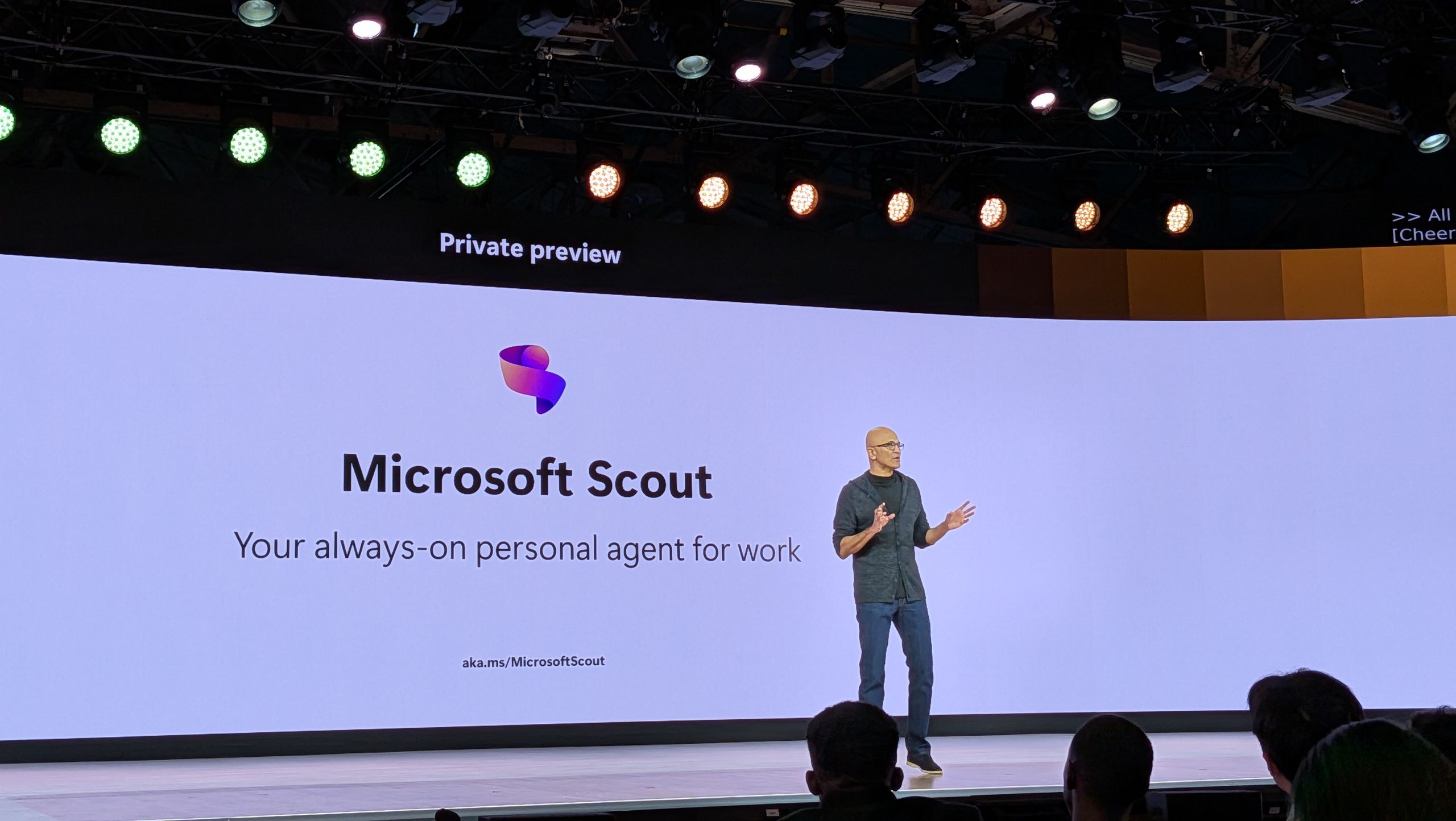
'A new category of agents': Microsoft reveals Scout, its first "Autopilot"
Microsoft unveils Autopilots, a new kind of AI agents, with Scout promising improved productivity and efficiency.www.techradar.com
- Related coverage: tomsguide.com
- Related coverage: axios.com

Microsoft debuts Scout agent, homegrown reasoning model
Microsoft is seeking to show it is a serious player in AI.www.axios.com
- Related coverage: windowscentral.com
Loading…
www.windowscentral.com - Related coverage: techcrunch.com

Microsoft launches Scout, an OpenClaw-inspired personal assistant | TechCrunch
Launched at Build, Microsoft Scout is a new AI assistant meant to bring the power and flexibility of OpenClaw into the Microsoft 365 system. techcrunch.com
- Official source: news.microsoft.com
PHASE 2: with links/12:30 - Microsoft Build 2026
 news.microsoft.com
- Related coverage: computerworld.com

Microsoft unveils Scout, an autonomous AI agent built on OpenClaw
Scout is the first of a new breed of ‘autopilot’ agents in Microsoft 365 that can carry out tasks independently. www.computerworld.com
- Related coverage: semafor.com

Microsoft launches AI assistant powered by OpenClaw
The tool could give businesses a taste of what agentic AI looks like at scale. www.semafor.com
- Related coverage: windowslatest.com

Microsoft pledges to make Windows 11 the OS for building AI, after years of Copilot backlash
Microsoft is turning Windows 11 into agent-native at Build 2026, adding local AI models and OS-level security to fix its developer platform. www.windowslatest.com
- Related coverage: thurrott.com

Build 2026: Microsoft Unveils New 'Scout' Personal Work Agent Powered by OpenClaw
Microsoft Scout is a new type of always-on AI agent that Microsoft refers to as "Autopilots." Scout is powered by OpenClaw, and it's available today via Microsoft's Frontier program. www.thurrott.com
- Related coverage: epcgroup.net
Loading…
www.epcgroup.net - Related coverage: technobezz.com
Loading…
www.technobezz.com - Related coverage: fool.com
Loading…
www.fool.com - Related coverage: acuityai.co
Loading…
acuityai.co - Related coverage: livemint.com
Loading…
www.livemint.com - Related coverage: tomshardware.com
Loading…
www.tomshardware.com - Official source: microsoft.com
Loading…
www.microsoft.com