

For decades Microsoft was treated in Washington and in the enterprise as a virtual public utility; the latest reporting and independent analysis now force a reckoning about what decades of commercial decisions with China mean for U.S. national security, corporate governance, and the resilience of the Windows ecosystem.
A new wave of investigative reporting and analysis — amplified this week in a Breitbart summary of a Horizon report — has re‑ignited scrutiny of Microsoft’s long engagement with China and the security tradeoffs that engagement has produced. The central claims are straightforward and consequential: Microsoft permitted controlled Chinese access to Windows and Office source code beginning in 2003, entered joint ventures with state‑backed Chinese organisations to build a China‑specific Windows build, and has long operated cloud infrastructure in China through a local partner that is subject to Chinese law. Additional reporting has documented Microsoft’s operational practice of allowing China‑based engineers to provide technical support for some U.S. government cloud systems under a supervised “digital escort” model — a practice the Pentagon now calls a “breach of trust.” These facts matter because Microsoft products and Azure cloud services are embedded across civilian and government infrastructure; the implications cut across software supply‑chain risk, access control, and national procurement policy. This article summarises the core reporting, verifies key technical facts, assesses strengths and mitigations in Microsoft’s posture, and lays out practical policy and engineering steps that federal agencies and enterprise IT teams should adopt today.
Practical resilience depends less on rhetorical winners and losers and more on structural reform: enforceable auditability, tenant‑level cryptographic controls, multi‑vendor contingency planning, and procurement rules that insist on verifiable, third‑party inspection rights. The technology industry and government must accept that security is not a static property sold with a license; it is a negotiated, measurable posture that must be continuously verified.
For Windows administrators and federal IT leaders the immediate task is practical and achievable: map critical dependencies, enforce zero‑trust administrative boundaries, demand auditable session trails under contract, and push for tenant‑controlled cryptographic protections. Those steps will materially reduce the odds that business relationships formed in a different geopolitical era become the vectors for tomorrow’s crises.
Source: breitbart.com 'Enduring Risk:' Report Exposes Microsoft’s Ties to Communist China
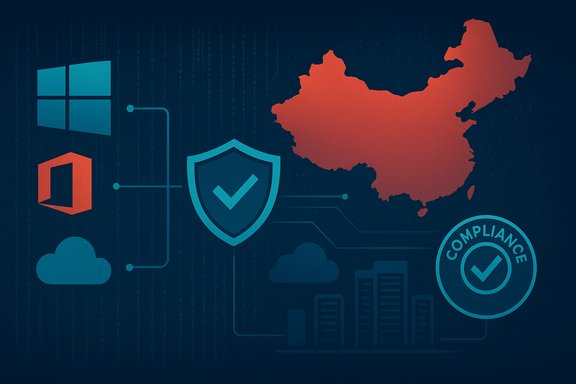 Overview
A new wave of investigative reporting and analysis — amplified this week in a Breitbart summary of a Horizon report — has re‑ignited scrutiny of Microsoft’s long engagement with China and the security tradeoffs that engagement has produced. The central claims are straightforward and consequential: Microsoft permitted controlled Chinese access to Windows and Office source code beginning in 2003, entered joint ventures with state‑backed Chinese organisations to build a China‑specific Windows build, and has long operated cloud infrastructure in China through a local partner that is subject to Chinese law. Additional reporting has documented Microsoft’s operational practice of allowing China‑based engineers to provide technical support for some U.S. government cloud systems under a supervised “digital escort” model — a practice the Pentagon now calls a “breach of trust.” These facts matter because Microsoft products and Azure cloud services are embedded across civilian and government infrastructure; the implications cut across software supply‑chain risk, access control, and national procurement policy. This article summarises the core reporting, verifies key technical facts, assesses strengths and mitigations in Microsoft’s posture, and lays out practical policy and engineering steps that federal agencies and enterprise IT teams should adopt today.Background: What the reporting says and what’s verifiable
The three pillars of the story
- Source‑code visibility. Microsoft opened a controlled source‑code review lab in Beijing in 2003, giving China’s designated review centre access to Windows and Office code under a formal agreement. Microsoft’s own announcement from 2003 documents the creation of the China Information Technology Security Certification Center (CNITSEC) source‑code review lab and the controlled access arrangement.
- Local joint ventures and China Government Edition. Microsoft formed a joint venture with China Electronics Technology Group (CETC) to operate CMIT (C&M Information Technologies), which developed a Windows 10 China Government Edition tailored to Chinese government requirements. Microsoft’s product blogs and contemporaneous reporting confirm the joint venture and the China Government Edition program.
- China‑based cloud operations and supervised support. Because Chinese regulation requires local operators for cloud services, Microsoft’s Azure presence in China is operated by 21Vianet (Shanghai Blue Cloud). That onshore instance is a physically separated instance of Azure operated by 21Vianet and subject to PRC law. Investigative reporting by ProPublica and follow‑ups in mainstream outlets documented that China‑based engineers — supervised by U.S. “digital escorts” — at times provided technical maintenance related to Defense Department cloud systems; Microsoft has since said it stopped using China‑based engineers for DoD support.
Which claims are independently corroborated
- Microsoft’s 2003 source‑code review lab in Beijing is a documented Microsoft press announcement; the fact of controlled source‑code review is verifiable.
- The CMIT joint venture and the Windows 10 China Government Edition are documented in Microsoft’s own blogs and Chinese press reporting from 2017.
- Azure in China is operated by 21Vianet under a formally documented operating model; Microsoft’s Azure documentation explicitly describes the separate, on‑shore Microsoft Azure operated by 21Vianet.
- ProPublica’s investigation into the “digital escorts” model is corroborated by multiple outlets, and Microsoft publicly revised its practices in response; the Pentagon has publicly questioned the practice.
Which claims are currently unproven or remain contested
- Direct causation claims that a specific zero‑day exploit was discovered and weaponised by Chinese actors solely because of source‑code review access are not independently documented in publicly accessible forensic reports. The Horizon summary and some commentators attribute at least one major exploit to earlier Chinese visibility of Microsoft code, but public technical attributions that link a particular CVE to source‑code visibility are scarce or classified. Where the public record lacks a detailed forensic chain, those assertions should be treated as plausible but not proven. Independent researchers and agencies have, however, repeatedly shown that state‑linked actors successfully exploited Microsoft product vulnerabilities in campaigns attributed to China‑linked actors — the pattern matters even if the direct line of causality is contested. (Cautionary note: the most serious linkage claims in the new report are asserted by the report itself and have not been published in a technical appendix that independent researchers can evaluate.
The technical landscape: How Microsoft’s choices create risk vectors
1) Source‑code review and the limits of “controlled” access
Controlled source‑code review can be legitimate — many sovereign states insist on audits so software can be certified for use in national systems. Microsoft’s 2003 lab was framed as a transparency and security exercise, not a transfer of ownership. But controlled access still grants a deep understanding of internal logic, interfaces, and design tradeoffs that accelerate vulnerability discovery and exploit development compared to black‑box testing.- Having a third party scan source code can reduce accidental backdoors or bugs — and is a standard practice in some procurement regimes.
- However, the same visibility can shorten the timeline for a well‑resourced adversary to locate subtle logic flaws or to craft test cases that exercise latent bugs. That risk grows if code review access expands beyond a narrow, accredited, and deeply audited team. Microsoft’s 2003 announcement documents the controlled lab but cannot — in public form — prove how narrowly that access was held or whether derivative findings were securitised.
2) On‑shore cloud operations: compliance vs. exposure
Operating Azure services inside China through a legally local operator was a business and compliance decision: it allowed Microsoft to sell cloud services in China while complying with PRC requirements. But the consequence is a split architecture:- Azure China is a physically separated environment with a Chinese operator (21Vianet) running services under local law; that separation is explicit in Microsoft documentation.
- When firms run services in that environment, they operate under PRC rules that can compel cooperation with local government requests; this is a structural risk for global customers that neglect the jurisdictional and legal differences. The tension is legal and architectural rather than purely technical — but technical mitigations (e.g., cryptographic isolation, tenant‑level key control) can reduce exposure.
3) Operational practices: the “digital escort” pattern
ProPublica’s reporting documented an escort arrangement: non‑U.S. technical staff performed troubleshooting while U.S. escorts — sometimes with limited technical depth — monitored sessions. The practical risk is operational: a sophisticated engineer executing a malicious script while a non‑expert watches logs may still cause undetected changes. Microsoft’s response — ceasing China‑based engineer work on DoD systems — acknowledges the operational hazard.4) Dual‑use technologies and talent networks
Microsoft Research Asia (MSRA) and other R&D presences in China have produced world‑class research and many joint publications. That talent flow is beneficial for product quality and for the global research community. But when research touches sensitive domains such as facial recognition, generative media, or synthetic biology, collaboration with institutions that have military ties becomes a national‑security consideration. Public reporting shows MSRA continues advanced recruiting in China; the broader debate is about governance and permissible research scopes. Independent verification that each collaborative paper created an exploitable military capability is context dependent — and requires case‑by‑case technical review.What Microsoft and defenders have done — and where the gaps remain
Mitigations Microsoft has announced or implemented
- Operational changes to support the U.S. government: following the ProPublica disclosures Microsoft announced it would stop using China‑based engineers to support DoD customers and updated its internal processes for government support work. Multiple mainstream outlets reported Microsoft’s policy change.
- Architectural separation for Azure China: Microsoft and 21Vianet operate Azure China as a separate instance; Microsoft documents the legal and technical separation and provides guidance about limitations and compliance. The separation reduces direct global‑to‑China data flows by architecture.
- Enterprise controls and tenant isolation: Microsoft’s enterprise offerings (Copilot for Microsoft 365, Azure security controls) provide administrative isolation, key management options, and contractual commitments around data processing that large customers can negotiate to enhance protection. These controls are meaningful, but they are contractual and operational — they depend on Microsoft’s implementation, auditability, and the willingness of customers to demand and verify stronger guarantees.
Remaining gaps and recurring operational failures
- Auditability. Public reporting repeatedly shows that audits and independent forensic trails either weren’t available or were insufficiently granular to reassure outside reviewers about what foreign engineers saw or did. The absence of non‑repudiable, cryptographically anchored audit trails (immutable logs) reduces confidence in claims about what actions occurred during escorted sessions.
- Procurement and concentration risk. Microsoft’s dominant role in federal email, enterprise desktop, and cloud services creates a systemic concentration: if a vulnerability exists in Microsoft’s stack, the blast radius is enormous. Critics argue that reliance on a single major vendor increases political and operational risk. WindowsForum community discussion has emphasised the dangers of vendor lock‑in and proposed procurement strategies to avoid single‑vendor dependency.
- Jurisdictional exposure via partners. When foreign partners operate parts of a vendor’s service under local law, the vendor’s stated security posture must be augmented by technical isolation measures and legal controls; otherwise, legal compulsion may erode even strong technical promises. Microsoft’s Azure China model is an explicit example.
The national‑security angle: why this matters beyond headlines
The combination of source‑code visibility, local operational control in China, and the breadth of Microsoft dependents inside U.S. federal systems creates a layered risk profile:- Attack surface and intelligence value. Access to source code and detailed system knowledge accelerates vulnerability discovery and targeted exploitation. Even when exploitation is not immediate, the knowledge base can be weaponised later, or combined with other intelligence to enable high‑impact intrusions.
- Supply‑chain and platform lock‑in. Microsoft’s pervasiveness in government and critical industry makes the cost of migration high; this encourages long tails of legacy configuration and potentially delayed patching or constrained incident response when trust issues arise. WindowsForum discussions have repeatedly raised the problem of long‑term lock‑in and recommended stronger procurement clauses for auditability and exit rights.
- Technology proliferation and dual use. Advanced AI and mixed‑reality tools developed by Microsoft and partners have legitimate commercial uses but also dual‑use applications. Public footage of PLA technicians using HoloLens‑style headsets for aircraft maintenance demonstrates how commercially‑available mixed‑reality can move into defense contexts. That episode has already triggered fresh export‑control discussions.
Strengths in Microsoft’s case — why this isn’t a simple “bad actor” story
It’s important to balance criticism with a clear view of Microsoft’s positive contributions and the reality of global business.- Scale and defensive investment. Microsoft operates one of the largest global security teams, funds vulnerability research, and maintains broad threat‑intelligence capabilities that materially protect many customers. Its investments in secure cloud infrastructure and compliance frameworks have raised the baseline for many customers worldwide. These investments are non‑trivial and have visible benefits in incident response and platform resilience.
- Business incentives to secure customers. Losing government business or suffering major reputational harm would be materially costly. Microsoft has a commercial and regulatory incentive to harden its controls, improve transparency, and accept third‑party auditing when required by contracts.
- Technical mitigations are available. Cryptographic tenant isolation (customer‑owned keying), immutable logging, hardware root‑of‑trust, and strict zero‑trust architectures are well‑understood technical controls that reduce exposure even when services are operated across jurisdictions. The question becomes one of adoption, verification, and enforceability at scale.
Practical recommendations — what federal agencies and enterprises should do now
The following are concise, actionable steps IT leaders and procurement policymakers can take to reduce exposure and improve resilience.Technical and operational controls (for IT and security teams)
- Require customer‑controlled cryptographic keys for any cloud workloads containing high‑value or classified data (bring your own key or HSM‑backed key control).
- Enforce zero‑trust segmentation down to service accounts and administrative endpoints; map and reduce the surface area for remote maintenance and third‑party support.
- Mandate immutable, cryptographically signed audit logs for all privileged remote sessions and automated configuration changes, with independent retention controls.
- Decommission legacy authentication and legacy management protocols that bypass modern telemetry and repoint escalation detection (disable Basic Auth, SMTP/IMAP/POP where possible).
- Conduct periodic third‑party forensic audits (red team + blue team) focusing on supply‑chain and support‑channel threat models.
Contractual and procurement reforms (for policy and contracting officers)
- Include independent external audit rights and vendor obligations to produce verifiable forensic trails as contract terms for critical services.
- Enforce diversity in critical supplier ecosystems where feasible — mandate multi‑vendor strategies for key workloads to reduce single‑vendor systemic risk.
- Require clear disclosure about where geographic operations run, who performs maintenance, and the legal jurisdiction for any subcontracted support staff.
- Use procurement leverage to demand more restrictive acceptable‑use clauses for AI and dual‑use tech delivered to foreign customers or partners (including verifiable downstream use restrictions).
Policy and regulatory measures (for lawmakers and national security agencies)
- Strengthen incident reporting requirements for contractors supporting critical infrastructure and federal systems; require prompt, detailed disclosure when non‑U.S. engineers touch sensitive systems.
- Expand the scope of security reviews in the Committee on Foreign Investment and agency procurement to explicitly evaluate historical localised code reviews and joint ventures that could create future exposure.
- Invest in independent national forensic capabilities that can be rapidly deployed to validate claims of compromise and to review vendor‑provided logs without relying solely on vendor cooperation.
Risks and trade‑offs: a realistic assessment
Any corrective path is inherently a set of trade‑offs.- Over‑reaction can harm interoperability and competitiveness. Blanket bans on all foreign engagement could force enterprises to adopt less capable or less secure alternatives, and may encourage fractured ecosystems that are harder to secure at scale. The goal should be targeted mitigation, not wholesale decoupling.
- Demand for audits and data sovereignty can increase costs and complexity. Stronger procurement and auditing standards are necessary, but they are not free — budgets and technical capacity are finite.
- Attribution difficulty complicates legal remedies. When evidence of exploitative use is limited to classified channels or dependent on vendor logs, proving deliberate malfeasance in court is hard. That reality makes engineering mitigations and auditability more meaningful than after‑the‑fact legal claims.
What the Windows‑admin and enterprise community should do this week
- Map dependencies. Inventory which services, accounts, and critical functions rely on a single vendor’s cloud control plane. Prioritise contingency plans for the highest‑risk services.
- Harden admin paths. Remove human remote maintenance where practicable in favour of ephemeral automation that can be fully logged and attested.
- Demand contractual auditability. When negotiating enterprise contracts, require vendor commitments to provide auditable session metadata, cryptographic proof of session integrity, and third‑party audit access.
- Treat AI and mixed‑reality as dual‑use. For teams procuring AI or mixed‑reality solutions, conduct impact assessments that include downstream use cases in foreign jurisdictions. Public reporting shows that mixed‑reality devices have already been demonstrated for PLA training; these are not theoretical risks.
Final assessment: constructive skepticism, not alarmism
Microsoft’s scale, global reach, and centrality to enterprise computing mean that any credible allegation of risk deserves serious attention. The combination of documented past actions — the 2003 controlled source‑code review program, the CMIT joint venture and China Government Edition, Azure China’s local operator model, and the operational digital‑escort practice exposed by ProPublica — create a plausible architecture for elevated risk that policymakers and IT leaders must mitigate. These facts are documented in primary Microsoft announcements and in investigative reporting; they are not speculative. At the same time, some of the most dramatic causation claims in the Horizon‑style narratives — like a single zero‑day being directly and only enabled by earlier source‑code access — have not been publicly demonstrated in a way that independent researchers can fully verify. Those assertions should be treated cautiously until a transparent forensic narrative and technical indicators are published.Practical resilience depends less on rhetorical winners and losers and more on structural reform: enforceable auditability, tenant‑level cryptographic controls, multi‑vendor contingency planning, and procurement rules that insist on verifiable, third‑party inspection rights. The technology industry and government must accept that security is not a static property sold with a license; it is a negotiated, measurable posture that must be continuously verified.
Conclusion
The recent reporting is a wake‑up call that mixes verified facts with contested inferences. Microsoft’s business decisions — from early source‑code review arrangements and joint ventures with state‑linked Chinese entities, to the architectural choice to operate Azure China with a local operator — combined to create a complex risk surface that now intersects with U.S. national security interests. The corporate and national response should be measured but resolute: require verifiable technical controls, institutionalise independent audits, reduce single‑vendor systemic exposure, and harden operational practices around privileged maintenance.For Windows administrators and federal IT leaders the immediate task is practical and achievable: map critical dependencies, enforce zero‑trust administrative boundaries, demand auditable session trails under contract, and push for tenant‑controlled cryptographic protections. Those steps will materially reduce the odds that business relationships formed in a different geopolitical era become the vectors for tomorrow’s crises.
Source: breitbart.com 'Enduring Risk:' Report Exposes Microsoft’s Ties to Communist China
