

Microsoft’s surprise shutdown of a long‑running video storefront has left buyers, archivists, and Windows power users scrambling to reassess what “digital ownership” actually means on the platform many of them still trust.
Microsoft quietly ended sales and rentals of movies and TV shows from the Microsoft Store on Windows and Xbox on July 18, 2025, effectively closing the Movies & TV storefront after roughly two decades of evolution from Zune Marketplace to Xbox Video and finally Movies & TV. Existing purchases remain playable through the Movies & TV app on Windows and Xbox devices, but the company stopped offering new content for purchase or rent and did not institute blanket refunds for prior buyers. This move is the latest episode in a broader industry realignment: major platform owners have been pruning direct digital‑video storefronts or consolidating distribution into fewer apps and partners. Microsoft’s decision mirrors earlier shifts by other big tech companies that restructured how video content is sold and surfaced on their ecosystems. Microsoft’s public-facing support materials and FAQ summarize the functional outcome—no new purchases, continued playback for previously bought content, and recommendations to use third‑party storefronts such as Apple TV, Prime Video, and other services where available.
For the Windows ecosystem, this pattern increases the burden on third‑party apps and open projects to fill gaps left by vendor withdrawal. It also resets user expectations: purchases on platform stores are durable but not immutable; ownership is always mediated by a vendor’s long‑term product choices.
For users, the takeaway is twofold. First, treat vendor‑hosted purchases as licensed access rather than absolute ownership; build redundant archives where possible. Second, demand clearer deprecation policies and migration tools from platform vendors so that paid content remains accessible or transferable when companies pivot.
The wider industry will watch how Microsoft handles downstream fallout—customer complaints, possible regulatory inquiries, and long‑term trust impacts—because the way this episode is resolved will influence consumer behavior and platform policy elsewhere. Until vendors commit to standardized, portable ownership models, the prudent consumer should assume that today’s “bought” file may become tomorrow’s streaming‑only relic.
Source: TheStreet https://www.thestreet.com/technolog...ar-old-entertainment-service-without-warning/
 Background / Overview
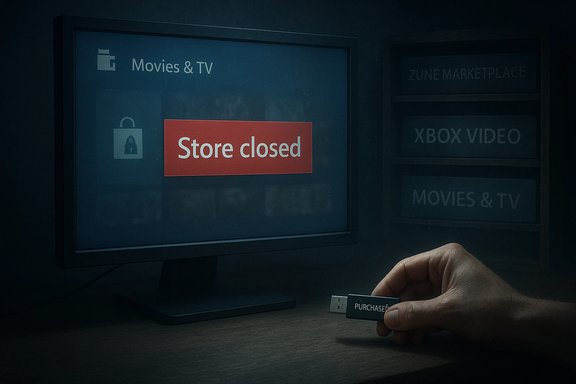
Microsoft quietly ended sales and rentals of movies and TV shows from the Microsoft Store on Windows and Xbox on July 18, 2025, effectively closing the Movies & TV storefront after roughly two decades of evolution from Zune Marketplace to Xbox Video and finally Movies & TV. Existing purchases remain playable through the Movies & TV app on Windows and Xbox devices, but the company stopped offering new content for purchase or rent and did not institute blanket refunds for prior buyers. This move is the latest episode in a broader industry realignment: major platform owners have been pruning direct digital‑video storefronts or consolidating distribution into fewer apps and partners. Microsoft’s decision mirrors earlier shifts by other big tech companies that restructured how video content is sold and surfaced on their ecosystems. Microsoft’s public-facing support materials and FAQ summarize the functional outcome—no new purchases, continued playback for previously bought content, and recommendations to use third‑party storefronts such as Apple TV, Prime Video, and other services where available. What changed, exactly
- Microsoft removed the ability to buy or rent movies and TV shows from the Microsoft Store on Windows and Xbox as of July 18, 2025. New entertainment purchases are no longer accepted on Microsoft.com, the Microsoft Store on Windows, or the Microsoft Store on Xbox devices.
- Users who previously purchased content can continue to stream or re‑download those items through the Movies & TV app on supported Windows and Xbox devices, though some platform and quality limitations (e.g., maximum download resolution) may apply.
- Microsoft’s published position is that purchases are non‑refundable under the Store’s existing Terms of Sale; the company directed customers to alternative sellers and streaming services for future purchases. That policy detail is notable because it leaves users without a refund pathway for purchases they can no longer extend, migrate, or re‑buy inside the Microsoft ecosystem.
These practical facts were confirmed independently by multiple outlets reporting on Microsoft’s support updates and changes to the Microsoft Store storefront behavior.
A short history: how Microsoft sold digital video for 20 years
Microsoft’s first major foray into digital media distribution began with the Zune ecosystem in the mid‑2000s, followed by rebrands and platform shifts (Xbox Video, Microsoft Movies & TV). Over time, Microsoft’s approach reflected both shifting consumer habits—streaming over downloads—and the company’s strategic priorities, which more recently emphasized cloud services, enterprise software, and AI. The Movies & TV storefront had persisted as a legacy revenue channel and a convenience for consumers who preferred to buy digital copies tied to their Microsoft account rather than subscribe to multiple streaming services. For two decades the core promise was simple: buy once, stream anywhere (on Microsoft devices). The abrupt removal of buy/rent capability now calls that promise into question for long‑term buyers and archivists who assumed platform continuity.Who this hit hardest — real‑world impact
Consumers and casual buyers
Casual buyers who purchased or rented a movie on a spur-of-the-moment basis will find an immediate behavioral change: they can no longer make new purchases through the Microsoft storefront. Existing purchases remain available but are now dependent on Microsoft’s continued support of the playback app and backend rights management systems. In practice, that means consumers should explicitly verify that their purchases are downloadable or portable (for example, synchronized via Movies Anywhere where supported) or else accept that access is tied to Microsoft’s ecosystem.Collectors, families, and those who rely on downloads
People who keep local copies for offline viewing or family‑shared collections must check the Movies & TV app for download entitlements and any resolution limits on re‑downloads. Microsoft’s own documentation notes continued support for playback and downloads on Windows devices but does not commit to indefinite preservation or cross‑platform transfers. That uncertainty matters for anyone who expects purchased digital video to be permanently accessible outside of the selling storefront.Archivists and cultural institutions
For archivists and institutions that depended on store‑level purchases as a convenient acquisition route, the closure is an operational headache. The loss of a platform vendor’s purchase channel complicates acquisition strategies and long‑term preservation planning. This is particularly acute when vendor stores operate under DRM and license‑tied playback models—formats and licenses that are fragile if the vendor’s rights servers or apps are retired. The policy to refuse refunds on purchases compounds preservation risk because it removes a typical consumer remediation option.The Microsoft pattern: pruning legacy services and metadata endpoints
Microsoft’s retirement of the Movies & TV storefront is part of a broader pattern of discontinuing legacy consumer services and metadata services that underpin older Windows experiences. Recent community reporting shows a separate but related disruption: the album‑lookup metadata endpoint used by Windows Media Player and the modern Media Player app—referenced as musicmatch‑ssl.xboxlive.com—stopped returning results around mid‑December 2025, breaking the longstanding “Find album information” workflow for CD rips and automated tagging. That outage illustrates the operational fragility of centralized metadata services and underscores how abrupt back‑end changes can ripple through user workflows. Taken together, these moves indicate Microsoft is aggressively pruning older consumer features that do not align with its current strategic emphasis—cloud, enterprise, and subscription‑driven services. For users, the common thread is the fragile reliance on vendor‑hosted endpoints for experiences that were once perceived as stable.Why Microsoft may have done this — plausible motives (and what is unverified)
Several plausible rationales explain the decision, but none are explicitly confirmed by Microsoft beyond the support updates announcing the change:- Cost and maintenance: Running storefronts, DRM servers, and metadata services carries ongoing operating and licensing costs that are harder to justify for lower‑volume legacy storefronts. Consolidation reduces those operational burdens.
- Strategic focus: Microsoft’s corporate priorities have shifted toward cloud infrastructure, AI, enterprise software, and subscription platforms. A direct‑sale video storefront may not fit into a portfolio optimized for those goals.
- Industry consolidation: Other platform operators have consolidated where and how they present purchased content; Microsoft may be following industry precedent to reduce fragmentation.
Caution: the precise internal motivations, contract expirations, or telemetry thresholds that triggered the shutdown are not publicly documented and should be considered unverified. Any narrative about "profit motive" versus "product focus" remains interpretation unless Microsoft provides an explicit rationale. That uncertainty is relevant because it affects how users and regulators judge the decision.
Strengths and potential justifications
- Operational simplicity: Removing a legacy storefront reduces the surface area Microsoft must secure, update, and license, freeing resources for core initiatives like Azure, Microsoft 365, and Copilot features.
- Reduced legal and content licensing complexity: Maintaining storefront rights across regions, studios, and titles demands continuous licensing negotiations. Exiting direct sales reduces that administrative overhead.
- Clearer product focus: The company can redirect engineering and product resources toward strategic growth areas rather than supporting low‑usage legacy features. This is defensible from a resource‑allocation perspective.
Risks, consumer harms, and second‑order effects
- Erosion of trust: Abrupt service shutdowns without proactive, transparent migration paths degrade user trust—especially for buyers who paid for content that’s now harder to move elsewhere. The absence of refunds for purchases amplifies that loss of trust.
- Digital preservation risk: Purchases tied to proprietary DRM and vendor servers are fragile. If the vendor later reduces support for playback apps or decommissions rights servers, consumers risk losing access to content they thought they owned.
- Legal and regulatory scrutiny: Deleting or disabling purchase channels while keeping content accessible only under vendor terms raises consumer‑protection questions. Regulators in some jurisdictions may scrutinize whether customers were adequately informed or misled about the longevity of their purchases.
- Fragmentation and friction: Directing users to third‑party storefronts and streaming services increases friction and potentially raises costs for users who preferred to keep purchases consolidated under a single account. This fragmentation also hurts families and small institutions that relied on a single platform for purchase management.
Practical steps: what buyers and collectors should do now
- Check and download entitlements: If you previously bought movies or shows through Microsoft, open the Movies & TV app and confirm whether downloads are allowed and in what resolution. Save local copies where permitted.
- Link to Movies Anywhere (U.S. users): Where supported, connect your Microsoft account to Movies Anywhere to consolidate eligible purchases across participating platforms. This gives more portability for films that participate in the program. Confirm eligibility on the Movies Anywhere site and within each service’s account pages.
- Back up files and metadata: If downloads are available, create redundant backups (external drive and cloud). For music collectors affected by metadata endpoint shutdowns, prefer verified rips (EAC, dBpoweramp), embed tags, and use MusicBrainz Picard for robust, open metadata mapping.
- Audit family purchases and licenses: Review family account sharing settings and ensure multiple household members can access purchased content where the platform’s license permits. Document purchase IDs and screenshots of entitlements as an emergency fallback.
- Consider alternate ownership models: If you require long‑term archival access, evaluate buying physical media or obtaining non‑DRMed licenses where legally possible. While less convenient, physical discs and non‑DRM files are more durable for preservation.
Technical note for Windows users and media archivists
The broader wake‑up call from Microsoft’s recent deprecations is simple: don’t rely on a single vendor’s online lookup or rights infrastructure for preservation workflows. For CD rips and music metadata, the community response has coalesced around open services and offline embedding:- Use robust rip tools that produce verification logs (Exact Audio Copy, dBpoweramp).
- Use MusicBrainz and AcoustID for fingerprints and persistent identifiers; embed MusicBrainz Release IDs into tags.
- Host a local metadata mirror if you manage institutional collections, or maintain a sidecar JSON or XML export of metadata and checksums for long‑term integrity.
Strategic implications for Microsoft and platform ecosystems
Microsoft’s withdrawal from direct video sales signals an ongoing strategic pivot: prioritize enterprise and cloud economics while shedding low‑value consumer storefronts. That approach is sensible from a corporate allocation standpoint but carries reputational risk. The company’s willingness to discontinue low‑usage consumer features without a deep migration program highlights the tension between platform stewardship and commercial prioritization.For the Windows ecosystem, this pattern increases the burden on third‑party apps and open projects to fill gaps left by vendor withdrawal. It also resets user expectations: purchases on platform stores are durable but not immutable; ownership is always mediated by a vendor’s long‑term product choices.
What Microsoft could do better (and what users should ask for)
- Clear deprecation timelines and migration tooling: A predictable deprecation calendar with explicit migration tools (account linkages, export APIs) would reduce customer harm when services end.
- Refund policy clarity: Where functionality is materially reduced (no longer allowed to buy additional copies, or purchases lose portability), offering at least partial remediation or a goodwill credit would restore trust.
- Open export options: Providing a machine‑readable purchase manifest or a robust Movies Anywhere linkage for non‑U.S. customers would improve portability and consumer confidence.
Final assessment
The sudden removal of the Movies & TV storefront and parallel retirements of supporting metadata services illustrate a predictable but painful dynamic: digital conveniences are only as permanent as the vendor’s strategic patience. Microsoft has a defensible rationale—reducing operating costs and concentrating on strategic product lines—but the execution exposed legitimate gaps in user communication, migration support, and preservation safeguards.For users, the takeaway is twofold. First, treat vendor‑hosted purchases as licensed access rather than absolute ownership; build redundant archives where possible. Second, demand clearer deprecation policies and migration tools from platform vendors so that paid content remains accessible or transferable when companies pivot.
The wider industry will watch how Microsoft handles downstream fallout—customer complaints, possible regulatory inquiries, and long‑term trust impacts—because the way this episode is resolved will influence consumer behavior and platform policy elsewhere. Until vendors commit to standardized, portable ownership models, the prudent consumer should assume that today’s “bought” file may become tomorrow’s streaming‑only relic.
Source: TheStreet https://www.thestreet.com/technolog...ar-old-entertainment-service-without-warning/
Last edited:
