

Microsoft’s Copilot is no longer just a headline—it's become a test of whether an enterprise giant can translate massive AI hype into dependable, measurable productivity for customers and investors alike.
Microsoft launched the Copilot family as the centerpiece of an audacious strategy: embed generative AI across Windows, Microsoft 365, Teams, GitHub and Azure so AI becomes a default productivity layer and a new source of recurring revenue. The idea was straightforward: monetize per-seat productivity features while capturing the cloud consumption that model inference drives. Early demos were eye-catching and the rollout was broad—but ongoing reporting and internal telemetry paint a more complicated picture of real-world adoption, reliability, and competitive pressure.
Copilot today is not a single product but a product family: Windows Copilot, Microsoft 365 Copilot, GitHub Copilot, Copilot Studio and Azure-hosted copilots for vertical solutions. That breadth is a strength on paper—Microsoft can put assistants where users already work—but it has also produced real confusion inside procurement and engineering teams about which Copilot SKU solves which business problem. The consequence: pilots proliferate while organization‑wide rollouts lag.
Satya Nadella has publicly repositioned the company's AI rhetoric away from spectacle toward engineered systems that deliver real-world value; his end‑of‑year messaging emphasized the need to distinguish “spectacle” from “substance” as the industry moves from discovery into operationalization. That reframing matters because Copilot was always meant to be Microsoft’s bridge to an “AI‑first” company—and if it stumbles, the strategic architecture Nadella built around Azure and enterprise AI faces real pressure.
This also matters to competitive dynamics. When incumbents struggle to convert pilots into production, agile competitors with narrower, reliable point solutions can capture habits and reference customers. The risk is not theoretical: independent trackers show consumers and developers forming preferences for alternative chat and assistant tools—habits that can persist even in enterprise contexts if not countered by superior, proven outcomes.
The next 6–12 months are decisive: investors are watching Azure growth and enterprise customers are testing whether Copilot reduces real work or merely adds a verification chore. Microsoft has both the resources and the levers to fix this—but execution will require discipline, transparency, and a willingness to trade some marketing spectacle for engineering rigor. The question is whether the company will move at the tempo customers and markets now expect.
Concluding, Copilot’s troubles are a reminder that in enterprise AI the margin of error is thin: novelty gets attention, but reliability and measurable ROI win deployments. Microsoft’s Copilot remains strategically vital, but its promise will be judged by consistent execution, not by marketing ubiquity.
Source: Magzter Microsoft’s pivotal AI product is running into big problems | Mint Bangalore - newspaper - Read this story on Magzter.com
 Background / Overview
Microsoft launched the Copilot family as the centerpiece of an audacious strategy: embed generative AI across Windows, Microsoft 365, Teams, GitHub and Azure so AI becomes a default productivity layer and a new source of recurring revenue. The idea was straightforward: monetize per-seat productivity features while capturing the cloud consumption that model inference drives. Early demos were eye-catching and the rollout was broad—but ongoing reporting and internal telemetry paint a more complicated picture of real-world adoption, reliability, and competitive pressure.Copilot today is not a single product but a product family: Windows Copilot, Microsoft 365 Copilot, GitHub Copilot, Copilot Studio and Azure-hosted copilots for vertical solutions. That breadth is a strength on paper—Microsoft can put assistants where users already work—but it has also produced real confusion inside procurement and engineering teams about which Copilot SKU solves which business problem. The consequence: pilots proliferate while organization‑wide rollouts lag.
Satya Nadella has publicly repositioned the company's AI rhetoric away from spectacle toward engineered systems that deliver real-world value; his end‑of‑year messaging emphasized the need to distinguish “spectacle” from “substance” as the industry moves from discovery into operationalization. That reframing matters because Copilot was always meant to be Microsoft’s bridge to an “AI‑first” company—and if it stumbles, the strategic architecture Nadella built around Azure and enterprise AI faces real pressure.
What the reporting shows: signals of strain
The recent investigative reporting and aggregated telemetry reveal several converging signals that suggest Copilot’s challenges are systemic rather than ephemeral.- Fragmented brand and product taxonomy that confuses buyers and delays procurement decisions. Enterprises struggle to map specific needs to the right Copilot SKU.
- Operational fragility: user‑visible outages and autoscaling problems that turned assistants embedded in Word, Excel and Teams into points of failure rather than trusted helpers. A December regional degradation became emblematic of these issues.
- Uneven adoption: Microsoft has announced large headline metrics—tens of millions of paid Copilot seats across its ecosystem—but independent snapshots and market trackers report far smaller consumer-facing web traction and declining preference shares in some panels. That gap between headline counts and active, valuable usage is the core worry.
- Competitive pressure from Google’s Gemini and standalone consumer models such as ChatGPT—both in raw user preference and rapidly improving model performance and developer tooling. Internal and external indicators suggest some users and even sales teams are favoring alternatives for ad‑hoc tasks.
Technical and operational roots of the problem
Reliability and autoscaling at scale
Copilot’s architecture stitches together UI surfaces, orchestration layers, routing, and Azure‑hosted model inference endpoints. When any layer is stressed—autoscaling limits, database timeouts, or a misconfigured load‑balancer—the result can be a user-visible failure: stalled assistants, truncated responses, or complete timeouts. These synchronous failures matter in enterprise deployments because the assistant is often embedded inside workflows that expect near-instantaneous, reliable outcomes. The December incident (logged internally as CP1193544) highlighted how sudden traffic surges can cascade into multi‑hour degradations for document edits and meeting summaries, provoking real operational risk for customers.Accuracy, hallucinations and the “helpfulness tax”
Independently reproduced tests and journalistic evaluations continue to show that large language models produce factual errors and hallucinations, particularly in multi‑step summarization or data‑extraction tasks. In enterprise contexts, these errors impose a helpfulness tax: time spent verifying and correcting Copilot outputs can swamp the intended productivity gains, turning the tool from a time saver into a verification burden. While hallucinations are industry‑wide, their impact is magnified when an assistant is positioned as a reliability enhancer for knowledge workers.Integration complexity and data plumbing
Moving from pilot to production is not a marketing problem—it's an integration engineering problem. Automation workflows require connectors to CRM, ERP, document stores, identity systems and more. Real deployments need robust fallbacks, change management, and monitoring. Enterprises told sales teams—and internal Microsoft reporting confirmed—that the integration overhead, uncertain total cost of ownership (TCO) and the absence of predictable FinOps tooling are slowing conversions from pilot to full deployment.Vendor and hardware dependence
Microsoft’s inference economy is closely tied to a narrow set of GPU vendors, and shifts in supply or pricing ripple into inference economics and ultimately product pricing. Microsoft is experimenting with smaller task-specific models and on‑device inference, but those are medium‑term engineering plays, not immediate remedies to capacity‑driven outages or cost pressures.Commercial and organizational friction
Confusing naming and go‑to‑market
“Copilot” has become an umbrella term encompassing developer tools, productivity assistants, and OS‑level helpers. That multiplicity creates friction at procurement: which Copilot does a CFO or CIO buy? Without clear SKU alignment to measurable ROI outcomes, many pilot projects stall while procurement seeks contractable SLAs and CFOs balk at uncertain billing models. Simplification of product taxonomy and clearer ROI playbooks are practical, if unglamorous, fixes.Sales recalibration and missed quotas
Multiple reporting threads indicate that some Microsoft sales teams quietly reduced internal expectations for specific AI product lines after many reps missed aggressive targets. While Microsoft publicly denied company‑wide quota reductions, product‑level recalibrations were reported—evidence that the pilot‑to‑scale gap is also being felt in GTM execution. These tactical shifts signal the difference between marketing momentum and commercial closure: pilots are easy, predictable enterprise rollouts are not.Investor and market implications
Copilot is central to the narrative that Microsoft can capture new software dollars while growing Azure through inference consumption. When Copilot's adoption looks weaker-than-expected, investors worry about Azure growth and whether Microsoft’s AI business is overly reliant on third‑party models (notably OpenAI). After a recent earnings release that flagged slowing Azure growth and raised concerns about Copilot's traction, Microsoft shares reacted negatively—an early reminder that product execution is now tightly coupled to market expectations for growth.Evidence in the field: adoption metrics and outages
- Microsoft’s headline seat numbers—commonly reported in press coverage as millions of paid Copilot seats—are real but aggregated across many surfaces; in‑app interactions (inside Office clients) are not captured by web‑traffic trackers, making public comparisons to consumer chatbots imperfect. This measurement mismatch frequently explains the apparent discrepancy between Microsoft’s tallies and independent trackers.
- Independent snapshots documented a drop in the proportion of subscribers who say Copilot is their primary AI tool—one panel showed a fall from ~18.8% to ~11.5% over six months—suggesting some displacement by rivals in user preference, though the underlying methodology of the panel warrants inspection. Treat such survey numbers as directional rather than definitive without full methodological transparency.
- Actual operational incidents have been concrete and public. The December 2025 regional degradation left users with truncated responses and failure messages inside critical apps, an incident that engineers addressed by manually increasing capacity and reverting a load‑balancing change. Those are not subtle UX regressions—these are synchronous failures for live workflows.
Risks for Microsoft: why this matters beyond PR
- Financial leverage on Azure: Copilot is meant to drive incremental inference usage on Azure. If Copilot's adoption stalls, the cloud revenue lift tied to inference demand could underperform expectations and pressure margins.
- Reputational damage in enterprise IT: Embedding unreliable assistants into mission‑critical flows increases support costs, compliance risk, and hesitancy from procurement teams that demand SLAs and auditability. Once confidence erodes, it is expensive to rebuild.
- Competitive habit formation: Developers and employees forming habits around competitive tools (ChatGPT, Gemini) create switching costs for Microsoft. Habits that favor consumer‑accessible assistants can reduce the speed of enterprise rollouts unless Microsoft matches or exceeds user experience.
- Vendor concentration risk: Heavy dependence on external model and GPU suppliers creates operational and negotiation vulnerability. If costs rise or supply tightens, price and performance dynamics for Copilot will be affected.
- Internal misalignment: Product bloat without clear commercial articulation—many Copilots—creates internal confusion and slows product development focus. Without a prioritized engineering roadmap that pledges reliability improvements, customers will remain cautious.
Where Microsoft can, and should, focus—practical fixes
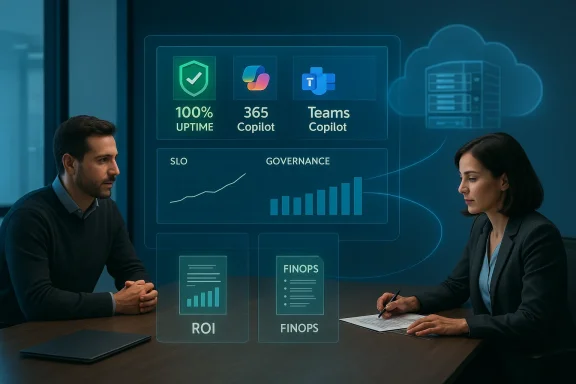
None of these problems require magic—most are engineering and commercial disciplines. The pathway to restoring trust and accelerating adoption is clear in principle, though not necessarily easy in execution.- Prioritize reliability and regional resilience: reduce frequency and duration of user‑visible outages by hardening autoscaling, load‑balancing and regional capacity planning. Publish measurable SLO improvements and incident postmortems for large customers.
- Simplify the Copilot taxonomy: tie each SKU to a clear, contractable business outcome and a documented integration pattern. Make it simple for CIOs and procurement to map a problem to a solution pack.
- Deliver FinOps and predictable billing: provide tooling that translates inference usage into predictable budget items, usage forecasts, and clear TCO scenarios for CFOs. This reduces sticker shock and shortens purchasing cycles.
- Improve governance and provenance: invest in auditing, data‑isolation features, provenance metadata and enterprise-grade model‑ops that compliance officers can sign off on. Make the “why trust this output?” question easy to answer.
- Expand model diversity and portability: hedge hardware and model vendor risk by supporting a portfolio of model backends (including efficient task-specific models and on‑device inference where appropriate) to reduce single‑supplier pressure.
- Publish independent benchmarks and transparent measurement: to close the gap between Microsoft telemetry and public trackers, release verifiable sampling methodology showing how in‑app interactions are measured and how they compare to web traffic-based trackers. This transparency would reduce noisy narrative gaps in the press.
Recommendations for IT leaders evaluating Copilot today
If you are an IT leader or procurement officer deciding whether to expand Copilot usage, take a pragmatic, outcomes‑oriented approach.- Define contractable KPIs before pilot: measure time saved on a repeatable task, error‑reduction rates, and downstream support costs. Tie expansion clauses to these KPIs.
- Start with low‑risk, high‑repeatability workflows: choose tasks where the assistant’s outputs are easy to verify and provide predictable ROI (e.g., templated document assembly rather than open‑ended research synthesis).
- Demand visibility into model lineage and data flows: require suppliers (including Microsoft) to demonstrate audit trails, entitlements, and data isolation controls for sensitive data.
- Insist on FinOps tooling during trials: simulate scaled inference usage and its billing impact before committing to organization‑wide seat purchases.
How this episode reframes the AI era for incumbents
Copilot’s challenges crystallize a broader lesson for large incumbents: distribution and installed base are powerful, but they do not substitute for rock‑solid execution when a product becomes a synchronous piece of enterprise workflow. The industry is transitioning from the discovery phase to a phase where reliability, governance, and measurable ROI determine winners. Nadella’s call to move beyond spectacle and focus on substance captures this pivot; the test will be whether Microsoft can make Copilot demonstrably reliable and easy to buy.This also matters to competitive dynamics. When incumbents struggle to convert pilots into production, agile competitors with narrower, reliable point solutions can capture habits and reference customers. The risk is not theoretical: independent trackers show consumers and developers forming preferences for alternative chat and assistant tools—habits that can persist even in enterprise contexts if not countered by superior, proven outcomes.
Strengths Microsoft still brings to the table
Despite the problems, Microsoft has structural advantages that many rivals do not:- Vast enterprise distribution and identity plumbing that makes large rollouts possible if reliability and governance are solved.
- Deep pockets and the ability to invest heavily in datacenter capacity, model ops and long‑term engineering required to harden these systems.
- A multi‑product surface area (Windows, 365, Teams, GitHub) that, if aligned, can deliver a compelling integrated experience few competitors can match.
Caveats and unverifiable claims
Some public figures cited in reporting—survey percentages and third‑party web‑traffic shares—depend heavily on the measurement methodology used (web visits vs. in‑app telemetry, panel composition, and sampling frames). In particular, at least one commonly quoted Recon Analytics figure lacks a publicly available methodology in the sources reviewed; treat such numbers as directional until full methodologies are published for verification. Microsoft’s own in‑app telemetry is not visible to external trackers, which complicates apples‑to‑apples comparisons between Copilot and consumer chat models. These measurement gaps are material to interpreting who is “winning” in AI.Final analysis — what success looks like and the clock on execution
Copilot’s future hinges on Microsoft turning distribution and engineering scale into repeated, measurable trust at the enterprise level. The changes required are not glamorous: more robust autoscaling, clearer product packaging, FinOps transparency, governance controls and honest, verifiable metrics. If Microsoft prioritizes these hard fixes and publicly ties them to measurable milestones—SLO improvements, reduced incident frequency/duration, pilot-to-production conversion rates—Copilot can still realize its strategic promise. If not, the product risks becoming an expensive lesson in the limits of distribution alone.The next 6–12 months are decisive: investors are watching Azure growth and enterprise customers are testing whether Copilot reduces real work or merely adds a verification chore. Microsoft has both the resources and the levers to fix this—but execution will require discipline, transparency, and a willingness to trade some marketing spectacle for engineering rigor. The question is whether the company will move at the tempo customers and markets now expect.
Concluding, Copilot’s troubles are a reminder that in enterprise AI the margin of error is thin: novelty gets attention, but reliability and measurable ROI win deployments. Microsoft’s Copilot remains strategically vital, but its promise will be judged by consistent execution, not by marketing ubiquity.
Source: Magzter Microsoft’s pivotal AI product is running into big problems | Mint Bangalore - newspaper - Read this story on Magzter.com
