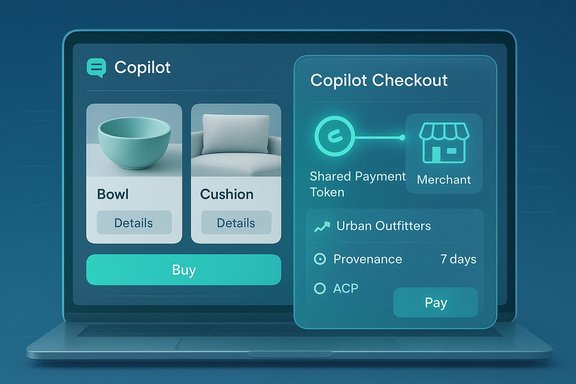
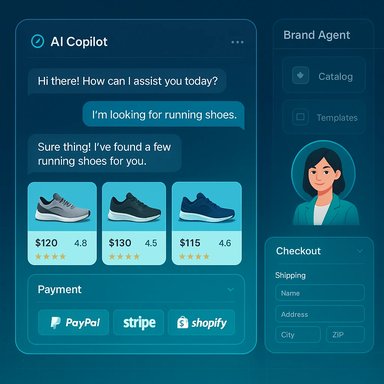
Microsoft has pushed Copilot from a productivity and search assistant into a full transactional surface: shoppers in the U.S. can now discover, compare and complete purchases inside Copilot with the launch of Copilot Checkout, while merchants get new Brand Agents and Copilot Studio templates to automate catalog, personalization and store operations.
Microsoft framed this move as part of an “agentic commerce” shift—AI agents that do more than recommend, they can act on behalf of users and execute multi‑step workflows like discovery → selection → payment. The company announced a U.S.-first rollout of Copilot Checkout and a set of merchant-facing tools timed with retail industry activity, positioning Copilot as both a consumer-facing shopping surface and an operations layer for sellers. This launch is not happening in isolation. Payments and commerce providers are racing to define standards and rails for in‑chat commerce, and rival platforms are making similar plays—most notably new industry efforts around open agentic protocols and Google’s recent AI shopping push. The competitive backdrop is driving a fast race to scale merchant participation and interoperability.
Copilot Checkout is a decisive step toward embedding commerce inside conversational AI. The technical choices—canonical product data, tokenized delegated payments and partner‑first settlement—are sensible foundations. The real question is operational: can merchants and platforms stitch these pieces together at scale while preserving consumer trust, dispute fairness and merchant control? Early pilots and rigorous instrumentation will determine whether Copilot becomes a durable new checkout lane—or a high‑profile experiment that needs rebalancing.
In the near term, merchants should pilot deliberately: clean the catalog, codify contracts for data and refunds, and instrument every Copilot order so the business impact is measured and auditable. For shoppers, the promise is real: faster, more conversational shopping—if the ecosystem gets the disclosure, dispute and trust mechanics right.
Source: Moneycontrol https://www.moneycontrol.com/techno...tform-with-new-ai-tools-article-13768759.html
 Background
Microsoft framed this move as part of an “agentic commerce” shift—AI agents that do more than recommend, they can act on behalf of users and execute multi‑step workflows like discovery → selection → payment. The company announced a U.S.-first rollout of Copilot Checkout and a set of merchant-facing tools timed with retail industry activity, positioning Copilot as both a consumer-facing shopping surface and an operations layer for sellers. This launch is not happening in isolation. Payments and commerce providers are racing to define standards and rails for in‑chat commerce, and rival platforms are making similar plays—most notably new industry efforts around open agentic protocols and Google’s recent AI shopping push. The competitive backdrop is driving a fast race to scale merchant participation and interoperability. What Microsoft announced — the essentials
Copilot Checkout: conversation-to-transaction in one pane
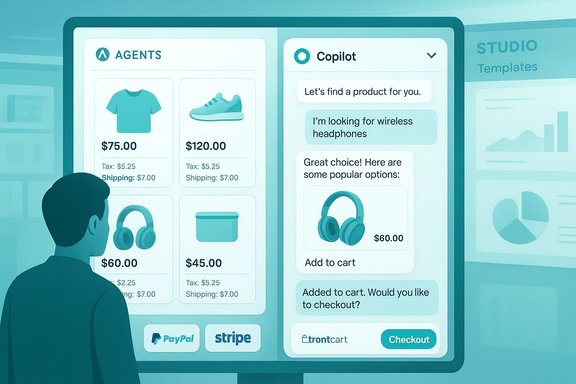
- Copilot Checkout lets U.S. users on Copilot.com discover products, view details (price, tax, shipping), and complete payments without being redirected away from the Copilot chat interface. Microsoft positions Copilot as the shopping surface while partner systems perform settlement and fulfilment.
- At launch, Microsoft named PayPal, Shopify and Stripe as primary partners for inventory sync, checkout plumbing, payment processing and merchant onboarding. Early participating sellers include mainstream brands and curated shops such as Urban Outfitters, Anthropologie, Ashley Furniture and a subset of Etsy sellers.
Brand Agents and Copilot Studio templates for sellers
- Brand Agents: a turnkey, brand‑trained assistant available initially to Shopify merchants that speaks in a brand’s tone, answers product and policy questions, and can guide shoppers all the way to the in‑chat checkout. Microsoft positions this as a rapid deployment for merchants who want on‑brand conversational commerce.
- Catalog enrichment agent (public preview): automates ingestion and normalization of product data, extracts attributes from images, corrects errors and enriches feeds with social signals—aimed at turning messy catalog data into structured, discovery-ready records.
- Store operations agent (public preview): a frontline assistant for store managers and associates that answers inventory and policy queries, analyzes sales trends, and suggests staffing or merchandising actions informed by internal POS data and external signals (weather, events).
How Copilot Checkout works — the technical anatomy
Microsoft and its partners described a layered architecture designed to limit exposure and preserve merchant control while enabling a seamless UX.- Canonical product feeds: merchants expose machine‑readable catalogs (SKU, GTIN, inventory, images, shipping metadata) via Microsoft Merchant Center, Shopify sync, or PayPal/Stripe store‑sync tools. The agent references canonical records rather than scraped HTML to reduce hallucination risk.
- Conversational orchestration: Copilot parses intent, asks clarifying questions (size, color, delivery timing), and maintains provenance linking suggestions back to the originating product record—important for dispute resolution and traceability.
- Delegated, tokenized checkout: Copilot delegates payment execution to PSP partners (PayPal, Stripe, Shopify checkout) by requesting short‑lived session tokens; raw card credentials are not stored in Copilot. PSPs run authorization, fraud checks and the settlement/dispute flows. This preserves merchant-of-record responsibilities while letting Copilot control the front‑end experience.
- Governance and AgentOps: Copilot Studio and Azure AI Foundry provide orchestration, identity, observability and governance controls for agents—Microsoft emphasizes the need for auditable policies and human escalation paths.
Merchant onboarding, consent and Shopify’s automatic enrollment
Microsoft and Shopify are pursuing quick scale: Shopify merchants will be automatically enrolled in Copilot Checkout after an opt‑out window, with controls exposed via the Shopify admin. Non‑Shopify merchants can apply to onboard via PayPal or Stripe integrations. That combination reduces merchant friction to join but raises operational questions about default inclusion. Microsoft stresses merchants remain the merchant of record—pricing, fulfilment, tax, returns and customer service are the seller’s responsibilities—while payment processors and merchants themselves handle settlement and dispute flows. Microsoft’s public materials explicitly state this separation to limit regulatory and financial exposure for the platform, but the operational reality of disputes and refunds in a new surface will be tested in live transactions.Early partner messaging and claimed benefits — what’s verified and what is vendor‑provided
Microsoft and PayPal are promoting conversion gains as a key rationale: vendor materials include claims such as a 53% increase in purchases within 30 minutes of a Copilot session and far shorter purchase funnels in Copilot‑led journeys. These are promising but currently vendor‑sourced metrics; they require independent validation and careful measurement in merchant pilots before they can be treated as general truth. Treat those uplift figures as directional, not definitive. Benefits that are already verifiable from product documentation and partner press releases:- In‑chat checkout UX is live on Copilot.com in the U.S. and connects to named PSPs and storefront platforms.
- Brand Agents and Copilot Studio templates are available (or in public preview) for merchants to build conversational experiences and automate catalog and store tasks.
- Tokenized, delegated payments are the intended pattern—this is consistent across Microsoft, PayPal and Stripe messaging and is required to avoid centralizing raw payment credentials.
Why this matters: business and technical implications
For shoppers
- Friction reduction: one conversational session from discovery to checkout reduces context switching and could lower cart abandonment for simpler or high‑intent purchases.
- Convenience with caveats: buyers must rely on clear UI signals to confirm seller identity, price, shipping and return policies—issues that are usually visible on merchant pages but can be obscured inside an assistant UI. Microsoft and partners will need to standardize disclosure patterns to maintain trust.
For merchants
- New distribution channel: Copilot surfaces merchant catalogs across Microsoft properties (Copilot.com, Edge, Bing), potentially unlocking high‑intent shoppers who might never land on the merchant’s own site.
- Operational lift and risk: catalog enrichment and store‑ops agents can cut manual onboarding and frontline toil, but poor feed hygiene will quickly produce bad experiences in agentic contexts and create reputational risk.
For platforms and payments
- Standards and interoperability matter: the industry is coalescing around agentic commerce protocols and tokenized payments to enable safe agent‑to‑merchant flows. Microsoft’s partner approach ties Copilot to PSPs and storefront platforms to prevent unnecessary centralization of financial risk.
Risks, gaps and governance concerns
- Data and customer‑relationship erosion
- If merchant traffic increasingly routes through Copilot, merchants risk losing first‑party engagement data unless contractual controls guarantee exportable customer records and marketing opt‑ins. Automatic Shopify enrollment amplifies this concern.
- Liability and dispute resolution friction
- Who bears responsibility when a conversational agent misstates price, availability or product claims? Microsoft’s merchant-of-record posture helps, but the practical disputes—chargebacks, returns, cancellations—will reveal operational frictions between agents, PSPs and merchant systems.
- Fraud, trust and UX transparency
- Tokenized payments reduce exposure of raw card data, but agentic flows introduce new fraud vectors (social engineering inside conversation windows, credential reuse, malicious prompts). Clear UI affordances and robust fraud signals from PSPs are essential.
- Performance claims need independent audits
- Uplift statistics quoted by Microsoft and partners should be validated by neutral third parties and A/B tests on merchant SKUs. Vendors’ early numbers are useful hypotheses, not guarantees.
- Regulatory and competition scrutiny
- As agentic commerce centralizes discovery and checkout in assistant layers, regulators may scrutinize platform power, default enrollments and data portability—particularly where merchants’ bargaining power could be affected. Recent cross‑industry moves toward open protocols show the market is aware of interoperability and anticompetitive risks.
Practical guidance for merchants and IT leaders
Microsoft’s announcement is actionable now, but success requires operational discipline. Recommended steps:- Pilot with a tight SKU set
- Select a limited catalog slice (e.g., best sellers, simple SKUs) to test Copilot‑originated traffic and measure conversion lift vs. baseline channels.
- Define contract and data‑export terms
- Negotiate explicit rights to customer data, order logs and attribution windows. Ensure you retain the ability to export first‑party customer contacts and purchase history.
- Prepare catalog hygiene and provenance
- Use the catalog enrichment templates or your own PIM cleanup: accurate titles, GTINs, images and inventory sync are non‑negotiable. Poor metadata degrades discovery and increases disputes.
- Instrument end‑to‑end observability
- Track Copilot origin orders, conversion funnel metrics, AOV differences, return rates and chargebacks separately so you can quantify incremental value and risk.
- Test dispute and fulfilment flows
- Rehearse refund and cancellation scenarios to ensure status updates propagate from merchant systems back to Copilot and the buyer without manual toil.
- Start governance and escalation playbooks
- Define rules for agent responses, escalation thresholds for ambiguous queries, and human‑in‑the‑loop controls for price or policy changes.
How this fits into the broader AI commerce race
Microsoft’s Copilot Checkout is one front in a consolidated industry move toward agentic commerce. Google and Shopify have been working on open protocols (Universal Commerce Protocol / similar industry efforts) to let assistants act across merchant systems, and payments firms are publishing agentic payment standards to support tokenized flows. Success in this space will hinge on open standards, interoperable protocols and a clear split of responsibilities between discovery surfaces and settlement systems. If Microsoft’s approach gains traction, Copilot could become a central distribution surface—not just a place to ask questions, but a place where buying and selling actually happens. That is precisely the strategic bet Microsoft and its partners are making.Final assessment: strengths, weaknesses, and what to watch
Strengths
- Integrated UX: collapsing discovery and checkout into one conversational flow solves a real friction problem and aligns with how many users want to interact with AI.
- Partnered plumbing: relying on PayPal, Stripe and Shopify to handle settlement and fraud keeps Microsoft from centralizing payment risk while leveraging existing payment ecosystems.
- Operational tooling: catalog enrichment and store-ops agents address real merchant pain points and reduce time to market for conversational commerce.
Weaknesses and risks
- Vendor‑sourced performance claims: conversion uplift numbers are promising but need independent verification in merchant pilots. Treat them as directional until validated.
- Data and relationship risk: automatic enrollment and platform distribution could weaken first‑party data capture if contractual protections aren’t negotiated.
- Operational maturity: dispute handling, refund workflows and fraud defenses for in‑chat purchases must be stress‑tested at scale.
What to watch next
- Independent A/B test results and third‑party audits of Copilot‑origin conversions.
- Regulatory responses or policy changes around default merchant enrollment and data portability.
- Rapid expansion of agentic commerce protocols that enable cross‑platform checkout interoperability.
- Merchant adoption rates after the Shopify opt‑out window and the onboarding cadence for PayPal/Stripe merchants.
Copilot Checkout is a decisive step toward embedding commerce inside conversational AI. The technical choices—canonical product data, tokenized delegated payments and partner‑first settlement—are sensible foundations. The real question is operational: can merchants and platforms stitch these pieces together at scale while preserving consumer trust, dispute fairness and merchant control? Early pilots and rigorous instrumentation will determine whether Copilot becomes a durable new checkout lane—or a high‑profile experiment that needs rebalancing.
In the near term, merchants should pilot deliberately: clean the catalog, codify contracts for data and refunds, and instrument every Copilot order so the business impact is measured and auditable. For shoppers, the promise is real: faster, more conversational shopping—if the ecosystem gets the disclosure, dispute and trust mechanics right.
Source: Moneycontrol https://www.moneycontrol.com/techno...tform-with-new-ai-tools-article-13768759.html