

Microsoft’s flagship AI assistant, Copilot, is no longer an unambiguous win for Microsoft — recent reporting and independent telemetry show a product that is highly visible but unevenly reliable, with adoption, operational resilience, and commercial clarity all under real pressure.
Microsoft positioned Copilot as the center of a sweeping platform strategy: embed generative AI across Windows, Microsoft 365, Teams, GitHub and Azure to make AI the default productivity layer and to monetize both seat-based subscriptions and metered inference on Azure. That strategy justified a multibillion-dollar datacenter and GPU buildout and helped drive a major commercial narrative for investors and enterprise customers.
Yet the narrative has become more complicated. The Wall Street Journal’s investigative piece framed the problem bluntly as “running into big problems,” describing a mix of internal friction, confusing product fragmentation, and slippage in user preference versus rivals such as Google’s Gemini and OpenAI’s ChatGPT. Independent analysts and incident logs paint the same picture: Copilot has suffered regionally significant outages, produces hallucinations and brittle automation in real-world workflows, and shows a growing gap between seats sold and seats meaningfully used.
This is a classic enterprise-technology moment: distribution and marketing created huge visibility, but reliability, governance, and measurable return-on-investment (ROI) determine whether that visibility becomes durable adoption.
Independent market trackers and surveys tell a different story when the metric is preference or primary tool adoption. Recon Analytics’ U.S. paid-subscriber survey, for example, reports Copilot’s share of primary platform preference fell from 18.8% in July 2025 to 11.5% in January 2026, a substantial contraction in a short span that was driven by competitive pressure and product experience differences. Recon’s analysis emphasizes that licenses don’t equal active preference or habit.
Caveat: Recon’s measurements focus on U.S. paid subscribers and rely on survey panels; methodology should be inspected before treating the numbers as universal penetration metrics, particularly because Copilot’s in‑app usage (inside Office clients) can be invisible to web-traffic trackers. Transparency about measurement boundaries is crucial when comparing vendors.
Why this matters operationally: Copilot is often embedded inside synchronous workflows — meeting summaries, inline document edits, file actions in Word/Excel/Teams. When those synchronous features time out or return truncated results, the assistant becomes a point of friction rather than a productivity multiplier. Multiple public incident logs and forum recreations indicate the outage profile was consistent with a control‑plane or routing failure (requests accepted but not getting serviced promptly), not a data loss event.
To reduce this coupling, Microsoft must treat Copilot more like a platform that requires hardened regional isolation, observable autoscaling behavior, and contractable SLAs for synchronous operations — not only a feature set stitched into apps.
Microsoft is already diversifying model-routing (task‑specific lightweight models for routine jobs, frontier models for creative tasks) and exploring on‑device inference for NPU-enabled Copilot+ hardware to reduce inference costs and latency. But these are multi‑quarter engineering projects, not immediate solutions.
Google’s Gemini and OpenAI’s ChatGPT continue to invest in smoother consumer experiences and developer tooling that captures attention. Habit formation in the browser and developer ecosystems can become self‑reinforcing: once employees adopt a particular assistant regularly, procurement faces an uphill battle to justify paying for an enterprise‑grade alternative unless the ROI and governance advantages are clear.
If Microsoft invests the next several quarters in hardening autoscaling, simplifying commercial packaging, and delivering auditable governance features — and if it publicly validates those improvements with independent sampling — Copilot can still deliver the productivity gains Microsoft promised. If those fixes lag, the product risks becoming an instructive cautionary tale about the limits of distribution when operational execution and trust aren’t equally prioritized.
Source: Magzter Microsoft's Pivotal AI Product Is Running Into Big Problems | The Wall Street Journal - newspaper - Read this story on Magzter.com
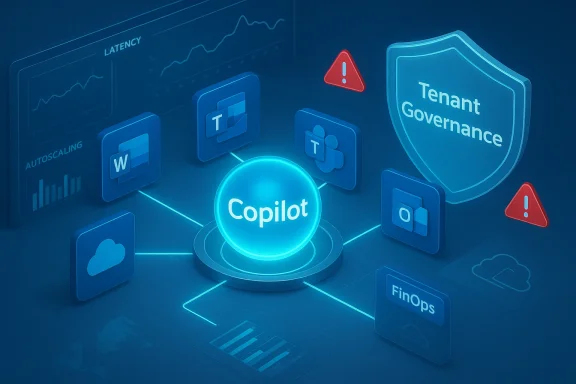 Background / Overview
Microsoft positioned Copilot as the center of a sweeping platform strategy: embed generative AI across Windows, Microsoft 365, Teams, GitHub and Azure to make AI the default productivity layer and to monetize both seat-based subscriptions and metered inference on Azure. That strategy justified a multibillion-dollar datacenter and GPU buildout and helped drive a major commercial narrative for investors and enterprise customers.Yet the narrative has become more complicated. The Wall Street Journal’s investigative piece framed the problem bluntly as “running into big problems,” describing a mix of internal friction, confusing product fragmentation, and slippage in user preference versus rivals such as Google’s Gemini and OpenAI’s ChatGPT. Independent analysts and incident logs paint the same picture: Copilot has suffered regionally significant outages, produces hallucinations and brittle automation in real-world workflows, and shows a growing gap between seats sold and seats meaningfully used.
This is a classic enterprise-technology moment: distribution and marketing created huge visibility, but reliability, governance, and measurable return-on-investment (ROI) determine whether that visibility becomes durable adoption.
What reporting and telemetry actually show
Headline metrics versus real-world usage
Microsoft has touted large headline numbers — public statements in recent quarters cited roughly 15 million paid Microsoft 365 Copilot seats and material growth in daily interactions. Those are real and important numbers for corporate reporting, but they conflate different usages (embedded in‑app calls, consumer web sessions, and enterprise seat activations) and therefore can overstate the depth of day‑to‑day reliance on Copilot in many organizations.Independent market trackers and surveys tell a different story when the metric is preference or primary tool adoption. Recon Analytics’ U.S. paid-subscriber survey, for example, reports Copilot’s share of primary platform preference fell from 18.8% in July 2025 to 11.5% in January 2026, a substantial contraction in a short span that was driven by competitive pressure and product experience differences. Recon’s analysis emphasizes that licenses don’t equal active preference or habit.
Caveat: Recon’s measurements focus on U.S. paid subscribers and rely on survey panels; methodology should be inspected before treating the numbers as universal penetration metrics, particularly because Copilot’s in‑app usage (inside Office clients) can be invisible to web-traffic trackers. Transparency about measurement boundaries is crucial when comparing vendors.
Operational incidents: autoscaling and regional outages
A particularly visible incident occurred in early December 2025, cataloged internally by Microsoft as CP1193544. That incident produced multi‑hour degradations for users in the U.K. and parts of Europe and was linked publicly to an unexpected surge in localized request traffic that stressed autoscaling and routing policies; Microsoft’s mitigation required manual capacity increases and load‑balancer reconfiguration. National health and enterprise status pages and third‑party trackers recorded the outage symptoms.Why this matters operationally: Copilot is often embedded inside synchronous workflows — meeting summaries, inline document edits, file actions in Word/Excel/Teams. When those synchronous features time out or return truncated results, the assistant becomes a point of friction rather than a productivity multiplier. Multiple public incident logs and forum recreations indicate the outage profile was consistent with a control‑plane or routing failure (requests accepted but not getting serviced promptly), not a data loss event.
Accuracy and the “helpfulness tax”
Independent tests and hands‑on reproductions continue to show hallucinations and brittle behavior in multi‑step tasks — e.g., inconsistent spreadsheet automation, vision misidentification, and incomplete agentic workflows. In enterprise settings where the promise is time-savings and automation, these errors create a “helpfulness tax”: the time saved by AI is often spent verifying and correcting outputs instead of being net positive. This is an industry‑wide problem but has special gravity for Microsoft because Copilot is sold as a reliability-enhancing productivity feature.Product family fragmentation and buyer confusion
“Copilot” is not one product. It refers to a family: GitHub Copilot (developers), Microsoft 365 Copilot (productivity apps), Windows Copilot (OS‑level assistant), Copilot Studio (custom agents), and Azure‑hosted vertical copilots. That breadth is a distribution strength but introduces procurement friction: buyers and IT teams struggle to map business problems to the right SKU, slowing decisions and pilots-to-production conversions.Why these problems compound: engineering, economics, governance
Engineering coupling at scale
Copilot’s architecture stitches together UI clients, orchestration layers, routing, authentication flows, and Azure‑hosted model inference endpoints. When components share routing or control-plane services, a misconfiguration or load spike can cascade across many surfaces. The December CP1193544 incident illustrated how an autoscaling or load-balancer policy change can produce synchronized failure modes across Word, Teams, Outlook, and other clients. These are not theoretical risks — they are lived experiences for affected tenants.To reduce this coupling, Microsoft must treat Copilot more like a platform that requires hardened regional isolation, observable autoscaling behavior, and contractable SLAs for synchronous operations — not only a feature set stitched into apps.
Inference economics and vendor dependence
Running generative AI at scale is expensive. Microsoft’s large capital expenditures (GPU-heavy datacenter investments) were made to support a sustained AI workload; those costs are expected to be offset by seat monetization and Azure inference consumption. But the economics are tightly coupled to vendor hardware cycles (notably Nvidia GPUs) and to the real-world rate at which enterprises convert pilots into paid, continuously used deployments. If paid adoption (and the per-seat lift to inference usage) lags expectations, payback windows lengthen and margins compress.Microsoft is already diversifying model-routing (task‑specific lightweight models for routine jobs, frontier models for creative tasks) and exploring on‑device inference for NPU-enabled Copilot+ hardware to reduce inference costs and latency. But these are multi‑quarter engineering projects, not immediate solutions.
Governance, data isolation and compliance risk
Copilot’s power comes from its ability to read context and act on corporate data. That same capability expands the attack surface for prompt injection, data leakage, and policy violations. Enterprises — especially regulated industries and public-sector tenants — demand auditable model routing, tamper-resistant logs, and clear permissioning before giving Copilot the broad access required to deliver substantial automation value. Several enterprise buyers have paused expansions pending stronger governance guarantees.Competitive dynamics: why user preference matters
User habit and discoverability are huge advantages for consumer-first products. Recon Analytics’ survey shows that when employees have both Copilot and alternative consumer assistants (ChatGPT, Gemini), many pick the consumer product for ad‑hoc tasks. That preference gap translates into weaker conversion pressure for enterprise seat upgrades and complicates Microsoft’s pitch that Copilot’s distribution equals daily habit.Google’s Gemini and OpenAI’s ChatGPT continue to invest in smoother consumer experiences and developer tooling that captures attention. Habit formation in the browser and developer ecosystems can become self‑reinforcing: once employees adopt a particular assistant regularly, procurement faces an uphill battle to justify paying for an enterprise‑grade alternative unless the ROI and governance advantages are clear.
The practical consequences for Microsoft and customers
- For Microsoft: slower-than-expected seat conversion and usage depth mean the Azure inference revenue lift may underperform near‑term expectations. Field reports of adjusted growth targets in some sales units suggest internal recalibration.
- For customers: embedding a brittle assistant into mission‑critical workflows raises helpdesk load, compliance risk, and potential workflow disruption when Copilot is not available or returns incorrect actions.
- For competitors: consumer leaders can continue capturing mindshare even as enterprises demand stronger reliability and governance features from vendors.
What Microsoft needs to fix — engineering and commercial priorities
Below are practical, measurable actions Microsoft should prioritize to convert scale into durable trust:- Engineering hardening and observability
- Publish regional autoscaling commitments for synchronous Copilot features and make scaling behavior auditable to large tenants.
- Increase regional isolation so routing regressions don’t cascade across all surfaces.
- Expand chaos testing and pre-deployment load validation specific to the Copilot surfaces (Word, Teams, Outlook, Windows) that require synchronous behavior.
- Clearer commercial packaging and FinOps controls
- Simplify Copilot SKUs and map each to measurable ROI scenarios so procurement committees can evaluate TCO.
- Provide clear meter‑simulation tools that let finance teams model inference-driven costs before mass rollout.
- Governance-first product features
- Ship tenant‑level model routing controls, immutable audit logs for sensitive actions, and admin‑testable policy templates for regulated industries.
- Standardize “read-only” and “gateway” modes for automation, enabling staged trust-building.
- Performance-first UX and two‑tier access handling
- Introduce lightweight fallback modes that return cached advisory results for short outages instead of failing synchronously.
- Reduce two‑tier UX resentment by making Copilot+ benefits optional and providing on‑cloud parity where hardware is older.
- Transparent measurement and independent validation
- Publish sampling data or partner with trusted third-party auditors to demonstrate active daily usage, not just seat counts.
- Explain measurement boundaries for any headline metrics (in‑app vs web sessions vs paid seats).
Recommendations for enterprise buyers and IT leaders
- Treat Copilot deployments as staged programs, not flip-the-switch projects. Begin with advisory and read-only modes, then move to agentic automation after robust success criteria and SLAs are proven.
- Require explicit FinOps modeling during procurement and insist on postmortem commitments for any severe outages that affected your tenant.
- Demand governance features in contract negotiations: model‑routing controls, audit logs, and data residency guarantees.
- Pilot on non-critical workflows to quantify the “helpfulness tax” in your own environment; measure time saved versus time spent verifying outputs.
Strengths Microsoft still controls — and why they matter
Microsoft’s structural advantages are real and valuable:- Platform distribution: Windows, Office, Teams and Azure give Microsoft a unique edge for embedding Copilot in the places people already work. This moat is meaningful for long-term integration and enterprise lock‑in.
- Enterprise governance experience: Microsoft’s history with identity, compliance and enterprise SLAs gives it an edge if it can productize governance controls for Copilot.
- Capital and engineering scale: Few firms can match Microsoft’s datacenter investments and the capacity to invest iteratively in model routing and infrastructure resilience.
Risks and unanswered questions
- Recon Analytics and other trackers show sharp shifts in preference metrics for Copilot that merit careful study; however, differing methodologies (web‑traffic vs in‑app telemetry vs survey panels) make apples‑to‑apples comparisons difficult. Treat each dataset with its measurement boundaries in mind.
- Hardware and vendor dependence (notably on specific GPU stacks) create a strategic fragility: changes in supply or pricing can rapidly alter inference economics. Microsoft’s mitigation (smaller task models, on‑device inference) is real but multi‑quarter.
- The December CP1193544 incident was remediated, but it highlighted the operational risk of embedding a synchronous agent across many surfaces. Enterprises should require remediation commitments and transparency about root‑cause analyses for outages that affect their tenants.
Final assessment: salvageable, but time‑sensitive
Copilot is simultaneously Microsoft’s most visible AI bet and a visible example of how platform ubiquity does not automatically translate into durable enterprise trust. The company can still convert its distribution advantage into lasting enterprise value, but that requires a clear shift away from spectacle and toward the meticulous engineering work of reliability, governance, and predictable economics.If Microsoft invests the next several quarters in hardening autoscaling, simplifying commercial packaging, and delivering auditable governance features — and if it publicly validates those improvements with independent sampling — Copilot can still deliver the productivity gains Microsoft promised. If those fixes lag, the product risks becoming an instructive cautionary tale about the limits of distribution when operational execution and trust aren’t equally prioritized.
Quick checklist for readers (IT leaders, CIOs, procurement)
- Verify what “15 million seats” actually means for your tenant: active paid seats, in‑app enabled seats, or trial/preview footprints.
- Insist on FinOps modeling and a pilot-to-scale success definition before large rollouts.
- Demand tenant-level governance and post‑incident transparency in procurement contracts.
- Start with low-risk advisory use-cases; escalate to automation only after measurable, reproducible ROI is proven.
Source: Magzter Microsoft's Pivotal AI Product Is Running Into Big Problems | The Wall Street Journal - newspaper - Read this story on Magzter.com
