

Microsoft is moving Copilot in a direction that looks less like a chat assistant and more like an always-on digital co-worker. According to a report published on April 13, the company has formed a new team under corporate vice president Omar Shahine to build persistent AI agents for Microsoft 365, borrowing ideas that made OpenClaw a breakout open-source success. The timing is telling: Microsoft has said it now has 15 million paid Microsoft 365 Copilot seats, yet “multiples more” enterprise users are still on the free Copilot Chat tier, while Anthropic is pressing directly into Word, Excel, and PowerPoint.
For Microsoft, Copilot has always been more than a product launch. It is the company’s attempt to turn the enormous installed base of Microsoft 365 into an AI distribution engine, one that can monetize work already happening in Word, Excel, Outlook, Teams, and PowerPoint. That is a compelling idea in theory, but the practical reality has been more complicated, especially when customers can experiment with a free tier and still postpone a paid commitment.
The current moment is a reminder that AI adoption inside enterprises does not follow a straight line from novelty to payment. Microsoft disclosed in January that it had 15 million paying Copilot users, a figure that still represented only about 3% of Office 365 users at the time, and its latest earnings commentary again emphasized that free Copilot Chat usage is far larger than the paid base. That gap matters because Microsoft has already spent heavily on infrastructure, model access, and product integration; what remains is the harder problem of creating enough daily utility to make Copilot feel indispensable.
At the same time, Microsoft’s AI strategy is becoming more pluralistic. The company and Anthropic expanded their partnership in late 2025, bringing Claude models into Microsoft Foundry and into Microsoft 365 Copilot workflows, including Researcher and Agent Mode in Excel. By March 2026, Microsoft was publicly describing Researcher’s new Critique and Council capabilities as multi-model experiences that use Anthropic and OpenAI side by side to improve output quality and let users compare model responses.
That shift matters because it reveals something bigger than a simple model swap. Microsoft is no longer betting that one model family will dominate every use case, every document type, and every workflow. Instead, it is building a stack that can route tasks among models, compare results, and increasingly orchestrate work across the Microsoft 365 environment in ways that mirror how people actually operate during the day.
OpenClaw arrived as an unlikely template for this next phase. The project gained attention for persistent, model-agnostic operation across messaging channels and tools, and it showed that users want more than prompt-response exchanges when they are trying to manage real work. Microsoft’s interest in that pattern suggests it sees the same thing many users do: the future of workplace AI is not just better answers, but continuity, memory, and action across multiple contexts.
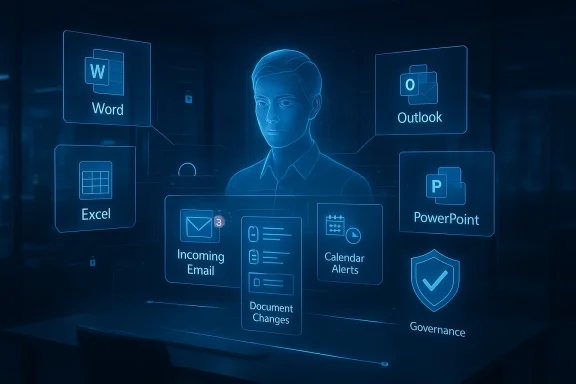
Persistent agents can sit in the background and catch things a human misses, especially in distributed workstreams. They can watch inboxes, surface calendar conflicts, track documents, and alert a user when a message or file becomes time-sensitive. In practice, that means less context switching, fewer missed follow-ups, and more time spent on decision-making rather than scavenger hunts through email and shared drives.
That is also why the timing is so commercially important. If the free Copilot tier is already absorbing most casual interest, the paid tier needs a differentiator that feels concrete rather than abstract. Persistent agents offer exactly that: not just “AI in Office,” but “AI that works while you are away.” That is the kind of promise enterprise buyers understand because it translates into measurable time savings and better operational continuity.
Microsoft’s challenge is therefore architectural as much as product-led. It has to create something that feels continuous without becoming noisy, intrusive, or dangerous. In other words, the company has to combine usefulness with restraint, which is easier said than done when the software is monitoring messages, documents, and workflow triggers across an enterprise tenant.
That cross-channel continuity is the heart of its appeal. People do not live in one interface, and work rarely happens in a single thread. If a tool can follow the conversation from WhatsApp to Slack to Discord or elsewhere, it becomes much more than a bot; it becomes a memory layer for distributed work.
For Microsoft, that is an uncomfortable lesson. Copilot historically lived much closer to a single-vendor worldview, even if the company now openly mixes models in some workflows. OpenClaw’s popularity shows that users value optionality, and Microsoft’s own multi-model experiments suggest it has absorbed that message.
The project also expands beyond messaging. It can run shell commands, read and write files, and execute scripts on a user’s machine, giving it the practical range of a lightweight automation agent rather than a conversational layer. That makes it attractive to power users, but it also increases the stakes, because the same capabilities that save time can also create risk.
That is the deeper lesson for the enterprise market. People do not only want generative AI to create text or summarize documents. They want it to stay involved, to hold state, and to keep working after the tab is closed. OpenClaw made that desire visible in a way boardroom demos often fail to do.
Shahine’s team reportedly wants agents that can run continuously on behalf of users inside Microsoft 365, which implies a much more proactive assistant model than the current prompt-based interface. That type of agent can monitor inboxes, surface relevant documents, and flag time-sensitive information without waiting for the user to ask. It is a direct response to the productivity promise OpenClaw popularized, but inside Microsoft’s own security and identity framework.
That said, enterprise context is a double-edged sword. The richer the data, the more useful the agent becomes, but also the more consequential any mistake becomes. A persistent AI that misreads a meeting, misses a sensitive thread, or leaks context across boundaries is not just annoying; it becomes a governance issue. That is why the enterprise version of persistence must be far stricter than the consumer version.
Microsoft’s incentive is obvious. If it can make persistent agents feel safe enough for corporate deployment, it can create a premium feature set that the free tier cannot easily imitate. That is exactly the kind of tiered value proposition Microsoft needs to turn broad trial into paid seats.
The choice also hints at a broader Copilot strategy: build for enterprise trust, not just consumer enthusiasm. Microsoft has already learned that shiny demos are insufficient if the buyer cannot clearly explain security, governance, and ROI to procurement teams. A team centered on persistent agents is a way to make the pitch more operational and less theatrical.
That matters because Office is not just another app suite. It is where enterprises draft contracts, prepare budgets, build decks, and document decisions. If a rival model can sit directly inside those workflows, it can intercept user habits at the point of work rather than trying to pull users away from Microsoft’s ecosystem.
Microsoft has responded by leaning into multi-model orchestration, especially in Researcher, where it now offers Critique and Council modes that combine OpenAI and Anthropic models. That is a smart tactical answer because it reframes the competition: instead of “our model versus their model,” Microsoft is saying “use whichever combination produces the best work product.”
The broader implication is that the AI stack is becoming more modular. If Anthropic can win trust inside Word and Excel, and Microsoft can still control the surrounding tenant and identity layer, the result may not be a winner-take-all battle but a negotiation over who owns which layer of the workflow. That is a more complex market than the old software bundle wars, and likely a more durable one.
That complexity may actually help Microsoft if it can frame Copilot as the orchestrator of choice. But if Anthropic feels more useful in the day-to-day apps and more responsive to user needs, Microsoft risks becoming the plumbing while someone else captures the user’s attention. That would be a subtle but meaningful loss.
Critique separates generation from evaluation, which is a strong design choice because it mirrors how careful human work happens. One model drafts, another reviews, and the system improves before the user sees the final result. Council goes a step further by showing side-by-side model outputs, making differences in framing, completeness, and interpretation visible to the user.
It also gives Microsoft a practical hedge against model volatility. The AI market moves quickly, and performance leadership can shift by task, release, or benchmark. A multi-model framework makes the product less dependent on any one provider’s temporary advantage, which is exactly the kind of resilience a platform company wants.
The challenge, of course, is user experience. Too much model choice can confuse users, especially when they just want a result. Microsoft’s answer is to hide the complexity behind guided modes like Critique and Council, which is a sensible compromise between power and usability. That balance may be one of Copilot’s most important design tests in 2026.
This also gives Microsoft a narrative advantage in enterprise sales. It can argue that Copilot is not just an assistant, but a safe, governed environment where multiple best-in-class models can be used without making customers manage a fragmented toolchain. That is a strong message for compliance-heavy organizations that want innovation without chaos.
That risk is not hypothetical. A persistent agent connected to messaging, documents, scripts, and local tools is exactly the kind of software attackers will try to manipulate. If the agent is tricked into accepting a malicious instruction, or if a plugin ecosystem becomes a distribution channel for harmful behavior, the impact can spread much further than a normal app compromise.
The Microsoft Security Copilot ecosystem and MSRC bounty efforts show that Microsoft is already thinking about AI security as a first-class category, not a bolt-on. That matters because persistent agents will likely require their own threat models, telemetry, approval flows, and isolation rules. In an enterprise context, one bad automation is enough to damage adoption for an entire rollout.
The likely result is that Microsoft will need to be stricter than the open-source ecosystem while still preserving enough flexibility to make the product feel magical. That is a difficult line to walk, but it may be the only way persistent agents reach the mainstream.
That is why a “safer OpenClaw” inside Microsoft 365 could be a real market opportunity. If Microsoft can package persistence with governance, it may turn a security weakness in the category into a selling point for its own platform. Trust could end up being the feature that matters most.
The company appears to know this. It has emphasized that the number of customers with more than 35,000 seats is rising, and executives have said they are confident about near-term sales goals. But there is a difference between internal momentum and broad market penetration, and the gap between the paid and free tiers suggests that many users still see Copilot as optional rather than essential.
That is especially true in enterprise buying cycles, where anything that feels like a nice-to-have can be delayed indefinitely. If Copilot can automate follow-ups, detect document changes, and stay ahead of workflow interruptions, it becomes easier to justify as operational tooling rather than a discretionary software add-on. That distinction may be the difference between a stalled pilot and a scaled rollout.
That would be a painful outcome for a company whose biggest advantage is distribution. Microsoft does not need to invent the idea of persistence; it needs to own the enterprise implementation of it before rivals define the category. That is why the new team under Shahine is so significant.
The larger market question is whether enterprise AI will settle into a model of platform-controlled orchestration or remain a patchwork of specialized assistants. Microsoft is clearly betting on the former, while Anthropic is proving that direct embedded competition can still bite deeply into the Office franchise. The outcome may define not just who sells AI seats, but who sets the operating standard for knowledge work.
Source: WinBuzzer Microsoft Taps OpenClaw Playbook for New Copilot AI Agents
 Background
For Microsoft, Copilot has always been more than a product launch. It is the company’s attempt to turn the enormous installed base of Microsoft 365 into an AI distribution engine, one that can monetize work already happening in Word, Excel, Outlook, Teams, and PowerPoint. That is a compelling idea in theory, but the practical reality has been more complicated, especially when customers can experiment with a free tier and still postpone a paid commitment.The current moment is a reminder that AI adoption inside enterprises does not follow a straight line from novelty to payment. Microsoft disclosed in January that it had 15 million paying Copilot users, a figure that still represented only about 3% of Office 365 users at the time, and its latest earnings commentary again emphasized that free Copilot Chat usage is far larger than the paid base. That gap matters because Microsoft has already spent heavily on infrastructure, model access, and product integration; what remains is the harder problem of creating enough daily utility to make Copilot feel indispensable.
At the same time, Microsoft’s AI strategy is becoming more pluralistic. The company and Anthropic expanded their partnership in late 2025, bringing Claude models into Microsoft Foundry and into Microsoft 365 Copilot workflows, including Researcher and Agent Mode in Excel. By March 2026, Microsoft was publicly describing Researcher’s new Critique and Council capabilities as multi-model experiences that use Anthropic and OpenAI side by side to improve output quality and let users compare model responses.
That shift matters because it reveals something bigger than a simple model swap. Microsoft is no longer betting that one model family will dominate every use case, every document type, and every workflow. Instead, it is building a stack that can route tasks among models, compare results, and increasingly orchestrate work across the Microsoft 365 environment in ways that mirror how people actually operate during the day.
OpenClaw arrived as an unlikely template for this next phase. The project gained attention for persistent, model-agnostic operation across messaging channels and tools, and it showed that users want more than prompt-response exchanges when they are trying to manage real work. Microsoft’s interest in that pattern suggests it sees the same thing many users do: the future of workplace AI is not just better answers, but continuity, memory, and action across multiple contexts.
Why Persistence Matters
The most important idea in the current Copilot story is persistence. A chatbot that answers questions is useful; an agent that stays alive, watches for relevant events, and acts at the right time is something more like an operating layer for work. That is why the OpenClaw pattern matters so much to Microsoft’s product planning, because the difference is not cosmetic. It is the difference between reactive assistance and proactive execution.Persistent agents can sit in the background and catch things a human misses, especially in distributed workstreams. They can watch inboxes, surface calendar conflicts, track documents, and alert a user when a message or file becomes time-sensitive. In practice, that means less context switching, fewer missed follow-ups, and more time spent on decision-making rather than scavenger hunts through email and shared drives.
The productivity case
Microsoft’s strongest argument for this kind of agent is not that it is futuristic. It is that it solves a mundane and expensive workflow problem. Office workers spend huge amounts of time checking multiple channels, reconciling updates, and re-reading threads to reconstruct what happened since yesterday. A persistent Copilot agent could do much of that triage continuously, which is a more convincing value proposition than asking users to remember to open a chat window and type a request.That is also why the timing is so commercially important. If the free Copilot tier is already absorbing most casual interest, the paid tier needs a differentiator that feels concrete rather than abstract. Persistent agents offer exactly that: not just “AI in Office,” but “AI that works while you are away.” That is the kind of promise enterprise buyers understand because it translates into measurable time savings and better operational continuity.
- Always-on monitoring can reduce missed deadlines.
- Context continuity can shrink the time spent reorienting.
- Automated triage can improve response quality for overloaded teams.
- Background agents can make Copilot feel less like a toy and more like infrastructure.
- Persistent workflows are easier to justify in enterprise ROI discussions.
Why the idea is hard
The difficulty is that persistence creates an entirely new class of expectations. Once an agent is always on, users begin to assume it will remember state correctly, respect boundaries, and act only when appropriate. That is a much higher bar than a single-turn answer, and it is exactly where many early agent systems have struggled.Microsoft’s challenge is therefore architectural as much as product-led. It has to create something that feels continuous without becoming noisy, intrusive, or dangerous. In other words, the company has to combine usefulness with restraint, which is easier said than done when the software is monitoring messages, documents, and workflow triggers across an enterprise tenant.
OpenClaw’s Appeal
OpenClaw became a reference point because it solved a user experience problem that many AI companies had largely ignored. It was not just another wrapper around a model. It connected to many messaging platforms, maintained ongoing context, and let users move conversations across channels without starting over every time they changed app context.That cross-channel continuity is the heart of its appeal. People do not live in one interface, and work rarely happens in a single thread. If a tool can follow the conversation from WhatsApp to Slack to Discord or elsewhere, it becomes much more than a bot; it becomes a memory layer for distributed work.
Model-agnostic by design
Another reason OpenClaw drew attention is its model-agnostic architecture. The project can work with Anthropic, OpenAI, Google, and local models through Ollama, which gives users freedom to choose the best engine for a given task. That flexibility is strategically important because it reduces vendor lock-in and makes the system easier to adapt as model quality shifts over time.For Microsoft, that is an uncomfortable lesson. Copilot historically lived much closer to a single-vendor worldview, even if the company now openly mixes models in some workflows. OpenClaw’s popularity shows that users value optionality, and Microsoft’s own multi-model experiments suggest it has absorbed that message.
The project also expands beyond messaging. It can run shell commands, read and write files, and execute scripts on a user’s machine, giving it the practical range of a lightweight automation agent rather than a conversational layer. That makes it attractive to power users, but it also increases the stakes, because the same capabilities that save time can also create risk.
- Cross-channel memory is a real user pain point.
- Model choice makes the platform more resilient.
- Local execution makes the agent feel useful, not ornamental.
- Background operation is what turns chat into workflow.
- Flexibility can become a moat when users distrust lock-in.
From hobby project to product signal
The speed of OpenClaw’s rise is as important as the product itself. It moved from a hobbyist idea to a major open-source destination in a remarkably short time, which tells us the market was waiting for a more persistent assistant model. Microsoft does not need to copy the repo line by line to learn from it; it just needs to understand why users cared enough to make it a phenomenon.That is the deeper lesson for the enterprise market. People do not only want generative AI to create text or summarize documents. They want it to stay involved, to hold state, and to keep working after the tab is closed. OpenClaw made that desire visible in a way boardroom demos often fail to do.
Microsoft’s Internal Pivot
The creation of a dedicated team under Omar Shahine is an organizational signal, not just a product one. When a company forms a group to explore a fast-emerging pattern, it usually means the old roadmap is no longer enough. In this case, Microsoft appears to be building around persistent agents because the existing Copilot experience is not converting users at the speed executives want.Shahine’s team reportedly wants agents that can run continuously on behalf of users inside Microsoft 365, which implies a much more proactive assistant model than the current prompt-based interface. That type of agent can monitor inboxes, surface relevant documents, and flag time-sensitive information without waiting for the user to ask. It is a direct response to the productivity promise OpenClaw popularized, but inside Microsoft’s own security and identity framework.
Why enterprise data changes the game
The biggest structural advantage Microsoft has over OpenClaw is access to enterprise context. Microsoft 365 already sees email, calendar, documents, teams, and organizational metadata that a standalone messaging agent never could. If Microsoft can safely connect those signals, it can build an assistant that is far more relevant than an external tool that only knows what the user explicitly routes into it.That said, enterprise context is a double-edged sword. The richer the data, the more useful the agent becomes, but also the more consequential any mistake becomes. A persistent AI that misreads a meeting, misses a sensitive thread, or leaks context across boundaries is not just annoying; it becomes a governance issue. That is why the enterprise version of persistence must be far stricter than the consumer version.
Microsoft’s incentive is obvious. If it can make persistent agents feel safe enough for corporate deployment, it can create a premium feature set that the free tier cannot easily imitate. That is exactly the kind of tiered value proposition Microsoft needs to turn broad trial into paid seats.
- Persistent agents can exploit Microsoft 365 context.
- Identity and permissions can become a competitive moat.
- Controlled enterprise workflows may justify premium pricing.
- Security and compliance become product features, not afterthoughts.
- The more context the agent has, the more careful it must be.
Omar Shahine’s role
Putting Shahine in charge is also telling because it suggests Microsoft wants a bridge between product engineering, work culture research, and customer-facing Copilot development. In a large company, the people who shape future workflows are often the ones who can translate abstract AI capability into concrete business behavior. That is exactly the job here.The choice also hints at a broader Copilot strategy: build for enterprise trust, not just consumer enthusiasm. Microsoft has already learned that shiny demos are insufficient if the buyer cannot clearly explain security, governance, and ROI to procurement teams. A team centered on persistent agents is a way to make the pitch more operational and less theatrical.
Anthropic’s Direct Challenge
Anthropic’s move into Microsoft Office is perhaps the most important competitive pressure in the entire story. By bringing Claude into Word, Excel, and PowerPoint, Anthropic is no longer content to be a model provider behind the curtain. It is entering the same productivity territory that Microsoft has historically defended as its core moat.That matters because Office is not just another app suite. It is where enterprises draft contracts, prepare budgets, build decks, and document decisions. If a rival model can sit directly inside those workflows, it can intercept user habits at the point of work rather than trying to pull users away from Microsoft’s ecosystem.
Office-by-office competition
Anthropic’s approach is strategically elegant. Instead of attacking Microsoft with a generic “better AI” narrative, it is embedding Claude in the places where people already spend time and money. That makes the product easier to understand, easier to test, and harder to dismiss as a novelty. It also gives Anthropic a repeatable playbook it can extend from one Office app to the next.Microsoft has responded by leaning into multi-model orchestration, especially in Researcher, where it now offers Critique and Council modes that combine OpenAI and Anthropic models. That is a smart tactical answer because it reframes the competition: instead of “our model versus their model,” Microsoft is saying “use whichever combination produces the best work product.”
The broader implication is that the AI stack is becoming more modular. If Anthropic can win trust inside Word and Excel, and Microsoft can still control the surrounding tenant and identity layer, the result may not be a winner-take-all battle but a negotiation over who owns which layer of the workflow. That is a more complex market than the old software bundle wars, and likely a more durable one.
- Anthropic is attacking the workflow layer, not just the model layer.
- Microsoft is defending with orchestration, not monopoly assumptions.
- Office is the critical battlefield because it contains high-value work.
- Model pluralism may become a competitive necessity.
- Users may increasingly choose embedded capability over brand loyalty.
What this means for buyers
For enterprise buyers, the presence of Anthropic inside Office is both a blessing and a problem. It expands choice and may improve output quality, but it also complicates governance, procurement, and rollout strategy. Buyers now have to think about which model handles which task, who approves access, and how much variation they are comfortable allowing in critical workflows.That complexity may actually help Microsoft if it can frame Copilot as the orchestrator of choice. But if Anthropic feels more useful in the day-to-day apps and more responsive to user needs, Microsoft risks becoming the plumbing while someone else captures the user’s attention. That would be a subtle but meaningful loss.
Multi-Model Copilot as Strategy
Microsoft’s Critique and Council features are more than an experiment in model quality. They are evidence that the company has accepted a key reality of the current AI market: different models do different things well, and the best enterprise experience may come from combining them rather than choosing one.Critique separates generation from evaluation, which is a strong design choice because it mirrors how careful human work happens. One model drafts, another reviews, and the system improves before the user sees the final result. Council goes a step further by showing side-by-side model outputs, making differences in framing, completeness, and interpretation visible to the user.
Why this matters technically
From a product standpoint, multi-model systems help reduce overconfidence. If one model gives a polished but incomplete answer, a second model may catch the omission. If one model frames a question in a narrow way, another may surface a broader perspective. That does not eliminate hallucinations or bias, but it does create a better chance of catching them before they affect a report or recommendation.It also gives Microsoft a practical hedge against model volatility. The AI market moves quickly, and performance leadership can shift by task, release, or benchmark. A multi-model framework makes the product less dependent on any one provider’s temporary advantage, which is exactly the kind of resilience a platform company wants.
The challenge, of course, is user experience. Too much model choice can confuse users, especially when they just want a result. Microsoft’s answer is to hide the complexity behind guided modes like Critique and Council, which is a sensible compromise between power and usability. That balance may be one of Copilot’s most important design tests in 2026.
- Multi-model workflows can improve accuracy.
- A second model can act as a reviewer.
- Side-by-side comparison supports trust and transparency.
- Model pluralism reduces dependency on a single vendor.
- The interface must keep complexity from overwhelming users.
Implications for the market
If Microsoft normalizes multi-model office work, rivals will have to respond. The old sales pitch that a single foundation model is sufficient for every task becomes weaker when a platform giant shows users how to compare and combine models in a familiar interface. That could accelerate a broader industry shift toward orchestration, routing, and model governance as core product features.This also gives Microsoft a narrative advantage in enterprise sales. It can argue that Copilot is not just an assistant, but a safe, governed environment where multiple best-in-class models can be used without making customers manage a fragmented toolchain. That is a strong message for compliance-heavy organizations that want innovation without chaos.
Security and Trust
The security concerns around persistent agents are not side issues. They are central to whether this category becomes mainstream in enterprises or remains a promising but carefully fenced-off experiment. Research cited in the reporting has flagged hundreds of malicious OpenClaw plugins and a high-severity vulnerability, underscoring how quickly a background agent can become an attack surface.That risk is not hypothetical. A persistent agent connected to messaging, documents, scripts, and local tools is exactly the kind of software attackers will try to manipulate. If the agent is tricked into accepting a malicious instruction, or if a plugin ecosystem becomes a distribution channel for harmful behavior, the impact can spread much further than a normal app compromise.
Enterprise controls will decide the outcome
Microsoft’s advantage is that it already has deep enterprise controls, tenant boundaries, identity management, and compliance tooling. Those capabilities can reduce exposure, but only if the agent architecture is designed to respect them rigorously. The company cannot simply graft persistence onto Copilot and assume the old trust model will hold.The Microsoft Security Copilot ecosystem and MSRC bounty efforts show that Microsoft is already thinking about AI security as a first-class category, not a bolt-on. That matters because persistent agents will likely require their own threat models, telemetry, approval flows, and isolation rules. In an enterprise context, one bad automation is enough to damage adoption for an entire rollout.
The likely result is that Microsoft will need to be stricter than the open-source ecosystem while still preserving enough flexibility to make the product feel magical. That is a difficult line to walk, but it may be the only way persistent agents reach the mainstream.
- Persistent agents expand the attack surface.
- Plugin ecosystems can become supply-chain risks.
- Misrouted actions are more damaging than wrong answers.
- Enterprise buyers will demand stronger isolation and logging.
- Security may become the deciding factor in adoption speed.
The trust premium
There is also a branding issue here. Open-source projects can afford a degree of roughness because enthusiasts accept risk in exchange for capability. Microsoft cannot. Once Copilot operates continuously in a corporate tenant, users will expect guardrails, explainability, and predictable failure modes. If those are missing, adoption will stall regardless of how impressive the demos look.That is why a “safer OpenClaw” inside Microsoft 365 could be a real market opportunity. If Microsoft can package persistence with governance, it may turn a security weakness in the category into a selling point for its own platform. Trust could end up being the feature that matters most.
Adoption and Monetization
The adoption gap in Copilot is the commercial backdrop that makes all of this urgent. Fifteen million paid seats sounds large in isolation, but relative to the size of the Microsoft 365 base, it still leaves enormous headroom before Copilot becomes a universal workplace standard. That matters because Microsoft’s AI economics depend not just on usage, but on conversion.The company appears to know this. It has emphasized that the number of customers with more than 35,000 seats is rising, and executives have said they are confident about near-term sales goals. But there is a difference between internal momentum and broad market penetration, and the gap between the paid and free tiers suggests that many users still see Copilot as optional rather than essential.
Why free users matter
Free users are not just missed revenue. They are evidence that demand exists but that the product has not yet crossed the threshold where users feel pain without it. Microsoft’s task is to make paid Copilot feel like the obvious next step, and persistent agents may be the feature that does it by delivering continuous value instead of episodic convenience.That is especially true in enterprise buying cycles, where anything that feels like a nice-to-have can be delayed indefinitely. If Copilot can automate follow-ups, detect document changes, and stay ahead of workflow interruptions, it becomes easier to justify as operational tooling rather than a discretionary software add-on. That distinction may be the difference between a stalled pilot and a scaled rollout.
- Free-tier users show strong interest but weak conversion.
- Persistent value is more defensible than intermittent novelty.
- Enterprise buyers need concrete workflow ROI.
- Product stickiness is the key to seat expansion.
- Copilot has to move from assistive to indispensable.
Microsoft’s competitive window
This is also a timing issue. Anthropic is already inside Office workflows, and OpenClaw-style user expectations are spreading fast through the market. If Microsoft waits too long to deliver a compelling persistent agent, the industry may learn to expect that capability from other tools first, leaving Copilot to play catch-up in its own ecosystem.That would be a painful outcome for a company whose biggest advantage is distribution. Microsoft does not need to invent the idea of persistence; it needs to own the enterprise implementation of it before rivals define the category. That is why the new team under Shahine is so significant.
Strengths and Opportunities
Microsoft still has major advantages that rivals cannot easily replicate. It controls the world’s most important workplace software stack, it has enterprise identity and compliance infrastructure, and it can embed AI into the documents and workflows where business value is actually created. If persistent agents are done well, Microsoft has a real chance to turn AI from an add-on into a platform layer.- Distribution scale through Microsoft 365 remains unmatched.
- Enterprise trust controls can make persistent agents more palatable.
- Multi-model orchestration gives Copilot flexibility against single-vendor rivals.
- Tenant-level context can make Microsoft’s agents more relevant than external tools.
- Paid-seat expansion could accelerate if persistence proves indispensable.
- Workflow integration creates a stronger business case than standalone chat.
- Product bundling gives Microsoft many ways to package value across the suite.
Risks and Concerns
The risks are equally real, and Microsoft would be wise not to underestimate them. Persistent agents expand the blast radius of mistakes, security incidents, and governance failures. If Copilot becomes too active, too noisy, or too hard to control, the feature could create resistance rather than enthusiasm.- Prompt injection and malicious plugins can compromise agent behavior.
- Enterprise data exposure becomes more serious when tools run continuously.
- Over-automation can frustrate users who want control, not surprise actions.
- Model inconsistency may confuse users if outputs diverge too widely.
- Security reviews could slow adoption in regulated industries.
- Vendor complexity rises when multiple model providers are involved.
- Trust erosion would hurt not just Copilot, but Microsoft’s broader AI pitch.
Looking Ahead
The next phase of this story will be defined by execution, not rhetoric. Microsoft has already shown that it can integrate rival models into Researcher and build credible multi-model workflows, but persistent agents are a tougher test because they must work reliably over time. If the company gets this right, it can transform Copilot from a mostly reactive assistant into a durable layer of workplace automation.The larger market question is whether enterprise AI will settle into a model of platform-controlled orchestration or remain a patchwork of specialized assistants. Microsoft is clearly betting on the former, while Anthropic is proving that direct embedded competition can still bite deeply into the Office franchise. The outcome may define not just who sells AI seats, but who sets the operating standard for knowledge work.
- Watch for a formal product announcement around persistent Microsoft 365 agents.
- Track whether Critique and Council expand beyond the Frontier program.
- Monitor adoption data to see if free users convert into paid seats.
- Pay close attention to enterprise security guidance and admin controls.
- See whether Anthropic broadens its Office integrations beyond the current foothold.
- Watch for evidence that Microsoft can make persistence feel safe, not just powerful.
Source: WinBuzzer Microsoft Taps OpenClaw Playbook for New Copilot AI Agents
