

Microsoft is canceling most direct Claude Code licenses inside its Experiences and Devices division by June 30, 2026, and steering affected engineers toward GitHub Copilot CLI across teams tied to Windows, Microsoft 365, Outlook, Teams, and Surface. The move is not a public divorce from Anthropic, nor is it proof that Claude has been purged from Microsoft’s stack. It is something more revealing: a platform company discovering that the most strategic AI tool is the one it can meter, govern, integrate, and ultimately own. For Windows users and enterprise IT, the story is less about one coding assistant winning a bake-off than about Microsoft tightening the loop between its developer tools, cloud economics, and product roadmap.
The first temptation is to read Microsoft’s internal Claude Code pullback as a simple vendor slapdown: Microsoft backs OpenAI, owns GitHub, sells Copilot, and therefore does not want engineers building core products with Anthropic’s coding agent. There is truth in that, but it is too tidy. Microsoft has been unusually pragmatic about model choice when it suits the business, and Claude models remain part of Microsoft’s broader AI story through Azure and Microsoft 365 channels.
What changed is the center of gravity. Claude Code was reportedly opened to thousands of Microsoft employees roughly six months ago, and its popularity appears to have been real enough to create an internal constituency. Engineers liked it because it behaved less like autocomplete and more like a capable terminal-native collaborator: it could inspect a codebase, modify files, run commands, and iterate through tasks in the place developers already work.
That popularity is precisely why the license cut matters. If Claude Code had failed inside Microsoft, the end of most direct licenses would be a footnote. Instead, Microsoft is curbing a tool that apparently found product-market fit among some of the people building Windows and Microsoft 365, then redirecting them to GitHub Copilot CLI, its own terminal-based agent.
That is not merely procurement housekeeping. It is Microsoft asserting that developer workflow is not a neutral layer. In the age of agentic coding, the tool that reads your repository, runs your tests, touches your build scripts, and learns your team’s conventions becomes part of the software factory itself.
Claude Code and Copilot CLI represent a different phase. These tools live in the terminal, understand local project context, execute commands, and move through multi-step work. They are not just suggesting a line; they are acting inside the development environment.
That shift explains why Microsoft is unlikely to treat direct Claude Code access as just another SaaS subscription. A coding agent operating from the shell can become the user interface for the build system, source control, test harness, issue tracker, and deployment workflow. In a company the size of Microsoft, that makes it a governance surface as much as a productivity surface.
GitHub Copilot CLI gives Microsoft a more natural control plane. GitHub already sits at the heart of Microsoft’s developer strategy, and Copilot is no longer only an IDE companion. It is becoming a family of coding agents, repository-aware workflows, cloud sessions, and command-line tools designed to keep developers inside GitHub’s orbit.
That matters for WindowsForum readers because Microsoft’s internal tool choices often foreshadow the friction points customers will eventually feel. If Microsoft decides that agentic coding should be mediated through GitHub-native controls, enterprise customers should expect GitHub, Copilot, Azure identity, auditability, and model-routing policy to become more tightly fused.
The broader industry has already run into that wall. Token-based and usage-based AI tools behave differently from traditional software licenses. A seat license gives finance a number it can understand. A coding agent that runs long sessions, repeatedly scans context, tests hypotheses, invokes tools, and loops through errors can turn one motivated engineer into a surprisingly expensive user.
That does not mean the most sensational claim around this story should be taken at face value. The idea that Claude Code cost Microsoft more than the human workers it supposedly replaced has not been confirmed by Microsoft, and it deserves skepticism unless a primary source backs it. The safer conclusion is narrower and still important: Microsoft appears to be reducing most direct Claude Code licenses and standardizing more work around Copilot CLI at a moment when corporate AI spending is under scrutiny.
But cost alone does not fully explain the decision. Microsoft is one of the few companies with both the money to absorb AI tool spending and the strategic incentive to own the alternative. If an internal team wants an agentic coding assistant, Microsoft can point to GitHub Copilot CLI and say: use the tool we can secure, shape, instrument, and sell.
That is the difference between expense management and platform strategy. Canceling a third-party tool saves money this quarter. Moving developers onto a first-party workflow teaches Microsoft how its own agent behaves under real pressure, inside enormous codebases, with engineers whose complaints can be routed directly into the product group.
In another company, that might have produced a larger Anthropic rollout. Inside Microsoft, success created a strategic conflict. The better Claude Code looked inside the maker of GitHub Copilot, the harder it became to justify letting it become a default interface for Microsoft’s own engineering culture.
This is not new behavior for large platform companies. They borrow, benchmark, and sometimes enthusiastically use third-party tools until those tools begin to occupy a layer the platform owner considers strategic. Then the company either buys the tool, builds a replacement, or narrows access.
Microsoft did not buy Anthropic. It already had GitHub. The predictable outcome was internal consolidation.
The risk is that engineers notice when a preferred tool is replaced for strategic reasons rather than purely technical ones. Developers are unusually sensitive to workflow quality. If Copilot CLI is good enough, the transition becomes a mild annoyance. If it lags behind Claude Code in reliability, autonomy, context handling, or day-to-day feel, Microsoft may save on licenses while paying in developer frustration.
That distinction matters because model partnerships are no longer monogamous. Microsoft is still deeply tied to OpenAI, but it has also spent the past few years signaling that customers want model choice. Azure’s pitch is not simply “use the Microsoft-approved model.” It is “bring your workload to our cloud, and we will help you govern, deploy, and bill the model that fits.”
Claude Code is different. It is not just a model endpoint. It is a packaged workflow, with its own assumptions about how developers prompt, approve changes, run commands, and manage codebase context. Allowing a third-party workflow to become deeply embedded inside Microsoft’s own product engineering teams is a much bigger concession than allowing customers to deploy Anthropic models in Azure.
That is why the move should not be read as an anti-Anthropic policy. It is an anti-uncontrolled-workflow policy. Microsoft can happily sell or host Claude models while still deciding that the internal interface for building Windows and Microsoft 365 should be GitHub Copilot.
For customers, that split is instructive. The future of enterprise AI will likely separate model access from workflow ownership. Companies may permit multiple models behind the scenes while standardizing on one front-end agent for logging, compliance, identity, and support.
A terminal-native AI agent is more than a convenience. It is an attempt to become the conversational layer over the command line. Instead of remembering flags, scripts, repository conventions, or issue references, the developer asks the agent to plan, inspect, modify, and execute.
For Microsoft, this is a natural extension of GitHub’s gravity. GitHub already hosts the code, pull requests, issues, Actions pipelines, and security tooling for millions of developers. Copilot CLI can theoretically bind those assets together in ways a third-party assistant cannot match as cleanly.
The advantage is not just integration. It is telemetry and product learning. When Microsoft’s own engineers use Copilot CLI against large, messy, high-stakes repositories, GitHub gains feedback that no synthetic benchmark can provide. Internal adoption becomes a laboratory for features that later land in enterprise subscriptions.
There is also a security argument. A coding agent that can read files, invoke commands, and modify repositories needs careful permissions, logging, and policy enforcement. Microsoft can make a credible case that first-party tooling gives it better control over secrets handling, audit trails, enterprise identity, and compliance boundaries.
That argument will appeal to CIOs. It may not fully satisfy developers who simply want the best tool. But in large organizations, the tool that wins is often the one security can approve, finance can forecast, and management can standardize.
If AI agents are increasingly involved in writing, refactoring, testing, or navigating code for these products, the choice of agent becomes part of the quality pipeline. That does not mean Copilot CLI will write Windows features by itself. It means Microsoft wants the human-agent workflow around those features to happen inside a controlled first-party environment.
For Windows users, this is one more sign that Microsoft is reorganizing not only products but production around AI. The company has spent years pushing Copilot into the Windows shell, Edge, Office apps, Teams, and developer tools. Now the same branding and infrastructure is being reinforced internally.
That can produce benefits. When the people building Windows use the same broad family of AI tools that Microsoft sells to customers, the feedback loop tightens. Bugs, missing controls, weak integrations, and developer pain points surface inside the company before they land in customer environments.
It can also create blind spots. If Microsoft standardizes too aggressively on its own tools, it risks losing exposure to competing workflows that developers outside Redmond prefer. Claude Code’s reported popularity should be a warning: Anthropic found something in the coding-agent experience that resonated with technical users. Microsoft should be studying that closely, not merely replacing it by policy.
A junior developer asking an agent to explain a small function is cheap. A senior engineer asking it to reason across a monorepo, run tests, revise patches, and repeat the process for hours is not. Multiply that by thousands of employees and the budget conversation changes quickly.
That is why Microsoft’s Claude Code cut is likely to resonate far beyond Microsoft. Companies are discovering that AI adoption has two separate curves: the productivity curve and the consumption curve. The first makes the tool look indispensable. The second makes finance ask who approved the invoice.
This is where governance becomes the real product. Enterprises will want controls that answer basic but difficult questions: who can use which agent, against which repositories, with which models, under what spending caps, and with what audit trail. They will want project-level budgets, policy-based model routing, and a way to distinguish valuable long-running work from runaway automation.
Microsoft is well positioned to sell that story because it already sells the administrative fabric: Entra ID, Azure, GitHub Enterprise, Microsoft 365 admin controls, Purview, Defender, and Copilot subscriptions. The Claude Code pullback gives Microsoft a cleaner internal narrative: the responsible enterprise path is not every team buying the agent it likes, but a governed AI development platform.
That narrative will be convenient. It may also be correct.
Claude Code’s appeal has been tied to that sense of agency. It can move through files, run commands, and behave like a persistent coding partner rather than a suggestion box. If Copilot CLI matches that experience while adding GitHub-native context, Microsoft’s internal migration may become a proof point for its product maturity.
If it does not, the switch will become another example of enterprise standardization overriding practitioner preference. That would be damaging because AI coding tools are not like expense-report systems. They sit directly in the creative and diagnostic flow of engineering work. Bad friction compounds.
There is also a cultural question. Microsoft’s engineering teams have spent years absorbing open source habits, GitHub workflows, and cross-platform development norms. Forcing a move away from a well-liked external agent could feel like a return to an older Microsoft instinct: keep the ecosystem inside the walls.
The more interesting possibility is that Copilot CLI improves rapidly because of this pressure. Internal migrations can be brutal product accelerators. When thousands of Microsoft engineers are told to use the company’s own agent for real work, every missing feature becomes harder to ignore.
But Anthropic is not out of the enterprise race. Claude’s reputation in coding, reasoning, and agentic workflows remains strong, and model availability through cloud platforms gives it routes into customers even when a first-party workflow dominates the front end. The more companies separate models from agents, the more Anthropic can compete as the intelligence layer even when it does not own the interface.
OpenAI, too, is part of the background tension. Microsoft’s AI strategy is no longer as simple as “OpenAI everywhere.” The company has reason to diversify models, build internal alternatives, and strengthen GitHub as the developer-facing layer regardless of which model sits underneath. Copilot CLI can be Microsoft’s interface even if the model mix changes behind it.
That is the strategic elegance of Microsoft’s position. Owning the workflow gives the company leverage over model providers. If Copilot CLI becomes the default enterprise coding agent, Microsoft can route work to OpenAI, Anthropic, its own models, or customer-selected providers depending on cost, capability, compliance, and negotiation.
In that world, the model vendor is powerful but replaceable. The workflow owner is harder to dislodge.
Those stories matter, but they are not a management system. At scale, organizations need to decide whether AI coding agents are personal productivity apps, sanctioned engineering infrastructure, or something in between. Microsoft appears to be answering that question for itself: these tools are infrastructure.
That answer changes procurement. It means security review cannot be a one-time checkbox. It means finance needs usage visibility, not just seat counts. It means engineering leadership has to define acceptable workflows for code modification, command execution, and repository access.
It also means vendor diversity needs a plan. Letting teams experiment with Claude Code, Cursor, Copilot, Codex, Gemini, or local models may be healthy during discovery. Letting every team independently standardize on different agents can become a support, compliance, and cost nightmare.
Microsoft’s internal move is therefore both self-serving and instructive. The company is doing what many enterprises will do after the experimental phase: narrow the approved surface, centralize governance, and push usage toward a platform that can be managed.
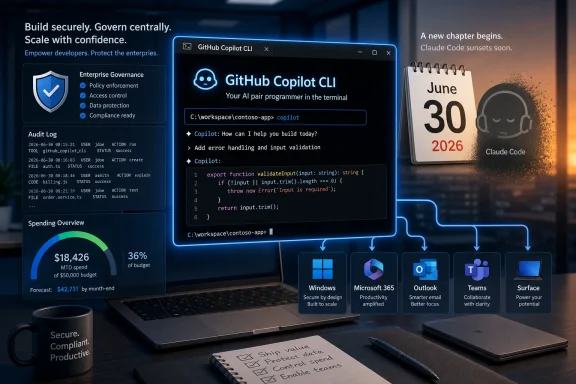 Microsoft’s Claude Retreat Is Really a Copilot Consolidation
The first temptation is to read Microsoft’s internal Claude Code pullback as a simple vendor slapdown: Microsoft backs OpenAI, owns GitHub, sells Copilot, and therefore does not want engineers building core products with Anthropic’s coding agent. There is truth in that, but it is too tidy. Microsoft has been unusually pragmatic about model choice when it suits the business, and Claude models remain part of Microsoft’s broader AI story through Azure and Microsoft 365 channels.What changed is the center of gravity. Claude Code was reportedly opened to thousands of Microsoft employees roughly six months ago, and its popularity appears to have been real enough to create an internal constituency. Engineers liked it because it behaved less like autocomplete and more like a capable terminal-native collaborator: it could inspect a codebase, modify files, run commands, and iterate through tasks in the place developers already work.
That popularity is precisely why the license cut matters. If Claude Code had failed inside Microsoft, the end of most direct licenses would be a footnote. Instead, Microsoft is curbing a tool that apparently found product-market fit among some of the people building Windows and Microsoft 365, then redirecting them to GitHub Copilot CLI, its own terminal-based agent.
That is not merely procurement housekeeping. It is Microsoft asserting that developer workflow is not a neutral layer. In the age of agentic coding, the tool that reads your repository, runs your tests, touches your build scripts, and learns your team’s conventions becomes part of the software factory itself.
The Terminal Has Become the New AI Battleground
For years, the public version of AI coding assistance was the ghost text in the editor. GitHub Copilot’s original magic trick was suggestion: it helped finish a function, sketch a test, or translate boilerplate into something useful. That was powerful, but it kept the developer in charge of the steering wheel.Claude Code and Copilot CLI represent a different phase. These tools live in the terminal, understand local project context, execute commands, and move through multi-step work. They are not just suggesting a line; they are acting inside the development environment.
That shift explains why Microsoft is unlikely to treat direct Claude Code access as just another SaaS subscription. A coding agent operating from the shell can become the user interface for the build system, source control, test harness, issue tracker, and deployment workflow. In a company the size of Microsoft, that makes it a governance surface as much as a productivity surface.
GitHub Copilot CLI gives Microsoft a more natural control plane. GitHub already sits at the heart of Microsoft’s developer strategy, and Copilot is no longer only an IDE companion. It is becoming a family of coding agents, repository-aware workflows, cloud sessions, and command-line tools designed to keep developers inside GitHub’s orbit.
That matters for WindowsForum readers because Microsoft’s internal tool choices often foreshadow the friction points customers will eventually feel. If Microsoft decides that agentic coding should be mediated through GitHub-native controls, enterprise customers should expect GitHub, Copilot, Azure identity, auditability, and model-routing policy to become more tightly fused.
Cost Was Probably the Spark, but Control Is the Fire
The June 30 deadline is difficult to ignore. Microsoft’s fiscal year ends on that date, and cutting external licenses before the books close is a familiar corporate maneuver. AI tooling is especially vulnerable to this kind of cleanup because agentic systems can turn enthusiastic adoption into unexpectedly large usage bills.The broader industry has already run into that wall. Token-based and usage-based AI tools behave differently from traditional software licenses. A seat license gives finance a number it can understand. A coding agent that runs long sessions, repeatedly scans context, tests hypotheses, invokes tools, and loops through errors can turn one motivated engineer into a surprisingly expensive user.
That does not mean the most sensational claim around this story should be taken at face value. The idea that Claude Code cost Microsoft more than the human workers it supposedly replaced has not been confirmed by Microsoft, and it deserves skepticism unless a primary source backs it. The safer conclusion is narrower and still important: Microsoft appears to be reducing most direct Claude Code licenses and standardizing more work around Copilot CLI at a moment when corporate AI spending is under scrutiny.
But cost alone does not fully explain the decision. Microsoft is one of the few companies with both the money to absorb AI tool spending and the strategic incentive to own the alternative. If an internal team wants an agentic coding assistant, Microsoft can point to GitHub Copilot CLI and say: use the tool we can secure, shape, instrument, and sell.
That is the difference between expense management and platform strategy. Canceling a third-party tool saves money this quarter. Moving developers onto a first-party workflow teaches Microsoft how its own agent behaves under real pressure, inside enormous codebases, with engineers whose complaints can be routed directly into the product group.
The Irony Is That Claude Seems to Have Worked
There is an awkward subtext here: Claude Code may be losing direct internal reach at Microsoft not because it failed, but because it succeeded. Reports describe it as popular among engineers and useful enough that designers and project managers with limited coding backgrounds could interact with code more directly. That is exactly the sort of adoption every AI vendor wants to brag about.In another company, that might have produced a larger Anthropic rollout. Inside Microsoft, success created a strategic conflict. The better Claude Code looked inside the maker of GitHub Copilot, the harder it became to justify letting it become a default interface for Microsoft’s own engineering culture.
This is not new behavior for large platform companies. They borrow, benchmark, and sometimes enthusiastically use third-party tools until those tools begin to occupy a layer the platform owner considers strategic. Then the company either buys the tool, builds a replacement, or narrows access.
Microsoft did not buy Anthropic. It already had GitHub. The predictable outcome was internal consolidation.
The risk is that engineers notice when a preferred tool is replaced for strategic reasons rather than purely technical ones. Developers are unusually sensitive to workflow quality. If Copilot CLI is good enough, the transition becomes a mild annoyance. If it lags behind Claude Code in reliability, autonomy, context handling, or day-to-day feel, Microsoft may save on licenses while paying in developer frustration.
Microsoft Is Not Breaking Up With Anthropic
The sharpest distinction in this story is between Claude Code as a direct employee tool and Claude models as enterprise AI infrastructure. Microsoft can reduce one without abandoning the other. Anthropic’s models remain available through Microsoft’s enterprise channels, including Azure-based offerings and Microsoft Foundry, and Anthropic has positioned Claude availability inside Microsoft’s AI ecosystem as part of its broader enterprise reach.That distinction matters because model partnerships are no longer monogamous. Microsoft is still deeply tied to OpenAI, but it has also spent the past few years signaling that customers want model choice. Azure’s pitch is not simply “use the Microsoft-approved model.” It is “bring your workload to our cloud, and we will help you govern, deploy, and bill the model that fits.”
Claude Code is different. It is not just a model endpoint. It is a packaged workflow, with its own assumptions about how developers prompt, approve changes, run commands, and manage codebase context. Allowing a third-party workflow to become deeply embedded inside Microsoft’s own product engineering teams is a much bigger concession than allowing customers to deploy Anthropic models in Azure.
That is why the move should not be read as an anti-Anthropic policy. It is an anti-uncontrolled-workflow policy. Microsoft can happily sell or host Claude models while still deciding that the internal interface for building Windows and Microsoft 365 should be GitHub Copilot.
For customers, that split is instructive. The future of enterprise AI will likely separate model access from workflow ownership. Companies may permit multiple models behind the scenes while standardizing on one front-end agent for logging, compliance, identity, and support.
GitHub Copilot CLI Is Microsoft’s Bid to Own the Shell
Copilot CLI’s importance is easy to underestimate if you still think of Copilot as an editor feature. The CLI version places Microsoft’s AI assistant in the developer’s terminal, where many serious engineering workflows actually happen. That is where repositories are cloned, branches are managed, tests are run, containers are built, scripts are debugged, and deployment commands begin.A terminal-native AI agent is more than a convenience. It is an attempt to become the conversational layer over the command line. Instead of remembering flags, scripts, repository conventions, or issue references, the developer asks the agent to plan, inspect, modify, and execute.
For Microsoft, this is a natural extension of GitHub’s gravity. GitHub already hosts the code, pull requests, issues, Actions pipelines, and security tooling for millions of developers. Copilot CLI can theoretically bind those assets together in ways a third-party assistant cannot match as cleanly.
The advantage is not just integration. It is telemetry and product learning. When Microsoft’s own engineers use Copilot CLI against large, messy, high-stakes repositories, GitHub gains feedback that no synthetic benchmark can provide. Internal adoption becomes a laboratory for features that later land in enterprise subscriptions.
There is also a security argument. A coding agent that can read files, invoke commands, and modify repositories needs careful permissions, logging, and policy enforcement. Microsoft can make a credible case that first-party tooling gives it better control over secrets handling, audit trails, enterprise identity, and compliance boundaries.
That argument will appeal to CIOs. It may not fully satisfy developers who simply want the best tool. But in large organizations, the tool that wins is often the one security can approve, finance can forecast, and management can standardize.
Windows and Microsoft 365 Make This More Than an Internal Tool Swap
The affected division matters. Experiences and Devices is not a side lab. It covers many of the products that define Microsoft for everyday users and IT departments: Windows, Microsoft 365, Outlook, Teams, and Surface. These are not hobby repositories where an experimental coding agent can misfire without consequence.If AI agents are increasingly involved in writing, refactoring, testing, or navigating code for these products, the choice of agent becomes part of the quality pipeline. That does not mean Copilot CLI will write Windows features by itself. It means Microsoft wants the human-agent workflow around those features to happen inside a controlled first-party environment.
For Windows users, this is one more sign that Microsoft is reorganizing not only products but production around AI. The company has spent years pushing Copilot into the Windows shell, Edge, Office apps, Teams, and developer tools. Now the same branding and infrastructure is being reinforced internally.
That can produce benefits. When the people building Windows use the same broad family of AI tools that Microsoft sells to customers, the feedback loop tightens. Bugs, missing controls, weak integrations, and developer pain points surface inside the company before they land in customer environments.
It can also create blind spots. If Microsoft standardizes too aggressively on its own tools, it risks losing exposure to competing workflows that developers outside Redmond prefer. Claude Code’s reported popularity should be a warning: Anthropic found something in the coding-agent experience that resonated with technical users. Microsoft should be studying that closely, not merely replacing it by policy.
The AI Budget Problem Is Becoming a Governance Problem
The enterprise software world is used to paying for tools by seat, server, or subscription tier. AI agents are dragging companies into a messier model. Even when a product is sold as a seat, the underlying economics are shaped by model inference, context size, tool calls, retries, and user behavior.A junior developer asking an agent to explain a small function is cheap. A senior engineer asking it to reason across a monorepo, run tests, revise patches, and repeat the process for hours is not. Multiply that by thousands of employees and the budget conversation changes quickly.
That is why Microsoft’s Claude Code cut is likely to resonate far beyond Microsoft. Companies are discovering that AI adoption has two separate curves: the productivity curve and the consumption curve. The first makes the tool look indispensable. The second makes finance ask who approved the invoice.
This is where governance becomes the real product. Enterprises will want controls that answer basic but difficult questions: who can use which agent, against which repositories, with which models, under what spending caps, and with what audit trail. They will want project-level budgets, policy-based model routing, and a way to distinguish valuable long-running work from runaway automation.
Microsoft is well positioned to sell that story because it already sells the administrative fabric: Entra ID, Azure, GitHub Enterprise, Microsoft 365 admin controls, Purview, Defender, and Copilot subscriptions. The Claude Code pullback gives Microsoft a cleaner internal narrative: the responsible enterprise path is not every team buying the agent it likes, but a governed AI development platform.
That narrative will be convenient. It may also be correct.
Developers Will Judge the Switch by Friction, Not Strategy
The corporate logic behind Copilot CLI is strong. The developer logic is harsher: does it work as well as the thing being taken away? Engineers rarely care that a tool aligns with fiscal-year planning, vendor consolidation, or executive platform strategy. They care whether it understands the repository, makes good edits, avoids wasting time, and recovers gracefully when it gets something wrong.Claude Code’s appeal has been tied to that sense of agency. It can move through files, run commands, and behave like a persistent coding partner rather than a suggestion box. If Copilot CLI matches that experience while adding GitHub-native context, Microsoft’s internal migration may become a proof point for its product maturity.
If it does not, the switch will become another example of enterprise standardization overriding practitioner preference. That would be damaging because AI coding tools are not like expense-report systems. They sit directly in the creative and diagnostic flow of engineering work. Bad friction compounds.
There is also a cultural question. Microsoft’s engineering teams have spent years absorbing open source habits, GitHub workflows, and cross-platform development norms. Forcing a move away from a well-liked external agent could feel like a return to an older Microsoft instinct: keep the ecosystem inside the walls.
The more interesting possibility is that Copilot CLI improves rapidly because of this pressure. Internal migrations can be brutal product accelerators. When thousands of Microsoft engineers are told to use the company’s own agent for real work, every missing feature becomes harder to ignore.
The Competitive Message Lands Outside Redmond
Anthropic should not be thrilled by the optics. Claude Code being popular inside Microsoft was a strong implicit endorsement. Losing most direct licenses in a major Microsoft division is a reminder that enterprise AI vendors can win users and still lose distribution if a platform owner controls the channel.But Anthropic is not out of the enterprise race. Claude’s reputation in coding, reasoning, and agentic workflows remains strong, and model availability through cloud platforms gives it routes into customers even when a first-party workflow dominates the front end. The more companies separate models from agents, the more Anthropic can compete as the intelligence layer even when it does not own the interface.
OpenAI, too, is part of the background tension. Microsoft’s AI strategy is no longer as simple as “OpenAI everywhere.” The company has reason to diversify models, build internal alternatives, and strengthen GitHub as the developer-facing layer regardless of which model sits underneath. Copilot CLI can be Microsoft’s interface even if the model mix changes behind it.
That is the strategic elegance of Microsoft’s position. Owning the workflow gives the company leverage over model providers. If Copilot CLI becomes the default enterprise coding agent, Microsoft can route work to OpenAI, Anthropic, its own models, or customer-selected providers depending on cost, capability, compliance, and negotiation.
In that world, the model vendor is powerful but replaceable. The workflow owner is harder to dislodge.
The Lesson for IT Is Hidden in Microsoft’s Own House
This episode is a useful preview for CIOs, engineering leaders, and Windows administrators who are being asked to approve AI tools at speed. The first wave of adoption often starts with productivity anecdotes. Someone ships a prototype faster. A project manager edits a script for the first time. A developer says the agent saved a day.Those stories matter, but they are not a management system. At scale, organizations need to decide whether AI coding agents are personal productivity apps, sanctioned engineering infrastructure, or something in between. Microsoft appears to be answering that question for itself: these tools are infrastructure.
That answer changes procurement. It means security review cannot be a one-time checkbox. It means finance needs usage visibility, not just seat counts. It means engineering leadership has to define acceptable workflows for code modification, command execution, and repository access.
It also means vendor diversity needs a plan. Letting teams experiment with Claude Code, Cursor, Copilot, Codex, Gemini, or local models may be healthy during discovery. Letting every team independently standardize on different agents can become a support, compliance, and cost nightmare.
Microsoft’s internal move is therefore both self-serving and instructive. The company is doing what many enterprises will do after the experimental phase: narrow the approved surface, centralize governance, and push usage toward a platform that can be managed.
The Copilot Mandate Leaves a Paper Trail for Everyone Else
The concrete lesson from Microsoft’s Claude Code reversal is not that enterprises should avoid third-party AI coding tools. It is that the experimental era of “just give people access and see what happens” is ending, especially for agents that can act inside real codebases.- Microsoft is reportedly winding down most direct Claude Code licenses in Experiences and Devices by June 30, 2026, while directing engineers toward GitHub Copilot CLI.
- The affected organization touches Windows, Microsoft 365, Outlook, Teams, and Surface, making the decision relevant to Microsoft’s most visible product lines.
- Claude models remain part of Microsoft’s broader enterprise AI ecosystem, so the move is better understood as workflow consolidation than a full Anthropic break.
- The fiscal-year timing points toward cost discipline, but the stronger long-term motive is control over security, integration, telemetry, and product direction.
- Enterprises adopting AI coding agents should treat them as governed engineering infrastructure, not casual productivity utilities.
- Developers will ultimately judge Copilot CLI by whether it can match or exceed the workflow quality that made Claude Code attractive in the first place.
References
- Primary source: ProPakistani
Published: 2026-06-02T16:12:13.341510
Loading…
propakistani.pk - Related coverage: windowscentral.com
Loading…
www.windowscentral.com - Related coverage: fortune.com
Loading…
fortune.com - Related coverage: spacedaily.com
Loading…
spacedaily.com - Related coverage: winbuzzer.com

Microsoft Shifts Engineers from Claude Code to GitHub Copilot CLI
Microsoft is moving Experiences + Devices engineers from Claude Code to GitHub Copilot CLI by June 30, while keeping its broader Anthropic ties intact. winbuzzer.com
- Related coverage: windowsnews.ai
Microsoft Cancels Internal Claude Code Licenses, Pushes Copilot CLI by 2026
Microsoft plans to phase out internal use of Anthropic’s Claude Code in its Experiences and Devices division by June 30, 2026, transitioning thousands of...windowsnews.ai
- Related coverage: forbes.com
Loading…
www.forbes.com - Related coverage: epcgroup.net

GitHub Copilot CLI Replacing Claude Code: What Microsoft Engineers Actually Do Now
Microsoft moved its Experiences and Devices engineering team from Claude Code to GitHub Copilot CLI by June 30, 2026. The actual day-to-day developer workflow change, what GitHub Copilot CLI does vs Claude Code, and the multi-model AI lesson every CIO should take from it.www.epcgroup.net
- Related coverage: byteiota.com

Microsoft Claude Code Killed: Copilot CLI by June 2026
Microsoft is canceling Claude Code at Windows and Teams by June 30, forcing Copilot CLI instead. Token costs and platform strategy explain the real reason why. byteiota.com
- Related coverage: quasa.io
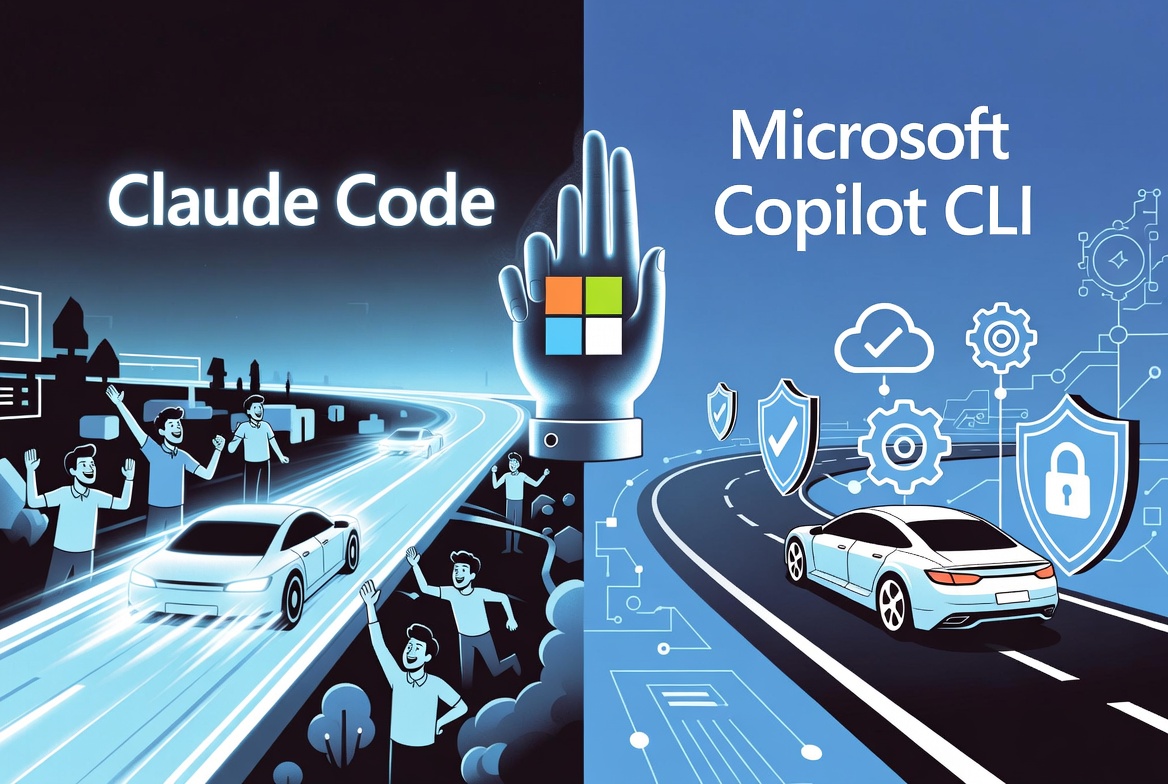
Microsoft Is Pulling Claude Code from Its Core Product Teams and Forcing a Switch to GitHub Copilot CLI
June 30, 2026 (the end of Microsoft’s current fiscal year). Developers have been told to transition to GitHub Copilot CLI in the coming weeks.quasa.io
- Related coverage: awesomeagents.ai
Loading…
awesomeagents.ai - Related coverage: enterprisedna.co
Loading…
enterprisedna.co - Related coverage: keepingupwith.ai

Microsoft Cancels Most Claude Code Licenses, Pivots Developers to GitHub Copilot CLI | keepingupwith.ai
Microsoft is canceling most of its internal Claude Code licenses by June 30, the end of its fiscal year, and redirecting developers to GitHub Copilot CLI. The move reflects both cost-cutting and a strategic preference for a tool Microsoft can directly influence — despite Claude Code being more... keepingupwith.ai
- Related coverage: techradar.com

Microsoft may discontinue Claude Code internally as it looks to push users towards GitHub Copilot
Claude Code has proven a hit among Microsoft's engineers, but the company now wants them to switch to GitHub Copilot CLI.www.techradar.com
- Official source: anthropic.com
Loading…
www.anthropic.com - Official source: code.claude.com
Loading…
code.claude.com - Official source: docs.anthropic.com
Loading…
docs.anthropic.com - Related coverage: huggingface.co
Loading…
huggingface.co - Related coverage: pcgamer.com
Loading…
www.pcgamer.com - Related coverage: itpro.com
Loading…
www.itpro.com - Related coverage: tomsguide.com
Loading…
www.tomsguide.com