

Satya Nadella has pushed Microsoft into what insiders and outside observers call “founder mode” — a fast, hands‑on reset that reassigns responsibilities, elevates outsiders and longtime deputies, and creates a new engineering axis aimed at building a Microsoft‑owned AI stack capable of standing on its own amid a ferocious battle with Google, OpenAI and a wave of specialist startups.
Microsoft’s shift is no incremental rejig. In recent months the company has stood up a new engineering organization, CoreAI – Platform & Tools, and named former Meta engineering chief Jay Parikh to lead it as an executive vice‑president reporting directly to CEO Satya Nadella. The CoreAI unit consolidates the Developer Division, AI platform teams, and elements of the Office of the CTO into a single mission: build the end‑to‑end Copilot & AI stack for Microsoft’s first‑party products and for third‑party customers. The leadership changes go further. Nadella has elevated Judson Althoff to run a newly consolidated commercial organization that combines marketing, sales and operations — freeing Nadella to focus more aggressively on technical and infrastructure priorities. Ryan Roslansky, LinkedIn’s CEO, has been given an expanded remit that reaches into Microsoft 365 and the Office productivity stack. These are not cosmetic promotions: they are structural signals about where Microsoft believes competitive advantage will lie in the next phase of AI. Why the urgency? The AI competitive landscape flipped again when Google shipped its Gemini 3 model and rapidly integrated it across Google’s services, triggering a defensive, high‑velocity response inside OpenAI (an internal “code red”) and creating renewed pressure on Microsoft to be both faster and more self‑reliant. The result: Microsoft is accelerating internal engineering consolidation, hiring top external talent, and rewiring reporting lines to shorten decision loops.
Caveat: exact user‑count tallies and some competitive metrics vary by source and time of reporting. Reported figures such as ChatGPT’s and Gemini’s active‑user numbers are useful directional indicators but move quickly; treat single‑source numbers as snapshots rather than firm baselines.
Source: Times Now After OpenAI Code Red, Satya Nadella Puts Microsoft In Founder Mode To Win AI Race
 Background / Overview
Microsoft’s shift is no incremental rejig. In recent months the company has stood up a new engineering organization, CoreAI – Platform & Tools, and named former Meta engineering chief Jay Parikh to lead it as an executive vice‑president reporting directly to CEO Satya Nadella. The CoreAI unit consolidates the Developer Division, AI platform teams, and elements of the Office of the CTO into a single mission: build the end‑to‑end Copilot & AI stack for Microsoft’s first‑party products and for third‑party customers. The leadership changes go further. Nadella has elevated Judson Althoff to run a newly consolidated commercial organization that combines marketing, sales and operations — freeing Nadella to focus more aggressively on technical and infrastructure priorities. Ryan Roslansky, LinkedIn’s CEO, has been given an expanded remit that reaches into Microsoft 365 and the Office productivity stack. These are not cosmetic promotions: they are structural signals about where Microsoft believes competitive advantage will lie in the next phase of AI. Why the urgency? The AI competitive landscape flipped again when Google shipped its Gemini 3 model and rapidly integrated it across Google’s services, triggering a defensive, high‑velocity response inside OpenAI (an internal “code red”) and creating renewed pressure on Microsoft to be both faster and more self‑reliant. The result: Microsoft is accelerating internal engineering consolidation, hiring top external talent, and rewiring reporting lines to shorten decision loops. What changed — the concrete moves
CoreAI: a single mission for platform, tools and developer productivity
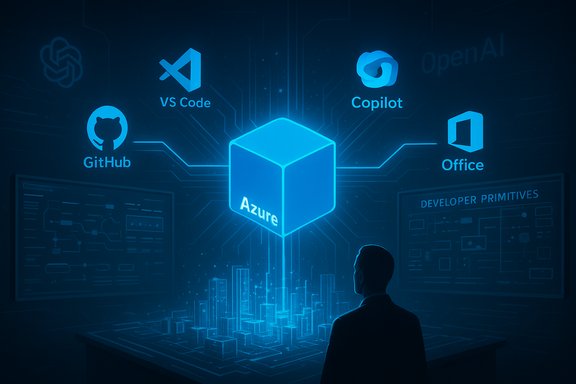
- What it is: CoreAI unites DevDiv (developer tools), AI platform teams, and parts of the Office of the CTO — including AI Supercomputer and Agentic Runtimes — under Jay Parikh’s leadership. The charter: make Azure the backbone for AI while building a developer‑facing stack (Azure AI Foundry, GitHub, VS Code) that powers agents, copilots and custom AI apps.
- Why it matters: This consolidates platform primitives, SDKs, runtime observability and developer experience in a way that reduces friction between research and product teams. For Microsoft, it is an attempt to close the product‑to‑model feedback loop that favors nimble startups.
Commercial realignment: Judson Althoff’s new remit
- What it is: Althoff now oversees a consolidated commercial organization that brings together sales, marketing (including the CMO reporting line), operations and customer success. The move is explicitly intended to free Nadella to focus on datacenter buildout, systems architecture and AI science.
- Why it matters: Centralizing go‑to‑market functions under one executive tightens the loop between product decisions and customer signals — a critical capability when the definition of “product” is increasingly model behavior and integration fidelity.
LinkedIn + Office: Ryan Roslansky’s wider responsibilities
- What it is: Roslansky retains LinkedIn leadership while taking on deeper responsibility for Microsoft’s productivity suite and Copilot integrations, aligning professional network data and signals with productivity flows.
- Why it matters: Combining professional graph signals with productivity tools is a strategic bet: richer context (profiles, connections, signals of intent) can make copilots more relevant and personalized for enterprise users, and strengthens Microsoft’s differentiation against search‑anchored competitors.
The competitive trigger: OpenAI’s “code red” and Gemini 3
In late 2025 Google’s release of Gemini 3 produced strong benchmark results and fast ecosystem integration that prompted OpenAI CEO Sam Altman to declare an internal “code red” — a reallocation of engineering resources to defend ChatGPT’s lead and accelerate improvements. Reputable outlets reported that OpenAI paused or delayed some planned initiatives while staff were redeployed to core model and product work. The move reversed the panic of 2022, when Google declared its own emergency after ChatGPT’s early success. This moment mattered to Microsoft because the company’s product roadmap has for years been tightly coupled with OpenAI’s model capability. As OpenAI moved to broaden its compute and hosting partners and publicly recalibrated product timelines, Microsoft signaled the need to be able to operate independently — hence the internal push to own more of the AI stack and to recruit the engineering leadership that can deliver at product speed.Caveat: exact user‑count tallies and some competitive metrics vary by source and time of reporting. Reported figures such as ChatGPT’s and Gemini’s active‑user numbers are useful directional indicators but move quickly; treat single‑source numbers as snapshots rather than firm baselines.
Why Nadella says “founder mode” — the logic behind the operating shift
Two simultaneous problems Nadella needs to solve
- Speed and iteration: Big incumbents lose in product‑model cycles if governance and chains of approval slow iteration. Nadella’s weekly, cross‑functional forums are designed to cut those middle layers and surface product signals directly.
- Dependency risk: Microsoft’s historic bet on OpenAI gave it early differentiation, but as OpenAI diversifies hosting and commercial partners, Microsoft needs to ensure continuity of product capabilities on its own terms. The legal and commercial re‑negotiations between Microsoft and OpenAI have reshaped incentives and made a self‑sufficient model strategy more attractive.
Tactical levers Nadella has pulled
- External hires with product‑scale engineering experience (Jay Parikh, ex‑Meta; earlier Mustafa Suleyman from DeepMind) to accelerate platform engineering and product delivery.
- Consolidation of developer tools under CoreAI to ensure GitHub, VS Code and Azure tooling are co‑developed and optimized for agentic apps.
- Commercial consolidation to bring customer voice directly into product priorities and to accelerate enterprise adoption cycles.
What Microsoft gains — realistic advantages
- Faster productization of model improvements. By collapsing teams and elevating product delivery leaders, Microsoft shortens the time between model capability and user‑facing features in Office, Windows, GitHub and Azure. This is a structural edge if Microsoft can sustain cross‑team engineering rhythm.
- Platform lock‑in via developer primitives. Owning the developer stack (Azure AI Foundry, SDKs in GitHub, VS Code integration) creates sticky dependencies: developers and enterprises will find it easier to build and operate on Microsoft’s stack if it offers superior observability, governance, and cost predictability.
- Reduced single‑partner exposure. Building proprietary or dual‑sourced model and inference capability reduces business risk if OpenAI changes commercial terms or hosting arrangements. The revised terms of the Microsoft–OpenAI relationship explicitly allow Microsoft to pursue its own advanced model effort.
- Commercial leverage at scale. A unified commercial organization can better package Copilot, Azure, and services into enterprise deals, shortening procurement cycles for transformative AI projects.
Where the strategy risks stumble — structural and execution hazards
1) Cultural friction and internal resentment
Granting outsized autonomy and compensation levers to newly formed AI units risks creating a two‑tier culture. Long‑tenured teams may feel bypassed, leading to attrition and knowledge loss. Microsoft knows this and has taken steps to protect autonomy, but such moves can still unsettle organizations that relied on long, stable career paths.2) Duplication and fragmentation
Rapidly formed units can produce overlapping APIs, duplicated telemetry stacks, and incompatible roadmaps. Without rigorous platform governance and clear API contracts, Microsoft could replicate the very siloing it seeks to eliminate — but at AI scale, where interop matters more than ever.3) Talent arms race costs
Competing with Meta, Anthropic, DeepMind and startups for top researchers and engineers requires significant compensation flexibility and hiring speed. Reports show Microsoft is prepared to offer multimillion dollar packages for critical hires — a sensible but expensive tactic that must be matched by product outcomes. If hiring costs outpace product monetization, economics will be strained.4) Regulatory and governance exposure
As Microsoft moves to build more powerful, integrated agentic systems, regulators will look closely at market concentration, data governance, and model provenance. A platform that ties deep professional profiles (LinkedIn) into productivity copilots raises legitimate privacy and antitrust questions that will attract scrutiny.5) Overpromising vs. enterprise adoption
Public metrics for Copilot and AI engagement are large headline numbers, but internal reporting suggests uneven adoption, and some enterprise pilots still face integration challenges. Microsoft must convert feature hype into measurable time‑and‑cost outcomes for customers, or risk churn and reputational erosion.What this means for Windows users, IT leaders and developers
Windows users and productivity customers
- Expect deeper, more tightly integrated Copilot features across Word, Excel, Outlook and Teams — with the added possibility of richer LinkedIn‑derived context (e.g., contact intelligence, company signals) feeding Copilot’s suggestions. This will make some workflows faster, but introduces new governance questions around what data is used and how it is logged.
- Windows may become more of an agent host: Microsoft’s internal language and product roadmap hint at agentic components in OS and productivity layers that can persist context, act on behalf of users and orchestrate multi‑app workflows. This will change how people think about macros and automation. Enterprises will need guardrails and auditing.
Enterprise IT and procurement
- Procurement and architecture teams should plan for multi‑model orchestration rather than a single model dependency. Microsoft’s approach is explicitly multi‑model and platform‑centric: some workloads will use smaller, cheaper models; others will run larger models under tight governance. Design for portability and observability.
- Expect new commercial bundles: consolidated commercial leadership implies packaged offers that more tightly couple Azure consumption with Copilot subscriptions and professional services. IT leaders should renegotiate procurement terms to preserve exit options and predictable inference pricing.
Developers and ISVs
- A clearer, consolidated developer stack (CoreAI + GitHub + VS Code) should reduce friction for building agentic apps — but vendors should be prepared for platform lock‑in tradeoffs and demand strong SLAs, exportable artifacts and reproducible evaluation datasets.
Tactical checklist for CIOs and IT implementers
- Inventory AI dependencies: catalog which internal apps use hosted OpenAI models, which use Microsoft‑provided models, and the data flows between them.
- Define governance lanes: map high‑risk tasks (hiring, legal, clinical) to human‑in‑the‑loop controls and define audit logs for agent actions.
- Negotiate inference economics: push vendors for predictable pricing or consumption caps to limit runaway cloud bills.
- Pilot agent factories in sandboxes: allow product teams to iterate quickly within technical and policy guardrails before enterprise rollouts.
- Maintain portability: require vendors to provide model‑agnostic integrations and exportable artifacts to prevent lock‑in.
Cross‑checks and unverifiable points — where to be cautious
- Multiple outlets report that OpenAI declared an internal “code red” after Gemini 3’s launch and that Microsoft’s reorganizations are a reaction to a changing competitive environment. These reports are corroborated by multiple independent news organizations, but some details (timing of memos, internal adopt‑or‑leave ultimatums) are based on leaked memos and anonymous sources. Treat such operational details as plausible but not fully independently verifiable.
- Some published figures (user counts, dollar amounts tied to Azure commitments) vary by outlet and may be snapshots or headline figures rather than contractually fixed numbers. When planning procurement or financial forecasts, rely on official contract language and audited financial disclosures rather than press numbers.
- Internal forum and analysis material (including board or memo excerpts circulating in corporate‑adjacent threads) provide good color on intent and cultural shifts but are not substitutes for official corporate filings or regulatory disclosures. Use these to inform strategy but confirm decisions through direct vendor dialogue.
Verdict: an essential pivot — but not an automatic win
Microsoft’s strategic reset under Nadella is powerful and coherent: reduce dependency, own more of the stack, and move with startup intensity inside a trillion‑dollar company. The moves are well targeted — CoreAI addresses developer experience and platform primitives, commercial consolidation aligns market incentives, and external hires bring missing theater‑tested engineering experience. When combined with Microsoft’s scale in enterprise contracts, Azure infrastructure and large‑scale partnerships, the company has the components needed to remain a heavyweight contender in the AI era. But execution risk is real. The strategy creates short‑term cultural strain, raises acquisition and hiring costs, and exposes Microsoft to regulatory and governance scrutiny as it stitches together user data, professional graphs and productivity flows. The company’s ability to translate engineering velocity into measurable enterprise outcomes — time saved, error reduction, revenue impact — will determine whether this founder‑mode sprint becomes a durable competitive advantage or a costly reorg with limited product payoff.Final takeaways for WindowsForum readers
- Expect accelerated Copilot feature rollouts across Windows, Office, and GitHub as CoreAI’s outputs are productized. These will be more integrated, agentic and context‑aware than previous incremental updates.
- Prepare for changes in licensing and procurement: Microsoft’s commercial consolidation may produce bundled offerings that change how enterprises buy Azure and Copilot services. Negotiate exit options and pricing guarantees now.
- Security, compliance and observability will become primary differentiators. Demand robust governance, audit trails and human‑in‑the‑loop controls from vendors.
- Treat press reports of internal memos, user counts and dollar figures as directional; confirm contract details with legal teams and vendor representatives before making strategic commitments.
Source: Times Now After OpenAI Code Red, Satya Nadella Puts Microsoft In Founder Mode To Win AI Race
