

In 2026, Microsoft’s partner channel is being pushed from AI experimentation into AI operations as customers move Azure AI, Azure OpenAI Service, Microsoft Foundry, and Copilot projects from pilots into governed production environments. That shift is exposing a practical problem hiding beneath the industry’s optimism: the channel knows how to sell and implement Microsoft technology, but many partners are still learning how to run AI safely after go-live. The winners will not be the firms with the slickest demo, but the ones that can make AI boring, measurable, auditable, and supportable. For a partner ecosystem built on licensing, migration projects, and user support, that is a far bigger change than another product launch.
For the last two years, enterprise AI has been sold in the language of possibility. Every department could have a copilot, every workflow could be automated, every spreadsheet could talk back, and every knowledge base could become a conversational interface. That framing was useful when customers needed permission to experiment, but it is becoming less useful now that executives are asking why so many experiments are still trapped in PowerPoint decks and sandbox tenants.
The Microsoft channel is feeling that change first because Microsoft’s AI stack sits close to the operational center of many businesses. Copilot touches identity, email, documents, Teams, SharePoint, compliance policies, and endpoint governance. Azure OpenAI and Foundry touch cloud architecture, application development, data governance, billing, monitoring, and security. This is not a peripheral software category that partners can attach to a renewal quote and forget.
The problem is that pilots and production systems reward different skills. A pilot rewards speed, imagination, and a willingness to work around messy internal politics. A production AI service rewards controls, runbooks, monitoring, lifecycle management, cost discipline, and a willingness to say no when a use case is not ready.
That is the gap now reshaping the Microsoft partner market. Customers no longer need someone to prove that generative AI can summarize a document or draft an email. They need someone to decide who is allowed to use it, what data it can see, how its outputs are evaluated, what happens when it fails, and why the bill doubled last Tuesday.
Production is less forgiving. The moment an AI system becomes part of real work, it must obey the same rules as everything else in the enterprise estate. It has to integrate with identity, conditional access, data loss prevention, retention policies, audit logging, incident response, procurement, and finance. It has to survive users behaving unpredictably, data changing underneath it, and business owners asking for service-level commitments that were never discussed in the proof of concept.
That is why the industry’s stubborn pilot-to-production problem matters. Research and reporting across the market have repeatedly pointed to a large failure rate for AI pilots, with many organizations moving only a small fraction of experiments into durable production use. The exact percentage varies depending on how “production” and “success” are defined, but the directional signal is hard to miss: enterprises have been better at starting AI projects than institutionalizing them.
This is not simply a story about failed technology. In many cases, the model works well enough, the demo is credible, and users are interested. What fails is the operating model around the technology.
That distinction is crucial for Microsoft partners. If AI adoption were mainly a model-selection problem, the channel could solve it with technical certifications and reference architectures. But if the real bottleneck is organizational readiness, then partners must become advisors on governance, process redesign, security posture, adoption, telemetry, and financial control. That is a different business.
Security teams are not objecting to AI because they dislike productivity. They are objecting because AI systems collapse familiar boundaries. A conventional application usually has defined inputs, outputs, users, and permissions. A generative AI system may retrieve, transform, summarize, infer, and act across multiple systems, often in ways that are probabilistic rather than deterministic.
That makes governance more than a paperwork exercise. If a Copilot deployment exposes poorly permissioned SharePoint content, the AI did not create the underlying access problem, but it made the blast radius more visible. If an Azure OpenAI application logs prompts containing sensitive customer information, the model did not invent the data-handling failure, but it changed the consequences. If an agent takes action in a business system based on flawed context, the issue is no longer hallucination as a novelty; it is operational risk.
The channel has an opportunity here, but only if it stops treating security as a late-stage checkbox. The partners that succeed will bring security into the first conversation about use-case design. They will ask whether the data is fit for purpose, whether permissions reflect business reality, whether outputs can be evaluated, and whether humans remain in the loop where risk demands it.
The irony is that security may become the channel’s best AI growth engine. Customers do not just need encouragement to adopt AI; they need confidence that adoption will not create an uncontrolled shadow estate. A partner that can make AI acceptable to the CISO, the CFO, and the business owner has a stronger proposition than one that can merely make it impressive in a workshop.
That creates a new kind of customer anxiety. A department may love an AI assistant until the organization realizes that every enthusiastic query, every long completion, and every poorly optimized workflow has a cost profile. In Azure AI and Foundry environments, cost management is not an afterthought; it is part of production readiness.
The operational challenge is not simply “AI is expensive.” Sometimes it is, sometimes it is not. The harder problem is predictability. A useful AI system often invites more usage, and more usage can change the economics quickly. The better the adoption story, the more urgent the cost-control story becomes.
This changes what customers should expect from partners. A credible AI operations provider should understand budgets, alerts, cost analysis, token consumption, model routing, provisioned capacity options, and the trade-offs between performance and price. It should be able to explain when pay-as-you-go is sensible, when commitments may be worth exploring, and when a design is wasteful because it sends too much context to too large a model too often.
The CFO is now part of the AI architecture review, whether technologists like it or not. That is healthy. Enterprise AI will not mature if it is sold as magic and billed as a surprise.
An AI service needs onboarding, permissions review, prompt and workflow design, monitoring, evaluation, incident handling, adoption coaching, cost optimization, and periodic redesign. It may need model updates, grounding data refreshes, tool permission reviews, red-team testing, and business outcome measurement. In other words, it needs operations.
That is why the Microsoft channel’s center of gravity is moving from project delivery to managed AI services. The one-off implementation is becoming less valuable than the monthly operating cadence that follows it. Customers do not merely want a Copilot rollout; they want usage to climb in the right departments, sensitive data to remain protected, and measurable outcomes to appear in business processes.
This favors partners that can productize repeatable motions. A small MSP does not need to become a global systems integrator to compete, but it does need a standard way to assess readiness, deploy controls, train users, monitor usage, report value, and tune the environment. The partner that treats each AI engagement as artisanal consulting will struggle to scale. The partner that turns AI operations into a managed practice has a chance to create durable margin.
There is a cultural shift here as well. Many MSPs grew up reacting to tickets. AI operations requires more proactive engagement: reviewing telemetry before users complain, catching cost anomalies before finance escalates, identifying risky usage patterns before auditors arrive, and coaching departments before they revert to unsanctioned tools.
The partner of record becomes less like an installer and more like an air-traffic controller. That is a more demanding role, but also a more defensible one.
That creates a deceptively simple challenge: Copilot can only be as safe and useful as the environment around it. If content is stale, permissions are sloppy, labels are inconsistent, and business processes are vague, AI will surface those weaknesses with uncomfortable efficiency. It will not politely wait while the organization fixes its information architecture.
For Microsoft partners, this turns old hygiene work into new AI work. SharePoint cleanup, identity governance, sensitivity labels, retention policies, endpoint security, and user training are not glamorous, but they are now part of the AI value chain. The unsexy plumbing has become strategic.
This may be good news for the channel’s more disciplined operators. Partners that spent years telling customers to clean up identity and data governance can now connect that advice to a board-level AI agenda. The message is no longer “tidy your tenant because best practice says so.” It is “your AI strategy depends on whether your tenant is trustworthy.”
That framing matters because customers are often willing to fund governance when it is attached to innovation. Microsoft’s AI push gives partners a way to repackage foundational work without pretending it is new. The work is familiar; the urgency is not.
That creates a strategic problem for Microsoft partners. If they do not help customers provide governed AI services quickly enough, users will assemble their own toolchains. Those toolchains may include consumer chatbots, browser extensions, niche SaaS products, personal accounts, and undocumented workflows that never pass through procurement or security review.
This is not merely a compliance concern. Shadow AI fragments organizational learning. One department may build useful prompts that no one else sees. Another may upload sensitive data to a tool with unclear retention terms. A third may become dependent on an automation that breaks silently when a vendor changes a model. The enterprise ends up with lots of AI activity and very little AI capability.
Microsoft’s channel has an obvious counteroffer: bring AI into the managed Microsoft estate, wrap it in identity and compliance controls, and give users approved ways to get work done. But that offer must be fast and practical. If the official path takes nine months and three committees, employees will route around it.
The partner’s job is not to eliminate experimentation. It is to make the governed path easier than the rogue path. That requires templates, approved patterns, training, internal champions, and a realistic understanding of how people actually use these tools when no one is watching.
That creates a profound support question for the channel. MSPs and Microsoft partners have traditionally supported people: named users with devices, mailboxes, permissions, tickets, and managers. Agents complicate that model because they may need identities, permissions, logs, owners, budgets, and lifecycle policies of their own.
If an agent can open a ticket, update a CRM record, trigger a workflow, or query sensitive data, it cannot be treated as a toy. It needs least-privilege access. It needs auditability. It needs a business owner. It needs a retirement process. It needs monitoring for drift, misuse, failure, and cost.
This is where the phrase supporting identities, not just users becomes more than a clever channel talking point. The future Microsoft estate may contain human identities, service principals, workload identities, bots, copilots, and agents that act with varying degrees of autonomy. The partner that understands only the human help desk will miss a growing portion of the operational surface.
There is also a liability dimension. When a human makes a mistake, organizations have established processes for training, discipline, escalation, and remediation. When an agent makes a mistake, responsibility is murkier. Was the model wrong, the prompt flawed, the tool permission excessive, the data stale, or the business process badly designed? The partner operating that environment will need an answer.
This is how Microsoft has always expanded enterprise reach. Redmond builds the platform, then relies on partners to translate it into industry workflows, customer deployments, managed services, and local trust. The same pattern is unfolding with AI, but the stakes are higher because the technology is more entangled with data, risk, and business process.
The partner opportunity is therefore not limited to reselling Copilot or attaching Azure consumption to existing accounts. It includes assessment services, readiness programs, governance frameworks, custom agent development, adoption management, security reviews, cost optimization, and ongoing operations. The old Microsoft channel stack is not disappearing, but AI is adding a new layer above it.
This also explains why skilling has become such a persistent theme. AI capability cannot live only in a small innovation team. Salespeople need to qualify use cases honestly. Architects need to design secure patterns. Security teams need to understand model and data risks. Service desks need to triage AI-related incidents. Customer success teams need to measure adoption and outcomes rather than celebrate deployment as the finish line.
The channel firms that treat AI skilling as a badge-collection exercise will disappoint customers. The firms that embed AI operations into their delivery methodology will look much more valuable.
The first split will be between partners that can talk about AI and partners that can run it. The former will have demos, decks, and enthusiasm. The latter will have operating procedures, monitoring dashboards, governance models, adoption metrics, and uncomfortable lessons from production deployments. Customers will learn the difference quickly.
The second split will be between partners that see AI as an add-on and partners that see it as a forcing function across the whole Microsoft estate. AI readiness touches identity, data, endpoint, compliance, cloud architecture, application modernization, and business process design. A partner that isolates AI in a small practice may miss the broader account opportunity.
The third split will be economic. Managed AI operations could create recurring revenue, but it also requires investment before demand is fully standardized. Partners must build tooling, train staff, define service packages, and accept that early engagements may be messier than classic managed services. Not every small partner will have the appetite or balance sheet for that transition.
Still, smaller partners should not assume the market belongs only to large consultancies. Many SMB and midmarket customers will need practical, right-sized AI operations more than grand transformation programs. A nimble MSP with strong customer trust, disciplined security practices, and repeatable Copilot and Azure AI playbooks may be better positioned than a giant firm selling abstract strategy.
Is usage growing among the right users? Are people trusting outputs too much or too little? Are prompts exposing sensitive context? Are retrieval results grounded in current and approved data? Are agents calling tools appropriately? Are costs tracking with business value? Are model changes affecting output quality? Are there enough logs to investigate incidents? Has anyone defined what “good” looks like six months from now?
These are not questions a reseller can answer with a quote. They require an ongoing relationship with the customer’s business and technical teams. They also require partners to become more opinionated. A good AI operations partner must be willing to shut down weak use cases, challenge unrealistic ROI claims, and insist on governance before scale.
That may feel uncomfortable in a channel culture that often rewards saying yes. But AI production punishes vague promises. A partner that says yes to everything may win the first project and lose the renewal when the customer discovers that enthusiasm is not an operating model.
This is why outcome measurement matters. Time saved is useful, but it is not always enough. Customers will increasingly ask whether AI reduced handling time, improved sales conversion, shortened onboarding, increased first-contact resolution, improved compliance review throughput, or reduced rework. The channel must learn to connect AI activity to business process metrics rather than generic productivity anecdotes.
That does not mean imagination is irrelevant. Customers still need help identifying valuable use cases and redesigning processes around new capabilities. But imagination without operational discipline is how organizations end up with dozens of pilots and little production value.
The best partners will combine three instincts that do not always coexist. They will be creative enough to spot where AI can change work, cautious enough to govern it properly, and commercial enough to measure whether the change was worth paying for. That blend is rare, which is precisely why it will command a premium.
There is also a trust advantage for partners that already manage the Microsoft estate. If a customer trusts an MSP with identity, security, devices, Microsoft 365, and Azure, extending that relationship into AI operations is logical. But incumbency is not a guarantee. Existing partners that lack AI competence may find themselves displaced by specialists who can make the production problem legible.
The channel’s future will not be decided by who has the most AI logos on a website. It will be decided by who can keep AI systems useful after the novelty fades.
Source: IT Pro The AI operations gap is reshaping the Microsoft channel
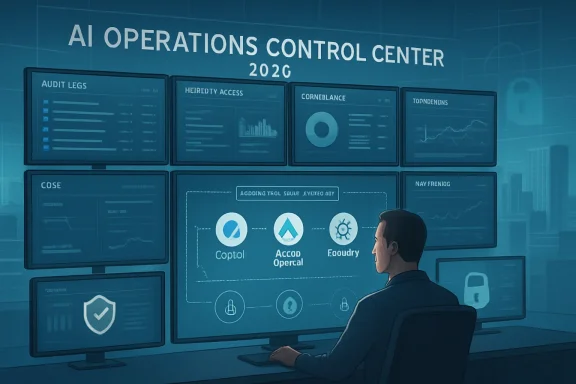 The AI Demo Era Is Giving Way to the Operations Era
For the last two years, enterprise AI has been sold in the language of possibility. Every department could have a copilot, every workflow could be automated, every spreadsheet could talk back, and every knowledge base could become a conversational interface. That framing was useful when customers needed permission to experiment, but it is becoming less useful now that executives are asking why so many experiments are still trapped in PowerPoint decks and sandbox tenants.The Microsoft channel is feeling that change first because Microsoft’s AI stack sits close to the operational center of many businesses. Copilot touches identity, email, documents, Teams, SharePoint, compliance policies, and endpoint governance. Azure OpenAI and Foundry touch cloud architecture, application development, data governance, billing, monitoring, and security. This is not a peripheral software category that partners can attach to a renewal quote and forget.
The problem is that pilots and production systems reward different skills. A pilot rewards speed, imagination, and a willingness to work around messy internal politics. A production AI service rewards controls, runbooks, monitoring, lifecycle management, cost discipline, and a willingness to say no when a use case is not ready.
That is the gap now reshaping the Microsoft partner market. Customers no longer need someone to prove that generative AI can summarize a document or draft an email. They need someone to decide who is allowed to use it, what data it can see, how its outputs are evaluated, what happens when it fails, and why the bill doubled last Tuesday.
Pilots Hide the Friction That Production Cannot Ignore
AI pilots often succeed because they are protected from the very constraints that define enterprise IT. They use a narrow dataset, a friendly user group, a permissive security model, and a limited budget horizon. If the demo answers the right question three times in a row, the room applauds and the project gets labeled a success.Production is less forgiving. The moment an AI system becomes part of real work, it must obey the same rules as everything else in the enterprise estate. It has to integrate with identity, conditional access, data loss prevention, retention policies, audit logging, incident response, procurement, and finance. It has to survive users behaving unpredictably, data changing underneath it, and business owners asking for service-level commitments that were never discussed in the proof of concept.
That is why the industry’s stubborn pilot-to-production problem matters. Research and reporting across the market have repeatedly pointed to a large failure rate for AI pilots, with many organizations moving only a small fraction of experiments into durable production use. The exact percentage varies depending on how “production” and “success” are defined, but the directional signal is hard to miss: enterprises have been better at starting AI projects than institutionalizing them.
This is not simply a story about failed technology. In many cases, the model works well enough, the demo is credible, and users are interested. What fails is the operating model around the technology.
That distinction is crucial for Microsoft partners. If AI adoption were mainly a model-selection problem, the channel could solve it with technical certifications and reference architectures. But if the real bottleneck is organizational readiness, then partners must become advisors on governance, process redesign, security posture, adoption, telemetry, and financial control. That is a different business.
Security Teams Were Right to Be Difficult
It is fashionable in AI circles to portray security and compliance teams as blockers. The line is familiar: the business wants innovation, and security slows it down. In the AI production phase, that complaint is both understandable and incomplete.Security teams are not objecting to AI because they dislike productivity. They are objecting because AI systems collapse familiar boundaries. A conventional application usually has defined inputs, outputs, users, and permissions. A generative AI system may retrieve, transform, summarize, infer, and act across multiple systems, often in ways that are probabilistic rather than deterministic.
That makes governance more than a paperwork exercise. If a Copilot deployment exposes poorly permissioned SharePoint content, the AI did not create the underlying access problem, but it made the blast radius more visible. If an Azure OpenAI application logs prompts containing sensitive customer information, the model did not invent the data-handling failure, but it changed the consequences. If an agent takes action in a business system based on flawed context, the issue is no longer hallucination as a novelty; it is operational risk.
The channel has an opportunity here, but only if it stops treating security as a late-stage checkbox. The partners that succeed will bring security into the first conversation about use-case design. They will ask whether the data is fit for purpose, whether permissions reflect business reality, whether outputs can be evaluated, and whether humans remain in the loop where risk demands it.
The irony is that security may become the channel’s best AI growth engine. Customers do not just need encouragement to adopt AI; they need confidence that adoption will not create an uncontrolled shadow estate. A partner that can make AI acceptable to the CISO, the CFO, and the business owner has a stronger proposition than one that can merely make it impressive in a workshop.
Consumption Billing Turns AI Enthusiasm Into a Finance Problem
Microsoft partners have long understood licensing, but AI workloads introduce a more volatile economic model. Traditional Microsoft channel economics often orbit seats, subscriptions, renewals, and projects. AI adds consumption patterns that can change with user behavior, model choice, prompt design, retrieval strategy, agent activity, evaluation runs, and application architecture.That creates a new kind of customer anxiety. A department may love an AI assistant until the organization realizes that every enthusiastic query, every long completion, and every poorly optimized workflow has a cost profile. In Azure AI and Foundry environments, cost management is not an afterthought; it is part of production readiness.
The operational challenge is not simply “AI is expensive.” Sometimes it is, sometimes it is not. The harder problem is predictability. A useful AI system often invites more usage, and more usage can change the economics quickly. The better the adoption story, the more urgent the cost-control story becomes.
This changes what customers should expect from partners. A credible AI operations provider should understand budgets, alerts, cost analysis, token consumption, model routing, provisioned capacity options, and the trade-offs between performance and price. It should be able to explain when pay-as-you-go is sensible, when commitments may be worth exploring, and when a design is wasteful because it sends too much context to too large a model too often.
The CFO is now part of the AI architecture review, whether technologists like it or not. That is healthy. Enterprise AI will not mature if it is sold as magic and billed as a surprise.
The Managed Service Provider Becomes the AI Control Plane
The traditional MSP model was built around keeping users, devices, networks, and cloud services running. That work is not going away. But AI adds a new managed layer that does not fit neatly into legacy break/fix categories.An AI service needs onboarding, permissions review, prompt and workflow design, monitoring, evaluation, incident handling, adoption coaching, cost optimization, and periodic redesign. It may need model updates, grounding data refreshes, tool permission reviews, red-team testing, and business outcome measurement. In other words, it needs operations.
That is why the Microsoft channel’s center of gravity is moving from project delivery to managed AI services. The one-off implementation is becoming less valuable than the monthly operating cadence that follows it. Customers do not merely want a Copilot rollout; they want usage to climb in the right departments, sensitive data to remain protected, and measurable outcomes to appear in business processes.
This favors partners that can productize repeatable motions. A small MSP does not need to become a global systems integrator to compete, but it does need a standard way to assess readiness, deploy controls, train users, monitor usage, report value, and tune the environment. The partner that treats each AI engagement as artisanal consulting will struggle to scale. The partner that turns AI operations into a managed practice has a chance to create durable margin.
There is a cultural shift here as well. Many MSPs grew up reacting to tickets. AI operations requires more proactive engagement: reviewing telemetry before users complain, catching cost anomalies before finance escalates, identifying risky usage patterns before auditors arrive, and coaching departments before they revert to unsanctioned tools.
The partner of record becomes less like an installer and more like an air-traffic controller. That is a more demanding role, but also a more defensible one.
Copilot Makes Governance a Mainstream Channel Conversation
Copilot is important not just because it is Microsoft’s flagship AI brand, but because it drags governance into everyday productivity software. AI is no longer confined to data science teams or innovation labs. It is sitting inside the tools employees already use to write, meet, search, analyze, and collaborate.That creates a deceptively simple challenge: Copilot can only be as safe and useful as the environment around it. If content is stale, permissions are sloppy, labels are inconsistent, and business processes are vague, AI will surface those weaknesses with uncomfortable efficiency. It will not politely wait while the organization fixes its information architecture.
For Microsoft partners, this turns old hygiene work into new AI work. SharePoint cleanup, identity governance, sensitivity labels, retention policies, endpoint security, and user training are not glamorous, but they are now part of the AI value chain. The unsexy plumbing has become strategic.
This may be good news for the channel’s more disciplined operators. Partners that spent years telling customers to clean up identity and data governance can now connect that advice to a board-level AI agenda. The message is no longer “tidy your tenant because best practice says so.” It is “your AI strategy depends on whether your tenant is trustworthy.”
That framing matters because customers are often willing to fund governance when it is attached to innovation. Microsoft’s AI push gives partners a way to repackage foundational work without pretending it is new. The work is familiar; the urgency is not.
Shadow AI Is the Channel’s Burning Platform
If sanctioned AI adoption feels slow, unsanctioned adoption is already moving quickly. Employees have discovered that public AI tools can write drafts, summarize documents, generate code, analyze data, and automate tedious work. Waiting for central IT to bless every use case is not how modern knowledge workers behave.That creates a strategic problem for Microsoft partners. If they do not help customers provide governed AI services quickly enough, users will assemble their own toolchains. Those toolchains may include consumer chatbots, browser extensions, niche SaaS products, personal accounts, and undocumented workflows that never pass through procurement or security review.
This is not merely a compliance concern. Shadow AI fragments organizational learning. One department may build useful prompts that no one else sees. Another may upload sensitive data to a tool with unclear retention terms. A third may become dependent on an automation that breaks silently when a vendor changes a model. The enterprise ends up with lots of AI activity and very little AI capability.
Microsoft’s channel has an obvious counteroffer: bring AI into the managed Microsoft estate, wrap it in identity and compliance controls, and give users approved ways to get work done. But that offer must be fast and practical. If the official path takes nine months and three committees, employees will route around it.
The partner’s job is not to eliminate experimentation. It is to make the governed path easier than the rogue path. That requires templates, approved patterns, training, internal champions, and a realistic understanding of how people actually use these tools when no one is watching.
Agents Turn User Support Into Identity Support
The next phase of the AI operations gap will be driven by agents. Microsoft has been increasingly explicit about agents as a major direction for enterprise AI, and the logic is straightforward: chat is useful, but action is where business value compounds. An agent that can reason over context, call tools, and complete tasks starts to look less like a feature and more like a digital worker.That creates a profound support question for the channel. MSPs and Microsoft partners have traditionally supported people: named users with devices, mailboxes, permissions, tickets, and managers. Agents complicate that model because they may need identities, permissions, logs, owners, budgets, and lifecycle policies of their own.
If an agent can open a ticket, update a CRM record, trigger a workflow, or query sensitive data, it cannot be treated as a toy. It needs least-privilege access. It needs auditability. It needs a business owner. It needs a retirement process. It needs monitoring for drift, misuse, failure, and cost.
This is where the phrase supporting identities, not just users becomes more than a clever channel talking point. The future Microsoft estate may contain human identities, service principals, workload identities, bots, copilots, and agents that act with varying degrees of autonomy. The partner that understands only the human help desk will miss a growing portion of the operational surface.
There is also a liability dimension. When a human makes a mistake, organizations have established processes for training, discipline, escalation, and remediation. When an agent makes a mistake, responsibility is murkier. Was the model wrong, the prompt flawed, the tool permission excessive, the data stale, or the business process badly designed? The partner operating that environment will need an answer.
Microsoft Wants the Channel to Industrialize AI
Microsoft’s messaging to partners has been increasingly clear: customers want AI that is secure, governed, measurable, and repeatable. That is not accidental positioning. Microsoft needs the channel to turn AI from platform capability into operational practice at scale.This is how Microsoft has always expanded enterprise reach. Redmond builds the platform, then relies on partners to translate it into industry workflows, customer deployments, managed services, and local trust. The same pattern is unfolding with AI, but the stakes are higher because the technology is more entangled with data, risk, and business process.
The partner opportunity is therefore not limited to reselling Copilot or attaching Azure consumption to existing accounts. It includes assessment services, readiness programs, governance frameworks, custom agent development, adoption management, security reviews, cost optimization, and ongoing operations. The old Microsoft channel stack is not disappearing, but AI is adding a new layer above it.
This also explains why skilling has become such a persistent theme. AI capability cannot live only in a small innovation team. Salespeople need to qualify use cases honestly. Architects need to design secure patterns. Security teams need to understand model and data risks. Service desks need to triage AI-related incidents. Customer success teams need to measure adoption and outcomes rather than celebrate deployment as the finish line.
The channel firms that treat AI skilling as a badge-collection exercise will disappoint customers. The firms that embed AI operations into their delivery methodology will look much more valuable.
The Partner Split Will Be Brutal but Not Immediate
Channel transitions rarely happen overnight. Many partners will continue to make money from licensing, migrations, security projects, endpoint management, and cloud operations. AI will not instantly erase those revenue streams. But it will change where growth and influence accumulate.The first split will be between partners that can talk about AI and partners that can run it. The former will have demos, decks, and enthusiasm. The latter will have operating procedures, monitoring dashboards, governance models, adoption metrics, and uncomfortable lessons from production deployments. Customers will learn the difference quickly.
The second split will be between partners that see AI as an add-on and partners that see it as a forcing function across the whole Microsoft estate. AI readiness touches identity, data, endpoint, compliance, cloud architecture, application modernization, and business process design. A partner that isolates AI in a small practice may miss the broader account opportunity.
The third split will be economic. Managed AI operations could create recurring revenue, but it also requires investment before demand is fully standardized. Partners must build tooling, train staff, define service packages, and accept that early engagements may be messier than classic managed services. Not every small partner will have the appetite or balance sheet for that transition.
Still, smaller partners should not assume the market belongs only to large consultancies. Many SMB and midmarket customers will need practical, right-sized AI operations more than grand transformation programs. A nimble MSP with strong customer trust, disciplined security practices, and repeatable Copilot and Azure AI playbooks may be better positioned than a giant firm selling abstract strategy.
The New Channel Playbook Starts After Go-Live
The phrase “pilot to production” understates the real challenge. Production is not the end state; it is the beginning of the operating burden. Once an AI system is live, the questions multiply.Is usage growing among the right users? Are people trusting outputs too much or too little? Are prompts exposing sensitive context? Are retrieval results grounded in current and approved data? Are agents calling tools appropriately? Are costs tracking with business value? Are model changes affecting output quality? Are there enough logs to investigate incidents? Has anyone defined what “good” looks like six months from now?
These are not questions a reseller can answer with a quote. They require an ongoing relationship with the customer’s business and technical teams. They also require partners to become more opinionated. A good AI operations partner must be willing to shut down weak use cases, challenge unrealistic ROI claims, and insist on governance before scale.
That may feel uncomfortable in a channel culture that often rewards saying yes. But AI production punishes vague promises. A partner that says yes to everything may win the first project and lose the renewal when the customer discovers that enthusiasm is not an operating model.
This is why outcome measurement matters. Time saved is useful, but it is not always enough. Customers will increasingly ask whether AI reduced handling time, improved sales conversion, shortened onboarding, increased first-contact resolution, improved compliance review throughput, or reduced rework. The channel must learn to connect AI activity to business process metrics rather than generic productivity anecdotes.
The Channel’s AI Winners Will Look More Like Operators Than Evangelists
The Microsoft partner ecosystem is not short on evangelists. It has plenty of people who can explain why AI matters, why Copilot is strategic, and why agents will reshape work. The market now needs fewer sermons and more operating manuals.That does not mean imagination is irrelevant. Customers still need help identifying valuable use cases and redesigning processes around new capabilities. But imagination without operational discipline is how organizations end up with dozens of pilots and little production value.
The best partners will combine three instincts that do not always coexist. They will be creative enough to spot where AI can change work, cautious enough to govern it properly, and commercial enough to measure whether the change was worth paying for. That blend is rare, which is precisely why it will command a premium.
There is also a trust advantage for partners that already manage the Microsoft estate. If a customer trusts an MSP with identity, security, devices, Microsoft 365, and Azure, extending that relationship into AI operations is logical. But incumbency is not a guarantee. Existing partners that lack AI competence may find themselves displaced by specialists who can make the production problem legible.
The channel’s future will not be decided by who has the most AI logos on a website. It will be decided by who can keep AI systems useful after the novelty fades.
The Real Margin Is in Making AI Boring
The near-term lesson for Microsoft partners is not that every firm must become an AI lab. It is that AI must be operationalized with the same seriousness as security, identity, backup, and cloud cost management. The firms that turn that seriousness into repeatable services will define the next phase of the channel.- Customers are moving from AI curiosity to production pressure, and that shift favors partners with governance, security, monitoring, and adoption skills.
- AI pilots often fail to scale because they avoid the identity, compliance, data, cost, and support constraints that production systems must face.
- Copilot and Azure AI create opportunities for partners to modernize old tenant hygiene, data governance, and security work under a more urgent AI agenda.
- Consumption-based AI economics make cost monitoring, budget alerts, model selection, and optimization central parts of managed service delivery.
- Agentic AI will force partners to support non-human identities, permissions, logs, ownership models, and lifecycle policies alongside traditional users.
- The strongest channel businesses will package AI operations as an ongoing service rather than a one-time deployment project.
Source: IT Pro The AI operations gap is reshaping the Microsoft channel
