

Microsoft’s apparent rethink — dialing back the “Copilot everywhere” experiment in Windows 11 and putting several high‑visibility AI surfaces under review — is the clearest sign yet that the company’s desktop AI strategy collided with real user pushback and hard economic realities. the past two years Microsoft has pushed a broad plan to make Windows an “AI PC,” embedding Copilot, Recall, and other model‑driven features into the shell and first‑party apps. The goal was straightforward: make AI a native productivity layer across the OS, from the taskbar to File Explorer to lightweight utilities such as Notepad and Paint. Those moves were supported by heavy engineering investment in on‑device ML, Windows AI APIs, and cloud capacity to serve inference workloads.
But the rollout has had two repeatieadministrators often perceived AI additions as forced rather than optional: Copilot icons and “Ask Copilot” affordances appeared on UI surfaces that people expect to be minimal and predictable, creating the sense that Microsoft was advertising AI rather than offering genuinely useful functionality. Second, privacy and reliability concerns—particularly around features that index local activity (the so‑called “photographic memory” of Recall)—triggered loud criticism and required Microsoft to dial back, rework, or move some features into Insider preview channels.
Those user and admin complaints did not happen in a vacuum. They arrived at terutinize Microsoft’s massive AI capital expenditures and the short‑term economics of turning servers, GPUs, and datacenter space into product value. The result was a rare alignment of consumer sentiment and market pressure that increased the cost of pushing AI features aggressively.
This change is tactical, not absolute: the engineering teams remain committed to bringing AI capabilities to Windows, but they want to focus on high‑value, contextually relevant scenarios rather than “slapping a Copilot icon on every toolbar.” That distinction matters; under‑the‑hood investments in Windows AI APIs, *on‑device inferenceing appear to continue even as visible integrations are pruned.
That said, the company faces a delicate balancing act. The markets have just signaled impatience with blunt, capital‑intensive AI strategies, and users have signaled impatience with intrusive UI changes. Microsoft must now deliver both better short‑term stability and a credible long‑term plan for secure, optional, and well‑scoped AI features.
If the company executes a disciplined program—stabilize the core OS, publish clear privacy defaults, provide durable admin controls, and reintroduce AI into places where it demonstrably helps—Windows could end this chapter stronger. If it fails to resist investor or marketing pressure to return to rapid surface expansion, the platform risks repeati
Source: Tom's Guide https://www.tomsguide.com/computing...-windows-11-with-ai-and-i-couldnt-be-happier/
But the rollout has had two repeatieadministrators often perceived AI additions as forced rather than optional: Copilot icons and “Ask Copilot” affordances appeared on UI surfaces that people expect to be minimal and predictable, creating the sense that Microsoft was advertising AI rather than offering genuinely useful functionality. Second, privacy and reliability concerns—particularly around features that index local activity (the so‑called “photographic memory” of Recall)—triggered loud criticism and required Microsoft to dial back, rework, or move some features into Insider preview channels.
Those user and admin complaints did not happen in a vacuum. They arrived at terutinize Microsoft’s massive AI capital expenditures and the short‑term economics of turning servers, GPUs, and datacenter space into product value. The result was a rare alignment of consumer sentiment and market pressure that increased the cost of pushing AI features aggressively.
 What’s being pulled back — and what’s staying
Pausing surface‑level Copilot placements
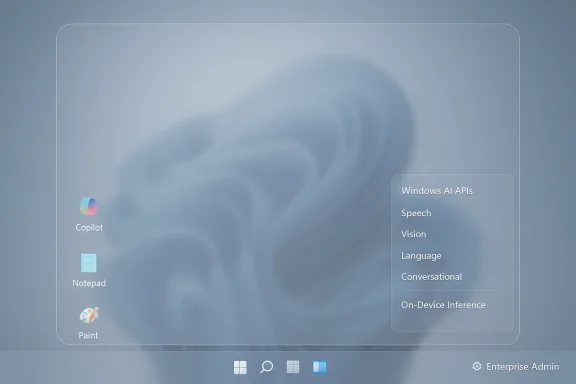
According to reporting based on sources familiar with Microsoft’s plans, the company has paused work on adding new Copilot buttons to many lightweight, first‑party apps (Notepad, Paint, and similar utilities) and is reconsidering where visible Copilot affordances belong in the UI. The intent, as described by insiders, is to be more *tactfultlly benefit from a conversational assistant and which ones are just visual clutter.This change is tactical, not absolute: the engineering teams remain committed to bringing AI capabilities to Windows, but they want to focus on high‑value, contextually relevant scenarios rather than “slapping a Copilot icon on every toolbar.” That distinction matters; under‑the‑hood investments in Windows AI APIs, *on‑device inferenceing appear to continue even as visible integrations are pruned.
Reworking Windows Recall
The most politically sensitive feature is Windows Recall, Microsoft’s proposed on‑device “photographic memory” that takes periodic snapshots of activity to let users search past interactions. Reporters say Microsoft now views the current Recall implementation as a failure in its present form and is exploring rework, renaming, or a new strategy for that capability. Importantly, this assessment comes from internal reporting and insiders; Microsoft has not publicly acknowledged a permanent cancellation, and the company still appears to be experimenting with the core idea in more privacy‑first, limited deployments (for example, moving features behind explicit opt‑ins or gating them with Windows Hello). Treat ther than confirmed.What’s likely to remain
- Developer and platform investments — The Windows AI stack, ML runtimes, and APIs for third‑party integrations remain active priorities. Microsoft can still pursue a long‑term platform strategy for AI without plastering visible Copilot butt
- Scoped, high‑impact scenarios — Accessibility, robust file summarization, and search experiences that demonstrably reduce friction are the kind of features likely to survive and even flourish under a more conservative roll‑out.cktrack matters
User experience and trust
The fundamental lesson here is product discipline. Users accept useful automation if it’s clearly optional, predictable, and offers measurable benefits. When features are always‑on by default, visually prominent, or poorly explained, they erode trust. The Recall controversy crystallized those concerns because a system that “remembers everything” must meet a higher bar for transparency, control, and security. Microsoft initially missed that mark in public perception, and the company’s move to pause or rework features is essentially an attempt to repair trust.Administrativeises
Enterprises care about auditability, patch stability, and predictable update behavior. Admins reacted strongly to elements that hid controls behind complicated servicing mechanics or that could be re‑provisioned by updates after users removed them. Microsoft’s reported pivot includes shipping more enterprise controls — Group Policies and MDM CSPs to manage Copilot surfaces and uninstall provisioned Copilot artifacts where reasonable — which should reduce friction if implemented cleanly. But until those controls are broadly available and documented, large organizations will continue to hedge upgrades.Market discipline: investors are wa consequence of Microsoft’s AI spending is also visible in the markets. Following Microsoft’s recent earnings, investors punished the company for a surge in capital expenditures and a cloud growth rate that disappointed expectations; shares fell roughly 10% in a single trading session, erasing hundreds of billions in market capitalization and crystallizing investor skepticism about the near‑term ROI of AI infrastructure spending. That market reaction is a real constraint on how quickly leadership can fund large, speculative desktop experiments that don’t clearly monetize or reduce churn.
The technical and product tradeoffs at play
Surface vs. substrate
There are two separate engineerin*surface problem**: how and where to expose AI to users. This is a UX, privacy, and default‑setting problem. Poor choices here create immediate friction and backlash.- The substrate problem: building stable APIs, local inference capabilities, and develhigh‑value scenarios can be implemented securely and efficiently. This is deeper and slower work, but it is where long‑term platform value lives.
Privacy, telemetry, and consent
Recall brought privacy into sharp relief. In response to community and security researcher concerns, Microsoft made several changes — moving Recall behind Insiders, adding opt‑in gating, and attaching Windows Hello safeguards to certain features — but perception lagged behind the technical mitigations. Any future version of Recall will need transparent defaults, clear consenal encryption, and easily discoverable controls to meet the expectations of privacy‑sensitive users and enterprise auditors.Performance and resource costs
On less capable hardware, background AI services and new UI surfaces can add overhead. The complaint from long‑time users is simple: they expect fast, predictable tools such as Notepad to open instantly, not to be intercepted by a background assistant. Microsoft must balance innovation with baseline responsiveness, and that often means deferring flashy features until the runtime ihe community response — scripts and tools that remove Copilot surfaces — is a symptom of that mismatch.Strengths in Microsoft’s favor
- Engineering depth and scale: Microsoft can reassign large engineering teams and has already invested in on‑device ML runtimes and cloud capacity. That means the company can re OS and re‑architect AI features more thoughtfully, rather than abandoning them.
- Platform reach: Windows runs on a huge variety of hardware and serves both consumers and enterprises. If Microsoft can define conservative defaults and strong admin‑grslowly re‑introduce AI features where they clearly add value.
- Developer tooling: By shifting emphasis to APIs rather than surface add‑ins, Microsoft can encourage third parties to build more integrated and useful AI experiences that solve real problems for users. That path than unilateral shell decorations.
Risks and unanswered questions
- Execution risk: A pause is easy; a disciplined, user‑centric rollout is much harder. Microsoft must follow through with turnaround plans that include clearer defaults, stronger documentation, and fewer surprises in update behavior. Early signals are promising, but the company must demonts to regain trust.
- Investor expectations vs. product patience: Market pressure to monetize AI quickly may push teams back toward visible features even before they’re ready. The recent stock sell‑off increases that tension, because short‑term investor returns and long‑term engineering discipline aren’t always aligned. If leadership overcorrects to meet revenue narratives, the platform could suffer renewed instability.
- Fragmentation risk: Copilot+ hardware tiers and specialized OEM experiences risk fragmenting the Windofeatures only work on expensive hardware, the broader installed base can feel left behind or forced into upgrades. That perception undercuts trust.
- Community workarounds carry risk: Powerful community tools that remove Copilot surfaces are a symptom of legitimate demand for control, but they can touch servicing compoe risk of upgrade and stability problems. That, in turn, could escalate support burdens for both Microsoft and administrators.
What this means for users and IT admins — practical guidance
- If you value stability and control, pause feature upgrades on production machines and treat major Windows feature updut exercise. Test in a small group first, validate driver compatibility, and keep critical backups ready.
- Use enterprise controls: Microsoft is reportedly expanding Group Policy and MDM options to manage Copilot surfaces and related artifacts. IT teams should inventory their environment, evaluate these led pilot, and prepare to block or defer features that interact with sensitive data.
- For enthusiasts who want a lean desktop: community tools exist that can hide or remove Copilot affordances, but use them with caution. Projects that modify the Component‑Based Servicing (CBS) store or provisioning metadata can make future updatesrsible, well‑documented approaches and test recovery scenarios.
- Demand clarity: ask Microsoft for explicit documentation about where AI runs (local vs. cloud), what data is used for model training, and how to opt out persistently. Companies that ship privacy‑sensite those controls discoverable and durable.
A critical assessment: cautious optimism
This pivot is, at minimum, a healthy course correction. Microsoft’s initial ambition—to treat the OS as an AI platform—was not wrong in principle. The problem was a speed and product‑judgment mismatch: surfacing nascent, sometimes flaky AI experiences widely before proving they improve the user workflow. The current pause suggests Microsoft is learning that lesson and is willing tnship over spectacle.That said, the company faces a delicate balancing act. The markets have just signaled impatience with blunt, capital‑intensive AI strategies, and users have signaled impatience with intrusive UI changes. Microsoft must now deliver both better short‑term stability and a credible long‑term plan for secure, optional, and well‑scoped AI features.
If the company executes a disciplined program—stabilize the core OS, publish clear privacy defaults, provide durable admin controls, and reintroduce AI into places where it demonstrably helps—Windows could end this chapter stronger. If it fails to resist investor or marketing pressure to return to rapid surface expansion, the platform risks repeati
Final thoughts: what to watch next
- Concrete UI changes: are Copilot icons and other visible affordances actulidated in Insider builds and public releases? Look for explicit release notes and behavioral changes in the next preview rings.
- Recall’s evolution: will Microsoft publish a privacy‑first specification or timeline for Rec will the idea be shelved? Treat press reporting as provisional until Microsoft issues definitive guidance.
- Admin tooling: Microsoft’s rollout of Group Policy and MDM controls for AI surfaces will be a major sy intends to serve enterprise needs seriously. Evaluate those controls when they land.
- Market discipline: expect investor scrutiny to shape the cadence of high‑visibility, expensive experiments. If surface features continue to proliferate without clear monetization and reliability, market pressure will not let that slide.
Source: Tom's Guide https://www.tomsguide.com/computing...-windows-11-with-ai-and-i-couldnt-be-happier/
