

For decades, Microsoft has presented privacy and security not as competing priorities but as mutually reinforcing obligations—and the company’s recent Deputy CISO commentary lays out how that philosophy is engineered into products, programs, and governance at global scale.
Microsoft’s latest Deputy CISO post reiterates a simple thesis: privacy is a human right and the practical way to protect it is through layered, identity‑centric security that minimizes the vendor’s need to see customer data. The blog highlights several technical building blocks—Microsoft Entra (including Private Access), Microsoft Purview, Conditional Access, Customer Lockbox—and positions the Secure Future Initiative (SFI) as the corporate program that institutionalizes those controls across engineering and operations. The narrative combines treaty‑level compliance claims (GDPR, DPDP, NIS2, DORA, EU AI Act) with product‑level controls intended to deliver both legal defensibility and operational privacy protection in customers’ environments.
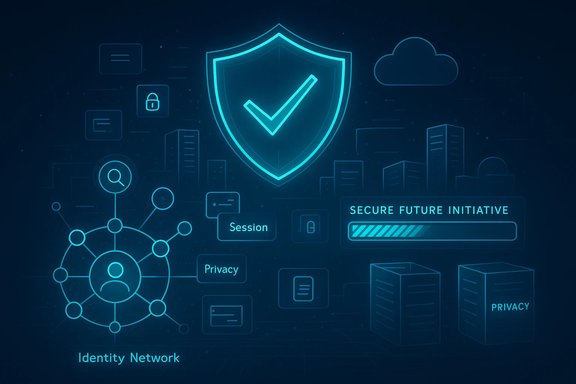
Microsoft’s own public materials confirm these pillars. The Secure Future Initiative (SFI) is explicitly described by Microsoft as a multi‑year, engineering‑first program that increases secure defaults, accelerates vulnerability remediation, and embeds security governance across product teams. The company has published progress reports detailing SFI objectives and measurable activities.
However, the power of integration brings responsibility. Customers must treat Microsoft’s offerings as enablers rather than silver bullets. The effective controls are a combination of Microsoft features and the customer’s implementation, governance, and audit program. The most sensible path forward is a measured one: adopt Microsoft’s identity‑centric, data‑centric controls; enforce strong governance and human‑access approvals; and maintain independent verification and layered defenses to mitigate vendor‑side and tenant‑side risks.
Microsoft’s standing in public opinion—ranked among the top trusted brands in some reputation indexes—helps the narrative but does not substitute for rigorous, tenant‑level assurance. The company’s technical investments and public governance moves are substantial, yet customers and regulators will continue to demand tangible, auditable evidence that privacy and security commitments translate into operational protections.
Yet technology alone does not guarantee safety. The onus remains on customers to configure, govern, and verify these controls inside their own environments. When deployed thoughtfully—paired with independent verification, DSPM for legacy estates, robust incident playbooks, and AI‑specific governance—Microsoft’s stack can materially reduce risk and make privacy both enforceable and operational. The most pragmatic conclusion is this: Microsoft has built much of the scaffolding required for privacy‑centric security at scale, but the structure’s strength will be proven by how enterprises and regulators stress‑test it in real operations.
Source: Microsoft How Microsoft builds privacy and security to work hand-in-hand | Microsoft Security Blog
 Background
Microsoft’s latest Deputy CISO post reiterates a simple thesis: privacy is a human right and the practical way to protect it is through layered, identity‑centric security that minimizes the vendor’s need to see customer data. The blog highlights several technical building blocks—Microsoft Entra (including Private Access), Microsoft Purview, Conditional Access, Customer Lockbox—and positions the Secure Future Initiative (SFI) as the corporate program that institutionalizes those controls across engineering and operations. The narrative combines treaty‑level compliance claims (GDPR, DPDP, NIS2, DORA, EU AI Act) with product‑level controls intended to deliver both legal defensibility and operational privacy protection in customers’ environments.Microsoft’s own public materials confirm these pillars. The Secure Future Initiative (SFI) is explicitly described by Microsoft as a multi‑year, engineering‑first program that increases secure defaults, accelerates vulnerability remediation, and embeds security governance across product teams. The company has published progress reports detailing SFI objectives and measurable activities.
Overview: Why the model matters now
The commercial and regulatory environment for cloud providers has shifted from “trust us” to “prove it.” Regulators demand demonstrable controls and transparency, enterprises demand data protection and tenant control, and users demand privacy assurances that survive legal and technical pressure. Microsoft answers this with a three‑part approach:- Build identity and access as the primary control plane (Zero Trust, Microsoft Entra).
- Apply data classification, labeling, and policy enforcement at scale (Microsoft Purview).
- Operationalize vendor limits on human access through strict workflows (Customer Lockbox, hardened admin workstations) and governance (SFI).
How the technology stack maps to privacy outcomes
Microsoft Entra / Identity as the perimeter
Microsoft positions identity as the canonical perimeter: if identity and device posture are continuously verified, then access to data can be limited to what is necessary and logged.- What it delivers: Identity‑centric Zero Trust Network Access (ZTNA) that replaces broad VPN access with per‑app and per‑protocol controls, short‑lived sessions, and conditional policies that evaluate device health, location, and session risk. Microsoft Entra Private Access explicitly offers per‑app adaptive Conditional Access without requiring legacy VPNs.
- Privacy effect: Reduces lateral exposure. When fewer people and services can reach sensitive stores, there is less chance of accidental or unauthorized data disclosure.
- Operational reality: Entra’s conditional policies require careful configuration and a disciplined identity hygiene program—cleansing stale accounts, removing broad group memberships, and applying least privilege across service principals and managed identities. Community and technical analyses highlight that applying Zero Trust at scale is challenging but necessary.
Microsoft Purview / Data governance and protection
Purview is Microsoft’s platform for discovery, classification, labeling, DLP, retention, and compliance reporting across Microsoft 365, Azure, and connected data sources.- What it delivers: Automated scanning of repositories, Exact Data Match (EDM) for reliable detection, auto‑apply sensitivity labels, policy enforcement (encryption and access controls), and integration with DLP and auditing. Purview is a central control plane to ensure sensitive data is identified and remediated before AI processing or external sharing.
- Privacy effect: Shifts defenses from perimeter blocking to data‑centric controls that travel with content. If sensitive content is labeled and protected at creation, downstream tools (including generative AI features) can be configured to block, require review, or redact that content automatically.
- Operational reality: Purview’s value depends on accurate inventories and classifiers. Organizations will often need DSPM (data security posture management) complements to find legacy or orphaned data stores that Purview’s connectors do not reach.
Customer Lockbox and human access governance
Customer Lockbox is the engineering control Microsoft offers to ensure customer approval is required before Microsoft engineers access tenant content for support.- What it delivers: An approval workflow for support‑initiated access requests; limited access windows (default eight hours in many implementations); audit logs; and explicit approver controls. Variants and implementations exist across Power Platform, Fabric, Windows 365, and Microsoft 365.
- Privacy effect: Places human access to customer content under customer control—reducing the risk of unauthorized human inspection or “curiosity‑driven” access.
- Operational reality: Lockbox adds latency to incident troubleshooting and is not applied universally (some emergency “break glass” scenarios may exempt it). It is a powerful control for high‑sensitivity tenants but requires process maturity (clear approver roles, monitoring of pending requests).
Regulatory alignment and contractual assurances
Microsoft presents regulatory engagement as material to their product design: GDPR compliance influenced the company’s global commitments years ago, and Microsoft now frames new laws (India DPDP, EU NIS2, DORA, EU AI Act) as inputs to product hardening and contractual obligations.- GDPR mechanics: Microsoft’s processor obligations in GDPR terms—breach notification, assistance with DSRs (data subject requests), and technical/organizational measures—are codified in Microsoft’s documentation and contract language. The GDPR requires breach notification to supervisory authorities within 72 hours, a capability Microsoft says it supports through incident and notification processes.
- AI regulation: Microsoft has published Responsible AI resources and Transparency Notes to help customers satisfy the EU AI Act’s documentation and governance expectations; the company treats the Act as a prompt to offer tooling and contractual commitments that enable downstream compliance.
- Strategic view: Microsoft claims that aligning to higher bars (GDPR, EU AI Act) equips it to adapt more easily to other national laws, turning compliance into product differentiation rather than a recurring cost center. That positioning is credible given Microsoft’s size and engineering investment—but it presumes consistent, timely execution across product teams.
What Microsoft’s Secure Future Initiative (SFI) brings to the table
SFI is framed as a corporate program that makes security and privacy a measurable part of engineering and operations, introducing governance, standards, and an engineering “paved paths” approach to secure development.- Scale and intent: Microsoft reports dedicating tens of thousands of engineer‑equivalents to SFI work, issuing progress reports on secure defaults, automated threat modeling, and code analysis. Independent reporting and analysis have confirmed SFI’s scale and the company’s public roadmap.
- Why it matters: SFI converts promises into engineering artifacts—default configurations, secure SDLC requirements, and monitoring investments—that are essential if Microsoft is to meet high regulatory and customer expectations at global scale.
- Risk to watch: centralized programs can improve consistency but may also create monocultures; when a single vendor controls widely used infrastructure and security defaults, misconfigurations or flawed assumptions risk rippling across many customers. Community analysis and incident history make this a non‑trivial point of attention.
Strengths in Microsoft’s approach
- Product integration: Identity (Entra), data governance (Purview), device posture, and telemetry are designed to work together, reducing policy gaps that plague multi‑vendor stacks.
- Scale of investment: A program like SFI backed by large engineering resources and executive oversight signals long‑term commitment rather than ad hoc responses.
- Operational controls for human access: Customer Lockbox and hardened admin workstations materially reduce risk from support access—an area often overlooked in security programs.
- Regulatory pragmatism: Microsoft’s approach of baking compliance obligations into contracts and product features simplifies customers’ compliance burden and, in many cases, raises the baseline for the market.
Real risks and limitations (what enterprises must not ignore)
- Complexity and configuration risk: Integrated stacks are powerful but brittle if misconfigured. Conditional Access policies, sensitivity labeling, DLP, and connector scopes require constant tuning. The “enable and forget” approach leads to policy gaps—especially for large tenants with legacy archives and shadow IT. Purview helps but often needs DSPM complements and human oversight.
- Concentration of control and single‑vendor risk: Relying on a single cloud provider for identity, data governance, and security telemetry concentrates risk. If a systemic misconfiguration or vulnerability exists in any of these layers, the blast radius is large.
- Human‑access exceptions and legal requests: Customer Lockbox is effective for support workflows, but Microsoft’s documentation and independent analyses note that exceptions exist for emergency scenarios and legal demands—situations where customer approval might not be required. Enterprises must understand these boundaries and negotiate contract language where necessary.
- AI‑era data leakage: Generative AI introduces new exfiltration vectors—prompts, connectors, and model training pipelines can inadvertently expose sensitive data. Purview and Copilot‑aware DLP can reduce risk, but organizations must adopt governed enablement (not blanket bans) and instrument telemetry for AI interactions to remain auditable.
- Operational burden from regulatory fragmentation: Different jurisdictions impose different localization, consent, and retention requirements (DPDP, NIS2, DORA). Implementing region‑specific data residency and processing practices at scale requires both engineering investments and continuous legal coordination.
- Transparency and trust gaps: Product controls and contractual assurances are necessary but not always sufficient for public trust. Independent audits, third‑party attestations, and clear incident disclosure practices are required to close trust gaps with customers and regulators.
Practical guidance for enterprise security and privacy teams
The following is a pragmatic checklist to turn Microsoft’s controls into a defensible, auditable program in your tenant:- Inventory and classify
- Run continuous scans (Purview + DSPM) across SharePoint, OneDrive, Exchange, file shares, and archives.
- Use Exact Data Match where precise identifiers must be detected.
- Harden identity
- Enforce phishing‑resistant MFA and make Conditional Access policies the behavioral baseline.
- Clean up service principals, remove unnecessary admin roles, and rotate keys and secrets.
- Limit and govern human access
- Enable Customer Lockbox where regulatory or contractual needs require customer approval for vendor access.
- Define and test approval workflows; keep a small set of approvers and log every decision.
- Protect AI interactions
- Auto‑label high‑sensitivity content and block Copilot or AI processing against those labels or require human review.
- Audit prompts, responses, and connectors; integrate that telemetry into your SIEM and IR playbooks.
- Operationalize compliance
- Map product controls to legal obligations (72‑hour breach notification, DPIA requirements) and maintain playbooks for regulatory reporting.
- Conduct DPIAs for AI and high‑risk processing and maintain records of processing activities.
- Test and measure
- Run regular Red Team exercises that simulate attacker paths through identity and data controls.
- Validate that remediation timelines in SFI or vendor reports are reflected in your tenant’s SLAs.
Cross‑checking Microsoft’s claims: what third‑party reporting shows
Microsoft’s SFI and product claims are corroborated by independent reporting and industry analysis. Major technology outlets and security researchers have documented the company’s SFI progress, the focus on identity hardening, and the engineering investments made since the program’s inception. That external scrutiny lends credibility to Microsoft’s public assertions, but it also raises expectations for measurable outcomes (fewer incidents, quicker remediation) rather than aspirational statements. Equally, community resources and practitioner threads highlight practical caveats—policy misconfigurations, the need for DSPM to supplement Purview in complex estates, and the friction introduced by governance controls such as Customer Lockbox. These practitioner perspectives are useful because they translate corporate controls into real operational tradeoffs.Where Microsoft needs to keep proving its case
- Consistency of enforcement: Consumers and enterprises alike will judge Microsoft on consistent application of secure defaults and the rapid translation of SFI learnings into shipped mitigations.
- Auditability and transparency: Vendors must provide machine‑readable logs, tenant‑level evidence for data access and processing (especially for AI prompts and responses), and external audit reports that are verifiable by customers and regulators.
- Clear carve‑outs and exceptions: Contractual clarity around emergency access, legal process compliance, and support‑related workarounds must be visible to customers so they can make informed risk decisions.
- Third‑party validation: Independent assessments (SOC 2, ISO, independent penetration tests) tied to customer‑facing artifacts will greatly strengthen trust claims.
Bottom line for security leaders
Microsoft’s architecture for aligning privacy and security is coherent and—critically—engineered to scale. The company has converted regulatory demands into product features (e.g., Purview labeling, contractual GDPR terms) and introduced strong operational controls (Customer Lockbox, SFI governance). For organizations investing heavily in Microsoft stacks, that alignment simplifies compliance pathways and consolidates tooling.However, the power of integration brings responsibility. Customers must treat Microsoft’s offerings as enablers rather than silver bullets. The effective controls are a combination of Microsoft features and the customer’s implementation, governance, and audit program. The most sensible path forward is a measured one: adopt Microsoft’s identity‑centric, data‑centric controls; enforce strong governance and human‑access approvals; and maintain independent verification and layered defenses to mitigate vendor‑side and tenant‑side risks.
Microsoft’s standing in public opinion—ranked among the top trusted brands in some reputation indexes—helps the narrative but does not substitute for rigorous, tenant‑level assurance. The company’s technical investments and public governance moves are substantial, yet customers and regulators will continue to demand tangible, auditable evidence that privacy and security commitments translate into operational protections.
Conclusion
Microsoft’s argument—that security and privacy are two sides of the same coin and can be delivered together at scale—is backed by a coherent product strategy and a major corporate engineering commitment. Identity‑first access with Microsoft Entra, data governance with Microsoft Purview, and strict human‑access controls like Customer Lockbox are sensible building blocks. The Secure Future Initiative provides governance muscle to stitch these capabilities into consistent defaults and engineering practices.Yet technology alone does not guarantee safety. The onus remains on customers to configure, govern, and verify these controls inside their own environments. When deployed thoughtfully—paired with independent verification, DSPM for legacy estates, robust incident playbooks, and AI‑specific governance—Microsoft’s stack can materially reduce risk and make privacy both enforceable and operational. The most pragmatic conclusion is this: Microsoft has built much of the scaffolding required for privacy‑centric security at scale, but the structure’s strength will be proven by how enterprises and regulators stress‑test it in real operations.
Source: Microsoft How Microsoft builds privacy and security to work hand-in-hand | Microsoft Security Blog
