

Microsoft corporate vice president Vasu Jakkal said on June 30, 2026, that she is leaving her Microsoft Security leadership role after roughly six years helping build the company’s security, compliance, identity, management, and privacy business. Her exit lands at an awkwardly symbolic moment: Microsoft is entering fiscal 2027 with security as both a growth engine and a reputational test. The company has spent years telling customers that it can be the control plane for enterprise defense. Now it has to prove that Microsoft Security is durable enough to outlast the executives who made it legible.
Executive departures at Microsoft are easy to overread because the company is large enough to absorb almost any single exit. That is the safe interpretation here, and it may even be the correct operational one. But Jakkal’s departure is still notable because her role sat at the intersection of product, marketing, partner strategy, and customer trust — the place where Microsoft’s sprawling security portfolio became a sellable story.
Jakkal did not merely run a product group in the narrow engineering sense. Her remit, as described in public professional materials and by CRN’s reporting, included end-to-end business strategy, go-to-market execution, positioning, packaging, analyst engagement, media relations, demand generation, channel engagement, and work with engineering on product direction. In other words, she helped turn Microsoft Security from a basket of tools into a commercial category.
That distinction matters. Microsoft does not sell security the way a pure-play cybersecurity vendor does. It sells security as a gravitational field around Windows, Microsoft 365, Azure, Entra, Intune, Defender, Sentinel, Purview, and Copilot. The argument is that customers already living inside Microsoft’s cloud and productivity stack should let Microsoft reduce complexity by securing the estate from the inside.
Jakkal was one of the public faces of that argument. Her LinkedIn farewell framed the decision as one made with “gratitude, joy, fullness and optimism,” and she did not announce a next role. That makes this less of a dramatic rupture than a transition — but transitions can still reveal where the pressure points are.
That growth changes what leadership means. The first phase of Microsoft’s modern security push required persuasion: convincing customers that the same vendor whose products were constantly targeted could also be a primary defender. The next phase requires proof: fewer incidents, faster response, cleaner product boundaries, better defaults, and measurable resilience across a customer base that includes governments, hospitals, schools, banks, manufacturers, and small businesses.
Microsoft’s strength in security has always been distribution. Defender can ride along with Windows. Entra can inherit identity gravity from Azure Active Directory. Intune can become the management layer for organizations already standardizing on Microsoft 365. Sentinel and Purview can be packaged into broader cloud commitments. Copilot can then be framed as the intelligent assistant that makes the whole stack more usable.
But distribution is not the same as trust. In security, distribution gives Microsoft reach; trust determines whether CISOs and administrators sleep better after turning the knobs on. That is the strategic gap Microsoft must keep closing as leadership changes.
Jakkal’s tenure coincided with the period in which Microsoft successfully made security a boardroom business rather than a set of admin-center checkboxes. The challenge for her successors and peers is less glamorous: make the platform consistently worthy of the promises.
The customer problem is obvious to anyone managing endpoints in 2026. Work machines leave the office, home networks become part of the attack surface, personal accounts coexist with corporate data, and cyber insurance questionnaires increasingly force customers to document controls they used to hand-wave. The perimeter did not disappear; it became too fragmented to manage with yesterday’s assumptions.
That is where Microsoft’s pitch has power. A small or midsize organization may not want six security vendors, three consoles, two identity providers, a separate endpoint management system, and an integration project that never ends. Microsoft can say: you already own much of this; consolidate, configure, monitor, and improve.
The danger is that consolidation can become complacency. A partner selling Microsoft Security responsibly has to do more than activate licenses. It has to harden endpoints, enforce identity controls, monitor risky sign-ins, separate personal and corporate use, apply conditional access, review device compliance, and keep explaining why convenience and security are now the same conversation.
That is why a leadership departure in Microsoft’s security go-to-market world matters to the channel. Partners do not only need product roadmaps. They need narrative consistency, packaging clarity, and confidence that Microsoft will keep investing in the hard operational bits that make security offerings defensible after the sale.
Bell’s tenure was important because he came from Amazon Web Services with the credibility of someone who understood large-scale infrastructure and operational discipline. But Microsoft’s security narrative during the Bell years also had to contend with serious breaches and public criticism, including incidents that affected government customers. The company responded by elevating security as a top priority and pushing the Secure Future Initiative as a cultural and engineering reset.
Gallot’s return made sense as a Microsoft move: bring back a leader who knows the company’s commercial machinery and can connect security to customer value. But it also sharpened the accountability structure. With Gallot owning security and Bell focused on engineering quality, Nadella effectively put two related problems into direct executive channels: the security of Microsoft’s products and the quality of how those products are built.
Jakkal’s departure now removes a prominent business-side leader from that evolving structure. It does not mean Microsoft is retreating. If anything, it suggests the opposite: Microsoft Security has matured into an organization where the next phase will be less personality-driven and more systems-driven.
That can be healthy. Security businesses cannot depend on a single evangelist, however effective. They need repeatable product discipline, field enablement, partner incentives, threat intelligence, and customer support that can survive fiscal-year reorgs and executive reshuffles.
For customers, this creates a difficult calculation. Buying more security from Microsoft may reduce complexity and improve integration. It may also deepen dependence on the same vendor whose ecosystem already shapes the organization’s risk profile. That is not a theoretical procurement concern; it is the central strategic tension in Microsoft Security.
The company’s answer has been to argue scale. Microsoft can process signals across enormous telemetry pools, ship protections into products customers already use, and respond to threats across identity, endpoint, cloud, email, and data. In an era of AI-generated phishing, token theft, session hijacking, software supply chain attacks, and agentic automation, that breadth is genuinely valuable.
The counterargument is that breadth can blur accountability. When Microsoft Defender flags something, Entra policy blocks something else, Purview labels data, Intune enforces compliance, and Sentinel collects the evidence, an administrator still has to understand what happened and what to do next. Integration is only useful if it reduces cognitive load rather than moving it to a different screen.
This is where leadership and messaging intersect with product reality. Jakkal’s work helped Microsoft explain why a unified security platform matters. The next test is whether customers experience that unity as operational clarity instead of licensing architecture.
AI does not create the need for access control, but it makes weak access control more expensive. A poorly governed SharePoint site used to be a lurking risk. A poorly governed SharePoint site queried by an AI assistant becomes a retrieval problem with a user-friendly front end. The same goes for overshared Teams content, stale groups, excessive admin privileges, unmanaged devices, and legacy authentication assumptions that somehow survive every modernization campaign.
This is why Microsoft’s security story cannot be separated from its AI story. Copilot adoption depends on trust that the assistant will respect permissions, surface the right information to the right people, and avoid turning years of messy enterprise data practices into instant exposure. That trust rests on the plumbing Jakkal’s organization helped sell: identity, compliance, endpoint management, information protection, and security operations.
The phrase agentic AI can sound like conference fog, but the practical version is plain enough. Software will increasingly take actions on behalf of users. If those actions are governed by weak identity, poor logging, excessive privilege, or confused data boundaries, organizations will automate their own mistakes faster.
Microsoft understands this, which is why security keeps appearing as a precondition for AI transformation. The question is not whether Microsoft can say the right things. It is whether the company can make secure defaults, least privilege, data hygiene, and administrative visibility feel like the normal path rather than the advanced path.
Microsoft has a long-standing tendency to rename, repackage, and re-bundle faster than many customers can absorb. In security, that habit is especially risky. A confused buyer may delay deployment. A confused administrator may misconfigure a control. A confused partner may undersell the work required to implement the product responsibly.
Jakkal’s role was important because go-to-market discipline can reduce that confusion. Strong product marketing is not just gloss; in enterprise security, it is part of operational adoption. If customers cannot understand what they bought, what overlaps, what replaces what, and what must be configured first, the technology’s theoretical protection does not matter.
The partner opportunity remains large. Microsoft’s reported base of more than 15,000 security ecosystem partners gives it an enormous route to market, and its broader partner ecosystem gives it reach that few security companies can match. But a large channel also magnifies inconsistency. Some partners will build rigorous managed security practices; others will treat security as a licensing attachment.
That is the next leadership challenge. Microsoft must make the responsible path the easier path for partners, not merely the more virtuous one.
Defender, Intune, Entra, Windows security baselines, application control, BitLocker, update compliance, device inventory, and privileged access controls all promise a more manageable estate. But administrators know that promise depends on careful sequencing. Turn on the wrong policy too quickly and users revolt. Leave the wrong exception in place and attackers inherit it. Buy the license without doing the configuration and the dashboard becomes theater.
The hybrid work era has made this harder. Devices move across networks. Users mix personal and work behavior. Browser sessions persist. SaaS apps multiply. Contractors and guests require access. Local admin rights linger because someone is afraid to break a line-of-business app. Every one of those compromises becomes part of the security posture.
Microsoft’s advantage is that it can influence many of those layers at once. Its disadvantage is that customers often expect it to make the complexity disappear. It cannot. The best it can do is compress complexity into better defaults, clearer policies, sharper alerts, and automation that helps rather than surprises.
That is the practical lens through which the leadership change should be read. Jakkal helped sell the integrated future. Administrators need Microsoft to keep making that future less brittle.
Microsoft is moving from the first posture to the second. That does not mean marketing becomes unimportant; it means marketing must be tethered more tightly to delivery. If Microsoft says security is its number one priority, customers will increasingly ask where that priority shows up when a feature conflicts with hardening, when a release deadline conflicts with quality, or when a support ticket exposes an architectural ambiguity.
The Secure Future Initiative is part of that answer, but initiatives only matter if they change incentives. A company as large as Microsoft can declare a priority while still having teams rewarded for shipping, adoption, and revenue. The hard work is aligning those incentives so security and quality are not ceremonial gates at the end of development.
Gallot’s security leadership and Bell’s engineering-quality role suggest Microsoft knows the problem is structural. Jakkal’s departure, then, becomes a marker between eras. The era of establishing Microsoft Security as a global business is giving way to the era of proving that the business can make Microsoft’s own ecosystem safer at scale.
That is a higher bar. It is also the bar Microsoft invited by becoming so central to enterprise defense.
That may be difficult for a company currently reorganizing around Copilot and racing to define the AI productivity market. AI rewards speed, spectacle, and expansive demos. Security rewards restraint, proof, and operational humility. Microsoft has to do both at once, and the tension will shape how customers interpret every leadership change.
Jakkal’s public note was gracious and optimistic, and there is no reason to treat it as anything other than a voluntary farewell unless more information emerges. Still, executive timing carries meaning. Leaving as Microsoft enters a new fiscal year, after a broader security leadership reshuffle, makes her exit part of a larger transition from growth narrative to execution burden.
For the channel, this is a moment to watch whether Microsoft simplifies or complicates the security sale. For customers, it is a moment to reassess whether Microsoft’s stack is configured deeply enough to justify the trust placed in it. For competitors, it is a reminder that Microsoft’s size is formidable but not invulnerable.
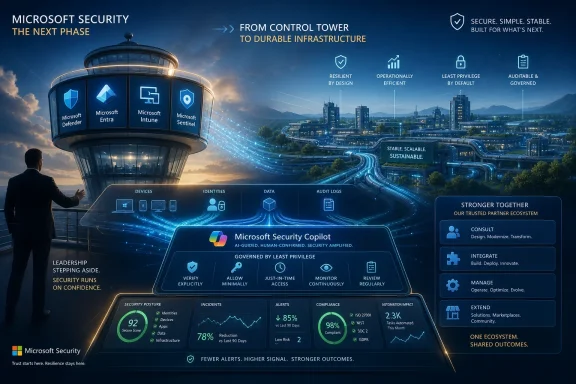 Jakkal’s Exit Is a Business Story Disguised as a Personnel Move
Executive departures at Microsoft are easy to overread because the company is large enough to absorb almost any single exit. That is the safe interpretation here, and it may even be the correct operational one. But Jakkal’s departure is still notable because her role sat at the intersection of product, marketing, partner strategy, and customer trust — the place where Microsoft’s sprawling security portfolio became a sellable story.Jakkal did not merely run a product group in the narrow engineering sense. Her remit, as described in public professional materials and by CRN’s reporting, included end-to-end business strategy, go-to-market execution, positioning, packaging, analyst engagement, media relations, demand generation, channel engagement, and work with engineering on product direction. In other words, she helped turn Microsoft Security from a basket of tools into a commercial category.
That distinction matters. Microsoft does not sell security the way a pure-play cybersecurity vendor does. It sells security as a gravitational field around Windows, Microsoft 365, Azure, Entra, Intune, Defender, Sentinel, Purview, and Copilot. The argument is that customers already living inside Microsoft’s cloud and productivity stack should let Microsoft reduce complexity by securing the estate from the inside.
Jakkal was one of the public faces of that argument. Her LinkedIn farewell framed the decision as one made with “gratitude, joy, fullness and optimism,” and she did not announce a next role. That makes this less of a dramatic rupture than a transition — but transitions can still reveal where the pressure points are.
Microsoft Security Has Outgrown the Founder-Messenger Phase
The most important sentence in the CRN report is not the sentimental farewell quote. It is the claim that Jakkal helped build a $20 billion Microsoft Security business. At that scale, Microsoft Security is no longer an adjacent motion inside enterprise software; it is one of the most consequential cybersecurity businesses in the world.That growth changes what leadership means. The first phase of Microsoft’s modern security push required persuasion: convincing customers that the same vendor whose products were constantly targeted could also be a primary defender. The next phase requires proof: fewer incidents, faster response, cleaner product boundaries, better defaults, and measurable resilience across a customer base that includes governments, hospitals, schools, banks, manufacturers, and small businesses.
Microsoft’s strength in security has always been distribution. Defender can ride along with Windows. Entra can inherit identity gravity from Azure Active Directory. Intune can become the management layer for organizations already standardizing on Microsoft 365. Sentinel and Purview can be packaged into broader cloud commitments. Copilot can then be framed as the intelligent assistant that makes the whole stack more usable.
But distribution is not the same as trust. In security, distribution gives Microsoft reach; trust determines whether CISOs and administrators sleep better after turning the knobs on. That is the strategic gap Microsoft must keep closing as leadership changes.
Jakkal’s tenure coincided with the period in which Microsoft successfully made security a boardroom business rather than a set of admin-center checkboxes. The challenge for her successors and peers is less glamorous: make the platform consistently worthy of the promises.
The Channel Heard Microsoft’s Security Pitch Because It Solved a Real Problem
For Microsoft partners, the security business has not been abstract. It has become one of the clearest ways to turn licensing, migration, compliance, endpoint management, and incident response into repeatable services. The CRN piece rightly emphasizes the channel-facing nature of Jakkal’s role because Microsoft Security’s growth depends heavily on partners who translate Redmond’s packaging into customer reality.The customer problem is obvious to anyone managing endpoints in 2026. Work machines leave the office, home networks become part of the attack surface, personal accounts coexist with corporate data, and cyber insurance questionnaires increasingly force customers to document controls they used to hand-wave. The perimeter did not disappear; it became too fragmented to manage with yesterday’s assumptions.
That is where Microsoft’s pitch has power. A small or midsize organization may not want six security vendors, three consoles, two identity providers, a separate endpoint management system, and an integration project that never ends. Microsoft can say: you already own much of this; consolidate, configure, monitor, and improve.
The danger is that consolidation can become complacency. A partner selling Microsoft Security responsibly has to do more than activate licenses. It has to harden endpoints, enforce identity controls, monitor risky sign-ins, separate personal and corporate use, apply conditional access, review device compliance, and keep explaining why convenience and security are now the same conversation.
That is why a leadership departure in Microsoft’s security go-to-market world matters to the channel. Partners do not only need product roadmaps. They need narrative consistency, packaging clarity, and confidence that Microsoft will keep investing in the hard operational bits that make security offerings defensible after the sale.
The Gallot-Bell Shuffle Put Security Under a Harsher Light Before Jakkal Left
Jakkal’s announcement does not arrive in isolation. Earlier in 2026, Microsoft brought Hayete Gallot back from Google Cloud to become executive vice president of security, replacing Charlie Bell, who moved into a role focused on engineering quality. That move already signaled that Microsoft was rebalancing its security leadership around execution, quality, and AI-era risk.Bell’s tenure was important because he came from Amazon Web Services with the credibility of someone who understood large-scale infrastructure and operational discipline. But Microsoft’s security narrative during the Bell years also had to contend with serious breaches and public criticism, including incidents that affected government customers. The company responded by elevating security as a top priority and pushing the Secure Future Initiative as a cultural and engineering reset.
Gallot’s return made sense as a Microsoft move: bring back a leader who knows the company’s commercial machinery and can connect security to customer value. But it also sharpened the accountability structure. With Gallot owning security and Bell focused on engineering quality, Nadella effectively put two related problems into direct executive channels: the security of Microsoft’s products and the quality of how those products are built.
Jakkal’s departure now removes a prominent business-side leader from that evolving structure. It does not mean Microsoft is retreating. If anything, it suggests the opposite: Microsoft Security has matured into an organization where the next phase will be less personality-driven and more systems-driven.
That can be healthy. Security businesses cannot depend on a single evangelist, however effective. They need repeatable product discipline, field enablement, partner incentives, threat intelligence, and customer support that can survive fiscal-year reorgs and executive reshuffles.
Microsoft’s Security Paradox Remains Its Biggest Asset and Its Biggest Liability
Microsoft’s paradox is simple: it is both the defender and the terrain being defended. Attackers target Microsoft identity systems, email platforms, cloud services, collaboration tools, endpoint software, and developer infrastructure because those systems are everywhere. Microsoft can see a huge amount of signal precisely because it sits at the center of enterprise computing, but that same centrality makes every weakness more consequential.For customers, this creates a difficult calculation. Buying more security from Microsoft may reduce complexity and improve integration. It may also deepen dependence on the same vendor whose ecosystem already shapes the organization’s risk profile. That is not a theoretical procurement concern; it is the central strategic tension in Microsoft Security.
The company’s answer has been to argue scale. Microsoft can process signals across enormous telemetry pools, ship protections into products customers already use, and respond to threats across identity, endpoint, cloud, email, and data. In an era of AI-generated phishing, token theft, session hijacking, software supply chain attacks, and agentic automation, that breadth is genuinely valuable.
The counterargument is that breadth can blur accountability. When Microsoft Defender flags something, Entra policy blocks something else, Purview labels data, Intune enforces compliance, and Sentinel collects the evidence, an administrator still has to understand what happened and what to do next. Integration is only useful if it reduces cognitive load rather than moving it to a different screen.
This is where leadership and messaging intersect with product reality. Jakkal’s work helped Microsoft explain why a unified security platform matters. The next test is whether customers experience that unity as operational clarity instead of licensing architecture.
Copilot Raises the Stakes for Every Security Promise
The timing matters for another reason: Microsoft’s fiscal 2027 begins with Copilot no longer treated as an experiment bolted onto existing products. Microsoft has been reorganizing around AI across commercial and consumer experiences, and security is now inseparable from that strategy. The more Copilot becomes an interface to enterprise knowledge, the more identity, permissions, data governance, endpoint posture, and auditability become existential concerns.AI does not create the need for access control, but it makes weak access control more expensive. A poorly governed SharePoint site used to be a lurking risk. A poorly governed SharePoint site queried by an AI assistant becomes a retrieval problem with a user-friendly front end. The same goes for overshared Teams content, stale groups, excessive admin privileges, unmanaged devices, and legacy authentication assumptions that somehow survive every modernization campaign.
This is why Microsoft’s security story cannot be separated from its AI story. Copilot adoption depends on trust that the assistant will respect permissions, surface the right information to the right people, and avoid turning years of messy enterprise data practices into instant exposure. That trust rests on the plumbing Jakkal’s organization helped sell: identity, compliance, endpoint management, information protection, and security operations.
The phrase agentic AI can sound like conference fog, but the practical version is plain enough. Software will increasingly take actions on behalf of users. If those actions are governed by weak identity, poor logging, excessive privilege, or confused data boundaries, organizations will automate their own mistakes faster.
Microsoft understands this, which is why security keeps appearing as a precondition for AI transformation. The question is not whether Microsoft can say the right things. It is whether the company can make secure defaults, least privilege, data hygiene, and administrative visibility feel like the normal path rather than the advanced path.
Partners Will Judge the Transition by Packaging, Margins, and Support
The WindowsForum audience knows that the difference between a good security strategy and a bad one often appears at 2:00 a.m., not in a keynote. Partners and administrators will judge Microsoft’s post-Jakkal security organization by the mundane things: whether licensing is understandable, whether documentation matches the portal, whether support escalations move, whether alerts are actionable, and whether new features arrive without breaking the workflows customers finally learned.Microsoft has a long-standing tendency to rename, repackage, and re-bundle faster than many customers can absorb. In security, that habit is especially risky. A confused buyer may delay deployment. A confused administrator may misconfigure a control. A confused partner may undersell the work required to implement the product responsibly.
Jakkal’s role was important because go-to-market discipline can reduce that confusion. Strong product marketing is not just gloss; in enterprise security, it is part of operational adoption. If customers cannot understand what they bought, what overlaps, what replaces what, and what must be configured first, the technology’s theoretical protection does not matter.
The partner opportunity remains large. Microsoft’s reported base of more than 15,000 security ecosystem partners gives it an enormous route to market, and its broader partner ecosystem gives it reach that few security companies can match. But a large channel also magnifies inconsistency. Some partners will build rigorous managed security practices; others will treat security as a licensing attachment.
That is the next leadership challenge. Microsoft must make the responsible path the easier path for partners, not merely the more virtuous one.
Windows Administrators Are the Ones Who Live With the Strategy
For Windows administrators, the significance of Jakkal’s departure is not celebrity gossip. It is whether Microsoft’s security stack continues moving toward practical coherence. The endpoint remains one of the places where Microsoft’s grand strategy touches daily work most directly.Defender, Intune, Entra, Windows security baselines, application control, BitLocker, update compliance, device inventory, and privileged access controls all promise a more manageable estate. But administrators know that promise depends on careful sequencing. Turn on the wrong policy too quickly and users revolt. Leave the wrong exception in place and attackers inherit it. Buy the license without doing the configuration and the dashboard becomes theater.
The hybrid work era has made this harder. Devices move across networks. Users mix personal and work behavior. Browser sessions persist. SaaS apps multiply. Contractors and guests require access. Local admin rights linger because someone is afraid to break a line-of-business app. Every one of those compromises becomes part of the security posture.
Microsoft’s advantage is that it can influence many of those layers at once. Its disadvantage is that customers often expect it to make the complexity disappear. It cannot. The best it can do is compress complexity into better defaults, clearer policies, sharper alerts, and automation that helps rather than surprises.
That is the practical lens through which the leadership change should be read. Jakkal helped sell the integrated future. Administrators need Microsoft to keep making that future less brittle.
The Security Business Is Now Too Big to Behave Like a Campaign
A $20 billion security business cannot operate like a campaign, even a successful one. Campaigns have slogans, launches, analyst decks, and hero executives. Platforms have maintenance windows, migration guides, incident playbooks, backward compatibility problems, and unhappy customers whose edge cases are not edge cases to them.Microsoft is moving from the first posture to the second. That does not mean marketing becomes unimportant; it means marketing must be tethered more tightly to delivery. If Microsoft says security is its number one priority, customers will increasingly ask where that priority shows up when a feature conflicts with hardening, when a release deadline conflicts with quality, or when a support ticket exposes an architectural ambiguity.
The Secure Future Initiative is part of that answer, but initiatives only matter if they change incentives. A company as large as Microsoft can declare a priority while still having teams rewarded for shipping, adoption, and revenue. The hard work is aligning those incentives so security and quality are not ceremonial gates at the end of development.
Gallot’s security leadership and Bell’s engineering-quality role suggest Microsoft knows the problem is structural. Jakkal’s departure, then, becomes a marker between eras. The era of establishing Microsoft Security as a global business is giving way to the era of proving that the business can make Microsoft’s own ecosystem safer at scale.
That is a higher bar. It is also the bar Microsoft invited by becoming so central to enterprise defense.
The Fiscal 2027 Test Is Whether Microsoft Can Make Trust Boring
The best outcome for Microsoft in fiscal 2027 would be remarkably dull: fewer embarrassing incidents, clearer admin experiences, stronger partner execution, better default security, and AI features that do not repeatedly force customers to rediscover their own data-governance failures. Trust in enterprise software is rarely built by a single breakthrough. It is built by uneventful quarters.That may be difficult for a company currently reorganizing around Copilot and racing to define the AI productivity market. AI rewards speed, spectacle, and expansive demos. Security rewards restraint, proof, and operational humility. Microsoft has to do both at once, and the tension will shape how customers interpret every leadership change.
Jakkal’s public note was gracious and optimistic, and there is no reason to treat it as anything other than a voluntary farewell unless more information emerges. Still, executive timing carries meaning. Leaving as Microsoft enters a new fiscal year, after a broader security leadership reshuffle, makes her exit part of a larger transition from growth narrative to execution burden.
For the channel, this is a moment to watch whether Microsoft simplifies or complicates the security sale. For customers, it is a moment to reassess whether Microsoft’s stack is configured deeply enough to justify the trust placed in it. For competitors, it is a reminder that Microsoft’s size is formidable but not invulnerable.
The Microsoft Security Era Jakkal Helped Build Now Has to Prove It Can Run Without Her
The concrete readout is not that Microsoft Security is in trouble. It is that the business has become too important for any one departure to be dismissed as routine.- Vasu Jakkal announced on June 30, 2026, that she is leaving Microsoft after about six years helping build and promote Microsoft Security.
- Her role mattered because it connected strategy, packaging, partner engagement, customer messaging, and product direction across a security business described as roughly $20 billion in scale.
- Her exit follows Microsoft’s earlier 2026 security leadership reshuffle, in which Hayete Gallot returned to lead security and Charlie Bell moved into an engineering-quality role.
- Microsoft’s next challenge is not convincing customers that security is a growth business; it is proving that the company can deliver safer products, clearer controls, and more reliable operations at global scale.
- Partners and Windows administrators should watch for practical signals: licensing clarity, support quality, secure defaults, Copilot governance, endpoint-management improvements, and fewer portal-driven surprises.
References
- Primary source: crn.com
Published: 2026-06-30T21:50:13.783434
Microsoft’s Vasu Jakkal Reveals Security Leadership Role Departure
Vasu Jakkal exits Microsoft, leaving its fast-growing security unit and vast partner ecosystem as the AI and cloud vendor enters FY2027.www.crn.com - Related coverage: bloomberg.com
- Related coverage: linkedin.com
- Related coverage: windowscentral.com
Hayete Gallot returns to Microsoft as its new security chief | Windows Central
Charlie Bell is leaving the role to focus on engineering quality as an individual contributor, while Gallot takes over.www.windowscentral.com - Related coverage: boursorama.com
Microsoft réorganise sa direction cybersécurité, Hayete Gallot remplace Charlie Bell - 04/02/2026 à 18:54 - Boursorama
Microsoft a annoncé mercredi un remaniement à la tête de sa division cybersécurité. Hayete Gallot fait son retour au sein du groupe pour succéder à Charlie Bell, qui occupait cette fonction depuis 202... - 04/02/2026 à 18:54 - Boursorama www.boursorama.com
- Related coverage: techrepublic.com
Microsoft Overhauls Security Leadership as AI Expands Enterprise Attack Surface
Microsoft brings back Hayete Gallot to lead Security while Charlie Bell moves to an engineering quality mandate, both reporting to CEO Satya Nadella.www.techrepublic.com
- Related coverage: crn.de
Hayete Gallot wechselt von Google Cloud zurück zu Microsoft
Weniger als ein Jahr nach ihrer Berufung zur Verantwortlichen für die Customer Experience verlässt Hayete Gallot Google Cloud schon wieder und geht zurück zu Microsoft. Dort ersetzt sie Charlie Bell als Executive Vice President für Sicherheit.www.crn.de - Related coverage: it.investing.com
Il capo della sicurezza di Microsoft Bell passa a nuovo ruolo, Gallot subentra Da Investing.com
Il capo della sicurezza di Microsoft Bell passa a nuovo ruolo, Gallot subentrait.investing.com - Related coverage: rcpmag.com
Nadella announces changes to Microsoft Team Focusing on Security and Quality -- Redmond Channel Partner
Leadership changes signal Microsoft’s renewed focus on security governance and product reliability amid expanding AI and cloud services.rcpmag.com - Related coverage: m.fr.investing.com
- Related coverage: thurrott.com
Microsoft Announces New Security and Engineering Quality Roles - Thurrott.com
Microsoft CEO Satya Nadella announced that his company is creating two new Executive Vice President roles, for Security and Quality.www.thurrott.com - Related coverage: notebookcheck.com
Wechsel bei Microsoft: Qualität und Sicherheit rücken in den Fokus - Notebookcheck News
Microsoft-CEO Satya Nadella hat strukturelle Änderungen in den Kernbereichen Sicherheit und Engineering-Qualität angekündigt. Mit der Rückkehr von Hayete Gallot als neue Sicherheitschefin und der Neuausrichtung von Charlie Bell reagiert das Unternehmen auf die wachsenden Anforderungen an die... www.notebookcheck.com
- Related coverage: s21.q4cdn.com
- Related coverage: tbs.tech
- Official source: info.microsoft.com
- Related coverage: edgile.com
WiproSecurity_cover_v02-alt01 copy
Abstract futuristic - technology with polygonal shapes on dark blue background. Design digital technology concept.edgile.com
- Official source: techcommunity.microsoft.com
