

Microsoft is moving deeper into the age of autonomous AI, and the latest reports suggest it wants to do so with a more tightly controlled, enterprise-grade alternative to the open agent model that has captured so much attention across the industry. The idea is simple but consequential: instead of just offering Copilot as a reactive assistant, Microsoft appears to be working toward proactive agents that can act on behalf of users, enforce permissions, and operate with stronger security boundaries. If that sounds like a small product evolution, it is not. It would mark a broader shift in how Microsoft packages AI for business customers, especially as rivals push harder into agentic workflows and enterprise automation.
For much of the past two years, Microsoft’s AI story has centered on Copilot: a layer of assistance embedded across Microsoft 365, Windows, security products, and developer tools. That strategy gave the company a fast route to market because it could attach AI to software already used by hundreds of millions of people. But the market has already begun moving past simple chat and summarization. Businesses now want AI that can plan, execute, and monitor multi-step work, not just answer a prompt. Microsoft has spent the last several release cycles laying the groundwork for exactly that shift.
The most important backdrop is Microsoft’s growing emphasis on agents. In late 2024, the company publicly introduced autonomous agents for sales, service, finance, supply chain, and IT workflows, and it has since expanded that vision into security and identity management. Microsoft’s own security team has described agentic AI as something that must be observed, governed, and secured at scale, not treated like a novelty feature. That framing matters because it shows Microsoft sees agents less as a consumer gimmick and more as the next control plane for enterprise productivity and security
What makes the new reporting interesting is not merely that Microsoft wants agents. It is that the company reportedly wants a version that is safer and more tightly integrated than open alternatives. That is a natural Microsoft response. The company has historically won enterprise trust by folding new capabilities into its ecosystem, managing identity and compliance centrally, and making IT teams comfortable enough to deploy widely. In an AI world filled with third-party agents and loosely governed tools, Microsoft’s pitch is increasingly that trust is the product, not just the model.
There is also a commercial reason for this timing. Microsoft has been publicly highlighting the scale-up of Copilot adoption. In February 2026, Microsoft said paid Microsoft 365 Copilot seat adds were up 160% year over year, while daily active users were up 10x year over year. That is meaningful momentum, but it still leaves Microsoft far behind ChatGPT in consumer mindshare and usage habits. In enterprise software, though, raw engagement is only one part of the game. The larger question is whether Microsoft can turn Copilot into the operating layer for AI work across organizations before competitors set the standard elsewhere
Microsoft has already laid the foundation in several product lines. Copilot Studio gives organizations a way to create custom agents and automate tasks. Microsoft 365 now includes more proactive agent capabilities, and Dynamics 365 has long supported process automation. In other words, the company is not starting from zero; it is stitching together an emerging platform stack. The current rumor simply suggests Microsoft wants a more unified and more security-centric version of that stack, especially for enterprise customers.
A practical agent platform also aligns with Microsoft’s broader product design philosophy. The company rarely tries to be only the best model provider. Instead, it prefers to become the place where work happens, identities are managed, permissions are enforced, and data is governed. If an AI agent is going to act on behalf of a worker, Microsoft wants that action to happen inside a system the company can observe and secure.
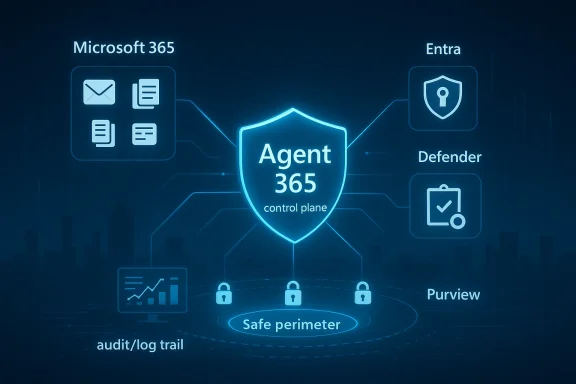
Microsoft’s recent security announcements make that posture explicit. The company said Agent 365 acts as a control plane for agents, giving IT and security teams visibility and tools to secure and govern AI at scale. Microsoft also tied Agent 365 to expanded Defender, Entra, and Purview capabilities, emphasizing the need to prevent oversharing, secure identities, and defend against emerging threats. That matters because a truly autonomous agent is not just a productivity feature; it is a new identity in the enterprise ecosystem
That is also why Microsoft’s own messaging around data oversharing and compliance is important. In practice, many organizations fear that an autonomous tool may surface confidential information, exceed the scope of a user’s privileges, or create an irreversible action trail that is hard to unwind. Microsoft is betting that a tightly managed platform can calm those fears better than a more open agent framework.
Microsoft has already tested the waters with a steady stream of product announcements. In 2024, the company introduced new Copilot actions, agents, and admin tools for IT teams. It also said organizations could govern which users can access Copilot and agents, and it highlighted visibility into agent status and lifecycle management. This indicates Microsoft has been preparing the governance story alongside the product story, which is exactly what enterprise software buyers expect
For Microsoft, the challenge is to make the transition feel incremental, not disruptive. If the company can embed agents inside familiar Microsoft 365 workflows, adoption may feel less like replacing workers and more like augmenting them. That framing is essential to winning enterprise buy-in, especially in sectors where automation still triggers labor concerns.
That is why the recently announced Microsoft 365 E7: The Frontier Suite is so important. Microsoft says the bundle combines Microsoft 365 E5, Microsoft 365 Copilot, Agent 365, and related security capabilities into a single offering priced at $99 per user. Microsoft has framed the suite as a simpler way for organizations to deploy enterprise AI at scale while maintaining the security posture they already rely on
It also suggests Microsoft knows some customers want a single vendor answer for the messier parts of agent management. They do not want to assemble identity, observability, policy, and AI orchestration from multiple providers. They want a trusted stack that behaves predictably under audit.
The company also has to contend with the reality that ChatGPT remains the dominant public-facing AI brand. Even as Microsoft reports dramatic growth in Copilot usage, the broader market still treats ChatGPT as the default starting point for AI experimentation. That matters because product habit often begins in consumer usage and then migrates to work. Microsoft needs its enterprise pitch to be strong enough that organizations choose governance over novelty
That creates an opening for Microsoft. If it can make agent deployment feel like a managed extension of Microsoft 365 rather than a risky experiment, it can win accounts that might otherwise default to a more open ecosystem. In this sense, security is not the opposite of innovation; it is the mechanism that turns innovation into procurement.
This is the difference between a general-purpose autonomous assistant and an enterprise agent platform. One tries to do everything. The other tries to solve a limited class of work problems extremely well. Microsoft’s DNA strongly favors the latter. The company is more likely to ship a suite of tightly scoped agents than a free-roaming digital employee.
That approach also makes it easier to control permissions. If an accounting agent can only access certain finance systems and cannot touch unrelated records, the risk profile becomes more manageable. This is where Microsoft’s identity stack becomes a major commercial asset rather than a background feature.
The consumer limitation is that Microsoft’s ecosystem is still strongest where organizations already pay for it. On the consumer side, AI preference is more fluid and brand-driven. People often jump between tools based on convenience, model quality, or social momentum. Microsoft can compete there, but the company’s true advantage lies in the business software stack.
That is why Microsoft may keep the most aggressive agent capabilities behind business controls first. Enterprise users often tolerate more administration in exchange for reliability and compliance, while consumer users demand simplicity and speed. Microsoft will likely calibrate the product accordingly.
That matters because enterprise buyers often want evidence of real operational use before adopting a new category. Microsoft can point to its own adoption as proof that agents are not just demos. The company can also use its internal telemetry to refine governance, controls, and user experience before scaling to customers.
There is, of course, a strategic upside as well. Internal adoption creates credibility. When Microsoft says agents are not theory but operational reality, that statement carries weight in procurement conversations. It also helps the company argue that its platform is mature enough to handle mission-critical work.
The strengths are not just technical. They are structural, commercial, and organizational. Microsoft already owns much of the enterprise stack, which makes an agent platform far more defensible than a standalone AI app.
There is also the risk of fragmentation. If Microsoft’s agent story becomes too dependent on separate SKUs, controls, and security layers, customers may struggle to understand what they are buying. Complexity has always been one of Microsoft’s biggest strengths and biggest vulnerabilities at the same time.
If that thesis proves correct, the company’s secure-agent approach could become one of the most important enterprise software moves of the decade. The race is no longer just about who has the smartest model. It is about who can turn AI into an auditable part of everyday work.
Source: TechRadar Microsoft wants to build its own, more secure version of OpenClaw for Copilot
 Overview
For much of the past two years, Microsoft’s AI story has centered on Copilot: a layer of assistance embedded across Microsoft 365, Windows, security products, and developer tools. That strategy gave the company a fast route to market because it could attach AI to software already used by hundreds of millions of people. But the market has already begun moving past simple chat and summarization. Businesses now want AI that can plan, execute, and monitor multi-step work, not just answer a prompt. Microsoft has spent the last several release cycles laying the groundwork for exactly that shift.The most important backdrop is Microsoft’s growing emphasis on agents. In late 2024, the company publicly introduced autonomous agents for sales, service, finance, supply chain, and IT workflows, and it has since expanded that vision into security and identity management. Microsoft’s own security team has described agentic AI as something that must be observed, governed, and secured at scale, not treated like a novelty feature. That framing matters because it shows Microsoft sees agents less as a consumer gimmick and more as the next control plane for enterprise productivity and security
What makes the new reporting interesting is not merely that Microsoft wants agents. It is that the company reportedly wants a version that is safer and more tightly integrated than open alternatives. That is a natural Microsoft response. The company has historically won enterprise trust by folding new capabilities into its ecosystem, managing identity and compliance centrally, and making IT teams comfortable enough to deploy widely. In an AI world filled with third-party agents and loosely governed tools, Microsoft’s pitch is increasingly that trust is the product, not just the model.
There is also a commercial reason for this timing. Microsoft has been publicly highlighting the scale-up of Copilot adoption. In February 2026, Microsoft said paid Microsoft 365 Copilot seat adds were up 160% year over year, while daily active users were up 10x year over year. That is meaningful momentum, but it still leaves Microsoft far behind ChatGPT in consumer mindshare and usage habits. In enterprise software, though, raw engagement is only one part of the game. The larger question is whether Microsoft can turn Copilot into the operating layer for AI work across organizations before competitors set the standard elsewhere
Why Microsoft Is Chasing Agentic AI
The shift from chat assistants to autonomous agents is the most important change in enterprise AI since the launch of large language model copilots. A conversational assistant waits for a user to ask a question. An agent can observe conditions, initiate steps, consult policy, and complete work across systems. That makes the technology more valuable, but it also makes it more dangerous if permissions, logging, and oversight are weak. Microsoft’s interest in building a “safer” version of this category reflects that tension.Microsoft has already laid the foundation in several product lines. Copilot Studio gives organizations a way to create custom agents and automate tasks. Microsoft 365 now includes more proactive agent capabilities, and Dynamics 365 has long supported process automation. In other words, the company is not starting from zero; it is stitching together an emerging platform stack. The current rumor simply suggests Microsoft wants a more unified and more security-centric version of that stack, especially for enterprise customers.
From Prompting to Delegation
This is where the economics change. Prompting is cheap, but it is also limited. Delegation can save real labor time if the agent can reliably handle repetitive work such as triaging requests, drafting responses, updating records, or monitoring policy drift. That is why Microsoft keeps emphasizing workflow integration rather than standalone chat. The company knows the commercial value comes when AI becomes part of the job, not just part of the interface.A practical agent platform also aligns with Microsoft’s broader product design philosophy. The company rarely tries to be only the best model provider. Instead, it prefers to become the place where work happens, identities are managed, permissions are enforced, and data is governed. If an AI agent is going to act on behalf of a worker, Microsoft wants that action to happen inside a system the company can observe and secure.
- Agents are more useful than chat when work is repetitive and structured.
- The same autonomy that creates value also increases security exposure.
- Microsoft’s advantage lies in identity, governance, and enterprise integration.
- A tightly controlled platform is easier to sell to CIOs than a loose ecosystem.
The Security Angle Matters More Than the Branding
The phrase “more secure version” is not marketing fluff. It reflects a real enterprise pain point: organizations want AI that can act, but they do not want AI that can wander. In Microsoft’s world, security by design is becoming the differentiator. The company has repeatedly argued that agentic AI must be governed with the same seriousness as human employees, including access controls, monitoring, lifecycle management, and data-loss protection.Microsoft’s recent security announcements make that posture explicit. The company said Agent 365 acts as a control plane for agents, giving IT and security teams visibility and tools to secure and govern AI at scale. Microsoft also tied Agent 365 to expanded Defender, Entra, and Purview capabilities, emphasizing the need to prevent oversharing, secure identities, and defend against emerging threats. That matters because a truly autonomous agent is not just a productivity feature; it is a new identity in the enterprise ecosystem
Why Security Is the Product
Enterprises do not buy AI in a vacuum. They buy it through procurement, compliance review, and security architecture. A “safer” OpenClaw-like alternative would therefore be valuable not because it sounds futuristic, but because it could reduce the friction of legal, regulatory, and IT approval. If Microsoft can make agents easy to audit and constrain, it can sell more AI seats without forcing customers to invent their own governance layer.That is also why Microsoft’s own messaging around data oversharing and compliance is important. In practice, many organizations fear that an autonomous tool may surface confidential information, exceed the scope of a user’s privileges, or create an irreversible action trail that is hard to unwind. Microsoft is betting that a tightly managed platform can calm those fears better than a more open agent framework.
- Security controls can accelerate adoption by reducing organizational resistance.
- Identity and permissions are central to any serious agent platform.
- Auditability will likely matter as much as model quality.
- “Safer” in enterprise AI usually means more governance, not slower innovation.
Copilot Today Versus Copilot Tomorrow
Today’s Copilot is still largely a reactive assistant. You ask, Copilot answers. It can summarize, draft, search, and help with tasks, but the user remains the primary operator. The rumored next phase would move toward an environment where Copilot can behave more like a co-worker or an automated agent, especially in repeated business processes. That is a substantial design shift, and it would likely require different permissions, user interfaces, and control policies.Microsoft has already tested the waters with a steady stream of product announcements. In 2024, the company introduced new Copilot actions, agents, and admin tools for IT teams. It also said organizations could govern which users can access Copilot and agents, and it highlighted visibility into agent status and lifecycle management. This indicates Microsoft has been preparing the governance story alongside the product story, which is exactly what enterprise software buyers expect
Reactive Tools Versus Proactive Systems
The difference between a reactive tool and a proactive system is operational trust. A reactive assistant can be limited to suggestions. A proactive agent can create, update, schedule, route, or even approve work depending on the rules it is given. That makes it potentially transformative for office labor, but it also introduces a new failure mode: the machine may do something correct in isolation and still do the wrong thing in context.For Microsoft, the challenge is to make the transition feel incremental, not disruptive. If the company can embed agents inside familiar Microsoft 365 workflows, adoption may feel less like replacing workers and more like augmenting them. That framing is essential to winning enterprise buy-in, especially in sectors where automation still triggers labor concerns.
- Reactive AI assists the user.
- Proactive AI completes steps for the user.
- The more proactive the system, the more governance it needs.
- Familiar interfaces can reduce resistance to automation.
Enterprise Demand Is the Real Battleground
Although consumer attention often goes to ChatGPT, Microsoft’s biggest strategic prize is enterprise deployment. The company’s advantage is that it already sits in the middle of office identity, documents, email, meetings, compliance, and endpoint management. If it can turn that installed base into an agent platform, it can create a much stickier AI subscription model than a standalone chatbot can offer.That is why the recently announced Microsoft 365 E7: The Frontier Suite is so important. Microsoft says the bundle combines Microsoft 365 E5, Microsoft 365 Copilot, Agent 365, and related security capabilities into a single offering priced at $99 per user. Microsoft has framed the suite as a simpler way for organizations to deploy enterprise AI at scale while maintaining the security posture they already rely on
A New Packaging Strategy
This packaging strategy signals that Microsoft sees AI as a suite-level transformation, not a bolt-on feature. By rolling Copilot and Agent 365 into a broader productivity-and-security bundle, Microsoft can justify premium pricing while also making procurement easier for large customers. For many enterprises, simplification is a feature.It also suggests Microsoft knows some customers want a single vendor answer for the messier parts of agent management. They do not want to assemble identity, observability, policy, and AI orchestration from multiple providers. They want a trusted stack that behaves predictably under audit.
- Bundle pricing can reduce buying friction.
- Microsoft’s installed base gives it a distribution advantage.
- Enterprise buyers often prefer a single accountability chain.
- AI governance is becoming part of the licensing discussion.
The Competition Microsoft Cannot Ignore
If Microsoft is building a more secure OpenClaw-like platform, it is doing so in a competitive environment where no player can assume the lead is permanent. Open frameworks and agent ecosystems are attractive because they promise flexibility, interoperability, and developer control. Large cloud providers and AI startups alike are pushing into multi-agent coordination, tool use, and autonomous workflows. Microsoft’s answer is likely to be less open but more enterprise-friendly.The company also has to contend with the reality that ChatGPT remains the dominant public-facing AI brand. Even as Microsoft reports dramatic growth in Copilot usage, the broader market still treats ChatGPT as the default starting point for AI experimentation. That matters because product habit often begins in consumer usage and then migrates to work. Microsoft needs its enterprise pitch to be strong enough that organizations choose governance over novelty
Why “Safer” Could Be a Moat
A safer platform can become a moat if it becomes the easiest way for companies to approve AI at scale. In a regulated or security-conscious industry, the best technology is not always the most open one. It is the one that legal, risk, and security teams will sign off on without months of negotiation.That creates an opening for Microsoft. If it can make agent deployment feel like a managed extension of Microsoft 365 rather than a risky experiment, it can win accounts that might otherwise default to a more open ecosystem. In this sense, security is not the opposite of innovation; it is the mechanism that turns innovation into procurement.
- Open ecosystems may win developers.
- Controlled ecosystems may win enterprises.
- Trust and compliance can be a competitive differentiator.
- Microsoft’s strongest advantage is not raw model hype but distribution.
What the New Agent Model Could Look Like
The reporting suggests Microsoft is exploring role-specific agents that could serve areas such as sales, marketing, accounting, and support. That would follow Microsoft’s current pattern of building AI around business functions rather than generalized autonomy. In practice, the company is likely to focus on agent templates that are easier to define, easier to control, and easier to measure.This is the difference between a general-purpose autonomous assistant and an enterprise agent platform. One tries to do everything. The other tries to solve a limited class of work problems extremely well. Microsoft’s DNA strongly favors the latter. The company is more likely to ship a suite of tightly scoped agents than a free-roaming digital employee.
Role-Based Automation
Role-based agents are attractive because they map to existing organizational structures. Sales teams want lead summaries and outreach support. Accounting teams want invoice triage and exception handling. HR teams want policy answers and onboarding workflows. By designing agents around these lanes, Microsoft can minimize ambiguity and optimize for measurable value.That approach also makes it easier to control permissions. If an accounting agent can only access certain finance systems and cannot touch unrelated records, the risk profile becomes more manageable. This is where Microsoft’s identity stack becomes a major commercial asset rather than a background feature.
- Sales, finance, HR, and service are natural starting points.
- Scoped agents are easier to audit than generic ones.
- Role-based design matches how enterprises already budget and govern work.
- Permissions can be narrower and safer when use cases are specific.
Consumer Impact Will Be Real, But Secondary
Consumers will likely feel any shift toward proactive AI through Microsoft’s everyday software surfaces, not through a dramatic standalone launch. A more capable Copilot could eventually help draft emails, prepare documents, organize calendars, and surface context before a user asks for it. But Microsoft’s clearest commercial emphasis remains the enterprise side, where it can charge more and justify more governance.The consumer limitation is that Microsoft’s ecosystem is still strongest where organizations already pay for it. On the consumer side, AI preference is more fluid and brand-driven. People often jump between tools based on convenience, model quality, or social momentum. Microsoft can compete there, but the company’s true advantage lies in the business software stack.
Adoption Will Depend on Familiarity
If Microsoft wants broader user acceptance, the new agent experience will need to feel helpful rather than intrusive. Proactive suggestions can be welcome, but autonomous actions can quickly become annoying or scary if they appear before the user trusts the system. The consumer lesson is clear: autonomy must be earned.That is why Microsoft may keep the most aggressive agent capabilities behind business controls first. Enterprise users often tolerate more administration in exchange for reliability and compliance, while consumer users demand simplicity and speed. Microsoft will likely calibrate the product accordingly.
- Consumers want convenience.
- Enterprises want control.
- Microsoft is better positioned to satisfy enterprises first.
- Broad adoption will depend on whether proactive behavior feels useful.
Microsoft’s Internal Momentum Supports the Strategy
Microsoft has been using its own products as a proving ground. The company has repeatedly described itself as “customer zero,” testing agentic capabilities internally before broadening them externally. In March 2026, Microsoft said it had visibility into more than 500,000 agents across the company and that its employees were already using agents for research, coding, sales intelligence, customer triage, and HR self-service. That kind of internal usage gives Microsoft a strong narrative: the platform is not speculative; it is already embedded in its own workflowsThat matters because enterprise buyers often want evidence of real operational use before adopting a new category. Microsoft can point to its own adoption as proof that agents are not just demos. The company can also use its internal telemetry to refine governance, controls, and user experience before scaling to customers.
Customer Zero as Strategy
The customer-zero approach is especially valuable in a category as uncertain as AI agents. Bugs, permission errors, and workflow friction are easier to discover inside a company like Microsoft than inside a bank, hospital, or government agency. By the time the product reaches customers, Microsoft wants the rough edges gone.There is, of course, a strategic upside as well. Internal adoption creates credibility. When Microsoft says agents are not theory but operational reality, that statement carries weight in procurement conversations. It also helps the company argue that its platform is mature enough to handle mission-critical work.
- Internal dogfooding reduces product risk.
- Real usage helps validate governance claims.
- Enterprise buyers trust evidence more than hype.
- Microsoft can turn internal adoption into sales proof.
Strengths and Opportunities
Microsoft’s biggest opportunity is to transform Copilot from a helpful assistant into a governed AI work layer that enterprises can trust. That would let the company widen its moat around Microsoft 365 while also extending value into security, identity, and workflow automation. If the execution is strong, the result could be a new premium tier of AI software that feels less experimental and more operational.The strengths are not just technical. They are structural, commercial, and organizational. Microsoft already owns much of the enterprise stack, which makes an agent platform far more defensible than a standalone AI app.
- Distribution advantage through Microsoft 365 and existing enterprise contracts.
- Identity control via Entra and adjacent security tooling.
- Governance credibility from Microsoft’s sustained focus on secure AI.
- Cross-sell potential across Copilot, Agent 365, and security products.
- Workflow depth in email, meetings, documents, CRM, and admin tools.
- Pricing power from suite bundling and premium packaging.
- Internal validation from Microsoft’s own “customer zero” deployment.
Risks and Concerns
The biggest risk is that Microsoft could overestimate how much autonomy customers actually want. In enterprise software, the promise of automation often collides with the reality of controls, exception handling, and legal review. A more secure platform helps, but if it becomes too constrained, customers may see it as just another admin layer rather than a meaningful productivity leap.There is also the risk of fragmentation. If Microsoft’s agent story becomes too dependent on separate SKUs, controls, and security layers, customers may struggle to understand what they are buying. Complexity has always been one of Microsoft’s biggest strengths and biggest vulnerabilities at the same time.
- Overly cautious design could blunt the value of autonomous agents.
- SKU complexity may confuse buyers and slow adoption.
- Permission errors could create trust issues if agents act incorrectly.
- Competitive pressure from open ecosystems may appeal to developers.
- Consumer indifference could limit brand momentum outside the enterprise.
- Integration debt may grow if agent capabilities are spread across too many products.
- Regulatory scrutiny may intensify as AI agents gain more authority.
Looking Ahead
The next phase of Microsoft’s AI strategy will likely be defined less by chatbot features and more by control planes, permissioning, and workflow ownership. That is a subtle shift in product language but a major shift in business strategy. Microsoft appears to believe the future of enterprise AI will belong to companies that can make autonomy feel routine, monitored, and safe.If that thesis proves correct, the company’s secure-agent approach could become one of the most important enterprise software moves of the decade. The race is no longer just about who has the smartest model. It is about who can turn AI into an auditable part of everyday work.
- Watch how Microsoft defines the boundary between Copilot and agents.
- Watch for new role-specific agents in finance, HR, sales, and support.
- Watch whether Agent 365 becomes the core governance layer for AI.
- Watch how pricing affects adoption of the Frontier Suite.
- Watch whether competitors respond with stronger enterprise governance.
- Watch for signs that Microsoft’s “safer” pitch resonates with regulated industries.
Source: TechRadar Microsoft wants to build its own, more secure version of OpenClaw for Copilot
