
 Midjourney Turns the Camera Back on Hollywood
The original lawsuit was built to be simple enough for a jury and damning enough for a press release. Disney and Universal sued Midjourney in June 2025, alleging that the company’s image-generation system could produce recognizable versions of protected characters and that its training and output practices amounted to infringement. Warner Bros. Discovery later joined the broader legal campaign, bringing its own complaints around characters such as Superman and Bugs Bunny.
That framing gave Hollywood the moral high ground: decades of creative labor on one side, a fast-scaling AI company on the other. The studios could say they were not anti-technology, only anti-piracy. Disney’s own legal leadership has previously described the company as optimistic about responsible AI while insisting that infringement does not become acceptable merely because software is doing it.
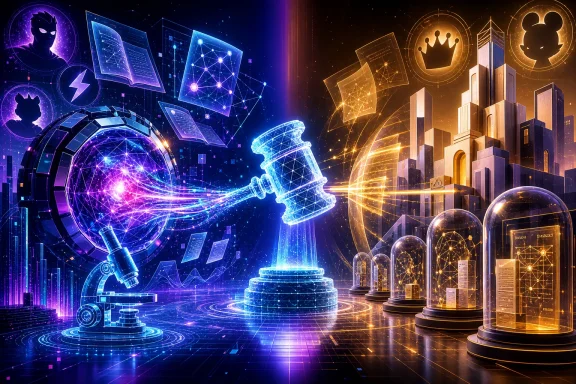
Midjourney’s discovery push is designed to complicate that story. According to TechCrunch, the company wants the studios to reveal how they use AI internally, including business plans, research reports and materials related to AI-generated content. Indulge Express reported that the request reaches into training datasets, model weights and board-level discussions of AI strategy.
That is a clever legal maneuver because it reframes the studio position from “AI company steals from artists” to “AI company is being sued by AI users with better lawyers.” Whether that reframing works in court is a different question. But as media strategy, it lands exactly where Hollywood is most vulnerable: the gap between public anxiety about AI and private investment in it.
The Lawsuit Was Always Bigger Than Character Knockoffs
The most vivid examples in the case are cartoonishly easy to understand. If a user can ask Midjourney for an image resembling Elsa, Darth Vader, a Minion or Superman, the public does not need a seminar in copyright doctrine to grasp why studios are angry. These are not obscure archival works; they are the crown jewels of modern franchise capitalism.
But the legal fight is not only about whether a single output looks too much like a familiar character. It is also about whether the training of a commercial AI system on copyrighted material can be justified as fair use, how much responsibility a platform bears for user prompts, and whether output filters are a legal necessity rather than a product choice. Those questions sit at the center of nearly every major generative AI copyright dispute.
The studios want the court to see Midjourney as a machine for extracting value from their libraries without permission. Midjourney wants the court to see its system as a general-purpose tool that learns visual concepts from large-scale data and produces new works based on user instructions. That familiar divide — theft versus transformation — is now the central fault line of the AI economy.
Hollywood’s involvement makes the fight unusually consequential. Book publishers, news organizations, record labels, artists and software developers have all challenged AI companies in different ways, but Disney, Universal and Warner bring a uniquely powerful mix of cultural recognition, legal resources and political influence. When they say a generated image of a famous character threatens the economics of creativity, judges and lawmakers listen.
That is why Midjourney’s discovery demand matters even if much of it never becomes public. The company is trying to establish that the studios are not outside the AI race, looking in with clean hands. They are participants, investors and likely experimenters — and Midjourney wants the legal record to reflect that.
“Unclean Hands” Is a Legal Defense With a Public-Relations Payload
Indulge Express highlighted Midjourney’s reliance on an unclean hands argument, a doctrine that asks whether a plaintiff’s own conduct should limit its ability to obtain equitable relief. In plain English, Midjourney is saying: if the studios are doing versions of what they accuse us of doing, the court should know.
That does not automatically mean the defense will succeed. A studio using licensed AI tools for internal concept art, marketing experiments or workflow automation is not necessarily the same thing as training a public image model that can reproduce protected characters. Courts tend to care about the specific conduct at issue, not broad accusations of hypocrisy.
Still, the defense has strategic value. It gives Midjourney a way to argue that Hollywood’s position is less principled than it appears. If studio executives have internal slide decks celebrating generative AI productivity, if their teams have tested image models on copyrighted materials, or if their business units are developing AI tools trained on large creative datasets, that evidence could make the plaintiffs’ rhetoric harder to sustain.
The move also places the studios in an awkward procedural posture. If they resist disclosure, they risk looking like they have something to hide. If they comply, they may reveal sensitive strategy, vendor relationships and internal debates about labor, licensing and automation.
That is why discovery fights often become proxy wars. They are not merely about gathering evidence; they are about forcing the other side to expose the assumptions beneath its public story. Midjourney does not need every document it seeks to win the case. It needs enough to make Hollywood’s clean-versus-dirty framing look incomplete.
Hollywood Wants AI, But on Hollywood’s Terms
The studios’ public line has been carefully calibrated. They are not saying AI should be banned from creative work. They are saying AI should respect ownership, licensing and control. That distinction is both reasonable and self-serving, which is exactly why the case is so revealing.
Hollywood has always been comfortable with technology when it can be incorporated into the studio system. Digital compositing, motion capture, virtual production, de-aging, synthetic extras, automated localization and recommendation algorithms have all become part of the entertainment business. Generative AI is different in speed and scope, but not in the basic corporate instinct to adopt tools that reduce cost, compress schedules or open new revenue streams.
The uncomfortable part is that generative AI threatens to blur the boundary between a tool and a substitute. If a model can draft a background, mimic a visual style, generate a storyboard, create synthetic voices or spit out promotional artwork, it touches labor markets as well as copyright markets. That is why Hollywood’s internal AI plans are politically sensitive, especially after the writers’ and actors’ strikes made AI a central labor issue.
Midjourney’s discovery request therefore pokes at more than legal consistency. It pokes at the studios’ labor compact. The same companies warning that AI firms exploit creative work may also be exploring AI systems that reduce dependence on certain creative workers.
This does not make the studios wrong to sue. A rights holder can both use AI and object to unlicensed copying. But it does make the case more complicated than the slogan “piracy is piracy” suggests.
The Real Asset Is Not the Image, It Is Control
For Disney, Universal and Warner, the question is not merely whether someone can generate a knockoff image. The deeper issue is who controls the commercial grammar of their characters. A character like Darth Vader or Superman is not just a drawing; it is a licensing machine, a brand vessel, a merchandising platform and a carefully managed symbol.
Generative AI disrupts that control by making imitation cheap, fast and scalable. A fan drawing has always been possible. A counterfeit poster has always been possible. What changes with AI is the volume, ease and platformization of derivative creation.
That scale matters. If millions of users can generate images that resemble protected characters, the studios can argue that the value of their intellectual property is being diluted even when no single image replaces a movie ticket or licensed toy. Midjourney, in turn, can argue that the mere ability to create something evocative of popular culture does not prove unlawful copying in every instance.
This is where the legal debate gets difficult. Copyright protects expression, not ideas. But characters can receive protection when they are sufficiently distinctive, and Hollywood’s most valuable properties are deliberately built to be instantly recognizable. The more iconic the character, the easier it is for a model to summon the audience’s recognition — and the harder it becomes to argue that the output is just generic visual culture.
The studios are fighting for the principle that recognizability itself has economic value. Midjourney is fighting to avoid a rule that would make AI systems legally responsible whenever they can generate something culturally recognizable. Both sides understand that the precedent could reach far beyond superheroes and animated princesses.
Discovery Is Where AI Companies Learn the Cost of Being Public Infrastructure
The AI industry spent years presenting large models as neutral engines of creativity. In lawsuits, that abstraction collapses. Courts ask what went into the model, what came out of it, who profited, who had control and what safeguards existed.
That is why discovery is so dangerous for AI companies and their opponents alike. Plaintiffs want training records, internal communications, safety policies and evidence that executives understood infringement risks. Defendants want licensing practices, internal AI experiments, market analyses and examples of plaintiffs behaving similarly.
The result is a brutal mutual exposure contest. Midjourney has already been accused of building a business on creative material it did not license. Now it is trying to force the studios to disclose how much of their own AI enthusiasm depends on similarly unresolved assumptions.
For WindowsForum readers, especially sysadmins and IT leaders, the lesson is not confined to Hollywood. Any organization adopting generative AI should assume that today’s internal experiment can become tomorrow’s litigation exhibit. Prompt logs, vendor contracts, dataset notes, board decks and policy exceptions are no longer boring governance artifacts. They are potential evidence.
That is particularly important in enterprises where AI adoption has outpaced documentation. A marketing team may test a public image generator, a product group may use a coding assistant, a legal department may quietly prohibit uploading confidential material, and an executive committee may still describe the company as “AI-forward.” If those pieces do not align, discovery will find the seams.
Fair Use Is Carrying Too Much Weight
Midjourney’s defense rests heavily on fair use, the same doctrine that has become the AI industry’s most important legal shield. The basic claim is that training a model on large amounts of material is transformative because the system learns patterns and relationships rather than storing and redistributing individual works. Plaintiffs respond that mass ingestion without permission, followed by commercial outputs that can imitate protected works, is not transformation but industrial-scale appropriation.
The problem is that fair use was not designed to carry the entire economics of machine learning. It is a flexible doctrine, but flexibility is not the same as predictability. Courts weigh purpose, nature of the work, amount used and market effect, then apply those factors to facts that often do not fit neatly into older categories.
AI companies prefer broad rulings that bless training as transformative. Rights holders prefer rulings that treat unlicensed training and substitutional outputs as market harms. The likely legal future may be messier: some training uses allowed, some outputs infringing, some datasets treated differently, and some industries pushed toward licensing by practical pressure rather than a sweeping judicial command.
The Midjourney case is especially dangerous for the AI side because the alleged outputs are so emotionally legible. A generated image resembling a famous studio character is easier for a court to understand than a latent-space theory of visual learning. If the studios can show repeatable, high-fidelity character generation, they have a story that cuts through technical complexity.
Midjourney’s discovery push is partly an attempt to restore complexity. By dragging the studios’ own AI usage into the case, it wants to make the court confront a world where everyone is training, testing, prompting or planning around generative systems. That may not defeat infringement claims, but it could influence how the court thinks about remedies, market harm and equitable relief.
The Studios Risk Winning a Rule They Cannot Live With
Hollywood’s ideal outcome is a rule that restrains outside AI companies while preserving internal flexibility. The studios want to stop Midjourney from generating their characters without permission, but they do not want a legal standard so broad that it undermines their own AI research, effects pipelines or licensed model development. That is a narrow target.
If courts hold that training on copyrighted works without permission is broadly unlawful, studios gain leverage over AI vendors but may also increase compliance burdens for their own tools. If courts focus mainly on infringing outputs, studios may win relief against character replication while leaving broader training questions unresolved. If courts embrace fair use too broadly, the studios may lose control over a new class of derivative media.
That tension explains why internal AI documents matter. They could reveal whether studios are seeking legal theories they would dislike if applied symmetrically. A company that argues AI training harms creative markets may have to explain why its own training, testing or vendor use does not create the same harms.
The answer may be licensing. Studios can say they own the works, license the tools, control the inputs and use AI within authorized pipelines. But that answer only works if the documents support it. If internal materials show looser practices, the moral clarity fades.
This is the danger of litigating technology while simultaneously adopting it. The courtroom rewards clean categories. The business rewards opportunism. Generative AI has made those two instincts collide.
The Public May Learn Less Than the Fight Suggests
There is a catch in all of this: even if Midjourney wins some discovery, the public may not see much. Sensitive corporate materials are often produced under protective orders, heavily redacted or sealed. The most interesting documents in a case like this may circulate among lawyers while ordinary artists, developers and users get only filtered summaries.
That would be unfortunate but unsurprising. The AI copyright debate is being shaped by lawsuits that depend on evidence most people will never read. The public sees the press releases, the complaint excerpts and the occasional filing. The operational truth — what models were trained on, what executives knew, what filters failed, what studios tested internally — often remains obscured.
Still, sealed discovery can shape outcomes. Judges see more than the public does. Settlement negotiations respond to facts that never appear in headlines. If Midjourney uncovers embarrassing or strategically useful studio documents, the leverage may matter even if the documents never become a public archive.
The reverse is also true. If the studios obtain evidence that Midjourney knowingly tolerated or encouraged infringing character generation, the company’s fair-use posture could weaken. Discovery cuts both ways, and AI companies have plenty of internal messages they would rather not see quoted in court.
That is why the case should not be read as a simple stunt. It is a litigation tactic, yes, but one with plausible strategic purpose. Midjourney is not merely trolling Hollywood; it is trying to widen the factual battlefield.
The Windows Angle Is Governance, Not Glamour
At first glance, a fight over Mickey-adjacent outputs and superhero images may seem far removed from Windows administrators, enterprise IT and the Microsoft ecosystem. It is not. The same governance problems are already present in corporate Windows environments, Microsoft 365 tenants, Azure deployments and desktop workflows where AI tools are being bolted onto ordinary productivity.
The practical question for IT is not whether users will touch generative AI. They already have. The question is whether the organization can prove what tools were used, what data was entered, what policies applied and whether outputs were reviewed before being shipped into customer-facing work.
That is the enterprise version of the Midjourney problem. AI systems produce artifacts, but the risk lives in the pipeline. Where did the source material come from? Was it licensed? Did the user upload confidential information? Was the output checked for similarity to protected material? Did the company preserve logs? Who approved the vendor?
Microsoft’s own AI push has made these questions unavoidable for Windows shops. Copilot-branded features, cloud-based assistants and AI-enabled creative tools are moving from novelty to default expectation. Administrators who once worried mostly about patch cadence and endpoint security now have to think about data boundaries, prompt retention, model access and intellectual-property exposure.
Hollywood’s lawsuit is dramatic because the characters are famous. The enterprise analogue will be duller but more common: a marketing image that resembles a competitor’s campaign, a generated code snippet with licensing baggage, a support document created from confidential tickets, or a sales deck built with customer data pasted into the wrong tool. The case is a warning that AI governance is becoming discoverable reality, not policy theater.
The Moral Panic and the Gold Rush Are the Same Story
One reason the Midjourney dispute resonates is that both sides are easy to dislike and easy to defend. AI companies have often treated the public web as an all-you-can-eat training buffet, then acted surprised when creators objected. Hollywood studios have spent decades squeezing franchises, labor and consumers while wrapping their control of IP in the language of artistic protection.
That does not make the legal issues symmetrical. A studio’s hypocrisy, if proven, would not automatically legalize Midjourney’s conduct. But hypocrisy affects legitimacy, and legitimacy matters when courts are being asked to shape new technological norms.
The public debate around AI often pretends there are two camps: creators who resist automation and technologists who embrace it. The reality is more tangled. Studios want AI to cut costs. Artists may use AI for ideation while opposing unlicensed training. Developers may rely on code assistants while worrying about open-source license contamination. Consumers may mock AI slop while using AI tools daily.
Midjourney’s discovery gambit exploits that tangle. It asks the court and the public to notice that AI is not an external invader attacking a pristine creative industry. It is already inside the industry, moving through vendor contracts, R&D budgets, pitch decks and experimental workflows.
That observation is powerful, but it is not exculpatory. Everyone doing something does not make it lawful. It only means the eventual rules will have to govern an economy already deep into deployment.
The Case Is Becoming a Fight Over Who Gets to Automate Culture
The most important thing about this lawsuit is not whether Midjourney can generate a convincing Minion. It is whether the right to automate pieces of culture belongs to model builders, rights holders, licensed partners, end users or some negotiated combination of all four. That is the real market at stake.
If AI companies win broad freedom to train and generate, culture becomes more programmable but less controllable. If rights holders win expansive control, AI development becomes more licensed, more expensive and more concentrated among firms that can afford deals. If courts split the difference, everyone gets years of uncertainty and a compliance industry grows in the gaps.
Hollywood would probably prefer the second outcome, at least for its own catalogs. Large studios are well positioned to license their archives, build proprietary models and charge others for access. Smaller creators may not be so lucky. A licensing-first world can protect rights, but it can also entrench incumbents.
Midjourney’s preferred world has its own concentration problem. If unlicensed training is broadly blessed, the biggest winners may be companies that already scraped the most, trained the largest models and captured the user base before rules hardened. That is not exactly a utopia for independent artists either.
This is why the case feels less like a normal copyright dispute and more like an argument over industrial policy. The court may speak in terms of fair use, secondary liability and discovery relevance. The market will hear a different question: who gets to build the machines that remix the century’s visual imagination?
The Documents May Matter More Than the Doctrine
For now, the immediate fight is procedural. Midjourney wants more access to studio AI materials than the plaintiffs want to provide. Reports suggest a magistrate judge has already limited some of the company’s broader requests, which means Midjourney is trying to reopen or expand a door that may not swing as wide as it wants.
That matters because relevance is the gatekeeper. Courts do not generally allow parties to rummage through corporate secrets just because the material would be embarrassing. Midjourney must show that the studios’ AI practices bear on fair use, damages, market harm, credibility or equitable defenses.
The studios will argue that their internal AI plans do not answer whether Midjourney infringed their copyrights. They will say the case is about Midjourney’s training, outputs, safeguards and commercial conduct, not whether Disney or Warner executives have AI strategy decks. That is a strong argument if the requests look too broad.
Midjourney will counter that the studios’ own practices illuminate what they consider fair, transformative, market-harming or commercially reasonable. If the plaintiffs use AI models trained on copyrighted works, or if they study generative outputs as part of production and marketing, Midjourney will say those facts are relevant to the standards the studios want imposed.
The judge does not need to accept either side’s maximal position. The likely path is narrower discovery: some documents about public-facing AI tools or directly comparable uses, fewer documents about speculative business plans, and heavy confidentiality protections for anything sensitive. But even a partial win could give Midjourney enough material to complicate the story.
The Fight Leaves a Paper Trail Every AI Customer Should Notice
The Hollywood battle is a useful reminder that AI adoption creates records long before it creates revenue. That is the part many organizations still underestimate. The first prompt, the first vendor demo, the first internal pilot and the first executive presentation can all become part of the institutional memory a lawsuit later excavates.
Companies do not need to freeze AI experimentation. They do need to stop treating it as informal. If a tool touches copyrighted inputs, customer data, employee work product or public output, it belongs inside procurement, legal review, security review and retention policy.
For IT leaders, the practical work is unglamorous but urgent. Inventory the tools. Define approved use cases. Separate consumer accounts from enterprise accounts. Preserve audit trails. Train users on what not to paste into prompts. Review outputs before publication. Decide who owns AI-generated assets before a campaign or product ships.
That may sound bureaucratic, but bureaucracy is often what keeps a technology bet from becoming a litigation exhibit. Hollywood is learning that lesson under spotlights. Everyone else has the advantage of learning it earlier and more quietly.
The Courtroom Is Where the AI Hype Cycle Meets Receipts
The Midjourney fight has already produced enough noise to obscure the concrete stakes, so the useful reading is disciplined and narrow. The case is not proof that all AI use is infringement. It is not proof that Hollywood is clean. It is not proof that hypocrisy defeats copyright. It is proof that the next phase of AI law will be argued through documents, not manifestos.
- Midjourney is trying to expand discovery to include Hollywood’s internal AI plans, research, datasets and strategic discussions.
- Disney, Universal and Warner Bros. Discovery are seeking to protect valuable character franchises from AI outputs they say copy or exploit protected expression.
- The studios’ own AI usage may be relevant to some defenses, but it does not automatically excuse Midjourney’s alleged conduct.
- The case could influence how courts think about fair use, market harm, output safeguards and the responsibilities of generative AI platforms.
- Enterprises should treat AI prompts, datasets, vendor contracts and internal strategy decks as records that may one day need to withstand legal scrutiny.
- The public may never see the most revealing documents, but those documents can still shape rulings, settlements and the rules vendors impose on users.
The legal system is now being asked to draw boundaries around a technology that businesses have already started normalizing, and that is why Midjourney’s demand for Hollywood’s AI secrets feels bigger than a discovery spat. If the studios succeed, AI companies may face stronger pressure to license, filter and document their systems; if Midjourney succeeds, rights holders may find their own AI ambitions turned against them in court. Either way, the next version of the creative economy will not be written only by engineers or studio lawyers, but by the paper trails they are forced to reveal.
